
VA Offers New Tools to Ensure Post-9/11 GI Bill Beneficiaries Are Informed Consumers
Ed. note: This is cross-posted from the Department of Veterans Affairs' VAntage Point blog. See the original post here.
What’s the first thing you do when shopping for a big-ticket item? You might shop around, ask friends and relatives for their opinion, or compare items online. In today’s world of instant online access to a wealth of consumer information – from online reviews to infographics comparing products, product websites, and online shopping sites – consumers are used to finding and comparing information online before they buy.
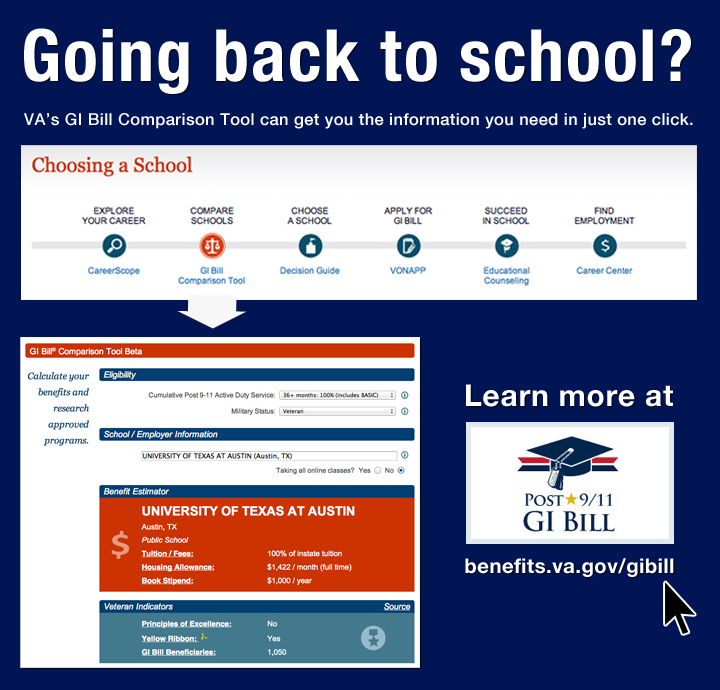
Thanks to VA’s new GI Bill® Comparison Tool, you can now find information online about Post-9/11 GI Bill benefits and the schools and training programs available to education beneficiaries.
Before this tool launched, estimating how much beneficiaries may receive under the Post-9/11 GI Bill benefit was challenging. Many beneficiaries provided this feedback to our GI Bill Facebook page. The new comparison tool makes it easy to estimate Post-9/11 GI Bill benefits with just one click.
In addition, you can find and compare information on our 10,000+ approved education and training programs, including estimated tuition and fee amounts and your projected housing allowance. Also available are each school’s graduation rate, student loan default rate, and Yellow Ribbon participation. Together, the GI Bill benefit estimator and school comparison information enable students to compare education options and make the best decision for their future.
Also, for the first time, VA is publicly releasing information about the number of students receiving VA education benefits at a particular school. Through the online comparison tool, students can now see how many Veterans attend the school of their choice. In the future, VA will add additional functionality to the tool, including the ability to compare up to three schools side-by-side.
Curtis Coy is VA’s Deputy Undersecretary for the Office of Economic Opportunity.
White House Blogs
- The White House Blog
- Middle Class Task Force
- Council of Economic Advisers
- Council on Environmental Quality
- Council on Women and Girls
- Office of Intergovernmental Affairs
- Office of Management and Budget
- Office of Public Engagement
- Office of Science & Tech Policy
- Office of Urban Affairs
- Open Government
- Faith and Neighborhood Partnerships
- Social Innovation and Civic Participation
- US Trade Representative
- Office National Drug Control Policy
categories
- AIDS Policy
- Alaska
- Blueprint for an America Built to Last
- Budget
- Civil Rights
- Defense
- Disabilities
- Economy
- Education
- Energy and Environment
- Equal Pay
- Ethics
- Faith Based
- Fiscal Responsibility
- Foreign Policy
- Grab Bag
- Health Care
- Homeland Security
- Immigration
- Innovation Fellows
- Inside the White House
- Middle Class Security
- Open Government
- Poverty
- Rural
- Seniors and Social Security
- Service
- Social Innovation
- State of the Union
- Taxes
- Technology
- Urban Policy
- Veterans
- Violence Prevention
- White House Internships
- Women
- Working Families
- Additional Issues