Energy and Environment Latest News
The Economic Power of Outdoor Recreation
Posted by on August 22, 2011 at 3:48 PM EDTEd. note: This article has been cross-posted from the Department of the Interior's web site
President Obama has made it clear that job creation is, and must remain, front and center for his Administration day in and day out.
With that in mind, I traveled to New England this week to highlight the economic power of outdoor recreation and tourism to create jobs. Hunting, fishing, and outdoor recreation contribute an estimated $730 billion to the U.S. economy each year. And one in twenty U.S. jobs are in the recreation economy – more than there are doctors, lawyers or teachers.
More than 12 million Americans hunt; more than 30 million Americans fish; and three out of four Americans engage in some kind of healthy outdoor activity.
A letter I recently received from a Canadian family shows just how big an impact tourism and recreation can have. The family spent 42 days on the road, exploring national parks across the U.S. Over the course of their travels, they stayed in motels and hotels, ate in restaurants and spent money in local businesses from coast to coast:
“Our family spent almost $20,000 on our trip,” the letter reads, “almost all of it at local stores and services as we traveled. Without the National Park Service, our destination would have probably been somewhere in Europe.”
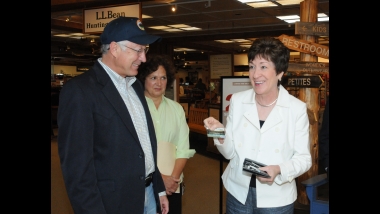
Many small and large businesses in New England are also key drivers of the outdoor economy. A store like LL Bean is a shining example of how a home-grown business can fulfill the American dream. What started almost 100 years ago as one man’s idea to sell a waterproof boot to hunters has grown into a company that today employs 5,000 people and generates 1.4 billion in revenue.
The businesses I visited this week -- including L.L. Bean’s headquarters in Freeport, Maine, Bibens Ace Hardware in Colchester, Vermont, and Eastern Mountain Sports near Portsmouth, New Hampshire -- demonstrate the power of outdoor recreation to create jobs and spur economic growth in communities both in New England and across our country. When we invest in conservation and encourage people to reconnect with nature, we aren’t just investing in the land, water, and wildlife we love, but also in our economic future.
playSecretary Salazar Promotes Outdoor Recreation in the Northeast
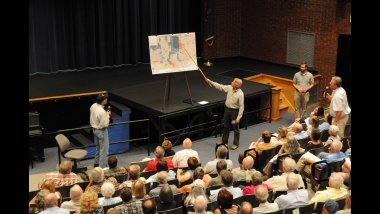
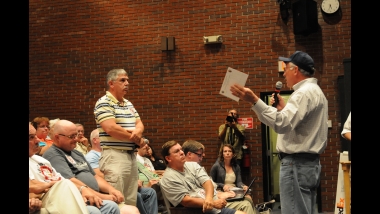
Secretary Salazar joined members of Congress, state and local officials and outdoor stakeholders in Vermont, Rhode Island, Maine and New Hampshire to highlight the importance of America’s outdoor economy in creating jobs and building strong local economies across the country. Along the way, he toured the parks, refuges and public lands that serve as recreation destinations for tourists and travelers from around the country – helping to create jobs in the leisure and hospitality industry; participated in events that encourage youth to get outside and explore the great outdoors; and visited retail shops and outfitters that help power our nation’s economy.
1 of 5Environmentally Friendly and Fun
Posted by on August 22, 2011 at 2:38 PM EDTEd. Note: Champions of Change is a weekly initiative to highlight Americans who are making an impact in their communities and helping our country rise to meet the many challenges of the 21st century.

After a whirlwind of red eye and early morning flights there I was, sitting on stage amongst some of the most talented business people I have ever met. The Champions of Change initiative was kind enough to invite me out to The White House to join a discussion about the current state of support the government gives to entrepreneurs.
While I am not a politically savvy or even a politically correct person I really appreciated the time that the government is putting into these programs. Some of the services that they offer are game changing for young entrepreneurs and they definitely need to get the word out about them!
I currently own and operate an environmentally friendly industrial pressure cleaning company in the Phoenix metro area. DevilWash is not a high tech start up and we don’t have the luxury of huge investments or even bank loans. We are financed purely from cash flow as well as business plan competition winnings. This is why the resources available through the SBA and other programs are a huge help.
Sprint Declares Commitment as E-waste Impacts Grow
Posted by on August 22, 2011 at 9:30 AM EDT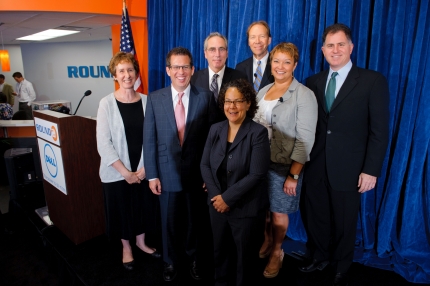
(Left to right): GSA Administrator Martha N. Johnson; Round2 Recycling CEO Randy Weiss; Mark Small, Vice President for Corporate Environment, Safety and Health, Sony Electronics Inc.; White House Council on Environmental Quality Chair Nancy Sutley; Sprint CEO Dan Hesse; EPA Administrator Lisa P. Jackson; Dell Inc. CEO Michael Dell. (Photo by Eric Vance, US EPA)
Sprint's Electronics Stewardship Policy sets aggressive e-waste goals, including the collection of nine phones for reuse or recycling for every 10 sold by 2017. To date, Sprint has collected more than 25 million mobile phones— keeping them out of landfills, helping to conserve resources, reducing greenhouse gas emissions, and preventing air and water pollution.
For the second year, Sprint received the Sustainability Leadership Award from the International Electronics Recycling Conference for our full-lifecycle product approach. On the design end, we have more environmentally-friendly devices and accessories than any other carrier. We recently launched our fourth green device and first eco-friendly Android phone – the new Samsung Replenish. It's made with 82 percent recyclable materials, and is the first phone in the U.S. with a solar battery cover. And it's the first mobile device to receive UL Environment's Platinum certification.
At the other end of the lifecycle, Sprint's industry-first Electronics Stewardship Policy gave us the opportunity to work with environmental organizations like BSR, Basel Action Network and ABI Research to develop goals. The new national e-waste policy will enhance progress in the area of sustainable electronics management. Sprint's commitment to the new national strategy will boost our goals in several areas including greater transparency in our operations.
Sprint is honored to be among the first companies to sign the new sustainable electronics management policy and to make our commitment public.Dan Hesse is CEO of Sprint
Learn more about Energy and EnvironmentAmerica's Great Outdoors: Homegrown Community Revitalization
Posted by on August 19, 2011 at 3:10 PM EDT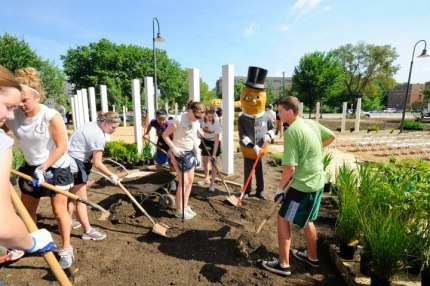
Community activists and Mr. Peanut roll up their sleeves at the Washington, D.C. Planters Grove. (Photo courtesy of Planters)
Recently, I had the pleasure of joining forces with White House Council on Environmental Quality Chair Nancy Sutley and several other leaders in Washington, D.C., including Mayor Vincent Gray and Congresswoman Eleanor Holmes Norton, to open a new urban park in the Northeast community of Lincoln Heights. Once an unused and overrun piece of land that attracted illegal activity, the space has been transformed into a sustainable and welcoming outdoor park through a partnership between Planters and The Corps Network, the national nonprofit I lead that represents the country's service and conservation corps.
For the past month, we have brought together our local member Corps including Washington Parks & People, Earth Conservation Corps and the Student Conservation Association to work in tandem with the private sector, city government, community organizations and local residents to bring the vision of the park—called a Planters Grove—to life. Borne out of the ideas and goals laid out in the President's America’s Great Outdoors initiative, it is so much more than simply a new park. It is a nexus of neighborhood revitalization, community service and outdoor activity, and proof that public-private partnerships can seed community transformation and growth.
We know this transformation of community transforms lives. Built by the local member Corps noted above, the park has already contributed to the employment and training of young people in Washington at a time when we know our country's youth face tremendous challenges and disadvantages. For example, one young woman who helped us build, Ashley, is originally from the Lincoln Heights neighborhood. After an abusive childhood, she has recently graduated from the Earth Conservation Corps, is now attending college and preparing to be a social worker and, through motivational speaking, is giving peers and youth inspiration through her story. Just one of several Corps members involved in the project, Ashley is representative of the powerful and lasting change these young people are driving in their communities and in themselves through this project.
Service and learning will continue to define the Planters Grove for years to come. The opportunities to engage the community are endless. We hope the re-imagined urban park will soon be used to teach community members green job skills and offer opportunities for residents, especially local children, to spend time outdoors and take part in healthy-living activities. The Planters Grove is truly a model for the broader city of Washington, D.C. and the nation for connecting residents of urban communities to nature and each other.
Sally Prouty is President and CEO of The Corps Network
Learn more about Energy and EnvironmentThe Health of Our Lands and Waters and the Health of Our Economy
Posted by on August 18, 2011 at 11:59 AM EDT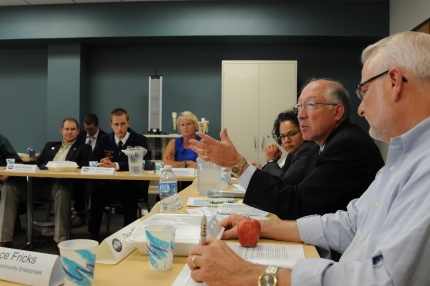
Chair Sutley and Secretary Salazar engage with stakeholders at a breakout session on conservation, tourism, and the economy at the White House Rural Economic Forum in Peosta, Iowa. (Photo by Tami Heilemann - Department of Interior)
From the beginning of his Administration, President Obama has been a champion for the wise stewardship of America’s natural treasures, understanding the strong connection between the health of our lands and waters and the health of our economy. Smart, community-led conservation presents a tremendous opportunity to improve quality of life across America, and to build and grow local jobs in industries like recreation and tourism. In fact, one in every 20 jobs is related to outdoor recreation, making conservation integral to a thriving American economy.
Beginning very early in 2009 with the President’s historic signing of the Omnibus Public Lands Management Act, this Administration has invested in land and water protection by creating the most important conservation initiative in more than a generation. Through his America’s Great Outdoors initiative, the President has announced an action plan, built with ideas from the American people, to achieve lasting conservation of the outdoor spaces that communities care about, and to reconnect people – especially children – to the outdoors.
In our most recent travels throughout the Northwest and the Northeast, we saw firsthand the intersection of conservation and economic growth in rural communities. Below are just a few of the highlights from our trips:
A Student Goes to Washington
Posted by on August 17, 2011 at 5:10 PM EDT
Teirra Scott, Green Youth Farmer for the Chicago Botanic Garden
I am Teirra Scott, an incoming freshman at Howard University. I've been an employee at the Green Youth Farm in Chicago for three years, starting as a crew member and now a crew leader. Recently, our organization had the pleasure of hosting White House Council on Environmental Quality Chairwoman Nancy Sutley at our farm and showing her our organic gardens. With approximately 20 high school students working at each of our four sites every year, Green Youth Farm (GYF) harvests and sells sustainably-grown produce throughout the City of Chicago and neighboring areas.
When I first heard of the opportunity to work at GYF, my initial reaction was "Yes! I can make some good money this summer!" But after starting, I realized that the work I did motivated me more than the pay I received. It felt good to grow healthy, organic produce for a community where obesity is too common. This is why I have returned to the Farm every year. Though I know I am still young, I want to help as many people as I can. GYF has taught me that anyone regardless of his or her age can do just that. In addition, I have learned many gardening skills that I hope to apply when I plant my own garden (or perhaps at the White House garden) in the future!
Leaving high school, I'm glad to have been a part of GYF where I have developed leadership and communication skills and, most importantly, learned more about myself. I know that in college next year I will be better equipped to live in a new community and talk to people about the importance of eating healthy and sustainable food.
Teirra Scott, age 18, is a Green Youth Farmer for the Chicago Botanic Garden
Learn more about Energy and Environment
Related Videos
-
 May 09, 2014 9:21 AM
Inside the White House: Solar Panels
-
 September 01, 2016 9:25 PM
President Obama Delivers a Statement to the Press
White House Blogs
- The White House Blog
- Middle Class Task Force
- Council of Economic Advisers
- Council on Environmental Quality
- Council on Women and Girls
- Office of Intergovernmental Affairs
- Office of Management and Budget
- Office of Public Engagement
- Office of Science & Tech Policy
- Office of Urban Affairs
- Open Government
- Faith and Neighborhood Partnerships
- Social Innovation and Civic Participation
- US Trade Representative
- Office National Drug Control Policy