
Energy and Environment Latest News
Ocean Policy Task Force Releases Interim Framework
Posted by on January 7, 2010 at 9:28 AM ESTOn December 14, 2009, President Obama’s Ocean Policy Task Force released its Interim Framework for Effective Coastal and Marine Spatial Planning for a 60-day public review and comment period. With competing interests in the ocean, our coasts and the Great Lakes, the Interim Framework offers a comprehensive, integrated approach to planning and managing uses and activities. Under the Framework, coastal and marine spatial planning would be regional in scope, developed cooperatively among Federal, State, tribal, local authorities, and regional governance structures, with substantial stakeholder and public input.
For more details on the Interagency Ocean Policy Task Force, including the Interim Framework, and to submit your comments, please go to www.whitehouse.gov/oceans
Nancy Sutley is the Chair of the White House Council on Environmental Quality
Learn more about Energy and Environment$100 Million More for Green Grants Out the Door
Posted by on January 6, 2010 at 2:22 PM ESTIn the new video below, Labor Secretary Solis announces $100 million in green jobs training grants. These grants are part of a larger Recovery Act initiative — totaling $500 million — to prepare workers for careers in the energy efficiency and renewable energy industries. It's well understood how much of a win-win these investments are, providing some of the most immediate job-creation opportunities around and producing a more energy-efficient America for the long term.
In case you missed it, see the Vice President's memo to the President on how the foundation for a new clean energy economy has been laid during the last year. Also check out the Labor Department's new green jobs page.
Learn more about Economy, Energy and EnvironmentRecovery in Action: From Coast to Coast
Posted by on January 4, 2010 at 3:30 PM ESTPresident Obama has made job creation a top priority in the nation's continuing economic recovery, hosting a jobs forum at the White House and calling for similar meetings across the country to make sure every good idea is explored. The Recovery Act continues to be instrumental in providing funds to states and municipalities to keep Americans working and, at the same time, make needed improvements to the nation's infrastructure and prepare workers for the economy of tomorrow. Reports of these successes are coming in from media across the country:
Ohio, Cleveland,com, 12/29/09:
Ohio Gets Billions From ARRA, Enabling It To Balance Its Budget And Save The Jobs Of Many State Employees, As Well As Invest In Energy And Environment Projects. "When the federal stimulus program was announced last year, Ohio figured it would get around $8.2 billion. But the state already has surpassed that by $1 billion and could get another billion before the program ends... Experts say the money that helped Ohio balance its budget saved the jobs of many state employees."
Stimulus Funding Goes To Bay Area Jobs Program That Is 'Almost Too Good To Be True.' "The federal stimulus bill set aside $5 billion to subsidize jobs for needy families. California gets $1.8 billion of that to dole out to counties which can use the money to get unemployed people into jobs. San Francisco was one of the first to get the program off and running."
California, Contra Costa Times, 1/3/10:
More Than $1 Billion From ARRA Is “Flowing Freely” Into The Bay Area, Flooding University Research Coffers, Boosting Transportation Projects, Improving Infrastructure, And More. "More than $1 billion from the $787 billion American Recovery and Reinvestment Act is flowing freely into the Bay Area, flooding university research coffers and boosting transportation projects such as the long-awaited Caldecott Tunnel expansion and the BART-Oakland Airport people mover, funding high-tech baggage screening equipment at San Francisco International Airport and improvements to Caltrain in San Mateo County.”
Missouri, St. Louis Business Journal, 12/31/09:
Missouri Gets $1.2 Million Stimulus Grant For Green Jobs. "Missouri has won a $1.2 million grant funded by the federal stimulus package for research on ‘green’ occupations and the skills needed for these jobs... Nearly 5 percent of Missouri’s total employment, or more than 130,000 positions, are now tied to the green economy, according to a report released this month."
Stimulus Funds Go To 14 Road Improvement Projects In Ouachita Parish. "Fourteen road improvement projects in Ouachita Parish being funded with federal stimulus monies have been scheduled to go out for bids in February. The state Department of Transportation and Economic Development will let projects in February for Monroe, West Monroe and in the parish as part of the state's expenditure of federal American Recovery and Reinvestment Act funds...West Monroe Mayor Dave Norris expects his city's six projects to be under construction in the spring."
Learn more about Economy, Energy and EnvironmentAmerican and Kenyan Youth Deliver Environmental Messages in Copenhagen
Posted by on December 23, 2009 at 7:19 PM ESTAs President Obama called world leaders back to the table in Copenhagen to work on an agreement, the White House Offices of Energy and Climate Change and Public Engagement helped facilitate a meeting between White House aides and young environmental leaders from the United States and Kenya. The American coalition hand-delivered hundreds of letters-to-the-President from a wide spectrum of young Americans: from high school students in Illinois to young leaders in Michigan to young sportsmen in South Dakota.
The Kenyan coalition brought a book of drawings and illustrations from students in Nyang’oma Kogelo village, where President Obama’s father lived. Included was a collage of letters depicting young Kenyans’ lives and the ways in which climate and environmental change has impacted it.
Hear from the American and Kenyan youth here:
Take a look at some of the notes and artwork here:
Learn more about , Energy and Environment, Foreign PolicyRecovery in Action: "Energy Squads" in the Twin Cities
Posted by on December 23, 2009 at 12:26 PM ESTBefore we get into the national round-up, we wanted to highlight one particularly action-packed story out of Minnesota. The headline from the Star-Tribune is 'Energy squads' find and stop waste":
As the biggest storm of the season so far descends on the Twin Cities, some lucky homeowners are getting expert help battening down the hatches and lowering their utility bills. The bonus? It's costing them peanuts.
The Center for Energy and the Environment (CEE) in Minneapolis and Neighborhood Energy Connection (NEC) in St. Paul, both nonprofits dedicated to energy efficiency, began pilot programs in the fall in select neighborhoods. Their crews replace light bulbs, wrap fiberglass blankets around water heaters and weatherstrip doors. All the homeowners receiving these customized services had to do was attend a free workshop, then pay $30. Besides the installed products, they get utility-bill savings averaging $127 a year.
Xcel Energy Inc. and CenterPoint Energy pay both programs' labor costs as part of their efforts to meet state-mandated conservation goals. But in January the two utilities will begin offering Home Energy Squad, their own joint program, to other customers in the seven-county metro area. It will be a limited version of the neighborhood-focused visits offered by NEC and
CEE, and will expand over the next three years. You must be a customer of Xcel electric and either Xcel gas or CenterPoint gas to be eligible. This is the first time the utilities have collaborated on such a broad scale, said Todd Berreman, who oversees CenterPoint's conservation programs.
And what allowed CEE and NEC to expand expontially? You got it, the Recovery Act. Who else has been reaping the benefits of the Recovery Act? Let’s go with alphabetical order so as not to offend anybody:
Learn more about Economy, Energy and Environment"A Meaningful and Unprecedented Breakthrough Here in Copenhagen"
Posted by on December 18, 2009 at 6:57 PM ESTplayA Breakthrough in Copenhagen
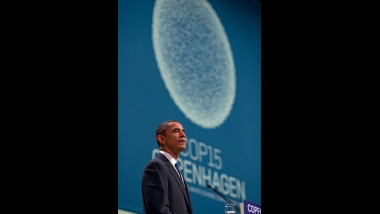
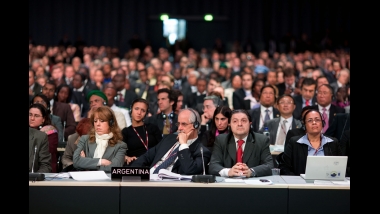
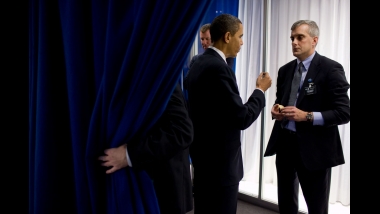
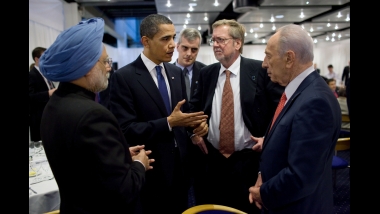
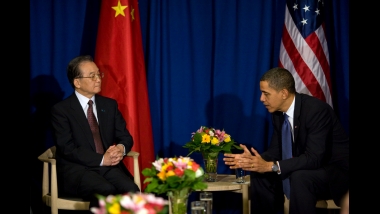
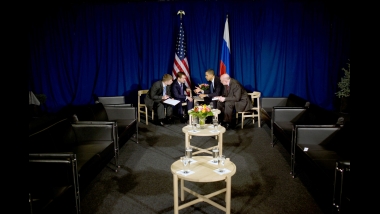
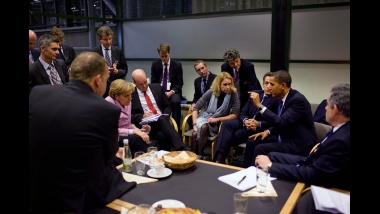
President Obama attends the United Nations Climate Change Conference in Copenhagen, Denmark, Dec. 18, 2009.
1 of 10In a much-anticipated United Nations climate change conference in Copenhagen, Denmark, the President arrived after nearly two weeks of work with the firm intention of seizing the opportunity to get something solid done. And as he explained in remarks at the end of the day, defying many expectations, the world will not leave empty-handed:
Today we've made meaningful and unprecedented -- made a meaningful and unprecedented breakthrough here in Copenhagen. For the first time in history all major economies have come together to accept their responsibility to take action to confront the threat of climate change.
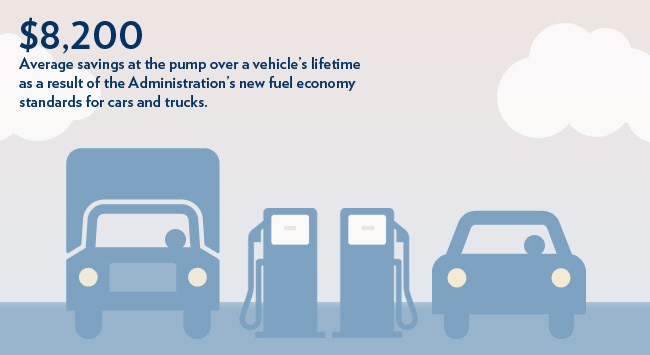
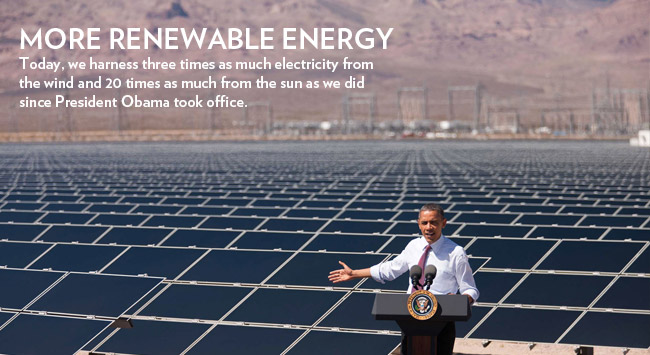
Let me first recount what our approach was throughout the year and coming into this conference. To begin with, we've reaffirmed America's commitment to transform our energy economy at home. We've made historic investments in renewable energy that have already put people back to work. We've raised our fuel efficiency standards. And we have renewed American leadership in international climate negotiations.
Most importantly, we remain committed to comprehensive legislation that will create millions of new American jobs, power new industry, and enhance our national security by reducing our dependence on foreign oil.
That effort at home serves as a foundation for our leadership around the world. Because of the actions we're taking we came here to Copenhagen with an ambitious target to reduce our emissions. We agreed to join an international effort to provide financing to help developing countries, particularly the poorest and most vulnerable, adapt to climate change. And we reaffirmed the necessity of listing our national actions and commitments in a transparent way.
These three components -- transparency, mitigation and finance -- form the basis of the common approach that the United States and our partners embraced here in Copenhagen. Throughout the day we worked with many countries to establish a new consensus around these three points, a consensus that will serve as a foundation for global action to confront the threat of climate change for years to come.
This success would have not been possible without the hard work of many countries and many leaders -- and I have to add that because of weather constraints in Washington I am leaving before the final vote, but we feel confident that we are moving in the direction of a significant accord.
In addition to our close allies who did so much to advance this effort, I worked throughout the day with Prime Minister Meles of Ethiopia, who was representing Africa, as well as Premier Wen of China, Prime Minister Singh of India, President Lula of Brazil, and President Zuma of South Africa, to achieve what I believe will be an important milestone.
Earlier this evening I had a meeting with the last four leaders I mentioned -- from China, India, Brazil, and South Africa. And that's where we agreed to list our national actions and commitments, to provide information on the implementation of these actions through national communications, with international consultations and analysis under clearly defined guidelines. We agreed to set a mitigation target to limit warming to no more than 2 degrees Celsius, and importantly, to take action to meet this objective consistent with science.
Taken together these actions will help us begin to meet our responsibilities to leave our children and our grandchildren a cleaner and safer planet.
Now, this progress did not come easily, and we know that this progress alone is not enough. Going forward, we're going to have to build on the momentum that we've established here in Copenhagen to ensure that international action to significantly reduce emissions is sustained and sufficient over time. We've come a long way, but we have much further to go.To continue moving forward we must draw on the effort that allowed us to succeed here today -- engagement among nations that represent a baseline of mutual interest and mutual respect. Climate change threatens us all; therefore, we must bridge old divides and build new partnerships to meet this great challenge of our time. That's what we've begun to do here today.
For energy holds out not just the perils of a warming climate, but also the promise of a more peaceful and prosperous tomorrow. If America leads in developing clean energy, we will lead in growing our economy, in putting our people back to work, and in leaving a stronger and more secure country to our children.
And around the world, energy is an issue that demands our leadership. The time has come for us to get off the sidelines and to shape the future that we seek. That's why I came to Copenhagen today, and that's why I'm committed to working in common effort with countries from around the globe. That's also why I believe what we have achieved in Copenhagen will not be the end but rather the beginning, the beginning of a new era of international action.
He then proceeded to take questions, read the rest of the transcript for more details.
Learn more about Energy and Environment

Related Videos
-
 May 09, 2014 8:21 AM
Inside the White House: Solar Panels
-
 September 01, 2016 8:25 PM
President Obama Delivers a Statement to the Press
White House Blogs
- The White House Blog
- Middle Class Task Force
- Council of Economic Advisers
- Council on Environmental Quality
- Council on Women and Girls
- Office of Intergovernmental Affairs
- Office of Management and Budget
- Office of Public Engagement
- Office of Science & Tech Policy
- Office of Urban Affairs
- Open Government
- Faith and Neighborhood Partnerships
- Social Innovation and Civic Participation
- US Trade Representative
- Office National Drug Control Policy