Health Care Blog
Turning Up the Heat on Fraud
Posted by on May 13, 2010 at 2:59 PM ESTEd. Note: Attorney General Eric Holder and Health and Human Services Secretary Kathleen Sebelius will discuss the Obama Administration’s efforts to fight fraud today using new tools provided by the Affordable Care Act at 4:00 PM EDT today. Click here to watch.
As the Affordable Care Act has kicked in over the last few weeks, Americans around the country have been getting some long overdue good news about health care. While most of us see this historic new law as an opportunity to give all of us more control over our own health care and bring down health care costs, there are others who are trying to use the new law to defraud seniors and try to rip off the system.
Sadly, criminals see health insurance reform an opportunity to launch new schemes. My message to them is this: there has never been a worse time to try to steal Americans’ health care dollars.
What these criminals may not know is that the Affordable Care Act is not just about making our health insurance system work better for families. It’s also has some of the strongest anti-health care fraud provisions in American history.
Over the past year and a half, we have made great strides in fighting fraud, working with the Department of Justice and state and local partners to deploy innovative fraud-fighting strategies like our HEAT strike force.
A new report released today by the Attorney General and I shows that our fraud-fighting efforts are working – in FY 2009 anti-fraud efforts put $2.51 billion back in the Medicare Trust Fund, a $569 million, or 29 percent, increase over FY 2008, and over $441 million in federal Medicaid money was returned to the Treasury, a 28 percent increase from FY 2008.
But criminals aren’t quitting yet. In just the past few weeks, in states from Delaware to Wyoming, we’re hearing unfortunate examples of schemers promising medical benefits to seniors in exchange for their personal information. These schemes are not only a threat to taxpayer dollars, but are potentially devastating to seniors seeking care.That is why we’re turning up the heat on scam artists who try to defraud taxpayers and exploit consumers. The Affordable Care Act will improve our ability to detect, track and prevent fraud, through enhanced communication and transparency across agencies and geographic regions, and stronger penalties for criminals.
Over the next 10 years, we’ll be investing $600 million towards these detection and enforcement efforts – investments that studies have shown pay for themselves many times over. And we’ll be working to empower Americans to help us fight fraud by building strong coalitions on the state and local level with law enforcement and seniors groups to educate people about their rights and to enlist them to become fraud fighters too.
As the new law is implemented, we will aggressively work to safeguard our tax dollars and protect our seniors every step of the way. Fighting fraud, strengthening Medicare and protecting seniors is the core of our mission when it comes to this new law and we will act swiftly and aggressively to both prevent fraud from happening and against those who break the law.
Kathleen Sebelius is Secretary of the Department of Health and Human Services
Learn more about Health CareAround the Web: Health Reform Helping Young Adults
Posted by on May 12, 2010 at 3:02 PM ESTOn Monday HHS Secretary Kathleen Sebelius posted about new regulations related to health reform that let young adults under 26 stay on their parents' health plans. If you missed it, you now have plenty of other options to learn all about it:
- HowStuffWorks explains the basics
- Watch yesterday's webchat with the Secretary and Rock the Vote
- Follow the Q&A with About.com Guides
- Read about what Yahoo! readers want to know
Learn more about Health CareA New Round of Old Questions on Health Insurance Reform
Posted by on May 12, 2010 at 2:24 PM ESTCross-posted from the OMB Blog.
A Congressional Budget Office (CBO) letter released yesterday has sparked a new round of old questions about the cost of the recently enacted health insurance reform law, the Affordable Care Act. The letter simply updates CBO’s calculation of the size of discretionary authorizations included in the legislation.
CBO’s tally, which is not included in its estimate of the cost of the law, has led some to erroneously conclude that the law includes more spending and less deficit reduction than CBO has previously reported.
As I have said before and independent analysts have echoed, this is incorrect:
- Authorizations are just that — they are not spending. That is, they are expressions of what Congress would like to spend money on, not what it will spend money on. This is important since Congress frequently does not fully fund authorizations and many are never funded. As CBO itself says in the letter, authorizations “are subject to future appropriation actions, which could result in greater or smaller costs than the sums authorized by the legislation.”
- The President has made a firm commitment to freezing non-security discretionary funding for the next three years — a commitment he has said would be enforced by his veto pen. As a result, any actual new funding would have to fit within this freeze and so would have to be offset by budget cuts elsewhere.
- It is also worth noting that a number of these authorizations — including the largest authorization reported in the CBO letter — are simply new authorizations of spending that already exists. In other words, funding such authorizations does not result in new spending.
The bottom line remains the same: the Affordable Care Act is the largest deficit reduction package enacted in over a decade according to CBO. It will reduce deficits by more than $100 billion in the current decade and more than $1 trillion in the decade after that — and that will not change.
Peter R. Orszag is Director of the Office of Management and Budget
Learn more about Health CareA Long Overdue Change to Help Young Adults Get Coverage
Posted by on May 10, 2010 at 10:20 AM ESTAs families around the country celebrate high school and college graduations this month, they can also cheer another piece of good news: as part of the Affordable Care Act, our Administration is issuing regulations today that will allow young adults to stay on their parents’ health insurance plans until age 26.
This change is long overdue. For years, getting a diploma also meant losing your health insurance. And whether you went on to college or not, it was often hard as a young person to find affordable coverage. Overall, Americans in their twenties were twice as likely to go without health insurance as older Americans.
I saw this firsthand as a mom. When my sons graduated from college, they both found jobs. But like a growing number of employers, neither of theirs offered health insurance. Fortunately, they were both healthy and could afford to buy coverage. But I often wondered: what if one of them had a preexisting condition like diabetes? What if our family had fewer resources?
For too many young Americans over the years, the answer to these questions was simply to go without health insurance and hope that you stayed healthy.
Thanks to the rule we’re establishing today, no young American will have to take that risk ever again. Under this policy, insurers will be required to allow any American under the age of 26 who doesn’t get health insurance through their job to stay on their parents’ plan. To get more details, you can read this fact sheet or Q&A.
This provision was scheduled to go into effect in September. But we didn’t want any young person to needlessly go without health insurance this summer. So over the last few weeks, we’ve reached out to insurance companies and asked them to make this change immediately. And to their credit, we’ve gotten a terrific response.
So far, every major insurance company – more than 65 in total – and several major self-insured organizations have said they will provide continuous coverage for young adults this summer. That’s great news for graduating seniors and their families who will get added security in exchange for premiums that are only expected to rise by .7%.
And it’s not a bad deal for insurance companies or employers either. Insurers will save the administrative costs that would have added up as they dropped people in May only to sign them back up in September. And businesses have already been notified that the tax exclusion for employer health benefits will apply to all the young adults who choose to stay on their parents’ plans.
It’s only been seven weeks since President Obama signed the Affordable Care Act, but Americans are already seeing the benefits. In addition to this new security for young adults, small business owners have been notified about a new tax credit to help them provide health coverage for their employees.
Seniors who have hit the prescription drug donut hole will begin getting $250 rebate checks next month to help them afford their medications. And we’ve been working closely with states for weeks to develop a new insurance option for uninsured Americans with preexisting conditions.
After years of feeling like they were losing control over their health care, Americans are finally getting a glimpse of a better future. And in the months to come, we’re going to continue to work diligently with our partners across the country to deliver the promise of this new law and make our health care system work better for the American people.
Kathleen Sebelius is Secretary of the Department of Health and Human Services
Learn more about Health CareWeekly Address: Health Reform Starts to Kick In
Posted by on May 8, 2010 at 5:00 AM ESTThe President goes through the benefits in health insurance reform that are already kicking in for young adults, retirees, and families, and says more benefits are coming down the pike.
Learn more about Health CareChecking for Any Further "Miscalculations" in Insurance Rate Hikes
Posted by on May 5, 2010 at 12:28 PM ESTSeveral months ago, Anthem Blue Cross, an insurance company in California owned by WellPoint, informed its customers that they would see their health insurance premiums rise by as much as 39 percent. President Obama, his team, leaders in Congress and officials in California spoke out and an investigation found that there were significant errors in Anthem Blue Cross’s justification for the massive rate increase. Last week, the company withdrew the proposed increase and admitted they made “miscalculations.”
The announcement was good news for the more than 800,000 Anthem Blue Cross customers in California who will receive some temporary relief, but it raised troubling questions about the company’s actions. Did WellPoint make similar miscalculations in the other states where it does business? Will those errors leave consumers stuck with higher premiums?
Last night, HHS Secretary Kathleen Sebelius wrote to Governors across the country and urged them to examine this issue. In her letter, she wrote:
I am writing to call your attention to the recent withdrawal by Anthem Blue Cross, an affiliate of WellPoint, Inc., of the proposed rate increase of up to 39 percent for many of its California individual market policyholders. The California Department of Insurance found that the proposed rate increase was based on unreasonably high assumptions about the rate at which medical costs are increasing.
In light of this recent finding, I urge that, to the extent you have authority to do so, you re-examine any WellPoint rate increases in your state to determine whether any mistaken assumptions similar to those made in California were made in your state. Even small errors can mean unaffordable premiums for policyholders.
Sebelius also urged the Governors to examine whether or not they have the tools and authority they need to approve all rate increases before they take effect.
The ability to require insurers to modify an increase if a proposed rate increase is unjustified has been shown to be effective in many states. The Affordable Care Act expressly contemplates support for state efforts in rate review, appropriating a total of $250 million to states to assist in meaningful rate review.
The Affordable Care Act is already ending some of the worst insurance company practices and we’ll keep working to bring costs down and give the American people, not big insurance companies, control of their health care.
Stephanie Cutter is Assistant to the President for Special Projects
Learn more about Health Care
- &lsaquo previous
- …
- 153
- 154
- 155
- 156
- 157
- 158
- 159
- 160
- 161
- …
- next &rsaquo
From the Press Office
Related Videos
-
 December 13, 2016 5:04 PM
Signing Ceremony for the 21st Century Cures Act
-
 December 10, 2016 5:00 AM
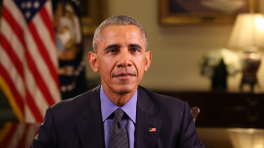
Weekly Address: It’s Time to Get Covered on the Health Insurance Marketplace