The White House

Office of the Press Secretary

President Obama Announces Presidential Delegation to the Republic of Chile to Attend the Inauguration of Her Excellency Michelle Bachelet

President Barack Obama today announced the designation of a Presidential Delegation to the Republic of Chile to attend the Inauguration of Her Excellency Michelle Bachelet on March 11, 2014.

The Honorable Joseph R. Biden, Jr., Vice President of the United States, will lead the delegation.

Members of the Presidential Delegation:

The Honorable Michael A. Hammer, United States Ambassador to the Republic of Chile

The Honorable Roberta S. Jacobson, Assistant Secretary of State for Western Hemisphere Affairs

The White House

Office of the Press Secretary

Remarks by the President on Preparing for College

Coral Reef Senior High School
Miami, Florida

3:05 P.M. EST

THE PRESIDENT:  Hello, Miami!  (Applause.)  Hello, Cuda Nation!  (Applause.)  Hello!  It is good to be here at Coral Reef Senior High.  (Applause.)  You guys are just happy because it’s warm down here all the time.  (Laughter.)  I don’t know if you’re aware of this, but the rest of the country is cold.  (Laughter.)  Listen, Michelle and I are so grateful for the warm welcome.  It is great to be here.  I want to thank some people who are doing outstanding work.

First of all, your superintendent, Superintendent Carvalho, is doing great work.  We’re really proud of him.  (Applause.)  Your principal, Principal Leal, is doing great work.  (Applause.)  All the Coral Reef teachers and staff, you guys are all doing a great job.  (Applause.)  And you’re doing what is necessary to help young people get ready for college and careers.  So that’s why we’re here.  We are proud of what’s being done at this school.

I want to mention a few other folks who are here who are fighting on behalf of the people of South Florida every day.  We’ve got Congressman Joe Garcia is here.  (Applause.)  We’ve got Congresswoman Frederica Wilson here.  (Applause.)  We’ve got Miami-Dade County Mayor Carlos Gimenez.  Your former Governor Charlie Crist is here.  (Applause.)  

And most of all, I want to thank the people that Michelle and I came all the down here to see, and that is the students of Coral Reef.  (Applause.)  We had heard great things about your school.  We had heard great things about the students.  We wanted to come down here and just see what was going on.  (Applause.)  And Michelle and I just had a chance to visit with some of your classmates who are going through some of the scholarship applications, and we had a chance to talk to them and hear what their plans were.  And first of all, Michelle and I looked and we said, these must be actors playing students, because they were all smart and good-looking and organized.  (Laughter.)  And I asked them, what are you going to do?  And they’re -- well, I’m going to be applying to business school, and then I’m going to start a company, and then I -- when I was your age, I didn’t know what I was doing.  I was lucky if I had gotten out of bed on time.  (Laughter.)  So you guys are ahead of the game. 

And we’re here to tell you that you’ve got to keep up the good work, because by working hard every single day, every single night, you are making the best investment there is in your future.  And we want to make sure you’ve got everything, all the tools you need to succeed.  We want every young person to have the kinds of teachers and the kind of classes and the kind of learning experiences that are available to you here at Coral Reef.  (Applause.)  Because that’s the best investment we can make in America’s future.  (Applause.) 

Now, keep in mind, Michelle and I, we’re only here today because of the kind of education that we got.  That was our ticket to success.  We grew up a lot like many of you.  I was raised by a single mom; she was a teenager when I was born.  We moved around a lot, we did not have a lot of money, but the one thing she was determined to see was that my sister and I would get the best education possible. 

And she would press me.  Sometimes she’d make me wake up, do my lessons before I even went to school.  She was not going to let me off the hook.  And at the time, I wasn’t happy about it, but now I’m glad she pressed me like that.  Because, thanks to my mother and my grandparents, and then great teachers and great counselors who encouraged me, and a country that made it possible for me to afford a higher education, I was able to go to college and law school. 

And then when I met Michelle, I saw that -- (applause) --there were a couple of things I noticed.  I noticed she was smart.  (Applause.)  I noticed she was funny -- she’s funny, she’s funnier than I am.  (Laughter.)  Obviously, I noticed she was cute, yes.  (Applause.)  But one of the things I also realized was, even though we had grown up in very different places, her story was a lot like mine.  Her dad worked at a city water plant.  He didn’t go to college.  He was a blue-collar worker.  Michelle’s mom -- my mother-in-law, who I love to death -- she was a secretary.  No one in her family had gone to college.  But because she had worked hard and her parents understood the value of education, and she had great teachers and great opportunities, and because the country was willing to invest to make sure that she was able to pay for college, she ended up going to some of the best universities in the country.  (Applause.)

So the point is she and I have been able to achieve things that our parents, our grandparents would have never dreamed of.  And that’s the chance this country should give every young person.  That’s the idea at the heart of America.  (Applause.)

What makes this country great, what makes it special when you look around, and Miami is a great example of it, you’ve got people coming from everywhere, every background, every race, every faith.  But what binds us together is this idea that if you work hard, you can make it -- that there’s opportunity for all.  The belief that no matter who you are, no matter where you come from, no matter what your last name is, if you are responsible and put in the effort, you can succeed.  There’s no limit to what you can do.  That’s what America is all about.  (Applause.)

Opportunity is what drew many of your parents and grandparents to America.  And we’ve got to restore that idea for your generation, so that everybody has the same chance Michelle and I did.  That’s why we’re working on what we call an opportunity agenda to create more jobs and train more workers with new skills; to make sure hard work is rewarded with a paycheck that supports a family; to make sure that everybody can get health care when they need it, so that nobody has to get into financial trouble because somebody in the family gets sick.  (Applause.) 

And for the students here, a lot of you, you may not think about these issues all the time.  You’re spending a lot of time on homework and sports, and this and that.  But you also oftentimes see your own family struggling and you worry about it.  And one of the single-most important parts of our opportunity agenda is making sure that every young person in America has access to a world-class education -- a world-class education.  (Applause.)  So that’s why we are here. 

I believe we should start teaching our kids at the earliest ages.  So we’re trying to help more states make high-quality preschool and other early learning programs available to the youngest kids.  (Applause.)  I believe that our K-12 system should be the best in the world.  So we started a competition called Race to the Top, to encourage more states like Florida to raise expectations for students like you, because when we set high expectations, every single one of you can meet them.  (Applause.)  You’re recruiting and preparing the best teachers.  You are turning around low-performing schools.  You’re expanding high-performing ones.  You’re making sure every student is prepared for college or a career. 

I believe that every student should have the best technology.  So we launched something we called ConnectED to connect our schools to high-speed Internet.  And I want to congratulate Miami-Dade and your superintendent, because you have achieved your goal of installing wi-fi in every single one of your schools.  (Applause.)

So the good news is, in part because of some of these reforms we’ve initiated, when you add it all up our nation’s high school graduation rate is the highest on record.  The drop-out rate has been dropping, and among Latino students has been cut in half since 2000.  (Applause.)  Miami-Dade’s graduation rate is higher than it’s ever been.  That’s all because of the efforts of so many people, including the parents and students who have been putting in the effort.  It’s because of the teachers and administrators and staff who are doing such a great job.  You should be proud.  We’re making progress -- we’re making progress.  (Applause.)

Yes, you guys -- by the way, you can all sit down.  I didn’t realize everybody was still standing up.  Sit down.  Take a load off.  You guys can’t sit down though, because you don’t have chairs, although bend your knees so you don’t faint.  (Laughter.)   

But here’s the key thing, Coral Reef:  We still have more work to do, all of us -- elected officials, principals, teachers, parents, students.  Because, as Michelle says, education is a two-way street.  Folks like us have to work hard to give you the best schools and support that you need.  But then, you’ve got to hold up your end of the bargain by committing to your education.  That means you’ve got to stretch your minds.  You’ve got to push through subjects that aren’t always easy.  And it means continuing your education past high school, whether that’s a two-year or a four-year college degree or getting some professional training. 

So I want to talk about an easy step that high school students like you can take to make college a reality.  And it’s something you already know here at Coral Reef, but I’m speaking to all the young people out there who may be watching.  It’s called FAFSA, the Free Application for Federal Student Aid. 

It is a simple form.  It used to be complicated; we made it simple.  It doesn’t cost anything -- that’s why the word “free” is right there in the name.  (Laughter.)  It does not take a long time to fill out.  Once you do, you’re putting yourself in the running for all kinds of financial support for college -- scholarships, grants, loans, work-study jobs. 

For the past five years, we’ve been working to make college more affordable.  We took on a college loan system that gave billions of dollars of taxpayer money to big banks to manage the student loan system.  We said, we don’t need the banks, let’s give the money directly to students, we can help more students.  (Applause.)  We can help more students that way.  So we expanded the grants that help millions of students from low-income backgrounds pay for college.  We’re offering millions of people the chance to cap their student loan payments at 10 percent of their incomes once they graduate. 

Today, more young people are earning college degrees than ever before.  That’s a great thing.  (Applause.)  That is a great thing.  But we still need to do more to help rein in the rising cost of tuition.  We need to do more to help Americans who feel trapped by student loan debt -- because no striving, hardworking, ambitious, young American should ever be denied a college education just because they can’t afford it -- nobody.  (Applause.)

Unfortunately, there are still a lot of young people all across the country who say the cost of college is holding them back.  Some of you may have sat around the kitchen table with your parents wondering about whether you’ll be able to afford it.  So FAFSA is by far the easiest way to answer that question.  And I know the Barracudas know all about FAFSA.  (Applause.)  Last year, you had the second-highest completion rate of any large high school in the state.  (Applause.)  You should be proud of that.  Your teachers and parents should be proud of that. 

But last year, almost half of high school graduates in Florida didn’t fill out the FAFSA form.

AUDIENCE:  Booo --

THE PRESIDENT:  That ain’t right.  (Laughter.)  Not only is it not right, but it also ain’t right.  (Laughter.)  And as a result, they lost out on over $100 million in Pell grants.  Think about that -- $100 million that could have helped Florida students help pay for college was just left on the table.  That’s just in Florida.  Nationwide, over one million high school students did not fill out the FAFSA form.  That happens every year.

So my challenge today to every high school student in America:  Fill out the form.  Even if you think you might not qualify for financial aid, fill out the form.  You might qualify.

And we’re making it easier than ever.  We put the FAFSA form online.  We made it shorter.  It takes about half an hour to fill out.  And it could change the rest of your life.  We’ve updated it to save your parents a lot of hassle as well.  And today, I’m announcing another improvement. 

Today, I’m directing the Department of Education to tell every governor that, starting today, they can, if they choose, confidentially let high school administrators know which students have filled out the FAFSA form and which haven’t.  So that way, if Principal Leal wants to check in with the seniors --

AUDIENCE:  Wooo --

THE PRESIDENT:  I know, everybody is like, wow.  (Laughter.)  I know she’s already on top of stuff, but this way, she could check and seniors who had not filled it out, she could then help them answer the questions and figure out what’s holding her back -- what’s holding them back. 

Anybody will be able to go online and find out the number of students who have filled out the form at each high school, so we can track it.  So if you want to have a friendly competition with Palmetto High or Miami Killian -- (applause) -- to see who can get a higher completion rate on your FAFSA, you can do that.  (Applause.)  You achieved the second-highest rate in the state, but I mean if you want to settle for number two, that's okay --  you might be able to get number one.  (Applause.)  Huh?  I’m just saying you could go for number one.  (Applause.)

So these are things I can do on my own, but I’m here to also tell you I need -- I could use some help from folks in Washington.  There are some things I don’t need Congress’s permission for, and in this year of action, whenever I see a way to act to help expand opportunity for young people I’m just going to go ahead and take it.  I’m just going to go ahead and do it.  (Applause.)

So earlier this year, Michelle and I hosted a College Opportunity Summit, where over 150 colleges and universities and nonprofits made commitments to help more low-income students get to college and graduate from college.  (Applause.)  But I’m also willing to work with anybody in Congress -- Democrat, Republican, don't matter -- to make sure young people like you have a shot to success. 

So a few days ago, I sent my budget to Congress.  And budgets are pretty boring -- but the stuff inside the budgets are pretty important.  And my budget focuses on things like preschool for all; like redesigning high schools so students like you can learn real-world skills that businesses want -- (applause) -- like preparing more young people for careers in some of the fields of the future -- in science and technology and engineering and math to discover new planets and invent robots and cure diseases -- all the cool stuff that we adults haven’t figured out yet.  (Laughter.)

These are not just the right investments for our schools; they’re the right priorities for our country.  You are our priority.  We’ve got to make sure we have budgets that reflect that you are the most important thing to this country’s success. If you don't succeed, we don't succeed.  (Applause.)

We’ve got to make sure all of you are prepared for the new century, and we’ve got to keep growing our economy in other ways:  attracting new high-tech jobs, reforming our immigration system -- something Congressman Garcia is fighting for.  (Applause.)   And the rest of Congress needs to stop doing nothing, do right by America’s students, America’s teachers, America’s workers.  Let’s get to work.  Let’s get busy.  (Applause.)  We’ve got work to do. All of us have work to do -- teachers, school counselors, principals, superintendents, parents, grandparents. 

We all have work to do, because we want to see you succeed, because we’re counting on you, Barracudas.  (Applause.)  And if you keep reaching for success -- and I know you will, just based on the small sampling we saw of students here -- if you keep working as hard as you can and learning as much as you can, and if you’ve got big ambitions and big dreams, if you don’t let anybody tell you something is out of your reach, if you are convinced that you can do something and apply effort and energy and determination and persistence to that vision, then not only will you be great but this country will be great.  (Applause.)  Our schools will be great.  (Applause.)

I want us to have the best-educated workforce in America.  And I want it to be the most diverse workforce in the world.  That’s what I’m fighting for.  That’s what your superintendent and your principal are fighting for, and I hope that’s what you fight for yourselves.  (Applause.)  Because when I meet the students here at Coral Reef, I am optimistic about the future.  Michelle and I walked out of that classroom, and we said, you know what, we’re going to be in good hands, we’re going to do okay.  (Applause.)  Because these young people are coming, and nobody is going to stop them. 

Thank you, everybody.  God bless you.  God bless America.  (Applause.)

END
3:25 P.M EST

The White House

Office of the Press Secretary

Remarks by the President to Travel Pool

Classroom in Coral Reef Senior High School
Miami, Florida

2:47 P.M. EST

THE PRESIDENT:  One of the reasons we're down here, Michelle and I are both working on encouraging school districts to adopt some terrific stuff that's being done down here in order for young people to know if they’ve done the work, if they’re being responsible, they’re outstanding students, then financing should not be a barrier for them being able to go to college.  And we just don't have enough information that's getting out there about how easy it is now to fill out the FAFSA form and other scholarships that are available.  But this school district is doing some great work on it.  So this is an example of where we want all our young people to be.

So, great job. 

END              
2: 48 P.M. EST

The White House

Office of the Press Secretary

Press Gaggle with Principal Deputy Press Secretary Josh Earnest en route Florida

Aboard Air Force One
En Route Florida

12:17 P.M. EST  

MR. EARNEST:  This afternoon, the President and First Lady are headed to Coral Reef High School to talk about ensuring that as many students as possible fill out the financial aid forms that open the door to a college education.  Never before has a college education been as important as it is now in expanding opportunity and ensuring economic stability in this global economy. 

The First Lady has previously talked about efforts the administration has taken to simplify the financial aid form.  Today, the President will talk about an executive action that he'll take to better track which students have completed the form, which will assist efforts to encourage the families of students to do so.

And I'll also point out that any time you're going to a school whose mascot is the barracuda you know it's going to be an interesting afternoon.  So it should be kind of fun. 

With that, why don't we take some questions?

Q    Quick question -- the readout this morning on the President’s call to the Japanese Prime Minister, he talked about they agreed to work with other G7 countries to put pressure on Russia.  Does that reference signal the U.S. no longer views the group as the G8?  And if that's the case, what’s the latest on the President going to the previously scheduled so-called G8 summit in Sochi?

MR. EARNEST:  Jeff, as you know, what we have done is we've suspended our participation in meetings to prepare for the G8 meeting in Sochi.  The reference to the G7 is simply an indication of how united those seven countries are in our resolve to stand up for principles relating to territorial integrity and individual state sovereignty.  You’ve heard these seven countries speak with one voice on this issue and you’ve seen these seven countries demonstrate their resolve in considering a range of options to demonstrate that there will be costs associated with violating principles like this. 

So you saw the readout from the call that the President had with Prime Minister Abe, and Prime Minister Abe was of one mind with the President and the other members of the international community and the other members of the G7 on this issue.

Q    So Sochi, on or off?  If it continues, will the President go?

MR. EARNEST:  Well, I don't have any announcements to make about the President’s travel in June.  But I can tell you that there had been meetings, as there always is, in advance of the big meeting in June among the countries to prepare for meetings like that.  Our participation in those meetings has been suspended, and I think it would be logical for anybody to conclude that it raises significant questions about whether or not we’d participate in the meeting in June.

Q    I wanted to ask you about Senator Gillibrand’s sexual assault bill -- military sexual assault bill.  I don't remember the President ever coming out and saying where he stood on that bill.  Did he have a position on it?  And was it getting blocked in the Senate, was that something that the White House thought was okay or --

MR. EARNEST:  I'm going to have to pull some additional information for you, which I could get this afternoon, related to this.  It has been the administration’s position and you’ve heard the President speak very forcefully as the Commander-in-Chief about taking the kinds of steps necessary to address what is a persistent problem in our armed forces.  But in terms of our position on specific proposals to reform that system, let me get back to you on that.

Q    A quick one on Ukraine again.  Republicans have been pushing this plan to increase exports of natural gas.  Does the administration see that as some type of realistic option when it comes to helping overseas?

MR. EARNEST:  Let me start by saying this:  There are six licenses that have been approved by the Department of Energy related to the export of about 8.5 billion cubic feet per day of natural gas to a range of countries around the world.  What’s important for you to understand about those licenses that have already been issued is that the projects for delivering the product would not be completed until the end of next year.  So proposals to try to respond to the situation in Ukraine that are related to our policy on exporting natural gas would not have an immediate effect.

The other factor that’s important to understand about the situation is the current inventories of liquefied natural gas in Europe and in Ukraine are actually above traditional levels or above normal levels.  The reason for that is, unlike North America, they’ve had a relatively mild winter in Europe and the region.  So there is no indication currently that there’s much risk of a natural gas shortage in the region.

The other dynamic that factors into all this is that Russia prides itself on being a reliable supplier of natural gas to countries around the world -- I would say natural gas and other sources of energy to countries around the world.  Shutting off the natural gas would threaten that reputation -- it certainly would undermine it, not just in the eyes of Ukraine and Europe but in countries around the world.

Finally, it’s also important to recognize that Russia relies on revenue from exporting natural gas and other sources of energy.  Russia currently yields about $50 billion a year in revenue from exporting natural gas, so ending that kind of relationship with Europe would have significant financial consequences for Russia as well. 

So this is a complicated situation.  For a more detailed explanation of this complicated dynamic, I’d refer you to the Department of Energy.  But in terms of the top lines, the United States has a long relationship with Ukraine and has actually been talking about these energy issues for some time.  Vice President Biden traveled to Ukraine in 2009, and one of the items at the top of the agenda was efforts by the United States to work with Ukraine to help them reduce their dependence on Russian sources of energy, to help them reform their energy sector, to improve efficiency, to improve energy security in Ukraine.  So this is a complicated issue, one that we’ve been coordinating with the Ukrainians on for quite some time.

So I think that mostly answers your question, but for a more detailed answer, I’d refer you to the Department of Energy.

Q    Just related to that, did this come up in the call last night with the Prime Minister?  Because I know that it’s been really important for Japan to build a strong relationship with Russia for natural gas.  Was the President able to give any assurances to the Prime Minister about this?

MR. EARNEST:  I don’t want to get into a more detailed readout beyond what we issued last night and early this morning. But I will say that the executive order that the President issued yesterday put in place a structure where sanctions could be implemented.  As Jay discussed during the briefing, no specific organizations have been targeted at this point, but that process is underway.  So there’s no immediate impact from the sanctions that the President has considered in terms of interrupting anybody’s access to Russian sources of energy. 

What sanctions we’ll be focused on are individuals and entities that have interfered with or played a prominent role in interfering with the sovereignty of Ukraine.  And those are the individuals and entities that will be targeted.  And when we have additional announcements on that, we will.  Let me just end this answer by saying that, as I mentioned in my previous answer, that Prime Minister Abe is committed, or voiced to the President his commitment to closely coordinating with the international community and with the other countries in the G7 in standing up for the principle of respecting state sovereignty and the territorial integrity of independent nations.

Q    Josh, I’m wondering why the White House made the decision or the President made the decision to stick to the plan of spending the weekend in Key Largo, given obviously the pace of events overseas and the fact that the Vice President is also going to be out of the country?

MR. EARNEST:  Well, Mark, as you’ve been covering the President this week, you know that he has had a very robust schedule of consulting with President Putin a couple of times this week, that he has had a number of conversations with Prime Minister Cameron, Chancellor Merkel, and other foreign leaders -- Prime Minister Abe just last night.  He has been able to do all of that without interrupting what has otherwise been a pretty busy schedule for him this week -- during a snow day in Washington, D.C., during the rollout of the President’s Fiscal Year 2015 budget.  Our ongoing efforts to monitor ongoing events in Ukraine and to stay in close contact with world leaders has not affected the other aspects of the President’s schedule. 

That’s true of the President’s schedule today.  The President and First Lady, as I mentioned at the top, are traveling to a high school to talk about this core component of the President’s domestic agenda.  Meanwhile, the President has been able to get updates from his national security team and I would anticipate that later today, the President will have at least one phone call to make with a world leader around the globe.  I do anticipate we’ll be able to get you a readout of that call, so we’ll keep you posted.

I think the point is that the President over the course of a very busy week has maintained his schedule and his ability to monitor ongoing events in Ukraine.  I would anticipate that he’ll do the same thing this weekend.  And the fact of the matter is what the President is doing this weekend in Florida is essentially what the President will be doing if he stayed back at the White House.  It’s just that the weather will be a little warmer.

Q    Well, what else will he be doing besides monitoring world events?  What else will he be planning to do on his vacation, if you can give us a little flavor?

MR. EARNEST:  The President is looking forward to spending some time with his wife and daughters, who are traveling down to Florida as well.  There are some recreational amenities on the property, including workout facilities, tennis courts, a couple of golf courses, as you’ve seen. 

So there is a -- many of the people that the people that the President has been talking to in terms of our allies in Europe and other world leaders -- there’s a six-hour time difference between here and there.  So if there is an opportunity for the President to enjoy some of those amenities, then he’ll do that.  But we’ll have to see.  What he will do and what he is looking forward to doing is getting a little bit of downtime in the warm weather with his wife and daughters.  

Q    Can I ask you was any of the President’s or the First Lady’s personal acquaintances or friends traveling on Air Force One who are not administration officials, do you know?  We saw someone boarding who happened to be well dressed with like a cowboy hat -- wasn’t sure who that was -- earlier before the President got there.  And I didn’t know if any other friends or acquaintances --

MR. EARNEST:  There are a couple members of the Florida congressional delegation onboard.  I saw Congresswoman Frederica Wilson and Congressman Joe Garcia is on board as well.  It may have been one of the two of them that you saw. 

Q    You don’t know if any other, like, friends?

MR. EARNEST:  I don’t know of any other friends of the President or the First Lady that’s on board.

Q    Is there still a chance that he could go back to the White House tonight?  Or is the weekend here set pretty much?

MR. EARNEST:  There’s always a chance that the schedule could change, but I don’t anticipate any changes at this point.

Q    Josh, one more question on this.  You’ve obviously got the Vice President out of town, the Secretary of State is still out of town, the National Security Advisor is in the Persian Gulf, and the President is heading to Florida.  I’m just wondering that’s four senior national security officials not in Washington, including the President.  Is that an unusual set of circumstances?  And does that pose any issues in terms of how the government would respond should something sudden happen in Ukraine or Crimea?

MR. EARNEST:  It’s hard for me to speak to the travel habits of all of those officials.  Most of the people you described have as a part of their job description traveling overseas to represent the interest of the United States overseas.  So I wouldn’t be surprised if this is a fairly regular occurrence.  I mean, it’s not uncommon when the President is traveling overseas for the National Security Advisor or for the Secretary of State to be with him.  So it’s not uncommon.

I will say this:  The President is traveling this weekend with his Deputy National Security Advisor, Tony Blinken, who has played a very important role in handling this situation in Ukraine.  The President is traveling with the regular assortment of communications tools that will allow him to convene in a secure fashion meetings with his national security team, if necessary.  He, of course, has a telephone, so if he needs to make calls to world leaders, whether it’s President Putin or our allies, or other international leaders that are involved in this effort, he can stay in regular touch with them.  So we have complete confidence that the President can handle all the responsibilities that he has, based on the resources that we have with us on the flight.

Q    That said, you were quoted earlier this week I think by Politico saying that it was still up in the air, there was some debate or some internal deliberations about whether he would maintain a weekend schedule of staying down there.  The decision seems that he’s going to.  What was the debate about then if he can do that, and you know that?  Are you saying that the situation in the Ukraine is sort of calm enough that you can go reliably?  In other words, what was the debate or why did it come down on this side?

MR. EARNEST:  I wouldn’t characterize it as a debate.  I was quoted in Politico talking about the fact that the President’s schedule would be a little more fluid than usual because international events were a little more fluid than usual. 

I do think that what we have seen over the course of the last several days is the President has marshalled our allies to put in place a structure for responding to the situation that we’re seeing on the ground in Ukraine.  The President has had, again, multiple conversations with President Putin where he highlighted that there is an off-ramp here, that there is an opportunity for the Russians to sit down with the Ukrainians, facilitated by the international community, if necessary, to try to broker an agreement, to allow international inspectors into every corner of the nation of Ukraine to ensure that the rights of everybody, including the rights of ethnic Russians, are being protected.

We’ve described before that that is a legitimate interest of Russia and, frankly, it’s a legitimate interest of the international community to ensure that the rights of all the citizens of Ukraine are being respected.

There’s an opportunity for the Russians to live up to their basing agreement in Crimea, to return their soldiers and their troops to their bases, and for the international community to come together in support of the elections that are planned for May.  So there is a path to deescalate the situation.  And that is a path that has been set up by -- under the President’s leadership.  We have marshalled the international community behind -- or in support of this potential off-ramp.  And I think over the course of the next few days, we’ll get a better indication about whether or not the Russians are open to that off-ramp.

And one of the conclusions of the call that the President had with President Putin yesterday was that Secretary of State John Kerry and his counterpart, Foreign Minister Lavrov, should be in touch to talk about steps forward on that. 

So I think -- the President is hopeful that we’ll get a little greater clarity on the situation over the course of the next few days.  And if additional steps need to be taken next week, then we can take those steps.

Q    Can you characterize the tone of these lengthy conversations that the two leaders have had?  I mean, you said that next few days will tell the story, but it doesn't seem that so far that something has come out of it, that --

MR. EARNEST:  I don't want to set up a deadline over the next few days.  I think we’re hopeful that in the next few days, we’ll get greater clarity about whether or not the Russians are willing to take some concrete steps toward this off-ramp here.

But in terms of characterizing the calls, we have issued readouts and I wouldn’t want to get in front of those.  But I do think that it’s fair for you to -- fair for people to take away from these readouts that at least as it relates to the view of the situation -- the U.S. view of the situation versus the Russian view of the situation in Ukraine, and in Crimea in particular, there’s a pretty strong difference of opinion; that there is a disagreement about the facts related to what’s actually happening on the ground there.

The best example of this is you saw in the news conference that President Putin convened earlier this week that he basically denied that there were Russian troops on the ground in Crimea outside their bases.  All of the available evidence indicates that's not true. 

So we’re having robust, direct, candid conversations between President Obama and President Putin.  That means acknowledging that there are basic differences over what’s actually happening on the ground in Crimea. 

So the real test is whether or not the Russians are going to take advantage of this off-ramp that is available here.  And we’re hopeful that the Russians will take the steps necessary to deescalate the situation -- by observing the basing agreements, by supporting elections, by entering into talks, facilitated by the international community, if necessary, with the Ukrainians to try to resolve all this.  And again, that could also include putting international monitors all throughout Ukraine to ensure that the rights of everybody, including ethnic Russians, are being respected. 

President Putin has indicated that that's part of Russia’s interest in the region, and it’s part of the U.S. and the international community’s interest in the region.  So there is some common ground here.  But I don't want to paper over the differences that exist on some very basic facts on the ground.

Q    It sounds like you’re saying the White House is in kind of a wait-and-see mode for a few days on this?

MR. EARNEST:  I wouldn’t use those words, only because the President and senior members of our team remain very actively engaged in the situation.  The President will continue to consult very closely with our allies around the globe, particularly the G7 nations that Jeff mentioned.  Secretary Kerry will be in touch with his counterpart, having specific discussions about the way forward here.  So there’s still a lot of activity going on here even as we watch carefully to see what the Russian reaction might be.

Other questions?

Q    Will the President have a message today for voters in next week’s special congressional election? 

MR. EARNEST:  The White House is obviously aware that there is a special congressional election on the other side of the state of Florida.  I know that that race has gotten a lot of national attention, but I don’t anticipate that in his event today that the President will be talking about it.  He’ll be pretty focused today on this one core component of his domestic agenda, which is expanding the door -- expanding college education. 

Q    Is it a coincidence that he’s there a few days ahead of the election?

MR. EARNEST:  Well, it’s in a different part of the state, so, yes, it is a coincidence.

Q    Do you have a week ahead?

MR. EARNEST:  I do have a very bare-bones week ahead.  At this point, we anticipate that the President and the First Family will return to Washington on Sunday.

On Monday, the President is really looking forward to welcoming the 2012 and 2013 Division I Men’s and Women’s NCAA National Champions at the White House.  As you know, the President traditionally welcomes the NCAA champion football and basketball teams.  This will be an opportunity for the President to welcome the NCAA champions in some sports that don’t get quite as much attention as those other more high-profile events.  So we’re looking forward to that.

On Tuesday, the President is planning to travel to New York City to participate in events to benefit the DNC and the DSCC.  At this point, on Wednesday, Thursday and Friday, I don’t have any additional events to announce.  I anticipate the President will be at the White House and participating in meetings on those days.

Q    Thank you.

Q    I have one more -- sorry -- closer question to ask about this beer bet.  My editors asked me to ask specifically -- Prime Minister Harper said he hasn’t gotten his beer yet from the Olympic hockey bet.  What’s with the delay?

MR. EARNEST:  I don’t know.  I’m not privy to the details of the international beer delivery, but I can tell you that the President is somebody who makes good on his bets.  So I’m confident that Prime Minister Harper and members of his team will soon be enjoying some delicious White House beer. 

All right.  Thanks.

END
12:42 P.M. EST

The White House

Office of the Press Secretary

Statement by the President on Bloody Sunday

Forty-nine years ago, a determined group of Americans marched into history, facing down grave danger in the name of justice and equality—walking to protest the continued discrimination and violence against African Americans.  On a day that became known as “Bloody Sunday”, these brave men and women met billy-clubs and tear gas with courage and resolution.  Their actions helped set an example for a generation to stand up for the fundamental freedoms due to all people.  We recognize those who marched that day—and the millions more who have done their part throughout our nation’s history to bend the arc of the moral universe toward justice.

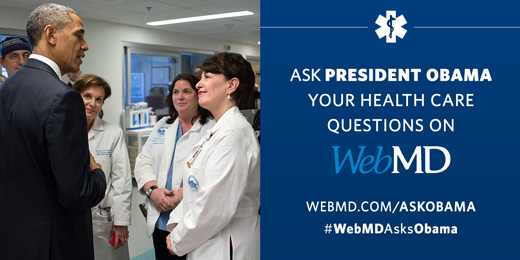
Ask President Obama Your Health Care Questions on WebMD

Next week, President Obama will sit down for his first-ever interview with WebMD, the leading source of health information for consumers and health care professionals, to discuss the importance of signing up for health insurance under the Affordable Care Act. During a conversation with the site's health care reform expert Lisa Zamosky, the President will answer questions about health care and the ACA directly from WebMD users in an interview that will air on March 14.

What’s your question for President Obama? Ask now at WebMD.com/AskObama

The President's interview with WebMD continues efforts by the administration to encourage as many Americans as possible to sign up for health insurance for 2014 by the end of open enrollment on March 31.

And it's just one of many innovative and targeted strategies used by the White House to speak with Americans directly -- especially women, young adults and the uninsured -- about quality, affordable health care options available. As the leading source for health information, WebMD has enormous reach. According to WebMD, the site's more than 156 million unique visitors per month is made up of 60 percent women, 33 percent of its audience is ages 18-34 and 38 percent of those younger users are uninsured. 

So, go ahead and submit your questions now – then tune in on March 14 to watch the full interview and find out if the President answered your question.

Related Topics: Health Care

The White House

Office of the Press Secretary

2014 White House Easter Egg Roll Ticket Lottery Opens, Theme and Logo Are Revealed

WASHINGTON - Today, the President and First Lady announced the theme for this year’s White House Easter Egg Roll: “Hop into Healthy, Swing into Shape.”  Part of the President and First Lady’s ongoing effort to open the White House to as many people as possible, the event will open its South Lawn for children ages 13 years and younger and their families.   In support of the First Lady’s Let’s Move! initiative to help kids grow up healthy and  have the opportunity to reach their full potential, the event will feature sports courts, cooking stations, and, of course, Easter egg rolling in addition to live music and storytelling.

The ticket lottery opens today, Friday, March 7, at 10:00 a.m. EST and will close on Monday, March 10, at 10:00 a.m. EDT.  To enter the lottery, please go to www.recreation.gov.  Tickets are free of charge and cannot be sold. 

The lottery results will be posted online at www.recreation.gov, and all lottery participants will be notified via email of the results by Friday, March 14th.

This year’s souvenir eggs come in four bold colors – green, blue, orange, pink – and include the stamped signatures of the President and First Lady.  A commemorative purple “Bo and Sunny” egg is included only in the 2014 5-pack Collector’s Egg Set. 

To place your commemorative egg order, please visit www.recreation.gov, and follow the link to the online Easter egg store.

National Park Foundation (NPF), the official charity of America’s national parks, produces and sells the White House Easter egg.  An egg is given as a souvenir to all children 13 years and younger who attend the White House Easter Egg Roll on the South Lawn of the White House, which is part of the National Park System.

The White House also invites all elementary and middle school students to submit poster designs for the 2014 Easter Egg Roll.  Designs should reflect this year’s theme, “Hop into Healthy, Swing into Shape.”  The First Lady will select the winning design, which will be used as part of the White House 2014 Easter Egg Roll program.

The deadline for submissions is March 21, 2014 at 10:00 AM EDT.  Submissions should be uploaded to http://www.WhiteHouse.gov/EasterEggRoll/poster2014 , relate to this year’s theme, “Hop into Healthy, Swing into Shape,” and may not exceed two megabytes (high-quality scans measuring either 8.5x11” at 600 dpi or 20x16” at 300 dpi must be available upon request).  Please note submissions may be made public during the selection process. 

For full details on souvenir eggs, submitting artwork, and the event, please visit www.WhiteHouse.gov/EasterEggRoll.

The White House

Office of the Press Secretary

Statement by NSC Spokesperson Caitlin Hayden on National Security Advisor Susan E. Rice’s Travel to the United Arab Emirates and Djibouti

National Security Advisor Susan E. Rice is traveling to the United Arab Emirates and Djibouti from March 6-8.  In the United Arab Emirates she is meeting with senior Emirati officials including Abu Dhabi Crown Prince Mohamed bin Zayed to discuss U.S.-UAE cooperation on a range of regional issues.  In Djibouti, she will meet with President Guelleh to discuss our strategic partnership and visit U.S. troops at the Combined Joint Task Force - Horn of Africa at Camp Lemonnier. 

The Employment Situation in February

February 2014 was the 48th straight month of private-sector job growth, with businesses adding 8.7 million jobs over that time. Despite a major snowstorm that hit the East Coast during the reference week for the labor market surveys, the rate of job growth picked up from the December and January pace. Nevertheless, the unemployment rate remains elevated, and for too many Americans, wages have been slow to rise.

This week, the President put out a budget that can make progress on these issues by investing in education, job training, and innovation, by expanding tax credits for working Americans, and by extending the emergency unemployment benefits that has expired for 2 million Americans. And while the President encourages Congress to act on his proposals, he will also continue to take action on his own wherever possible to support job growth and expand economic opportunity.

FIVE KEY POINTS IN TODAY'S REPORT FROM THE BUREAU OF LABOR STATISTICS

1. The private sector has added 8.7 million jobs over 48 straight months of job growth. Today we learned that total non-farm payroll employment rose by 175,000 in February, with 162,000 of that increase in the private sector. Revisions to private employment in the previous months were small and offsetting, so that that over the past twelve months, private employment has risen by 2.2 million, or an average of 183,000 a month. This is almost identical to the pace of job gains over the preceding twelve-month period (182,000 a month).

The White House

Office of the Press Secretary

Statement by NSC Spokesperson Caitlin Hayden on Deputy National Security Advisor Antony Blinken’s Meeting with United Nations-Organization for the Prohibition of Chemical Weapons Joint Mission in Syria Special Coordinator Sigrid Kaag

Deputy National Security Advisor Antony Blinken met yesterday with Sigrid Kaag, Special Coordinator of the United Nations-Organization for the Prohibition of Chemical Weapons (OPCW) Joint Mission to eliminate the chemical weapons program in Syria, to discuss the Joint Mission’s progress and to reiterate strong U.S. support for its work.  Their conversation focused on ensuring the Syrian government maintains regular, substantial, and uninterrupted activities to remove its chemical weapons to enable destruction in accordance with the June 30 deadline set by the OPCW Executive Council and the U.N. Security Council, and on the continued readiness of the United States and the international community to support the Joint Mission’s efforts to facilitate the Syrian government’s meeting its obligations.  Deputy NSA Blinken thanked Special Coordinator Kaag for her leadership and for the dedication and bravery of her staff.