Happy Birthday, President Obama

play

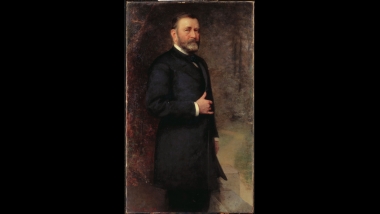
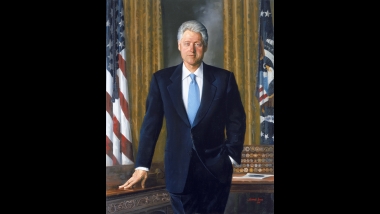
On August 4, 2011 President Obama turns 50 years old. He’s not the first Commander in Chief to earn his AARP card while in the Oval Office – take a look at some other Presidents who celebrated this milestone while serving our country.


Related Topics:

The White House

Office of the Press Secretary

Statement by the President on the FAA

I'm pleased that leaders in Congress are working together to break the impasse involving the FAA so that tens of thousands of construction workers and others can go back to work. We can't afford to let politics in Washington hamper our recovery, so this is an important step forward.

The White House

Office of the Press Secretary

President Obama Amends Arizona Disaster Declaration

The President today made additional disaster assistance available to the State of Arizona by authorizing an increase in the level of Federal funding for Public Assistance projects undertaken in theSovereign Tribal Nation of the Havasupai Tribe as a result of severe storms and flooding during the period of October 3-6, 2010.

Under the President’s major disaster declaration issued for the Sovereign Tribal Nation of the Havasupai TribeState in the State of Arizona on December 21, 2010, Federal funding was made available to the Sovereign Tribal Nation of the Havasupai Tribefor Public Assistance and Hazard Mitigation.  Public Assistance and Hazard Mitigation were authorized at 75 percent Federal funding of total eligible costs.          

Under the President's order today, the Federal share for Public Assistance has been increased to 90 percent of the total eligible costs for the Sovereign Tribal Nation of the Havasupai Tribe.

FOR FURTHER INFORMATION MEDIA SHOULD CONTACT:  FEMA NEWS DESK AT (202) 646-3272 OR FEMA-NEWS-DESK@DHS.GOV

The White House

Office of the Press Secretary

President Obama to Travel to Interstate Moving Services in Springfield, Virginia

WASHINGTON – On Tuesday, August 9, the President will travel to Interstate Moving Services in Springfield, Virginia, to announce first of their kind fuel efficiency standards for work trucks, buses, and other heavy duty vehicles. The new standards will provide American businesses, who operate and own these commercial vehicles, tens of billions of dollars in fuel savings, and will dramatically reduce oil consumption and cut pollution.

President Obama to Deliver Remarks at the Martin Luther King, Jr. Memorial Dedication

On Sunday, August 28, 2011, the 48th anniversary of the historic "I Have a Dream" speech, President Obama will deliver remarks at the Martin Luther King, Jr. memorial dedication on the National Mall.  The memorial, which will be located between the Lincoln and Jefferson memorials, will commemorate the life and work of Dr. Martin Luther King, Jr. and his contributions to world peace through non-violent social change.

For more information, please visit www.DedicatetheDream.org

Related Topics: Civil Rights

The White House

Office of the Press Secretary

President Obama to Travel to Holland, Michigan

WASHINGTON – On Thursday, August 11, the President will travel to Holland, Michigan, to tour the Johnson Controls Inc. advanced battery facility.  While at Johnson Controls, the President will highlight the key role innovative technologies will play in helping automakers achieve the historic fuel economy standards, establishing U.S. leadership in advanced vehicle manufacturing, spurring economic growth, and creating high-quality domestic jobs in cutting edge industries across America.

The White House

Office of the Press Secretary

FACT SHEET: President Obama Directs New Steps to Prevent Mass Atrocities and Impose Consequences on Serious Human Rights Violators

“The United States is committed to working with our allies, and to strengthening our own internal capabilities, in order to ensure that the United States and the international community are proactively engaged in a strategic effort to prevent mass atrocities and genocide. In the event that prevention fails, the United States will work both multilaterally and bilaterally to mobilize diplomatic, humanitarian, financial, and—in certain instances—military means to prevent and respond to genocide and mass atrocities.”

–National Security Strategy of the United States, May 2010

President Obama is committed to strengthening the United States Government’s ability to prevent mass atrocities and serious human rights violations.  In 2010, he created the first-ever White House position dedicated to preventing and responding to mass atrocities and war crimes.  And in Kyrgyzstan, Cote d’Ivoire, Libya, Sudan, and elsewhere, this Administration has prioritized the protection of civilians and the prevention of mass atrocity and serious human rights violations, and employed a wide range of economic, diplomatic, and other tools in service of those ends.

Today, President Obama is directing a comprehensive review to strengthen the United States’ ability to prevent mass atrocities.  The President’s directive creates an important new tool in this effort, establishing a standing interagency Atrocities Prevention Board with the authority to develop prevention strategies and to ensure that concerns are elevated for senior decision-making so that we are better able to work with our allies and partners to be responsive to early warning signs and prevent potential atrocities.  Today he is also issuing a proclamation that, for the first time, explicitly bars entry into the United States of persons who organize or participate in war crimes, crimes against humanity, and serious violations of human rights. 

The Presidential Directive on Mass Atrocities, Presidential Study Directive-10 (PSD-10), is innovative and significant in several respects:

  • Presidential Prioritization.  In PSD-10, President Obama finds that:  “Preventing mass atrocities and genocide is a core national security interest and a core moral responsibility of the United States of America.”  He directs agencies to participate in a comprehensive assessment, led by the National Security Advisor, of how best to accomplish this national security imperative.
  • Organization Matters.  The President notes that, “66 years since the Holocaust and 17 years after Rwanda, the United States still lacks a comprehensive policy framework and a corresponding interagency mechanism for preventing and responding to mass atrocities and genocide.”  The President orders the creation of an interagency Atrocity Prevention Board within 120 days from today so as to coordinate a whole-of-government approach to engaging “early, proactively, and decisively.”
  • Full Toolbox.  The President rejects the idea that, in the face of mass atrocity, our options are “limited to either sending in the military or standing by and doing nothing.”  He instructs his Administration to undertake a 100-day review – to take an “inventory” of the full range of economic, diplomatic, and other tools available to U.S. policymakers; to develop the appropriate governmental organization to try to ensure early and less costly preventive action; to improve the collection and processing of indicators of mass atrocity; to provide a channel for dissent to be raised during a crisis; and to appropriately train and prepare our diplomats, armed services, development professionals, and others.
  • A Global Responsibility.  The directive recognizes that preventing mass atrocities is a responsibility that all nations share.  Often other countries are better positioned than the United States to respond to particular crises or potential atrocities.  Recognizing that the burden for preventing mass atrocities must be appropriately shared by other countries, the directive calls for  a strategy for engaging key regional allies and partners so that they are prepared to accept greater responsibility for preventing and responding to crimes against humanity.

The President’s proclamation makes two key contributions:

  • Closing gaps.  The United States has long sought to ensure that our country does not become a safe haven for human rights violators or those responsible for other atrocities.  Existing U.S. law renders certain human rights violators inadmissible to the United States – such as participants in genocide, torture, extra-judicial killings, or certain violations of religious freedom.  However, before today, the United States did not have an explicit bar to admission on the basis of participation in serious violations of human rights or humanitarian law or other atrocities that do not otherwise fit into those categories specifically enumerated in the Immigration and Nationality Act.  This proclamation fills this gap by expanding the grounds for denial of entry into the United States to cover a broader array of recognized violations of international humanitarian law and international criminal law, such as war crimes and crimes against humanity.  The proclamation will also cover participants in serious human rights violations, such as prolonged arbitrary detention, forced disappearances, slavery, and forced labor, as well as participants in widespread or systematic violence against civilians based on ethnicity or other grounds.
  • New deterrent.  By enumerating these grounds for denying admission to the United States, policymakers will have a new tool to deter would-be organizers of atrocities, serious human rights violations, and related abuses.  The President’s proclamation empowers the United States to warn groups that have carried out, or may be about to carry out, serious human rights violations or grave atrocities that their conduct falls within explicit standing bans on admission to the United States.  As such, we will be able to more effectively shame those who are organizing such conduct.  The proclamation also bans admission to the United States for those who are complicit in organizing these abuses – not just those who carry them out.  As such, it allows the United States to act before planned abuses and atrocities metastasize into actual ones.

The proclamation is being issued pursuant to the President’s authority under Section 212(f) of the Immigration and Nationality Act, which authorizes the President to suspend entry into the United States of aliens whose entry “would be detrimental to the interests of the United States.”  There are currently seventeen 212(f) proclamations in effect, including Proclamation 8342 (2009), which suspends entry to foreign government officials responsible for failing to combat human trafficking, and Proclamation 7750 (2004), which suspends entry of persons engaged in or benefiting from corruption.

The White House

Office of the Press Secretary

Presidential Study Directive on Mass Atrocities

PRESIDENTIAL STUDY DIRECTIVE/PSD-10

MEMORANDUM FOR

THE VICE PRESIDENT
THE SECRETARY OF STATE
THE SECRETARY OF THE TREASURY
THE SECRETARY OF DEFENSE
THE ATTORNEY GENERAL
THE SECRETARY OF HOMELAND SECURITY
ASSISTANT TO THE PRESIDENT AND CHIEF OF STAFF
DIRECTOR OF THE OFFICE OF MANAGEMENT AND BUDGET
UNITED STATES TRADE REPRESENTATIVE
REPRESENTATIVE OF THE UNITED STATES OF AMERICA TO THE UNITED NATIONS
ASSISTANT TO THE PRESIDENT AND NATIONAL SECURITY ADVISOR
DIRECTOR OF NATIONAL INTELLIGENCE
COUNSEL TO THE PRESIDENT
ASSISTANT TO THE PRESIDENT FOR LEGISLATIVE AFFAIRS
DIRECTOR OF THE CENTRAL INTELLIGENCE AGENCY
ADMINISTRATOR OF THE UNITED STATES AGENCY FOR INTERNATIONAL DEVELOPMENT
CHAIRMAN OF THE JOINT CHIEFS OF STAFF
CHIEF EXECUTIVE OFFICER, MILLENNIUM CHALLENGE CORPORATION
DIRECTOR OF THE PEACE CORPS
DEPUTY ASSISTANT TO THE PRESIDENT AND NATIONAL SECURITY ADVISOR TO THE VICE PRESIDENT
DIRECTOR OF THE NATIONAL SECURITY AGENCY
DIRECTOR OF THE DEFENSE INTELLIGENCE AGENCY

SUBJECT: Creation of an Interagency Atrocities Prevention Board and Corresponding Interagency Review

Preventing mass atrocities and genocide is a core national security interest and a core moral responsibility of the United States.

Our security is affected when masses of civilians are slaughtered, refugees flow across borders, and murderers wreak havoc on regional stability and livelihoods.  America's reputation suffers, and our ability to bring about change is constrained, when we are perceived as idle in the face of mass atrocities and genocide.  Unfortunately, history has taught us that our pursuit of a world where states do not systematically slaughter civilians will not come to fruition without concerted and coordinated effort.

Governmental engagement on atrocities and genocide too often arrives too late, when opportunities for prevention or low-cost, low-risk action have been missed.  By the time these issues have commanded the attention of senior policy makers, the menu of options has shrunk considerably and the costs of action have risen.

In the face of a potential mass atrocity, our options are never limited to either sending in the military or standing by and doing nothing.  The actions that can be taken are many    they range from economic to diplomatic interventions, and from non combat military actions to outright intervention.  But ensuring that the full range of options is available requires a level of governmental organization that matches the methodical organization characteristic of mass killings.

Sixty six years since the Holocaust and 17 years after Rwanda, the United States still lacks a comprehensive policy framework and a corresponding interagency mechanism for preventing and responding to mass atrocities and genocide.  This has left us ill prepared to engage early, proactively, and decisively to prevent threats from evolving into large scale civilian atrocities.

Accordingly, I hereby direct the establishment of an interagency Atrocities Prevention Board within 120 days from the date of this Presidential Study Directive.  The primary purpose of the Atrocities Prevention Board shall be to coordinate a whole of government approach to preventing mass atrocities and genocide.  By institutionalizing the coordination of atrocity prevention, we can ensure:  (1) that our national security apparatus recognizes and is responsive to early indicators of potential atrocities; (2) that departments and agencies develop and implement comprehensive atrocity prevention and response strategies in a manner that allows "red flags" and dissent to be raised to decision makers; (3) that we increase the capacity and develop doctrine for our foreign service, armed services, development professionals, and other actors to engage in the full spectrum of smart prevention activities; and (4) that we are optimally positioned to work with our allies in order to ensure that the burdens of atrocity prevention and response are appropriately shared.

To this end, I direct the National Security Advisor to lead a focused interagency study to develop and recommend the membership, mandate, structure, operational protocols, authorities, and support necessary for the Atrocities Prevention Board to coordinate and develop atrocity prevention and response policy.  Specifically, the interagency review shall identify:

  • operational protocols necessary for the Atrocities Prevention Board to coordinate and institutionalize the Federal Government's efforts to prevent and respond to potential atrocities and genocide, including but not limited to:  identifying (standing and ex officio) members of the Atrocities Prevention Board; defining the scope of the Atrocity Prevention Board's mandate and the means by which it will ensure that the full range of options and debate is presented to senior-level decision makers; identifying triggers for the development of atrocity prevention strategies; identifying any specific authority the Atrocities Prevention Board or its members should have with respect to alerting the President to a potential genocide or atrocity;
  • how the Intelligence Community and other relevant Government agencies can best support the Atrocities Prevention Board's mission, including but not limited to:  examining the multiplicity of existing early warning assessments in order to recommend how these efforts can be better coordinated and/or consolidated, support the work of the Atrocities Prevention Board, and drive the development of atrocity prevention strategies and policies; examining options for improving intelligence and open source assessments of the potential for genocide and mass atrocities; and examining protocols for safely declassifying and/or sharing intelligence when needed to galvanize regional actors, allies, or relevant institutions to respond to an atrocity or genocide; and
  • steps toward creating a comprehensive policy framework for preventing mass atrocities, including but not limited to:  conducting an inventory of existing tools and authorities across the Government that can be drawn upon to prevent atrocities; identifying new tools or capabilities that may be required; identifying how we can better support and train our foreign and armed services, development professionals, and build the capacity of key regional allies and partners, in order to be better prepared to prevent and respond to mass atrocities or genocide.

In answering these questions, the interagency review shall consider the recommendations of relevant bipartisan and expert studies, including the recommendations of the bipartisan Genocide Prevention Task Force, co-chaired by former Secretaries Madeleine K. Albright and William Cohen.

I direct the National Security Advisor, through the National Security Staff's Director for War Crimes and Atrocities, to oversee and direct the interagency review, which shall include representatives from the following:

Office of the Vice President
Department of State
Department of the Treasury
Department of Defense
Department of Justice
Department of Homeland Security
United States Mission to the United Nations
Office of the Director of National Intelligence
Central Intelligence Agency
United States Agency for International Development
Joint Chiefs of Staff
Peace Corps
National Security Agency
Defense Intelligence Agency

Executive departments and agencies shall be responsive to all requests from the National Security Advisor-led interagency review committee for information, analysis, and assistance.

The interagency review shall be completed within 100 days, so that the Atrocities Prevention Board can commence its work within 120 days from the date of this Presidential Study Directive.

BARACK OBAMA

The White House

Office of the Press Secretary

Presidential Proclamation--Suspension of Entry as Immigrants and Nonimmigrants of Persons Who Participate in Serious Human Rights and Humanitarian Law Violations and Other Abuses

SUSPENSION OF ENTRY AS IMMIGRANTS AND NONIMMIGRANTS OF PERSONS WHO PARTICIPATE IN SERIOUS HUMAN RIGHTS AND HUMANITARIAN LAW VIOLATIONS AND OTHER ABUSES

BY THE PRESIDENT OF THE UNITED STATES OF AMERICA

A PROCLAMATION

The United States enduring commitment to respect for human rights and humanitarian law requires that its Government be able to ensure that the United States does not become a safe haven for serious violators of human rights and humanitarian law and those who engage in other related abuses.  Universal respect for human rights and humanitarian law and the prevention of atrocities internationally promotes U.S. values and fundamental U.S. interests in helping secure peace, deter aggression, promote the rule of law, combat crime and corruption, strengthen democracies, and prevent humanitarian crises around the globe.  I therefore have determined that it is in the interests of the United States to take action to restrict the international travel and to suspend the entry into the United States, as immigrants or nonimmigrants, of certain persons who have engaged in the acts outlined in section 1 of this proclamation.

NOW, THEREFORE, I, BARACK OBAMA, by the authority vested in me as President by the Constitution and the laws of the United States of America, including section 212(f) of the Immigration and Nationality Act of 1952, as amended (8 U.S.C. 1182(f)), and section 301 of title 3, United States Code, hereby find that the unrestricted immigrant and nonimmigrant entry into the United States of persons described in section 1 of this proclamation would be detrimental to the interests of the United States.  I therefore hereby proclaim that:

Section 1.  The entry into the United States, as immigrants or nonimmigrants, of the following persons is hereby suspended:

(a)  Any alien who planned, ordered, assisted, aided and abetted, committed or otherwise participated in, including through command responsibility, widespread or systematic violence against any civilian population based in whole or in part on race; color; descent; sex; disability; membership in an indigenous group; language; religion; political opinion; national origin; ethnicity; membership in a particular social group; birth; or sexual orientation or gender identity, or who attempted or conspired to do so.

(b)  Any alien who planned, ordered, assisted, aided and abetted, committed or otherwise participated in, including through command responsibility, war crimes, crimes against humanity or other serious violations of human rights, or who attempted or conspired to do so.

Sec. 2.  Section 1 of this proclamation shall not apply with respect to any person otherwise covered by section 1 where the entry of such person would not harm the foreign relations interests of the United States.

Sec. 3.  The Secretary of State, or the Secretary's designee, in his or her sole discretion, shall identify persons covered by section 1 of this proclamation, pursuant to such standards and procedures as the Secretary may establish.

Sec. 4.  The Secretary of State shall have responsibility for implementing this proclamation pursuant to such procedures as the Secretary, in consultation with the Secretary of Homeland Security, may establish.

Sec. 5.  For any person whose entry is otherwise suspended under this proclamation entry will be denied, unless the Secretary of State determines that the particular entry of such person would be in the interests of the United States.  In exercising such authority, the Secretary of State shall consult the Secretary of Homeland Security on matters related to admissibility or inadmissibility within the authority of the Secretary of Homeland Security.

Sec. 6.  Nothing in this proclamation shall be construed to derogate from United States Government obligations under applicable international agreements, or to suspend entry based solely on an alien's ideology, opinions, or beliefs, or based solely on expression that would be considered protected under U.S. interpretations of international agreements to which the United States is a party.  Nothing in this proclamation shall be construed to limit the authority of the United States to admit or to suspend entry of particular individuals into the United States under the Immigration and Nationality Act (8 U.S.C. 1101 et seq.) or under any other provision of U.S. law.

Sec. 7.  This proclamation is not intended to, and does not, create any right or benefit, substantive or procedural, enforceable at law or in equity by any party against the United States, its departments, agencies, or entities, its officers, employees, or agents, or any other person.

Sec. 8.  This proclamation is effective immediately and shall remain in effect until such time as the Secretary of State determines that it is no longer necessary and should be terminated, either in whole or in part.  Any such termination shall become effective upon publication in the Federal Register.

IN WITNESS WHEREOF, I have hereunto set my hand this fourth day of August, in the year of our Lord two thousand eleven, and of the Independence of the United States of America the two hundred and thirty-sixth.

BARACK OBAMA

The White House

Office of the Press Secretary

President Obama Announces More Key Administration Posts

WASHINGTON – Today, President Obama announced his intent to appoint the following individuals to key Administration posts:

  • Maria Lombardo -  Chairman, Board of Trustees of the Christopher Columbus Fellowship Foundation
  • William Sisk – Member, Committee for Purchase from People Who are Blind or Severely Disabled
  • Steven L. VanRoekel - Federal Chief Information Officer and Administrator, Office of Electronic Government, Office of Management and Budget.

President Obama said, “I am grateful these accomplished men and women have agreed to join this Administration, and I am confident they will serve ably in these important roles.  I look forward to working with them in the coming months and years.”

President Obama announced his intent to appoint the following individuals to key Administration posts:

Dr. Maria Lombardo, Appointee for Chairman, Board of Trustees of the Christopher Columbus Fellowship Foundation
Dr. Maria Lombardo is the project coordinator for the Spotlight Teacher Training Project and the ESL Licensure Coordinator at the University of Massachusetts in Boston.  Prior to her current position, she served as the Education Director for the National Italian American Foundation from 1981 until 2001. Dr. Lombardo increased the foundation’s now multi-million dollar scholarship fund, initiated their grant program, and provided technical assistance to organizations and colleges seeking to bolster their cultural education programs.  Dr. Lombardo has also conducted over 50 conferences on the Holocaust and authored a book, A Camp Without Walls.  She was awarded Educator of the Year by the Association of Italian American Educators, and the Marisa Bellisario International Award in her home country of Italy, for which she served as a representative of Calabria.  Dr. Lombardo received her B.S. from Bridgewater State University, her M.A. from Northeastern University, and her doctoral degree from Boston University.

William Sisk, Appointee for Member, Committee for Purchase from People Who are Blind or Severely Disabled
William Sisk is the Assistant Commissioner in the Office of General Supplies and Services for the Federal Acquisition Service of the General Services Administration (GSA).  In his current position, he leads GSA’s acquisition of a wide range of commodities and services used by Federal agencies and the disposal of personal property.   Mr. Sisk has over 20 years experience with the GSA.  He began his career in the Southeast Sunbelt Region in 1990 and served in various management positions including Director of GSA’s Southeast Distribution Center, Deputy Assistant Regional Administrator, and Assistant Regional Administrator.  In 2007, he was permanently selected as the Regional Commissioner for the Federal Acquisition Service where he represented GSA’s Assisted Acquisition Services, Fleet Management, Network Services, Personal Property and the Customer Accounts and Research Division.  Mr. Sisk graduated from The Citadel with a Bachelor of Science degree in Business Administration.

Steven L. VanRoekel, Appointee for Federal Chief Information Officer and Administrator, Office of Electronic Government, Office of Management and Budget
Steven L. VanRoekel is currently the Executive Director of Citizen and Organizational Engagement at the United States Agency for International Development (USAID). Before moving to USAID in 2011, he served as Managing Director of the Federal Communications Commission (FCC), where he oversaw all operational, technical, financial, and human resource aspects of the agency. He also led the FCC's efforts to introduce new technology and social media into the agency. Mr. VanRoekel worked at Microsoft Corporation from 1994 to 2009, most recently as the Senior Director for the Windows Server and Tools Division. He received a B.A. in Management of Information Systems from Iowa State University.