The White House

Office of the Press Secretary

Letter to the Congress -- Continuation of the National Emergency with Respect to Yemen

TEXT OF A LETTER FROM THE PRESIDENT
TO THE SPEAKER OF THE HOUSE OF REPRESENTATIVES
AND THE PRESIDENT OF THE SENATE

May 12, 2014

Dear Mr. Speaker: (Mr. President:)

Section 202(d) of the National Emergencies Act (50 U.S.C. 1622(d)) provides for the automatic termination of a national emergency unless, within 90 days prior to the anniversary date of its declaration, the President publishes in the Federal Register and transmits to the Congress a notice stating that the emergency is to continue in effect beyond the anniversary date. In accordance with this provision, I have sent to the Federal Register for publication the enclosed notice stating that the national emergency declared in Executive Order 13611 of May 16, 2012, with respect to Yemen is to continue in effect beyond May 16, 2014.

The actions and policies of certain members of the Government of Yemen and others continue to threaten Yemen's peace, security, and stability, including by obstructing the implementation of the agreement of November 23, 2011, between the Government of Yemen and those in opposition to it, which provided for a peaceful transition of power that meets the legitimate demands and aspirations of the Yemeni people for change, and by obstructing the political process in Yemen. For this reason, I have determined that it is necessary to continue the national emergency declared in Executive Order 13611 with respect to Yemen.

Sincerely,

BARACK OBAMA

A Numbers-Based Case for Why It's Time to Act on Infrastructure

The United States was once known as a leader in infrastructure, and we're slipping: 

When the American Society of Civil Engineers graded our infrastructure systems last fall, they gave our road and transit systems a D, our bridges a C+, and our levees a D-.

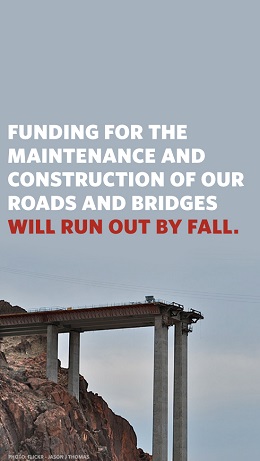
But here's the real problem: The funding we have in place to fix them is set to run out by fall. That puts at risk more than 112,000 active projects that are currently paving our roads and building our bridges, as well as approximately 5,600 projects that are actively improving our transit systems — not to mention the nearly 700,000 jobs that these collective projects support.

It's time to get this done. That's why this week, the President is calling on Congress to pass a bill to put Americans to work repairing our crumbling roads and bridges — avoiding a crisis in the short term, and helping to position our economy for long-term growth.

And today, we're releasing a new analysis that makes a numbers-based case for exactly why we need to invest in infrastructure right now — and what it's going to mean for all of us if Congress fails to act.

Take a look at the new analysis that the White House released today — we guarantee you'll learn something you didn't know. And when you do, you should pass it on.

Related Topics: Jobs, Economy

The White House

Office of the Press Secretary

FACT SHEET: The United States and Uruguay – A Growing Bilateral Relationship

Today President Barack Obama hosted Uruguayan President Jose Mujica Cordano at the White House.  Their visit underscored the close partnership between the United States and Uruguay, founded on shared democratic values, and our desire to deepen economic ties and increase exchanges on social issues, as well as our strong cooperation in the following areas:

Economic Opportunities and Trade Facilitation

Increasing Trade and Investment: The 2005 U.S.-Uruguay Bilateral Investment Treaty and 2007 U.S.-Uruguay Trade and Investment Framework Agreement continue to benefit both nations.  Bilateral trade increased to $2.2 billion in total goods trade in 2013.  Exports of U.S. goods to Uruguay totaled $1.8 billion in 2013, an increase of 438 percent from 2003.  And imports of Uruguayan goods to the United States totaled $423 million, an increase of 65 percent since 2003.

Trade and Investment Council Meeting:  The United States and Uruguay convened its Trade and Investment Council Meeting on the margins of the meeting between President Obama and President Mujica.  The Council meeting is part of  the Trade and Investment Framework Agreement and focused on trade facilitation, market access for agricultural products, trade in services, intellectual property rights, small and medium business cooperation, labor cooperation, and international trade agreements and arrangements.  Both countries expressed satisfaction with improvements in customs modernization, the recent granting of Uruguayan market access to U.S. poultry and beef and of U.S. market access to Uruguayan citrus and deboned lamb.

Customs Mutual Assistance Agreement:  The United States and Uruguay will sign a Customs Mutual Assistance Agreement (CMAA) on the sidelines of President Obama and President Mujica’s meeting.  CMAAs provide the legal framework to allow for the exchange of information and evidence to assist countries in the prevention, detection, and investigation of customs offenses – including those associated with duty evasion, trafficking, proliferation, money laundering, and terrorism-related activities.  Uruguay is the 69th country to sign a CMAA with the United States. 

Global Security, Human Rights, and Social Inclusion

Peacekeeping:  Uruguay consistently deploys roughly 10 percent of its armed forces to UN peacekeeping missions, making it one of the world’s largest per capita troop contributors.  The United States applauds Uruguay’s leadership and contributions to global security, and is committed to continuing its support for Uruguayan peacekeeping deployments.  Since 2008, the United States has provided $9.6 million through the Global Peace Operations Initiative (GPOI) to expand and enhance Uruguayan peacekeeping operation training centers, as well as provide Uruguayan units pre-deployment training, communications gear, vehicles, night vision devices, aviation equipment, and patrol boats.  GPOI support has helped enable Uruguay to fulfill critical missions in the U.N. peacekeeping missions in Haiti and the Democratic Republic of the Congo.  In fiscal year 2014, the United States has committed to providing an additional $3.1 million in GPOI funds to further augment Uruguayan peacekeeping capabilities.

Social Inclusion:  Recognizing the democratic, multi-ethnic, and multi-racial nature of U.S. and Uruguayan societies, the United States and Uruguay have signed a Memorandum of Understanding (MOU) to Promote Racial, Ethnic, and Social Equality.  The MOU underscores our mutual commitment to protecting and defending human rights, which are essential to preserving peace, promoting democracy and advancing prosperity around the world.  The United States and Uruguay will collaborate to promote cooperation and exchange information in areas such as increased access to education at all levels, equal protection under the law and access to the legal system, improved enforcement of domestic anti-discrimination laws and policy, and increased access to healthcare, credit, and job training.  

Education, Environment, Science, Technology, and Health Opportunities

Educational Exchange:  The United States and Uruguay are working together to expand educational opportunities for students from both our countries in support of the 100,000 Strong in the Americas initiative, which is focused on dramatically increasing study abroad in the hemisphere.  Through new and existing programs, we are working to strengthen academic partnerships and spark entrepreneurship and innovation.  We put special emphasis on building connections between Uruguayan and American youth from diverse backgrounds.  Recent visits have brought Uruguayan policy makers and evaluation specialists who are working on redesigning Uruguay’s accountability and evaluation systems.  In addition, communications deans from Uruguay’s principal universities visited to learn about how new technologies can enhance curriculums, encourage citizen journalism, and strengthen civil society.  In September 2013, and planned again for September 2014, the United States facilitated the participation of 27 U.S. universities in an educational fair in Uruguay that attracted roughly 2,000 students interested in studying in the United States.  Uruguay has committed to increase its contribution to the Fulbright scholarship program to $1.5 million in 2014, and to provide $500,000 annually going forward. 

Science and Technology Joint Consultative Meeting:  The United States and Uruguay held a Science and Technology Joint Consultative Meeting before President Obama and President Mujica’s meeting.  The Joint Consultative Meeting allowed both governments to assess opportunities for future collaboration on research exchanges, water quality mapping, wildlife research, and earth sciences.  Participants highlighted the inclusion of Uruguay in the Science Envoy Program in August 2014.  On health issues, participants discussed ongoing and potential new collaboration in public health, biomedical and behavioral health research, activities within the U.S.-Latin America Cancer Research Network, best practices to address non-communicable diseases, and the potential for U.S. National Institutes of Health to host Uruguayan post-doctoral fellows.  The United States also committed to providing funding that will triple the size of the U.S.-Uruguay Teacher Exchange Program, which brings Uruguayan teachers to the United States to improve their English teaching skills by living and working with American teachers.

The White House

Office of the Press Secretary

Remarks by President Obama and President Mujica of Uruguay Before Bilateral Meeting

Oval Office

11:06 A.M. EDT

PRESIDENT OBAMA:  I want to welcome President Mujica and his delegation to the Oval Office.  I have had the pleasure on several occasions of having discussions with President Mujica, and have been consistently impressed with the progress that Uruguay has been making under his presidency.

The United States and Uruguay has developed a strong relationship across a wide spectrum of issues.  Our trade and commerce has expanded significantly.  On the international front, we are very grateful that Uruguay is one of the largest contributors to U.N. peacekeeping in places like Haiti and Africa, and has been responsible for helping to facilitate peace in some very volatile regions.

President Mujica personally has extraordinary credibility when it comes to issues of democracy and human rights given his strong values and personal history, and is a leader on these issues throughout the hemisphere.  And we share an interest in strengthening further the people-to-people bonds between our two countries, particularly around the issues of science, technology and education.

So this gives us an opportunity to find ways that we can further deepen this relationship.  We both think that there’s room for additional work to expand trade and commerce between our countries.  We want to see if we can expand exchanges, particularly for teachers and students.  I want to hear from President Mujica additional ideas of how we can strengthen the broad trends of democratization and human rights in the hemisphere.

And we have a shared interest in social inclusion.  Economically and socially, in both Uruguay and the United States, we have a potential great strength of a diverse population, and we want to exchange ideas about how we can make sure that our societies are open and benefiting all people and not just some.

So I very much appreciate the President’s visit, although I will say the first thing he said to me was that my hair has become much grayer since the last time he saw me.  (Laughter.) 
Welcome. 

PRESIDENT MUJICA:  (As interpreted.)  Thank you.  First let me recognize the American people and its institutions that are represented by you, Mr. President Obama.

We live in the south.  We have a soul of the south.  We belong to a continent where our mother tongue is more or less Spanish.  And we live in a time where we need to learn English  -- yes or yes.  And you will have to become a bilingual country -- yes or yes.  Because the strength of Latin women is admirable and they will fill this country with people who speak Spanish and Portuguese, too.

We have been looking toward everywhere, but towards ourselves a bit also.  And from the humbleness of my little Uruguay, my people, who are there amongst an enormous area of fertile and much water, come here to seek out knowledge and research in all groups of the biological sciences, particularly in land that require local research, because the continent must produce much food for the world.  And besides, this is the most advanced country in the world for biological sciences, but we don't want to merely send students out because they get married -- (laughter) -- and the American corporations pay more money, so we lose these qualified people.  We have to bring teachers so then can come, but we need to make arrangements so that they can continue to contribute to Social Security here.  Wisdom must be looked for there where it is.

And I must tell you that in Germany I asked the same thing from Mrs. Merkel, and with the efficiency that Germans have she set up a plan for 10,000 qualified retirees that are on call to spend some time and convey knowledge.  And that I believe that in the long term that's worth much more than money, everything that is being asked for.  We must fight to get our children in the new generation’s new capacities, new knowledge.  And that is going to be the best way to spread freedom, independence, rights.

Mr. President, who is speaking is an old smoker.  But in the world, per year, 8 million people are dying from smoking.  And that is more than World War I, World War II.  It’s murder.  We are in an arduous fight -- very arduous -- and we must fight against very strong interests.  Governments must not be involved in private litigation, but here we're fighting for life.  And nobody must be distracted in this fight for life, because out of all values, the most important one is life itself.

Well, thank you.  I'm wholeheartedly grateful.  And I am getting old, and to be old means you don't want to leave home.  I would like to be a little bit younger to see Mississippi, know the ranches -- in Los Angeles, the milk farms, other things.  But please convey a hug -- I embrace all agriculturalists of this nation. 

PRESIDENT OBAMA:  All right.  Thank you. 

Thank you, everybody.

END   
11:20 A.M. EDT

A Call to Action for Off-Grid Energy in Africa

The President launched Power Africa in Africa almost one year ago to double access to power in Sub-Saharan Africa. With a private sector orientation and transaction focus, Power Africa has already catalyzed more than 35 private sector partners to commit more than $14 billion for energy investment in Africa. Their engagement is critical and emblematic of the National Impact Initiative that seeks to spread market-based models and private investment to create jobs and economic value while solving social and environmental problems.

Recognizing that Power Africa cannot achieve its energy access goals through large generation projects alone, the Obama Administration is exploring opportunities to unlock further investment in and growth of small-scale energy systems at the household and village level. Toward that goal, the Administration hosted two events in the last week – one here at the White House and a second roundtable at Stanford University in Palo Alto, California – to engage nearly 60 impact investors and venture philanthropists interested in small-scale energy investment in Africa.

Consistent with the core modus operandi of Power Africa to date, this new effort will leverage the combined capabilities of 12 U.S. government agencies to deploy the “glue and grease” needed to assist private sector transactions to close. It will also build upon early Power Africa successes, such as:

  • Off-Grid Electric – the pioneering household solar services company initially supported by early-stage grant funding from the Development Innovation Ventures and the U.S.-Africa Clean Energy Finance Initiative, an innovative finance program developed by the Overseas Private Investment Corporation, the U.S. Department of State, the U.S. Trade Development Agency, and the U.S. Agency for International Development (USAID)
  • Kiwira River Hydro – a 10MW run-of-river hydropower project in Tanzania that received a USAID Development Credit Authority credit guarantee that reduced its financing costs and paved the way to financial close

With input from individual investors, investment funds, single family offices, and large foundations seeding and scaling innovative off-grid business models, this new effort will also develop new capabilities to strengthen the enabling environment and catalyze further private sector investment into off-grid and mini-grid energy solutions. 

We know that great ideas and impactful small scale energy investments aren’t limited to the people that joined us at the recent events. Do the activities of your investment fund or foundation align with this new strategy under the President’s Power Africa initiative? Are you actively pursuing small-scale energy deals in the six Power Africa countries that could use a little glue or grease? Do you have thoughts on steps the public sector can take to further unlock investment and growth?

If you have such thoughts, please email us at innovation@who.eop.gov. Working together, we can increase access to energy, eradicate extreme poverty, and achieve sustained, inclusive economic growth.

The White House

Office of the Press Secretary

White House Honors “Champions of Change” for Transportation

WASHINGTON, DC – Tomorrow, the White House will honor eleven local heroes who are “Champions of Change” for their exemplary leadership to ensure that transportation facilities, services, and jobs help individuals and their communities connect to 21st century opportunities. These individuals are leading the charge across the country building connectivity, strengthening transportation career pathways, and making connections between transportation and economic growth.

Across the Federal government, the Administration has been dedicated to providing “ladders of opportunity” for all Americans, by investing in connecting communities to centers of employment, education, and services, and is calling for greater emphasis on those initiatives supporting this outcome.  Recent research has found that social mobility varies by geography, and poor transportation access is a factor preventing lower income Americans from gaining higher income levels than their parents. Transportation plays a critical role in connecting Americans and communities to economic opportunity through connectivity, job creation, and economic growth. Recognizing social mobility as a defining trait of America’s promise, access to reliable, safe, and affordable transportation is critical.  

The Champions of Change program was created as an opportunity for the White House to feature individuals doing extraordinary things to empower and inspire members of their communities. The event is closed to press but will be live streamed on the White House website. To watch this event live, visit www.whitehouse.gov/live at 10:00 am EST on May 13, 2014.  To learn more about the White House Champions of Change program, visit www.whitehouse.gov/champions.

Josh Baker, General Manager, Radford Transit, New River Valley Community Services
Blacksburg, VA

Josh is the leader of a major investment in the development of a brand new Public Transit system in the City of Radford, Virginia. He pioneered the concept and worked with community leaders, local university administration, state officials and the Federal Transit Administration to garner support for a much needed community service.  Josh dedicated his work and time over the course of three years to help make the new service a reality. It’s the first time in over 30 years there has been any transit available to the City of Radford, and it was badly needed. Radford Transit has grown rapidly providing over 325,000 passenger trips annually, even providing transfer connections throughout the entire region. Now residents can move effortlessly and reach their destinations within and between the communities of Radford, Pulaski County, Montgomery County and the Towns of Blacksburg and Christiansburg.

Dr. Evelyn Blumenberg, Professor and Chair of Urban Planning, UCLA’s Luskin School of Public Affairs
Los Angeles, CA

Professor Evelyn Blumenberg’s research examines the effects of urban structure—the spatial location of residents, employment, and services—on economic outcomes for low-wage workers, and on the role of planning and policy in shaping the spatial structure of cities.  Evelyn has investigated the travel behavior of special population groups including low-income adults, immigrants, and youth; the effects of the economy on the travel behavior and transportation assets in low-income communities; and the relationship between residential location, automobile ownership, and employment outcomes among the poor.  Evelyn is recommended for Ladders of Opportunity because her current research examines (1) travel behavior of low-income adults; (2) the transportation expenditure burden; and (3) the relationship between transportation and the economic outcomes of low-income families.

Dan Burden, Director of Innovation and Inspiration, Walkable and Livable Communities Institute
Port Townsend, WA

Dan Burden is the Director of Innovation and Inspiration for the nonprofit Walkable and Livable Communities Institute. For more than 35 years he has worked to inspire leaders in 3500 cities on ways to design cities for people first; still accommodating the auto. His work helps define the future of transportation; and is now celebrated with thousands of new innovations giving full support to walking, bicycling, transit, and living in place; driving less, enjoying life more.  Dan has proven his ability to energize leaders of towns and cities to help them frame and focus on their assets, get beyond their barriers, raise the bar in design of place. He has an ability to help them focus on their values and become believers in their future, achieving their hopes and dreams, and once momentum is gained, expand to the rebuilding of their entire community.

Anthony Chiarello, President and CEO, TOTE
Princeton, NJ

Anthony has led TOTE to build the first liquefied natural gas (LNG) powered container ships in the world; TOTE is the first maritime company in the U.S. to convert its entire fleet to natural gas. As a result of his vision and leadership, natural gas suppliers are now creating distribution networks in major U.S. ports, making gas available to all transportation modes in those markets. Natural gas powered ships will achieve emissions reductions far below even the world’s most stringent regulatory standards. These emissions reductions will have long-lasting and far-reaching positive effects on the health and safety of citizens along the U.S. coastline, particularly in Washington, Alaska, Florida, and Puerto Rico where TOTE ships are part of the critical domestic supply chain. As the adoption of natural gas fuel spreads, air emissions will be lowered along the coastline as part of the North American Emissions Control Area, and additional environmental benefits will accrue in ports, on roads, and rail lines. 

Greer Gillis, Area Manager of Parsons Brinckerhoff
Washington, DC

Greer Gillis is the Washington, D.C. Area Manager of Parsons Brinckerhoff, where she oversees transportation services staff in managing various infrastructure, planning, and design projects as well as leading client relations management, business development, and financial oversight for activities in the metropolitan Washington DC area.     She is the Vice President of the Conference of Minority Transportation Officials (COMTO) Washington, DC chapter and serves as National Chair of its “Celebrating Women Who Move the Nation” Awards Committee.  She is also a past President of the Women’s Transportation Seminar International’s Washington, D.C. Chapter. Throughout her career, she has served as a role model and advocate for building a diverse transportation workforce.

Marilyn Golden, Senior Policy Analyst, Disability Rights Education & Defense Fund
Berkeley, CA

For over 25 years, Marilyn Golden has led national system-change efforts that broaden the rights of people with disabilities to transportation. Marilyn has played a key role in federal policy development in the interconnected areas of transportation and architectural barriers. She has been a strong advocate for the Americans with Disabilities Act (ADA) throughout all the stages of its proposal, passage, and implementation, as well as a forceful watchdog through its many stages of regulatory interpretation and the regular challenges to its strong mandates. Her advocacy has been focused on a broad range of transportation issues—including fixed route buses, all forms of passenger rail systems, ADA complementary paratransit, privately-funded over-the-road buses, taxis, airport shuttles, as well as air travel. As a national transportation advocate, she has led the struggle for many of the policy victories during and since the ADA to provide better public transportation for people with disabilities.  Marilyn served on the U.S. Architectural and Transportation Barriers Compliance Board from 1996-2005 as a very strong and effective advocate for the interests of people with disabilities.

Daphne Izer, Founder, Parents Against Tired Truckers (PATT)
Lisbon, ME

Daphne Izer founded the nonprofit safety organization Parents Against Tired Truckers (PATT) after losing her son Jeff in a fatigue related truck crash that killed three other teenagers and seriously injured a fourth. Daphne has worked tirelessly to advance truck safety in order to help prevent other families from suffering a similar, devastating loss. PATT has focused its efforts on reducing truck driver fatigue, seeking a requirement for the use of technology to accurately record truck driver hours behind the wheel and reduce falsification of driving logs, and to promoting safe trucking. Recently, PATT took another step toward realizing its goal of requiring electronic logging devices (ELDs) in commercial trucks when the FMCSA released the NPRM for the ELD rule. This May, as PATT marks its twentieth anniversary, Daphne is recognized for her instrumental work in bringing attention to the urgent need for change in truck safety policy and programs, with a focus on reducing truck driver fatigue.

Flavio Leo, Deputy Director, Aviation Planning and Strategy, Massachusetts Port Authority
Newton, MA

Flavio has played a key role applying innovative transportation technology to enhance airport safety, security and equitable access at MassPort Airport in Boston.   This includes the implementation of aircraft related noise mitigation strategies for the surrounding urban communities and the greater Boston region , leading to an enhanced quality of life.   Through his leadership, transparency and enhanced public participation, he has established a relationship with over 30 diverse communities, which have had a long history of engagement with Massport and the FAA.   He has been the leader and “face of Massport” on an innovative program to address airport noise and other safety and technology improvements, which can be applied nationwide.  Flavio was selected for his leadership and coordination for the implementation of a set of noise reduction strategies created with extensive community participation and implemented that will reduce aircraft noise impacts to the greater Boston area including to nearby disadvantaged communities.

Susan Park Rani, President, Rani Engineering
Minneapolis, MN

Susan Park Rani is an inspiration and a role model for women, minorities, immigrants, and virtually anyone with a desire to pursue the American Dream and start their own business. As a leader in the transportation field, she has demonstrated that opportunities in this industry are widespread and growing—and open to all who wish to acquire the necessary skills and participate.  Rani, born in South Korea, moved with her family to the United States as a child, speaking no English. She ultimately obtained a degree in civil engineering, and in 1993, at the age of 34, founded one of the first woman-and-minority-owned engineering firms in Minnesota where she grew up, with just two employees.  Over the years, the company has been involved in a number of high-profile transportation projects, and today, Rani Engineering employs 50 people, the company grosses over $5 million a year, and anticipates doubling in size within the next five years. In 2012, Rani Engineering was named the Disadvantaged Business Enterprise (DBE) Contractor of the Year by the Minnesota Department of Transportation.

Big John Smith, Transportation Director, Shoshone and Arapaho Tribes, Joint Business Council
Fort Washakie, WY

For the past 25 years, “Big John Smith” has served as the Transportation Director for the Eastern Shoshone and Northern Arapaho tribes’ Joint Business Council on the Wind River Indian Reservation in central Wyoming.  Big John is also the Rocky Mountain Regional Representative on the Tribal Transportation Committee, and the Executive Director of the Intertribal Transportation Association. Big John has succeeded in improving the reservation’s transportation infrastructure (highways and bridges), has led the effort to dramatically cut alcohol-involved crashes and fatalities on the Wind River Reservation.  He has worked with tribal leaders to toughen tribal laws to enhance seat belt compliance, and has led the effort to use positive messaging to educate drivers of all ages about the dangers of drinking and driving.  His love for the people of Wind River has been instrumental in building relationships with tribal, local, county, state and federal partners to save lives.

Wanda Vazquez, Regional Traffic Safety Liaison, Rincon Family Services
Chicago, IL

Wanda Vazquez has been an active mentor and trainer for Hispanic advocates in the Chicago area helping them become certified child passenger safety technicians. As a motivational instructor, she teaches students how to correctly install car seats and help families understand the importance of safe transportation for their children. Once the training is completed, the students become nationally certified and are able to staff car seat inspection stations or participate in community events. Statistics show that Hispanic children are at a greater risk than non-Hispanic children for injuries and death in traffic crashes because their restraint use is low. Often times this is because their parents are from home countries where car seat use is not the norm. By training Hispanic advocates on how to correctly install car seats and the value of occupant protection, they can in turn go into the Hispanic community where they are welcomed and are able to teach families the importance of keeping their children and themselves safety secured whenever they travel. Ms. Vazquez also served as the Diversity Representative on the National Child Passenger Safety Board and was instrumental in translating materials into Spanish and ensuring that the concerns of the Hispanic community were heard. Wanda is a recommended Champion for her active role as a mentor and trainer for Hispanic advocates in the Chicago.

A 21st Century Workplace for Today's Working Families

This was originally posted on the Huffington Post, and is part of a series of essays about the issues facing working families, leading up to the White House Summit on Working Families on June 23, 2014.

You can learn more about the Summit and how you can get involved at www.workingfamiliessummit.org.


Every day in America, there are single moms struggling to take sick children to doctors’ appointments because missing work isn’t an option. Working dads find themselves straining to focus at work, because their employer doesn't provide paternity leave that would enable them to contribute at home and bond with their new babies. Young women are questioning their ability to thrive in the workplace as they try to balance the needs of their families with their responsibilities at work.

Nearly half of America’s workforce is now comprised of women, and three-fourths of households are headed by a working single parent, or two working parents. Still, our workplaces have yet to catch up by implementing policies which empower women, and provide flexibility for parents.

Most parents, myself included, have felt at times like we were barely holding on by our finger tips as we try to meet all of the demands on our time. I often recall a time while working for Mayor Richard Daley in Chicago, when the value of a flexible work environment was made clear. I had just been promoted to the role of Commissioner of Planning and Development, and he had convened a meeting with members of his cabinet and Susan Sher, who was the corporation counsel at the time. She was also one of my dearest friends, and a single mom too.

Related Topics: Jobs, Economy, Women, Working Families

The White House

Office of the Press Secretary

Statement by the Press Secretary on S. 994

On Friday, May 9, 2014, the President signed into law:

S. 994, the "Digital Accountability and Transparency Act of 2014" or the "DATA Act," which amends the Federal Funding Accountability and Transparency Act of 2006 to make publicly available specific classes of Federal agency spending data, with more specificity and at a deeper level than is currently reported; require agencies to report this data on USASpending.gov; create Government-wide standards for financial data; apply to all agencies various accounting approaches developed by the Recovery Act's Recovery Accountability and Transparency Board; and streamline agency reporting requirements.

Weekly Address: The First Lady Marks Mother’s Day and Speaks Out on the Tragic Kidnapping in Nigeria

In this week’s address, First Lady Michelle Obama honored all mothers on this upcoming Mother’s Day and offered her thoughts, prayers and support in the wake of the unconscionable terrorist kidnapping of more than 200 Nigerian girls.

Transcript | mp4 | mp3

Related Topics: Human Rights, Education, Women

The White House

Office of the Press Secretary

Weekly Address: The First Lady Marks Mother’s Day and Speaks Out on the Tragic Kidnapping in Nigeria

WASHINGTON, DC – In this week’s address, First Lady Michelle Obama honored all mothers on this upcoming Mother’s Day and offered her thoughts, prayers and support in the wake of the unconscionable terrorist kidnapping of more than 200 Nigerian girls.

The audio of the address and video of the address will be available online at www.whitehouse.gov at 6:00 a.m. ET, Saturday, May 10, 2014.


Remarks of First Lady Michelle Obama

Weekly Address

May 10, 2014

Hello everyone, I’m Michelle Obama, and on this Mother’s Day weekend, I want to take a moment to honor all the mothers out there and wish you a Happy Mother’s Day. 

I also want to speak to you about an issue of great significance to me as a First Lady, and more importantly, as the mother of two young daughters.

Like millions of people across the globe, my husband and I are outraged and heartbroken over the kidnapping of more than 200 Nigerian girls from their school dormitory in the middle of the night. 

This unconscionable act was committed by a terrorist group determined to keep these girls from getting an education – grown men attempting to snuff out the aspirations of young girls. 

And I want you to know that Barack has directed our government to do everything possible to support the Nigerian government’s efforts to find these girls and bring them home. 

In these girls, Barack and I see our own daughters. We see their hopes, their dreams – and we can only imagine the anguish their parents are feeling right now.

Many of them may have been hesitant to send their daughters off to school, fearing that harm might come their way. 

But they took that risk because they believed in their daughters’ promise and wanted to give them every opportunity to succeed. 

The girls themselves also knew full well the dangers they might encounter. 

Their school had recently been closed due to terrorist threats…but these girls still insisted on returning to take their exams. 

They were so determined to move to the next level of their education…so determined to one day build careers of their own and make their families and communities proud.   

And what happened in Nigeria was not an isolated incident…it’s a story we see every day as girls around the world risk their lives to pursue their ambitions. 

It’s the story of girls like Malala Yousafzai from Pakistan.

Malala spoke out for girls’ education in her community…and as a result, she was shot in the head by a Taliban gunman while on a school bus with her classmates. 

But fortunately Malala survived…and when I met her last year, I could feel her passion and determination as she told me that girls’ education is still her life’s mission. 

As Malala said in her address to the United Nations, she said “The terrorists thought that they would change our aims and stop our ambitions but nothing changed in my life except this: Weakness, fear and hopelessness died. Strength, power and courage was born.”

The courage and hope embodied by Malala and girls like her around the world should serve as a call to action. 

Because right now, more than 65 million girls worldwide are not in school. 

Yet, we know that girls who are educated make higher wages, lead healthier lives, and have healthier families. 

And when more girls attend secondary school, that boosts their country’s entire economy. 

So education is truly a girl’s best chance for a bright future, not just for herself, but for her family and her nation. 

And that’s true right here in the U.S. as well…so I hope the story of these Nigerian girls will serve as an inspiration for every girl – and boy – in this country. 

I hope that any young people in America who take school for granted – any young people who are slacking off or thinking of dropping out – I hope they will learn the story of these girls and recommit themselves to their education.

These girls embody the best hope for the future of our world…and we are committed to standing up for them not just in times of tragedy or crisis, but for the long haul.

We are committed to giving them the opportunities they deserve to fulfill every last bit of their God-given potential. 

So today, let us all pray for their safe return... let us hold their families in our hearts during this very difficult time…and let us show just a fraction of their courage in fighting to give every girl on this planet the education that is her birthright.  Thank you.