
Office of Science and Technology Policy Blog
Nanotechnologies Support National Progress
Posted by on October 10, 2014 at 1:00 PM ESTThe Federal Government has invested over $20 billion in nanotechnology research over the past 13 years, yielding fruitful work that has successfully helped create the building blocks of nanoscience. Today, the President’s Council of Advisors on Science and Technology (PCAST) released the Report to the President and Congress on the Fifth Assessment of the National Nanotechnology Initiative (NNI). The report, PCAST’s fifth review of the NNI, concludes that the nanotechnology community is at an important turning point.
The NNI vision is to help realize a future in which the ability to understand and control matter at the nanoscale leads to a revolution in technology and industry with cross-cutting societal impact in fields as diverse as medicine, energy, and computing. The report recommends that the Federal Government accelerate its activities aimed at facilitating the commercialization of the past decade’s worth of Federally sponsored research, thereby enabling the Nation to reap the benefits of this investment. To help focus the commercialization process, PCAST calls for the nanotechnology community to take on a series of national nanotechnology Grand Challenges.
Specific nanotechnology Grand Challenges provide a way to turn revolutionary scientific advances into products that leverage existing opportunities and meaningfully address existing needs. In the report, PCAST recommends that the Federal Government establish and execute a process for engaging the nanotechnology community to identify specific Grand Challenges that best support these goals. PCAST also provides some specific recommendations regarding the formulation of the Grand Challenges and innovation prizes and public-private partnerships to support them, as well as a focus on manufacturing challenges. Finally, the report details several program management updates to leadership initiatives, advisory input, evaluation metrics, and other areas to ensure the continuing success of the NNI.
New Federal activities can catalyze the creation of business partnerships among academic researchers, entrepreneurs, the venture capital community, and industries that produce promising nanotechnologies, while simultaneously harnessing the manufacturing sector to scale up these technologies for commercial application. In doing so, the Government and its partners in other sectors must also ensure that these advances are developed in an ecosystem that is sensitive and supportive to the progress the community has made addressing environmental, health, and safety issues associated with nanotechnology.
Learn more about TechnologyFirst Lady’s Fashion Workshop Highlights Growing Role of Makers and New Technologies in the Creative Economy
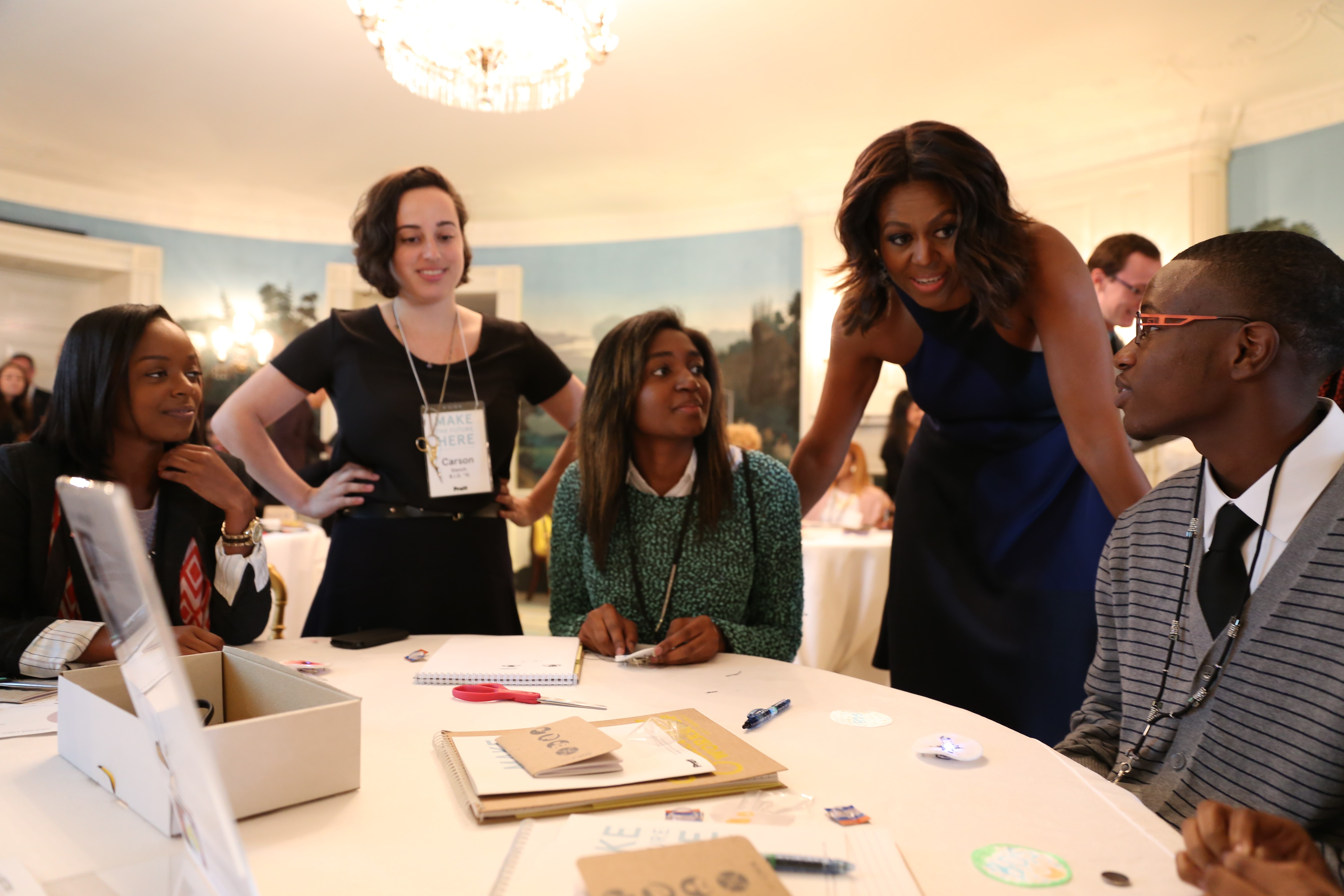
Posted by on October 10, 2014 at 8:52 AM ESTOn Wednesday, October 8, First Lady Michelle Obama hosted a Fashion and Education Workshop at the White House with 150 high school and college students. The fashion industry is full of Makers – creative individuals who have a diverse range of skills that they use to create products and apparel that are innovative, stylish and functional. The workshop highlighted the growing impact that the Maker Movement, along with the development of new materials and technologies such as 3D printing, low-cost sensors, and micro-controllers are having in the fashion industry and the creative economy.
 Learn more about Health Care, Technology
Big Data a Big Deal for First Recipients of Biomedical Big Data Grants
Posted by on October 9, 2014 at 4:00 PM ESTIn March 2012, the Obama Administration announced the commitment of $200 million by six Federal agencies as part of the Big Data Research and Development Initiative. Earlier this year, the Administration released a report entitled Big Data: Seizing Opportunities, Preserving Values. This report outlines steps the Administration is taking to promote the benefits of Big Data while preserving values such as privacy, fairness, and self-determination.
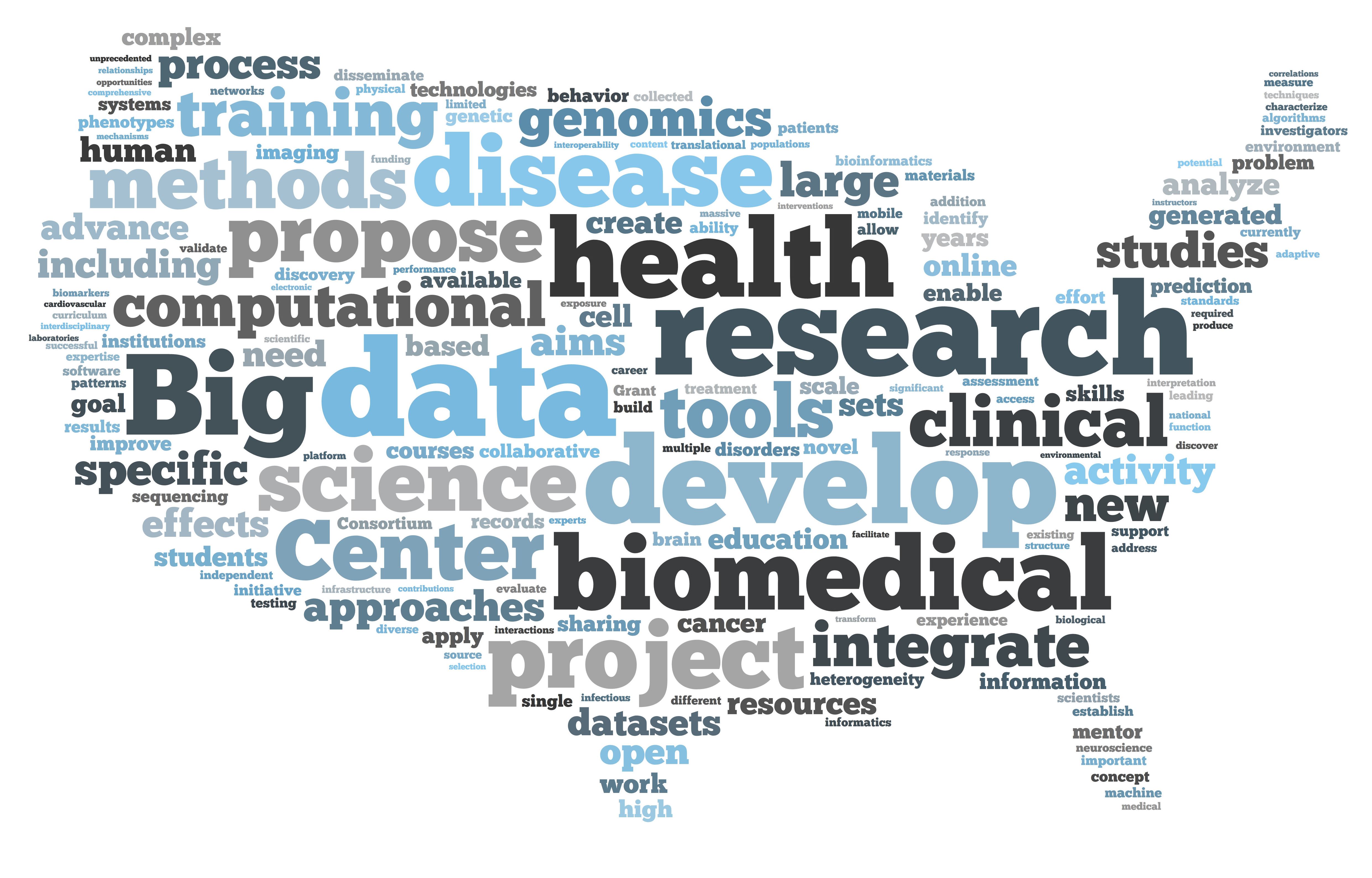
To catalyze new biomedical Big Data research, the Obama Administration and the National Institutes of Health launched the Big Data to Knowledge (BD2K) initiative in April 2013. Today, we are pleased to announce that the NIH has awarded a total of $32 million in new grants.
Learn more about Health Care, TechnologyPromoting Innovation and Protecting Privacy in the Classroom
Posted by on October 9, 2014 at 1:18 PM ESTThough often invisible, big data technologies are a part of our lives, and will be even more so in the coming years. Earlier this year, Counselor to the President John Podesta and members of the OSTP team authored a report to the President with a clear message: these technologies hold great promise, but those benefits might go unrealized if we don’t get the policy right. Nowhere is that truer than in education, where we have the chance to transform teaching and learning through data, thereby improving individual outcomes and our national competitiveness. But when we do, we have to make sure we are protecting students’ privacy.
Student data can help personalize a single student’s learning experience to deliver better outcomes across populations. For instance, a mobile application that teaches algebra can pinpoint not only where one student is struggling, but also where the app’s own content could use improvement by assessing the performance of thousands of users. But that data is also sensitive; it will be important that it remains under student and parent control to the extent possible, and not used for purposes inconsistent with the educational mission.
Learn more about Education, , TechnologyThe BRAIN Initiative and Grand Challenge Scholars
Posted by on October 9, 2014 at 8:13 AM ESTOn Tuesday, September 30, OSTP hosted the White House BRAIN (Brain Research through Advancing Innovative Neurotechnologies) Conference. The BRAIN Initiative seeks to revolutionize our understanding of the human brain by mapping the brain, linking neural activity to behavior, and integrating computation with neuroscience experiments. Last week, former competitive snowboarder Kevin Pearce shared why the BRAIN Initiative has personal meaning for him, demonstrating the real positive impact that the Initiative has on individuals. The BRAIN Conference was held to highlight recent progress on the President’s BRAIN Initiative, and to look ahead at the tools and technologies that still need to be envisioned and created to meet the goals of the BRAIN Initiative. The conference participants included representatives from the academic research community, national laboratories, philanthropic foundations, companies, and other key contributors across America that have aligned their research goals with the Initiative.
Several students from the National Academy of Engineering Grand Challenge Scholars Program were also invited to participate. Students selected for this prestigious, nationwide program may become some of the next generation’s top scholars. OSTP invited two of them, Kevin Mauro from Duke University and Kaleia Kramer from Arizona State University, to share their experiences from the conference.
Learn more about Education, , TechnologyCelebrating the Federal STEM Workforce at the White House
Posted by on October 8, 2014 at 10:51 AM ESTToday the U.S. Office of Personal Management (OPM) and the White House Office of Science & Technology Policy (OSTP) welcomed more than 50 Federal innovators to the White House to celebrate the key contributions of science, technology, engineering and math (STEM) professionals working in our Government.
Participants in a White House event celebrating the Federal science, technology, engineering, and math (STEM) workforce demonstrate a prototype tool being developed by the U.S. Office of Personnel Management to help hiring managers better target and recruit top STEM job applicants. (Photo by Sheena Friend)
Every day, these STEM employees conduct scientific research in laboratories and in the field; collect and analyze measurements of Earth from land, air, sea, and space; synthesize scientific insights to inform policy decisions; and administer and carry out a host of programs and initiatives that help grow our Nation’s economy, boost national security, and protect public health and our environment.
These innovators are skilled professionals with expertise in areas as diverse as supercomputing, climate science, ecosystem conservation, robotics, energy systems, and epidemiology. It is their job to seek answers to urgent science and technology questions; help ensure that innovative solutions and technologies are rapidly prototyped and brought to market; and collectively contribute to keeping our nation on the cutting edge.
Since its earliest days, the Obama Administration has emphasized the importance of maintaining a dynamic, diverse, and high-caliber Federal STEM workforce with multi-disciplinary skills and the necessary professional, technical, and policy expertise to achieve the wide-ranging missions of Federal agencies. This includes:
- Ensuring responsible stewardship of taxpayer resources in government-funded research and procurement programs;
- Managing large, dynamic, and complex research and engineering organizations that perform and fund research
- Conducting in-house research at Federal laboratories and other institutions;
- Developing Federal policies and regulations based on accurate technical and scientific information; and
- Performing operational activities at the state, local, and Federal levels.
- &lsaquo previous
- …
- 23
- 24
- 25
- 26
- 27
- 28
- 29
- 30
- 31
- …
- next &rsaquo


White House Blogs
- The White House Blog
- Middle Class Task Force
- Council of Economic Advisers
- Council on Environmental Quality
- Council on Women and Girls
- Office of Intergovernmental Affairs
- Office of Management and Budget
- Office of Public Engagement
- Office of Science & Tech Policy
- Office of Urban Affairs
- Open Government
- Faith and Neighborhood Partnerships
- Social Innovation and Civic Participation
- US Trade Representative
- Office National Drug Control Policy
categories
- AIDS Policy
- Alaska
- Blueprint for an America Built to Last
- Budget
- Civil Rights
- Defense
- Disabilities
- Economy
- Education
- Energy and Environment
- Equal Pay
- Ethics
- Faith Based
- Fiscal Responsibility
- Foreign Policy
- Grab Bag
- Health Care
- Homeland Security
- Immigration
- Innovation Fellows
- Inside the White House
- Middle Class Security
- Open Government
- Poverty
- Rural
- Seniors and Social Security
- Service
- Social Innovation
- State of the Union
- Taxes
- Technology
- Urban Policy
- Veterans
- Violence Prevention
- White House Internships
- Women
- Working Families
- Additional Issues