Energy and Environment Latest News
Benefits of High-Speed Rail Draw A Crowd
Posted by on April 6, 2011 at 1:19 PM ESTEd. note: This was originally posted on the Department of Transportation blog.
Since the Department of Transportation announced the availability of an additional $2.4 billion for high-speed rail projects last month, governors and members of Congress from both major parties have been clamoring for the opportunity to participate.
As of our Monday deadline, we received more than 90 applications from 24 states, the District of Columbia, and Amtrak. The preliminary total of those requests is nearly $10 billion, more than four times what we have available.
Why is demand for high-speed rail support so high?
Because elected officials have seen the immediate benefits of jobs where rail work has already begun. They've seen these jobs in Maine--where the Downeaster extension to Brunswick is under construction--and they've seen them in Illinois--where 96 miles of track are now being laid for the Chicago-St. Louis high-speed corridor.
How Energy Efficiency is "Lighting Up" the Streets of Philadelphia
Posted by on April 6, 2011 at 10:34 AM ESTEd. Note: Cross-posted from the Department of Energy Blog. Today President Obama is travelling to the Philadelphia area to hold a town hall event with employees at Gamesa Technology Corporation, Inc. about building a 21st century clean energy economy to win the future. Watch the event live at WhiteHouse.gov/live starting at 2:10 p.m. EDT.
President Obama has made building a secure, prosperous energy future a top priority. Last week, he outlined a plan
And today, the President is holding a town hall meeting just outside of Philadelphia, Pennsylvania at the Gamesa Technology Corporation, a manufacturer of large-scale wind turbines, to further discuss our energy future. President Obama has proposed an ambitious, but achievable, goal of generating 80 percent of our electricity from clean energy sources by 2035. This includes sources like wind, produced in part by Gamesa turbines, as well as other renewables, natural gas, clean coal and nuclear power.
As the President outlined last week, securing our energy future will require our nation to increase our renewable energy portfolio, decrease our dependence on oil and implement energy efficiency measures in home and buildings all over the country. Over the next two weeks, we’ll be spotlighting five communities across the country that are helping make our country more secure – five communities that are “winning the future” today.
And naturally, first up today is Philadelphia, Pennsylvania.
Watch the video on energy efficiency in Philadelphia here.
One Year Later: Remembering the Miners of Montcoal
Posted by on April 5, 2011 at 11:00 AM ESTEd. note: This was originally posted on Work In Progress, the Department of Labor blog. Read another blog post on this topic on the Middle Class Task Force blog.
One year ago today, in West Virginia, 29 men died in the worst mine disaster in 40 years.
Wives lost husbands. Parents lost sons. Children lost fathers. Neighbors lost friends. And a community lost a big part of its soul.
Since that day, I have been convinced that the best way to honor these men is to do everything in our power so that a tragedy like this never happens again.
The administration has taken many steps to make that goal a reality. The Mine Safety and Health Administration (a part of the U.S. Department of Labor) has made available unprecedented resources to find out what exactly happened on April 5, 2010 and we are making sure that the U.S. Department of Justice can fully prosecute any wrongdoers.
Learn more about Disabilities, Economy, Energy and Environment, Poverty, Rural, Technology, Working Families, Additional IssuesWinning the Future in our Research Laboratories and Facilities
Posted by on April 4, 2011 at 1:45 PM ESTWhen President Obama called for 80% of our energy to come from clean sources by 2035, he challenged Americans to awaken their creativity, innovation and expertise to help us meet this charge. Across the country, public and private institutions are leading the way in developing the research and technologies that will help us win the future.
Right here in Gaithersburg, MD, the National Institute of Standards and Technology (NIST) is doing pioneering work to boast state of the art greener, safer buildings and homes. I was pleased to take part in the ground breaking for three exciting new facilities on the NIST campus.
On the outside, the NIST Net-Zero Energy Residential Test Facility will resemble a typical suburban home occupied by a Washington area family, but no one will actually live there (NIST would probably get plenty of volunteers to live there in a moment!). Researchers will simulate the daily energy usage of a family of four and prove that the typical American home can still use very little energy and produce as much as it consumes. With the installation of state-of the art energy saving windows, solar thermal panels, and energy efficient appliances, the net-zero test facility will bring us closer to the next generation of homes that can produce as much energy from renewable resources as it consumes over the course of a year. It will also help create clean energy jobs and the industries of the future.
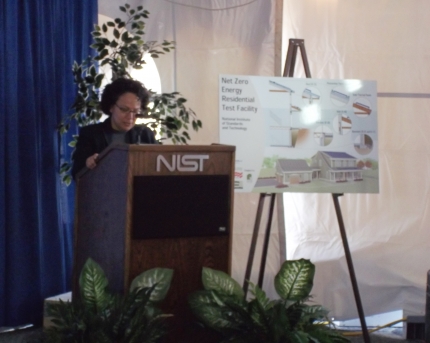
Chair Sutley deliver remarks at the NIST Groundbreaking Ceremony in Gaithersburg, Maryland
NIST's 2,000 new solar energy panels will catch the sun's rays and with the flip of a switch, feed up to 600kW of electricity directly into the electrical grid. This renewable energy produced by the sun will fuel the groundbreaking work happening on the NIST campus, and exemplifies our commitment to innovative and responsible government. Instead of wasting energy and emitting carbon pollution, the NIST facility in Gaithersburg is acting as a good neighbor to local families and communities by protecting public health and producing energy with greenhouse gas emission-free energy.
The third new facility, the National Structural Fire Resistance Laboratory, will give researchers a place to develop the solutions and technologies that will ensure we have the safest buildings in the world. Stemming from the tragic collapse of the World Trade Center, NIST scientists are working to ensure that our buildings can withstand severe fire conditions. The Laboratory will provide a unique capability for testing full-scale structural elements and systems under realistic fire conditions to protect our homes and buildings from disaster. The facility will also serve as a reminder of how our nation responds in the face of hardship: that we are a country that remembers the tragedies from our past, and always strives to build a safer future.
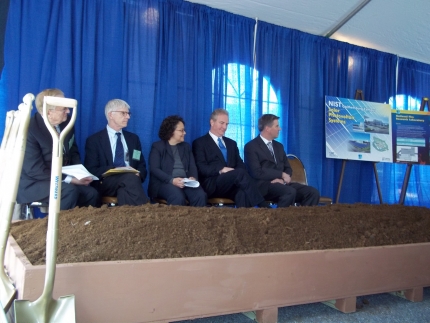
Purdue University Professor Arden Bement, DOE Acting Assistant Secretary Henry Kelly, CEQ Chair Nancy Sutley, Representative Chris Van Hollen and NIST Director Patrick Gallagher celebrate the groundbreaking of three new facilities.
Turning the soil and breaking ground on these three important projects at NIST shows once again that we are on the cusp of delivering a new energy future for America. In research labs across the country, the future is being won each day. It is in these centers where landmark discoveries are made and where we see American innovation at its finest. I want to thank Representative Van Hollen and Representative Edwards for supporting the American Recovery and Reinvestment Act, which invests in facilities like the ones at NIST. We are already leading the way to becoming clean energy leaders, and I look forward to continuing our work to build a healthy and prosperous future for America.
Nancy Sutley is Chair of the White House Council on Environmental Quality
Learn more about Energy and EnvironmentDepartment of Transportation’s Wireless Research Ties Intelligent Transport to Clean Fleets
Posted by on April 4, 2011 at 11:46 AM ESTPresident Obama highlighted the National Clean Fleets Partnership last week at the UPS facility in Landover, MD. This public-private partnership, part of the Department of Energy’s “Clean Cities” initiative, will help large fleets reduce diesel and gasoline use by incorporating electric vehicles, alternative fuels, and fuel-saving measures into their daily operations. The President noted that one of the innovative tools that fleets will deploy is mobile applications to enhance fleet efficiency.
The U.S. Department of Transportation (USDOT), through the Research and Innovative Technology Administration’s Intelligent Transportation Systems (ITS) Research Program, in close partnership with the Federal Motor Carrier Safety Administration (FMCSA), has been leading research into mobile applications for fleet management, with an eye to improving transportation safety as well as reducing truck and motor coach fuel consumption and emissions. USDOT is pleased to support critical national priorities in safety, environment and economic competitiveness through our ITS research.
Already, major national trucking fleets have been using mobile wireless applications to stay safe and reduce emissions, delivering goods on time and improving the bottom line, by:
- using real-time routing to find the fastest way to a destination;
- using real-time traffic information to avoid congestion and guide just-in-time delivery;
- using advanced road weather information to avoid hazards and to find the safest route.
Increasingly, firms are working with partners in the states to use wireless transponders to transmit cargo and inspection information ahead; to avoid the stops at truck weigh and inspection stations, keeping freight moving safely and efficiently; and to plan “green routing” that will allow trucks to “stop and start” less, reducing frequent changes to engine throttling that contribute to emissions—minimizing trucking’s carbon footprint.
And, don’t forget transit bus fleets. Transit is already a great way to reduce congestion and emissions, and transit agencies are using wireless systems developed by the ITS Program (in collaboration with our partners at the Federal Transit Administration) to improve routing, to improve performance through transit signal priority, and to let customers know where and when their next transit option will be arriving.
The ITS program continues to accelerate innovation in wireless applications, providing the foundation for connected vehicles that will be able to “talk” to one another to avoid crashes and the congestion (and emissions) that result. We are especially excited about our new Applications for the Environment: Real-Time Information Synthesis (AERIS) program, to facilitate green transportation choices, and “cleaner air through smarter transportation.” We are looking forward to expanding our work in mobile wireless applications for transportation as the President’s Wireless Innovation and Infrastructure Initiative moves forward.
You can help us win the future for transportation and the environment by giving us your ideas through the Connected Vehicle Technology Challenge. As new wireless technology enables connectivity for vehicles of all kinds—cars, trains and even bicycles, vehicles can “talk” to each other, traffic signals, and mobile devices. Tell us: What should they say?
Aneesh Chopra is U.S. Chief Technology Officer
Peter Appel is Research and Innovative Technology Administrator at the U.S. Department of Transportation
Learn more about Energy and Environment, TechnologyDocumenting America's Natural Beauty
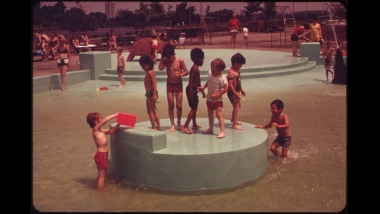
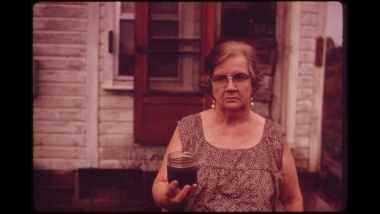
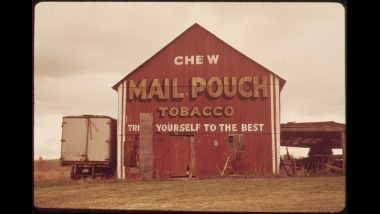
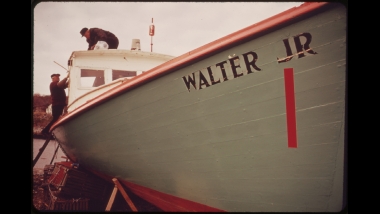
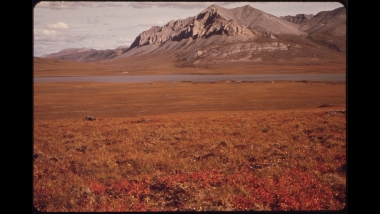
Posted by on April 2, 2011 at 2:00 PM ESTAlmost 40 years ago, the EPA started Documerica, a project that coordinated with freelance photographers to capture images of environmental problems, EPA activities, and everyday life in America. Over the project's seven-year lifespan, it compiled more than 15,000 photos. Some of the best are featured below.
From now through Earth Day 2012, EPA is asking for your submissions as a Documerica for a new generation. Photos will be featured on the EPA homepage starting April 15, 2011, and the new collection will debut in April 2012 alongside its 1970s counterpart.
Be sure to check out EPA's Earth Day page for information about the photo project and Earth Day 2011 activities.
playDOCUMERICA
Selected images from EPA's DOCUMERICA Project (1971-77)
1 of 10Learn more about Energy and Environment


Related Videos
-
 May 09, 2014 8:21 AM
Inside the White House: Solar Panels
-
 September 01, 2016 8:25 PM
President Obama Delivers a Statement to the Press
White House Blogs
- The White House Blog
- Middle Class Task Force
- Council of Economic Advisers
- Council on Environmental Quality
- Council on Women and Girls
- Office of Intergovernmental Affairs
- Office of Management and Budget
- Office of Public Engagement
- Office of Science & Tech Policy
- Office of Urban Affairs
- Open Government
- Faith and Neighborhood Partnerships
- Social Innovation and Civic Participation
- US Trade Representative
- Office National Drug Control Policy