

Latest News
DHS Announces Expanded List of STEM Degree Programs
Posted by on May 11, 2012 at 1:18 PM ESTEd. note: This is cross-posted from Department of Homeland Security
In an effort to continue to attract the best and brightest international students to study in the United States, today DHS added more science, technology, engineering, and math (STEM) designated-degree programs to the list of qualifying student visa extensions.
These newly added STEM designated-degree programs, including pharmaceutical sciences, econometrics and quantitative economics, qualify eligible graduates on student visas for an optional practical training (OPT) extension. OPT allows eligible international students to remain in the United States for up to 12 months while they gain work experience and receive training related to their programs of study.
Students who graduate with a STEM designated degree can remain for an additional 17 months on an OPT STEM extension. You may be eligible for the 17-Month OPT STEM extension under the following circumstances:
- Your degree for your current period of post-completion OPT is a bachelor’s, master’s or doctoral degree in a STEM program listed
- The employer from which you are seeking work uses the E-Verify Program
- You have not already received a 17-month extension of OPT
For more information about the expanded list of STEM designated-degree program, please visit here.
Learn more about ImmigrationWhite House Rural Council: Rural Stakeholders Meeting
Posted by on May 11, 2012 at 10:33 AM ESTOn Tuesday, May 1st, the White House Rural Council, along with Health and Human Services Secretary Kathleen Sebelius and Agriculture Secretary Tom Vilsack, hosted a group of 24 rural health care providers and experts to discuss issues around access to care and improving health outcomes in rural communities.
Rural physicians, nurses, mental hospital administrators, and rural health associations from across the country gathered to discuss a range of rural health issues--from the need to expand broadband to support telehealth services in California, to ways to improve health outcomes by focusing on nutrition and healthy living choices in Ohio.
During the meeting, Secretary Sebelius, announced $10.4 million in funding for 70 Rural Health Outreach Grants. These grants will address the needs of a wide range of population groups; including low-income families and individuals, the elderly, pregnant women, children, minorities and individuals with special health care needs.
Both Sebelius and Vilsack remarked that in their experience as Governors, they learned firsthand how important health care is for a vibrant rural community. They both agree that without access to quality, affordable, health care rural communities cannot compete for growth and economic development.
A recent RAND study that shows that 5.5 million rural Americans will now have access to health coverage because of the passage of the Affordable Care Act. In addition, 394,000 young adults in rural areas have gained coverage thanks to being able to stay on their parent’s insurance plan. Click here for more information on how this law is making a difference in the lives of millions of people like you.
Health care has long been a key focus area for the White House Rural Council. In August, the Administration announced a number of policy initiatives including expanding the National Health Service Corps to Critical Access Hospitals and improving access to capital for helping hospitals and clinics leverage emerging health information technology such as electronic health records. This session served as an excellent forum to discuss important opportunities and challenges and to initiative further solutions that can help rural Americans receive the best health care possible. Stay tuned for more updates on Rural Council events and announcements.
Promoting Equality in LGBT Health
Posted by on May 11, 2012 at 9:56 AM ESTLast month while I was in Chicago, I had the opportunity to attend a great event hosted by Equality Illinois to discuss the President’s commitment to combating barriers and promoting equality for LGBT people and underscore some of the important work that is being undertaken at the Department of Health and Human Services.
Some of the efforts that I shared highlight the importance of equality, including the updated Health Plan Finder tool on Healthcare.gov. This update will enable all LGBT Americans to search specifically for insurance plans that include coverage for domestic partners, compare the cost sharing and benefit choices of health plans, and choose the best option to meet their needs; including finding coverage for all members of the family. Individuals can also access Healthcare.gov’s regular features, such as sorting based on enrollment, out-of-pocket expenses or other key categories.Reactions to President Obama’s Support for Marriage Equality
Posted by on May 10, 2012 at 3:40 PM ESTYesterday, in an interview with ABC News, President Obama articulated his support for marriage equality, saying “I think same-sex couples should be able to get married.”
In the last 24 hours, we have received countless statements of support from individuals and organizations across the country, including labor unions, environmental groups, social justice and civil rights advocates, and organizations advocating for equal rights for lesbian, gay, bisexual, and transgender people.
Here are some of those statements:
“Working people believe in equality and fairness and that’s why we are happy to stand with millions of Americans and with President Obama in supporting marriage equality.
“LGBT working people face numerous inequities in the workplace and in society as they struggle to care for their families. Civil unions do not guarantee the 1,138 rights, benefits and responsibilities that are triggered by the word "marriage” under federal law.
“Most important, we should respect and honor our friends, neighbors, and family members who want to take care of their families and their loved ones – whatever their sexual orientation. We are proud to come together for a more just America.”
My First Job: Valerie Jarrett
Posted by on May 9, 2012 at 11:21 AM ESTSummer Jobs+ is a call to action for businesses, non-profits, and government to work together to provide pathways to employment for young people in the summer of 2012. It's about helping people find their first jobs.
Valerie Jarrett, Senior Advisor to the President, says her first job taught her about working with people who are under enormous amounts of stress, the importance of paying attention to details and something that virtually every worker deals with each day--showing up to work on time. Check it out:
So far, employers have committed to providing more than 300,000 jobs, mentorships, and other employment opportunities this summer through Summer Jobs+.
You heard about Valerie's first job. Now go find yours.
Learn more about EconomyNative American CDFI Representative to be Featured in the White House Summit on Financial Capability and Empowerment
Posted by on May 9, 2012 at 9:14 AM ESTOn May 10, 2012, Tanya Fiddler will join leaders from states, cities, organizations, businesses and other communities to highlight their work and focus on the financial empowerment of all Americans. Tanya serves as the Executive Director of the Four Bands Community Loan Fund, a Native American Community Development Financial Institution (CDFI) located on the Cheyenne River Sioux Reservation in South Dakota. Native American CDFI’s have been established to overcome barriers to financial services that often exist in Indian Country through two specific strategies. First, through training and education tailored to tribal communities and second, through program funding and resources that increases the number of Native CDFI’s and improves their capacity.
Learn more about Additional IssuesPursuing a Future for STEM Equality
Posted by on May 7, 2012 at 12:10 PM EST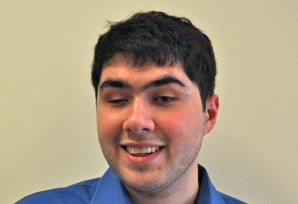
Sina Bahram is being recognized as a Champion of Change for leading education and employment efforts in science, technology, engineering and math for Americans with disabilities.
I would like to thank the administration, those who serve in public office, and everyone else involved with the Champions of Change program for two reasons. First, thank you so much for recognizing and bringing attention to the projects, people, and problems that are a part of science, technology, engineering, and math (STEM). I believe that this recognition can go a long way in affecting an important and lasting positive change for STEM issues faced by individuals with disabilities. Second, I would like to simply express what a singularly humbling and profound honor it is for me to accept this recognition as a White House Champion of Change.
I'll begin by stating that I happen to be blind. I have some light perception and some shape recognition, but for all intents and purposes, I am blind. When I was presented with maps in geography, biology, and civics classes at school, I would have to either cue off of verbal descriptions, intuit the relationships among important locations, or rely on expensive, much lower-resolution tactile copies of the graphics my classmates used. When I was given a flowchart to analyze in biology, economics, or computer science courses, I either asked someone to translate it into Braille or read its contents to me.
Want a Blossoming STEM Career? Just add Confidence and a Little Assistance
Posted by on May 7, 2012 at 12:05 PM EST
Henry Wedler is being recognized as a Champion of Change for leading education and employment efforts in science, technology, engineering and math for Americans with disabilities.
Blind people have no less of a desire than sighted people to pursue challenging and rewarding careers, including those in science, technology, engineering and mathematics (STEM) and, in doing so, contribute to society. Unfortunately, many people, including the blind, believe that these fields are too visual and, therefore, impractical for blind people to pursue. Contrary to this belief, all that is missing is the confidence and some practical assistance to fulfill these dreams.
Until I gained the necessary confidence from the National Federation of the Blind in high school and joined Dean Tantillo’s group in the Chemistry Department at the University of California, Davis, I, too, doubted that I could study organic chemistry as a blind graduate student. As I complete my first year of the Ph.D. program, studying computational organic chemistry, I am now confident that I will succeed in graduate school and beyond.
- &lsaquo previous
- …
- 132
- 133
- 134
- 135
- 136
- 137
- 138
- 139
- 140
- …
- next &rsaquo
Twitter