

Latest News
Everyone Should Feel that Learning about Science is “For Me”
Posted by on May 7, 2012 at 12:00 PM EST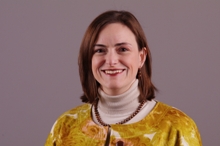
Christine Reich is being recognized as a Champion of Change for leading education and employment efforts in science, technology, engineering and math for Americans with disabilities.
“One of the most pervasive messages of my childhood was, ‘Not for you.’ That’s something that’s incredibly destructive for the life of a child. Places like science museums can dispel those messages more than almost any place else. I remember my few visits to museums as just wonderful. I believe everybody should have that experience. And I do mean everybody.”
- Betty Davidson, retired Museum of Science exhibit developer, biochemist, wheelchair user, and personal mentor
People with disabilities frequently receive the message that science learning is “not for you.” Sometimes this message is subtle, sent through the design of science learning experiences that do not take into account the physical, sensory, and cognitive diversity that exists within our society. Other times, the message is overtly stated, rooted in narrow perceptions of what a person with a disability can and cannot do. It is time for the message to change. It is time for us to take actions that send the message that learning about and engaging in science, technology, engineering, and mathematics (STEM) is possible for all.
Technology Change as the Great Equalizer
Posted by on May 7, 2012 at 11:55 AM EST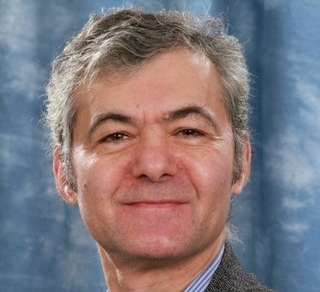
Dimitri Kanevsky is being recognized as a Champion of Change for leading education and employment efforts in science, technology, engineering and math for Americans with disabilities.
I’m honored to work in the field of technology and to be included as a White House Champion of Change.
Technology is the great equalizer that can dramatically improve the quality of a person’s life through the click of a mouse button. Technology is constantly evolving to remove barriers that emerge due to a person’s social characteristics, geographic location, physical or sensory abilities.
There are many examples of how technology is leveling the playing field and opening up doors for all citizens. For example, communication technologies allow people to work from home, making mobility disabilities less relevant. Development in transcription technologies makes it possible for people who have hearing loss to participate in meetings in the workplace and advance their education more easily.
Eliminating Barriers to Entry: Increasing Braille Used in STEM
Posted by on May 7, 2012 at 11:50 AM EST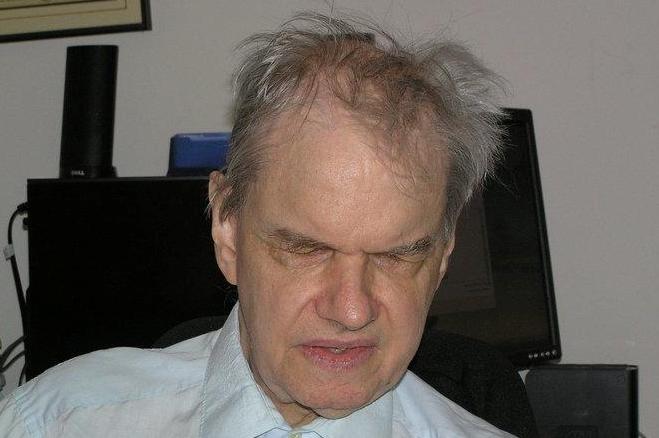
John Boyer is being recognized as a Champion of Change for leading education and employment efforts in science, technology, engineering and math for Americans with disabilities.
Blindness is the most prevalent impairment in the world. The World Health Organization estimates that there are 314 million people with vision impairments; 45 million of whom are blind. Every five seconds one person in the world goes blind and a child goes blind every minute.
From his home in Madison, WI, John Boyer supervises an international group of software developers who are working to create programs designed to increase educational and employment opportunities for persons in the blind community by making current STEM research and dialogue available to blind people.
Raising Expectations to Change Lives
Posted by on May 7, 2012 at 11:45 AM EST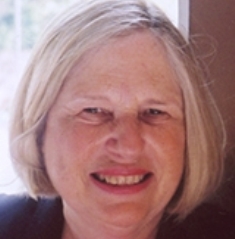
Virginia Stern is being recognized as a Champion of Change for leading education and employment efforts in science, technology, engineering and math for Americans with disabilities.
My husband, Bob, and I are parents of four now-adult children, two of whom have disabilities. We knew that each of them needed the best possible education, disabled or not. I remember so well when the #504 Regulations of the Rehab Act were signed in May 1977, opening up programs in higher education for qualified students with disabilities. Citizens with disabilities held demonstrations in many U.S. cities to initiate this critical effort for civil rights. There were huge barriers to overcome--physical, technological, attitudinal, and social. I was already an advocate, but this battle inspired me to join the American Association for the Advancement of Science (AAAS), the country's largest interdisciplinary science and engineering organization, and become a leader in its fledging Project on Science, Technology, and Disability, working to highlight lives of people with disabilities in STEM careers so they could serve as mentors to younger students.
Making STEM Accessible to All Americans
Posted by on May 7, 2012 at 11:40 AM EST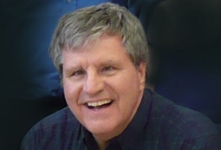
George Kerscher is being recognized as a Champion of Change for leading education and employment efforts in science, technology, engineering and math for Americans with disabilities.
A vast amount of science, technology, engineering and math (STEM) information is usually presented visually, from graphs and tables to diagrams and math equations. Students and professionals in the STEM fields who are blind or have low vision must find ways to access this data. In many cases, they still rely on other people to read and describe images for them. This creates a dependence that can be inefficient and time consuming. Also, students often must wait for months to get their learning materials in alternative formats.
DAISY (Digital Accessible Information System) is the international standard used for creating accessible digital talking books and e-books. The standard allows users with print disabilities to efficiently navigate and access book content. To ensure that math is accessible within DAISY books, the DAISY Consortium formed a working group consisting of several dedicated individuals from our member organizations. This working group developed a mechanism for extending DAISY to include MathML support. MathML is the standard markup language for mathematical formulas for making them meaningful and accessible with screen readers and braille. Access to knowledge through alternative formats and digital talking books (DTBs) has created more independence and opportunities for print-disabled users.
Making a Difference for Students with Disabilities in STEM Education: Understanding Facilitators and Barriers to Success
Posted by on May 7, 2012 at 11:35 AM EST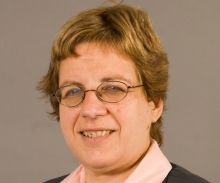
Maria Dolroes Cimini is being recognized as a Champion of Change for leading education and employment efforts in science, technology, engineering and math for Americans with disabilities.
As a scientist-practitioner with a disability, I have been inspired by a number of leaders and mentors living in our great nation, and I am honored to have the opportunity to give back to our country by having been selected as a Champion of Change. In reflecting on my own experiences as a scientist and woman with a disability, I have come to realize the many ways in which my own life challenges have been transformed into my passion to support access to STEM for students with disabilities.
There have been many advances in education, legislation, and access for students with disabilities in the United States in recent decades. However, for students with disabilities and the family members, faculty, advocates, and employers who work with them, technological advances, legislation, accessible environments, and global communications are not always enough to illuminate the pathway to STEM. Barriers remain in the transitions at many levels from schools to workplace and careers. Students and gatekeepers in education and employment continue to need existing proof of achievement to change the stereotype of what people with disabilities can accomplish in STEM disciplines.
Transforming Education with Universal Design for Learning
Posted by on May 7, 2012 at 11:30 AM EST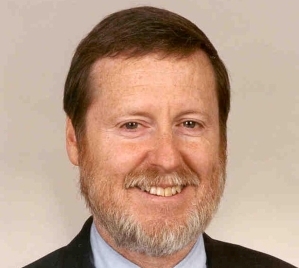
David Rose is being recognized as a Champion of Change for leading education and employment efforts in science, technology, engineering and math for Americans with disabilities.
Each day, educators face an enormous challenge in the classroom: to guide a group of varied individuals toward becoming motivated and successful learners. Teachers know how hard this work is. The personal differences from student to student can be vast. Yet educators often do not have the curriculum tools or support they need to educate in ways that allow various paths for success.
For more than 25 years, my colleagues and I at CAST—an education R&D organization based in Wakefield, Massachusetts—have explored ways to expand and improve educational opportunities for all individuals. This work led us to pioneer the idea of universal design for learning (UDL) in the 1990s. UDL is a set of principles to guide the development of instructional goals, methods, materials, and assessments that are flexible enough to be effective for all individuals.
Believing to Succeed: The Power of STEM Education
Posted by on May 7, 2012 at 11:25 AM EST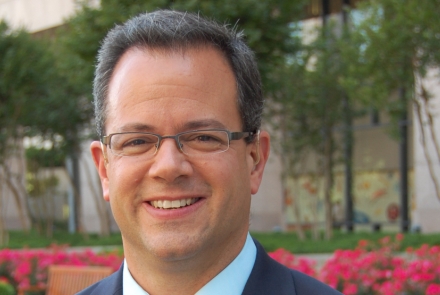
Rafael San Miguel is being recognized as a Champion of Change for leading education and employment efforts in science, technology, engineering and math for Americans with disabilities.
Due to an incorrect dose of antibiotics, I became deaf when I was a few days old. At the St. Joseph’s Institute for the Deaf in St. Louis, the dedicated Sisters of St. Joseph taught me to speak the same way Helen Keller learned, by feeling vibrations on someone else’s throat. After graduating from all-hearing Chaminade Prep School in St. Louis, I attended Texas A&M as an undergraduate. If you know any Aggie, you know you don’t go through Texas A&M without emerging with the understanding and responsibility of service to others. I was able to get through college without the use of an interpreter primarily because I was surrounded by a community of people eager to step up and lend a hand by taking lecture notes for me in class.
After college I began my career as a scientist working for NASA. Ever since I was a young boy I had wanted to become an astronaut, but realized that I couldn’t because of my disability. If you say to mission control “Houston, we have a problem” you need to be able to hear their response. However, what I still could do was work on the Space Shuttle program as a scientist where my work developing food for astronauts involved a project to send the first can of Coca-Cola into outer space. This was ironic since I would find myself in my private sector career working for The Coca-Cola Company as a flavor chemist, now for over 23 years.
- &lsaquo previous
- …
- 133
- 134
- 135
- 136
- 137
- 138
- 139
- 140
- 141
- …
- next &rsaquo
Twitter