Health Care Blog
The President Holds an Open Discussion Across the Aisle
Posted by on January 29, 2010 at 5:58 PM ESTToday the President did something unusual in American politics – initiated an open dialogue with members of the opposite party. Visiting the House Republican retreat, he took questions on anything they wanted to talk about. He heard them out, acknowledged where they were right, and gave a genuine explanation where he felt they were wrong.
It's worth noting that the President is looking to answer your questions as well. That's why immediately after the State of the Union, we partnered with YouTube to give you an opportunity to ask questions of the President. Go and ask whatever you want, or just vote on other questions that your fellow citizens have submitted, and the President will answer some of those questions in a unique live event on Monday at WhiteHouse.gov.

President Barack Obama addresses the Republican GOP House Issues Conference in Baltimore, Md. Listening at left are US House Minority Leader John Boehner (R-Ohio), House Minority Whip Eric Cantor (R-Va) and House Republican Conference Chairman Mike Pence (R-Ind.) January 29, 2010. (Official White House Photo by Pete Souza)
Learn more about Health CareCaring for Caregivers
Posted by on January 28, 2010 at 6:35 PM ESTThis week the Middle Class Task Force unveiled a series of initiatives in the President's FY 11 budget that are aimed at helping families with soaring child care costs, balancing work with caring for elderly relatives or people with disabilities, paying for college, and saving for retirement. These are costs that – along with health care – have risen dramatically for families at a time when their incomes haven't. Some people call this "squeeze" because of the pressure these costs put on family budgets. But for many families it just seems like it is impossible to get ahead.
This is particularly true for the so-called "sandwich generation" – people who are caring for children (or grandchildren or adult children who are struggling financially) and their parents. The Vice President often speaks very personally about his experience caring for his parents and in-laws. And almost all of us know someone who has juggled caring for a parent or relative who can’t get along completely on their own. Millions of Americans provide unpaid care to aging relatives – including approximately 23 million caregivers with jobs and 12 million who are also caring for their own children. That's why the Middle Class Task Force’s "squeeze" initiative includes help for family caregivers.
These caregivers play a vital role in helping seniors stay in their communities or at home. But too often they don’t have the support they need to balance caregiving with work and family responsibilities. As Elinor Ginzler of AARP put it:
"AARP is grateful that the Middle Class Task Force has drawn attention to an issue that is deeply important to our members—the critical role of family caregivers and what we should be doing to help them. Approximately 65 million Americans provide care to a loved one, giving more than $375 billion worth of unpaid care each year—often at their own financial and emotional expense. Increasing support to these invaluable individuals would be an important step to help those who do so much to help others."
The nearly $103 million investment proposed by the Middle Class Task Force will support more respite care, counseling, training, referrals, and adult day care. As Sandy Markwood, CEO of National Association for Area Agencies on Aging explained:
"Vice President Biden’s Middle Class Task Force’s recommendation to increase funding for the National Family Caregiver Support Program and Lifespan Respite, along with strengthening supportive services through Title III-B of the Older Americans Act, represents a huge investment in community-based programs that support the independence of older Americans and their caregivers. These funds will enable them to access and get the critical services that they need while avoiding unnecessary and more expensive institutional care or spending down to Medicaid. We applaud the work that has been done by the Administration that serves to strengthen long term living options through home and community-based services."
The extra funding proposed by the Task Force will allow nearly 200,000 additional caregivers to be served and 3 million more hours of respite care to be provided. It adds funding to programs that provide transportation help, adult day care, and in-home services including aides to help bathe and cook. Some have said these things are modest. And, to some extent, they are. But sometimes it is these small things that add up to make all the difference.
Eric Hall, President and Chief Executive Officer of the Alzheimers Foundation of America is well aware of the vital help these services give families:
"Family caregivers who struggle each day with practical and financial challenges have been anxiously waiting for this issue to be brought to the national stage and for relief in their own homes and communities. For these families, assistance at any level can help delay nursing home placement and enhance caregiver well being. The proposed initiatives represent a welcome change in direction, from minimal or flatlined funding to amounts that will make a difference for hundreds of thousands of American families."
And here’s what Gail Hunt, CEO of the National Alliance for Caregiving who represents family caregivers said:
"The National Alliance for Caregiving is proud to support the Middle Class Task Force and their efforts to support family caregivers. This is a wonderful addition to the National Family Caregiver Support Program and it is a perfect way to recognize these caregivers who on average spend 18 hours a week providing care. The funding for transportation, adult day care and other services under Title III b will also help family caregivers by assisting the older adult they are caring for. We are grateful to the Middle Class Task Force for bringing much needed public awareness to the family caregiver."
The caregiver initiative won’t magically alleviate all the strain on caregivers and their families – but it is an important first step toward providing more support for families and caregivers and the vital services they are performing.
Terrell McSweeny is Domestic Policy Advisor to the Vice President
Learn more about Health CareA Zero-Tolerance Approach to Health Care Fraud
Posted by on January 28, 2010 at 10:00 AM ESTIf a friend or family member gets robbed, you would want to see the perpetrator brought to justice. The same is true for catching criminals who steal money from American taxpayers and businesses. This exact scenario is playing out in the form of health care fraud. Criminals are stealing billions of dollars from American taxpayers, the federal government, and corporations – and it is unacceptable. At a time when many families are scraping together every last dollar to pay their medical bills, fraud, waste, and abuse in our health care system are unacceptable.
This administration is taking a zero-tolerance approach to health care fraud. Yet this is not a job for just one agency or one law enforcement team. It requires a coordinated effort from the public and private sectors. Today, Attorney General Eric Holder and I convened a first-ever National Summit on Health Care Fraud, bringing together the public and private sectors to identify and discuss innovative ways to eliminate fraud in our health care system.
Participants at today’s summit include government officials; prosecutors and investigators; state law enforcement; private sector health plans and insurers; and representatives of consumers and providers to discuss and find innovative ways to detect, prevent and deter fraud.
Today’s Summit builds upon the work accomplished by HEAT, the Health Care Fraud Prevention & Enforcement Action Team. This initiative was launched last May and is led by Attorney General Holder and myself. Through this initiative, we’ve been able to employ better enforcement tools. We’ve significantly expanded our Medicare Fraud Strike Forces to operate in 7 major cities across the country.
Since 2007, the Strike Forces have charged more than 500 defendants for health care fraud crimes resulting in more than $1 billion in fraudulent billing. Over 200 defendants have been sentenced to prison, with sentences ranging from two months to 30 years. Added up, we’ve done more to fight health care fraud in 2009 than in any other year. But we’re not done fighting. Building on the investments the President made in fraud fighting in last year’s budget, he will request $1.7 billion in his budget to support programs to fight fraud..
Through our collective efforts, we will defeat health care fraud; we will protect American consumers and businesses by tracking down the criminals and holding them accountable, and we’ll put the brakes on future fraudulent activity.
For more information, visit our website at www.StopMedicareFraud.gov.
Kathleen Sebelius is Secretary of Health and Human Services
Learn more about Health CareThe State of the Union & the State of Health Reform
Posted by on January 27, 2010 at 11:43 PM ESTTonight the President made it clear once again that he will not back away from his commitment to enacting health reform that protects Americans from abusive insurance company practices, lowers rising health care costs, provides security and stability to all Americans seeking health insurance, strengthens Medicare and reduces the deficit. He called upon Congress to act:
And it is precisely to relieve the burden on middle-class families that we still need health insurance reform. (Applause.) Yes, we do. (Applause.)
Now, let's clear a few things up. (Laughter.) I didn't choose to tackle this issue to get some legislative victory under my belt. And by now it should be fairly obvious that I didn't take on health care because it was good politics. (Laughter.) I took on health care because of the stories I've heard from Americans with preexisting conditions whose lives depend on getting coverage; patients who've been denied coverage; families –- even those with insurance -– who are just one illness away from financial ruin.
After nearly a century of trying -- Democratic administrations, Republican administrations -- we are closer than ever to bringing more security to the lives of so many Americans. The approach we've taken would protect every American from the worst practices of the insurance industry. It would give small businesses and uninsured Americans a chance to choose an affordable health care plan in a competitive market. It would require every insurance plan to cover preventive care.
And by the way, I want to acknowledge our First Lady, Michelle Obama, who this year is creating a national movement to tackle the epidemic of childhood obesity and make kids healthier. (Applause.) Thank you. She gets embarrassed. (Laughter.)
Our approach would preserve the right of Americans who have insurance to keep their doctor and their plan. It would reduce costs and premiums for millions of families and businesses. And according to the Congressional Budget Office -– the independent organization that both parties have cited as the official scorekeeper for Congress –- our approach would bring down the deficit by as much as $1 trillion over the next two decades. (Applause.)
Still, this is a complex issue, and the longer it was debated, the more skeptical people became. I take my share of the blame for not explaining it more clearly to the American people. And I know that with all the lobbying and horse-trading, the process left most Americans wondering, "What's in it for me?"
But I also know this problem is not going away. By the time I'm finished speaking tonight, more Americans will have lost their health insurance. Millions will lose it this year. Our deficit will grow. Premiums will go up. Patients will be denied the care they need. Small business owners will continue to drop coverage altogether. I will not walk away from these Americans, and neither should the people in this chamber. (Applause.)
So, as temperatures cool, I want everyone to take another look at the plan we've proposed. There's a reason why many doctors, nurses, and health care experts who know our system best consider this approach a vast improvement over the status quo. But if anyone from either party has a better approach that will bring down premiums, bring down the deficit, cover the uninsured, strengthen Medicare for seniors, and stop insurance company abuses, let me know. (Applause.) Let me know. Let me know. (Applause.) I'm eager to see it.
Here's what I ask Congress, though: Don't walk away from reform. Not now. Not when we are so close. Let us find a way to come together and finish the job for the American people. (Applause.) Let's get it done. Let's get it done. (Applause.)
Linda Douglass is with the White House Office of Health Reform
Learn more about Health CarePutting Washington at the Service of the Middle Class
Posted by on January 27, 2010 at 10:23 PM ESTEd. note: Also watch shorter video clips from the speech, broken down by topic.
In his State of the Union Address tonight, the President laid out an agenda attempting to attack one problem from every conceivable angle: the terrible squeeze felt by America’s middle class. Fundamentally, that means prying government away from special interests and dedicating it to measures that put Americans to work and lay the foundation for a stronger economy for our country – lowering health care and tuition costs, spurring creation of the next generation of clean energy jobs. It also means putting a cop on the beat on Wall Street, so major banks can no longer take advantage of families and taxpayers.
To do all that, though, we need to change the way Washington works. Already the President has taken unprecedented steps in this direction, from releasing the names of all visitors to the White House for the first time ever to clamping down on the revolving door between government and lobbying. But as much progress was made on this front in this first year, it was still only the first year, and the President will keep pushing forward, whether that’s shining sunlight on any contact between lobbyists and the White House, or pushing Congress to disclose all earmark requests in one place for Americans to see.
This was the vision that shaped the President's address, but this is not just a matter of rhetoric. The President made clear that there is tremendously busy agenda ahead for his second year – the policies and proposals below are just examples of the plans the President laid out in his address to put government to work for the middle class.
Here are a few initiatives you might have missed in the course of the speech:
- The President called on the Senate to pass a financial reform package. “A strong, healthy financial market makes it possible for businesses to access credit and create new jobs. It channels the savings of families into investments that raise incomes. But that can only happen if we guard against the same recklessness that nearly brought down our entire economy.” Essential reforms include measures to protect consumers and investors from financial abuse; close loopholes, raise standards, and create accountability for supervision of major financial firms; restrict the size and scope of financial institutions to reign in excesses and protect taxpayers and address the ‘too big to fail’ problem; and establish comprehensive supervision of financial markets.
- A vision for a clean energy economy. “…to create more of these clean energy jobs, we need more production, more efficiency, and more incentives.” We will build on the historic $80 billion investment made through the Recovery Act. The President’s vision includes investments in important technologies to diversity our energy sources and reduce our dependence on foreign oil, including: the renewal of our nation’s nuclear energy industry after a 30-year hiatus, cutting edge biofuel and clean coal technologies, and additional offshore oil and gas drilling. To fully transition to a clean energy economy and create millions of new American jobs, we must pass comprehensive energy and climate legislation to promote energy independence and address climate change.
- The President will continue his push to invest in the skills and education of our people. “This year, we have broken through the stalemate between left and right by launching a national competition to improve our schools. And the idea here is simple: instead of rewarding failure, we only reward success... In this country, the success of our children cannot depend more on where they live than on their potential.” The Obama Administration supports a new vision for increasing student achievement, delivering opportunity, and supporting excellence in America’s public schools. The President’s 2011 budget supports a new framework for the Elementary and Secondary Education Act that will foster innovation, reward excellence, and promote reform in our schools, as well as invests an additional $1.35 billion to continue the historic Race to the Top program to open it up to districts in order to spur innovation and additional progress. At the same time, the Administration is moving to consolidate ineffective policies and practices. The President’s Budget eliminates six programs and consolidates 38 others into 11 new programs that emphasize using competition to allocate funds, giving communities more choices around activities, and using rigorous evidence to fund what works.
- The President is committed to making college affordable for all Americans. “(I)n this economy, a high school diploma no longer guarantees a good job.” To increase college access and completion, the Administration will make student loans more affordable by limiting a borrower’s payments to 10 percent of his/her income and forgives remaining debt after 20 years – 10 years for public service works. We will also make permanent the American Opportunity Tax Credit. The President urges the Senate to pass the American Graduation Initiative, which invests more than $10 billion over the next decade in reforming our nation’s community colleges, promoting college completion, and moving toward the President’s goal of having the highest proportion of college graduates in the world by 2020. The President is also asking colleges and universities to do their share to make college affordable for all Americans cutting their own costs.
- The President is making investments to ensure that the middle class benefits from this economic recovery. “(T)he price of college tuition is just one of the burdens facing the middle class. That's why last year I asked Vice President Biden to chair a task force on middle-class families.” The President has outlined immediate steps to reduce the strain on family budgets and help middle class families manage their child and elder care responsibilities, save for retirement and pay for college. He will double the child tax credit this year, make it easier to save for retirement with automatic IRAs for workers without access to existing retirement plans, provide larger tax credits to match retirement savings for millions of additional workers, and provide new safeguards to protect retirement savings.
- Changing the way we do business. “To close that credibility gap we have to take action on both ends of Pennsylvania Avenue to end the outsized influence of lobbyists; to do our work openly; to give our people the government they deserve.” The President has called for additional new lobbyist reforms, including enhanced disclosure of lobbyist contacts, strict campaign contribution limits by lobbyists, and a single earmark database, so American taxpayers find out what earmarks are being requested, and where their money is going.
- Countering Citizens United. “I don't think American elections should be bankrolled by America's most powerful interests, or worse, by foreign entities.” Last week’s Supreme Court Citizen’s United decision opens the floodgates to special interests and foreign countries and companies bankrolling national campaigns. The President called for bipartisan support for legislation that will remedy the Supreme Court’s unprecedented and troubling decision.
- The President stands by military families. “Tonight, all of our men and women in uniform...have to know that they have our respect, our gratitude, our full support.” The President’s 2011 budget announces significant new investments, totaling more than $8 billion, and protections for our nation’s military families, including increased military pay and housing allowances, increased funding for family support programs, expanded availability of affordable, high-quality child care, the renovation or replacement of schools, and expanded and improved care for wounded, ill and injured service members.
- The President is establishing a National Equal Pay Enforcement Task Force. “We're going to crack down on violations of equal pay laws -– so that women get equal pay for an equal day's work.” To make sure we uphold our nation’s core commitment to equality of opportunity, the Obama Administration is implementing an Equal Pay initiative to improve compliance, public education, and enforcement of equal pay laws. The Task Force will ensure that the agencies with responsibility for equal pay enforcement are coordinating efforts and limiting potential gaps in enforcement. The Administration also continues to support the Paycheck Fairness Act, and is increasing funding for the agencies enforcing equal pay laws and other key civil rights statutes.
- Immigration reform. “And we should continue the work of fixing our broken immigration system - to secure our borders and enforce our laws, and ensure that everyone who plays by the rules can contribute to our economy and enrich our nation.” The President is pleased Congress is taking steps forward on immigration reform that includes effective border security measures with a path for legalization for those who are willing to pay taxes and abide by the law. He is committed to confronting this problem in practical, effective ways, using the current tools at our disposal while we work with Congress to enact comprehensive reform.
playState of the Union
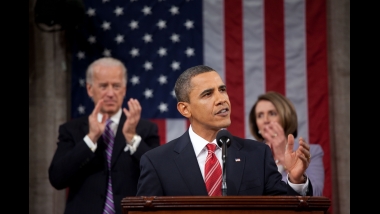
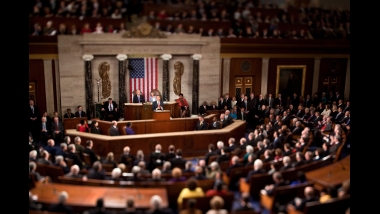
President Barack Obama delivers his first State of the Union address.
1 of 11And here are still more initiatives the President spoke to just tonight:
- The President will fight to recover the money American taxpayers spent to bailout the banks. “To recover the rest, I've proposed a fee on the biggest banks. Now, I know Wall Street isn't keen on this idea. But if these firms can afford to hand out big bonuses again, they can afford a modest fee to pay back the taxpayers who rescued them in their time of need.” The President has proposed the Financial Crisis Responsibility Fee, which will require the largest and most highly leveraged Wall Street firms to pay back taxpayers and provide a deterrent against excessive leverage for the largest firms. The conservative estimate for the cost of TARP in the budget is $117 billion, but the Treasury Department expects it to be much less and the fee will be in place for a minimum of ten years or however long it takes to recoup every last penny to the American taxpayer.
- The President recognizes that Small Businesses will be key to our nation’s economic recovery. “I'm proposing that we take $30 billion of the money Wall Street banks have repaid and use it to help community banks give small businesses the credit they need to stay afloat. I'm also proposing a new small business tax credit – one that will go to over one million small businesses who hire new workers or raise wages.” To get small businesses growing again, and growing our economy, the President has proposed a range of provisions that include tax incentives to spur investment; expanded access to capital and growth opportunities to create jobs; and increased support for entrepreneurship to foster innovation. He is proposing an employment tax credit for small businesses to encourage hiring, eliminating capital gains taxes on small business investments, extending enhanced small business expensing, and transferring $30 billion in resources from TARP to a new program to help community and smaller banks give small businesses the credit they need. The President and members of his Administration will announce additional details in the coming weeks.
- The President reiterates his support for continued investment in our nation’s infrastructure. “Tomorrow, I'll visit Tampa, Florida, where workers will soon break ground on a new high-speed railroad funded by the Recovery Act. There are projects like that all across this country that will create jobs and help move our nation's goods, services, and information.” Through the Recovery Act, we made the largest investment in our nation’s infrastructure since President Eisenhower called for the creation of our national highway system over half a century ago. In his speech, the President announced funding to make a down-payment on a new nationwide high-speed rail system being built in-part with ARRA dollars.
- Tax breaks to keep jobs at home. “(I)t’s time to finally slash the tax breaks for companies that ship our jobs overseas, and give those tax breaks to companies that create jobs right here in the United States of America.” The President has called for an end for tax breaks for companies that ship our jobs overseas to help fund tax cuts – like making the R & E credit permanent – that reward companies for investing and creating jobs in the United States.
- The President also called on the Senate to pass a jobs bill that he can sign. “The House has passed a jobs bill…. As the first order of business this year, I urge the Senate to do the same, and I know they will. People are out of work. They are hurting. They need our help. And I want a jobs bill on my desk without delay.” The bold and difficult steps the President took to stabilize the financial system have reduced the cost of TARP by more than $200 billion, providing additional resources for job creation and for deficit reduction. In December, the President outlined a package of targeted measures to help further stimulate private sector hiring, including measures to facilitate small business growth, green jobs and infrastructure. The House has passed strong legislation - it is time for the Senate to do the same.
- We must invest in American ingenuity and innovation. “We need to encourage American innovation.” The Obama Innovation Agenda will get us closer to the President’s long-term goal of increasing combined private and public R&D investment to three percent of GDP. The Obama 2011 budget will move us closer to restoring America to first in the world in college completion; and invest in the next generation of scientists so we will not lag behind countries like China in science and engineering graduates. More details will be announced in the coming weeks.
- We need to export more of our goods around the world. “We will double our exports over the next five years, an increase that will support two million jobs in America.” To meet this goal, we’re launching a National Export Initiative that will help farmers and small businesses increase their exports and expand their markets. Details will be announced in the coming weeks, but the NEI includes the creation of the President’s Export Promotion Cabinet and an enhancement of funding for key export promotion programs. We will work to shape a Doha trade agreement that opens markets and will continue to work with key allies like South Korea, Panama, and Colombia on trade agreements that provide real benefits to our workers. The President and members of his Administration will announce additional details in the coming week.
- The President remains committed to helping Americans stay in their homes and help their homes retain their value. “… we’re working to lift the value of a family’s single largest investment – their home.” Last year, we took steps allowing millions of Americans to take out new loans and save an average of $1,500 per family on mortgage payments. This year, we will step up programs that encourage re-financing so that homeowners can move into more affordable and sustainable mortgages. In addition to the changes proposed last week to ensure sound risk management, the FHA is continuing to evaluate its mortgage insurance underwriting standards and its measures to help distressed and underwater borrowers through other FHA initiatives going forward. In order to ensure American families receive the same consideration American corporations do, the Obama Administration remains supportive of efforts to allow bankruptcy proceedings to renegotiate all debts, including home mortgages.
- As Americans are getting their budgets in order, the President is getting the nation’s financial house in order. “Like any cash-strapped family, we will work within a budget to invest in what we need and sacrifice what we don’t.” The President has announced the three year, non-security discretionary spending freeze, and also called for a bipartisan Fiscal Commissionto identify policies to improve the fiscal situation in the medium term and to achieve fiscal sustainability over the long run. The President and members of his Administration will announce additional details in the coming weeks.
- The President’s focus on national security includes rooting out terrorists where they hide. “Since the day I took office, we have renewed our focus on the terrorists who threaten our nation.” In the last year, hundreds of Al Qaeda’s fighters and affiliates have been captured or killed – far more than in 2008.
- The President’s commitment to Non-Proliferation results. “Even as we prosecute two wars, we're also confronting perhaps the greatest danger to the American people - the threat of nuclear weapons.” The United States and Russia are completing negotiations on the farthest-reaching arms control treaty in nearly twenty years. He will also host a Nuclear Security Summit in April, which will bring forty-four nations together behind a clear goal: to secure all loose nuclear materials around the world in four years, so that they never fall into the hands of terrorists.
- The President is launching a bioterror and pandemic threat initiative. “We are launching a new initiative that will give us the capacity to respond faster and more effectively to bioterrorism or an infectious disease - a plan that will counter threats at home and strengthen public health abroad.” The President called to action key U.S. Government leaders to re-design our medical countermeasure enterprise to protect Americans from bioterror or infectious health threats. We will pursue a business model that leverages market forces and reduces risk to attract pharmaceutical and biotechnology industry collaboration with the U.S. Government.
- The President announced that he will work this year to repeal “Don’t Ask, Don’t Tell.” “I will work with Congress and the military to finally repeal the law that denies gay Americans the right to serve the country they love because of who they are.”
Mona Sutphen is Deputy Chief of Staff
The Cabinet Reporting to the President … and to You
Posted by on January 26, 2010 at 11:34 AM ESTWhen President Obama and his Cabinet took office a year ago, they faced an array of historic challenges: an economy in freefall; job losses averaging almost 700,000 a month; a middle class under assault; two wars and badly frayed global alliances; and a staggering $1.3 trillion budget deficit.
Faced with these unparalleled challenges, the President and his Cabinet went straight to work. The Administration took bold steps to: rescue the country from a potential second Great Depression; rebuild the economy for the long-term by creating good-paying jobs, improving education, reducing health care costs, and promoting energy independence; and restore America’s standing and leadership in the world.
Over the past year, the Administration has made real progress towards these goals. Today, I’m pleased to announce a new interactive online feature, "The President’s Cabinet Reporting to You." Through short videos, members of the President’s Cabinet describe their agencies’ accomplishments over the past year, as well as their plans for moving the country forward.
For example:
- Energy Secretary Chu highlights the thousands of green jobs that have been created through Recovery Act dollars;
- Health and Human Services Secretary Sebelius talks about the success in helping to prevent the spread of the H1N1 virus;
- Secretary of State Clinton describes her department’s efforts to restore our global partnerships; and
- Office of Management and Budget Director Peter Orszag discusses the President’s initiative to streamline government programs that work and eliminate those that don’t.
This Friday morning, President Obama will convene the fifth Cabinet Meeting of his Administration and continue his discussions with the Cabinet about their efforts to create more jobs, rebuild the middle class, and transform our economy for the 21st Century.
Chris Lu is Assistant to the President and Cabinet Secretary
Learn more about Defense, Economy, Education, Energy and Environment, Fiscal Responsibility, Foreign Policy, Health Care, Homeland Security, Rural, Seniors and Social Security, Taxes, Urban Policy, Veterans, Women
From the Press Office
Related Videos
-
 December 13, 2016 5:04 PM
Signing Ceremony for the 21st Century Cures Act
-
 December 10, 2016 5:00 AM
Weekly Address: It’s Time to Get Covered on the Health Insurance Marketplace