Health Care Blog
More Stable and Secure Health Care For Seniors
Posted by on September 17, 2009 at 1:00 PM ESTVice President Biden and members of the Middle Class Task Force just concluded a health care reform discussion in Alexandria, Virginia. Along with Health and Human Services Secretary Kathleen Sebelius, White House Office of Health Reform Director Nancy-Ann DeParle, and Barry Rand, CEO of AARP, the Vice President led a discussion with older Americans on how reforming health care will lower costs, cut waste, create stability and improve quality for them.
As health reform advances this summer, it’s important to recognize the benefits for two key groups that are all too familiar with the toll rising costs of health care are taking on their security: seniors and early retirees aged 50-64.
Seniors face increasing health care costs while living off of fixed incomes – a situation that often forces them to make tough decisions– like cutting doses of important drugs to save money. The Medicare Doughnut Hole – the gap in prescription drug coverage that millions of seniors fall into- costs seniors a total of $15 billion dollars a year.
Health care reform will help close that gap by providing deep discounts for medications for seniors who are stuck in that hole and allowing seniors to access more affordable generic drugs. Health reform will also ensure Medicare beneficiaries access to their doctors, fund 100% of preventative care, and cut the bureaucracy between seniors and their doctors by simplifying paperwork, computerizing medical records, and making sure that forms are easy to read for seniors. Health reform will prevent any insurance company from denying coverage based on a person’s underlying health status, and it will end discrimination that charges you more if you’re sick.
Americans aged 50-64 are often the most at vulnerable and at risk in the current health care system. Too young for Medicare, they experience sky high insurance premiums and costs because of their age. Premiums for 50-64 year olds buying coverage on the open market were three times that of their peers who were lucky enough to have employer coverage. And that’s for people who aren’t automatically excluded because of a pre-existing condition.
Health care reform will lower costs for 50-64 year old Americans by providing assistance to employer health plans to encourage them to cover recent retirees and by giving individuals access to an insurance exchange where participants will be able to compare prices of health plans – including a public plan - and decide which option is right for them. Individuals will be eligible for help paying for insurance in the exchange based on their income. And in order to market a plan in the Exchange, insurance companies will have to comply with its rules: no denial of coverage for pre-existing conditions; no discrimination based on age; and fair prices, for good benefits.
Everyone will have the security of knowing that if they lose their job, or if someone in their family develops a chronic disease or has a pre-existing condition, they will be able to find affordable health care for their families in the exchange.
Vice President Biden and the Middle Class Task Force are working to ensure that as Americans age, their care is stable and secure, affordable and effective.
Terrell McSweeny is Domestic Policy Advisor to the Vice PresidentLearn more about Health Care, Seniors and Social SecurityFired Up? Ready to Go?
Posted by on September 13, 2009 at 10:58 AM ESTViewing this video requires Adobe Flash Player 8 or higher. Download the free player.download .mp4 (423 MB) | read the transcriptDuring Wednesday's address to Congress, the President rose above the chatter, misinformation, and petty politics that opponents of health insurance reform have taken to new heights. In laying out the specifics of his plan, he spoke clearly on how it will benefit those who already have insurance -- ending discrimination based on pre-existing conditions, making sure you can't be dropped just because you get sick, capping out-of-pocket expenses, and eliminating extra charges for preventive care and tests that help you avoid getting sick in the first place. He explained how for the tens of millions of Americans without insurance, a new Insurance Exchange, a public option, and tax credits will open up a new range of afforable choices. And he explained how all Americans can feel safe that reform will include provisions guaranteeing it will not add to the deficit and take significant steps to bring down costs for families, businesses, and the government.
 President Barack Obama reaches out to the crowd at a rally for health care reform at the Target Center in Minneapolis, Minnesota, September 12, 2009. Official White House Photo by Pete Souza
Yesterday the President took his case from the heart of Washington out on the road, where an enthusiastic crowd showed a snapshot of the hunger for reform all over the country. During his remarks, the President discussed all of the same benefits of reform, but also emphasized that the fate of reform ultimately rests in their hands, and in all of your hands across the country:
THE PRESIDENT: ...Minnesota, we are closer to reform than we've ever been before, but this is the hard part. This is when the special interests and the insurance companies and the folks who think, you know, this is a good way to bring Obama down -- (boos) -- this is when they're going to fight with everything they've got. This is when they'll spread all kinds of wild rumors designed to scare and intimidate people. That's why I need your help. (Applause.)AUDIENCE: Yes we can! Yes we can! Yes we can!THE PRESIDENT: You know, there have been -- there have been some of the pundits in Washington who have been saying, well, maybe you've been trying to do too much.AUDIENCE: No!THE PRESIDENT: Maybe you've been pushing too far too fast.AUDIENCE: No!THE PRESIDENT: And I try to remind them, I said, listen, I never said change would be easy. (Applause.) Change is hard. It's always been hard. When FDR -- when FDR decided that Social Security was something that seniors needed -- (applause) -- when FDR decided -- when FDR introduced Social Security, you know what happened? They called it socialism. But senior citizens decided that, you know what? If I've got some protection in my golden years, that's something that's worth fighting for. (Applause.) When Medicare -- when Medicare was introduced as an idea, they said this is going to be a government takeover of Medicare. But imagine what seniors would be dealing with right now if they didn't have Medicare. Every time we've made progress it's because ordinary people banded together and they stood up and they said, we've got to make progress, and we're going to push and we're going to prod until Washington finally reacts, finally responds. (Applause.)I've always believed -- because I've always believed that change doesn't come from the top down; it comes from the bottom up. It doesn't start in Washington, D.C.; it begins in places like Minneapolis, it begins in places like St. Paul. (Applause.) It begins with you sharing your stories, fighting for something better. (Applause.) That's how change happens. That's what's happening right now. (Applause.)AUDIENCE: Yes we can! Yes we can! Yes we can!THE PRESIDENT: You know, I asked you -- I asked you at the beginning of the rally whether you were fired up. (Applause.) Some of you may have heard where that story comes from. But for those of you who don't know, I want to just tell this story real quick. My staff loves this story, so they always tell me, "Tell that story." (Laughter.) But it bears on what's happening with health care today.This is back at the beginning, when I was running for President. Nobody thought I could win; nobody could pronounce my name. (Laughter.) Nobody except R.T., that was the only person who believed. (Applause.)So I went down to -- it was right at the beginning of the campaign. I went down to South Carolina to a legislative conference where I was supposed to be one of the speakers. And I was sitting next to a state representative there -- nobody was that excited to see me. (Laughter.) You know, I was -- but I really needed some support and endorsements because South Carolina was an early state. So I said to this state representative, "Will you endorse my campaign?" And she looked at me and she said, "I will endorse your campaign if you come to my hometown of Greenwood, South Carolina." So I had had some wine and I was feeling kind of desperate. (Laughter.) I said, "Yes, I'll come to Greenwood. Be happy to do it." Only to find out that Greenwood is like an hour and a half from everyplace else. (Laughter.) You can't fly into Greenwood.About a month later, I've been campaigning in Iowa for weeks -- (applause) -- haven't seen my family -- got some Iowa folks in the house? (Applause.) I'm exhausted. I get into Greenville, South Carolina, about midnight. I get to my hotel about 1:00 a.m. I'm dragging to the hotel. I'm carrying my bags, ready to hit the pillow. And suddenly my staff says, "Sir?" I said, "What?" (Laughter.) They said, "Sir, you have to be in the car at 6:30 a.m. tomorrow -- in the morning." (Laughter.) I said, "Why is that?" They said, "Because you've got to go to Greenwood like you promised."Next morning, I wake up and I feel awful, I feel terrible. I'm exhausted. And I stagger over to the window to pull open the blinds, and it's pouring down rain outside, terrible day. I go out and I get some coffee and open up the newspaper -- bad story about me in The New York Times. (Laughter.) I pack up, I go downstairs. As I'm walking to the car my umbrella blows open and I get drenched. (Laughter.) So by the time I'm in the car I'm wet and I'm sleepy and I'm mad. (Laughter.)And I drive -- and we drive and we drive and we drive -- hour and a half, we just keep on driving. (Laughter.) Finally we get to Greenwood -- although you don't know that you're in Greenwood right away. (Laughter.) It's not like Minneapolis. (Laughter.) So there's a little field house in a park, and we go into the field house, I walk in, I get a little more wet. I walk in -- lo and behold, 20 people there. (Laughter.) Twenty people. And I'm already thinking about the fact I've got another hour and a half I've got to drive back. (Laughter.) And they're all kind of damp and they don't look like they're that happy to be there. The state rep had dragged them to the meeting.But that's okay. I have a job to do. I'm running for President, I shake their hand, I say, "How do you do, what do you do, nice to meet you." Suddenly I hear this voice should out behind me: "Fired up?" (Laughter.) And I almost jumped out of my shoes. (Laughter.) But everybody else acts like this is normal and they all say, "Fired up!" And then I hear this voice: "Ready to go?" And the people around me, they just say, "Ready to go!" I don't know what's going on. So I look behind me, and there's this little woman there. She's about 5'2", 5'3", she's maybe 50, 60 years old. And she looks like she's dressed for church. She's got a big church hat. (Laughter.) And she's just grinning at me, just smiling. And she points at me and she says "Fired up?" (Laughter and applause.)Wait, wait, the story gets better here. It turns out that she is a city councilwoman from Greenwood named Edith Childs -- that's her name -- and she's also known as the chant lady because she does this chant wherever she goes. She goes, "Fired up?" "Fired up!" "Ready to go?" "Ready to go!" (Laughter.) And she does this at every event she goes to. She's also, by the way, we discovered later, she also moonlights as a private detective but that's a -- (laughter) -- true story. True story.But she's well known for her chant, so for the next five minutes, she starts chanting. She says, "Fired up?" And everybody says, "Fired up!" "Ready to go?" "Ready to go!" And this just keeps on going. And I realize I'm being upstaged by this woman. (Laughter.) And I'm -- she's getting all the attention, and I'm standing there looking at my staff and they're shrugging their shoulders. (Laughter.) But here's the thing, Minneapolis. After about a minute, maybe two, I'm feeling kind of fired up. (Laughter and applause.) I'm feeling -- I'm feeling like I'm ready to go. (Applause.)And so -- so for the rest of the day, every time I saw my staff, I'd say, "Are you fired up?" They'd say, "I'm fired up." "Are you ready to go?" They'd say, "I'm ready to go." (Applause.) And it goes to show you how one voice can change a room. (Applause.) And if it changes a room it can change a city. And if it can change a city it can change a state. And if it can change a state it can change a nation. If it changes the nation it can change the world. (Applause.) It can bring health care to every American. It can lower our costs. It can make your insurance more secure. I want to know, Minnesota, are you fired up?AUDIENCE: Fired up!THE PRESIDENT: Ready to go?AUDIENCE: Ready to go!THE PRESIDENT: Fired up?AUDIENCE: Fired up!THE PRESIDENT: Ready to go?AUDIENCE: Ready to go!THE PRESIDENT: Fired up?AUDIENCE: Fired up!THE PRESIDENT: Ready to go?AUDIENCE: Ready to go!THE PRESIDENT: They can't stop us. Let's go get this done. Thank you, everybody. God bless you. (Applause.)
When you go talk to your neighbors, bring a few of these (pdf).
 The audience listens to President Barack Obama at a rally for health care reform at the Target Center in Minneapolis, Minnesota, September 12, 2009. Official White House Photo by Pete SouzaLearn more about Health Care
Weekly Address: Losing Insurance Can Happen to Anybody
Posted by on September 12, 2009 at 1:00 AM ESTThe President discusses a staggering new report from the Treasury Department indicating that under the status quo, around half of all Americans under 65 will lose their health coverage at some point over the next ten years. He pledges not to allow this future to unfold: "In the United States of America, no one should have to worry that they'll go without health care – not for one year, not for one month, not for one day. And once I sign my health reform plan into law – they won't."Viewing this video requires Adobe Flash Player 8 or higher. Download the free player.Learn more about Health CareThe President’s Remarks, and a Letter from Ted
Posted by on September 9, 2009 at 10:12 PM ESTplayRemarks by the President on Health Care
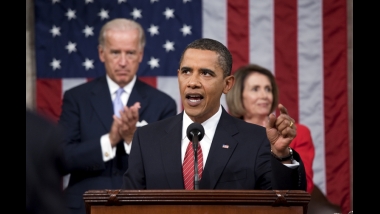
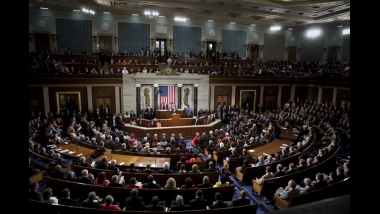
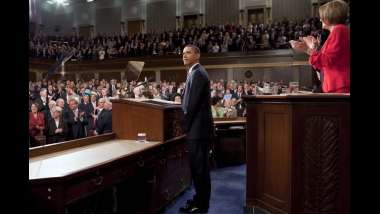
The President addresses a joint session of Congress on Health Care.
1 of 8We will have much, much more on the President's remarks tonight and the plan he laid out, but for now enjoy the closing remarks. He refers to a letter from the late Senator Kennedy:Everyone in this room knows what will happen if we do nothing. Our deficit will grow. More families will go bankrupt. More businesses will close. More Americans will lose their coverage when they are sick and need it the most. And more will die as a result. We know these things to be true.That is why we cannot fail. Because there are too many Americans counting on us to succeed -- the ones who suffer silently, and the ones who shared their stories with us at town halls, in e-mails, and in letters.I received one of those letters a few days ago. It was from our beloved friend and colleague, Ted Kennedy. He had written it back in May, shortly after he was told that his illness was terminal. He asked that it be delivered upon his death.In it, he spoke about what a happy time his last months were, thanks to the love and support of family and friends, his wife, Vicki, his amazing children, who are all here tonight. And he expressed confidence that this would be the year that health care reform -- "that great unfinished business of our society," he called it -- would finally pass. He repeated the truth that health care is decisive for our future prosperity, but he also reminded me that "it concerns more than material things." "What we face," he wrote, "is above all a moral issue; at stake are not just the details of policy, but fundamental principles of social justice and the character of our country."I've thought about that phrase quite a bit in recent days -- the character of our country. One of the unique and wonderful things about America has always been our self-reliance, our rugged individualism, our fierce defense of freedom and our healthy skepticism of government. And figuring out the appropriate size and role of government has always been a source of rigorous and, yes, sometimes angry debate. That's our history.For some of Ted Kennedy's critics, his brand of liberalism represented an affront to American liberty. In their minds, his passion for universal health care was nothing more than a passion for big government.But those of us who knew Teddy and worked with him here -- people of both parties -- know that what drove him was something more. His friend Orrin Hatch -- he knows that. They worked together to provide children with health insurance. His friend John McCain knows that. They worked together on a Patient's Bill of Rights. His friend Chuck Grassley knows that. They worked together to provide health care to children with disabilities.On issues like these, Ted Kennedy's passion was born not of some rigid ideology, but of his own experience. It was the experience of having two children stricken with cancer. He never forgot the sheer terror and helplessness that any parent feels when a child is badly sick. And he was able to imagine what it must be like for those without insurance, what it would be like to have to say to a wife or a child or an aging parent, there is something that could make you better, but I just can't afford it.That large-heartedness -- that concern and regard for the plight of others -- is not a partisan feeling. It's not a Republican or a Democratic feeling. It, too, is part of the American character -- our ability to stand in other people's shoes; a recognition that we are all in this together, and when fortune turns against one of us, others are there to lend a helping hand; a belief that in this country, hard work and responsibility should be rewarded by some measure of security and fair play; and an acknowledgment that sometimes government has to step in to help deliver on that promise.This has always been the history of our progress. In 1935, when over half of our seniors could not support themselves and millions had seen their savings wiped away, there were those who argued that Social Security would lead to socialism, but the men and women of Congress stood fast, and we are all the better for it. In 1965, when some argued that Medicare represented a government takeover of health care, members of Congress -- Democrats and Republicans -- did not back down. They joined together so that all of us could enter our golden years with some basic peace of mind.You see, our predecessors understood that government could not, and should not, solve every problem. They understood that there are instances when the gains in security from government action are not worth the added constraints on our freedom. But they also understood that the danger of too much government is matched by the perils of too little; that without the leavening hand of wise policy, markets can crash, monopolies can stifle competition, the vulnerable can be exploited. And they knew that when any government measure, no matter how carefully crafted or beneficial, is subject to scorn; when any efforts to help people in need are attacked as un-American; when facts and reason are thrown overboard and only timidity passes for wisdom, and we can no longer even engage in a civil conversation with each other over the things that truly matter -- that at that point we don't merely lose our capacity to solve big challenges. We lose something essential about ourselves.That was true then. It remains true today. I understand how difficult this health care debate has been. I know that many in this country are deeply skeptical that government is looking out for them. I understand that the politically safe move would be to kick the can further down the road -- to defer reform one more year, or one more election, or one more term.But that is not what the moment calls for. That's not what we came here to do. We did not come to fear the future. We came here to shape it. I still believe we can act even when it's hard. (Applause.) I still believe -- I still believe that we can act when it's hard. I still believe we can replace acrimony with civility, and gridlock with progress. I still believe we can do great things, and that here and now we will meet history's test.Because that's who we are. That is our calling. That is our character. Thank you, God bless you, and may God bless the United States of America. (Applause.) President Barack Obama speaks to a joint session of Congress on health care at the U.S. Capitol Wednesday, Sept. 9, 2009. Official White House Photo by Lawrence JacksonLearn more about Health Care
The Speech Tonight
Posted by on September 9, 2009 at 3:53 PM ESTWith all of the TV chatter and bickering, it might be easy to forget what makes health insurance reform such a monumental issue. It is not about the fortunes of one political party or another; it is about the anxiety and insecurity Americans face, about ensuring that the tragedy of illness is not compounded by a second tragedy in dealing with health insurance. Two brave parents who represent these struggles -- Laura Klitzka from Wisconsin and Nathan Wilkes from Colorado -- will join the First Lady at the Capitol to watch tonight's speech. Their powerful stories help underscore what's at stake with health insurance reform – watch:Viewing this video requires Adobe Flash Player 8 or higher. Download the free player.download .mp4 (45 MB)Viewing this video requires Adobe Flash Player 8 or higher. Download the free player.download .mp4 (68.8 MB)Tonight the President will make clear to Congress exactly what he would like to see in the health insurance reform legislation that gets sent to his desk. With four out of five committees in Congress having finished their work and the fifth announcing today that they are moving forward, more progress has been made today than in all the decades since reform was first proposed by Teddy Roosevelt. But tonight the President will explain how these bills should be pulled together to find the best solutions possible to bring peace of mind to Americans who have insurance and affordable coverage to those who don't.- We will be streaming the video live here at WhiteHouse.gov. You can also watch and discuss it through our Facebook chat application.
- You will also have a unique opportunity to talk to Anita Dunn, our Communications Director here at the White House, immediately after the speech when she answers your questions in a live video chat through WhiteHouse.gov and Facebook.
Also note: the Department of Education is planning on a live-captioned version of the address here.Learn more about Health CareLabor Day, Reform, and the Fight for What’s Right
Posted by on September 8, 2009 at 9:15 AM ESTYesterday, the President spent Labor Day at the AFL-CIO Labor Day Picnic in Cincinnati. In his remarks he acknowledged one of the more upbeat traditions of Labor Day – "you're enjoying some good music, some good food, some famous Cincinnati chili" – before noting the more serious tradition being observed:But today we also pause. We pause to remember and to reflect and to reaffirm. We remember that the rights and benefits we enjoy today weren't simply handed to America's working men and women. They had to be won. They had to be fought for, by men and women of courage and conviction, from the factory floors of the Industrial Revolution to the shopping aisles of today's superstores. They stood up and they spoke out to demand a fair shake and an honest day's pay for an honest day's work. (Applause.)Many risked their lives. Some gave their lives. Some made it a cause of their lives -- like Senator Ted Kennedy, who we remember today. (Applause.)
So let us never forget: much of what we take for granted -- the 40-hour work week, the minimum wage, health insurance, paid leave, pensions, Social Security, Medicare -- they all bear the union label. (Applause.) It was the American worker -- men and women just like you -- who returned from World War II to make our economy the envy of the world. It was labor that helped build the largest middle class in history. Even if you're not a union member, every American owes something to America's labor movement. (Applause.)
 President Barack Obama speaks at the AFL-CIO Labor Day Picnic in Cincinnati, OH on Labor Day. September 7, 2009. Official White House Photo by Lawrence JacksonHe took some questions from the crowd gathered there after his remarks, and spoke with the same kind of fight in his voice that those who have fought for workers’ rights all these years demonstrated time after time:But let me just say a few things about this health care issue. We've been fighting for quality, affordable health care for every American for nearly a century -- since Teddy Roosevelt. Think about that -- long time. (Laughter.) The Congress and the country have now been vigorously debating the issue for many months. The debate has been good, and that's important because we've got to get this right. But every debate at some point comes to an end. At some point, it's time to decide. At some point, it's time to act. Ohio, it's time to act and get this thing done. (Applause.)We have never been this close. We've never had such broad agreement on what needs to be done. And because we're so close to real reform, suddenly the special interests are doing what they always do, which is just try to scare the heck out of people.But I've got -- I've got a question for all these folks who say, you know, we're going to pull the plug on Grandma and this is all about illegal immigrants -- you've heard all the lies. I've got a question for all those folks: What are you going to do? (Applause.) What's your answer? (Applause.) What's your solution? (Applause.) And you know what? They don't have one. (Applause.) Their answer is to do nothing. Their answer is to do nothing. And we know what that future looks like: insurance companies raking in the profits while discriminating against people because of preexisting conditions; denying or dropping coverage when you get sick. It means you're never negotiating about higher wages, because all you're spending your time doing is just trying to protect the benefits that you already fought for.It means premiums continuing to skyrocket three times faster than your wages. It means more families pushed into bankruptcy, more businesses cutting more jobs, more Americans losing health insurance -- 14,000 every day. It means more Americans dying every day just because they don't have health insurance.That's not the future I see for America. I see reform where we bring stability and security to folks who have insurance today -- where you never again have to worry about going without coverage if you lose your job or you change your job or you get sick. You've got coverage there for you. Where there is a cap on your out-of-pocket expenses, so you don't have to worry that a serious illness will break you and your family even if you have health insurance. (Applause.) Where you never again have to worry -- where you never again have to worry that you or someone you love will be denied coverage because of a preexisting condition. (Applause.)I see reform where Americans and small businesses that are shut out of health insurance today will be able to purchase coverage at a price they can afford. (Applause.) Where they'll be able to shop and compare in a new health insurance exchange -- a marketplace where competition and choice will continue to hold down costs and help deliver them a better deal. And I continue to believe that a public option within that basket of insurance choices will help improve quality and bring down costs. (Applause.)I see reform where we protect our senior citizens by closing the gaps in their prescription drug coverage under Medicare that costs older Americans thousands of dollars every years out of their pockets; reforms that will preserve Medicare and put it on a sounder financial footing and cut waste and fraud -- the more than $100 billion in unwarranted public subsidies to already profitable insurance companies.I want a health insurance system that works as well for the American people as it does for the insurance industry. (Applause.) They should be free to make a profit. But they also have to be fair. They also have to be accountable.That's what we're talking about -- security and stability for folks who have health insurance, help for those they don't -- the coverage they need at a price they can afford, finally bringing costs under control. That's the reform that's needed. That's the reform we're fighting for. And that's why it's time to do what's right for America's working families and put aside partisanship, stop saying things that aren't true, come together as a nation, pass health insurance reform now -- this year. (Applause.)A little later he told the story behind a chant he likes to use once in a while, "Fired up! Ready to go!" If you haven’t heard the story, might be worth clicking through to the full transcript.
 The crowd listens as President Barack Obama speaks at the AFL-CIO Labor Day Picnic in Cincinnati, OH on Labor Day. September 7, 2009. Official White House Photo by Lawrence Jackson)Learn more about Economy, Health Care

From the Press Office
Related Videos
-
 December 13, 2016 5:04 PM
Signing Ceremony for the 21st Century Cures Act
-
 December 10, 2016 5:00 AM
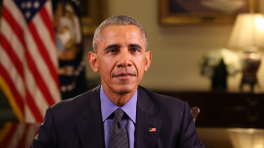
Weekly Address: It’s Time to Get Covered on the Health Insurance Marketplace