Health Care Blog
Addressing Some Misconceptions in Montana
Posted by on August 14, 2009 at 4:36 PM ESTViewing this video requires Adobe Flash Player 8 or higher. Download the free player.download .mp4 (946.9 MB) | read the transcriptThe President is continuing to travel across the country to talk to Americans about his plan for health insurance reform. In Belgrade, Montana, today the President had a strong message for insurance companies who unfairly deny coverage to Americans: "We are held hostage at any given moment by health insurance companies that deny coverage, or drop coverage, or charge fees that people can't afford at a time when they desperately need care. It's wrong. It's bankrupting families, it's bankrupting businesses. And we are going to fix it when we pass health insurance reform this year."Some people who are happy with their current insurance plans may not think health insurance reform will benefit them. However, as the President explained, all of us can be victims of these unfair practices. That’s why reform will benefit everyone – by providing more security and stability for you and your family:First, health insurance reform will mean a set of common-sense consumer protections for folks with health insurance. So those of you who have health insurance, this is what it will mean. Insurance companies will no longer be able to cancel your coverage because you get sick. (Applause.) That's what happened to Katie. It can't happen anymore.If you do the responsible thing, if you pay your premiums each month so that you are covered in case of a crisis, when that crisis comes -- if you have a heart attack or your husband finds out he has cancer or your son or daughter is rushed to the hospital -- at the time when you're most vulnerable and most frightened, you can't be getting a phone call from your insurance company saying that your insurance is revoked. It turns out, once you got sick, they scoured your records looking for reasons to cancel your policy. They'd find a minor mistake on your insurance form that you submitted years ago. That can't be allowed to happen. (Applause.)One report -- one report found that three insurance companies alone had canceled 20,000 policies in this way over the past few years. One man from Illinois lost his coverage in the middle of chemotherapy because his insurer discovered he hadn't reported gall stones he didn't know about. True story. Because his treatment was delayed, he died. A woman from Texas was diagnosed with an aggressive form of breast cancer, was scheduled for a double mastectomy. Three days before surgery, the insurance company canceled the policy, in part because she forgot to declare a case of acne. True story. By the time she had her insurance reinstated, the cancer had more than doubled in size.And this is personal for me. I'll never forget my own mother, as she fought cancer in her final months, having to worry about whether the insurance company would refuse to pay for her treatment. The insurance company was arguing that she should have known that she had cancer when she took her new job -- even though it hadn't been diagnosed yet. If it could happen to her, it could happen to any one of us. It's wrong. And when we pass health insurance reform, we're going to put a stop to it once and for all. That is what Max Baucus is working on. (Applause.)Number two: Insurance companies will be prohibited from denying coverage because of your medical history. A recent report found that in the past three years, more than 12 million Americans were discriminated against by insurance companies because of a preexisting condition. No one holds these companies accountable for these practices. But we will.
And insurance companies will no longer be able to place an arbitrary cap on the amount of coverage you can receive in a given year or a lifetime. (Applause.) And that will help -- that will help 3,700 households in Montana. We'll place a limit on how much you can be charged for out-of-pocket expenses, as well, because no one in America should be broke when they get sick. (Applause.) And finally -- finally, we'll require insurance companies to cover routine checkups and preventive care, like mammograms and colonoscopies, because that saves money and that saves lives. (Applause.)So that's what health care reform is all about. Right now we've got a health care system that all too often works better for the insurance companies than it does for the American people. We want to change that.The President was eager to take on questions from those who are critical of his plan. One skeptic wanted to know how health reform would be paid for without raising taxes on the middle class. The President explained that while we can’t get something from nothing, the money will not come off the backs of the middle class:Look, you are absolutely right that I can't cover another 46 million people for free. You're right. I can't do that. So we're going to have to find some resources. If people who don't have health insurance are going to get some help, then we're going to have to find money from somewhere.Now, what I've identified, and most of the committees have identified and agreed to, including Max Baucus's committee, is that there -- overall this bill will cost -- let's say it costs $800 billion to $900 billion. That's a lot of money. That's a lot of money. That's over 10 years, though, all right? So that's about $90 billion -- $80 billion to $90 billion a year.About two-thirds of it -- two-thirds -- can be obtained by doing some of the things I already mentioned, like eliminating subsidies to insurance companies. So you're right, that's real money. I just think I would rather be giving that money to the young lady here who doesn't have health insurance and giving her some help, than giving it to insurance companies that are making record profits. (Applause.) Now, you may disagree. I just think that's a good way to spend our money.There’s a misconception floating around that reform will harm small business, but the President outlined how his plan will help, not hurt, small businesses:So there are two ways we want to help. Number one, we want the small business to be able to buy into the exchange. That allows you then to use the purchasing power of everybody who is in the exchange to get the best rates from the insurance companies. That right away would drive down the premiums that you'd have to pay.And the second thing we want to do is for employers who are doing the right thing and providing health insurance that is real, then we want to give you a tax break so that it's easier for you to make your bottom line.Now, this is something that a lot of small businesses would benefit from. Nobody is talking about it. And since small businesses are the place where you're seeing the fastest job growth, it makes sense for us to provide this kind of protection. This, I guarantee you, will end up being an important component of whatever we pass out of Washington.
The President and his administration will continue to take these questions head on, keep watching and keep an eye on our Reality Check site to sort out fact from fiction.
Learn more about Health CareHealth Insurance Reform and Disability
Posted by on August 13, 2009 at 1:02 PM ESTRecently, you may have heard one misunderstanding that the President’s plan will mean children with disabilities will not receive the care they need. On the contrary, reform will eliminate health insurance discrimination against people with disabilities. Under the President’s plan, insurance companies will no longer be allowed to deny coverage based on a pre-existing condition, which will allow those with disabilities to receive the quality, affordable care they deserve.We asked Mike Strautmanis, Chief of Staff for Valerie Jarrett and the father of a child with a disability, to set the record straight. In this "Reality Check" video, he explains more about how the President’s plan will help, not hurt, those with disabilities:Viewing this video requires Adobe Flash Player 8 or higher. Download the free player.
Learn more about Health CareThe Return of the Viral Email
Posted by on August 13, 2009 at 7:39 AM ESTRead an email out this morning from Senior Advisor David Axelrod and watch a new "Reality Check" video from Health Reform Director Nancy-Ann DeParle below. Both respond to the malicious chain emails that have been circulating on health insurance reform:Dear Friend,This is probably one of the longest emails I’ve ever sent, but it could be the most important.
Across the country we are seeing vigorous debate about health insurance reform.Unfortunately, some of the old tactics we know so well are back — even the viral emails that fly unchecked and under the radar, spreading all sorts of lies and distortions.
As President Obama said at the town hall in New Hampshire, "where we do disagree, let's disagree over things that are real, not these wild misrepresentations that bear no resemblance to anything that's actually been proposed."
So let’s start a chain email of our own. At the end of my email, you’ll find a lot of information about health insurance reform, distilled into 8 ways reform provides security and stability to those with or without coverage, 8 common myths about reform and 8 reasons we need health insurance reform now.
Right now, someone you know probably has a question about reform that could be answered by what’s below. So what are you waiting for? Forward this email.
Thanks,
DavidDavid Axelrod
Senior Adviser to the PresidentP.S. We launched www.WhiteHouse.gov/realitycheck this week to knock down the rumors and lies that are floating around the internet. You can find the information below, and much more, there. For example, we've just added a video of Nancy-Ann DeParle from our Health Reform Office tackling a viral email head on. Check it out:
Viewing this video requires Adobe Flash Player 8 or higher. Download the free player.
8 ways reform provides security and stability to those with or without coverage-
Ends Discrimination for Pre-Existing Conditions: Insurance companies will be prohibited from refusing you coverage because of your medical history.
-
Ends Exorbitant Out-of-Pocket Expenses, Deductibles or Co-Pays: Insurance companies will have to abide by yearly caps on how much they can charge for out-of-pocket expenses.
-
Ends Cost-Sharing for Preventive Care: Insurance companies must fully cover, without charge, regular checkups and tests that help you prevent illness, such as mammograms or eye and foot exams for diabetics.
-
Ends Dropping of Coverage for Seriously Ill: Insurance companies will be prohibited from dropping or watering down insurance coverage for those who become seriously ill.
-
Ends Gender Discrimination: Insurance companies will be prohibited from charging you more because of your gender.
-
Ends Annual or Lifetime Caps on Coverage: Insurance companies will be prevented from placing annual or lifetime caps on the coverage you receive.
-
Extends Coverage for Young Adults: Children would continue to be eligible for family coverage through the age of 26.
-
Guarantees Insurance Renewal: Insurance companies will be required to renew any policy as long as the policyholder pays their premium in full. Insurance companies won't be allowed to refuse renewal because someone became sick.
Learn more and get details: http://www.WhiteHouse.gov/health-insurance-consumer-protections/8 common myths about health insurance reform
-
Reform will stop "rationing" - not increase it: It’s a myth that reform will mean a "government takeover" of health care or lead to "rationing." To the contrary, reform will forbid many forms of rationing that are currently being used by insurance companies.
-
We can’t afford reform: It's the status quo we can't afford. It’s a myth that reform will bust the budget. To the contrary, the President has identified ways to pay for the vast majority of the up-front costs by cutting waste, fraud, and abuse within existing government health programs; ending big subsidies to insurance companies; and increasing efficiency with such steps as coordinating care and streamlining paperwork. In the long term, reform can help bring down costs that will otherwise lead to a fiscal crisis.
-
Reform would encourage "euthanasia": It does not. It’s a malicious myth that reform would encourage or even require euthanasia for seniors. For seniors who want to consult with their family and physicians about end-of life decisions, reform will help to cover these voluntary, private consultations for those who want help with these personal and difficult family decisions.
-
Vets' health care is safe and sound: It’s a myth that health insurance reform will affect veterans' access to the care they get now. To the contrary, the President's budget significantly expands coverage under the VA, extending care to 500,000 more veterans who were previously excluded. The VA Healthcare system will continue to be available for all eligible veterans.
-
Reform will benefit small business - not burden it: It’s a myth that health insurance reform will hurt small businesses. To the contrary, reform will ease the burdens on small businesses, provide tax credits to help them pay for employee coverage and help level the playing field with big firms who pay much less to cover their employees on average.
-
Your Medicare is safe, and stronger with reform: It’s myth that Health Insurance Reform would be financed by cutting Medicare benefits. To the contrary, reform will improve the long-term financial health of Medicare, ensure better coordination, eliminate waste and unnecessary subsidies to insurance companies, and help to close the Medicare "doughnut" hole to make prescription drugs more affordable for seniors.
-
You can keep your own insurance: It’s myth that reform will force you out of your current insurance plan or force you to change doctors. To the contrary, reform will expand your choices, not eliminate them.
-
No, government will not do anything with your bank account: It is an absurd myth that government will be in charge of your bank accounts. Health insurance reform will simplify administration, making it easier and more convenient for you to pay bills in a method that you choose. Just like paying a phone bill or a utility bill, you can pay by traditional check, or by a direct electronic payment. And forms will be standardized so they will be easier to understand. The choice is up to you – and the same rules of privacy will apply as they do for all other electronic payments that people make.
Learn more and get details:
http://www.WhiteHouse.gov/realitycheck
http://www.WhiteHouse.gov/realitycheck/faq8 Reasons We Need Health Insurance Reform Now
-
Coverage Denied to Millions: A recent national survey estimated that 12.6 million non-elderly adults – 36 percent of those who tried to purchase health insurance directly from an insurance company in the individual insurance market – were in fact discriminated against because of a pre-existing condition in the previous three years or dropped from coverage when they became seriously ill. Learn more: http://www.healthreform.gov/reports/denied_coverage/index.html
-
Less Care for More Costs: With each passing year, Americans are paying more for health care coverage. Employer-sponsored health insurance premiums have nearly doubled since 2000, a rate three times faster than wages. In 2008, the average premium for a family plan purchased through an employer was $12,680, nearly the annual earnings of a full-time minimum wage job. Americans pay more than ever for health insurance, but get less coverage. Learn more: http://www.healthreform.gov/reports/hiddencosts/index.html
-
Roadblocks to Care for Women: Women’s reproductive health requires more regular contact with health care providers, including yearly pap smears, mammograms, and obstetric care. Women are also more likely to report fair or poor health than men (9.5% versus 9.0%). While rates of chronic conditions such as diabetes and high blood pressure are similar to men, women are twice as likely to suffer from headaches and are more likely to experience joint, back or neck pain. These chronic conditions often require regular and frequent treatment and follow-up care. Learn more: http://www.healthreform.gov/reports/women/index.html
-
Hard Times in the Heartland: Throughout rural America, there are nearly 50 million people who face challenges in accessing health care. The past several decades have consistently shown higher rates of poverty, mortality, uninsurance, and limited access to a primary health care provider in rural areas. With the recent economic downturn, there is potential for an increase in many of the health disparities and access concerns that are already elevated in rural communities. Learn more: http://www.healthreform.gov/reports/hardtimes
-
Small Businesses Struggle to Provide Health Coverage: Nearly one-third of the uninsured – 13 million people – are employees of firms with less than 100 workers. From 2000 to 2007, the proportion of non-elderly Americans covered by employer-based health insurance fell from 66% to 61%. Much of this decline stems from small business. The percentage of small businesses offering coverage dropped from 68% to 59%, while large firms held stable at 99%. About a third of such workers in firms with fewer than 50 employees obtain insurance through a spouse. Learn more: http://www.healthreform.gov/reports/helpbottomline
-
The Tragedies are Personal: Half of all personal bankruptcies are at least partly the result of medical expenses. The typical elderly couple may have to save nearly $300,000 to pay for health costs not covered by Medicare alone. Learn more: http://www.healthreform.gov/reports/inaction
-
Diminishing Access to Care: From 2000 to 2007, the proportion of non-elderly Americans covered by employer-based health insurance fell from 66% to 61%. An estimated 87 million people - one in every three Americans under the age of 65 - were uninsured at some point in 2007 and 2008. More than 80% of the uninsured are in working families. Learn more: http://www.healthreform.gov/reports/inaction/diminishing/index.html
-
The Trends are Troubling: Without reform, health care costs will continue to skyrocket unabated, putting unbearable strain on families, businesses, and state and federal government budgets. Perhaps the most visible sign of the need for health care reform is the 46 million Americans currently without health insurance - projections suggest that this number will rise to about 72 million in 2040 in the absence of reform. Learn more: http://www.WhiteHouse.gov/assets/documents/CEA_Health_Care_Report.pdf
Learn more about Health Care-
Taking Questions on Health Reform in New Hampshire
Posted by on August 11, 2009 at 4:33 PM ESTViewing this video requires Adobe Flash Player 8 or higher. Download the free player.download .mp4 (159.8 MB) | read the transcript
The President hosted a town hall in Portsmouth, New Hampshire on health insurance reform, telling the crowd, "I don't think government bureaucrats should be meddling, but I also don't think insurance company bureaucrats should be meddling. That's the health care system I believe in." The President was introduced by Lori, a woman who can’t find coverage because of her medical condition. We all know someone like Lori who has been discriminated against because of pre-existing conditions, and can't receive the care they need. This is a personal issue for the President, who recounted his mother's battle with insurance companies as she battled with cancer in the last months of her life. (President Barack Obama arrives at a town hall meeting at Portsmouth High School in Portsmouth, N.H., to speak bout health care reform, Tuesday, Aug. 11, 2009. Official White House photo by Pete Souza)The President outlined how his plan will end these unfair, and often deadly, practices:Under the reform we're proposing, insurance companies will be prohibited from denying coverage because of a person's medical history. Period. (Applause.) They will not be able to drop your coverage if you get sick. (Applause.) They will not be able to water down your coverage when you need it. (Applause.) Your health insurance should be there for you when it counts – not just when you're paying premiums, but when you actually get sick. And it will be when we pass this plan. (Applause.)Now, when we pass health insurance reform, insurance companies will no longer be able to place some arbitrary cap on the amount of coverage you can receive in a given year or a lifetime. And we will place a limit on how much you can be charged for out-of-pocket expenses, because no one in America should go broke because they get sick. (Applause.)And finally – this is important – we will require insurance companies to cover routine checkups and preventive care, like mammograms and colonoscopies – (applause) – because there's no reason we shouldn't be catching diseases like breast cancer and prostate cancer on the front end. That makes sense, it saves lives; it also saves money – and we need to save money in this health care system.So this is what reform is about. For all the chatter and the yelling and the shouting and the noise, what you need to know is this: If you don't have health insurance, you will finally have quality, affordable options once we pass reform. (Applause.) If you do have health insurance, we will make sure that no insurance company or government bureaucrat gets between you and the care that you need. And we will do this without adding to our deficit over the next decade, largely by cutting out the waste and insurance company giveaways in Medicare that aren't making any of our seniors healthier. (Applause.) Right. (Laughter.)You may have heard some of this "chatter" and false claims about the President's health care plan. As the President explained, this is to be expected, as proponents of the status quo fight against reform:But let's face it, now is the hard part – because the history is clear – every time we come close to passing health insurance reform, the special interests fight back with everything they've got. They use their influence. They use their political allies to scare and mislead the American people. They start running ads. This is what they always do.We can't let them do it again. Not this time. Not now. (Applause.) Because for all the scare tactics out there, what is truly scary – what is truly risky – is if we do nothing. If we let this moment pass – if we keep the system the way it is right now – we will continue to see 14,000 Americans lose their health insurance every day. Your premiums will continue to skyrocket. They have gone up three times faster than your wages and they will keep on going up.Our deficit will continue to grow because Medicare and Medicaid are on an unsustainable path. Medicare is slated to go into the red in about eight to 10 years. I don't know if people are aware of that. If I was a senior citizen, the thing I'd be worried about right now is Medicare starts running out of money because we haven't done anything to make sure that we're getting a good bang for our buck when it comes to health care. And insurance companies will continue to profit by discriminating against people for the simple crime of being sick. Now, that's not a future I want for my children. It's not a future that I want for the United States of America.The President wrapped up the town hall by describing his ultimate goal for health insurance reform:But I want everybody to understand, though, the status quo is not working for you. (Applause.) The status quo is not working for you. And if we can set up a system, which I believe we can, that gives you options, just like members of Congress has options; that gives a little bit of help to people who currently are working hard every day but they don't have health care insurance on the job; and most importantly, if we can make sure that you, all of you who have insurance, which is probably 80 or 90 percent of you, that you are not going to be dropped because of a preexisting condition, or because you lose your job, or because you change your job – that you're actually going to get what you paid for, that you're not going to find out when you're sick that you got cheated, that you're not going to hit a lifetime cap where you thought you were paying for insurance but after a certain amount suddenly you're paying out of pocket and bankrupting yourself and your family – if we can set up a system that gives you some security, that's worth a lot.Learn more about Health Care
A Reality Check on the Euthanasia Rumor
Posted by on August 11, 2009 at 2:19 PM ESTWith all the rumors floating around, it can be hard to sort out fact from fiction when it comes to health insurance reform. One especially outlandish claim is that the President’s health care plan will promote euthanasia for seniors. Last night, ABC News set the record straight on this particular claim. You can watch it here.Melody Barnes, the President’s Director of the Domestic Policy Council, also debunked the euthanasia myth in a "Reality Check" video. This is just one of several videos on whitehouse.gov/realitycheck, where our experts explain what’s true (and what’s false) about the President’s plan.Viewing this video requires Adobe Flash Player 8 or higher. Download the free player.Learn more about Health CarePreparing for H1N1
Posted by on August 11, 2009 at 1:59 PM ESTHHS Secretary Kathleen Sebelius, Homeland Security Secretary Janet Napolitano and Education Secretary Arne Duncan penned an op-ed, published today, highlighting the federal government’s coordinated efforts to combat H1N1. As they discussed, these efforts help ensure that we will be prepared as possible for flu season in the fall:We don’t need to wait to act. In the fight against flu, preparation is more than half the battle — and we need everyone to chip in.We in the federal government have been aggressively responding to the new H1N1 since April. We’re building on what we learned from the early spring season and from health officials in the southern hemisphere where flu seasons are already underway.In addition to preparing the seasonal flu vaccine as usual, government scientists and vaccine manufacturers are working around the clock to produce a vaccine to protect people from the new H1N1 flu virus. And we’re making good progress on both fronts — the seasonal flu vaccine is ready for distribution and we’re on track to have an H1N1 vaccine by mid-October.We’re also working closely with cities, states and across government agencies to make sure we have a rapid, coordinated response this fall. In the last few months, we’ve sent more than $350 million in federal grants to states, tribes, territories and hospitals to help them strengthen their flu response.In early July, the Departments of Health and Human Services, Homeland Security, and Education held a flu summit for governors and public health officials. Just this week, we hosted another summit for mayors and county officials and webcast it on flu.gov — which has become the best place to find up-to-date information about flu.But of course it can't be said enough that preparation is not solely the responsibility of the federal government – we must all do our part to prevent the spread of the flu:Until a vaccine arrives in October, prevention is our best defense. That means we all need to make sure we wash our hands frequently with soap and water, cough or sneeze into a tissue, and stay home from work or school if we’re sick.It also means planning ahead. Parents should talk to their employers and make child care arrangements in case their kids get sick. And if a school closes, learning shouldn’t stop. Schools need to create opportunities to learn online and work with parents to find ways for students to bring textbooks and other resources home.If you’re an employer, you should plan to get by with a reduced staff. You don’t want an employee who’s ill to spread flu in the workplace. If you’re a medical provider, you should plan to handle more calls and patient visits. An outbreak will bring people who have flu and people who have flu-related symptoms or concerns into your office.You can read the full op-ed here, and make sure to check out flu.gov for more tips on prevention.Learn more about Health Care
- &lsaquo previous
- …
- 194
- 195
- 196
- 197
- 198
- 199
- 200
- 201
- 202
- …
- next &rsaquo
From the Press Office
Related Videos
-
 December 13, 2016 5:04 PM
Signing Ceremony for the 21st Century Cures Act
-
 December 10, 2016 5:00 AM
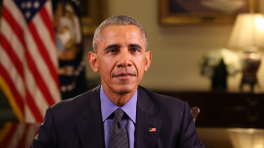
Weekly Address: It’s Time to Get Covered on the Health Insurance Marketplace