Health Care Blog
Changing Lives of Working Americans in Communities of Color
Posted by on October 27, 2014 at 9:35 AM EST
Joshua Gray is being honored as an Affordable Care Act Champion of Change.
Last fall, members of the Service Employees International Union (SEIU) reached out to friends, neighbors, and loved ones with the great news that the Affordable Care Act levels the playing field and gives them a fair shot at a longer, healthier life.
Thanks to the work of SEIU members and community partners, millions of working women and men – particularly in communities of color – are now waking up to a world in which there is no need to put off a doctor visit or skip medications. There is far less worry about mounting medical bills or missing work and subsequent paychecks.
Every day, I am honored to work with SEIU nurses, doctors, home care workers, and other union members to promote access to quality, affordable healthcare in African American, Hispanic, and Latino communities. I also build community partnerships that help close health equity gaps. But it is really the faces and lives of those who are touched that motivate me. I’ll never forget Ms. Thomas, a mother I met last February at an enrollment event in Philadelphia. I was able to help identify resources and walk her through the steps so that she could get her daughter covered. I didn’t think I’d ever hear from her again until she called to thank me two months later. Her daughter finally had healthcare.
This type of outreach is especially critical in reaching Latinos and African Americans, who are much more likely to be uninsured than the rest of the population and suffer worse healthcare outcomes as a result. That is simply unacceptable, and we must continue our fight to move our country’s healthcare forward. We won’t stop until we deliver quality, affordable healthcare to all working people, giving families a path out of poverty.
Joshua Gray is the Special Assistant to the Chair of the SEIU Healthcare Division.
Learn more about Health CareYou Too Can Make a Difference
Posted by on October 27, 2014 at 9:35 AM EST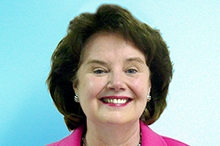
Pat Halpin-Murphy is being honored as an Affordable Care Act Champion of Change.
I am truly grateful to have been selected as a White House Champion of Change. I can’t tell you how much it means to me to be honored with this award.
As the President and Founder of the Pennsylvania Breast Cancer Coalition (PBCC), I lead a non-profit organization dedicated to finding a cure for breast cancer now so that our daughters won’t have to. I’m a breast cancer survivor, and twenty-five years ago when I was diagnosed I found that there wasn’t an organization in Pennsylvania dedicated to supporting women and families facing breast cancer. I founded the PBCC in 1993 to fill this void. In our twenty-year history, the PBCC has paved the way for countless legislative victories that support women and families across the state.
The best part of my work is talking to women about their experience with breast cancer and finding out what we can do to help meet their needs. For instance, we learned that many women were diagnosed with breast cancer in late stages because they have dense breast tissue. Upon learning this, we didn’t just sit by and wait for something to be done. Rather, we sprang into action and convinced Pennsylvania State Senator Bob Mensch to introduce legislation to help women with dense breast tissue receive improved information and screening so that they could be diagnosed at an earlier stage.
I believe that we all have the capacity to make a difference in our communities. Former U.S. Senator Harris Wofford made a tremendous impression on me as a leader. He recognized that each person has so much to contribute if only given the opportunity. He listened to people’s ideas and encouraged them to make those ideas become realities. Senator Wofford believed that everyone could contribute to their community. I truly believe that we can all make a difference. That’s the best part of this work. I’ve come to realize that, by simply standing up and taking action, we can all be “Champions of Change.”
Pat Halpin-Murphy is the President and Founder of the PA Breast Cancer Coalition.
Learn more about Health CareUsing Partnerships to Reach Into Communities
Posted by on October 27, 2014 at 9:35 AM EST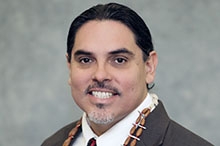
Mark LeBeau is being honored as an Affordable Care Act Champion of Change.
In California, tribal governments, tribal health programs, and the California Rural Indian Health Board (CRIHB) worked together to develop and share educational materials about the Affordable Care Act prior to its passage. Upon enactment of the ACA, CRIHB partnered with the Northwest Portland Area Indian Health Board, Oklahoma City Area Inter-Tribal Health Board, and United South and Eastern Tribes to develop tribal-specific educational materials about the legal rights of tribes and American Indian and Alaska Natives (AIANs) under the ACA. These partners each contributed funds to help make this work a reality.
This program became known as the Tribal Education and Outreach Consortium (TEOC). The people involved in this work became highly knowledgeable about the subject matter and formed a training program called TEOC University, which trained trainers to present the information to tribal communities. This was the first tribal work of this type in the United States, and the TEOC materials have been distributed throughout Indian Country.
Today, a number of federal and state offices provide these materials. Many of these materials have been reviewed and updated by CRIHB and the other members of TEOC. One of the most well-known programs we’ve helped with has been the National Indian Health Outreach and Education Initiative (NIHOE). This is a partnership between the Indian Health Service (HIS), the National Congress of American Indians, the National Indian Health Board, and representatives from each of the 12 IHS Areas. The partnership develops consumer-oriented materials to assist AIANs in understanding their opportunities under the ACA. Together, the partners provide local trainings, national marketing tools, and e-resources that clearly explain health reform changes and their impact on tribal communities. CRIHB has presented these materials to tribal governments, Indian health programs, and Indian communities and organizations.
To ensure the successful roll-out of the ACA in California, CRIHB policy staff have been meeting with state officials on a regular basis. In addition, CRIHB has reached out to the Northwest Portland Area Indian Health Board (NPAIHB) for input in developing successful implementation strategies and tactics.
These strategies and tactics were incorporated into a proposal developed by CRIHB, which was presented to the state as a necessary and fundable ACA program. Eventually, the state agreed to fund our program. As a result of this work, the Covered California Tribal Community Mobilization program was created and funded at $250,000. The grant designated funds to support implementation of the ACA AIAN provisions and to meet the tribal consultation requirements outlined in federal guidance. While this grant will end in December of 2014, I and the rest of the folks at CRIHB will continue to seek additional financial resources in order to continue to implement this important work for Indian Country.
Mark LeBeau is Executive Director at the California Rural Indian Health Board.
Learn more about Health CareSerious Illness Taught Me the Value of Insurance
Posted by on October 27, 2014 at 9:35 AM EST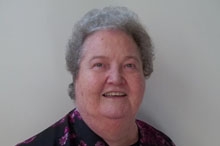
Cecelia Smaha is being honored as an Affordable Care Act Champion of Change.
I don’t remember driving home from work with the Georgia Department of Labor on November 19, 1999. I had flu-like symptoms and felt awful that day. My housemate was so alarmed when I arrived home that she tried to get me to call an ambulance. I refused because my insurance would not pay for the ambulance if the hospital didn’t admit me. I didn’t think I was that sick, and I couldn’t afford to pay the ambulance fee.
Blessed by God to have such a caring housemate, I made it through the weekend. But on Monday, I ended up in the hospital in a coma and was placed in the acute intensive care unit. Three weeks later, I awoke from the coma to learn that I’d had a severe E. coli bacterial infection and was lucky to be alive.
I was in the hospital for seven weeks, but I also had a long period of recuperation to follow that hospital stay. I never gave any thought to the cost of my hospital stay until I got the bill from the hospital. I couldn’t fathom paying almost a quarter of a million dollars! And that bill didn’t even include any of the doctors’ bills nor the aftercare with home nurses. I didn’t have that kind of money. The only thing I owned was my car.
I was advised not to pay anything until I checked with my insurance company. As it turned out, my insurance paid for everything. Because of residual effects from this illness, I still have medical complications, but my insurance continues to pay. This was a lesson of a lifetime: Everyone needs insurance.
On December 12, 2001, I was privileged to become an associate of the Institute of the Sisters of Mercy of the Americas South Central Community. In this role, I help provide services to people who are less fortunate, including the economically poor and the less well-educated. When the Affordable Care Act passed, I was jubilant. I saw this as an opportunity to put Mercy into action. I jumped at the chance to help spread information about the ACA through Get Covered America in Georgia.
I gave my time and energy to helping get the word out at churches, on the streets, and by working 10 hours each week for more than two and a half months at our local Kmart. Through a mutual agreement with Kmart and Get Covered America, I was privileged to do an event at our local Kmart, where I set up a table and greeted customers, explaining the Affordable Care Act to local shoppers. Through these opportunities, I helped make contact with over 2,000 Georgians.
I look forward to working with Get Covered America again this year. I am also spreading the word about my state’s refusal to expand Medicare, and I’m working to ensure its expansion—because nobody should be left without health insurance.
Cecelia Smaha is an associate of the Institute of the Sisters of Mercy of the Americas South Central Community.
Learn more about Health CareAlleviating the Burden of Circumstance
Posted by on October 27, 2014 at 9:35 AM EST
Peter Yang is being honored as an Affordable Care Act Champion of Change.
I believe that we are all products not only of our choices but also of our circumstances. There is a surprisingly prevalent misconception that people in adverse situations somehow deserve the hardships they face. Working in my community in Georgia, I’ve come to regard that idea as severely misguided; I have met so many hardworking individuals who, despite their best efforts, are trapped in a socioeconomic pit that they cannot dig themselves out of.
I first became involved in my community as an undergraduate at Emory University, when I saw the incredible impact of volunteerism in the surrounding community. During this time, I met many of the leaders and visionaries of the Asian American community in Georgia. Inspired by these individuals, upon graduation, I moved on to work at the Center for Pan Asian Community Services, where I was tasked with outreach for the Affordable Care Act during the first period of Open Enrollment. Prior to this work, my sole experience with the Affordable Care Act had been learning about its intricacies in a classroom setting. As I learned more about the program and its effect on the communities we serve, I began to see the law as a huge step in the right direction to improve the lives of the individuals that struggled with adverse circumstances.
Adequate access to health care is an essential part of human society. Some would even argue that it is a human right. Yet, the United States is severely behind the majority of other developed countries in providing that access. Georgia is home to one of the fastest growing populations of immigrants and refugees, and these individuals often lack adequate health insurance coverage. The more I worked with these individuals, the more I saw the human beings whose lives were impacted by the ACA.
The law has been successful thus far, but we still have more work to do. I am deeply honored to be selected as a Champion of Change but also just as honored that I have had the opportunity to serve these communities by promoting the Affordable Care Act.
Peter Yang is the Affordable Care Act Program Coordinator at the Center for Pan Asian Community Services.
Learn more about Health CareConnecting Muslims to Coverage
Posted by on October 27, 2014 at 9:35 AM EST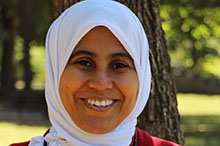
Khadija Gurnah is being honored as an Affordable Care Act Champion of Change.
There are a number of cultural, language, and financial barriers that prevent the traditional government messaging and resource dissemination strategies from reaching the Muslim community. These barriers vary greatly with each local community, as Muslim Americans represent diverse socioeconomic strata, immigration statuses, cultures, ethnicities, languages, histories, and religious approaches and interpretations. Assistance that is tailored to these diverse needs is critical to any effective public health initiative in the Muslim community.
American Muslim Health Professionals (AMHP) is a national, non-profit organization of American Muslims in health professions. During the last period of Open Enrollment, our goal was to cater to the needs of the uninsured Muslim population by promoting awareness of the benefits of the Affordable Care Act.
To achieve this, we had a two-pronged approach to outreach. At a grassroots level, we implemented enrollment campaigns in individual states. At a national level, we served as a resource for information and coordinated National Muslim Enrollment Weekend with a coalition of Muslim organizations.
At a grassroots level, we recruited “Community Liaisons” in seven states. The liaisons worked with their local faith communities to host enrollment and outreach events. We recognized that our communities needed cultural ambassadors to encourage their local faith communities to host events. Our most effective cultural ambassadors were recent graduates from health fields. They were excited, passionate, and well-established within their communities. AMHP also supported volunteers and partner organizations across the nation by connecting them with local Navigators and providing resources such as event planning guides, outreach materials tailored to Muslim communities, flyers, sign-up sheets, and a Jumah Khutba guide for imams to discuss the Affordable Care Act during sermons.
We established a clear tracking plan to help us keep metrics on outreach. We sent out a very simple form to anyone who planned to host an enrollment event. We also followed up afterward with another form. The form tracked attendance and enrollment and included a thank you to everyone for their time and commitment. We used the tracking form to update an online events page that allowed people to find enrollment events in their area.
We were also part of a national coalition of Muslim organizations that facilitated national Muslim Enrollment weekend. Together, we rolled out the first national health campaign targeting the Muslim community. We partnered with amazing facilitators at Get Covered America and the Department of Health and Human Services’ Office of Faith-Based and Neighborhood Partnerships to reach as many Muslim Americans as possible.
We were met with overwhelming support from the Muslim community. Over the course of the enrollment period, we made contact with 27,116 people and enrolled 1,662 people in high-quality, affordable health insurance plans.
As we prepare for the next enrollment period, we are looking forward to building upon our existing infrastructure to reach new communities across the nation. It is an honor to be part of this moment in our nation’s history and to help address the needs of our nation’s uninsured.
Khadija Gurnah is the Program Manager for the American Muslim Health Professionals’ Affordable Care Act outreach and enrollment efforts.
Learn more about Health Care
- &lsaquo previous
- …
- 20
- 21
- 22
- 23
- 24
- 25
- 26
- 27
- 28
- …
- next &rsaquo
From the Press Office
Related Videos
-
 December 13, 2016 5:04 PM
Signing Ceremony for the 21st Century Cures Act
-
 December 10, 2016 5:00 AM
Weekly Address: It’s Time to Get Covered on the Health Insurance Marketplace