The Incredible Kid-Ingenuity on Display at the Fifth White House Science Fair

President Obama looks at two Arizona students' robot at the fifth annual White House Science Fair

President Barack Obama talks with Sergio Corral and Isela Martinez while viewing science exhibits during the 2015 White House Science Fair celebrating student winners of a broad range of science, technology, engineering, and math (STEM) competitions, in the State Dining Room, March 23, 2015. The two 17-year-old students are current leaders of the robotics program from Carl Hayden High School in Phoenix, Ariz., which was chronicled in the recent documentary "Underwater Dreams" where their under-served high school beat out MIT and other colleges in an underwater robotics competition. (Official White House Photo by Chuck Kennedy)

Today, the halls of the White House were packed with science projects -- robots, 3D-printed objects, computer programs, apps, and extraordinary scientific discoveries -- all built, invented, designed, and brought to fruition by students.

At the fifth-annual White House Science Fair, President Obama welcomed more than 100 students from more than 30 states for a celebration and showcase of their truly remarkable achievements in science, technology, engineering, and math (STEM).

As part of the Science Fair, approximately 35 student teams exhibited innovative projects -- including discoveries and insights in key areas such as disease diagnostics, clean energy, and information security -- as well as inventions ranging from the “why didn’t I think of that?” (automatic page-turner for people with arthritis) to the “who’d have ever thought that possible?” (a hiccup-curing lollipop!).

The President personally viewed some of these projects, marveling at the incredible ingenuity on display from student innovators across the country including some as young as six years old.

The White House

Office of the Press Secretary

Remarks by the President at the SelectUSA Investment Summit

Gaylord National Convention Center
National Harbor, Maryland

2:39 P.M. EDT

THE PRESIDENT:  Thank you so much.  (Applause.)  Thank you. Please have a seat.  Well, thank you, everybody.  And let me begin by thanking Penny Pritzker for her outstanding leadership. We’ve got six Cabinet Secretaries and dozens of U.S. ambassadors here, which should tell you that SelectUSA is a major priority for this administration.  Since I was here with you 17 months ago, this gathering has doubled in size.  So I want to thank all 2,600 of you -- elected officials and local leaders from across this country, and business leaders from around the world -- thank you for making this a priority, as well.

The fact is there’s never been a more exciting time for us to do business together.  And today, I want to talk about why America is not only the right place for you to invest, but why America is the safest, strongest, smartest place for you to invest than we’ve been in a long time.

After the worst economic crisis since the Great Depression, America is now in the midst of the longest streak of private sector job growth on record -- 60 straight months; 12 million new jobs.  Businesses in America have added more than 200,000 jobs each month for 12 straight months.  That’s the first time that’s happened in nearly 40 years. 

Our unemployment rate has fallen from a peak of 10 percent in 2009 to 5.5 percent today.  After a decade of outsourcing, we’re starting to bring good jobs back to America.  Over the last five years, manufacturers have added jobs at a rate not seen since the 1980s.  In fact, the manufacturing sector is actually growing faster than the rest of the economy.  And last week, I announced nearly $500 million in new public and private investment in strengthening American manufacturing. 

And even though the United States is already home to more foreign direct investment than any other country in the world, we’ve worked hard to address some of the challenges that held us back for too long.  Our high school graduation rate is now at an all-time high.  More young people are earning their college degrees than ever before.  Our energy production is booming, our energy costs are low, our leadership on climate change is restored.  On the fiscal front, our deficits have shrunk by two-thirds.  Our health care costs are flattening out for the first time in half a century. 

Over the past six years, we’ve worked hard to make ourselves a smarter place to invest and to do business than any other country in the world.  So we've got a good story to tell.  And that’s one reason I created SelectUSA, the first-ever government-wide initiative to encourage more companies from around the world to invest and create jobs right here in the United States.  We've got a good story to tell, but we want to make sure all of you had a chance to hear it.  And the SelectUSA team wakes up every morning with one mission -- bringing job-creating investment to the United States of America.  It's a kind of one-stop shop, sort of a match-making service for investment.

Economic development organizations from around the country can connect with foreign investors from around the world who are interested in bringing their businesses here.  Now, understand a lot of state and local leaders in this room have been working tirelessly for a long time to attract foreign investment.  The idea behind SelectUSA is just to make it easier for you to do that, and easier for our international partners to find the best opportunities.

And by the beginning of this year, SelectUSA had assisted more than 1,000 clients, helping to generate more than $20 billion of investment in the United States -- investment that has spurred economic growth and created jobs all across the country. The companies in this room have invested $13 billion over the last year, which will create an estimated 32,500 new jobs. 

So what’s great about SelectUSA is that everybody wins.  Communities that welcome foreign investors see more jobs and economic activity and they can reach more potential investors.  The companies that invest in America have access to the largest market in the world -- and it's a market that is strong and stable, and growing.

And one thing I want to emphasize, it’s not just big corporations or billion-dollar investments that make a difference.  With the help of SelectUSA, for example, a Canadian company named Peds Legwear invested $7 million to rescue a failing sock company in Burke County, North Carolina.  And that investment saved 45 jobs.  They recently cut the ribbon on a new plant that will ultimately create more than 200 new jobs.  Had a little cheer back there.  That's good.  (Applause.)  

With the help from SelectUSA, Reha Technology, a Swiss medical robotics firm, just announced its merger with an American company called Interactive Motion Technologies.  The new company will headquarter in Watertown, Massachusetts -- and today it’s announcing a new $5 million investment to expand this year.

So we’re seeing real results from SelectUSA, and we want to build on that momentum and get even more of you to invest.  So today, we’re going to expand and improve our services.  We’re launching a new partnership between state and federal economic development officials.  We’re launching the SelectUSA Academy, with online and on-site training programs for investors.  We’re improving our online investment tools, helping companies identify state-based incentives so that they can decide where to invest.

So for companies considering new investment here, I want to be as clear as possible.  The United States of America is the best place in the world to do business.  We’ve got the most skilled and productive workers, the best universities, the most innovative entrepreneurs in the world.  We’re the global leader in patents –- home not only to more R&D investment than any other country but to nearly one-third of all R&D investment in the world.  Our access to global markets makes it easy to ship goods made in the USA around the world.  Our commitment to the rule of law and strong intellectual property protections make America a dependable place to innovate and do business.

And we’re a country that always believes we can be better, a country that adapts and advances, and sets new standards for new times.  It’s one of the reasons why I put forward a budget for this coming fiscal year that reflects the realities of the new economy.  We’re going to give workers and businesses the tools they need to succeed in a fast-paced, highly competitive, constantly changing world.  And that means new investments in education, new investments in job training, including making two years of community college free, because we want to make sure that our workers continue to be prepared to fill the jobs that you intend to bring here.  It means new investments in manufacturing, and 21st century infrastructure that 21st century businesses need.  We’re modernizing port, strengthening our bridges, making Internet and wireless and broadband far more accessible more quickly. 

Now, that’s my budget.  I recognize there’s something called Congress here and there are going to be some negotiations taking place.  So far, Republicans in Congress have put forward a different kind of budget.  But I’m confident that we can find a way forward.  I’m confident that we can find a path that doesn’t undermine our standing, but strengthens it.  Because the things that help businesses grow are not partisan.  There shouldn’t be anything partisan about making sure that our kids get the best education possible, or that we’ve got world-class infrastructure. 

We’re working together on a bipartisan Trade Promotion Authority and strong new trade deals from Asia to Europe that aren’t just free but are also fair and reciprocal -- trade deals that help businesses grow our exports and put American workers first.  And I’m confident we can, together, reauthorize the Export-Import Bank of the United States, giving our businesses one more tool that they need to compete.

Today, I’m pleased to announce a new action I’m also taking to make it easier for global companies who are present here today to launch and invest in the U.S.  My administration is going to reform the L-1B visa category, which allows corporations to temporarily move workers from a foreign office to a U.S. office in a faster, simpler way.  And this could benefit hundreds of thousands of nonimmigrant workers and their employers; that, in turn, will benefit our entire economy and spur additional investment.  (Applause.) 

Of course, as all of you know, one of the thing that would make America even more attractive to businesses and that would grow our economy and shrink our deficits, and keep this country safer, stronger, and smarter, would be a comprehensive immigration reform package.  And that’s why I’m going to continue to push and prod and poke and cajole friends in the Republican Party to get on board and help us get this done.  We need to get immigration reform done here in the United States of America.  That’s who we are.  (Applause.)

So the bottom line is this:  America is proudly open for business, and we want to make it as simple and as attractive for you to set up shop here as is possible.  That is what this summit is all about.  I hope you take full advantage of the opportunities that are here.  This is a pretty good networking session.  I can't even see the folks way out in the back.  (Laughter.)  There are a lot of deals to be done right here under this roof.  And I hope that everybody is going to take full advantage of it. 

Because we're committed to SelectUSA for the long haul.  We are committed to building partnerships with you so that our companies and our communities can thrive together.  And we intend to be with you not just today or tomorrow, but in the years and decades ahead. 

That's my commitment to you.  Because we are confident that if you invest in any of the communities that are represented here, what you will find is not only outstanding workers, and not just outstanding infrastructure, and not just an extraordinary market, and not just cheap energy, but what you will find is that the American people like doing business and they respect business, and they’re looking forward to working with you to make sure that your companies succeed, and that the faith that you place in those communities is ultimately going to result in outstanding results for your company.

Thank you very much, everybody.  Good luck.  (Applause.) 

END
2:52 P.m. EDT

This Day in History: Celebrating Women in STEM at The White House Science Fair

This Day
jul
4
In History

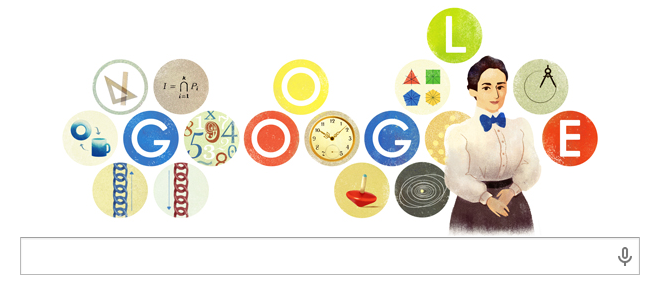
113 years ago today, Emmy Noether, one of the most important mathematicians of the 20th century, was born in Germany. Denied and discouraged as a woman, Noether is finally getting the respect she deserves for her brilliant underpaid and unpaid contributions. Featured in today’s Google Doodle, each circle illustrated symbolizes a branch of math or physics to which Noether made groundbreaking contributions. 


Her trailblazing work has inspired women in science, tech, engineering and math (STEM) to continue to shatter the glass celling. And today, more women than ever were invited to the 5th-annual White House Science Fair.


That makes this the second year in a row that women scientists represented the majority at the White House Science Fair. 


Miranda Houchins is an intern in the White House Office of Digital Strategy.
Related Topics: Women, Georgia

The White House

Office of the Press Secretary

Remarks by the President at White House Science Fair

East Room

12:15 P.M. EDT

THE PRESIDENT:  Hello, everybody!  (Applause.)  Hello, hello!  Thank you.  Everybody have a seat.  Thank you.  Hello, scientists.  (Laughter.) 

So this has got to be the most fun event of the year.  (Laughter.)  At least in the top three.  And before I go any further, though, I need to lay down some rules.  We had to put these in place based on the previous science fairs.  First of all, no taking your robots or electric go-karts for a spin on the South Lawn.  (Laughter.)  You can't do that.  Rule number two, if you’re going to explode something, you have to warn us first.  (Laughter.)  Actually, just don’t explode anything.  (Laughter.) Number three, no using a marshmallow air cannon in the house -- (laughter) -- unless you let me shoot it first.  (Laughter.)   

This is our fifth White House Science Fair.  And every year, I walk out smarter than I walked in, because these young people have something to teach all of us -- not just about batteries, or attacking cancer cells, or how to build a working robot or a rocket.  I will say, though, the robots I see keep getting smarter every year.  We are keeping an eye on that, by the way.  (Laughter.)  You’re on notice, Skynet.

But these young scientists and engineers teach us something beyond the specific topics that they’re exploring.  They teach us how to question assumptions; to wonder why something is the way it is, and how we can make it better.  And they remind us that there’s always something more to learn, and to try, and to discover, and to imagine -- and that it’s never too early, or too late to create or discover something new. 

That’s why we love science.  It’s more than a school subject, or the periodic table, or the properties of waves.  It is an approach to the world, a critical way to understand and explore and engage with the world, and then have the capacity to change that world, and to share this accumulated knowledge.  It’s a mindset that says we that can use reason and logic and honest inquiry to reach new conclusions and solve big problems.  And that’s what we are celebrating here today with these amazing young people. 

Now, first of all, I'm going to announce the people who are not that young -- although some of them are youngish.  We’re joined by some of America’s top scientists and engineers -- starting with my Science Advisor, John Holdren.  (Applause.)  Yay, John.  The Director of the National Institutes of Health, Francis Collins is here.  (Applause.)  The head of our Patent and Trademark Office -- so, young people, if you’ve got something fancy, talk to Michelle Lee right here.  (Applause.)  She’s ready to sign you up.  The Acting Director of the U.S. Geological Survey, Suzette Kimball is here.  (Applause.)  And somebody who has one of the coolest jobs in town, the head of NASA, Charles Bolden is here.  (Applause.)  Where’s Charlie?  If there are any aspiring astronauts here, he’s the man to impress.  He’s been in space himself. 

We also have some outstanding guests who are here who’ve been participating in this on an ongoing basis.  Bill Nye, the Science Guy, is here.  (Applause.)  Signature bowtie.  So is Rush Holt, who’s one of the few scientists to serve in Congress.  We could probably use some more.  (Applause.)  There you go.  Rush is now the head of the American Association for the Advancement of Science.  And just so you knew that athletes think science is cool, too, we've got Victor Cruz of the New York Giants here.  (Applause.)  He is a big fan of science.  And he has to be -- as all-pro wide receiver, he’s got to figure out trajectories and angles and velocities and the physics of doing the salsa.  (Laughter.)  For those of you who don't know, he does a salsa every time he gets a touchdown, and he gets a lot of them.  (Laughter.)

Now, Victor has been here before to celebrate the New York Giants winning the Super Bowl.  But as I’ve said many times before, we’ve got to celebrate the winners of our science fairs as much as we celebrate the winners of football or basketball or other athletic competitions, because young scientists, mathematicians, engineers, they’re critical to our future.  You guys are the ones who are going to define the contours of the 21st century.

And I just had a chance to meet some of these young people.  And I fired a lot of questions at them, and they know their stuff.  It is unbelievable what so many of these young people have accomplished at such an early age.  And I wish I could talk about every single one of them because all of them were extraordinarily impressive.  But I want to leave enough time for everybody else to explore some of their exhibits.  John Holdren probably wants me to get some of their résumés in case we’re hiring.  But let me just mention a few of the young people that I had a chance to talk to, to give you a sense of the scope and depth and quality of the work that they’re doing. 

So, first of all, we’ve got Sophia Sánchez-Maes who’s here from Las Cruces, New Mexico.  Where’s Sophia?  I just talked to her.  Did she get in?  There she is, right there.  (Applause.)  Sophia is a senior in high school and she is crazy about algae.  (Laughter.)  Now, to the non-science buffs here, you might say, what’s so great about algae?  But Sophia knows that algae is fascinating, especially as a potential fuel source. 

So scientists are already working to turn algae into fuel.  One of the hurdles is to make the process more efficient so less energy gets wasted along the way.  Sophia saw that was a challenge.  She asked why.  She has created a more efficient method.  She’s identified optimal algae to use in her method, and she’s helping to bring the world closer to using algae as a clean, renewable, and even inexhaustible energy source.  And it’s already being tested in her hometown, the process that she’s developing.  It is amazing.  So let’s give Sophia a big round of applause.  (Applause.)  

Harry Paul is here from Port Washington, New York.  Where’s Harry?  There’s Harry, right here.  (Applause.)  So Harry graduated and is now in his first year at Tufts.  But listen to this story, because I think it gives you a sense of the quality of the young people we’ve got here.  Harry was born with a condition called congenital scoliosis -- a curvature of the spine.  So, growing up, Harry endured more than a dozen operations.  Rather than feel sorry for himself, he thought there’s got to be a better way of doing this.  So he designed a new type of spinal implant. 

Starting in his freshman year in high school, he started researching the processes that he himself had gone through -- his doctor was an expert on this -- and he decided, let’s see if I can come up with something better, an implant that can grow along with the growing child so it doesn’t have to be constantly replaced or adjusted, which means you don’t need as many intrusive operations.  And Harry’s implant could reduce the number of surgeries that a child may need for more than a dozen to as few as five, which obviously would cut down medical costs, but more importantly, would save a lot of young people pain and time out from school and recovery time, and the potential complications of an operation. 

Unbelievable stuff.  Give Harry a big round of applause.  (Applause.)

So Nikhil Behari is here from Pennsylvania.  Where’s Nikhil. There’s Nikhil.  (Applause.)  He’s a freshman -- right? -- in high school, interested in how we can better protect ourselves against hackers and data thieves online.  So scientists are already using biometrics to prove that each of us walk in our own distinct ways.  And Nikhil wondered, what if we each type in a distinct ways?  So he collected all kinds of data about how a person types -- their speed, how often they pause, how much pressure they use; built a special keyboard to test it.  And he proved that his hypothesis was correct -- that even if somebody knows your password, they don’t necessarily punch it in exactly the way you do. 

And he asked why -- and made discoveries that now could help keep our online accounts more secure.  So in the future, if keystroke-based authentication keeps your siblings from breaking into your Facebook account or your Instagram account, you will know who to thank.  (Laughter.)  It will be Nikhil.  Congratulations.  (Applause.) 

So those three are just samples of the extraordinary scientists that we’ve already -- and engineers -- that we’ve already got here. 

I should give special mention to our Girl Scouts from Oklahoma. Where are those Super Girls?  (Applause.)  They’re standing up, but you can’t really see them -- (laughter) -- because they’re in kindergarten and first grade.  They are today’s youngest scientists at six years old.  They built their device out of Legos.  They realized that some people who might be paralyzed or arthritic might have trouble turning pages on a book so they invented this page turner.  It was awesome.  It was working so well, despite the fact, as they pointed out -- this is a quote, they said, “This is just a prototype.”  (Laughter.)  That’s what they said.  I said, well, how’d you come up with the idea?  They said, well, we had a brainstorming session.  (Laughter.)  And then one of them asked, “Mr. President, have you had brainstorming sessions?”  (Laughter.)  I said, yes, but I didn’t come up with something as cool as this -- (laughter) -- an automatic page turner.  Unbelievable.

Ruchi Pandya -- where’s Ruchi?  There’s Ruchi.  (Applause.) Found a way to use a single drop of blood to test a person’s heart function, much like a person with diabetes tests their blood sugar.

Anvita Gupta -- where’s Anvita?  There she is.  (Applause.) Used artificial intelligence and biochemistry to identify potential treatments for cancer, tuberculosis, Ebola.  What she’s done is she’s developed an algorithm that could potentially significantly speed up the process of finding drugs that might work against these diseases.

Something smells like it’s burning there -- and I don’t think it’s an experiment.  (Laughter.)  I think it’s somebody’s camera.  Do we have it under control?  We don’t see any flames bursting.  Yes?  All right.  Okay, it sounds like a little electrical short, but let’s keep monitoring that.  (Laughter.)  Exits will be -- (laughter) -- in that direction, should anything happen.  The last time there was a fire here, the British were invading.  (Laughter.) 

But Anvita’s algorithm has the potential of speeding up pathways to discovering what drugs would work on what diseases, and is consistent with some of the work that we announced around precision medicine that we are funding at a significant pace here at the White House.

Now, I should point out that, like several of the young people here, Anvita and Ruchi are first-generation Americans.  Their parents came here, in part, so their kids could develop their talents and make a difference in the world.  And we’re really glad they did.

So I want to congratulate all of you for your remarkable achievements.  You’ve made a lot of people proud -- your parents, your teachers, your friends, your mentors.  And as President, I’m proud of you, because America is going to be stronger and smarter and healthier, and a much more interesting place because of you. 

But it’s not enough for our country just to be proud of you. We’ve also got to support you.  We’ve got to make sure that young people like you are going to keep on having what you need to discover and experiment and to innovate.  So I’ve got three announcements to make that really were already kind of in the works before I met you guys, but it’s a pretty good occasion to announce them because you’re so inspiring.

First -- four years ago, I set a national goal to provide 98 percent of Americans with high-speed wireless Internet so that any young scientist or entrepreneur could access the world’s information.  Today, I can announce that we have achieved that goal, and we did it ahead of schedule.  (Applause.)  That’s a big deal.

Second, to make sure that we keep expanding broadband across the country, I’m creating a new team called the Broadband Opportunity Council, made up of leaders across government, who will work with business and communities to invest in next-generation Internet nationwide.  Because this not just going to be a key for your ability to learn and create; it’s also a key for America’s ability to compete and lead in the world. 

Number three -- no young person in America should miss out on the chance to excel in these fields just because they don’t have the resources.  So, five years ago, we launched a campaign called “Educate to Innovate,” to help more of our students explore science, technology, engineering and math.  Today, I’m pleased to announce $240 million in new contributions from businesses, from schools, from foundations across the country to help kids learn in these STEM fields.  So we are very, very proud to make that announcement.  (Applause.)

Corporations have pledged to help expand high-quality science and technology education to more than 1.5 million students.  More than 120 universities have pledged to help train 20,000 new engineers to tackle the toughest challenges of this century.  Foundations like the Howard Hughes Medical Institute, and the Gates Foundation, and the Simons Foundation, will support scientists early in their careers with mentoring and funding.   And, all told, these new commitments bring our grand total up to $1 billion in commitments to our kids since we first got this initiative started five years ago.

And I was talking to some of the folks who are helping to finance our efforts, and one of the things that they’ve discovered is that it’s not enough just to talk about STEM.  Part of what’s important to do is also to recognize that what you do in math and engineering and science has a purpose to it; that there are huge challenges that we have to solve in how we have clean energy, and how to we clean up our environment, and how do we solve crippling diseases like Parkinson’s or Alzheimer’s.  And when we give students the inspiration not just that math and science are inherently interesting, and technology and engineering are inherently interesting, but there’s actual problems to solve, it turns out that young people, they rise to the challenge.  And that’s what’s so exciting about it.

We don’t want to just increase the number of American students in STEM.  We want to make sure everybody is involved.  We want to increase the diversity of STEM programs, as well.  And that’s been a theme of this science fair.  We get the most out of all our nation’s talent -- and that means reaching out to boys and girls, men and women of all races and all backgrounds. Science is for all of us.  And we want our classrooms and labs and workplaces and media to reflect that.

And this is something that Megan Smith, our Chief Technology Officer, is really keen about.  Part of the problem is we don’t tell the stories enough of the incredible scientists and inventors along the way who are women, or people of color, and as a consequence, people don’t see themselves as potential scientists.  Except the good news is these young women and African American and Latino and Asian American folks, young people who are here today -- you guys certainly see yourselves as scientists.  So you’re helping to inspire your classmates and kids who are coming up behind you to pursue these dreams as well. And that’s what’s so exciting. 

Because the United States has always been a place that loves science.  We’ve always been obsessed with tinkering and discovering and inventing and pushing the very boundaries of what’s possible.  That’s who we are.  It’s in our DNA. Technological discovery helped us become the world’s greatest economic power.  Scientific and medical breakthroughs helped us become the greatest source of hope around the world.  And that’s not just our past, that’s also our future, because of amazing young people like this. 

So I want to thank you for inspiring me.  You got me off to a good start today.  Keep exploring.  Keep dreaming.  Keep asking why.  Don’t settle for what you already know.  Never stop believing in the power of your ideas, your imagination, your hard work to change the world.  

And to all the adults in the room, and to any members of Congress who might be listening, just think about all -- oh, Eddie Bernice Johnson is here, an outstanding member of Congress, who’s a big support of STEM education.  Just remember, all these young people -- to continue to pursue the research that might bring about a new clean energy source, or might cure a disease, a lot of them are going to need the capacity to get research positions and fellowships and grants.  And that, particularly when it comes to basic research, has typically been funded by the federal government.  And my federal budget promotes a significant increase in the kinds of research that needs to happen.  Unfortunately, some of the budgets coming out of Congress don’t make those same commitments. 

So it’s not enough for us to just lift up young people and say, great job, way to go.  You also have to have labs to go to, and you’ve got to be able to support yourself while you’re doing this amazing research.  And that involves us as a society making the kind of investments that are going to be necessary for us to continue to innovate for many, many years to come.

So, congratulations.  Give all these young people a big round of applause.  (Applause.)  Go take a look at their outstanding stuff.  It’s really great.  (Applause.)    

END
12:37 P.M. EDT

The White House

Office of the Press Secretary

FACT SHEET: President Obama to Announce New Steps to Attract Foreign Investors and Create Jobs through the Continued Expansion of the SelectUSA Initiative

The United States is the bright spot in the global economy, further proof that the President’s middle class economic agenda is working. More than 12 million jobs have been created over the last 60 months, and wages are beginning to rise again. In fact, U.S. businesses have added more than 200,000 jobs per month every month for 12 consecutive months—the first time that’s happened in 37 years.

Global investors have taken notice and are accelerating their investment in the United States, already home to more foreign direct investment than any other country in the world.  Foreign businesses have injected an average of $67 billion a quarter into the U.S. economy over the last three quarters, compared with an average of $49 billion quarterly from 2009 to 2013, according to Department of Commerce data released last week. 

To maintain this momentum, today the President will announce new Administration initiatives to bring job-creating investment from around the world to the United States at the second SelectUSA Investment Summit.

  • Investment Announcements: Summit participants have already announced at least $13 billion in U.S. investments over the last year and an estimated 32,500 new U.S. jobs, according to data compiled by fDi Markets.
  • Further Expansions to SelectUSA:  Commerce Secretary Penny Pritzker will create the first-ever federal advisory committee focused on attracting and retaining foreign direct investment into the United States. SelectUSA will strengthen its partnership with states and expand customized trainings for first-time investors.
  • Administrative Actions to Recruit and Retain Global Talent: The Department of Homeland Security will clarify guidelines for global companies seeking to staff new and expanding U.S. operations with specialized knowledge related to their company or industry without impacting job opportunities for U.S. workers. 

Second SelectUSA Investment Summit

Established by the President in 2011, SelectUSA is the first-ever government wide program to promote and facilitate job-creating business investment into the United States. Today, more than 2,600 people—including 1,300 companies from more than 70 countries and over 500 U.S. economic development officials from across the country—will attend the second SelectUSA Investment Summit for two days of matchmaking, information sessions, and presentations.

The United States is the world’s premier destination for investment and home to more foreign direct investment than any other country in the world. During the past year alone, 170 of the foreign firms attending the Summit have announced U.S. investments valued at about $13 billion and expected to create more than 32,500 U.S. jobs, according to data compiled by fDi Markets. The announcements come as the U.S. enjoys accelerated inflows of foreign direct investment in recent quarters.

This surge in FDI follows President Obama’s 2013 announcement of an aggressive enhancement and expansion of his SelectUSA investment-promotion initiative—and the results are billions in returns on taxpayer investment.

Since 2011, SelectUSA has helped facilitate more than $20 billion of investments in the United States, generating thousands of jobs and spurring economic growth. The program doubled the number of investors and U.S. economic development organizations (EDOs) it served last year to over 1,000, and is on track to increase its client base by more than 50 percent this year.

Actions to Enhance SelectUSA and Increase U.S. Attractiveness to Investors

Today, the Administration will announce further expansion of its assistance to U.S. economic development organizations and to international investors, through new partnerships with states, enhanced online tools, and a SelectUSA training program that was piloted at the Summit. Specifically:

  • New partnership with state economic development organizations: SelectUSA will convene at the Summit the first semi-annual gathering of a collaborative platform for federal and state economic development officials. The partnership will improve state-federal coordination, inform SelectUSA services and programs, and promote high standards in investment-promotion activities across the country.
  • Federal advisory committee: Commerce Secretary Penny Pritzker will establish the first-ever federal advisory committee to solicit formal input on the development and implementation of strategies and programs to attract and retain foreign direct investment in the United States.
  • Improved online tools for investors: SelectUSA has made available on its site for the first time a database of state-level incentives. The Department of Commerce has also made the website clustermapping.us, a joint project of the Harvard Business School and the Economic Development Administration, available to investors and economic developers. The Cluster Mapping website provides data and tools that make it easier for investors to identify regional concentrations of specific industries and locate potential economic partners. SelectUSA is committed to further improving online tools so that investors can more fully consider the advantages offered by the United States.
  • New and improved foreign direct investment data coming out this year:  The Bureau of Economic Analysis (BEA) will begin to report new data this year about the impact of foreign direct investment on the U.S. economy, and FDI contributions to employment. The data will allow investors and policymakers to distinguish and assess patterns of “greenfield” investments that establish new U.S. businesses.
  • Launch of SelectUSA Academy:  Through 2014, SelectUSA provided consultation for U.S. economic developers, seminars in at least 25 countries for investors, and a 101 series of webinars on infrastructure investing.  This culminated in the first-ever SelectUSA Academy, held March 22nd, the evening before the Summit kick-off.  Building on the success of this effort, SelectUSA will expand online and on-site training programs for investors and EDOs.
  • U.S. to be featured at 2016 Hannover Messe: Today, U.S. and German officials announced that the United States, led by the Department of Commerce, will be the featured official “Partner Country” for the 2016 Hannover Messe. Hannover Messe is the largest industrial trade fair in the world, attracting approximately 6,500 exhibitors and 250,000 visitors every year. As Partner Country, the United States will be featured to a global audience as a supplier of high quality products and a prime location for business investment.
  • Policy Guidance for L-1B Visas:  Policy Guidance for L-1B Visas:   U.S. Citizenship and Immigration Services will increase clarity around the adjudication of the L-1B non immigrant visa that allows international companies to temporarily deploy workers with specialized knowledge to the United States when launching or conducting operations here. This long-anticipated policy guidance, which will be released for public feedback, is of particular interest to global companies participating in the SelectUSA Investment Summit.

Surging Interest in the U.S. as Place to Locate Businesses and Create Jobs

Record attendance at the Summit—more than twice as large as the inaugural 2013 event—reflects growing global interest in the United States as a place to launch and expand operations, invest in research and development, and create jobs.  In fact:

  • Foreign direct investments have surged the last three quarters of 2014, compared with the year-earlier period. New Commerce Department data released last week showed that global investors pumped an average of $67 billion every quarter into the U.S. economy in the last three quarters of 2014, compared with an average of $50 billion per quarter in recent years.
  • Surveys show investors rate the U.S. as top destination for investment. After eclipsing China, Brazil, and India in 2013 to take the top spot in A.T. Kearney’s FDI Confidence Index, the United States remains “the prime destination” for investment in the world, according to the consulting firm’s survey of C-suite executives. More than half of large manufacturers will increase U.S. hiring by 5 percent or more in 2015, according to an October survey by the Boston Consulting Group. 

The White House

Office of the Press Secretary

FACT SHEET: Next Steps in Delivering Fast, Affordable Broadband

“Twenty-first century businesses need 21st century infrastructure -- modern ports, and stronger bridges, faster trains and the fastest Internet…I intend to protect a free and open Internet, extend its reach to every classroom, and every community, and help folks build the fastest networks so that the next generation of digital innovators and entrepreneurs have the platform to keep reshaping our world.”

                                                                        -President Obama, State of the Union, 2015

In January, the President traveled to Cedar Falls, Iowa to announce his plan to promote “Broadband that Works,” a public-private effort to help more Americans, in more communities around the country, get access to fast and affordable broadband.  Making good on the vision he outlined in his State of the Union Address means promoting investment and rewarding competition. Today, the Administration announced progress since January and new steps in that effort, including:

Reaching the National Goal of Providing 98 Percent of Americans with Access to High-Speed, Mobile Broadband.  In 2011, the President challenged the public and private sector to work together to expand wireless access and set the ambitious goal of providing 4th Generation (4G) mobile broadband to at least 98 percent of Americans.  Today, based on newly released data from the U.S. Commerce Department’s National Telecommunications and Information Administration (NTIA), we are announcing that through significant private investment we have reached that goal — nearly two years ahead of schedule.  The Obama Administration put in place policies that have helped drive progress toward this milestone, and will continue to promote robust investment in wireless broadband connectivity, including:

  • Initiating the Most Successful Mobile Spectrum Auction in American History. Setting in motion the highest-grossing auction of mobile spectrum in American history — raising more than $41 billion. Freeing up this spectrum for private investment will lead to better mobile connectivity while funding important priorities like a first-responders network and reducing the deficit. This success will keep the momentum for the Federal Communications Commission (FCC)’s upcoming “incentive auction” of television broadcast spectrum slated for early 2016.
  • Continuing to Free Up Wireless Spectrum. Concerted government efforts to successfully free up wireless spectrum previously held by government agencies have, to date, formally recommended or otherwise identified 335 Mhz of Federal and non-Federal spectrum for potential reallocation.
  • Expanding Access to Broadband in Rural and Underserved Areas.  Over $7 billion of Recovery Act funding went to increasing broadband connectivity, including to under-served areas, which is the foundation of high-speed wireless service.  In all, these efforts have installed or upgraded over 174,000 miles of high-speed broadband infrastructure.  The Administration will also continue to support the FCC’s Universal Service Fund (USF), which has invested over $25 billion since 2008, to encourage investment in high-cost and rural broadband, both fixed and mobile.

Standing up the Broadband Opportunity Council.  Today the President signed a new Presidential Memorandum making good on his promise in Cedar Falls to stand up a new Council singularly focused on increasing broadband investment and adoption. 

  • The Council, co-chaired by the Secretaries of Commerce and Agriculture, includes over twenty-five different government agencies and components, all united around clear policy objectives to:
    • Engage with industry and other stakeholders to understand ways the government can better support the needs of communities seeking broadband investment;
    • Identify regulatory barriers unduly impeding broadband deployment or competition;
    • Survey and report back on existing programs that currently support or could be modified to support broadband competition, deployment or adoption; and
    • Take all necessary actions to remove these barriers and re-align existing programs to increase broadband competition, deployment, and adoption.
  • The Council will report back to the President, within 150 days, with the steps each agency will take to advance these goals, including specific regulatory actions or budget proposals.
    • These steps will build on and expand several actions agencies have already taken during this Administration, such as developing a common application form for wireless broadband providers to lease space for their rooftop antennas, sharing of best practices for “dig once” policies by state and municipal governments nationwide, and offering new online tools for finding and leasing federal assets available for broadband networks.

Building on the FCC’s Landmark Decision to Promote Local Choice. The FCC last month independently decided to take action against two of the nineteen state laws that restrict communities from deciding what broadband solutions fit their needs.  This step forward helped unserved and under-served communities, many of whom have no way to stay economically competitive absent a municipal provider of broadband. 

  • As a result, communities in two states — Tennessee and North Carolina — will no longer be held back from setting up municipal networks like successful examples in Chattanooga and Wilson, where those networks affordably deliver broadband speeds around 100 times the national average.

Continued Support to Communities & Competitors Expanding Broadband Offerings. The Administration continues to build on the momentum we began earlier this year with the standup of Commerce’s BroadbandUSA program. Later this year, the Department of Agriculture will reopen a revamped broadband loan program, which offers financing to eligible rural carriers that invest in bringing high-speed broadband to unserved and under-served rural areas.

  • Today the Department of Agriculture is announcing a total of $35 million in broadband infrastructure loans in Arkansas, New Mexico, and Iowa to deliver enhanced services to help attract and grow businesses, as well as to improve educational and health care services.  Time and again, studies show that affordable broadband offers increased economic opportunities in rural areas, which is why Rural Development is committed to delivering high-speed Internet service to these communities.
  • Through the BroadbandUSA program, the Department of Commerce has followed through on its promise to support more communities seeking to learn from the experts on how to increase broadband investment and competition — including through municipal broadband. Since January, Commerce has provided ongoing one-on-one advice to communities across the U.S. including in Ohio, Kansas, Florida, California, and West Virginia; organized a regional summit in Jackson, Mississippi; and held a national webinar to introduce BroadbandUSA and present the new Guide to Public-Private Partnerships for Broadband Investment.

Announcing the Community Broadband Summit.  To carry forward the momentum, help communities leaders learn from one another, and report out the progress of our broadband initiatives, the White House will in June host the Community Broadband Summit.  Details will follow soon at WhiteHouse.gov.

The White House

Office of the Press Secretary

Presidential Memorandum -- Expanding Broadband Deployment and Adoption by Addressing Regulatory Barriers and Encouraging Investment and Training

MEMORANDUM FOR THE HEADS OF EXECUTIVE DEPARTMENTS AND AGENCIES

SUBJECT: Expanding Broadband Deployment and Adoption by Addressing Regulatory Barriers and Encouraging Investment and Training

Access to high-speed broadband is no longer a luxury; it is a necessity for American families, businesses, and consumers.

Affordable, reliable access to high-speed broadband is critical to U.S. economic growth and competitiveness.  High-speed broadband enables Americans to use the Internet in new ways, expands access to health services and education, increases the productivity of businesses, and drives innovation throughout the digital ecosystem.  The private sector and Federal, State, and local governments have made substantial investments to expand broadband access in the United States, but more must be done to improve the availability and quality of high-speed broadband, particularly in areas lacking competitive choices.

Today, more than 50 million Americans cannot purchase a wired broadband connection at speeds the Federal Communications Commission has defined as the minimum for adequate broadband service, and only 29 percent of Americans can choose from more than one service provider at that speed.  As a result, the costs, benefits, and availability of high-speed broadband Internet are not evenly distributed -- with considerable variation among States and between urban and rural areas.

The Federal Government has an important role to play in developing coordinated policies to promote broadband deployment and adoption, including promoting best practices, breaking down regulatory barriers, and encouraging further investment.  Doing so will help deliver higher quality, lower cost broadband to more families, businesses, and communities and allow communities to benefit fully from those investments.

Therefore, by the authority vested in me as President by the Constitution and the laws of the United States of America, I hereby direct the following:

Section 1Policy.  It shall be the policy of the Federal Government for executive departments and agencies having statutory authorities applicable to broadband deployment (agencies) to use all available and appropriate authorities to:  identify and address regulatory barriers that may unduly impede either wired broadband deployment or the infrastructure to augment wireless broadband deployment; encourage further public  and private investment in broadband networks and services; promote the adoption and meaningful use of broadband technology; and otherwise encourage or support broadband deployment, competition, and adoption in ways that promote the public interest.

Agencies shall pay particular attention to opportunities to promote broadband adoption and competition through incentives to new entrants in the market for broadband services; modernizing regulations; accurately measuring real-time broadband availability and speeds; and other possible measures, including supporting State, local, and tribal governments interested in encouraging or investing in high-speed broadband networks.

Agencies shall also pay particular attention to increasing broadband access for under-served communities, including in rural areas, and to exploring opportunities to reduce costs for potential low-income users.

In so doing, agencies shall ensure:  protection of existing and planned Federal, State, local, and tribal government missions and capabilities for delivering services to the public, including those related to national security, public safety, and emergency response.

Agencies shall coordinate the activities discussed in this section through the Broadband Opportunity Council established in section 2 of this memorandum.

    Sec. 2Establishing the Broadband Opportunity Council

  1. There is established the Broadband Opportunity Council (Council), to be co-chaired by the Secretaries of Commerce and Agriculture, or their designees.  In addition to the Co-Chairs, the Council shall include the heads, or their designees, of:


  1. the Department of Defense;


  1. the Department of State;


  1. the Department of the Interior;


  1. the Department of Labor;


  1. the Department of Health and Human Services;


  1. the Department of Homeland Security; 

  2. the Department of Housing and Urban Development;


  1. the Department of Justice;


  1. the Department of Transportation; 

  2. the Department of the Treasury;


  1. the Department of Energy;


  1. the Department of Education;


  1. the Department of Veterans Affairs; 

  2. the Environmental Protection Agency;


  1. the General Services Administration; 

  2. the Small Business Administration;


  1. the Institute of Museum and Library Services;


  1. the National Science Foundation;


  1. the Council on Environmental Quality;


  1. the Office of Science and Technology Policy;


  1. the Office of Management and Budget; 

  2. the Council of Economic Advisers;


  1. the Domestic Policy Council; 

  2. the National Economic Council;


  1. the National Security Council staff; and 

  2. such other Federal agencies or entities as determined appropriate pursuant to subsection (c) of this section.


  1. The Council shall consult with other relevant agencies and with the Federal Communications Commission as appropriate.  The Council shall also coordinate with existing Federal working groups and committees involved with broadband.

  2. The Director of the National Economic Council and the Director of the Office of Science and Technology Policy shall review, on a periodic basis, the membership of the Broadband Opportunity Council to ensure that it includes necessary Federal Government entities and that the Council is an effective mechanism for coordinating among agencies on the goals and policies outlined in this memorandum.  The Director of the National Economic Council and the Director of the Office of Science and Technology Policy may add or remove members of the Council, as appropriate, based on that review.

     Sec. 3Functions of the Broadband Opportunity Council. (a)  As permitted by law, the agencies as members of the Council shall consult with State, local, tribal, and territorial governments, as well as telecommunications companies, utilities, trade associations, philanthropic entities, policy experts, and other interested parties to identify and assess regulatory barriers and opportunities as outlined in section 1 of this memorandum to determine possible actions.

  1. Not later than 15 days from the date of this memorandum, each agency shall designate a representative to serve as the main point of contact and will notify the Co-Chairs of the Council of that designee. 

  2. Not later than 60 days from the date of this memorandum, agencies shall submit to the Council a comprehensive survey of Federal programs, including the allocated funding amounts, that currently support or could reasonably be modified to support broadband deployment and adoption, as well as a survey of all agency-specific policies and rules with the direct or indirect effect of facilitating or regulating investment in or deployment of wired and wireless broadband networks. Spectrum allocation decisions affecting broadband deployment and other policies related to spectrum allocation are excluded from this survey and from the work of the Council, and shall continue in accordance with the Presidential Memorandum of June 14, 2013 (Expanding America's Leadership in Wireless Innovation).

  3. Not later than 120 days from the date of this memorandum, agencies shall submit to the Council an initial list of actions that each of their agencies could take to identify and address regulatory barriers, incentivize investment, promote best practices, align funding decisions, and otherwise support wired broadband deployment and adoption.

  4. Not later than 150 days from the date of this memorandum, the Council shall report to the President, through the Director of the National Economic Council, a coordinated and agreed prioritized list of recommendations on actions that agencies can take to support broadband deployment and adoption. Such recommendations shall include a list of priority actions and rulemakings, as well as timelines to complete them.  Before finalizing and submitting these recommendations, the full Council shall meet at least twice.

     Sec. 4General Provisions.  (a)  Nothing in this memorandum shall be construed to impair or otherwise affect:

  1. the authority granted by law to a department or agency, or the head thereof;

  2. the functions of the Director of the Office of Management and Budget relating to budgetary, administrative, or legislative proposals; or 

  3. the authority of the Federal Communications Commission concerning spectrum allocation decisions.


  1. Nothing in this memorandum shall be construed to require the disclosure of classified information, law enforcement sensitive information, or other information that must be protected in the interests of national security.

  2. This memorandum shall not require duplicate efforts underway in accordance with other Executive Orders and memorandums.

  3. This memorandum shall be implemented consistent with applicable law and subject to the availability of appropriations.

  4. Independent agencies are strongly encouraged to comply with the requirements of this memorandum.

  1. This memorandum is not intended to, and does not, create any right or benefit, substantive or procedural, enforceable at law or in equity by any party against the United States, its departments, agencies, or entities, its officers, employees, or agents, or any other person.


BARACK OBAMA

Email: Better with Obamacare

Last night, we sent this message to the White House email list updating America on The Affordable Care Act to mark the five year anniversary since it became law. Didn't get it? Make sure you sign up for email updates here.


Better with Obamacare:

On March 23, 2010, President Obama signed a historic law that has transformed the lives of millions of Americans.

Tomorrow, the Affordable Care Act will celebrate five years of significant progress. That's a fact that people across the country can see in more affordable coverage, higher quality care, and better health, thanks to Obamacare.

After five years of the ACA:

More than 16 million

Americans have gained health coverage

Take a look back at history in the making:

Related Topics: Get Covered 2015, Health Care

Promoting Skills and Training for Low-Income Workers

Last year, the President directed Vice President Biden to lead a review of federal job training programs in order to identify and implement steps to make these programs more “job-driven” and responsive to the needs of employers. The idea was that -- even as the economy continues to recover, with more open jobs than at any point since 2001 -- we need to do more to make sure that we are giving workers the skills they need to compete for those jobs. This is core to the President’s vision for “middle-class economics,” in which Americans who are unemployed or in low-wage jobs have the opportunity to train and find jobs that create pathways to the middle-class.


Friday, as part of this effort, Secretaries Vilsack and Perez announced $200 million for projects designed to identify the most effective strategies to help participants in the Supplemental Nutrition Assistance Program (SNAP) improve their skills and find jobs.


The White House

Office of the Press Secretary

NEW DETAILS: President Obama Hosts 5th White House Science Fair

WASHINGTON, DC – President Obama will host the 2015 White House Science Fair today and celebrate the student winners of a broad range of science, technology, engineering and math (STEM) competitions from across the country.

As part of the Fair, President Obama will announce over $240 million in new private sector commitments to get more girls and boys, especially those that are under-represented, inspired, and prepared to excel in the STEM fields. With the commitments being made today, the President’s “Educate to Innovate” campaign has resulted in over $1 billion in financial and in-kind support for STEM programs.

Additional details on the White House Science Fair

Senior Administration officials and leading STEM communicators, advocates, and educators will also attend the White House Science Fair and meet the students. Attendees include:

Senior Administration Officials
Charles F. Bolden, Administrator, National Aeronautics and Space Administration (NASA)
Francis Collins, Director, National Institutes of Health (NIH)
Jo Handelsman, Associate Director for Science, White House Office of Science & Technology Policy
John Holdren, Assistant to the President for Science and Technology and Director, White House Office of Science & Technology Policy
Valerie Jarrett, Senior Advisor to the President
Suzette Kimball, Acting Director, U.S. Geological Survey
Michelle Lee, Director of the U.S. Patent and Trademark Office (PTO)
Willie May, Acting Director, National Institute of Standards and Technology (NIST)
Megan Smith, U.S. Chief Technology Officer

Leading STEM and Media Communicators
Victor Cruz, Wide Receiver, New York Giants
Susan Desmond-Hellmann, CEO of the Bill and Melinda Gates Foundation
Mariette DiChristina, Editor in Chief of Scientific American
Jim Gates, Member of the President’s Council of Advisors on Science and Technology (PCAST)
Rush Holt, Retired U.S. Congressman, CEO of the American Association for the Advancement of Science (AAAS)
Dean Kamen, Entrepreneur, Founder of FIRST
Mary Mazzio, Award-winning Director and Producer of the Documentary “Underwater Dreams”
Leland Melvin, NASA Astronaut, National Football League (NFL) Alum, Media Personality
Talia Milgrom-Elcott, Executive Director and Co-Founder of 100Kin10
Dan Mote, President of the National Academy of Engineering
Bill Nye, Bill Nye the Science Guy
Saul Perlmutter, 2011 Nobel Laureate in Physics
Cierra Ramirez, Actress, Singer, Star in ABC Family’s The Fosters
Linda Rosen, CEO of Change the Equation
Robert Tjian, President of the Howard Hughes Medical Institute
Oscar Vazquez, Dreamer, Veteran, Star of the Documentary “Underwater Dreams”

Exhibits at the White House Science Fair Include: (More information can be found here.)

Teen uses Tech to Tackle Cyber-bullying (Trisha Prabhu, 14, Naperville, Illinois). Illinois teen Trisha Prabhu learned about research showing that the human brain’s decision-making region is not fully developed until age 25 and got inspired to help teens rethink how they treat others. She developed a computer program called “Rethink” that alerts users when an outgoing message contains language that is potentially abusive and hurtful. Preliminary analysis showed that adolescents who use “Rethink” system are 93% less likely to send abusive messages than those who are not warned about the consequences of their actions prior to sending a message. Trisha earned a spot in the 2014 Google Science Fair to showcase her innovative project.

Scoliosis Patient Designs Implant to help Kids avoid Spinal Surgeries (Harry Paul, 18, Port Washington, NY). 18-year-old Harry Paul was born with congenital scoliosis, a curvature of the spine that, when congenital, restricts the size of the thorax preventing the heart and lungs from developing. Growing up, Harry endured more than a dozen spinal surgeries to help correct the problem. Now, he’s working to help other young people with scoliosis avoid the burdensome operations that can get in the way of living life. He designed a new type of spinal implant that expands over time, helping developing spines stay straighter as they grow, and lengthening the time young patients can go between surgeries. Harry’s implant could potentially help lower the number of risky procedures needed from over a dozen to less than five over the course of child’s surgical treatment. His design earned him numerous awards, including the Grand Awards of First Place, Best in Category (Bioengineering), and the Innovation Exploration Award at the 2014 Intel International Science and Engineering Fair.

Solar-Heating System Brings Warmth to Communities off the Grid (Kelly Charley, 15, Farmington, NM). Kelly Charley, 15, noticed that communities lacking electricity often build fires to stay warm, but that particles and ash from wood-burning fireplaces can be dangerous to breathe. She developed a solar-powered radiation system that circulates air and heats the interior of buildings. It can run without access to electricity or running water. Kelly, a sophomore at Navajo Preparatory School in Farmington, New Mexico, received a United National Indian Tribal Youth 25 under 25 Youth Leadership Award for her work to promote spiritual, mental, physical, and social well-being. Her heater design made her a finalist at the 2014 International Science and Engineering Fair.

Kid Inventor Designs Wearable Monitor for Grandfather with Alzheimer’s (Kenneth Shinozuka, 16
New York, NY
). More than half of the 5.2 million Americans with Alzheimer’s wander, which can lead to injury or death. Kenneth Shinozuka became acutely aware of this problem while caring for his grandfather, who was afflicted with the disease. Kenneth developed a sensor device that can detect when a wanderer stands up, apply pressure on his or her foot, and send an alert to the caregiver’s smartphone via Bluetooth. During six months of use, the device detected every instance when Kenneth’s grandfather got out of bed at night, without any false positives, ensuring his whereabouts were always known. Kenneth’s device won the Science in Action award at the 2014 Google Science fair.

Truly Flashy Fashion Accessories Use Tech to make Exercise Look Good (Maureen Botros, 15, Wichita, KS). Maureen Botros wants to make physical activity not just feel good, but also look good. Her invention, Illumi-cize, uses a pulse meter to measure heart rate and sends that information to a battery-powered computer chip. The chip is programmed to illuminate light-up accessories based on the intensity of a person’s physical activity. The wearable device includes a SD card that collects and stores the data gathered during a workout, which can be analyzed and tracked by the user. For those with more conservative styles, Maureen developed a less flashy wristband that can be programmed to shine red, yellow, or green to signal whether and how much person’s heart rate is elevated beyond its normal resting range. The invention took the top prize at the Kansas Junior Academy of Science competition and will be presented at the upcoming joint national meeting of the American Junior Academy of Sciences and the American Association for the Advancement of Science.

Girl Scouts Build Page-Turning Device out of Legos for Readers with Arthritis (Emily Bergenroth, Alicia Cutter, Karissa Cheng, Addy Oneal, and Emery Dodson, all age 6, Tulsa, OK). After chatting with their school librarian, the “Supergirls” Junior FIRST Lego League Team from Daisy Girl Scouts’ troop 411 discovered that some people have disabilities that make it difficult to turn the pages of a book. They came up with the concept of a battery-powered page turner that could turn pages for people who are paralyzed or have arthritis. The Supergirls sketched out a design concept and culled through motorized Lego components and gears to figure out how to build a working prototype. They discovered that the friction from rubber Lego tires could be used to lift and turn the pages of a book. They honed the device with a second motorized component that forces pages to lay flat after being turned over. The Supergirls’ creation was selected by the statewide FIRST program director to be the only project exhibited at an educational conference for librarians and educators in the region.

With Novel Battery, Pittsburgh Teen Turns Pollution into Power (Sahil Doshi, 14, Pittsburgh, PA). Inspired by the global energy crisis and the lack of electricity around the world, Pittsburgh ninth-grader Sahil Doshi designed an innovative carbon-dioxide powered battery called PolluCell. Comprised of multiple electrochemical cells wired in parallel circuits, PolluCell harnesses the power of carbon dioxide and waste materials to generate electricity, reducing the environmental effects of pollution. The battery earned him $25,000 and the title of America’s Top Young Scientist at the 2014 Discovery Education 3M Young Scientist Challenge. Sahil’s invention has been featured in national press outlets on TV, in print, and online.

Quad-Lingual Kid-Team Creates Sustainable City of the Future (Jose Valdez III, 12, Casandra D. Dauz, 11, Jaleena Rolon, 11, Española, NM). Jose Valdez, Casandra Dauz, and Jaleena Rolon are a team of elementary school students who competed in last year’s Future City Regional Competition, which challenges students to tackle infrastructure and natural resource challenges by designing cities of the future. The team created the “City of Crystal Water,” where agricultural “fish pens” separate industrial, commercial, and residential zones and vehicles travel along dams equipped with paddles that produce hydro energy. Recognizing the importance of connecting their idea with their rural, desert community’s cultural diversity, the team incorporated four languages into their City presentation: Spanish, English, American Sign Language, and Tewa, a Tanoan language spoken by Pueblo Native Americans. The team earned recognition for Most Unique Architectural Model at the New Mexico Regional Future City Competition.

Middle-Schooler’s Device Measures Strength of Sewn Stitches (Holly Jackson, 14, San Jose, CA). Californian Holly Jackson investigated the ancient art of sewing from a unique, architectural point of view. After learning to sew in the 4th grade from her grandmother, Holly’s scientific curiosity led her to explore the relative strength and compatibility of threads and fabrics, important information to better understand innovative sewn materials for the 21st century. She engineered a device to measure the capacity and strength of stitched fabric, and designed experiments and procedures to yield precise measurements. Her research has potential applications in the design of high-performance protective gear, hazmat and space suits, parachutes, and more. Her work won the top award of $25,000 at the 2014 Broadcom MASTERS competition.

Teen Finds Keystrokes May be Key to Password Authentication (Nikhil Behari, 14, Sewickley, PA). After hearing about major data breaches at retail chains, Pennsylvania teen Nikhil Behari got inspired to create a security system that is easy to use, versatile, and effective in protecting online data. Nikhil wondered if the manner in which people type could be used as a means of secondary authentication for safer passwords. He connected sensors to a microprocessor he had programmed to detect keystroke pressure, and used a separate program to measure action and pause time as users type. By analyzing data from these devices, Nikhil discovered that keystroke-based authentication is a potentially powerful technique for distinguishing and authenticating individuals. Nikhil won a second place award in Technology at the 2014 Broadcom MASTERS national finals.

Overcoming Setbacks, St. Louis Teen heads to Silicon Valley to Pitch Businesses Idea (Joschula Page, 16, St. Louis, MO). Joschula Page designed a business plan around a bracelet that wirelessly charges the battery of a cell phone, called UNPLUGGED. Her idea was born when she needed to plug her dying cell phone into a wall all the way across the room from her desk. She asked herself “what if I could charge my phone from exactly where I’m sitting?” The plan earned her the opportunity to travel to Silicon Valley for the Network for Teaching Entrepreneurship (NFTE) National Youth Entrepreneurship Challenge last October. In addition to her innovative idea, Joschula overcame setbacks in order to compete in California. Her house was broken into one week before the competition and the computer containing her business plan presentation was stolen, making preparations extremely difficult. With support from her community and mentors, she made it to Silicon Valley and competed as a semi-finalist, learning about other youth businesses and networking with employees of large tech companies along the way.

Inspired by Relatives in Ethiopia, Teens Builds Novel Water Purification System (Bluyé DeMessie, 18, Cincinnati, OH). During the summer before ninth grade, Bluyé DeMessie, 18, visited his relatives in Northern Ethiopia and was shocked by the lack of clean water. Over the last four years, Bluyé developed a novel method to convert agricultural waste into a bio-charcoal that is capable of removing pollutants from water within a short contact time. Bluyé’s potentially game-changing work earned him grand prizes at the 2013 and 2014 Intel International Science and Engineering Fairs and 2014 Siemens Competition in Math, Science, and Technology. Bluyé has presented his research at national and international conferences including the 246th and 248th American Chemical Society National Meetings. Bluyé wants to create an efficient and high-capacity water filtration system that can be maintained by villagers in remote areas of third world nations. He plans to study chemistry as a freshman at Harvard University in the fall.

5th Grader Designs Stable Drinking Cup for Patients with Parkinson’s (Lily Born, 11, Chicago, IL). Eleven year old Lily Born saw her grandfather, who was suffering from Parkinson’s disease, struggle to use a regular cup, spilling his drink in the process. Inspired to find a solution, Lily used moldable plastic to develop a prototype that was more stable and comfortable to use. The Kangaroo Cup can be used by individuals who suffer from muscular control issues, as well as young children. With the help of her father, she launched a crowdsourcing campaign and eventually raised enough funds to help bring the Kangaroo Cup to market. She launched product directly to the market on the crowdfunding sites Indiegogo and Kickstarter, where she successfully pre-sold over 10,000 cups. She was chosen as a member of the Independent Youth Teen Network, Selected as Business Insider's Top 11 year old in Tech, and was honored as a "Young Wonder" in CNN's Heroes Tribute. She is the youngest member of the Catalyze Chicago's Hardware Incubator.

Team from the U.S. Virgin Islands Launch into STEM with Rockets (Stephanie Bullock, 16; Shimeeka Stanley, 15; Gabriel St. Kitts, 13; Maria Heywood, 13; Amari DeSouza, 12, U.S. Virgin Islands). Under-represented minorities make up only 9.5% of American STEM workers. Determined to demonstrate that hard work and dedication can trump statistics, Elena L. Christian Jr. High School in the U.S. Virgin Islands inspires students to pursue higher education and careers in STEM through the Team America Rocketry Challenge. Their commitment has paid off, with teams qualifying and competing in the national finals four out of the last five years. Team Caribbean Splash was also selected to submit a scientific proposal to participate in the Small Satellites for Secondary Students (S4) Payload Contest. Their proposal was one of only five that was accepted. The team will be contending in the competition in Nevada this June.

New Mexico High Schooler Morphs Algae into Bio-Fuel (Sophia Sánchez-Maes, 16 Las Cruces, NM). When Sophia Sánchez-Maes learned that algae has the potential to yield 5000 gallons of biodiesel annually per acre, she wondered how best to harness that promise. She computationally modeled algae growth in order to optimize that phase of the biofuel-production process. Then she began work as a National Science Foundation Young Scholar, investigating how to convert a particular extremophile algae from Yellowstone into biofuel, with promising results. She found her algae holds the potential to fuel an energy positive wastewater treatment system, and also demonstrated lower cost conversion of the algae to fuel compared to traditional methods. Her work earned her a place at the Supercomputing expo in Los Alamos.

Young Researcher Harnesses Precision Medicine to Improve Cancer Diagnosis (Natalie Ng, 19, Cupertino, CA). Harnessing the power of Precision Medicine, Natalie Ng developed two micro-RNA-based prognostic models that can predict metastasis in breast cancer, and identified two micro-RNAs that independently impact the ability of breast cancer cells to metastasize. Ng’s project has important implications for breast cancer diagnosis and treatment. Breast cancer is the most prevalent cancer diagnosed in women worldwide, according to the latest WHO report. A frustrating reality about cancer is that even when initial hormonal treatment seems to work, metastatic cancer cells can survive and spread to distant sites in the body. Therefore, accurate prediction of metastatic outcome, such as with the aid of genetic signatures, can significantly improve the ability to predict the recurrence risk and to devise appropriate treatment strategies for individual cancer patients. Ng won First Place at the 2013 International BioGENEius Challenge.

High-School Senior Taps Precision Medicine to Improve Cardiac Health Diagnostics (Ruchi Pandya, 18, San Jose, CA). Combining nanotechnology, biology and electrochemistry, Ruchi Pandya’s research requires small biological samples – only a single drop of blood – to test for specific cardiac biomarkers. She developed a one-square centimeter carbon nanofiber electrode-based biosensor that has the potential to improve cardiac health diagnostics for patients around the world. Ruchi takes her passion for STEM education beyond the lab by mentoring 9th and 10th grade students on research and engineering as a teaching assistant for her school’s STEM-research class. She has competed at the California State Science Fair every year, and has won 18 category and special awards for scientific research. After graduation, Ruchi intends to major in materials science and engineering, and hopes to pursue a career as a technology entrepreneur.

6th Grade Engineers Design Earthquake-Safe Structures for Developing World (Julia Bray, 13; Luke Clay, 13; Ashton Cofer, 12, New Albany and Gahanna, OH). A team of Ohio 6th graders got inspired after befriending some Haitian students in 2010, right before the region’s devastating earthquake. Team “Quake Safe” wanted to find a solution to help make the many structurally unsound buildings in Haiti safer. The students experimented with materials that could withstand pressure and unique construction shapes to find a building design that would be both cost effective and structurally sound. Their hyperbolic bamboo creation takes on a paraboloid shape, inspired by the shape of Pringle chips, and uses bamboo – a fast growing renewable resource that is easily accessed by most in the region. The team won first place in the National eCybermission competition – a U.S.-Army run online contest that challenges student groups to submit detailed science or engineering project plans that solve a specific community-based challenge.

Crustacean-Derived Bio-filter removes Antibiotics from Drinking Water (Valerio, 16; Anthony Archuleta, 15; Julia Johnson 15, Andrea Chin-Lopez, 15, Ranchos de Taos and Taos, NM). 9th-grade “Craybiotics” team member James Valerio is severely allergic to penicillin and other common antibiotics derived from penicillin. For him, exposure to water supplies that are potentially contaminated with these substances could be a matter of life and death. Using chitosan, a polymer that can be derived from the shells of crustaceans, he and his teammates developed a bio-filter system to remove antibiotic drugs from drinking water. The team tested different forms of commercially available chitosan and also created their own from natural sources: crabs. Their promising research could help solve the growing problem of antibiotics in the water sources.

Connecticut Teen Patents Hiccup-Curing Lollipop (Mallory Kievman, 16, Manchester, CT). Hiccups are a nuisance for most, and a little-known side effect of chemotherapy, kidney dialysis, anesthesia, and other medical treatments—affecting quality of life for already-suffering patients. After enduring recurring bouts of hiccups over an extended period in the 7th grade, Mallory Kievman researched the physiology of hiccups and the associated folk remedies that have persisted over time. Mallory identified three approaches that worked to soothe her own hiccups: consuming apple cider vinegar, consuming sugar, and sucking on a lollipop. Mallory combined all three approaches and coined her invention the “Hiccupop.” Mallory is now a patented inventor (US Patent #8,563,030). Her creation appears to work by over-stimulating a set of nerves in the throat and mouth that may be responsible for the hiccup reflex arc. Her work earned her the honor of ringing the opening bell of the New York Stock Exchange and presenting at the Inc. 500 Awards Ceremony. Further research to test the efficacy of her invention is being conducted in 2015.

All-Girl Developer Team Codes App to help Teens Cope (Stephanie Lopez, 17; Chloe Westphal, 17; Amanda Arellano, 18, Kennewick, WA). Inspired by their own experiences with the difficult emotions that accompany adolescence, team “Safe & Sound” developed an app concept to provide a way for teens to manage anxiety and feelings of depression by sharing their feelings in a private journal. Following the tragic suicide of 15 year old student in their community, the girls teamed up with their Health Informatics teacher to find a way to harness technology to promote teens’ health and wellbeing. Their app concept was chosen from over 1,000 submissions by a panel of judges, ultimately earning the team a place as one of 8 National Winners of the Verizon Innovative App Challenge. Over the next few months, trainers from Massachusetts Institute of Technology (MIT) Media Lab will give the team onsite and virtual training on coding and app development, helping them to publish the app.

Wearable Breathalyzer Wristband Encourages Responsible Drinking. (Jonathan Hernandez, 17; Fanta Sinayoko, 18, Lancaster, CA). Jonathan Hernandez and Fanta Sinayoko represent their California high-school’s Lemelson-MIT “InvenTeam”—which designed and provisionally patented a unique blood alcohol content (BAC) detection wristband, called ëris. The apparatus, which sits on the underside of the wrist, is 1/8th the size of traditional breathalyzer technologies and, at $20, about 13% of the price of comparable breathalyzers. Upon blowing onto a miniature sensor in the wristband, the presence of ethanol triggers an analog voltage charge that is converted into a light-emitting diode (LED) reaction. Easily discernible colors indicate blood alcohol results to the wearer; green indicates the user is safe to drive (below legal limit BAC), and red indicates the user is not safe to drive (above legal limit BAC). The wristband is designed to be an appealing, viable option for adults and of-age college students who wish to drink responsibly. The team is currently working to file a utility patent, with at least one company expressing interest in a licensing agreement. Jonathan’s father emigrated from Mexico and his mother from Vietnam. Fanta’s mother and father emigrated from Guinea, West Africa.

Harnessing Wave Energy to Purify Ocean Water for Drinking (Joseph Santana, 12; Sophia Nobles, 11, Tampa and Land O Lakes, FL). A team of Florida grade schoolers set out to find a renewable way of generating safe drinking water from ocean water – currently a costly process. The team designed WateRenew, a conceptual system that uses wing-like structures to harness energy from the vacillating hydroelectric forces of the underwater swells. WateRenew converts energy from the elliptical motion of waves into electrical energy that can power desalination of ocean water into drinking water. The desalination process incorporates a special “reverse osmosis” membrane made out of graphene to trap salt while allowing water molecules to flow through.

Young Patent-Holder Solves Challenges for Athletes, the Elderly, and New Parents (Lilianna Zyszkowski, 14, Norfolk, CT). Driven to invent things that help people, 9th grader Lilianna Zyskowski developed a series of inventions that use networked sensors to "mind" things for people.
The PillMinder was created with a grandparent in mind. It uses capacitive touch sensors, LED lights, and a networked microcontroller to remind people to take their medications on schedule. The device also alerts caregivers via Twitter and SMS whether the proper pills have been taken on time. Her second invention, Dolphin Swim Goggles, was inspired by a swim teammate's concussion and are designed to prevent head, neck, and hand injuries. The Dolphin Goggles used an ultrasonic distance sensor (like the ones used in car bumpers) and LED lights to alert swimmers before they hit the pool wall – and earned Lilianna ESPN’s Sports Invention Award. Her most recent invention, the BabyMinder uses conductive fabric to monitor a baby's temperature, diaper status, and distance from the parents—and then alerts the parents’ cell phones. As a Next Step Inventor with the Connecticut Invention Convention, Lilianna is also working with a Silicon Valley firm to bring the PillMinder technology to market.

Teen “Teaches” Software to Distinguish Cancer-Causing Gene Mutations (Nathan Han, 16, Boston, MA). Nathan Han developed a machine-learning software tool to study mutations of a gene linked to breast cancer. Using data from publicly available databases, Nathan examined detailed characteristics of multiple mutations of the BRCA1 tumor suppressor gene in order to “teach” his software to differentiate between mutations that cause disease and those that do not. Nathan was awarded the Gordon E. Moore Award of $75,000 at the Intel International Science and Engineering Fair in 2014. He enjoys reading, Ping-Pong, and has been playing the violin since kindergarten.

Sophomore Student Transforms Old Piano into Interactive Jukebox (Sierra Seabrease, 15, Baltimore, MD). Sierra Seabrease, a Baltimore high-school sophomore, transformed an old, deserted piano into a fully functioning jukebox that pulls songs from an ever-changing Spotify playlist. Sierra’s “Jukebox Piano” has helped her discover a personal passion for interactive technology. Sierra continually updates both the appearance and functionality of the Jukebox Piano. Most recently, she used LEDs, a microphone, and other technology to create interactive lights that correspond to the music being played. Sirerra is a founder of and active participant in the Makerettes, a group that aims to expand the role of young women within the larger Baltimore tech community. She has given two TEDxYouth@Baltimore talks and is an active participant in tech outreach through “reverse mentoring” opportunities, such as helping to answer tech questions from new Teach for America teachers.

Students Send Science Project to the International Space Station (Anthony Holmes, 13; Jacob Rubio, 11; Kalista Ybarra, 12; Madelyn Hickman, 11, Antonio, TX). In 2015, “Crystal Tetris,” an experiment designed by students from Hobby Middle School in San Antonio, Texas, blasted off to orbit at approximately 220 miles above the Earth’s surface aboard the International Space Station (ISS). The project examined and concurrently compared the growth of ice crystals aboard the ISS and during a ground-truthing experiment on Earth at their school. Originally scheduled for an October 2014 launch, the students experienced a set-back when the rocket carrying their experiment exploded a few seconds after takeoff. The students regrouped and were able to recreate their experiment, which successfully launched in January 2015 and returned to Earth in February 2015.

Colorado Teen Branches out with Leaf-Imagery Project (Tiye Garret-Mills, 17, Denver, CO). High-school senior Tiye Garrett-Mills overcame a personal struggle with severe depression and anxiety. Inspired to make a change her life, Tiye started joining clubs and organizations, including participating in various science fairs. She began to research more economically viable and efficient ways to create images of the vein systems in leaves. Using an HP deskjet scanner, Tiye engineered several different methods to produce leaf images that could help reduce the cost and time it takes to procure these images professionally. She was recently accepted as a 2014 Recipient in the Teen Science Scholars program and participates in both the National Society of Black Engineers and the International Baccalaureate Black Student Organization.

Students Design Sustainable Low-Cost Lantern to the Light the Way along a Lake (Corine Peifer, 17; Kristian Sonsteby, 18, Wallenpaupack, PA). Today, the extension of shore electricity onto docks on Lake Wallenpaupack, PA is prohibited by lake regulations, resulting in poorly lit docks. Corine Peifer and Kristian Sonsteby, as part of a broader “InvenTeam”, designed a generator that uses the movement of a boat dock on Lake Wallenpaupack to produce electricity. The device consists of modified gear motors acting as generators attached to an arm that reciprocates when waves cause the dock to rise and fall. The produced through the wave motion is stored in a battery and used to power an LED lantern. This device uses safer low-voltage electricity, which is allowed on the Lake. Their device mounts directly onto the dock instead of floating as a buoy like most other wave-powered generators. It can be easily adapted for use on other lakes with floating docks. The generator produces enough power to maintain the 4.8 volts at 700 milliamp-hours. The lantern can be powered for 8 hours with an output of 30 lumens when fully charged. The first prototype cost just $300 to fabricate. The team’s invention is on display at the nearby Wallenpaupack Environmental Learning Center and earned first place in the Pennsylvania Entrepreneurship Challenge sponsored by EconomicsPA.

In North Carolina, Students Step Up to Protect Honeybees (Claudia Button, 12; Nathan Button, 12; Kate Fitzpatrick, 14, Banner Elk, Boone, and Mountain City, NC). The “Bee Aware” team from North Carolina is working to help revitalize honey bee populations and to inform the public and businesses about the harmful effects of specific chemicals on honey bee populations and the harmful ramifications to human, animal, and plant life. As part of their project, the group has presented to local garden clubs, Christmas tree farms, businesses, visitors, and tourists about honeybee science. They’ve also presented scientific information about honeybees to schools across the region, educating more than a thousand High Country elementary schoolers on the importance of honeybees and what can be done to protect them. The Bee Award Team was awarded the $25,000 Columbus Foundation Community Grant for their project, which will include the opening of a bee sanctuary in their community this spring.

Raised in Family of Farmers, Student Seeks Sustainable Alternative to Ethanol (Eric Koehlmoos, 18, Granville, Iowa). Eric Koehlmoos’s conducted three years of research with prairie cordgrass and switchgrass to better understand their impact in the cellulosic ethanol industry. Coming from a farming family, Eric has always been interested in the biofuel industry and in the new cellulosic ethanol plants being built near his home. Working with professors at South Dakota State University, Eric conducted experiments with cordgrass and switchgrass, discovering that both grasses produce nearly 200 more gallons of ethanol per acre than corn and wheat straw, two mainstream methods for ethanol production. He also discovered that when these grasses are pretreated with calcium hydroxide, ethanol yields are increased by as much as 80% and byproducts have higher protein values than corn distiller grains. Eric placed first in the National FFA Agriscience Fair and hopes to one day use these grasses to commercially produce ethanol in the Southern Plains, providing a sustainable solution to meet agriculture needs while avoiding competition with the food supply.

Using Machine Learning Techniques, Teen Demystifies Proteins Involved in Cancer and Ebola (Anvita Gupta, 17, Scottsdale, Arizona). Anvita Gupta used machine learning to “teach” a computer to identify potential new drugs for cancer, tuberculosis, and Ebola. She combined artificial intelligence techniques, 3D visualization, and biomimicry to systematically discover which drugs might inhibit the interactions of intrinsically disordered proteins with other proteins. These proteins make up 70% of all cancer proteins and are mutated in tuberculosis and Ebola. She’s also an advocate for getting more girls in science fields, starting an after-school computer science group to teach middle school girls programming and app development. Forty girls enrolled the first year. Anvita’s research earned her Third Place Medal of Distinction for Global Good at the 2015 Intel Science Talent Search.

Phoenix Teens Lead Award-Winning Robotics Team (Sergio Corral, 17; Isela Martinez, 17, Phoenix, AZ). Phoenix high school seniors Sergio Corral and Isela Martinez are the president and vice-president, respectively, of the Carl Hayden Community High School Robotics Team. This team continues a winning tradition (and history of sending its students into collegiate engineering schools) ever since its remarkable 2004 first place finish in a sophisticated underwater robotics competition (defeating the likes of MIT and other college programs.) The story of this team, which features Sergio and Isela, was chronicled in the documentary film, Underwater Dreams, released last summer. Sergio and Isela, like many other Carl Hayden Robotics team members, have shown grit, resilience, and perseverance to achieve their goals and have inspired other students, especially those from immigrant communities, to pursue science. Carl Hayden Robotics, a member of the FIRST Hall of Fame, has won four consecutive Arizona FIRST Robotics regional competitions – and they compete in the prestigious AUVSI Robosub competition against universities.

Classmates Team up to Give Wheelchair 3D-Printed Upgrade (Mohammed Sayed, 16 and Kaitlin Reed, 16, Cambridge and Dover, MA). Mohammed Sayed is a wheelchair-bound student at NuVu experimental high school in Massachusetts, which encourages students to solve real-world problems through hands-on apprenticeship opportunities and studio-teaching. Mohammed and classmate Kaitlin Reed used a 3D printer to transform his wheelchair into a cutting-edge piece of technology. First, Kaitlin built and added a “hand-drive”, a lever-powered attachment that can propel the wheelchair both forwards and backwards, snap on and off the wheelchair easily, is entirely 3D printable, and completely open source. Then, Mohammed added a Universal Arm – a 3D-printed modular arm that can be used as a food tray, camera tripod, rain canopy, laptop holder, and cup holder.

Team of Students in Foster Care System will Compete in Georgia Robitics Regionals (Taj Rhodes, 14; Malachi Williams, 16; Johnny Manuel, 18; Illya Wynn, 15; Virginia Wynn, 13; Stephan Ellis, 10, Atlanta, GA). A rookie First Robotics team from Atlanta will be the first in the state of Georgia to participate as a group of kids from the state’s Foster Care System. The entire team is comprised of extraordinary students in the Georgia Foster Care System. These students are working on a robot on site at Johnson Research and Development and are being mentored by Dr. Lonnie Johnson, best known as the inventor of the Supersoaker. These students will experience their First Robotics Competition and compete at the Peachtree Regional FRC competition this spring.

With 3D-Printed Prosthetic Paws, Pup can now Run and Play (Derby the Dog, 18 months). Tara Anderson works at a South-Carolina-based company focused on 3D printing. When she took in a disabled foster dog named Derby, who was born with deformed front legs, she decided to take action. Tara worked with colleagues to design custom-made prosthetics for Derby using data from CAT scans and 2D photos of the dog’s legs. She was then able to 3D-print the new limbs. The pup, who has since been adopted by a loving family, can now run and play. He is reported to enjoy accompanying his owners on a 2-mile jog every morning.

In addition to those exhibiting, honored students invited to the White House Science Fair include:

  • Therechel Abad, 14, McAllen, TX, Rio Grande Valley Science and Engineering Fair
  • Ernald Jules (E.J.) Aloria, 17, Wetumpka, AL, BEST Robotics
  • Sreya Atluri, 18, Centreville, VA, Aspirations in Computing
  • Zena Marie Banker, 17, Wetumpka, AL, BEST Robotics
  • Karen Bonilla, 16, Miami, FL, Network for Teaching Entrepreneurship (NFTE) National Youth Entrepreneurship Challenge
  • Ian Elijah Coolidge, 14, Hollis, NH, Christopher Columbus Awards
  • Shemar DaCosta, 14, Bronx, NY, C/I Hackathon
  • Mackenzie Dix, 12, Tipp City, OH, Invention Convention
  • Audrey Gallier, 13, Brookfield, IL, You Be The Chemist Challenge
  • Swapnil Garg, 14, Sunnyvale, CA, MATHCOUNTS Competition Series
  • Craig Hammond, 12, Las Vegas, NV, eCYBERMISSION NANOS
  • Terrence Jackson, 16, Washington, DC, Team America Rocketry Challenge
  • Ariel Jordan-Zamora, 18, Chicago, IL, State of Illinois Science Fair
  • Robert Kancans, 17, White Bear Lake, MN, University of Pittsburg Cancer Institute Academy
  • Kevin Liu, 14, Carmel, IN, MATHCOUNTS Competition Series
  • Bethany Macz, 10, Los Angeles, CA, Curiosity Machine
  • Naren Manoj, 18, Houston, TX, Zero Robotics High School Tournament
  • Esi McAllen, 17, New York, NY, Verizon App Challenge
  • Ryan McCrystal, 11, Leesburg, VA, CyberPatriot: The National Youth Cyber Defense Competition
  • Matthew Meadows, 14, Atlanta, GA, MATHCOUNTS Math Video Challenge
  • Dalilah Medina, 9, Los Angeles, CA, Curiosity Machine
  • Sabrina Melendez, 15, Alexandria, VA, Team America Rocketry Challenge
  • Alon Millet, 17, Franklin Lakes, NJ, USAID Innovation Award
  • Garret Minor, 15, Fairburn, GA, MATHCOUNTS Math Video Challenge
  • Joshuah Andreas Noel, 18, Wetumpka, AL, BEST Robotics
  • Erick Patterson, 14, College Park, GA, MATHCOUNTS Math Video Challenge
  • Terrell Prince, 15, Atlanta, GA, MATHCOUNTS Math Video Challenge
  • Lauren Prox, 18, Newport News, VA, Girl Scout Gold Award Project
  • Austin Roberts, 16, South Charleston, WV, Zero Robotics High School Tournament
  • Bhavjeet Sanghera, 12, Great Falls, VA, CyberPatriot: The National Youth Cyber Defense Competition
  • Monica Saraf, 13, Herndon, VA, CyberPatriot: The National Youth Cyber Defense Competition
  • Toni-Chanelle Suncar, 10, Chelsea, MA, Citizen Schools SCRATCH Apprenticeship Program with Digitas
  • Heather Sweeney, 15, Katy, TX, Science Olympiad
  • Peter Christopher Szczeszynski, 13, Hollis, NH, Christopher Columbus Awards
  • Steven Patrick Szczeszynski, 11, Hollis, NH, Christopher Columbus Awards
  • Lucero Varela, 17, Chicago, IL, Public School Science Fair
  • Katie Wiesner, 12, Las Vegas, NV, eCYBERMISSION NANOS
  • Rahul Yesantharao, 15, Houston, TX, Zero Robotics High School Tournament
  • Jingze (Erik) Yu, 15, Katy, TX, Science Olympiad

###