The White House

Office of the Press Secretary

Readout of National Security Advisor Susan E. Rice’s Meeting with Foreign Minister Luiz Alberto Figueiredo of Brazil

Today, National Security Advisor Susan E. Rice met with Foreign Minister Luiz Alberto Figueiredo of Brazil at the White House. The United States and Brazil are strategic partners that share deep commercial and cultural ties, and the two countries consult regularly on a wide array of bilateral, regional, and global issues.  During their meeting, Ambassador Rice outlined the results of the review of U.S. signals intelligence activities, and the reforms to be implemented as described by President Obama in his January 17th speech.  Ambassador Rice and Foreign Minister Figueiredo also discussed ways to strengthen our productive bilateral agenda with Brazil and exchanged views on global and regional issues of mutual interest.

The White House

Office of the Press Secretary

President Obama Signs Oklahoma Disaster Declaration

Today, the President declared a major disaster in the State of Oklahoma and ordered federal aid to supplement state and local recovery efforts in the area affected by the severe winter storm during the period of December 5-6, 2013.

Federal funding is available to state and eligible local governments and certain private nonprofit organizations on a cost-sharing basis for emergency work and the repair or replacement of facilities damaged by the severe winter storm in the counties of Choctaw, Le Flore, McCurtain, and Pushmataha. 

Federal funding is also available on a cost-sharing basis for hazard mitigation measures statewide.

W. Craig Fugate, Administrator, Federal Emergency Management Agency (FEMA), Department of Homeland Security, named Sandy Coachman as the Federal Coordinating Officer for federal recovery operations in the affected area.

FEMA said additional designations may be made at a later date if requested by the state and warranted by the results of further damage assessments.

The White House

Office of the Press Secretary

Statement by Press Secretary Jay Carney on Freedom of the Press in China

The United States is deeply concerned that foreign journalists in China continue to face restrictions that impede their ability to do their jobs, including extended delays in processing journalist visas, restrictions on travel to certain locations deemed “sensitive” by Chinese authorities and, in some cases, violence at the hands of local authorities.  These restrictions and treatment are not consistent with freedom of the press—and stand in stark contrast with U.S. treatment of Chinese and other foreign journalists. 

We are very disappointed that New York Times reporter Austin Ramzy was forced to leave China today because of processing delays for his press credentials. We remain concerned that Mr. Ramzy and several other U.S. journalists have waited months, and in some cases years, for a decision on their press credentials and visa applications.  We have raised our concerns about the treatment of journalists and media organizations repeatedly and at the highest levels with the Chinese government, and will continue to do so.  We have consistently and clearly expressed our expectation to Chinese authorities that China issue and renew visas for journalists working for U.S. media outlets in China.

Our two countries should be expanding media exchanges to enhance mutual understanding and trust, not restricting the ability of journalists to do their work.  We urge China to commit to timely visa and credentialing decisions for foreign journalists, unblock U.S. media websites, and eliminate other restrictions that impede the ability of journalists to practice their profession.  Around the world, the United States strongly supports universal rights and fundamental freedoms—central among them freedom of speech and freedom of the press.

Advance Estimate of GDP for the Fourth Quarter of 2013

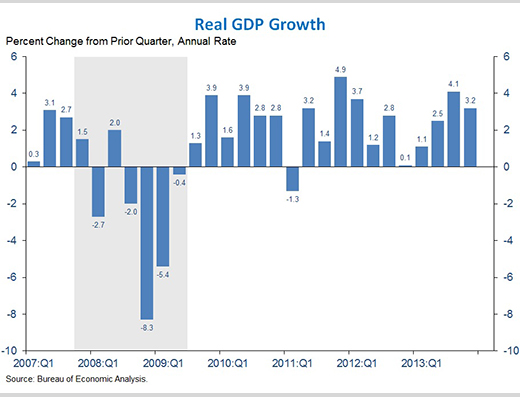
Economic growth was solid in the fourth quarter, a testament to the resilience of American businesses and families. The private sector’s strong performance in the fourth quarter caps off its fastest year of growth since 2003. And over the four quarters of 2013, real GDP grew 2.7 percent, its strongest rate in three years. Nevertheless, the unemployment rate is still unacceptably high, and too many Americans are still looking for a job and fighting to make ends meet. In his State of the Union address on Tuesday night, President Obama outlined his plans to build on the progress made to date and ensure 2014 is a year of action, with steps to increase growth, create new jobs, and expand economic opportunity.

FIVE KEY POINTS IN TODAY’S REPORT FROM THE BUREAU OF ECONOMIC ANALYSIS

1. Real gross domestic product rose at a solid 3.2 percent annual rate in the fourth quarter, the 11th consecutive quarter of growth. Looking at the various components of GDP, growth in consumer spending picked up from the previous quarter, as did exports, business investment was in line with its recent performance, but Federal spending fell sharply, and housing posted its first quarterly decline since 2010. In the last two quarters economic growth accelerated to a 3.7 percent annual rate and over the four quarters of 2013, real GDP grew 2.7 percent, up from 2.0 percent in 2012. (Note that economists generally prefer to measure growth on a Q4/Q4 basis because that reflects what happened to the economy just in 2013, the alternative annual measure of growth also places considerable weight on what happened to the economy in 2012 and thus does not provide as meaningful a measure.)


The White House

Office of the Press Secretary

FACT SHEET: Opportunity For All: Empowering All Americans with the Skills Needed for In-Demand Jobs

Year of Action: Making Progress Through Executive Action

In his State of the Union address, the President outlined a comprehensive agenda to make America a magnet for middle class jobs and business investment. As part of this effort, the President is acting on a set of specific, concrete proposals that will make sure American workers have the skills that they need for in-demand jobs of today and the jobs of tomorrow.

  • Presidential Memorandum Directing the Vice President to Lead an Across the Board Review of How to Best Reform Federal Training Programs. In the State of the Union, the President asked the Vice President to lead an across the board review of our federal employment and training programs within existing legislative authority. This full review will focus on ensuring that our training programs are job-driven – by making sure that all of our training programs are completely focused on helping people who are ready to work attain the skills needed to fill good jobs that are in high-demand industries.
  • Immediate Stakeholder Consultation Led by the Vice President on Best Practices to Make America’s System of Workforce Training More Job-Driven. Led by the Vice President, the White House policy councils together with the Secretaries of Labor, Commerce and Education will engage in immediate consultation with business and labor leaders, educators, Mayors and Governors, and Democratic and Republican Congressional officials on the best practices for ensuring that America’s workforce training system is more driven by the needs of employers in order to place workers in good jobs.
  • Focus Final $500 Million Community College Competition on Best Practices for Job-Driven Training. Secretary Perez and the Labor Department have increasingly emphasized job-driven training as part of their programs and competitions. Building on these successes, the President has asked the Secretary of Labor for an enhanced focus on job-driven training and the best practices that will be identified through the stakeholder consultations to be applied to the selection criteria for the final $500 million of a community college training fund. This grant competition will seek to scale job-driven training partnerships between regional employers and national industry associations that advance the best practices identified throughout the immediate stakeholder consultations.

Further Detail on Executive Actions the President Is Taking to Empower American Workers with the Skills That Employers Demand Today and the Jobs of Tomorrow

  • Presidential Memorandum Directing the Vice President to Lead an Across the Board Review of How to Best Reform Federal Training Programs. The President has asked the Vice President to lead an across the board review of the federal training system within existing legislative authority. This review will be focused on making sure that our training programs are job-driven. Under the Vice President’s leadership and the interagency coordination of the National Economic Council, the Domestic Policy Council, the Council of Economic Advisers and the Office of Management Budget, the Secretaries of Labor, Education and Commerce as well as leaders from other relevant Federal agencies will develop an action plan to make the workforce and training system more job-driven, integrated and effective, which will identify concrete steps that we can take including:
  • Partnerships with Businesses and Labor, Workers and National Industry Associations. Promoting more active engagement with industry and labor, regional employers, and worker representatives to identify the skills and support that workers need, and to make sure those skills are better communicated to education and training providers, workforce leaders as well as job seekers.
  • Innovations for Better Information. Making available to workers, job seekers, and employers the best information regarding job demand, skills matching, supports, and education, training, and career options, as well as innovative approaches to training using learning science and advanced technology.
  • Building Evidence and Greater Accountability. Building on existing evidence of success, we will improve the metrics used to assess programs and providers, to disseminate effective approaches and commit to a plan to evaluate more strategies for effectiveness.
  • Ensuring Better Alignment and Coordination. Identifying ways to ensure better alignment across workforce training, including better coordination of Federal skills, education and apprenticeship programs.
  • Immediate Stakeholder Consultation Led by the Vice President on Best Practices to Make Our System of Skills Training More Job-Driven. The President is asking the Vice President, senior White House officials and his Cabinet, including the Secretaries of Labor, Commerce and Education, to start immediate consultation with business, labor and community college leaders, Governors, Mayors, worker representatives, and Republican and Democratic Congressional officials to continue to tackle some of the challenges associated with preparing and matching workers to good jobs.
  • Business and labor leaders, including in high-growth industries and small businesses, about how they would use community colleges and training system partnerships to help them hire skilled workers, and their role in spreading these programs across the country.
  • Governors and Mayors about job-driven training that has worked in their communities, and how community college-employer partnerships can get more people into good jobs.
  • Worker representatives, community- and faith-based organizations on successful approaches to train low-skilled or displaced workers for well-paying, career-path jobs
  • Community college and other education leaders on how to collaborate effectively with employers and align training programs to industry-recognized credentials and hiring.
  • Leading technologists, researchers and entrepreneurs on how to how to make the best information available to jobseekers, as well as innovative approaches to training using learning science and advanced technology.
  • Focus Final $500 Million Community College Competition on Best Practices for Job-Driven Training. The Trade Adjustment Assistance and Community College and Career Training (TAA-CCCT) competitive grant program has, over the last three years, supported community colleges in a range of strategies, including a range of partnerships that have increasingly focused on job-driven training strategies. Secretary Perez has already undertaken serious engagement since being sworn into office to ensure that training programs at the Labor Department are focused on meeting the needs of employers that will do the hiring. Building on his progress, the President has asked the Secretary of Labor to make job-driven training strategies as well as the best practices identified through the stakeholder consultations to be taken into consideration in the selection criteria for the final $500 million of the TAA-CCCT competition. This grant competition will seek to scale job-driven training partnerships between regional employers and national industry associations that advance the best practices identified throughout the immediate stakeholder consultations. In particular, this grant competition will fund the work of winning partnerships advancing elements of the most successful models identified throughout the immediate stakeholder engagement and consultation, including at least one winner in every state. 
  • Community College Partnerships with Regional Employers.  Winning community college grantees will partner with regional employers to create training programs for in-demand jobs. Proposals in which applicants commit to replicating programs nationally will be encouraged.

National Competition with Winners in Every State. Every State will be awarded at least one grant for community college-regional employer partnerships, with competitive priority for partnerships that also include national industry and employer groups that commit to help replicate elements of these successful models nationwide, in other communities where they want to hire workers with these skills.

Remarks by the President on Retirement Security

January 29, 2014 | 20:10 | Public Domain

West Mifflin, PA.

Download mp4 (895MB) | mp3 (49MB)

Read the Transcript

Remarks by the President on Retirement

2:05 P.M. EST

THE PRESIDENT:  Hey, hello, everybody.  (Applause.)  Well, thank you, Mario, for that great introduction and your leadership.  You just don’t come to the Steel City without coming to U.S. Steel.  I just got a great tour and had a chance to see a little bit about how you guys build America every single day.  And I could not be prouder to be here. 

I brought a few friends with me.  We've got America’s Treasury Secretary, Jack Lew.  (Applause.)  We've got a couple of guys who wake up and go to bat for Pennsylvania workers every single day, Senator Bob Casey and Congressman Mike Doyle.  (Applause.)  We've got the Mayor of West Mifflin, Chris Kelly, in the house.  (Applause.)  Pittsburgh’s new Mayor, Bill Peduto is here.  (Applause.)  And we've got Allegheny County Executive, Rich Fitzgerald.  (Applause.)  And then, we’ve got one of my good buddies who is always in my ear about working people -- and I love this guy -- the International President of the United Steelworkers, Leo Gerard, is here.  (Applause.)  And I also brought along our great friend, our former ambassador to Ireland and, most importantly, Chairman of the Pittsburgh Steelers, Dan Rooney in the house.  (Applause.) 

And most of all, it’s great to be here with the men and women of U.S. Steel.  This company helped build America, and over a hundred years later, you’re still at it.  You forge the pipes that transport cleaner-burning natural gas.  You manufacture the lightweight alloys that our automakers use to build fuel-efficient cars.  You’re part of one of the great turnaround stories of this economic recovery, the rebound of the American steel industry.  And, look, just every time I go to a steel plant, I remember being a steelworker is hard work.  But every single one of you is doing your part to make the country stronger. 

Because of your efforts, businesses like U.S. Steel have now created 8 million new jobs over the past four years -- 9,000 new jobs in the steel industry alone.  Our unemployment rate is the lowest it’s been in more than five years.  Our deficits have been cut in half.  Housing is rebounding.  Manufacturing is adding jobs -- not shrinking jobs -- for the first time since the 1990s.  We sell more of what we make here in America to other parts of the world than ever before.  Business leaders are starting to realize that China is no longer the best place to invest and create jobs, America is -- the U.S. of A -- (applause) -- which is why I said last night I believe this can be a breakthrough year for America. 

After five years of hard work, after everything we did to dig ourselves out of the worst recession of our lifetimes, we’re better positioned in this 21st century than any other country on Earth.  And the question I posed to Congress yesterday is whether folks in Washington are going to help or they're going to hinder the progress we've been making, whether they’re going to waste time creating new crises that slow down our economy or they're going to spend time creating new jobs and new opportunities?  (Applause.)  

And I don't know what their plans are, but I choose a year of action.  Because too many Americans are working harder than ever just to get by, let alone get ahead.  They still have the scars of the recession.  But the truth is the middle class have been taking it on the chin since way before the financial crisis hit.  You know that.  The economy now has been growing for four years.  Corporate profits, stock prices they've gone up, but folks’ wages haven’t risen in over a decade. 

That’s why, last night, I laid out new steps we can take right now to speed up economic growth, strengthen the middle class and build new ladders of opportunity into the middle class.  It's an opportunity agenda, because opportunity is what America is all about.  And the agenda has four parts.  Number one, more new jobs:  jobs in American manufacturing, jobs in American energy, jobs in American innovation and technology.  (Applause.)   Number two, we've got to train more Americans with the skills that we need to fill those jobs.  Number three, we've got to guarantee every child in America a world-class education.  (Applause.)  And number four, we've got to make sure hard work pays off.

Now, some of these ideas that I presented last night are going to require Congress to pass legislation.  But America doesn’t stand still.  U.S. Steel hasn't stood still.  I'm not going to stand still.  So wherever I can take steps to expand opportunity for more families, regardless of what Congress does, that’s what I’m going to do -- (applause) -- because I am determined to work with all of you and citizens all across this country on the defining project of our generation, and that is to restore opportunity for every single person who is willing to work hard and take responsibility in this country.  That's what I'm committed to doing.  (Applause.)

I’ve come to U.S. Steel today because I want to talk about the fourth part of that opportunity agenda, making hard work pay off for every single American:  making sure jobs pay good wages, making sure affordable health care is there when you need it, making sure that after a lifetime of hard work you can retire with some dignity.

Today, women make up about half our workforce, but they still make 77 cents for every dollar a man makes.  As I said last night, that's wrong.  In 2014, it’s an embarrassment.  Women deserve equal pay for equal work.  They deserve to be able to have a baby without sacrificing a job.  (Applause.)  Moms and dads deserve to be able to take a day off for a sick kid or a sick parent.  We've got to get rid of some of these workplace policies that belong back in the '50s, back in a “Mad Men” episode, I said.  (Laughter.)  We've got to give every woman the opportunity she deserves, because when women succeed, America succeeds.  (Applause.)  And I'm really proud that there's a woman who is heading up this plant and doing some amazing work.  So I was really glad to see that.

But women hold the majority of lower-wage jobs.  And they're not the only ones who have been stifled by stagnant wages.  The truth is wages and incomes for the average working American haven't gone up.  Even though the economy is more productive, even though it's grown over the last two decades, the average person's salary -- what they're taking home, their paycheck -- it hasn't really grown.  Now, Americans understand, we all understand some people are going to earn more money than others.  And we don’t envy anybody who achieves success through their hard work.  That's what we want for our kids.

Michelle and I were talking.  Michelle's dad was a blue-collar worker, worked at a water filtration plant in Chicago.  Her mom was a secretary.  My mom was a single mom.  When we were growing up, we weren't worrying about what rich people were doing.  We weren't going around saying, oh, man, we don't have caviar for lunch -- (laughter) -- and we're not vacationing down in some fancy place.  We don't begrudge success to other folks. But we did expect -- and I think most Americans still expect -- that if you work hard, you should be able to make it.  You don't have to make it the way some folks make it, but everybody should have enough to feel some security. 

And Americans overwhelmingly agree that nobody who works full-time should ever have to raise a family in poverty.  (Applause.)  If you're doing your responsibilities and working hard, you should be able to pay the rent, buy food and look after your family.  

Now, today, the federal minimum wage doesn’t go as far as it did even in the 1950s.  That’s why some states and cities are raising their minimum wages on their own.  And I support their efforts.  And as I mentioned last night, as chief executive, I’m going to lead by example.  In the coming weeks, I'm issuing an executive order requiring federal contractors, folks doing business with the federal government, to pay your federally funded employees a fair wage of at least $10.10 an hour, because if you cook our troops’ meals or you wash their dishes, you shouldn’t have to live in poverty.  (Applause.) 

Of course, if we're going to reach millions more, then Congress is going to have to get on board.  There’s a bill in Congress right now to raise that minimum wage to $10.10.  And I told Congress, say yes to that.  Give America a raise. 

But that's not all we have to do to grow our middle class.  Making work pay also means access to health care that’s there for you when you get sick.  Now, the good news is if you work here at U.S. Steel, I know you've got good benefits.  And that's why I'm a strong supporter of unions, because they fought for those benefits.  (Applause.) 

But as everybody here knows -- and I'll bet you've got friends and family who haven't been so lucky and don't have those benefits.  And what the Affordable Care Act means is that no one can ever again be dropped or denied coverage for a preexisting condition like asthma or cancer.  You can’t be charged more if you’re a woman.  You can’t be charged more just because forging steel might hurt your back, make it hurt sometimes.  And if you don't have health insurance on the job, you can actually get affordable health insurance. 

So the days when folks are just on their own, out of luck, those days are over.  More Americans are signing up for new private health insurance plans every day.  (Applause.)  We're signing folks up for Medicaid.  And if you know somebody who isn’t covered, call them up, sit them down, help them get covered at healthcare.gov by March 31st.  We are going to get all of America covered.  That's one of my commitments.  (Applause.)  

And, finally -- and that's what this little desk here is about -- there's another thing we can all agree on.  If you've worked hard all your life, you deserve a secure retirement.  Some of the folks I met before I came here on the tour, some of these folks have been on the job 15 years, 20 years.  I think your roller has been on the job 38 years.  Let me tell you something, if you work 38 years, at the end of it you should feel like you're going to retire with some security.   

And a retirement used to be a three-legged stool, used to have a pension.  Then you had your Social Security.  Then you had your own private savings.  And you put that all together, and you could retire.  But today, most workers don’t have a pension in America.  Just half work for an employer that offers any kind of retirement plan.  A Social Security check is critical, but oftentimes that monthly check, that's not enough.  And while the stock market has doubled over the last five years, that doesn’t help somebody if you don't have a 401(k).

So what I’ve asked Congress to do is work with me to give more people more retirement security.  Let's fix an upside-down tax code that right now gives the wealthiest Americans big tax breaks to save, but does almost nothing for middle-class folks, doesn't give them the same kinds of tax advantages.  That's not fair.  And we need to give every American access to an automatic IRA on the job, so they can save at work.

Now, I’m hoping that Congress goes along with this, but I'm not going to wait for Congress.  I could do more with Congress, but I'm not going to not do anything without Congress, not when it’s about the basic security and dignity of American workers.  So here's what I'm going to do today.  This is what this little table is set up for.  I'm going to sign a presidential memorandum that directs the U.S. Treasury Secretary, Jack Lew, to create a new way for working Americans to start their own retirement savings.  (Applause.)  And as soon as I sign this, Jack Lew will get the memo.  He is right here.  So I'm going to be able to just -- here, here's your memo. 

And we're calling it “MyRA.”  Not IRA -- MyRA.  And what it is, it's a new type of savings bond that we can set up without legislation that encourages Americans to begin to build a nest egg.  And it’s simple.  Workers can contribute through automatic deductions in their paychecks, just like those of you who have an employer-sponsored pension fund can do.  They can keep the same account even if they change jobs, so they can carry it over.  It’s safe.  These account balances will never go down in value.  They’re backed by the full faith and credit of the United States government.  And it’s affordable.  So you can open an account with as little as $25.  You can contribute as little as $5 at a time. 

But what that means is for those of you who don't have a 401(k) on the job, don't have a pension on the job, don't have a mechanism to start saving -- especially younger workers -- you can get started now.  And in an emergency, you can withdraw contributions without paying a penalty.  So it's a pretty good deal.  (Applause.)  And what I'm hoping is that working Americans will take a look, because I want more people to have the chance to save for retirement through their hard work.  And this is just one step that we can take to help more people do that. 

So this is the opportunity agenda that's going to help restore some sense of economic security in this 21st century economy.  We want jobs that are more plentiful.  We want skills that keep you employable.  We want savings that are portable.  We want health care that’s yours and that's not going to be canceled when you really need it.  We want every American who works hard and takes responsibility to retire with dignity after decades of honest work.  These are real, practical, achievable solutions to help shift the odds back a little bit in favor of more working and middle-class Americans, so that if they work hard, they can get ahead and they can leave something for the next generation.

And that's something that U.S. Steel knows a little bit about.  For over a hundred years, people throughout the Mon Valley and across this country have been punching in at plants just like this one.  You’ve been keeping the furnaces blasting, keeping the cold mill rolling, carrying on the tradition of hard work and determination.  We've got two, three-generation steel workers at this plant right here.  And I know for a lot of you, this is more than a job.  This is a team.  This is a family that you're proud to be a part of. 

Robin Birk is with me today.  Decades ago, her granddad worked for Union Switch and Signal in Pittsburgh, making parts for railroads.  Her dad worked for U.S. Steel for over 30 years, rising to plant manager.  Robin’s been a safety manager here for 23 years.  And I want to share something Robin said.  She said, “When I was growing up, I would think about what my grandfather and father did for a living, and I always thought my brother would be the one who got to work here.  But it ended up being me.  Women before me maybe didn’t have that opportunity.”
 
Now, Robin’s dad, Bernard, who just passed away a little more than a year ago, he was full of pride for this company.  He used to say, “When we bleed, we bleed blue” -- the color of U.S. Steel. 

So that pride has run across generation.  That's the pride that built this company.  And that's the pride that built America.  That’s the spirit we all need today.  That's the resilience, the grit, the determination, and the optimism that keeps the American Dream alive not just for this generation, but for future generations to come. 

That's what I'm going to be fighting for this year, just like I was for the last five years and for the next three years.  And I expect all of you to join me in making sure that we deliver that promise to the next generation.  (Applause.)

And now, I'm going to sign this bill.  Thank you.  God bless you.  God bless the United States of America. 

END
2:26 P.M. EST

Close Transcript

Remarks by the President on Minimum Wage

January 29, 2014 | 21:16 | Public Domain

Lanham, MD.

Download mp4 (782MB) | mp3 (51MB)

Read the Transcript

Remarks by the President on Minimum Wage -- Lanham, MD

Costco
Lanham, Maryland

10:15.M. EST

THE PRESIDENT:  Hello, Maryland!  (Applause.)  It’s good to see you.  I love getting outside the Beltway, even if it is just a few hundred feet away.  (Laughter.) 

Well, first of all, give Teressa a great big round of applause for the great job she did.  (Applause.)  It is good to be here with all of you.  I want to acknowledge a champion for working families right here in Maryland -- Governor Martin O’Malley.  (Applause.)  Some folks who go to bat for working people every single day:  Senator Ben Cardin is here.  (Applause.)  Congresswoman Donna Edwards is here.  (Applause.)   And all of you are here.  (Applause.)

Teressa’s story proves that treating workers well is not just the right thing to do -- it is an investment.  And Teressa’s 27 years of hard work at Costco proves that investment pays off.

I talked a little bit about this last night in my State of the Union address.  Now, I only finished 12 hours ago, so these remarks will be quicker.  (Laughter.)  And I needed some time to pick up a snow shovel and one of those 50-pound bags of dog food for Bo and Sunny.  (Applause.)  I was told I'd get a big-screen TV, too, for the Super Bowl coming up -- 80-inch.  (Laughter.)   So 60 is not enough?  Got to go 80.  (Laughter.)

It is funny, though -- I was looking -- you can buy a sofa, chocolate chip cookies and a snorkel set all in the same -- (laughter and applause.)  The sofa didn’t surprise me, but the snorkel set -- (laughter) -- that was impressive.  Although I do want to ask, who’s snorkeling right now?  (Laughter.)  How many of those are you guys selling?  You never know.  (Laughter.)

But what I talked about last night was a simple but profound idea -- and it’s an idea that’s at the heart of who we are as Americans:  Opportunity for everybody.  Giving everybody a fair chance.  If they’re willing to work hard, take responsibility, give them a shot.  The idea that no matter who you are, where you come from, what you look like, what your last name is, if you work hard, you live up to your responsibilities, you can succeed; you can support a family.  (Applause.)  That's what America should be about.  Nobody is looking for a free lunch, but give people a chance.  If they’re working hard, make sure they can support a family.

Now, we’re at a moment where businesses all across the country, businesses like Costco have created 8 million new jobs over the last four years.  Our unemployment rate is the lowest it’s been in more than five years.  Our deficits have been cut in half.  Housing is rebounding.  Manufacturing is adding jobs for the first time since the ‘90s.  We sell more of what we make here in America to other places than ever before.  Business leaders are deciding that China’s not the best place to invest and create jobs -- America is. 

So this could be a breakthrough year for America.  After five years of hard work, overcoming the worst recession in our lifetimes, we're better-positioned for this young century than anybody else.  But the question for folks in Washington is whether they’re going to help that progress or hinder that progress; whether they’re going to waste time creating new crises for people and new uncertainty -- like the shutdown -- or are we going to spend time creating new jobs and new opportunities.

And I know what I'm choosing to do because it’s what you do -- I'm choosing this to be a year of action.  (Applause.)   Because too many Americans are working harder than ever just to get by, much less get ahead.  The scars of the recession are real.  The middle class has been taking it on the chin since before the recession.  The economy has been growing for four years now, and corporate profits, stock prices have all soared.  But the wages and incomes of ordinary people haven’t gone up in over a decade. 

So that’s why last night, I laid out some steps that we can take, concrete, common-sense proposals to speed up economic growth, strengthen the middle class, build new ladders of opportunity into the middle class. 

And this opportunity agenda has four parts.  Number one, we need more new jobs.  Number two, we need to train more Americans with the skills that they need to fill those jobs.  Number three, we should guarantee every child access to a world-class education.  (Applause.)  And number four, let’s make sure hard work pays off.  (Applause.)

Now, some of my ideas I’ll need Congress.  But America can't just stand still if Congress isn’t doing anything.  I’m not going to stand still either.  Wherever I can take steps to expand opportunity for more families, I’m going to do it -- with or without Congress.  (Applause.)  Because the defining project of our time, of our generation, is to restore opportunity for everybody.

And so I’m here at Costco today to talk about the fourth part of the opportunity agenda, and that is making hard work pay off for every single American.

Five years ago I signed my first bill into law.  I didn't have any gray hair.  (Laughter.)  You think it’s distinguished?  Okay.  (Laughter.)  That's the guy with the gray beard saying -- (Laughter).  So this first bill that I signed was called the Lilly Ledbetter Fair Pay Act.  (Applause.)  Lilly was at my speech last night.  And it’s a law to help protect a woman’s right to fair pay.  But at a time when women make up about half of the workforce, but still make 77 cents for every dollar a man earns -– we’ve got to finish the job and give women the tools they need to fight for equal pay.  Women deserve equal pay for equal work.  (Applause.)  They deserve -- if they're having a baby, they shouldn’t have to sacrifice their job.  A mom deserves a day off to care for a sick child or a sick parent -– and a father does, too.

As I said last night, we got to get rid of some of these workplace policies that belong in a “Mad Men” episode, belong back in the ‘50s.  We’ve got to give every woman the opportunity she deserves.  Because when women succeed, America succeeds.  (Applause.)

Now, women happen to hold a majority of lower-wage jobs in America.  But they’re not the only ones who are stifled when wages aren’t going up.  As Americans, we understand some people are going to earn more than other people, and we don’t resent those who because they work hard, because they come up with a new idea, they achieve incredible success.  We want our kids to be successful.

And it’s funny -- Michelle and I sometimes talk -- Michelle’s dad was a blue-collar worker; her mom was a secretary. I was raised by a single mom.  We didn't go around when we were growing up being jealous about folks who had made a lot of money -- as long as if we were working hard, we could have enough.

So Americans overwhelmingly agree nobody who works full-time should ever have to raise a family in poverty.  (Applause.)  And that is why I firmly believe it’s time to give America a raise.  (Applause.)

A hundred years ago, Henry Ford started Ford Motor Company. Model T -- you remember all that?  Henry Ford realized he could sell more cars if his workers made enough money to buy the cars. He had started this -- factories and mass production and all that, but then he realized, if my workers aren’t getting paid, they won’t be able to buy the cars.  And then I can't make a profit and reinvest to hire more workers.  But if I pay my workers a good wage, they can buy my product, I make more cars.  Ultimately, I’ll make more money, they’ve got more money in their pockets -- so it’s a win-win for everybody.

And leaders today, business leaders today, some of them understand this same concept.  Costco’s CEO, Craig Jelinek, he understands this.  He feels the same way.  He knows that Costco is going to do better, all our businesses do better when customers have more money to spend.  And listen, Craig is a wonderful guy, but he’s not in this for philanthropy.  He’s a businessman.  He’s looking at the bottom line.  But he sees that if he’s doing right by Costco’s workers, then they can buy that 80-inch TV, too.  (Laughter and applause.)  Right? 

Profitable corporations like Costco see higher wages as a smart way to boost productivity and to reduce turnover.  So entry-level employees here -– stock associates, cashiers –- start out at $11.50 an hour.  (Applause.)  Start at $11.50. 

AUIDENCE MEMBER:  Mr. President, we love you! 

THE PRESIDENT:  Thank you.

The average hourly wage is more than $20, not including overtime or benefits.  And Costco’s commitment to fairness doesn’t stop at the checkout counter; it extends down the supply chain, including to many of the farmworkers who grow the product -- the produce that you sell.  (Applause.) 

Now, what this means is that that Costco has some of the lowest employee turnover in your industry.  So you’re not constantly retraining folks because they quit.  You got people like Teressa who has been here 27 years -- because it’s a company that's looking out for workers.

And I got to tell you, when I walk around, just -- I had a little tour of the produce section, the bakery -- you could just tell people feel good about their job and they feel good about the company, and you have a good atmosphere, and the managers and people all take pride in what you do.

Now, folks who work at Costco understand that, but there are a lot of Americans who don’t work somewhere like Costco, and they’re working for wages that don’t go as far as they once did. Today, the minimum wage -- the federal minimum wage doesn’t even go as far as it did back in the 1950s.  And as the cost of living goes up, the value of the minimum wage goes down over time.  Just last year alone, workers earning the minimum wage basically got the equivalent of a $200 pay cut because the minimum wage stayed the same but costs of everything else are going up. 

I don’t need to tell you this.  You go shopping.  (Laughter.)  So you’re like, mm-hmm.  (Laughter.)  For a typical minimum-wage worker, that’s a month’s worth of groceries.  It’s two months of electricity.  It’s a big deal to a lot of families.

So I brought a guy here today who knows a little bit about this -- Tom Perez is America’s Secretary of Labor -- (applause)  -- works for working families every day.  I stole him from Governor O’Malley.  (Laughter.)  He came here from Maryland.  But when he was Governor O’Malley’s labor secretary here in Maryland, he helped implement the country’s first statewide living wage law.  And that helped a lot of Maryland families.  But there are more families in Maryland and across the country who put in long days, they’ve got hard jobs -- they deserve higher wages. 

In the year since I first asked Congress to raise the federal minimum wage, five states have passed laws to raise theirs.  Governor O’Malley is trying to do it here in Maryland, and lift the minimum wage to $10.10.  He says, “We all do better when we’re all doing better.”  He’s right.  Prince George’s County, Montgomery County are banding together with D.C. to raise the regional minimum wage.  And I'm here to support your efforts. (Applause.)  I’m here to support your efforts.  And as I said last night, to every governor, mayor, state legislator out there, if you want to take the initiative to raise your minimum wage laws to help more hardworking Americans make ends meet, then I’m going to be right there at your side.

While Congress decides whether it’s going to raise the minimum wage or not, people outside Washington are not waiting for Congress.  And I’m not, either.  So as a chief executive, I’m going to lead by example.  In the coming weeks, I will issue an executive order requiring federal contractors to pay their federally funded employees on new contracts a fair wage of at least $10.10 an hour.  (Applause.)  Because if you cook our troops’ meals and wash their dishes, you shouldn’t have to live in poverty.

So there’s some steps businesses are taking on their own.  There are steps that certain states and counties and cities are taking on their own.  There are steps I’m going to take as President.  But ultimately, Congress does have to do its part to catch up to the rest of the country on this. 

And there’s a reason why a wide majority of Americans support increasing the minimum wage.  Look, most Americans who are working make more than the minimum wage.  So it’s interesting that the overwhelming number of Americans support raising the minimum wage.  It’s not that it’s going to necessarily affect them personally right now; it’s that they know, they understand the value behind the minimum wage.  If you work hard, you should be able to pay your rent, buy your groceries, look after your kids.  (Applause.)  If you put in a hard day’s work, you deserve decent pay for it.  That’s a principle everybody understands, everybody believes.

So right now in Congress, there’s a bill that would lift the federal minimum wage to $10.10 an hour -- 10.10 -- 10.10, it’s easy.  It will give more businesses more customers with more money to spend.  I guarantee you, if workers have a little more money in their pocket, they’ll spend more at Costco.  (Applause.) And if Costco is seeing more customers, they’ll hire some more folk.  Everybody does better. 

And the thing about it is raising the minimum wage doesn’t require new spending by the federal government.  It doesn’t require a big bureaucratic program.  It would help a lot of Americans make ends meet.

So I need everybody here and everybody who’s going to be watching, tell Congress to make this happen.  Give America a raise.  Making work pay means doing more to help Americans all across this country, but it also means improving the economy -- because one of the things that’s been holding our economy back is wages and incomes being flat, which means consumers aren’t spending as much, which means businesses don’t have as many customers, which means they don’t hire as much and they don’t invest as much, and we don’t get that liftoff on the economy that we could. 

If we want to make work pay, we also have to help Americans save for retirement -- and I’m going to be flying up to Pittsburgh this afternoon to talk about that.  (Applause.)  Making work pay means access to health care that’s there when you get sick.  And the Affordable Care Act means nobody can ever be dropped or denied coverage for a preexisting condition like asthma or cancer.  (Applause.)  You can’t be charged more if you’re a woman.  You can’t be charged just because your job makes your back hurt sometimes.  Those days are over.  (Laughter.) 

More Americans are signing up for new private health insurance plans every day.  Already 3 million people have signed up.  So if you know somebody who isn’t covered, who doesn’t have health insurance, call them up, sit them down, help them get covered at healthcare.gov by March 31st.

So this is the opportunity agenda that I’m going to be talking about this year.  I don’t know -- I hope Congress will be talking about it, too.  But I’m not going to wait.  Because we’ve got to restore some economic security in a 21st century economy, and that means jobs that are more plentiful, skills that are more employable, savings that are more portable, health care that’s yours and can’t be canceled if you get sick. 

I just focused on one piece of that opportunity agenda today -- raising the minimum wage.  But these are real, practical, achievable solutions that can help shift the odds back in favor of working and middle-class Americans who haven’t been seeing some of the benefits of growth that we’ve seen over the last four years.

And before I grab a 10-pound barrel of pretzels and -- (laughter) -- 500 golf balls -- (laughter) -- let me just leave you with something I heard from Costco’s founder, Jim Sinegal, who’s been a great friend of mine and somebody who I greatly admire.  And Jim is rightly proud of everything he’s accomplished.  “But,” he said, “here’s the thing about the Costco story.  We did not build our company in a vacuum.  We built it in the greatest country on Earth.  We built our company in a place where anyone can make it with hard work, a little luck, and a little help from their neighbors and their country.” 

That’s what Jim said -- a place where anyone can make it.  That’s who we are.  That’s our story.  If we pull together, work together, put our shoulder to the wheel, keep moving forward, that’s going to be our future as well, and the future for our kids and grandkids. 

Thanks so much, everybody.  God bless you.  God bless America.  (Applause.)

END   
10:34 A.M. EST

Close Transcript
The White House

Office of the Press Secretary

President Obama Signs Vermont Disaster Declaration

The President today declared a major disaster exists in the State of Vermont and ordered federal aid to supplement state and local recovery efforts in the area affected by severe winter storms during the period of December 20-26, 2013.

Federal funding is available to state and eligible local governments and certain private nonprofit organizations on a cost-sharing basis for emergency work and the repair or replacement of facilities damaged by the severe winter storm in the counties of Caledonia, Chittenden, Essex, Franklin, Grand Isle, Lamoille, and Orleans.

Federal funding is also available on a cost-sharing basis for hazard mitigation measures statewide.

W. Craig Fugate, Administrator, Federal Emergency Management Agency (FEMA), Department of Homeland Security, named James N. Russo as the Federal Coordinating Officer for federal recovery operations in the affected area.

FEMA said additional designations may be made at a later date if requested by the state and warranted by the results of further damage assessments.

FOR FURTHER INFORMATION MEDIA SHOULD CONTACT:  FEMA NEWS DESK AT (202) 646-3272 OR FEMA-NEWS-DESK@DHS.GOV

The White House

Office of the Press Secretary

Readout of the President’s Call to Governor Brown

Today, the President called Governor Jerry Brown to receive an update on the situation in California and express his concern for the citizens impacted by the historic drought conditions facing the state – conditions that are likely to have significant impacts on the state’s communities, economy and environment in the coming months.

The President reinforced his commitment to providing the necessary federal support to the state and local efforts. The agencies are working together to target resources to help California and other impacted states prepare for and lessen the impacts of the drought.  USDA is also working with farmers and ranchers to increase their irrigation water efficiency, protect vulnerable soils from erosion, and improve the health of pasture and range lands.  And the Bureau of Reclamation is working closely with federal and California state authorities to facilitate water transfers and provide operational flexibility to convey and store available water, and facilitate additional actions that can conserve and move water to critical areas.

The National Drought Resilience Partnership (NDRP) will help coordinate the federal response, working closely with state, local government, agriculture and other partners. The NDRP is already helping to enhance existing efforts that federal agencies are working on with communities, businesses, farmers and ranchers to build resilience where drought is currently an issue across the country.

The President made clear that we will continue to work with our federal partners, including FEMA, to support the state and local response, and expressed his support during this challenging time.

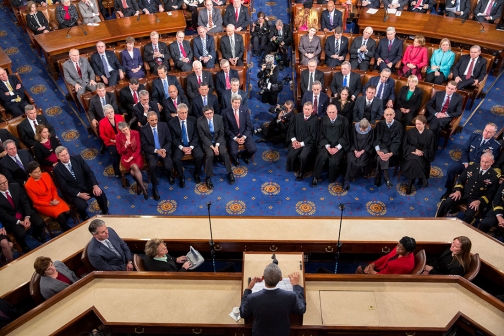
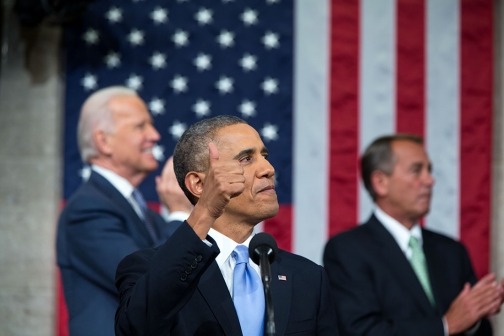
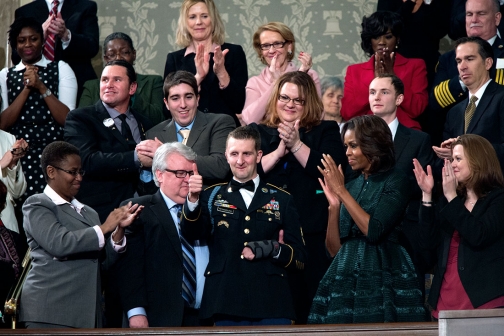
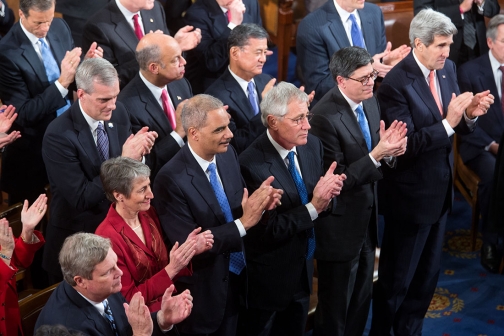
A Different Look at the 2014 State of the Union

On Tuesday, President Obama delivered his annual State of the Union Address to the nation and laid out his agenda for the coming year -- and the White House Photo Office followed him throughout the day.

They've put together a memorable set of State of the Union images -- including behind-the-scenes moments from before and after the speech, President Obama greeting Members of Congress, and audience reactions from during the speech. Check out the gallery below, and visit our State of the Union page for more State of the Union related videos and content.

  • SOTU1 En Route to Capitol

    President Obama’s motorcade travels to the U.S. Capitol for the State of the Union address. (Official White House Photo by Pete Souza)

    1 of 16
  • SOTU2 President Obama Reviews his Speech

    President Obama reviews his State of the Union address one last time at the U.S. Capitol. (Official White House Photo by Pete Souza)

    2 of 16
  • SOTU3 Waiting with Sergeants at Arms

    President Obama waits before entering the House Chamber to deliver the State of the Union address. (Official White House Photo by Pete Souza)

    3 of 16
  • SOTU4 VP Biden and Senate Majority Leader Reid

    Vice President Biden and Senator Reid enter the House Chamber for the State of the Union address. (Official White House Photo by David Lienemann)

    4 of 16
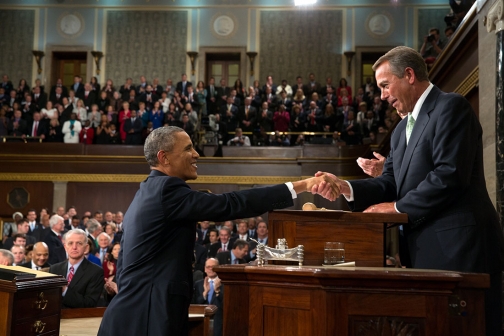
  • SOTU5 President Obama and Speaker Boehner

    President Obama shakes hands with House Speaker Boehner before he delivers the State of the Union address. (Official White House Photo by Pete Souza)

    5 of 16
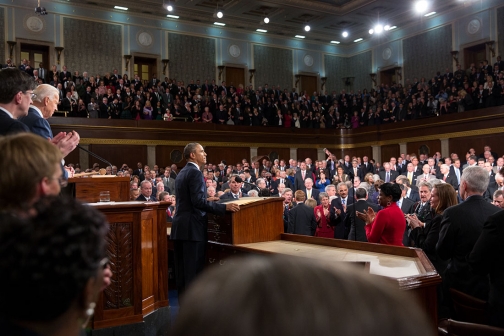
  • SOTU6 President Obama in the House Chamber

    President Obama acknowledges the applause before he delivers the State of the Union address. (Official White House Photo by David Lienemann)

    6 of 16
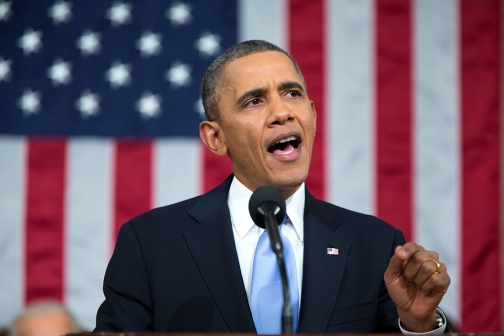
  • SOTU7 President Obama State of the Union Address

    President Obama delivers the State of the Union Address in the House Chamber at the U.S. Capitol (Official White House Photo by Pete Souza)

    7 of 16
  • SOTU8 President Obama State of the Union Address

    President Obama delivers the State of the Union Address in the House Chamber at the U.S. Capitol. (Official White House Photo by Amanda Lucidon)

    8 of 16
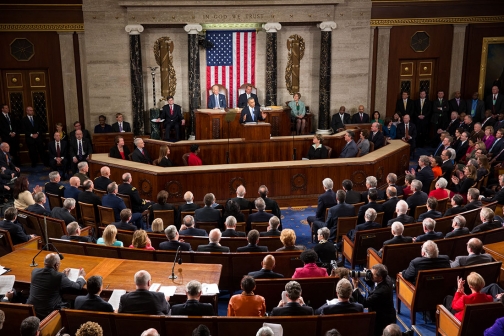
  • SOTU9 President Obama State of the Union Address

    President Obama delivers the State of the Union Address in the House Chamber at the U.S. Capitol. (Official White House Photo by Chuck Kennedy)

    9 of 16
  • SOTU10 President Obama Acknowledges Army Ranger Cory Remsburg

    President Obama acknowledges Army Ranger Cory Remsburg during the State of the Union address. (Official White House Photo by Pete Souza)

    10 of 16
  • SOTU11 Army Ranger Cory Remsburg

    The First Lady and the First Lady’s other guests applaud Army Ranger Cory Remsburg. (Official White House Photo by Pete Souza)

    11 of 16
  • SOTU12 Cabinet Members Applaud

    Cabinet members applaud President Obama at the State of the Union address in the House Chamber. (Official White House Photo by Chuck Kennedy)

    12 of 16
  • SOTU13 Sen. Debbie Stabenow

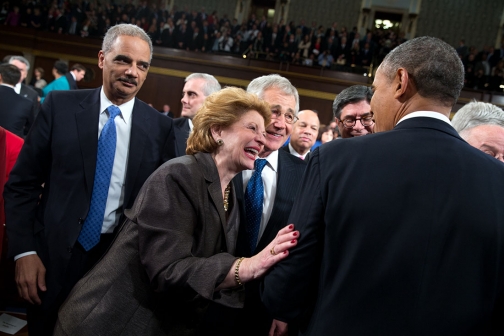
    Sen. Stabenow, Attorney General Holder, Defense Sec. Hagel, and Treasury Sec. Lew greet President Obama. (Official White House Photo by Pete Souza)

    13 of 16
  • SOTU14 President Obama Signs Copies of his Speech

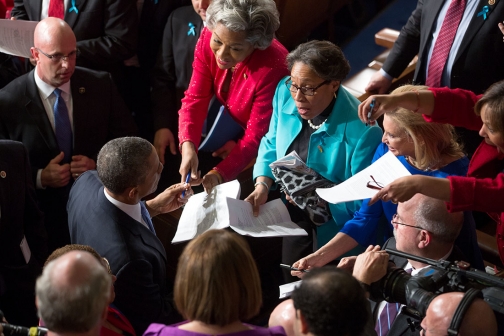
    President Obama signs copies of his speech for Members of Congress as he departs the House Chamber. (Official White House Photo by Amanda Lucidon)

    14 of 16
  • SOTU15 President Obama and First Lady Michelle Obama

    President Obama kisses the First Lady following his State of the Union address at the U.S. Capitol. (Official White House Photo by Pete Souza)

    15 of 16
  • SOTU16 President Obama Hallway Outside the House Chamber

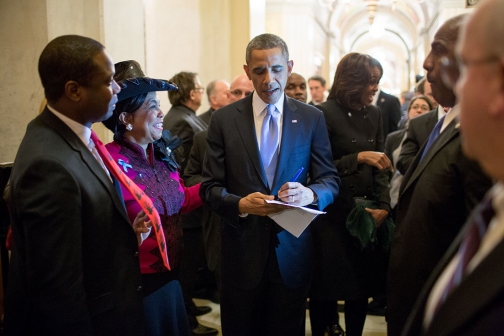
    President Obama signs a copy of his speech for Rep. Wilson in a hallway outside the House Chamber (Official White House Photo by Pete Souza)

    16 of 16