The White House

Office of the Press Secretary

Executive Order 13577--SelectUSA Initiative

EXECUTIVE ORDER

ESTABLISHMENT OF THE SELECTUSA INITIATIVE

By the authority vested in me as President by the Constitution and the laws of the United States of America, and in order to support private sector job creation and enhance economic growth by encouraging and supporting business investment in the United States, it is hereby ordered as follows:

Section 1.  Policy.  Business investment in the United States by both domestic and foreign firms, whether in the form of new equipment or facilities or the expansion of existing facilities, is a major engine of economic growth and job creation.  In an era of global capital mobility, the United States faces increasing competition for retaining and attracting industries of the future and the jobs they create.  My Administration is committed to enhancing the efforts of the United States to win the growing global competition for business investment by leveraging our advantages as the premier business location in the world.

As a place to do business, the United States offers a hardworking, diverse, and educated workforce, strong protection of intellectual property rights, a predictable and transparent legal system, relatively low taxes, highly developed infrastructure, and access to the world's most lucrative consumer market.  We welcome both domestic and foreign businesses to invest across the broad spectrum of the U.S. market.

The Federal Government lacks the centralized investment promotion infrastructure and resources to attract business investment that is often found in other industrialized countries.  Currently, States and cities are competing against foreign governments to attract business investment.  Our Nation needs to retain business investment and pursue and win new investment in the United States by better marketing our strengths, providing clear, complete, and consistent information, and removing unnecessary obstacles to investment.

Sec. 2.  SelectUSA Initiative.  (a)  Establishment.  There is established the SelectUSA Initiative (Initiative), a Government wide initiative to attract and retain investment in the American economy.  The Initiative is to be housed in the Department of Commerce.  The mission of this Initiative shall be to facilitate business investment in the United States in order to create jobs, spur economic growth, and promote American competitiveness.  The Initiative will provide enhanced coordination of Federal activities in order to increase the impact of Federal resources that support both domestic and foreign investment in the United States.  In providing assistance, the Initiative shall work to maximize impact on business investment, job creation, and economic growth.  The Initiative shall work on behalf of the entire Nation and shall exercise strict neutrality with regard to specific locations within the United States.

(b)  Functions.

(i)    The Initiative shall coordinate outreach and engagement by the Federal Government to promote the United States as the premier location to operate a business.

(ii)   The Initiative shall serve as an ombudsman that facilitates the resolution of issues involving Federal programs or activities related to pending investments.

(iii)  The Initiative shall provide information to domestic and foreign firms on:  the investment climate in the United States; Federal programs and incentives available to investors; and State and local economic development organizations.

(iv)   The Initiative shall report quarterly to the President through the National Economic Council, the Domestic Policy Council, and the National Security Staff, describing its outreach activities, requests for information received, and efforts to resolve issues.

(c)  Administration.  The Department of Commerce shall provide funding and administrative support for the Initiative through resources and staff assigned to work on the Initiative, to the extent permitted by law and within existing appropriations.  The Secretary of Commerce shall designate a senior staff member as the Executive Director to lead the Initiative.  The Executive Director shall coordinate activities both within the Department of Commerce and with other executive departments and agencies that have activities relating to business investment decisions.

(d)  Federal Interagency Investment Working Group.

(i)    There is established the Federal Interagency Investment Working Group (Working Group), which will be convened and chaired by the Initiative's Executive Director, in coordination with the Director of the National Economic Council.

(ii)   The Working Group shall consist of senior officials from the Departments of State, the Treasury, Defense, Justice, the Interior, Agriculture, Commerce, Labor, Veterans Affairs, Health and Human Services, Housing and Urban Development, Transportation, Energy, Education, and Homeland Security, the Environmental Protection Agency, the Small Business Administration, the Export Import Bank of the United States, the Office of the United States Trade Representative, the Domestic Policy Council, the National Economic Council, the National Security Staff, the Office of Management and Budget, and the Council of Economic Advisers, as well as such additional executive departments, agencies, and offices as the Secretary of Commerce may designate.  Senior officials shall be designated by and report to the Deputy Secretary or official at the equivalent level of their respective offices, departments, and agencies.

(iii)  The Working Group shall coordinate activities to promote business investment and respond to specific issues that affect business investment decisions.

(iv)   The Department of Commerce shall provide funding and administrative support for the Working Group to the extent permitted by law and within existing appropriations.

(e)  Department and Agency Participation.  All executive departments and agencies that have activities relating to business investment decisions shall cooperate with the Initiative, as requested by the Initiative's Executive Director, to support its objectives.

Sec. 3.  General Provisions.  (a)  Nothing in this order shall be construed to impair or otherwise affect:

(i)   authority granted by law to an executive department, agency, or the head thereof, or the status of that department or agency within the Federal Government; or

(ii)  functions of the Director of the Office of Management and Budget relating to budgetary, administrative, or legislative proposals.

(b)  This order shall be implemented consistent with applicable law and subject to the availability of appropriations.

(c)  This order is not intended to, and does not, create any right or benefit, substantive or procedural, enforceable at law or in equity by any party against the United States, its departments, agencies, or entities, its officers, employees, or agents, or any other person.

BARACK OBAMA

THE WHITE HOUSE,
June 15, 2011.

President Obama Arrives in Puerto Rico

June 14, 2011 | 10:36 | Public Domain

The President speaks about his Administration's commitment to the people of Puerto Rico as he arrives in San Juan.

Download mp4 (101MB) | mp3 (10MB)

Read the Transcript

Remarks by the President at a Welcome Event in San Juan, Puerto Rico

Luis Muñoz Marin International Airport
San Juan, Puerto Rico

11:43 A.M. AST

     THE PRESIDENT:  Buenas tardes!  (Applause.)  It is good to be back in Puerto Rico.  (Applause.)  It is great to see so many familiar faces, so many advocates for the island.  First of all, I want to acknowledge Congressman Pierluisi is here.  Where is he?  Right over there.  (Applause.)  My great friend, Andres Lopez.  (Applause.)  Franciso Pavia.  (Applause.)  Senator Bhatia.  (Applause.)  Governor Fortuno.  (Applause.)  And I know that we’ve got some former governors here today, along with leaders of local parties, and of the House and the Senate.
 
I am so grateful for the unbelievable reception.  As you know, the last President to come to San Juan and address the people of Puerto Rico was John F. Kennedy, nearly 50 years ago.  (Applause.)  Now, at the time, I was about four months old -- (laughter) -- so my memory of this visit is a little hazy.  What I do remember is that when I came here to campaign, I promised that I would return as President of the United States.  (Applause.)  And although my hair is a little grayer -- (applause) -- than during my first visit, I am glad to be able to keep that promise to the people of Puerto Rico.  (Applause.)  

But this is only one part of my commitment to families here on the island.  Because when I ran for President, I promised to include Puerto Rico not just on my itinerary, but also in my vision of where our country needs to go.  And I am proud to say that we’ve kept that promise, too.

First of all, we’ve addressed the question of political status.  In March, a report from our presidential task force on Puerto Rican status provided a meaningful way forward on this question so that the residents of the island can determine their own future.  And when the people of Puerto Rico make a clear decision, my administration will stand by you.  (Applause.) 

I also know that there are plenty of other issues that the island is facing.  When President Kennedy was here, he addressed the relationship between Washington and San Juan, and he also spoke about tackling what he called, “the difficult problems of education and housing and employment.”

In that same spirit, we’ve been trying to make sure that every family on the island can find work and make a living and provide for their children.  That’s why our economic plan and our health care reform included help for Puerto Rico.  (Applause.)

That’s why we’re increasing access to broadband and investing in education.  That's why we’re helping to grow local tourism and health care and clean-energy industries.  We’re giving Puerto Ricans the tools they need to build their own economic futures.
    
And this is how it should be.  Because every day, Boricuas help write the American story.  (Applause.)  Puerto Rican artists contribute to our culture -- and by the way, I don't know if you noticed, but Marc Anthony decided to show up here today.  (Applause.)  Puerto Rican entrepreneurs create American jobs.  Even in the NBA finals, J.J. Barea inspired all of us -- (applause) -- with those drives to the hoop.  That guy can play.  (Applause.)  Next time I’m down here I’m going to have to -- next time I’m here, I’m going to have to play some hoops.  (Applause.)
 
I also want to take a moment to acknowledge all the Puerto Rican men and women who serve in our country’s uniform.  (Applause.)  Give it up for our veterans.   Thank you.  (Applause.)

One of those veterans is Juan Castillo.  Juan fought in World War II, and he fought in the Korean War.  Today, he’s two months away from his 101st birthday.  (Applause.)

Juan’s legacy is carried on by Puerto Ricans in Iraq and Afghanistan; men and women like Chief Master Sergeant Ramon Colon-Lopez, of the United States Air Force.  In 2004, Ramon’s team was going after a high-value target in Afghanistan.  His helicopter was seriously damaged by hostile fire.  In the thick of battle, he didn’t know how large the force that he was up against.  But he pressed on anyway, and his team killed or captured 12 enemy fighters.  Because of his bravery, he was the first Hispanic American to be awarded the Air Force Combat Action Medal.  (Applause.)

And I tell this story because for decades, Puerto Ricans like Juan and Ramon have put themselves in harm’s way for a simple reason:  They want to protect the country that they love.  Their willingness to serve, their willingness to sacrifice, is as American as apple pie –- or as Arroz con Gandules.  (Applause.)  The aspirations and the struggles on this island mirror those across America.

So I know that today a lot of folks are asking some of the same questions here on the island as they’re asking in Indiana or California or in Texas:  How do I make sure my kids get the kind of education that they need?  How can I put away a little money for retirement?  How can I fill up my gas tank?  How can I pay the bills?

Everywhere I go, I see families facing challenges like these, but they’re facing them with resolve and determination.  You know, these problems didn’t develop overnight here in Puerto Rico or anywhere else, but that means we’re not going to solve them overnight.  But, day by day, step by step, we will solve them.

We are going to be able to improve our education system here in Puerto Rico and all across America.  (Applause.)  We are making strides to improve our health care system here in Puerto Rico and all across America.  (Applause.)  We are going to put people back to work here in Puerto Rico and all across America.  (Applause.)

Maybe some of you remember that when I was here in 2008, I spoke in front of the Cuartel de Ballaja, a site that had been home to so many chapters of Puerto Rican history.  Today, Puerto Rican workers are writing the next chapter by turning the building into a model of energy efficiency.  They’re making HVAC systems more efficient.  They’re putting on a green roof.  They’re installing 720 photovoltaic panels.  When they’re done, it’s estimated that the energy savings will be 57 percent.  And Puerto Rico will have taken one more step towards creating a clean energy economy.

Those are the kinds of steps it will take for Puerto Rico to win the future and for America to win the future.  (Applause.)  That’s what we do in this country.  With each passing decade, with each new challenge, we reinvent ourselves.  We find new ways to solve our problems.  We push forward. 

And we do so in a way that gives every one of our people a shot at the dream that we all share -– the dream that if you’re willing to work hard and take responsibility, you can build a better life for your family.  You can find a job that’s secure, provides decent wages, provides for your children, provides for your retirement.  That’s what people are hoping for, and it’s not too much to ask.

Puerto Rico, I don’t need to tell you that we’re not there yet.  We’re not where we need to be.  But in these challenging times, people on this island don’t quit.  We don’t turn back.  (Applause.)  People in America don’t quit.  We don’t turn back.  We place our bets on entrepreneurs and on workers and on our families.  We understand that there is strength in our diversity.  We renew the American Dream.  We have done it before.  We will do it again.
 
Muchas gracias.  Thank you very much.  Thank you.  Thank you, Puerto Rico.  (Applause.) 
             
END          
11:54 A.M. AST

Close Transcript

President Obama Visits Puerto Rico

Watch the President's full remarks here.

Today, President Obama traveled to San Juan, Puerto Rico for the first official visit by a sitting U.S. President to the island since President Kennedy visited in 1961. The visit follows a comprehensive report of the President’s Task Force on Puerto Rico’s Status, which provides a meaningful way forward on the question of status while making significant recommendations important to Puerto Rico’s economic development.

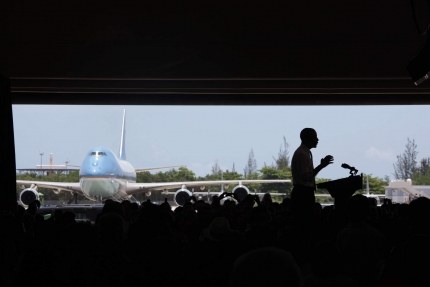
President Barack Obama delivers remarks at Luis Munoz Marin

President Barack Obama delivers remarks at the arrival ceremony at Luis Munoz Marin International Airport in San Juan, Puerto Rico, June 14, 2011. (Official White House Photo by Samantha Appleton)

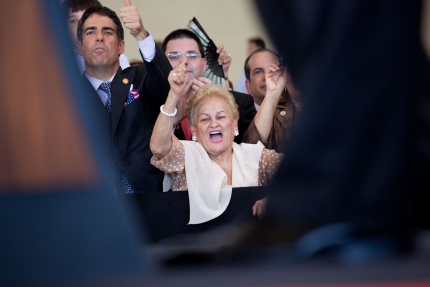
A woman cheers at the arrival ceremony at Luis Munoz Marin

A woman cheers President Barack Obama at the arrival ceremony at Luis Munoz Marin International Airport in San Juan, Puerto Rico, June 14, 2011. (Official White House Photo by Pete Souza)

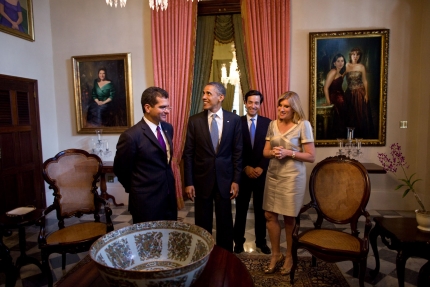
President Obama La Fortaleza

President Barack Obama tours La Fortaleza, the official residence of the Governor of Puerto Rico, with Gov. Luis Fortuno, First Lady Luce Vela de Fortuno and Rep. Pedro Pierluisi in San Juan, Puerto Rico, June 14, 2011. (Official White House Photo by Pete Souza)

Related Topics: Additional Issues

The White House

Office of the Press Secretary

Readout of the President's call with Prime Minister Erdogan of Turkey

President Obama called Turkish Prime Minister Recep Tayyip Erdogan from Air Force One today to congratulate the Prime Minister on the historic victory of his party in Turkey’s June 12 parliamentary elections.  The leaders noted the rich partnership and warm friendship between the United States and Turkey, and agreed to continue working closely together to develop an even stronger bilateral relationship.

The White House

Office of the Press Secretary

Remarks by the President at a Welcome Event in San Juan, Puerto Rico

Luis Muñoz Marin International Airport
San Juan, Puerto Rico

11:43 A.M. AST

     THE PRESIDENT:  Buenas tardes!  (Applause.)  It is good to be back in Puerto Rico.  (Applause.)  It is great to see so many familiar faces, so many advocates for the island.  First of all, I want to acknowledge Congressman Pierluisi is here.  Where is he?  Right over there.  (Applause.)  My great friend, Andres Lopez.  (Applause.)  Franciso Pavia.  (Applause.)  Senator Bhatia.  (Applause.)  Governor Fortuno.  (Applause.)  And I know that we’ve got some former governors here today, along with leaders of local parties, and of the House and the Senate.
 
I am so grateful for the unbelievable reception.  As you know, the last President to come to San Juan and address the people of Puerto Rico was John F. Kennedy, nearly 50 years ago.  (Applause.)  Now, at the time, I was about four months old -- (laughter) -- so my memory of this visit is a little hazy.  What I do remember is that when I came here to campaign, I promised that I would return as President of the United States.  (Applause.)  And although my hair is a little grayer -- (applause) -- than during my first visit, I am glad to be able to keep that promise to the people of Puerto Rico.  (Applause.)  

But this is only one part of my commitment to families here on the island.  Because when I ran for President, I promised to include Puerto Rico not just on my itinerary, but also in my vision of where our country needs to go.  And I am proud to say that we’ve kept that promise, too.

First of all, we’ve addressed the question of political status.  In March, a report from our presidential task force on Puerto Rican status provided a meaningful way forward on this question so that the residents of the island can determine their own future.  And when the people of Puerto Rico make a clear decision, my administration will stand by you.  (Applause.) 

I also know that there are plenty of other issues that the island is facing.  When President Kennedy was here, he addressed the relationship between Washington and San Juan, and he also spoke about tackling what he called, “the difficult problems of education and housing and employment.”

In that same spirit, we’ve been trying to make sure that every family on the island can find work and make a living and provide for their children.  That’s why our economic plan and our health care reform included help for Puerto Rico.  (Applause.)

That’s why we’re increasing access to broadband and investing in education.  That's why we’re helping to grow local tourism and health care and clean-energy industries.  We’re giving Puerto Ricans the tools they need to build their own economic futures.
    
And this is how it should be.  Because every day, Boricuas help write the American story.  (Applause.)  Puerto Rican artists contribute to our culture -- and by the way, I don't know if you noticed, but Marc Anthony decided to show up here today.  (Applause.)  Puerto Rican entrepreneurs create American jobs.  Even in the NBA finals, J.J. Barea inspired all of us -- (applause) -- with those drives to the hoop.  That guy can play.  (Applause.)  Next time I’m down here I’m going to have to -- next time I’m here, I’m going to have to play some hoops.  (Applause.)
 
I also want to take a moment to acknowledge all the Puerto Rican men and women who serve in our country’s uniform.  (Applause.)  Give it up for our veterans.   Thank you.  (Applause.)

One of those veterans is Juan Castillo.  Juan fought in World War II, and he fought in the Korean War.  Today, he’s two months away from his 101st birthday.  (Applause.)

Juan’s legacy is carried on by Puerto Ricans in Iraq and Afghanistan; men and women like Chief Master Sergeant Ramon Colon-Lopez, of the United States Air Force.  In 2004, Ramon’s team was going after a high-value target in Afghanistan.  His helicopter was seriously damaged by hostile fire.  In the thick of battle, he didn’t know how large the force that he was up against.  But he pressed on anyway, and his team killed or captured 12 enemy fighters.  Because of his bravery, he was the first Hispanic American to be awarded the Air Force Combat Action Medal.  (Applause.)

And I tell this story because for decades, Puerto Ricans like Juan and Ramon have put themselves in harm’s way for a simple reason:  They want to protect the country that they love.  Their willingness to serve, their willingness to sacrifice, is as American as apple pie –- or as Arroz con Gandules.  (Applause.)  The aspirations and the struggles on this island mirror those across America.

So I know that today a lot of folks are asking some of the same questions here on the island as they’re asking in Indiana or California or in Texas:  How do I make sure my kids get the kind of education that they need?  How can I put away a little money for retirement?  How can I fill up my gas tank?  How can I pay the bills?

Everywhere I go, I see families facing challenges like these, but they’re facing them with resolve and determination.  You know, these problems didn’t develop overnight here in Puerto Rico or anywhere else, but that means we’re not going to solve them overnight.  But, day by day, step by step, we will solve them.

We are going to be able to improve our education system here in Puerto Rico and all across America.  (Applause.)  We are making strides to improve our health care system here in Puerto Rico and all across America.  (Applause.)  We are going to put people back to work here in Puerto Rico and all across America.  (Applause.)

Maybe some of you remember that when I was here in 2008, I spoke in front of the Cuartel de Ballaja, a site that had been home to so many chapters of Puerto Rican history.  Today, Puerto Rican workers are writing the next chapter by turning the building into a model of energy efficiency.  They’re making HVAC systems more efficient.  They’re putting on a green roof.  They’re installing 720 photovoltaic panels.  When they’re done, it’s estimated that the energy savings will be 57 percent.  And Puerto Rico will have taken one more step towards creating a clean energy economy.

Those are the kinds of steps it will take for Puerto Rico to win the future and for America to win the future.  (Applause.)  That’s what we do in this country.  With each passing decade, with each new challenge, we reinvent ourselves.  We find new ways to solve our problems.  We push forward. 

And we do so in a way that gives every one of our people a shot at the dream that we all share -– the dream that if you’re willing to work hard and take responsibility, you can build a better life for your family.  You can find a job that’s secure, provides decent wages, provides for your children, provides for your retirement.  That’s what people are hoping for, and it’s not too much to ask.

Puerto Rico, I don’t need to tell you that we’re not there yet.  We’re not where we need to be.  But in these challenging times, people on this island don’t quit.  We don’t turn back.  (Applause.)  People in America don’t quit.  We don’t turn back.  We place our bets on entrepreneurs and on workers and on our families.  We understand that there is strength in our diversity.  We renew the American Dream.  We have done it before.  We will do it again.
 
Muchas gracias.  Thank you very much.  Thank you.  Thank you, Puerto Rico.  (Applause.) 
             
END          
11:54 A.M. AST

The White House

Office of the Press Secretary

Notice from the President on the Continuation of the National Emergency with Respect to Belarus

NOTICE

 - - - - - - - - - -

 CONTINUATION OF THE NATIONAL EMERGENCY WITH RESPECT TO THE ACTIONS AND POLICIES OF CERTAIN MEMBERS OF THE GOVERNMENT OF BELARUS AND OTHER PERSONS TO UNDERMINE BELARUS DEMOCRATIC PROCESSES OR INSTITUTIONS

     On June 16, 2006, by Executive Order 13405, the President declared a national emergency and ordered related measures blocking the property of certain persons undermining democratic processes or institutions in Belarus, pursuant to the International Emergency Economic Powers Act (50 U.S.C. 1701-1706).  The President took this action to deal with the unusual and extraordinary threat to the national security and foreign policy of the United States constituted by the actions and policies of certain members of the Government of Belarus and other persons to undermine Belarus democratic processes or institutions; to commit human rights abuses related to political repression, including detentions and disappearances; and to engage in public corruption, including by diverting or misusing Belarusian public assets or by misusing public authority.

     The flawed December 2010 Presidential election in Belarus and its aftermath -- the harsh violence against peaceful demonstrators; the continuing detention, prosecution, and imprisonment of opposition Presidential candidates and others; and the continuing repression of independent media and civil society activists -- all show that the Government of Belarus has taken steps backward in the development of democratic governance and respect for human rights.

     The actions and policies of the Government of Belarus and other persons continue to pose an unusual and extraordinary threat to the national security and foreign policy of the United States.  Accordingly, the national emergency declared on June 16, 2006, and the measures adopted on that date to deal with that emergency, must continue in effect beyond June 16, 2011.  Therefore, in accordance with section 202(d) of the National Emergencies Act (50 U.S.C. 1622(d)), I am continuing for 1 year the national emergency declared in Executive Order 13405.

     This notice shall be published in the Federal Register and transmitted to the Congress.

                                                                  
                                                                  BARACK OBAMA

THE WHITE HOUSE,
                June 14, 2011.

The White House

Office of the Press Secretary

Message from the President on the Continuation of the National Emergency with Respect to Belarus

TO THE CONGRESS OF THE UNITED STATES:

     Section 202(d) of the National Emergencies Act (50 U.S.C. 1622(d)) provides for the automatic termination of a national emergency unless, prior to the anniversary date of its declaration, the President publishes in the Federal Register and transmits to the Congress a notice stating that the emergency is to continue in effect beyond the anniversary date.  In accordance with this provision, I have sent to the Federal Register for publication the enclosed notice stating that the national emergency and related measures blocking the property of certain persons undermining democratic processes or institutions in Belarus are to continue in effect beyond June 16, 2011.

     The flawed December 2010 Presidential election in Belarus and its aftermath -- the harsh violence against peaceful demonstrators; the continuing detention, prosecution, and imprisonment of opposition Presidential candidates and others; and the continuing repression of independent media and civil society activists -- all show that the Government of Belarus has taken steps backward in the development of democratic governance and respect for human rights.  The actions and policies of the Government of Belarus and other persons to undermine Belarus democratic processes or institutions, to commit human rights abuses related to political repression, and to engage in public corruption pose a continuing unusual and extraordinary threat to the national security and foreign policy of the United States.  For this reason, I have determined that it is necessary to continue the national emergency declared to deal with this threat and the related measures blocking the property of certain persons.


                                                                                      BARACK OBAMA

THE WHITE HOUSE,
            June 14, 2011.

The White House

Office of the Press Secretary

Remarks by the President at a DNC event

Private Residence, Miami, Florida

8:51 P.M. EDT

     THE PRESIDENT:  Thank you, everybody.  Thank you.  Everybody please have a seat, have a seat.

     I am among a lot of friends here tonight, and it is just wonderful to be back in Miami.  I’m sorry about the Heat.  (Laughter.)  You know, my Bulls didn’t get there either.  We’ll be back -- both of our teams will be back in the Eastern Conference finals, and one of our teams will win the finals next year.  And I’ll just leave it at that.  (Laughter.)

     I want to thank J.P. and Maggie for opening up their incredible home.  And to their daughters, thank you guys for letting us crash your pad here.  (Laughter.)  I told J.P. and Maggie that I am big on daughters, as you might imagine, and I think having such poised young ladies, that reflects very well on Mom.  (Laughter.)  We don’t really have anything to do with it.  All we can do is screw it up.  (Laughter.)

     But they have hosted Michelle here as well, and I said that they’re just going to have to do with me tonight because anybody who’s had a chance to spend time with Michelle knows who the real star of the family is.

     We have gone through an incredible journey over the last two and a half years.  And many of you were with me very early in that journey when people couldn’t pronounce my name.  And I think back to that night in Grant Park when it was clear that I had won the presidency, and it was a night of such hope and such promise.  I tried to warn people, I explained to them, this isn’t the end, this is just the beginning.

     I knew that we had gone through a decade in which hard decisions had been put off again and again and again, on critical issues like health care and energy and immigration.  And I also knew that for a decade, families all across America had struggled.  Even though the economy was growing and the stock market was booming and corporate profits were high, ordinary folks had seen their wages and their incomes flatlined and were barely able to keep up with the costs of everything from health care to college tuition to gas prices.

     And so we knew that we were going to have to take on some structural challenges domestically and then we had a whole range of international issues, from two wars to try to restore America’s luster in the world.  And we weren’t going to be able to do it in a day or a week or a year or maybe even not in one term.  What I said to people was, I promise you if you stick with it, if hope isn’t just a slogan but an attitude that we carry forward every day no matter what the struggles are, no matter how hard things seem, that we can make incredible progress.

     And I think the last two and a half years have vindicated that faith and that confidence that I had, primarily in the American people.  Now, we didn’t know how hard the path was going to be at the time.  It was only after I had been sworn in that we realized that in fact we had lost 4 million jobs in the six months before and that we would lose another 4 million jobs in the few months after I had been elected, before we had a chance to put any of our economic policies in place.

     So we had to hit the ground running and do everything we could to prevent a second Great Depression and to make sure that the auto industry didn’t collapse and to make sure that the financial system stabilized, and not lose sight of those deeper, more fundamental structural issues that had to be attended to.

     But we did that.  An economy that was shrinking is now growing again.  Over the last 15 months we’ve created more than 2 million jobs.  The financial system is stable.  Corporations are making profits. 

     And so the immediate crisis was averted.  And oftentimes we had to make some pretty unpopular decisions to do that.  I was mentioning at a previous rally, there’s been some revisionist history lately where some folks don’t remember how unpopular the auto bailout was.  Some folks say, in fact, it might not have been necessary; Chrysler and GM would have done fine without it.  But the fact of the matter is, is that we were on the verge of seeing a liquidation that would have cost a million jobs and might have been a death knell to American manufacturing.

     And so we made those decisions, but as I said, what was key was making sure that we didn’t lose sight of those more fundamental questions that had been put off for too long.  And so we took on health care, knowing that it was going to be unpopular, but also knowing it was the right thing to do.  And as a consequence, 30 million more people are going to have health care and people who’ve got kids with preexisting conditions know that they’re going to be served.  And we’ve got a chance to start bending the cost curve so that a health care system that is probably the least efficient and most wasteful of any health care system in the developed world can finally start working the way it should.  (Applause.)

     We decided that we were going to take on the financial regulatory system to make sure not only that we didn’t have another meltdown but that we actually made it work for consumers better.  And that’s caused a little fuss on Wall Street.  But it was the right thing to do.  And we got it done.

     We said that we’ve got to start investing in clean energy because as long as we are vulnerable to a system in which we have 2 percent of the world’s oil reserves but we use 25 percent of the world’s oil, we’ll never have our economy on a firm footing -- not to mention the environmental consequences of continuing to rely on fossil fuels.  And so we made the largest investment in clean energy in our history.

     And while we were at it, we made the largest investment in infrastructure since Dwight Eisenhower, because we understood that it was important for us to start rebuilding our bridges and our ports and our airports and our roads so that we can attract companies who want to locate here in the United States of America.

     Along the way, we passed equal pay for equal work.  We made sure that we had two feisty women on the Supreme Court, including the first Latina.  (Applause.)  We made sure that we finally applied rule of law to the fight against terrorism and that basic principles like due process were observed.

     And then around the world, we started the hard work of restoring America’s luster -- ending the war in Iraq, creating the circumstances where we can begin transitioning troops out of Afghanistan, going after al Qaeda, making sure that we responded in Haiti and Japan in ways that no other country around the world can respond.  (Applause.)  Rebuilding our alliances.

     So we’ve been busy.  That doesn’t count the pirates, the pandemic -- (laughter) -- the oil spills.

     AUDIENCE MEMBER:  Bin Laden.

     THE PRESIDENT:  Bin Laden, yeah, that was another thing we did.  (Applause.) 

     I make these points just to say that our record of accomplishment over the last two and a half years, with the help of people like Debbie Wasserman Schultz who’s here today -- (applause.)

     But the progress we’ve made has been remarkable.  But I’m also here to say we’ve got so much more work to do.  Our task is not finished.  We did not attain the summit on election night and we didn’t attain it halfway through my first term in office.  This is hard work. 

     So we’ve got more work to do.  We’ve got to implement health care reform.  We’ve got to make sure that financial regulatory reform works the way it’s supposed to.  We haven’t reformed our immigration system so that we are a nation of laws and a nation of immigrants and we can attract the best and the brightest to our shores, which has always been a foundational strength of the United States.  Our energy policy still is just a hodgepodge, and for all the progress we’ve made, we’re not where we need to be in making sure that this is an energy-efficient economy that is running on all cylinders.

     We made a huge investment in basic research and science and a huge investment in making sure that our young people get the best education possible, but we still don’t have enough engineers and scientists, and our young people are still not performing at the levels they need to in order to compete in a 21st-century economy.

     And so we’ve got a lot more work to do.  Our court systems are still suffering from a backlog of appointments and a dysfunctional confirmation process that is going to be an ongoing project over the next four or five years.

     And so those things that we care most deeply about, those values that the people in this room share, we’re still fighting for them.  And most importantly, we’re still fighting for an economy that works for ordinary Americans.  And that means making sure that we are living within our means and we’ve got a budget that is sustainable, but it means making the hard choices so that we’re still investing in our kids, we’re still investing in schools, we’re still investing in science and research, we’re still doing what we need to do to win the future.

     This battle that we’re having about a budget right now, that’s -- it’s not just about numbers, it is about values and ideals and who we are and what we care about and whether this is still a big, generous, bold country where we say we don’t have to sacrifice taking care of our seniors and our disabled in order for us to get our budget in shape.  We can make different priorities and we can make sure that those of us who’ve benefited most from this society, that we’re giving a little something back so that we achieve fiscal discipline in a way that’s balanced and fair and true to who we are.

     So the bottom line is that for those of you who were feeling pretty good on Election Day and feel like you did your part, we’re signing you back up.  (Laughter.)  You’ve got more work to do.  This is my last campaign, so I’m going to put everything I’ve got into it.  I have been so blessed to have the privilege of being President of the United States, but as I mentioned earlier tonight, I didn’t run for President just to be President.  Frankly, Michelle would have been happy if I had just kept on teaching and writing books.  And the girls, they’re happy wherever they go -- they are just thriving.  The reason we’re going to put ourselves through this thing one more time, because our job’s not finished, and I believe in finishing something that we started.

     But I’m going to need your help.  The only way that we’re going to be able to assure that we are passing on to this next generation the America that we believe in is if we are putting our shoulder to the wheel one more time.  And one thing we discovered in 2008, when we put our shoulder to the wheel, when all of us together collectively fight for what we believe in, what we hold most dear, what we hold in common, our deepest values and ideals, nobody can stop us.  Nobody can stop us.

     So I mentioned to the group earlier, I’m a little grayer than I was in 2008.  (Laughter.)  It’s not as cool to be an Obama supporter as it was in 2008, with the posters and all that stuff.  (Laughter.)  But the values that motivated me haven’t changed, and I hope they haven’t changed for you either.  And if we do our part, then I think 2012 will just be an extension of what we started in 2008 and we can look back with great pride about what we accomplished, because I think we will be able to right this ship and make sure that America is heading for a brighter day.

     So thanks very much, everybody.  Thank you.  (Applause.)

END
9:06 P.M. EDT

The White House

Office of the Press Secretary

Remarks by the President at a DNC Event

Adrienne Arsht Center, Miami, Florida

7:50 P.M. EDT


     THE PRESIDENT:  Hello, Miami!  (Applause.)  It's good to see you.  (Applause.) It is good to be back in Miami.  (Applause.)  Thank you, thank you, everybody.  Thank you.  Everybody have a seat.  Have a seat.

     What do you guys think of our new DNC chair?  (Applause.)  Debbie Wasserman Schultz.  We are so thrilled to have her.  You want Debbie on your side.  (Applause.)  She's a mom, she's got that cute smile and all that, but she is tough.  Don't mess with Debbie.  (Laughter.)  We are so glad of her leadership. 

     I know that a lot of folks have already been acknowledged.  I want to make sure to mention resident commissioner Pedro Pierluisi of Puerto Rico.  Where is he?  Pedro, are you still here?  There he is right there.  (Applause.)

     Adrienne Arsht, thank you so much for everything that you've done for the civic life in Miami.  (Applause.) Our Florida finance chair, Kirk Wager, is here.  (Applause.)  Founding co-chair of Gen44, Andrew Korge, is here.  (Applause.)  Alonzo Mourning is in the house.  (Applause.)  And, look, he's not from Miami, but he's got 11 championships, so I've got to mention Bill Russell is in the house.  (Applause.)  Bill Russell -- greatest champion of all time in team sports in North America right here. (Applause.)

     It is wonderful to be back.  Many of you I've known for a very long time, some of you I'm getting a chance to see for the first time.  And it got me thinking back to election night two and a half years ago, in Grant Park.  It was a beautiful night in Chicago, and everybody was feeling pretty good who had supported me.  And it was an incredibly hopeful time.  And you will recall -- maybe you won't but I'm going to remind you -- (laughter) -- I said, this is not the end, this is the beginning.  This is the beginning. 

     Because what I said to the American people that night was that for almost a decade too many Americans had felt as if the American Dream was slipping away.  We had seen economic growth and corporate profits and a stock market that had gone up, but there were too many folks who were struggling each and every day, working as hard as they could, being responsible for their families, being responsible to their communities, but somehow they just couldn’t keep up.  Wages and incomes had flat-lined, even though the cost of everything from health care to college tuitions to gas had all skyrocketed. 

     Around the world, the impression of America as a preeminent force for good had lost sway.  We were in the midst of two wars. We didn’t seem to be able to tackle challenges that had confronted us for decades -- didn’t have an energy plan that was worthy of the greatness of America; didn’t have an immigration system that would allow us to be a nation of laws and a nation of immigrants; had a school system in which we had no longer -- we were no longer at the top and weren’t preparing our young people to meet the challenges and demands of the 21st century global interdependent economy.

     And so when I started the race for President, what I said to all of you was, if you’re looking for easy answers, you’re looking in the wrong place.  If you’re looking for just a bunch of partisan rhetoric, I’m probably not your guy.  But if you want to join me on this journey,, to make sure that America is living up to its ideals, if you wanted to reclaim the that sense that in America anything is possible if we’re willing to work for it, and if you wanted to see if we could get beyond some of the politics of the past and point towards the future, then I wanted you to be a part of this process.  And so all that culminated in Grant Park that night.

     But then I said, you know what, this just gives us the opportunity to do what’s possible.  This is not the end state.  I didn't run for President just to be President.  (Applause.)  I ran for President to do things -- to do big things, to do hard things. 

     What we didn't know at the time -- I said this is going to be a steep climb to get to where we want to go, to achieve that summit.  We didn't know how steep that climb was going to be because what we now know was we were already in the midst of what would turn out to be the worst recession since the Great Depression -- came this close to a financial meltdown that would have spun the global financial system out of control.

     We lost 4 million jobs in the six months before I was sworn in, and we’d lose another 4 [million] before any of our economic initiatives had a chance to take effect.  And all the challenges that ordinary families, working families, middle-class families had been feeling for years were suddenly compounded.  Folks were losing their jobs, losing their homes, didn't know what the future held.

     And so we’ve spent the last two and a half years trying to heal this country, trying to mend what was broken.  And with the help of people like Debbie and Pedro, we’ve made enormous strides.  With the help of you, we have made enormous strides.  I mean, think about it.  An economy that was contracting is now growing.  An economy that was shedding millions of jobs, we’ve seen over 2 million jobs created in the last 15 months, in the private sector.  (Applause.)  The financial system stabilized.  And some of the decisions that we made were not popular.  Everybody acts now like, well, yeah, that was easy.  (Laughter.) Think about it. 

     Just think for a moment about the U.S. auto industry.  We were on the verge of the liquidation of two of the three big automakers in the United States -- Chrysler and GM.  Now, there’s been some revisionist history that’s been offered lately about, well, they might have survived without our help -- except nobody at GM or Chrysler believes that.  They were going to break that up and sell off the spare parts.  And as a consequence, you would have seen a million people -- suppliers, dealerships -- all gone, in the midst of this incredible hardship that people were already experiencing.  (Applause.)  And we made tough decisions and we made the right decisions.  And now we’ve got the big three automakers -- (applause) -- all profitable, all increasing market share, hiring back workers. 

     And we didn’t forget the promises that we had made during the campaign.  We said we wanted to make sure that once again America would have the highest proportion of college graduates in the world.  And so in pursuit of that goal, we said let’s stop subsidizing big banks as middlemen on the student loan program.  (Applause.)  Let’s take back billions of dollars and give it directly to young people so that millions of children -- a million of our kids are going to be able to go to college without $100,000 or $200,000 worth of debt. 

     We said we’re going to start building a genuine clean energy industry in this country, and made the largest investment in clean energy in our history.  And we did that.  We said that we’d begin the process of rebuilding our infrastructure in this country, and made the largest investment rebuilding our roads and our bridges and our ports since Eisenhower built the Interstate Highway System in the 1950s, putting hundreds of thousands of people to work all across America, doing the work that needs to be done.

     We said we had to finally, after generations, deal with the travesty of the richest nation on Earth having people who went bankrupt because they went sick and couldn’t afford to provide health care to their families -- (applause) -- and we passed a historic health care law that is going to make sure that everybody in this country can get health care and is going to help drive prices down on health care in the bargain.  (Applause.)  We promised we’d do that, and we did it.

     Oh, and along the way, we did a few other things, like pass equal pay for equal work legislation.  (Applause.)  And make sure that never again will you be barred from serving your country in uniform just because of the person that you love.  (Applause.)  And we appointed two women to the Supreme Court, one of them the first Latina in our history.  (Applause.)  And we expanded national service so that our young people would know what it means to give back to this country.  (Applause.) 

     And we passed financial regulatory reform so that not only would we not see a reprise of the financial shenanigans that had gone on before, but we’d actually have a consumer bureau that would be able to look after folks when they take out credit cards and they take out mortgages, so that they wouldn’t be cheated.  (Applause.) 

     And on the international front, we said we would end the war in Iraq -- and we have ended combat operations in Iraq and will be bringing our troops home this year.  (Applause.)  And we said that we would start refocusing our efforts in Afghanistan, and especially go after al Qaeda -- and we went after al Qaeda and we’re going after al Qaeda -- (applause) -- and beginning the transition process so that Afghans can take responsibility for their security. 

     And in the meantime, we dealt with a few other things -- like pirates.  (Laughter.)  And pandemic and oil spills.  So there were a few other things that kept us occupied. 

     And I describe all this not for us to be complacent, but for all of us to remember that as hard as these battles have been, as much resistance as we’ve gotten, as much as the political debate has been distorted at times, that our basic premise -- the idea that when we put our minds to it, there’s nothing America can’t do -- that's been proven.  (Applause.)  That's been borne out.  We have the evidence.  We’ve brought about amazing change over the last two and a half years.

     And we couldn’t have done it without you.  We couldn’t -- we could not --

     AUDIENCE MEMBER:  Keep your promise, stop AIDS now!

     THE PRESIDENT:  That's all right.  That's all right.  We’re good.  We’re good. 

     AUDIENCE MEMBERS:  (Inaudible.)

     THE PRESIDENT:  Hold up.  Hold up. 

     So -- now, here’s the thing.  The reason we’re here today is because our work is not done.  (Applause.)  For all the progress we’ve made, our work is not complete.  We’re not at the summit.  We just -- we’re just partway up the mountain.  There’s more to do.  There is more to do. 

     We still don't have the kind of energy policy that America needs -- and all of you experience that at the pump each and every day.  Our economy is still vulnerable to the spot oil market and us having to import billions of dollars, when we could be not only producing more energy right here at home, but we could be producing energy that's clean and renewable and what would ensure that we could pass on the kind of planet to the next generation that all of us long for.  (Applause.)

     We know that we’re not done when it comes to issues like immigration reform.  I was down here at Miami Dade -- (applause) -- an amazing institution that embodies what America is all about.  Young people who can trace their heritage to 181 different countries were represented.  (Applause.)  And some of you who may not be familiar with the ceremony, what they do is they bring out the flags of each country where somebody can trace their roots.  And everybody cheers.  The Cuban flag comes up and everybody goes crazy.  (Applause.)  The Jamaican flag comes up and everybody is hooting and hollering.  (Applause.)  See, sort of just like this. 

     But then there’s one flag that comes up, and that is the American flag, and everybody explodes -- (applause) -- because that’s the essence of who we are.  Out of many, one.  But we don’t have a system that reflects those values.  It is still an issue that’s exploited, that’s used to divide instead of bringing people together.  We’ve got more work to do. 

     We’ve got more work to do when it comes to rebuilding the infrastructure of this country.  We’ve got a couple of trillion dollars worth of work that needs to be done.  We were at a Jobs Council meeting up in North Carolina and the chairman of Southwest, the CEO of Southwest, he explained how because our air traffic control system is so archaic, we probably waste about 15 percent of fuel because planes are having to go this way and that.  The whole system was designed back in the 1930s before you even had things like GPS.  But think about -- what’s true for the airlines industry is true for our roads, it’s true for our ports, it’s true for our airports, it’s true for our power system.  We’ve got more work to do. 

     We’ve made incredible progress on education, helping students to finance their college educations, but we still don’t have enough engineers.  We still don’t have enough scientists.  We still lag behind other countries when it comes to training our young people for the jobs, the high-skilled jobs that are going to provide high wages and allow them to support a family. 

     But we’ve made incredible progress K through 12 with something we call Race to the Top, which basically says -- (applause) -- to school districts and to states, you reform the system and we will show you the money, and so providing incentives.  And 40 states across the country have made critical reforms as a consequence to this program.  But we still have schools where half the kids drop out.  We still consign too many of our young people to lives of desperation and despair.  We’ve got more work to do. 

     And we’ve got so much work to do on our economy.  We’ve got so much more work to do on our economy.  Every night I get letters.  We get about 40,000 pieces of mail at the White House every day, and I ask my team to select 10 letters for me to read that are representative of what people are feeling out there.  And I will tell you these really are representative, because about half of them call me an idiot.  (Laughter.)  And -- but most of the stories are just some ordinary folks who have done the right thing, have worked hard all their lives.  Some of them are small business owners who have poured their savings into a venture, and then when the recession hit they lost everything, and now they’re trying to get back on their feet. 

     You get letters from moms who are trying to figure out how to pay their bills at the end of the month, and they’re going back to school while they’re working to see if they can retrain for a better job.  Sometimes you get folks who have sent out 100 resumes and haven’t gotten a response, and are trying to describe what it’s like to tell your child than nobody wants to hire you. Sometimes you get a letter from a kid who says, my parents are about to lose my home -- Mr. President, is there something you can do to help?

     And in all those stories, what you see is incredible resilience and incredible stick-to-itiveness, and a sense on the part of people that no matter how down they are, they’re not out. And they don’t expect government to solve all their problems.  All they’re looking for is that somebody cares and that we’re doing everything we can, trying every idea to make sure that this economy is moving.  And they don’t understand how it is that good ideas get caught up in partisan politics, and why is it that people seem to be arguing all the time instead of trying to do the people’s business.

     So we’ve got more work to do -- investing in our education system and making sure that -- (applause) -- making sure that our infrastructure is built and we’re putting people back to work, and helping the housing market recover, and dealing with our budget in a way that allows us to once again live within our means but doing so in a way that is consistent with our values.

     You know, this budget debate that we’re having in Washington right now, it’s not just about numbers.  It’s about values.  It’s about what we believe and who we are as a people.  The easiest thing to do to balance a budget is you just slash and burn and you cut and you don’t worry about the consequences.  But that’s not who we are.  We’re better than that.  (Applause.) 

     I don’t want to live in a country where we’re no longer helping young people go to college, and so your fate is basically determined by where you were born and your circumstances.  If that were the case, I wouldn’t be standing here today.  I don't want to live in a country where we no longer believe that we can build the best airports or the best rail systems.  I don't want to live in a country where we’re no longer investing in basic research and science so that we’re at the cutting edge of technology.  I don't want to live in a country where we are abandoning our commitment to the most vulnerable among us -- the disabled, our seniors -- making sure that they’ve got a basic safety net so that they can live with dignity and respect in their golden years.  (Applause.)

     And so here’s the -- the good news is that we can bring down our deficit and we can work down our debt, and we can do so the same way families all across America do, by prioritizing and deciding what’s important to us.  So we’re going to have to scrub the federal budget and get rid of every program that doesn't work, and get rid of every regulation that is outdated.  And we’ve got to make sure that we build on all the tax cuts that we’ve provided to small businesses and to individuals over the last couple years so that they’re getting back on their feet.

     But we’ve also got to make sure that whatever sacrifices we make, whatever burdens are borne are spread among all of us; that we’re not just doing it on the backs of the poor; that we’re not just doing it on the backs of our seniors; that we’re not just doing it on the backs of the most vulnerable.  (Applause.) 

     And the other side say, well, you know what, we can just cut and cut and cut and cut -- and by the way, you, Mr. President, since you’ve been so lucky, we’re going to give you a $200,000 tax break.  I’d love to have a tax break.  I don’t like paying taxes -- I’m the President.  (Laughter.)  This notion somehow that I enjoy paying taxes or administering taxes, that makes no sense.  Nothing is better for a politician than saying, you know what, forget about it, you will have everything you need and everything this country needs and you don’t have to pay for a thing.

     But, you know what, I don’t want a $200,000 tax break if it means that 33 seniors are each going to have to pay $6,000 more a year for their Medicare.  (Applause.)  I don’t want that.  I don’t want a tax break if it means hundreds of kids won’t be able to go to Head Start.  (Applause.)  That’s not a tradeoff I’m willing to make.  That’s not a tradeoff most of Americans are willing to make.  That’s not who we are.  That’s not what we believe in. 

     And the reason I’m not willing to make a tradeoff, it’s not out of charity.  It’s because my life is better when I know, as I’m driving by a school, you know what, those kids in there, they’ve got the best teachers, they’ve got the best equipment -- I know that they’re going to succeed.  That makes me feel better about my life and about my country.  (Applause.) 

     And if I’m seeing an elderly couple stroll by holding hands -- and I’m saying to myself, you know, that’s going to be Michelle and me in a few years -- and I know that whatever their circumstances, I know they’ve got Social Security and they’ve got Medicare that they can count on, that makes my life better.  That makes my life richer.  (Applause.) 

     So that's what this campaign is going to be about.  It’s going to be about values.  It’s the same thing that the 2008 campaign was about:  What's important to you?  Who are we?  What is it about America that makes us so proud? 

     When I think about why our campaign drew so much excitement, it was because it tapped into those essential things that bind us together.  I look out at this auditorium, and I see people from every walk of life, every age, every demographic -- but there’s something that binds us together, that says this is what makes our country so special. 

     And that's what’s at stake.  That's the journey that we’re on.  And the only way that we stay on track, the only way that we continue that journey is if all of you are involved.  Because what also made the campaign special was it wasn’t about me -- it was never about me -- it was about us.  It was about you.  (Applause.)  It was about you being willing to be involved, and you being willing to be engaged.  Because that's also what makes America special -- ordinary people doing extraordinary things.

     Now, two and a half years have passed since that night in Grant Park, and I’ve got a lot more gray hair.  (Laughter.)  And what seemed so fresh and new, now -- we’ve seen Obama so many times on TV, and we know all his quirks and all his tics and he’s been poked apart.  And there’s some of you who probably have felt at times during the last two and a half years, gosh, why isn’t this happening faster?  Why isn’t this easier?  Why are we struggling?  And why didn’t health care get done quicker?  And why didn’t we get the public option?  (Laughter and applause.)  And what -- I know the conversation you guys are having.  (Laughter.)  "I’m not feeling as hopeful as I was."  And I understand that.  There have been frustrations, and I’ve got some dings to show for it over the last two and half years. 

     But I never said this was going to be easy.  This is a democracy.  It’s a big country and a diverse country.  And our political process is messy.  Yes, you don’t always get 100 percent of what you want, and you make compromises.  That’s how the system was designed.  But what I hope all of you still feel is that for all the frustrations, for all the setbacks, for all the occasional stumbles, that what motivates us, what we most deeply cherish, that that’s still within reach.  That it’s still possible to bring about extraordinary change.  That it’s still possible to make sure that the America we pass down to our kids and our grandkids is a better America than the one we inherited. (Applause.)  I’m confident about that.  I believe in that, because I believe in you. 

     And so I’m glad you guys came to the rally.  But just like in 2008, if we want to bring about the change we believe in, we’re going to have to get to work.  You’re going to have to make phone calls.  (Applause.)  You’re going to have to knock on doors.  You’re going to have to talk to all your friends and all your neighbors, and you’re going to have to talk to the naysayers.  And you’re going to have to go out there and say:  We’ve got more work to do.  And if they tell you, I don’t know, I’m not sure, I’m not convinced -- you just remind them of those three words that captured this campaign, captured the last campaign and will capture the 2012 campaign:  Yes, we can.

     Thank you, Miami.  God bless you.  (Applause.)  God bless the United States of America.

END
8:20 P.M. EDT
 

The White House

Office of the Press Secretary

Remarks by the President at a DNC Event

Private Residence
Miami, Florida


6:23 P.M. EDT


THE PRESIDENT:  Thank you, everybody.  (Applause.)  It is wonderful to see you.  Steve, to you and Dorothea, thank you for the incredibly gracious introduction and for opening up this extraordinary home.  We really appreciate it.

To everybody who is here, all the co-hosts who helped make this event happen, thank you.  To Debbie Wasserman Schultz, thank you for letting me in your district.  (Applause.) If you're in the foxhole, you want Debbie alongside you, because not only is she charming and has that dazzling smile, but she's tough as nails.  And that's what's needed during challenging times.

You know, when I was taking photographs, Steve mentioned -- he said, this must be really the toughest time to be President that I can recall.  And Steve has known some Presidents.  And what I told him was that there's no doubt that the country has gone through an extraordinary trauma.  And there are a lot of folks here who remember my first campaign, that were big supporters during the first campaign.  We talked about the challenges that America had been going through for the previous decade -- the job growth had been slow, that inequality was on the rise, that our school system had declined, that we didn’t have an energy strategy that was appropriate for the 21st century.

All those challenges were worsened as a consequence of the financial crisis.  And so people who were already struggling -- middle-class families who were already treading water and trying to figure out how to get by when their income and wages had flat-lined, even though costs of everything from health care to college tuition to groceries and gas had gone up -- they really took it even worse in the chin over the last couple of years.

And my job over these first two years has, frankly, been to clean up a big mess.  And so, working with Debbie, we were able to make sure that we yanked an economy out of what could have been a second Great Depression, that we stabilized the financial system.  We made sure that we ended one war and started putting another war on a path where we could start bringing our troops home.  We had to restore a sense around the world of what American values and ideals were all about.  We had to make sure that we put in place sensible regulations in the financial system to ensure that another financial meltdown would not happen again. We had to address an auto industry that was on the verge of liquidation.  We had to get the economy going again and we had to get jobs created again.

And I could not be prouder of the track record that we've put together under these trying times.  (Applause.)  Over the last 15 months we've created over 2 million jobs.  The auto industry is now profitable for the first time in a decade and is actually hiring folks and producing cars that not just folks here in America but all around the world want to buy, and they've paid back most of the money that they got from taxpayers because we had faith in the workers and the people who are producing cars now.

The financial system is now running again, although not as fast as we'd like, and the banks have paid back the money that we put in place because of the strong stewardship that we showed.

Along the way we got a few other things done, like making sure that you could serve in our military no matter who you love. (Applause.)  We made sure that young people could afford to go to college without amassing hundreds of thousands worth of debt, because we made sure that subsidies that were going to the banks were now going directly to college students.

We appointed the first Latina to the Supreme Court and we made sure that people get paid an equal day's pay for an equal day's work.  (Applause.)

And so even in the midst of struggles, even in the midst of challenges, we were able to move that proactive agenda forward.  But here’s my main message to you today.  We’ve still got a lot more work to do.  We still have a lot more work to do.  We may have made the largest investment in green energy technology in our history, but we still don’t have the kind of energy policy that would befit the greatest nation on Earth.  We’re still too dependent on foreign oil. 

We’re seeing right now the effects of a spot oil market because we haven’t thought through how we start freeing ourselves from dependence on foreign oil.  And by the way, in the process, we have ended up financing folks who aren’t particularly on our side on a whole range of issues.  And so we’ve got to change course.  That’s work that remains to be done. 

We still don’t have a smart immigration policy in this country.  It still doesn’t make sense to think that we attract young people from all around the world to come here, study, get PhDs in engineering and math and science, and then we tell them to go home, instead of having them stay here and start businesses and create economic growth here in America, and allow people to live in the shadows, separating families, when we know that one of our strengths has been both a nation of -- to be a nation of laws and a nation of immigrants.  We’ve got more work to do.

I could not be prouder of the work that we’ve done on health care -- (applause) -- making sure that every American in this country can find affordable, accessible health care -- which, by the way, will also end up saving us money, because if we’ve got a more efficient health care system, if we've got a smarter health care system that invests in things like preventive diseases, then we save all the money we’re spending in the emergency room.  And by the way, we give people some security and peace of mind.

But even though we passed the law, we’ve still got to implement it.  And that’s going to require us doing the hard work not just this year, not just next year, but over the next five years to make sure that that system is in place and we can start bending the cost curve on health care and save taxpayers money along the way.

We’ve still got to make sure that around the world the progress that we’ve made over the last two years is not lost.  And we’ve got to make sure that in certain areas that I know are of huge interest to the people of South Florida, that America is representing our best values and our best ideals. 

In the Middle East, we will have to continue to be a stalwart ally of Israel -- (applause) -- but we cannot give up on peace in the Middle East, because that’s the only way that we can achieve full security.

Our neighbors in Haiti are still going to be depending on us to make sure that in the process of rebuilding, that we don’t return to the bad governance that has plagued that country for so long, and that with a new government there, we’re actually a partner with them to make sure that all the folks who were devastated by the earthquake are put in a position where they can finally live out their dreams.

Around the world, people are still looking to America for leadership.  And we can provide that leadership, but it starts at home.  And so the most important thing we can do is make sure that we are doing the things that are necessary to grow this economy.  I was just up in North Carolina meeting with my Jobs Council and some of the CEOs of some of the top businesses in the country -- Intel and GE were there.  And to a person, everybody said we have what it takes for America to grow and to prosper.  What’s preventing us right now is a lack of political will that can only be provided, I believe, by a strong Democratic Party  and a Democrat in the White House.  I believe that.  (Applause.) 

And the reason I believe it is because the last time we had a balanced budget, who was President?  It was a Democratic President.  The last time we had the kind of growth that lifted all boats, who was it?  It was a Democratic President.  And so for us to make the tough decisions that are required to start pulling down our deficit, getting a handle on our debt, but doing so in a way that continues to make investments in those things that have made America the land of opportunity -- that’s what this next election is going to be about.  This is going to be a values debate.  It’s not just dry numbers, it’s not just budgets. It’s about who we are as a people, and do we still have a big, optimistic, bold, hopeful, compassionate, generous spirit, and is that reflected in how our government operates.

I want an America where every young person who is willing to work hard knows that they can still make it, and that they’re going to schools that teach them the skills they need to be the best workers in the world.  And we’re not there yet.

And I want an America where we’ve got the best infrastructure in the world.  Where we’re not having to fly to Singapore -- excuse me, Ambassador -- or other places to see an airport that actually works, or go to China to see high-speed rail.  I want us to know that we can still do big things here in America. 

I want an America in which we are still looking out for our seniors.  And, yes, we’ve got to make changes so that Medicare and Social Security are there for future generations.  But we’re not going to do it by privatizing it.  We’re not going to have to do it by voucherizing it.  We’re not going to do it by shifting costs onto folks who are the most vulnerable.  We’ve got to do it in a way that shares the burdens for all people -- because we all benefit from this extraordinary country.  And obviously, no one has benefitted more from the opportunities of this country than I have.

So when I see these young people who are sitting here, my question is:  What kind of country are we going to be living -- leaving them?  Are we doing right by them?  And I’m confident that we are in a position to do right by them, but we’re going to have to work hard.

This process that began in 2008 is not done.  When I stood there in Grant Park on that gorgeous night in November, I said to people, this is not the end; this is the beginning.  We have a steep hill to climb.  I didn’t know exactly how steep it was going to be.  (Laughter.)  But I said we had a steep hill to climb.  And we’re just part of the way up that hill.  We’re going to have a lot more work to do. 

And so for those of you who were involved in the campaign back in 2008 and you thought, boy, this is so exciting and Obama is so fresh, and you had the posters -- (laughter) -- now you look and you say, boy, the guy is -- his hair is really gray now -- (laughter) -- he’s got a few bags under his eyes, and maybe my friends were all saying to me, oh, I don’t know, we thought the change would come faster -- I just want to remind you, big changes don’t happen overnight. 

This is a democracy that we live in.  And that’s -- that is a wonderful thing, but it’s messy and it’s diverse, and it means there are going to be contentious arguments.  And for those of you who think somehow that this period of time things are more contentious or polarized than they’ve ever been, just look at back at your history.  I mean, we’ve had some big battles in this country -- around women’s rights and worker’s rights and civil rights, and the shift from an agricultural economy to an industrial economy, and huge issues of war and peace.  It’s always been contentious.  That’s part of what being a democracy is all about.

But I have never been more optimistic or hopeful about what we can accomplish.  And when I meet young people around the country, there's a spirit in them, a belief, a faith, a confidence, a can-do spirit that continues to inspire me -- and I hope inspires you.

So the bottom line is this.  Just as that night at Grant Park was the beginning, well, this is another beginning.  And I want all of you to be just as geared up, just as fired up as you were two and a half years ago, as you were three years ago.  If you are, I guarantee you, not only are we going to win in 2012, but more importantly, we’re going to deliver the kind of country we want to our children and our grandchildren.

Thank you, everybody.  (Applause.)  Appreciate you.  Thank you.  (Applause.)

END
6:38 P.M. EDT