The White House

Office of the Vice President

BACKGROUND BRIEFING BY SENIOR ADMINISTRATION OFFICIAL ON THE VICE PRESIDENT'S TRIP TO AFGHANISTAN, PAKISTAN AND IRAQ

En route Washington, D.C.

Air Force Two

January 13, 2011

6:36 P.M. Arabian Standard Time
 
     Q    I guess the burning question is, first of all, how did the meeting with Karzai go?
 
     SENIOR ADMINISTRATION OFFICIAL:  The meeting with Karzai went -- with President Karzai went very well.  I think what we really concluded from the meeting is that we’re very much in alignment, in terms of the broad strategy that we’re working on in Afghanistan.  And this really flows from Lisbon.  I think that was a key moment with the President and Karzai and the allies.  
 
     And essentially we’re in agreement that this year is a pivot point for Afghanistan and for our policy.  We’ve moved from the surge last year to a transition to a -- the beginning of the transition to Afghan lead responsibility.  And there is agreement that that transition will begin this year.  There's agreement in NATO, with Karzai, with the United States that early this year we’ll look at the beginnings of transition.  In July we will start some drawdown of U.S. forces.  And by 2014 the Afghans will have responsibility for security throughout the country.  And so everyone is in agreement with that way forward, and that's very, very encouraging.  
 
A lot of hard work is required to get us from here to there.  And as the President said, as the Vice President and Karzai acknowledge, there are significant problems that we still have to overcome, and the gains that we’ve made to date everyone acknowledges are fragile.  They remain reversible.  
 
So to consolidate what’s been achieved, in terms of arresting the Taliban’s momentum, in terms of building up Afghan security forces, in terms of developing Afghan capacity, all of that requires in particular the Afghans to assume responsibility for security and for governance; for us to keep the pressure on the Taliban; for the efforts that we’re starting to see in reintegration and reconciliation hopefully to move forward so that the Taliban, who are willing to cut ties to al Qaeda, renounce violence and embrace the constitution, can be brought into the fold.
 
So there are a lot of -- there's a lot of hard work, and there are real open questions.  But the big picture is that in terms of the broad strategy, we are more aligned than I think we’ve been since the beginning of this effort with President Karzai in Afghanistan as well, of course, with our NATO and ISAF partners.
 
Q    Can you -- having been on the ground and gotten briefings from the military commanders there and met with Karzai, what kind of a drawdown are we going to see in six months?  Like how -- what is it going to -- is it going to be significant, is it going to be a small --
 
SENIOR ADMINISTRATION OFFICIAL:  It’s really premature to judge that.  The President has been very clear and consistently clear that the drawdown that would begin in July will be conditions-based.  We don't know the conditions.  And so the pace and scale of the drawdown will be very much dependent on where we are in July.
 
What we do know is that we will begin a drawdown.  What we do know is that this year we are starting the transition to Afghan responsibility.  But we don't know yet the pace and scale of that.
 
Q    Can you talk a little bit about the meetings in Pakistan?  Did the issue of sanctuaries come up?  And did you get any commitments from Pakistan to do more to root out al Qaeda from the sanctuaries?
 
SENIOR ADMINISTRATION OFFICIAL:  The issue of sanctuaries did come up, as we’ve said, also consistently.  In terms of the effort in Afghanistan, dealing with sanctuaries is an important piece.  I don't want to characterize the Pakistani response.
 
I will say that, you know, what we’ve seen over the past year is a significant effort by Pakistan against a number of extremist groups.  The Pakistanis have moved a significant number of forces from the Indian border.  They’ve taken significant losses in fighting extremists.  They’ve had to deal with Swat.  They’ve had to deal with some of the northern parts of the FATA.  They’ve had to deal with the flood, which took troops away from the effort.  And so I think it’s fair to say we have seen a real effort.
 
But again, the President said, when we announced the review, that from our perspective, in terms of dealing with the sanctuaries that are affecting Afghanistan, it’s still not enough, and we hope to see more.
 
I think the cooperation that we have with the military in Pakistan is as good as it’s been in getting -- I think getting stronger.  
 
I think the Vice President has concluded from his discussions that increasingly there's an understanding and an awareness in Pakistan that at the end of the day, extremism is a problem that we both confront.  And while there are different groups that have different agendas, we are seeing that these groups sometimes make common cause, and I think the Pakistanis are increasingly coming to the conclusion that extremism writ large is a problem for them.  And we see that as well in the assassination of the governor of Punjab.
 
So I think the conversations were very good with General Kayani, with President Zardari, with Prime Minister Gilani.  But there's still work to do, and the Pakistanis have resource constraints.  They have challenges that they have to face.  And we have to work on it together.
 
Q    Did he express any concerns about -- that U.S. cross-border incursions are a violation of their sovereignty?
 
SENIOR ADMINISTRATION OFFICIAL:  I don't want to characterize what they said in their conversations.  I think you’ve heard the Vice President, in the remarks that he made after the meeting with Prime Minister Gilani, talk about a number of what we believe are misconceptions about U.S. policy and intentions.  And one of them is this notion that we are somehow violating Pakistan’s sovereignty by helping its military deal with extremism.  As the Vice President pointed out, it is the extremists in Pakistan who are violating Pakistan’s sovereignty and sullying its good name.  And what we’re trying to do is to help Pakistan restore full sovereignty.  And so I think that statement speaks for itself.
 
Q    What kind of reaction did you get from the Pakistanis about what he said, in terms of the misconceptions?
 
SENIOR ADMINISTRATION OFFICIAL:  Extremely positive.  In fact, after the statements, as they were walking out, Prime Minister Gilani complimented the Vice President on his statement, and seemed extremely positive about it.
 
Q    Did he know he was going to say that?
 
SENIOR ADMINISTRATION OFFICIAL:  No -- well, we told the Pakistanis generically what the statement was about.  We didn’t share it with them in advance, but we told them that there would be a strong statement about the governor and that we would be dealing with some of these misconceptions, and also reminding people of the partnership that we’ve been trying to build, and the way we’ve delivered on that partnership over the past year, in terms of the civilian assistance, in terms of military assistance, in terms of flood relief, in terms of moving away from this transactional relationship, building a long-term partnership.  So I think that was all very well received.
 
The other thing that was striking -- I talked to our ambassador the day after, as did [my colleague], and the coverage in the Pakistani press and media of the Vice President’s remarks was quite remarkable.  Urdu-language papers and media, English-language -- covered the remarks extensively.  They were quite positive, including publications that are typically not enthusiastic about the United States.  They underscored the remarks that he made about the assassination of the governor, particularly the comment that the societies that tolerate such actions often are consumed by them.  And also actually the question of sovereignty -- that was picked up a lot.
  
So our Embassy thought it was quite -- the coverage was quite significant, both in terms of the fact that they repeated verbatim a lot of what the Vice President said, and also the commentary on it was positive.
 
Q    So the purpose of that -- was that to prepare the Pakistani people, perhaps, for these kinds of aggressive tactics -- cross-border operations -- to tell the Pakistanis that we’re not their enemy; change public opinion in Pakistan?  Was that part of the purpose?
 
SENIOR ADMINISTRATION OFFICIAL:  It was to communicate directly with the Pakistani people and to deal with the fact that, as the Vice President said, when you read the newspapers and magazines in Pakistan, and opinion leaders, when you watch the media, you often hear things and read things that, as an American, you think just do not reflect our intentions or our policies.  
 
And it’s not that we’re immune to this -- it happens in our own media from time to time, as well -- but the Vice President thought it was very important to, in a very straightforward and direct manner, to take on some of these misconceptions, but also to acknowledge criticisms of the United States by Pakistan that we think are legitimate, particularly the concern in Pakistan that we will abandon them after the problem that we’re trying to deal with now together, al Qaeda, is resolved.  And that's very understandable, given the history after the Soviet invasion of Afghanistan in the aftermath.  
 
So that was the purpose.  And, you know, I think the Vice President believes that speaking very directly and candidly and taking on these criticisms with a partner is a very effective way to do business and to reach people.  And the reaction of the Pakistani media suggests that that's correct.  
 
Where this goes from here, I can’t tell you, but this is an enduring -- this has to be an enduring conversation.  The relationship with Pakistan has been based on trends and policies that have built up over decades, and turning around problematic aspects of the relationship takes time, and it requires sustained dialogue and conversation.
 
I should add Secretary Clinton, when she was in Pakistan a year ago, did a tremendous job in really starting that conversation and addressing many of these issues also very directly.  And I think the reaction she got was extremely positive.
 
But you have to do this in a sustained, consistent way, and the Vice President thought it was important for that reason.
 
Q    How do you do that in a sustained, consistent way?  I mean, what’s the next steps --
 
SENIOR ADMINISTRATION OFFICIAL:  Well, for example, of course we want to have as much senior-level engagement as possible, but day in, day out our Embassy and our State Department are engaged in an effort that is, I think, unique in taking on what we believe are misplaced criticisms and misunderstandings of the United States and our policies.  And over time, if you’re doing that and engaging in a very proactive way, hopefully over time you have some impact.
 
But look, at the end of the day, changing the perception about any country has to be based on the policies you’re pursuing, not what you’re saying about them.  And so we also have to demonstrate that the kinds of policies we’re pursuing are policies that make sense for the people of Pakistan.  We think that they are.  We think that the more they understand the work we’re doing with the government, with civil society, with businesses, it is something that's benefiting them.  And the more we get that word out, the more we think we can change the perception over time.
 
Q    The other thing on that was, was what the Vice President said was somewhat of a preview of what we’re likely to hear from the President when he travels there later this year?  
 
SENIOR ADMINISTRATION OFFICIAL:  I don't want to in any way preview what the President may do or may say.  We’ll let him speak for himself.  But I think you’re seeing a fairly consistent theme from this administration, including Secretary Clinton, including the Vice President, including our daily interactions, where we are working very hard to, in a very direct way, talk about the differences of opinion that we have, to talk in a very direct way about the perceptions, some of which we think are ill-founded, and to tackle them head-on, because that's what friends and partners need to do.  You need to speak very clearly and truthfully to each other and to listen.
 
We’re also trying very, very hard to listen in Afghanistan, to President Karzai, in Pakistan, to the government, to the people.  And I think the more we reflect that and the more we act on that, the better off we’ll be.
 
Q    When you say, “We’re trying to listen,” what are they saying?  And in particular, how did the meeting with the military leaders in Pakistan go?
 
SENIOR ADMINISTRATION OFFICIAL:  Let me give you an example, in terms of what they’re saying.  President Karzai has had concerns about some of the policies we’re pursuing, particularly -- I would say -- better to say some of the tactics that are involved with the policies we’re pursuing, which he’s been quite vocal about.  He’s had longstanding concerns about civilian casualties.  We’ve made a huge effort to reduce them, and we have, and that's paying dividends.  He’s had concerns about some of the other aspects of our strategy that we’ve also worked hard to see if we could change to -- again, make sure that we’re all on the same page.
 
So we’re trying hard to hear what our partners are saying and make sure that, to the extent it advances our interests, as well, we’re acting on them.
 
Q    Did he bring those issues up in the meetings this trip?
 
SENIOR ADMINISTRATION OFFICIAL:  What he reflected was, I think, again, being more in sync and in alignment than we’ve been on the strategy, and what we’re trying to accomplish.  I think the meeting was extremely positive in that sense.
 
But again, there's also an acknowledgement by President Karzai and certainly by the Vice President that we’ve got a lot of hard work to do, and none of this is without real -- without fragility, none of this is irreversible, and they certainly both acknowledge that.
 
Q    Can you just --
 
Q    Can we ask about Iraq?
 
Q    Yeah, tell us about Iraq.
 
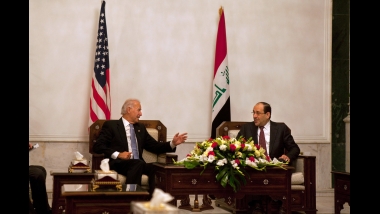
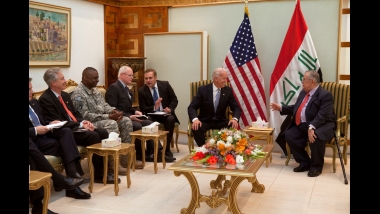
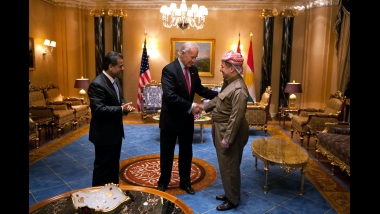
SENIOR ADMINISTRATION OFFICIAL:  Oh, sure, sure.  Look, in Iraq, as you know, this was the Vice President’s seventh trip since 2009.  I think as you all saw, he has rather significant relationships with virtually all of Iraq’s leaders.  He knows them well.  They know him well.  
 
And really this trip was designed to do two things.  First of all, it was to underscore the fact that Iraq has had a very significant achievement with the formation of a new government.  As the Vice President has said, the really big story in Iraq over the last couple of years is the emergence of politics as the basic way of doing business, and not violence.  And that's paying huge dividends.  It took the Iraqis a long time, but they got a government and they got it by working together in the political system.  And the government they produced is broad-based, it brings in virtually all of the different major blocks representing the major communities, and that has real promise for moving Iraq forward.  So that was the most important aspect of this.
 
But second, the Vice President spent considerable amount of time with each of the leaders talking about the agenda going forward.  The Iraqis have a lot of important work to do internally now that the government has formed to move forward.  There are big issues that need to be resolved:  oil law, dealing with disputed internal boundaries, working on the relationship with their neighbors, bringing all of their Chapter VII obligations to a close.  The Vice President presided over the closure of most of those obligations in December, but there remain, for example, the issues of Kuwait that need to be resolved.  
 
And also, tremendous potential.  The Iraqi economy is projected to grow at over 6 percent this year, over 7 percent next year.  We’ve seen oil production increase as more and more production is coming online.  But there’s a lot of work to do to bring that forward and to actually maximize the potential.
 
And so that was really the conversation.  And in particular, what the Vice President heard from everyone he talked to was the desire for a strong relationship with the United States and to bring the Strategic Framework Agreement that we have, which calls for cooperation across the board -- economic cooperation, trade and investment, culture, education, security -- to really bring that to fruition.  And so one of the things we focused on is how we move that forward and how we bring our senior officials together to work out very concrete projects.
 
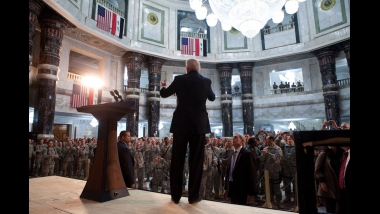
And then finally, I think as you heard, the Vice President wanted to put a spotlight on the military, the U.S. military, that remains in Iraq.  They continue to pursue a very important mission and a dangerous mission, and he wanted to make sure that they get the credit they deserve for the extraordinary job that they’re doing every day, as well as to talk to our folks at the State Department at the Embassy for assuming a tremendous responsibility, going forward, as they pick up a lot of the responsibilities that our military has had.  
 
So that was pretty much the agenda.  And I got to say it was very positive across the board.  I think we came away feeling that the Iraqis, for all of the remaining challenges, including closing out some pieces of government formation, like setting up this National Council on Higher Policies, naming a Minister of Defense, Minister of the Interior, that they were in a good place in terms of the potential for cooperation.
 
Again, none of this is easy.  There's a lot of effort that still has to be made.  But I think we come away feeling like this is moving in a good direction.
 
Q    How much longer do you think the Vice President will play this role in Iraq?
 
SENIOR ADMINISTRATION OFFICIAL:  The President asked him to continue to play this lead role in overseeing the implementation of our Iraq policy, because we’ve got a very important year, going forward.  We are going down from 50,000 troops to no troops, as we make good on the agreement between the United States and Iraq.  We are building up our civilian engagement, building up the Embassy effort.  The State Department, the Embassy, as I said, are taking responsibilities that are quite remarkable in their breadth and in their depth.


And so the President is very intent on keeping a sustained focus from the White House on Iraq as we move forward this year to ending the war responsibly, because that's ultimately what this is about, and building a strong relationship with Iraq.  And so he’s asked the Vice President to continue to do that.  The Vice President will continue to convene monthly Cabinet-level meetings on Iraq.  I suspect he’ll continue to go to Iraq on occasion.  He’ll certainly continue to be in regular contact.
 
Q    Will he want to bring us with him when he goes?  (Laughter.)
 
SENIOR ADMINISTRATION OFFICIAL:  He said to us that he thinks that we cannot go to Iraq unless you guys are along, so we’ll be getting you frequent flier miles and all the other benefits that come with that.  
 
     Q    Thanks a lot.
 
          END          6:57 P.M. Arabian Standard Time

The White House

Office of the Vice President

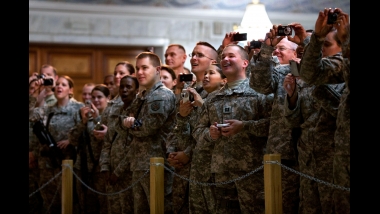
Remarks by Vice President Biden to the U.S. Forces-Iraq Troops

Al-Faw Palace, Camp Victory

5:50 p.m. Arabian Standard Time
 
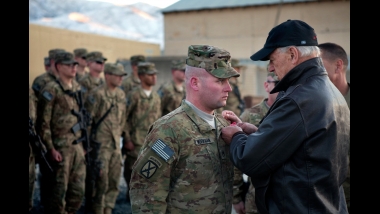
VICE PRESIDENT BIDEN:  Task Force Troy, Task Force 807 Med, Task Force Phantom, USDC, I just want to say I am amazed you’re still here.  (Laughter.)  And I don't mean in Iraq.  I mean, this is my seventh trip since Vice President, my 17th or 18th here, and I can tell you four of those seven trips since I was Vice President my son was here, and I assure you he would not have waited for me.  (Laughter.)  And so thank you very, very much.  
 
I truly, truly apologize for keeping you waiting so long.  It’s all the general’s fault.  (Laughter.)  Actually, it’s all my fault, but I think we made some good progress today with all of the Iraqi leadership.
 
We met, and folks, the point I want to make to you is very simple.  I’m here to say thank you.  I’m here to say thank you from the bottom of my heart and for -- and to thank all of your families.  
 
You know, there’s an old expression that is attributable to John Milton.  He said, “They also serve who only stand and wait.”  And your families, your families have made incredible sacrifices for you to be able to be here to promote the interests of the United States of America.  
 
You know, Iraq has made, in large part because of some of you -- this is more than your first tour, I know -- but for literally the hundreds of thousands of troops, over a million of troops have rolled through here.  Because of the incredible sacrifices that have been made since we arrived here, the Iraqi people for the first time, I suspect, I would argue, in their history, on the verge of literally creating a country that will be democratic, sustainable and, God willing, prosperous -- that it could have a dramatic impact on this entire region.  And God knows the Iraqi people deserve it.
 
But do you know, when we came to office, the President said that we were going to end this war and we’re going to end it responsibly.  By that we meant we were going to end it by bringing you all home within a time certain, but leaving behind a country that was worthy of the sacrifices that so many of your brothers and sisters have made.
 
Nearly 32,000 of your colleagues have been wounded here in this country; 4,422 fallen angels.  The good news is every time I ride home now I’m not riding home with a coffin strapped to the floor of the aircraft as we take off here.  
 
And I want you to know, though, everybody talks about essentially the war is over.  You’re still risking your lives for your country.  You lost some of your comrades, some of our brave American soldiers, just a couple of days ago.  And so I want you to know, the President wants you to know that this is not the normal day in the office for most Americans.
 
And look, the things that you are doing now in this transition period are the things that are going to put the Iraqi people, the Iraqi government in a position to maybe able to sustain the incredibly hard-fought gains that you initially were responsible for.  
 
You have trained, you have trained the Iraqi forces to the point now where they can be in the lead, and they’re getting better and better every day.  They’re going to continue to need our assistance and your assistance for some time.  
 
But the fact of the matter is that there's a lot that is changing during this transition.  Our mission has now fundamentally shifted since September.  But it’s going to shift again at the end of 2011.  We will probably be in the position of still maintaining and giving support.  We will probably be in the position of still -- in certain specific areas, having to train and equip.
 
But you know, what you’re doing now is -- what most Americans don’t realize is that each of you and your task forces are doing different things.  The 807 Med, you’re not only taking care of over the 100 bases and facilities we have around this country and America, but you’re literally providing the beginning of an infrastructure for a country to be able to deliver health care, to be able to deliver quality health care.  And so you’re leaving a legacy, a legacy of not just having helped freed a country, but helped getting the country on its feet and put in motion something that you will be proud, when you’re grandparents, to look at and see that this country is taking care of the basic needs of their country, and know you played a part in that.
 
You know, when you talk about your families, there is a -- I’ve been quoted in the last couple of years because I say it so often -- we really have one, one, only one sacred obligation as a nation.  We have many obligations, but only one truly sacred obligation, and that's to prepare and equip those who we send into harm’s way, and care for them when they come home.
 
There are thousands, close to 17,000, of your comrades that have come home who are going to need extended care the rest of their lives.  I visit veterans’ hospitals, I visit Army hospitals, I visit hospitals every single place I go.  You all know some of your friends are in Brooke Army Medical Center at their burn center.  The price that some of these kids, these people, have paid is beyond, beyond anything anyone should have to ever contemplate.
 
I spend -- and I don't say this like I -- my wife and I, though, spend every Christmas in Walter Reed visiting every non-ambulatory patient in that hospital and their families.  And the thing that amazes me -- the thing that amazes me about you all is no matter where I go in these hospitals, I always ask the family that's there or the soldier, sailor, Marine, Airman that's there who is the one injured, “What can I do for you?”  And almost without exception, the only request I ever get is, “Mr. Vice President, can you help me get back to my unit?
 
I just think -- you know, we talk about you all being, and you are, the greatest warrior class that the world has ever created.  This is not only the best run, but this is the most powerful, significant military force in the history of mankind.  
 
And the world knows that and our citizens know that, but I wish they knew, I wish they knew and could see what I see every single day.  I wish they could see all these young women and men, and not-so-young sometimes, who don't ask a thing for all that they’ve done, and you wonder how in God’s name can they do this.
 
Whether I was in Bosnia where we didn’t have as many casualties, or in Iraq where -- or Afghanistan where I just came from, or here, it’s the same story.  You are part of an incredibly, incredibly proud tradition.
 
And I hope that not only your military expertise wears off on our Iraqi friends, but I hope that they understand and see -- and I think they do -- the incredible patriotism, the incredible dedication to the country, the incredible diversity that we represent, men and women, black and white, Asian, Caucasian, every single mix that exists on the Earth, working this one incredible unit to protect the interests of the United States.
 
So I apologize -- I didn’t plan on getting emotional -- but I apologize for having kept you waiting, but I do not apologize for the intensity of the feeling that I and so many more Americans have for the sacrifices you and your comrades have made for your country.  
 
I'll end where I began.  We owe you.  We owe you more than we could ever repay you.  But the amazing thing to me is how after all that you’ve done, so few of you expect anything, even thanks.  
 
But the big difference between my generation and the general’s -- and I’m older than he is -- who leave their home, who leave their home, as you’ve noticed, and some of you leave home and come back, people have a sense and they know what you’ve done.  I hope you know how much they appreciate it.  
 
And I just was recently up in 10th Mountain up in Fort Drum, New York up in Watertown.  Any of you who are from that way, you’re not missing a thing.  They just had 44 inches of snow.  (Laughter.)  But I look at the expressions and the faces of the families as you all come back, and I hope, when you re-deploy home, I hope you get as much -- appreciate as much the sense of joy and overwhelming thanks that your families and your country feels, as my wife and I felt when our son came home.  
 
So folks, you’re led by one of the truly great generals in the United States military, and that's not hyperbole, and I mean that literally.  And it’s obvious that his enthusiasm for his country and his troops has worn off on all of you guys.  Otherwise there's no possibility you’d wait an hour on a marble floor to hear a Vice President of the United States of America.
 
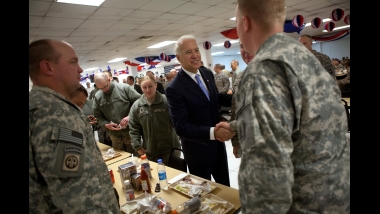
Ladies and gentlemen, thank you.  I look forward, if you’re willing, to coming out there and shaking as many of your hands as I can to personally tell you thanks.  God bless you all.  (Applause.)

END
6:01 P.M. Arabian Standard Time
The White House

Office of the Vice President

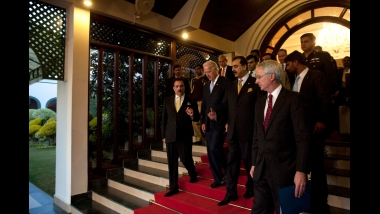
Remarks by Vice President Biden and Prime Minister Gilani of Pakistan

Presidential Palace

Islamabad, Pakistan

5:04 P.M. Pakistan Standard Time

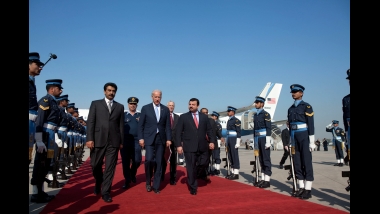
PRIME MINISTER GILANI:  Mr. Vice President, it gives me immense pleasure to once again welcome you to Pakistan.  We regard you as a good friend and appreciate your important contribution to reviewing the friendship and partnership between the United States and Pakistan.

VICE PRESIDENT BIDEN:  Thank you.

PRIME MINISTER GILANI:  Pakistan and United States have been on the same side for over half a century and at all defining periods of contemporary history.  Our friendship and partnership is based on shared values.

Vice President Biden, your visit has provided us a good opportunity to exchange views on bilateral and regional issues.  We had very fruitful discussions.  Pakistan looks forward with confidence of a robust, enduring and mutually beneficial partnership with the United States.  Policy consultations and coordination are necessary for attaining a shared cause.  We value United States’ support for Pakistan’s economy, stability and security.  We have set ourselves a calendar of extensive engagements during 2011.  Comprehensive engagements at all plans is important.

I’m happy to note that our enhanced strategic dialogue process is now in place.  We are determined to utilize this and other mechanisms to give greater substance and strength to our relations.

I must add that our discussion today on combating terror, issues of regional stability and promoting reconciliation and peace in Afghanistan were extremely useful.  Mr. Vice President, I assure you that we intend to work practical solutions and answers to many difficult issues.  

Please convey our warm greetings to President Obama and the friendly people of United States.  Thank you very much.

VICE PRESIDENT BIDEN:  Thank you very much, Mr. Prime Minister.  And it’s an honor to be back here, and I want to thank you and your colleagues for your hospitality.  I took so much of your time, and we talked about so many things in detail that you’re probably very tired, but I found it extremely useful, and I thank you very much.

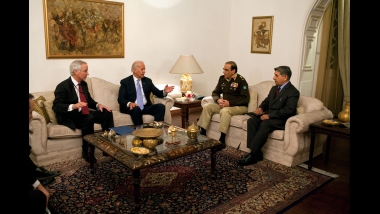
I also had a chance to meet with President Zardari today, and I’m going from here -- as a matter of fact I’m late -- I’m going from here to meet with General Kayani later this afternoon.  

Although it’s been almost two years since I have been back to Islamabad -- two years this month as a matter of fact -- I’ve had the occasion and it’s been my great honor to host you as well as the President in both my home and my office, and I look forward to seeing you again soon.  And I tell you that we have had numerous telephone conversations, and I thank you for always taking my call, and I thank you for your input.

I have been privileged in my career in United States Senate and as Chairman of the Foreign Relations Committee to have a long relationship with Pakistani leaders, going all the way back to the early ‘70s.  And our relationship, in my view and the view of President Obama, is absolutely vital, absolutely vital to U.S. interests, and I believe you believe it is to Pakistani interests, as well.

That's why I’m here.  This is why it’s the first overseas trip of the New Year.  And I can tell you President Obama sends his regards and is looking forward later this year to make a trip to Islamabad, as well.

The President and I -- indeed, the entire world, I would suggest -- were saddened, saddened by the cold-blooded murder of a decent, brave man.  The governor was killed simply because he was a voice for tolerance and understanding.  To state the obvious, there is no justification, none, for such senseless acts.

As you know all too well and all students of history know, as we’ve seen throughout history, societies that tolerate such actions end up being consumed by those actions.  So please accept my deepest condolences and those of President Obama and those of the American people.

The United States and Pakistan have forged an enduring partnership, as you referenced, Mr. Prime Minister, against extreme ideologies; a partnership based, as you pointed out, on our common interests and our mutual respect for one another.

And because we so value that partnership, I think it’s important to not only our leaders, as we talked -- as I talked about, understand one another, but that our populations understand one another, the leadership of each of our respective countries, the motives and the intentions, and avoid misconceptions about each of our motives or intentions.

That's why we in the United States and this administration pays close attention to what Pakistanis believe about the United States and U.S. intentions as it relates to Pakistan.  We read your newspaper, and to some of the columnists out here, we read you, columnists, as well.  We watch your television programs, as you do ours.  And we -- and I personally -- meet with Pakistanis from all walks of life.  And I am privileged to have close relationships with the Pakistani American communities, which is very well organized; close relationships for the past 30 years.

So I would like to take this opportunity to address directly what I believe are some misconceptions about U.S. actions and even more importantly about U.S. intentions with regard to our partner, Pakistan.

We know that there are those -- I’m not talking about the leadership; I’m talking about in the public discourse -- those who believe that in America’s fight against al Qaeda, that we have imposed a war upon Pakistan.  But violence -- violent extremists are a threat not just to the United States but to Pakistan, as well, and indeed to the entire civilized world.

The fact is that al Qaeda plotted an attack that killed nearly 3,000 American citizens.  And they continue to plot attacks against the United States and our interests to this very day.  And they have, not with your help, but they have found refuge in some of the most remote portions of your country.

As Pakistanis have wondered whether or not we are part of the problem instead of the solution, al Qaeda has worked with extremist allies who have had you as a target and your people as a target, maiming and murdering thousands of Pakistani security forces and ordinary citizens, as you saw so clearly in Swat and other parts of your country.

There are those also who accuse the United States of violating your sovereignty as we support your army and pursue terrorists where they hide.  I know well over the past 30 years the proud, proud traditions of the Pakistani military and its capacity to defend and protect Pakistan.  But I would respectfully suggest that it’s the extremists who violate Pakistan’s sovereignty and corrupt its good name.  Our goal is to work with your leaders and you, Mr. Prime Minister, to restore and strengthen sovereignties in those areas of your country where extremists have violated it.

There are even some critics in Pakistani society and elsewhere that suggest that America disrespects Islam and its followers.  I would like to take some of you to Los Angeles to one of the largest mosques in the world, where Muslim Americans practice their religion in full view and with respect of all Americans.

The assertion that we disrespect Islam is actually quite the opposite.  Islam is the fastest growing religion in the United States of America.  And as President Obama said in the heart of Cairo, one of the world’s great Muslim-majority cities, and I quote, “Islam is part of America.  And I believe” -- continuing the quote, he said, “I believe America holds within her the truth that regardless of race, religion or station in life, all of us share common aspirations -- to live in peace and security, to get education, to work with dignity, to love our families, our communities, and our God.”

To those who make these charges against us, I would challenge them to name any other country in the world, any country in the world, who -- where those of all faiths enjoy greater freedom of worship than they do in the United States of America.  Name me a single country in the world.  

So I want to put to rest, which I know I will not by this simple assertion -- we are not, we are not the enemies of Islam, and we embrace those who practice that great religion in our country.

There are also those who believe that our policies favor India and seek to weaken -- I’ve even heard some right -- and say to even dismantle this great country.  You know and your colleagues know that is dead wrong.  We want what you want:  a strong, stable, prosperous democratic Pakistan at peace with itself and with its neighbors, including India.  We want that not just for your sake but we wish your success because it’s in our own interest.  It’s in the interest of the entire region and I would argue the entire world.

America admires, admires the vision of your great founder, who said wisely, and I quote, “Our object should be peace within, and peace without.  We want to live peacefully and maintain cordial and friendly relations with our immediate neighbors and with the world at large.”  End of quote.  President Obama and I and everyone in our administration shares that vision.  

There's one last misconception I'd like to address, and I’m not suggesting these misconceptions are held or shared by anyone in this government, but we read them, we listen to them, we watch them on your television.

The one last misconception I'd like to address is there are those who point to America’s history in this region and claim that eventually we will abandon Pakistan; we will no longer be concerned.  But I have learned and we have learned from the past that only a productive way forward -- the only productive way forward is a long-term enduring partnership.

As I said two years ago when I was here -- and some of you covered me -- as I said four years ago when I came with Senator Kerry and others, and I said before that, our nations must move from what unfortunately for several decades was a transactional relationship to a true partnership, a sustained partnership.  

That's why we’ve established in Pakistan our largest educational exchange, and English-language program, in the entire world, a long-term investment in the dynamism of your young people.

A growing number, a growing number of Pakistani Americans, Americans of Pakistani descent, play an increasingly, increasingly visible role in bridging our societies and building those enduring partnerships.

I hope you will acknowledge we have demonstrated -- I say this to the press -- we have demonstrated by our actions over the last several years we mean what we say.

Through our Strategic Dialogue, as you pointed out, we’ve begun to implement projects that will benefit the people of Pakistan, in areas ranging from energy to agriculture to communications.  This means that you will soon see more dams providing more electricity and irrigation; crop yields that are higher; more hospitals providing services to the people of Pakistan, among other tangible benefits.  

Through what used to be called the Biden-Lugar bill -- now the Kerry-Lugar-Berman legislation -- we committed $7.5 billion, in very difficult economic times for us, as well as you and the rest of the world, in civilian assistance over the next five years.  There has been talk, and it’s true, that it took a while to get going.  But it is moving, and we will keep the entire commitment.

Rather than dictate to Pakistan how this money should be spent, we’re partnering with the government to achieve your priorities to lay a foundation for a sustainable long-term economic growth for this great country.

We’ve increased security cooperation between our two militaries, including training, support for operations, and greater coordination among -- along the border in Afghanistan.  And we’ve stood shoulder to shoulder with the Pakistani people during the last summer’s devastating, amazingly devastating, floods, deploying troops, airlift support, relief supplies to the affected regions as quickly as we possibly could.  Our only regret is we could not do more, more quickly with more resources.  I know the work is not yet done with regard to the floods, and that your government, Mr. Prime Minister, faces very difficult choices in addressing the cost of rebuilding.  

And we have made a long-term commitment to assist with the reconstruction and recovery, as evidenced by our announcement last week of another $190 million in Watan -- I’m hoping I’m pronouncing it correctly -- Watan cards.

And by the way, I don’t say this to say -- for you to suggest that you owe us any debt or gratitude.  It’s what partners do for partners.  It’s what should be done.  It’s in our interest to help you beyond it being the right thing to do.

These are just some of the many initiatives underway that are strengthening our partnership and helping to forge a more secure and, God willing, more prosperous Pakistan.

Let me leave you all with this final thought.  My country’s aspirations for Pakistan largely mirror yours, Mr. Prime Minister, and the rest of the Pakistani people.  

When my grandchildren and their grandchildren read news from Pakistan, I don't want them to find articles about terrorism, poverty, political instability, lack of American support.  I want them to be able to focus on the great Pakistani scientist winning Nobel Peace Prizes -- or excuse me, Nobel Prizes for Science.  I want the focus -- them to focus on entrepreneurs founding global businesses that you have.  I want them to focus on the artists creating masterpieces.  I want them to focus on the brilliance of your culture and the incredible resources, human resources, of your country.

As we embark on this New Year, Mr. Prime Minister, we must, in my view and the President’s view, rededicate ourselves to building on the progress we have made in the last couple years and what still must be achieved together.  

Again, I'll end where I began.  A close partnership with Pakistan and its people is in the vital self-interest of the United States of America and, I would argue, although it’s for you to decide, in the vital self-interest of Pakistan, as well.  

The discussions we had today, Mr. Prime Minister, as you aptly stated, are an important, an important step of the many we’ve taken so far toward that end.  My hope is, God willing, if I’m able to stand here next year with you, that we will be able to point to greater progress, greater resolve and more, more economic prosperity for both your people and mine.  And again, I thank you all and your folks for taking so much time with me.  

And I apologize, but I am late for my meeting with General Kayani, and I am never late for generals.  Thank you very much.  

END

5:24 P.M. Pakistan Standard Time

Vice President Biden in Afghanistan: "It’s Afghans Who Must Build Their Nation"

play

When the Vice President landed in Afghanistan yesterday, where he is spending most of the week, it was another chapter in the Vice President's role dealing with that country that has stretched not just throughout this Administation, but back to a visit nine years ago when the Taliban was first driven from power.  Vice President Biden was there to get a first-hand assessment of progress on the ground as the United States continues to move towards empowering Afghanistan for full independence, and his remarks in a joint press conference with President Karzai told the story of this tough endeavor:

The White House

Office of the Press Secretary

Remarks by Vice President Biden and President Karzai of Afghanistan After Meeting

Stone Building, Presidential Palace compound, Kabul, Afghanistan

3:02 P.M. Afghanistan Time

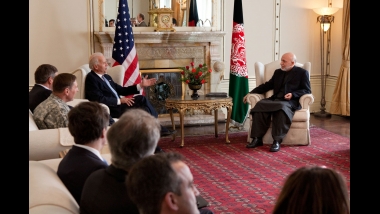
      PRESIDENT KARZAI:  (As Translated) Good afternoon.  Members of the media, Afghan media and international media, in the name of the God, I’m delighted and honored today to welcome His Excellency Joe Biden, Vice President of the United States.

      This is the fourth or fifth -- his visit -- to Afghanistan.  His first visit was at the very beginning of Afghanistan’s interim administration, where we met in a very cold room.  There was no electricity, nothing.  But because of his help and their assistance, we have electricity and everything today.  So today we had all the things, and we are in a lot improved situation for which we are grateful to their contributions.

      Today, His Excellency Joe Biden, me -- (inaudible) --and met in presence of our delegations.  We had a working lunch, and we spoke on many issues, including on several issues of mutual importance to both the countries.  And then it was followed by a one-to-one meeting that lasted for over an hour and which was also centered on the strategic partnership between Afghanistan and the United States; security in Afghanistan and in the region, as well as the transition process of security responsibilities to Afghan forces; on ways how to intensify and how to do that process and transition in the best possible manner.

      So we had discussions, and I’m pleased of the conclusions and of the results of our meetings, and I once again welcome him to Afghanistan.  And I thank you for all the cooperation and for all the contributions that you have given to the people of Afghanistan.

      Thank you, Mr. Vice President.

      VICE PRESIDENT BIDEN:  Well, Mr. President, thank you.  It’s a delight to be back.  Let me start by thanking you and your team for the great hospitality that you’ve extended to me and my crew I brought from Washington.  I know you know you get to see General Petraeus and Ambassador Eikenberry frequently, but it’s not as often as I get to come and visit you.  

      You know, the President reminisced very briefly on the telephone -- I guess it was a week ago or 10 days ago -- and again today about the first time I was here in Kabul nine years ago this month, as a matter of fact, and after the Taliban had been driven out, just when you were moving into the palace.  And it was under a very, very difficult circumstance that the President was taking over, and I witnessed that legendary hospitality with which the Afghans are so well known.  I really mean that.  There was no heat.  There was very little electricity that kept going on and off.  There was no paid staff --

      PRESIDENT KARZAI:  Yes.

      VICE PRESIDENT BIDEN:  And yet you treated me as if I were an honored guest and that you had --

      PRESIDENT KARZAI:  You were, you were.

      VICE PRESIDENT BIDEN:  The hospitality, the food, the dinner, it was exceptional, and I kept thinking, Mr. Ambassador, “My Lord, how is he able to do this?”  (Laughter.)

      But I also want to point out and pay tribute to not just your leadership, Mr. President, but in those days, in the circumstances, people forget is the extraordinary personal courage, physical courage, you showed.  It is -- it was notable then and it’s worth noting now.  And that's why I am pleased to -- was pleased to have President Karzai as a guest in my home in Washington on two different occasions.  And both times I apologized to him because it wasn’t nearly as lavish and wasn’t nearly as significant, but it was an opportunity to return the hospitality.  And I look forward, Mr. President, to being able to do that again.

      When I was last in Afghanistan just before our administration took office -- it was two years ago this month, and President-elect Obama asked me, as you recall, Mr. President, to once again get a firsthand look and have a discussion with you.  And now since then we have with the leadership of my -- the team that's here on the right, the President’s team, we have a strategy and the resources in place to accomplish the goal of a stable and growing and independent Afghanistan able to provide for its own security, and in the process to be able to, at the same time, to disrupt and dismantle and defeat ultimately al Qaeda in Pakistan and the little appearance there is in Afghanistan.

      A stable, sovereign Afghanistan that is not a haven for terrorists is critical toward that goal.  And to that end we’re engaged in working -- and I had the opportunity to go to a training facility today -- working with your military to train up a first-class military organization that will be eventually in the position to meet all of the Afghan security needs.  And toward that end I'd like to thank your Minister of Defense for taking me on the tour earlier today.

      In the meantime our military is breaking the momentum of the insurgents and the radicalized portion of the Taliban.  Our diplomats are working hard along with the President to promote regional cooperation, including with your neighbor, Pakistan.

      And I want to recognize the contribution toward this effort over the past several years of a significant American diplomat who passed away, Ambassador Richard Holbrooke, who had unparalleled skills and tenacity that -- where he spent almost two years as our special representative to Afghanistan and Pakistan before he passed away last month.

      And over the past two years the United States has sent some of America’s most capable troops into enclaves where -- that have long been operated -- the insurgency and the Taliban of being able to operate with impunity.  And we’ve also substantially increased our civilian effort here in Afghanistan with diplomats and development experts side by side with our military and your soldiers and your police and your personnel, Mr. President.  And as a result, I think it’s fair to say we have largely arrested the Taliban momentum here in some very important areas, particularly in Helmand and Kandahar.

      But these gains, as you pointed out to me, Mr. President, as we know, are fragile and reversible.  And as the President knows, sustaining them is going to require the Afghans to assume the responsibility for security and governance.  And it’s going to require more pressure -- more pressure on the Taliban, from Pakistan’s side of the border, than we’ve been -- we’ve been able to exert so far.  And there are many hard days that lie ahead.

      But we know that in order to maintain the support and commitment of the people of Afghanistan and the American people, we must work with our Afghan partners to improve the provision of basic services, to promote transparency and accountability, to strengthen the institutions, and advance the efforts of reconciliation with the Taliban of which we spoke for some time; the Taliban who’ve rejected Al Qaeda and renounce violence and are prepared to embrace the Afghan constitution.

      None of this, as the President has pointed out to me and we have discussed and we know, is going to be easy. But, Mr. President, in concert with your government and our NATO allies, we now have a viable path outline to move forward.  And again, I'd like to compliment you publicly on Lisbon.  I think it was a very, very useful conference, and I think we’re finally all on the same page.

      And this year, NATO is going to begin to transition responsibility over the security in certain provinces to the government of Afghanistan, while the United States begins a condition-based reduction of our forces starting in July.  And all of this will advance our shared U.S.-Afghani objective of having an Afghan National Security Force in the lead throughout all of Afghanistan by 2014, as President Karzai wisely proposed -- there was a first to move forward on.

      Together, we will work on a framework for future bilateral relations and a lasting friendship with the Afghan people and the American people.  And going forward, we’ll continue to train and advise the forces and to provide civilian assistance.

      Let me say it plainly, Mr. President, it is not our intention to govern or to nation-build.  As President Karzai often points out, this is the responsibility of the Afghan people, and they are fully capable of it.  As President Obama said it in a slightly different way, he said, “It’s Afghans who must secure their country.  And it’s Afghans who must build their nation.”  And we stand ready to help you in that effort.  And we will continue to stand ready to help you in that effort after 2014.

      PRESDIENT KARZAI:  Wonderful.

      VICE PRESIDENT BIDEN:  We have moved into a new phase -- a new phase -- in Afghanistan; a transition to a full Afghan lead that begins this year and will conclude in 2014, as we prepare a framework for our future bilateral relations.  This is President Obama’s vision for the future.  It’s a vision expressed by our allies at the Lisbon Conference.  And I believe, based on our conversation today, it clearly reflects the vision of President Karzai.

      The United States, if the Afghan people want it, are prepared, and we are not leaving in 2014.  Hopefully we will have totally turned over the ability of the -- to the Afghan security forces to maintain the security in the country, but we will -- we are not leaving, if you don't want us to leave.  And we plan on continuing to work with you, and it’s in the mutual self-interest of both our nations.

      And so, Mr. President, again, I want to thank you for a very, very good conversation.  And I look forward to seeing you and returning the hospitality in Washington. Thank you.  Thank you very much.  Thank you, gentlemen.  I appreciate it.

      PRESIDENT KARZAI:  Vice President, are we taking questions or are we not taking --

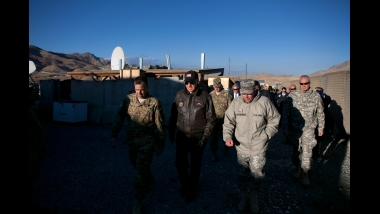
      VICE PRESIDENT BIDEN:  Well, they tell me in order for me to get to where I’m supposed to go to Forward Operating Base --

      PRESIDENT KARZAI:  Let’s go and talk.

      VICE PRESIDENT BIDEN:  If I don’t leave now, I don’t get back because it --

      PRESIDENT KARZAI:  You will have a chance some other time.  Today the Vice President has to leave in a hurry because we spent a lot of time doing other things.  So he has to go and greet the soldiers.

      VICE PRESIDENT BIDEN:  I apologize.  Thank you.

      PRESIDENT KARZAI:  Next time.             

                   END          3:14 P.M. Afghanistan Time

The White House

Office of the Press Secretary

Vice President Biden Arrives in Afghanistan

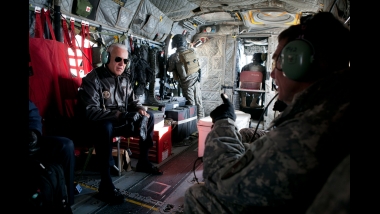
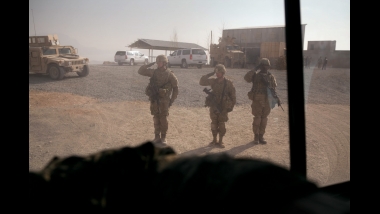
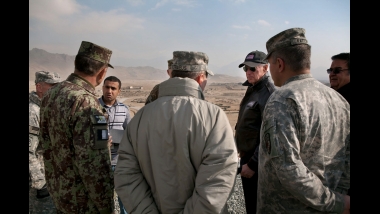
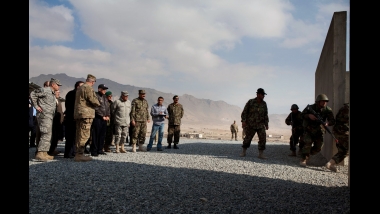
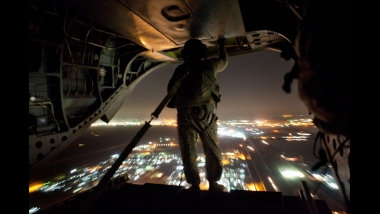
Vice President Biden has arrived in Afghanistan. The primary purpose of the trip is to assess progress toward the transition to Afghan-led security beginning this year, and to demonstrate the United States’ commitment to a long-term partnership with Afghanistan. While in Afghanistan, the Vice President will meet with President Hamid Karzai, visit with U.S. service members and civilian personnel, and tour an Afghan National Army Training Center. The Vice President last visited Afghanistan in January 2009 as Vice President-elect.

The White House

Office of the Vice President

Statement by the Vice President

The horrific attack in Tucson, Arizona, this morning has taken the lives of at least five people, including a federal judge and a young girl, and left many others wounded, among them a dear friend, Congresswoman Gabrielle Giffords.

Gabby is one of the finest members of Congress I know. She is a principled leader and a consensus-builder. She has spent her time in office working her heart out to improve the lives of the people she represents. And she loves her husband and family above all else. On this tragic day, Jill and I are praying for Gabby’s recovery, and we hold her family in our hearts.

Chief Judge John Roll was a dedicated jurist whose death is a terrible loss to Arizona and to the country.

We do not yet know the motivation behind these shootings. But what we do know is that there is simply no justification, no rationale for such senseless and appalling violence in our society.

Please join Jill and me in praying for each of today’s victims and for their families and loved ones.
 

The White House

Office of the Vice President

Readout of the Vice President's Meeting with Japanese Foreign Minister Seiji Maehara

The Vice President met with Japanese Foreign Minister Seiji Maehara today in the White House.  They discussed a wide range of bilateral, regional, and global issues.  The Vice President reaffirmed the importance of the U.S.-Japan alliance, which plays a key role in promoting stability and prosperity in the Asia-Pacific region.

The White House

Office of the Vice President

Readout of the Vice President's Meeting with Haitian-American Leaders

Earlier today, Vice President Biden met with a broad group of Haitian-American leaders to discuss the United States' lasting commitment to Haiti. The Vice President underscored the important work the United States and our international partners have engaged upon in partnership with the Haitian people since last year's devastating earthquake.

The Vice President and the Haitian-American leaders were joined by a team of senior U.S. government officials who discussed the whole-of-government U.S. effort relating to Haiti and the unprecedented challenges that remain for recovery and reconstruction efforts.

The White House

Office of the Vice President

Statement by the Vice President on the Departure of Chief of Staff Ron Klain

Vice President Joe Biden issued the following statement in response to the announcement by his chief of staff, Ron Klain, that Klain is leaving his post later in January:

"For 25 years, Ron Klain has been my friend and advisor. As my chief of staff in the White House, Ron has done an exceptional job of building my team, implementing my direction on top priorities, and providing invaluable counsel. He has also played a key role in establishing the strong, positive relationship that exists between my staff and the President's team. I am proud of the successes we have had over these two years, and am grateful for the role Ron played in achieving them. I wish him the best of luck as he takes this next step in his career."