The White House

Office of the Vice President

Readout of Vice President Biden’s meeting with Kuwaiti Prime Minister Sheikh Nasser Al-Sabah

Earlier today, the Vice President met with Kuwaiti Prime Minister Sheikh Nasser Al-Sabah.  The Vice President expressed his gratitude for Kuwait’s tremendous contribution during the recent redeployment of U.S. servicemembers from Iraq, most of whom transitioned through Kuwait.  In addition, the Vice President praised Kuwait’s leadership in the Middle East, and the continuing strength and breadth of the bilateral relationship.  They discussed common efforts on regional security issues, cooperation against the threat of terrorism and the importance of the continuing direct talks between the Government of Israel and the Palestinian Authority.  The Vice President noted the need for Iraqi leaders to take action to form a new government without further delay. 

The White House

Office of the Vice President

Vice President Biden Releases New Report on 100 Recovery Act Projects Changing America

Spotlights Some of the Most Innovative and Effective Recovery Act Projects Nationwide

WASHINGTON DC – Vice President Joe Biden today released a new report, “100 Recovery Act Projects that are Changing America.”  The report highlights some of the most innovative and effective Recovery Act projects across the country that are not only putting people back to work now, but helping transform our economy for years to come.  The report can be viewed in full HERE.

“With Recovery Act projects like these, we’re starting to turn the page on a decade of failed economic policies and rebuild our economy on a new foundation that creates good middle class jobs for American families,” said Vice President Biden.  “And we’re not engineering this transformation alone – Recovery Act projects like these are drawing billions in private capital off the sidelines to help recharge our economy.”

From wind turbine production in Muncie, Indiana to construction of a new commerce route in Appalachian Ohio, about 3 million Americans are on the job nationwide on Recovery Act projects like the ones in the Vice President’s report.  Together, they are conducting cutting edge research, rebuilding our nation’s roads and bridges, growing small businesses, re-opening and re-inventing factories – and changing the American economy to make us stronger and more competitive as a nation.

The White House

Office of the Vice President

Vice President Biden Hosts Conference Call with Governors to Discuss Recovery Act Implementation

Earlier today, the Vice President hosted a conference call with Governors from around the country to discuss implementation of the American Recovery and Reinvestment Act.

The following elected officials participated:

  • Governor Jennifer Granholm (D-MI)
  • Governor Martin O’Malley (D-MD)
  • Governor Jodi Rell (R-CT)

September 11th Memorial Ceremonies in Washington, New York and Pennsylvania

September 12, 2010 | 3:12

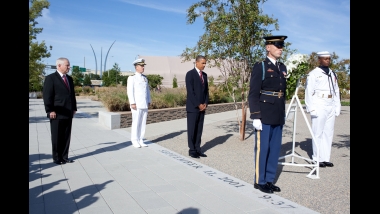
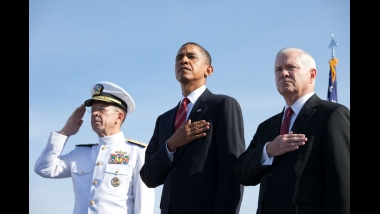
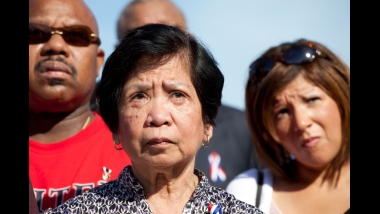
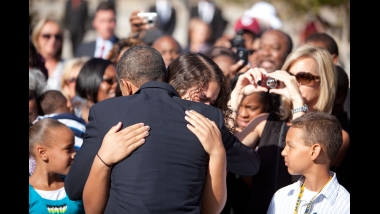
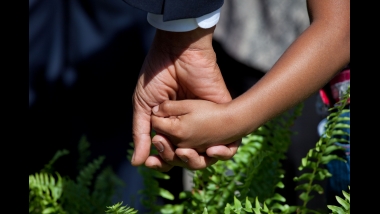
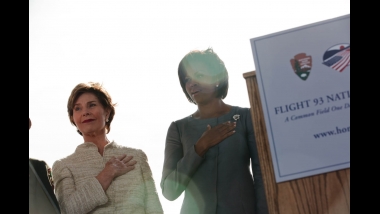
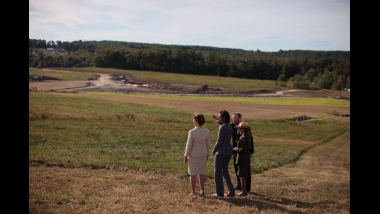
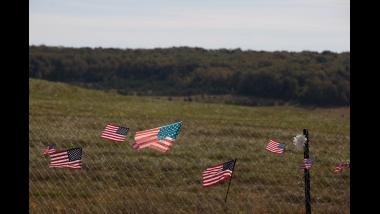
The President, The First Lady and the Vice President attend memorial ceremonies in remembrance of September 11th. The emotional ceremonies are conducted at Twin Tower site in New York City, the Pentagon in Washington D.C. and the Flight 93 crash site, a National Memorial in Shanksville, PA.

Download m4v (36MB)

The President, the Vice President, the First Lady and Dr. Biden: A Day of Service and Remembrance

Download Video: m4v (36MB)

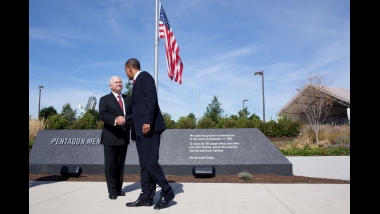
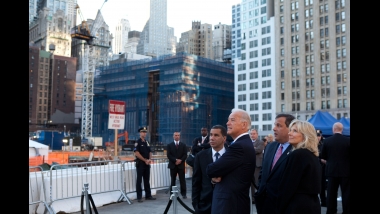
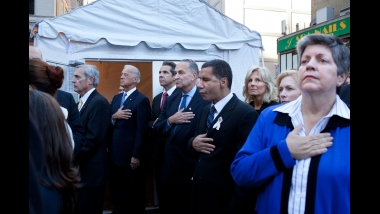
The President was joined by Defense Secretary Gates and Admiral Mullen, Chairman of the Joint Chiefs at the Pentagon Memorial.  Vice President Biden and Dr. Jill Biden were at Zuccotti Park in New York City.  And the First Lady was with Mrs. Laura Bush at the memorial ceremony in honor of the passengers and crew of United Flight 93 in Shanksville, Pennsylvania.  Watch a short, moving video touching on all three events above.

All of them took part in service projects afterwards, and Serve.gov is helping Americans across the country take part in this Day of Service and Remembrance.  Excerpts of their remarks below the photo gallery, which you can also view in full size.

play

The White House

Office of the Press Secretary

President and First Lady, Vice President and Dr. Biden to Commemorate 9/11 and National Day of Service and Remembrance

WASHINGTON, D.C. — On Saturday, September 11th, President Obama, First Lady Michelle Obama, Vice President Biden and Dr. Biden will mark the ninth anniversary of the September 11th terrorist attacks at the Pentagon, in Shanksville, Pennsylvania and in Lower Manhattan.
 
On Saturday morning, President Obama will observe a moment of silence at 8:46 AM at the White House. The President will then deliver remarks and participate in a wreath laying ceremony and moment of silence at the Pentagon Memorial in Arlington to mark the anniversary of the September 11, 2001 terrorist attacks. To mark the National Day of Service and Remembrance, the President will participate in a service activity in the Washington, DC area. The Pentagon event is open to pre-credentialed media; the deadline to request credentials has passed. The moment of silence observed at the White House will be closed press.
 
The First Lady will be the keynote speaker at the memorial ceremony in honor of the passengers and crew of United Flight 93 in Shanksville, Pennsylvania, along with Mrs. Laura Bush. The event is being hosted by the National Park Foundation and will also include Secretary of the Interior Ken Salazar and Pennsylvania Governor Ed Rendell.  United Flight 93 crashed into a field near Shanksville, Pennsylvania on September 11, 2001, after the 40 passengers and crew fought back against terrorists attempting to attack our nation’s capital.
 
To mark the National Day of Service and Remembrance, the First Lady will accompany Mission Serve, the civilian-military service initiative that she and Dr. Biden helped launch last Veterans Day, at a renovation service project for the Vinson Hall Retirement Community’s community center in McLean, Virginia. Vinson Hall is supported by the Navy Marine Coast Guard Residence Foundation, and among its residents include Navy Veterans of the Attack on Pearl Harbor and the Battle of Midway. Retired military residents of the Vinson Center will be volunteering alongside active-duty members of the military, wounded warriors, and George Washington University students to renovate the Center.  Both events with the First Lady are open to pre-credentialed media; the deadline to request credentials has passed.
 
The Vice President and Dr. Biden will remember those lost and honor our 9/11 heroes at New York City’s September 11th Commemoration Ceremony at Zuccotti Park. For further guidance on the event, media credentialing and logistics, please go to www.nyc.gov/mediaadvisory.
 
Afterwards, the Vice President and Dr. Biden will participate in a service activity in the New York City area.

The National Day of Service and Remembrance was developed by 9/11 families and established into law by the Edward M. Kennedy Serve America Act, which President Obama signed in April 2009.  The most sweeping overhaul and expansion of national service programs in 18 years, the Serve America Act will triple the size of AmeriCorps and strengthen service opportunities for Americans at all stages of their lives.

The White House

Office of the Vice President

Readout of Vice President Biden's Call with Pakistani Prime Minister Yousuf Raza Gilani

Vice President Biden spoke to Pakistani Prime Minister Yousuf Raza Gilani today to reiterate U.S. Government support to Pakistan during the current flood crisis.  Vice President Biden underlined that the United States is standing by Pakistan during this challenging time.  He noted that the U.S. Government has provided around $260 million in emergency humanitarian assistance to the people of Pakistan to date.  The United States has also provided other civilian and military in-kind assistance in the form of halal meals, pre-fabricated steel bridges and other infrastructure support.  The U.S. is now using 25 helicopters, two C-17s, and five C-130s to transport relief supplies.  We have already delivered more than 4.6 million pounds of supplies and transported more than 13,000 people to safety.  While we continue our immediate flood relief, Vice President Biden highlighted that we are also pursuing a full-fledged diplomatic effort to encourage additional international resources to help Pakistan rebuild.  The two leaders discussed ongoing coordination as Pakistan transitions from relief to recovery efforts.

The White House

Office of the Vice President

Readout of Vice President Biden's Video Teleconference with British Deputy Prime Minister Nicholas Clegg

Vice President Biden spoke with British Deputy Prime Minister Clegg today via video teleconference as part of their regular consultations on our shared strategic agenda.  The Vice President discussed his recent visit to Iraq in conjunction with the U.S. change of mission and the status of Iraqi efforts to form an inclusive government.  The Deputy Prime Minister briefed the Vice President on his visit to Afghanistan and Pakistan, where he met with leaders in both countries and visited British NATO ISAF troops serving in Helmand.  The Vice President and Deputy Prime Minister discussed our countries’ close counterterrorism cooperation and expressed support for the resumption of direct talks between the Israelis and Palestinians.  The Deputy Prime Minister accepted the Vice President’s invitation to meet with him in Washington, DC, on September 23rd.

Change of Command, End of Combat Operations Ceremony

September 01, 2010 | 17:27 | Public Domain

Vice President Joe Biden speaks during a ceremony at Camp Victory in Iraq marking the end of combat operations and the beginning of a new “advise and assist” role for U.S. forces.

Download mp4 (167MB) | mp3 (16MB)

Read the Transcript

Remarks by Vice President Joseph Biden at the Change of Command Ceremony for United States Forces-Iraq

Camp Victory
Baghdad, Iraq

VICE PRESIDENT BIDEN:  Ladies and gentlemen, the last several years, every time I have been in this old palace, am here, I can’t but help think of the irony that we are here today occupying a palace for a noble reason that was once occupied by Saddam Hussein. 

Secretary Gates, Admiral Mullen, General Mattis, General Odierno, General Austin, Ambassador Jeffrey, our distinguished and honored Iraqi leaders and military, it’s an honor to be with you today. 

It’s an honor to be joined by such a distinguished group of Americans and Iraqi commanders and civilian leaders bound together, I might add -- as a nation, we are now bound together as well by years of shared struggle and significant sacrifice.

In the predawn hours of March 20, 2003, columns of coalition troops set off across the desert and marshlands from Kuwait en route to Baghdad.  Last week -- after seven-and-a-half years that tested our mettle like no conflict in recent American history -- the last of our combat units followed that same dusty highway out of Iraq, on their way home.

As President Obama declared in the Oval Office last night, the United States has now ended our combat mission in Iraq and Iraqi troops are taking lead responsibility for their country’s security.

We’ve kept a promise, a promise made to the American people and to the people of Iraq, by drawing down our forces to roughly 50,000.  And we’re on track to remove all of our troops by the end of next year, according to the agreement signed by President Bush made with the Iraqi government.

Operation Iraqi Freedom is over. But American engagement with Iraq will continue with the mission that begins today -- Operation New Dawn.

As the name suggests, this ceremony not only marks the change of a command, but the start of a different chapter in the relationship with Iraq.  Our remaining troops -- I might add, as combat ready, if need be, as any in our military -- will advise and assist Iraqi forces, support partnered counterterrorism operations and protect our military and civilian personnel, as well as our infrastructure.

And we are ramping up our civilian and diplomatic effort to strengthen Iraq’s sovereignty, stability and self-reliance at the very time we are drawing down combat forces.

Our goal -- our goal is not just a physically secure Iraq, but an economically prosperous and stable one as well. 

With our Iraqi partners, our hope is to be able to enhance the ties of trade and commerce, increase our cultural and educational exchanges, open consulates in Basra and Erbil -- all to ensure that our engagement spans the breadth and length of this country.

Our diplomats -- our diplomats will support Iraq's efforts to build strong ties with their neighbors and the wider world, while working through the remaining obligations at the United Nations.

And here in Baghdad, those efforts will be led by an outstanding ambassador, Jim Jeffrey, who may be new to this particular job, but is certainly not new to the region nor this country.  His knowledge and commitment run deep.  They go back to his earlier service in the Bush administration as a Deputy National Security Advisor, as well as at one point the DCM right here in Baghdad. 

And he is backed by an extraordinary team of Foreign Service professionals and civilian experts, who are moving to the forefront of our effort now.  They have always been engaged, but now they’re moving to the forefront, people like Erin Eddy, a former Peace Corps volunteer in Ecuador, who now serves “outside the wire” as a public diplomacy officer on a regional -- provincial reconstruction team in Kirkuk. 

Or Madeline Chikko, who became an American citizen after her family fled Iraq three decades ago and has now chosen to return in 2008 to work with the Ministry of Justice here in Iraq on property rights and rule of law.

Or Dave Butzer, a 27 year-veteran of the Oregon police force, who has since then trained law enforcement officers in Kosovo, Jordan and Yemen, and who now advises the Iraqi Interior Ministry. 

Along with our military and diplomats, and the civilians in Iraq -- we have borne -- they have borne the burden of lengthy deployments, like you in the military, missing anniversaries and holidays, births of children and the loss of loved ones.

This change of mission, to state the obvious, would never have been possible without the resolve and tremendous sacrifice and competence of our military -- the finest -- if our Iraqi friends will forgive us, the finest fighting force in the world and I would argue the finest fighting force that ever has existed.  And I don’t believe that is hyperbole.

And that’s a large part, because it has been led by such a significant group of men and women over the last three decade.  And I want to thank my friend, Secretary Gates, for his unique willingness to serve two Presidents of different parties with differing views -- a testimony to Bob’s patriotism, his commitment to service and above all his determination to see this effort through.  (Applause.)  He deserves your applause. 

If you excuse the personal reference, as we used to say in the Senate, this is one good man -- one good man.  We’ve also been blessed by the wisdom and steady hand of Admiral Mike Mullen and the leadership of General David Petraeus, who I might add is still serving this country in a way that is beyond what we should ask of anyone.  I shouldn’t joke about this, but I visited him down in Florida and -- before he headed off, Bob.  And he said, “Just as I was getting -- finally getting to live like the Air Force, you’re asking me to move.”  (Laughter.)  It was a lovely place.  (Laughter.)  And by the way, we owe his wife and his family as well.

And also by General Jim Mattis, who is taking his command.  And on his last day of his command, I’d like to especially thank General Ray Odierno.  This man is not only a warrior, but a diplomat in the best American tradition.  I want to thank him for his exceptional -- and I’m not exaggerating, his exceptional service for more than four years leading forces here and working closely with Iraqi political leaders, many of them sitting here today.  And I think they would all acknowledge they have absolute complete faith and trust in this man.

General, four years and five months is an extraordinary sacrifice for both you and your family, and I can only imagine -- as a matter of fact, I know how joyous your homecoming is going to be and you richly deserve it.  And by the way, you owe Linda big -- really, really big.

And I would be remiss if I did not in mentioning the sacrifices that the General has made, like many of you, I would be remiss if I did not recognize his son, Capt. Tony Odierno, who made a great sacrifice here in Iraq on behalf of his country and was awarded the Purple Heart and the Bronze Star with a V for Valor.  And now he works for the New York Yankees, and I imagine you’re going to go home and see a couple of games -- I imagine.

I’m confident as well that General Austin, who has already served valiantly in Iraq and beyond, is going to continue this proud legacy.  We’re extremely fortunate to have you take command, General, and I look forward to working with you.  And I know you know many of the Iraqi political leaders here and their commanding generals, and it’s going to be a seamless transition.

Our fighting men and women were given a mission in Iraq that was as complicated as any in our history, an assignment that proved, as Clausewitz taught us, that “War is the realm of uncertainty.”

Troops steeped in military doctrine were asked to deal with challenges ranging from electricity to unemployment, currency exchange to trash collection.

A high-speed invasion that toppled a tyrant became a grinding struggle against violent extremists.  Empty roads became deathtraps.  Suicide became a devastating weapon, requiring split-second decisions by young American military women and men that could save the life of a comrade or shed the blood of an innocent.

And enemies like Al Qaeda in Iraq waged unspeakable violence against Iraqi civilians in an attempt to foster hatred in communities that worship the exact same God.

Thus far, they have failed.  The Iraqi people, to their great credit, have rejected the ugly face of violence and cast their lot, as well as their ballots, for a better future.

And so today, while the threat -- a tragic reality -- of further bloodshed remains, violence has reached the lowest point since 2003, when we arrived here -- shortly after we arrived here.  

And a great deal of credit goes to Iraq’s security forces -- more than 650,000 strong, including highly trained special operations forces who are increasingly ready to defend their fellow citizens.  In recent months, the Iraqi military secured an election, killed or captured most of Al Qaeda in Iraq and most of their leaders and made significant inroads against other terrorist groups.

Because of their competence, we have over the past year -- and it’s been over the past year as the General will tell you and you all know -- been able to transfer thousands of square miles of territory and hundreds of bases to Iraqi control.

Perhaps the most important development of all is that in the aftermath of a second national election, Iraqi leaders are sitting down to settle their differences through negotiation and not through violence.  Another way of putting it -- as my staff always kids me for saying -- politics has broken out in Iraq.

The fact that no single party or coalition got anywhere near a clear majority would make forming a government, a parliamentary system, difficult under any circumstances.  A decade -- after a decade of dictatorship and war, it’s an even more daunting task here in Iraq.

Unlike after the last election, however, a caretaker government is providing security and basic services and preventing a dangerous power vacuum from erupting.  But that is not a durable solution to the many challenges and significant opportunities Iraq faces.  The Iraqi people voted in large numbers across communities, and if you don’t mind -- forgive me for saying so -- they expect a government that reflects the result of the votes they cast.

And that’s going to require Iraqi politicians to place the national interest above their own, a difficult thing in any country, including ours.  It is not our place to tell the Iraqis who should lead.  But I strongly urge them to match the courage that their citizens have shown by bringing this process to a close and forming a government.  And I trust they will do so soon.

Since war is a human endeavor, its contours can never be fully drawn with numbers.  But the sheer scope of our commitment to the Iraqi people bears some reflection.

More than a million American service members have deployed here since the conflict began.  And I am awed -- I mean, I am in awe of their accomplishments and their significant sacrifices, including all of you sitting before me today.

This is particularly true for more than 30,000 troops wounded in action, and over 4,408 fallen angels who have made the ultimate sacrifice along with members of the international coalition.

It’s no secret that this war has divided Americans, but they have never shrunk -- or either political party has shrunk from a united support for an extraordinary United States military, for extraordinary service of our troops.

As President Obama said last night, now is the time to put these differences behind us and come together to meet the many challenges that remain and that we face at home.

Today is also an important acknowledgment -- it’s important to acknowledge the magnitude -- the magnitude of the Iraqi losses in this conflict.  Tens of thousands of security forces and innocent civilians have been killed.  Many times that number have been wounded and displaced.

I pray that all those scarred by this war in Iraq come to know the balm of lasting peace.  And I believe -- I truly believe that their darkest days are now behind them.  They have such a great opportunity as they step up to it.

After all that Iraqis endured, we understand their deeply felt desire to control their own lives, determine their own fate, and maintain their own security.

That’s why we kept President Bush’s commitment to withdraw our forces from Iraqi cities last summer, why President Obama has now kept his promise, made one month after we took office to end our combat mission and draw down to a force of 50,000, and why we will make good on our agreement with the Iraqis to remove all our forces by the end of next year.

We gather today in a capital that once boasted the planet’s greatest assemblage of universities, hospitals, and museums -- a cultural beacon whose centerpiece was a grand intellectual bazaar known literally as the House of Wisdom.

In modern times, Iraq has faced hardships most nations cannot fathom.  But it is blessed with vast national bounty, natural resources.  And the wisdom of the ages lives on in the people here in Iraq -- educated, adaptive, and above all resilient people.

This inevitable store of human talent and natural wealth are the tools that can now forge a secure and prosperous future for the people of Iraq.  And god-willing, you’re on the path to fulfill that promise again.  We’re proud to be your partner. 

Thank you all.  May God bless you all, and may God protect our troops.  (Applause.)

END

Close Transcript

The White House

Office of the Vice President

Remarks by Vice President Joseph Biden at the Change of Command Ceremony for United States Forces-Iraq

Al Faw Palace

Camp Victory
Baghdad, Iraq

VICE PRESIDENT BIDEN:  Ladies and gentlemen, the last several years, every time I have been in this old palace, am here, I can’t but help think of the irony that we are here today occupying a palace for a noble reason that was once occupied by Saddam Hussein. 

Secretary Gates, Admiral Mullen, General Mattis, General Odierno, General Austin, Ambassador Jeffrey, our distinguished and honored Iraqi leaders and military, it’s an honor to be with you today. 

It’s an honor to be joined by such a distinguished group of Americans and Iraqi commanders and civilian leaders bound together, I might add -- as a nation, we are now bound together as well by years of shared struggle and significant sacrifice.

In the predawn hours of March 20, 2003, columns of coalition troops set off across the desert and marshlands from Kuwait en route to Baghdad.  Last week -- after seven-and-a-half years that tested our mettle like no conflict in recent American history -- the last of our combat units followed that same dusty highway out of Iraq, on their way home.

As President Obama declared in the Oval Office last night, the United States has now ended our combat mission in Iraq and Iraqi troops are taking lead responsibility for their country’s security.

We’ve kept a promise, a promise made to the American people and to the people of Iraq, by drawing down our forces to roughly 50,000.  And we’re on track to remove all of our troops by the end of next year, according to the agreement signed by President Bush made with the Iraqi government.

Operation Iraqi Freedom is over. But American engagement with Iraq will continue with the mission that begins today -- Operation New Dawn.

As the name suggests, this ceremony not only marks the change of a command, but the start of a different chapter in the relationship with Iraq.  Our remaining troops -- I might add, as combat ready, if need be, as any in our military -- will advise and assist Iraqi forces, support partnered counterterrorism operations and protect our military and civilian personnel, as well as our infrastructure.

And we are ramping up our civilian and diplomatic effort to strengthen Iraq’s sovereignty, stability and self-reliance at the very time we are drawing down combat forces.

Our goal -- our goal is not just a physically secure Iraq, but an economically prosperous and stable one as well. 

With our Iraqi partners, our hope is to be able to enhance the ties of trade and commerce, increase our cultural and educational exchanges, open consulates in Basra and Erbil -- all to ensure that our engagement spans the breadth and length of this country.

Our diplomats -- our diplomats will support Iraq's efforts to build strong ties with their neighbors and the wider world, while working through the remaining obligations at the United Nations.

And here in Baghdad, those efforts will be led by an outstanding ambassador, Jim Jeffrey, who may be new to this particular job, but is certainly not new to the region nor this country.  His knowledge and commitment run deep.  They go back to his earlier service in the Bush administration as a Deputy National Security Advisor, as well as at one point the DCM right here in Baghdad. 

And he is backed by an extraordinary team of Foreign Service professionals and civilian experts, who are moving to the forefront of our effort now.  They have always been engaged, but now they’re moving to the forefront, people like Erin Eddy, a former Peace Corps volunteer in Ecuador, who now serves “outside the wire” as a public diplomacy officer on a regional -- provincial reconstruction team in Kirkuk. 

Or Madeline Chikko, who became an American citizen after her family fled Iraq three decades ago and has now chosen to return in 2008 to work with the Ministry of Justice here in Iraq on property rights and rule of law.

Or Dave Butzer, a 27 year-veteran of the Oregon police force, who has since then trained law enforcement officers in Kosovo, Jordan and Yemen, and who now advises the Iraqi Interior Ministry. 

Along with our military and diplomats, and the civilians in Iraq -- we have borne -- they have borne the burden of lengthy deployments, like you in the military, missing anniversaries and holidays, births of children and the loss of loved ones.

This change of mission, to state the obvious, would never have been possible without the resolve and tremendous sacrifice and competence of our military -- the finest -- if our Iraqi friends will forgive us, the finest fighting force in the world and I would argue the finest fighting force that ever has existed.  And I don’t believe that is hyperbole.

And that’s a large part, because it has been led by such a significant group of men and women over the last three decade.  And I want to thank my friend, Secretary Gates, for his unique willingness to serve two Presidents of different parties with differing views -- a testimony to Bob’s patriotism, his commitment to service and above all his determination to see this effort through.  (Applause.)  He deserves your applause. 

If you excuse the personal reference, as we used to say in the Senate, this is one good man -- one good man.  We’ve also been blessed by the wisdom and steady hand of Admiral Mike Mullen and the leadership of General David Petraeus, who I might add is still serving this country in a way that is beyond what we should ask of anyone.  I shouldn’t joke about this, but I visited him down in Florida and -- before he headed off, Bob.  And he said, “Just as I was getting -- finally getting to live like the Air Force, you’re asking me to move.”  (Laughter.)  It was a lovely place.  (Laughter.)  And by the way, we owe his wife and his family as well.

And also by General Jim Mattis, who is taking his command.  And on his last day of his command, I’d like to especially thank General Ray Odierno.  This man is not only a warrior, but a diplomat in the best American tradition.  I want to thank him for his exceptional -- and I’m not exaggerating, his exceptional service for more than four years leading forces here and working closely with Iraqi political leaders, many of them sitting here today.  And I think they would all acknowledge they have absolute complete faith and trust in this man.

General, four years and five months is an extraordinary sacrifice for both you and your family, and I can only imagine -- as a matter of fact, I know how joyous your homecoming is going to be and you richly deserve it.  And by the way, you owe Linda big -- really, really big.

And I would be remiss if I did not in mentioning the sacrifices that the General has made, like many of you, I would be remiss if I did not recognize his son, Capt. Tony Odierno, who made a great sacrifice here in Iraq on behalf of his country and was awarded the Purple Heart and the Bronze Star with a V for Valor.  And now he works for the New York Yankees, and I imagine you’re going to go home and see a couple of games -- I imagine.

I’m confident as well that General Austin, who has already served valiantly in Iraq and beyond, is going to continue this proud legacy.  We’re extremely fortunate to have you take command, General, and I look forward to working with you.  And I know you know many of the Iraqi political leaders here and their commanding generals, and it’s going to be a seamless transition.

Our fighting men and women were given a mission in Iraq that was as complicated as any in our history, an assignment that proved, as Clausewitz taught us, that “War is the realm of uncertainty.”

Troops steeped in military doctrine were asked to deal with challenges ranging from electricity to unemployment, currency exchange to trash collection.

A high-speed invasion that toppled a tyrant became a grinding struggle against violent extremists.  Empty roads became deathtraps.  Suicide became a devastating weapon, requiring split-second decisions by young American military women and men that could save the life of a comrade or shed the blood of an innocent.

And enemies like Al Qaeda in Iraq waged unspeakable violence against Iraqi civilians in an attempt to foster hatred in communities that worship the exact same God.

Thus far, they have failed.  The Iraqi people, to their great credit, have rejected the ugly face of violence and cast their lot, as well as their ballots, for a better future.

And so today, while the threat -- a tragic reality -- of further bloodshed remains, violence has reached the lowest point since 2003, when we arrived here -- shortly after we arrived here.  

And a great deal of credit goes to Iraq’s security forces -- more than 650,000 strong, including highly trained special operations forces who are increasingly ready to defend their fellow citizens.  In recent months, the Iraqi military secured an election, killed or captured most of Al Qaeda in Iraq and most of their leaders and made significant inroads against other terrorist groups.

Because of their competence, we have over the past year -- and it’s been over the past year as the General will tell you and you all know -- been able to transfer thousands of square miles of territory and hundreds of bases to Iraqi control.

Perhaps the most important development of all is that in the aftermath of a second national election, Iraqi leaders are sitting down to settle their differences through negotiation and not through violence.  Another way of putting it -- as my staff always kids me for saying -- politics has broken out in Iraq.

The fact that no single party or coalition got anywhere near a clear majority would make forming a government, a parliamentary system, difficult under any circumstances.  A decade -- after a decade of dictatorship and war, it’s an even more daunting task here in Iraq.

Unlike after the last election, however, a caretaker government is providing security and basic services and preventing a dangerous power vacuum from erupting.  But that is not a durable solution to the many challenges and significant opportunities Iraq faces.  The Iraqi people voted in large numbers across communities, and if you don’t mind -- forgive me for saying so -- they expect a government that reflects the result of the votes they cast.

And that’s going to require Iraqi politicians to place the national interest above their own, a difficult thing in any country, including ours.  It is not our place to tell the Iraqis who should lead.  But I strongly urge them to match the courage that their citizens have shown by bringing this process to a close and forming a government.  And I trust they will do so soon.

Since war is a human endeavor, its contours can never be fully drawn with numbers.  But the sheer scope of our commitment to the Iraqi people bears some reflection.

More than a million American service members have deployed here since the conflict began.  And I am awed -- I mean, I am in awe of their accomplishments and their significant sacrifices, including all of you sitting before me today.

This is particularly true for more than 30,000 troops wounded in action, and over 4,408 fallen angels who have made the ultimate sacrifice along with members of the international coalition.

It’s no secret that this war has divided Americans, but they have never shrunk -- or either political party has shrunk from a united support for an extraordinary United States military, for extraordinary service of our troops.

As President Obama said last night, now is the time to put these differences behind us and come together to meet the many challenges that remain and that we face at home.

Today is also an important acknowledgment -- it’s important to acknowledge the magnitude -- the magnitude of the Iraqi losses in this conflict.  Tens of thousands of security forces and innocent civilians have been killed.  Many times that number have been wounded and displaced.

I pray that all those scarred by this war in Iraq come to know the balm of lasting peace.  And I believe -- I truly believe that their darkest days are now behind them.  They have such a great opportunity as they step up to it.

After all that Iraqis endured, we understand their deeply felt desire to control their own lives, determine their own fate, and maintain their own security.

That’s why we kept President Bush’s commitment to withdraw our forces from Iraqi cities last summer, why President Obama has now kept his promise, made one month after we took office to end our combat mission and draw down to a force of 50,000, and why we will make good on our agreement with the Iraqis to remove all our forces by the end of next year.

We gather today in a capital that once boasted the planet’s greatest assemblage of universities, hospitals, and museums -- a cultural beacon whose centerpiece was a grand intellectual bazaar known literally as the House of Wisdom.

In modern times, Iraq has faced hardships most nations cannot fathom.  But it is blessed with vast national bounty, natural resources.  And the wisdom of the ages lives on in the people here in Iraq -- educated, adaptive, and above all resilient people.

This inevitable store of human talent and natural wealth are the tools that can now forge a secure and prosperous future for the people of Iraq.  And god-willing, you’re on the path to fulfill that promise again.  We’re proud to be your partner. 

Thank you all.  May God bless you all, and may God protect our troops.  (Applause.)

END