Taking a Hatchet to the Facts

Sometimes fact checkers need to check their own facts.

Writing for the AP, Cal Woodward asserts that the President’s proposed three-year non-security discretionary freeze represents a shift in position from the campaign since, then-candidate Obama said: "The problem with a spending freeze is you're using a hatchet where you need a scalpel." (Apparently, he missed Tuesday's blogpost explaining the "budget freeze" from my Administration colleague, Jared Bernstein).

Yet, the three-year spending freeze on non-security discretionary spending is not the same as an across-the-board cut (the hatchet approach).  First, the freeze does not affect key security agencies – Homeland Security, Defense, State, and Veterans Affairs – or mandatory programs such as Medicare and Social Security.

Second, the freeze is a top-line, aggregate freeze across a broad category of spending.  Within that overall spending level, there will be some departments that are increased – such as education which sees a 6.2 percent increase and some that are reduced.  Within departments, there will be some programs that are increased and some that are reduced or eliminated.  The choices will be strategic: investing in programs that work and cutting what does not, and prioritizing those investments that will drive job creation and  economic strength over the long-term – areas like education, clean energy, and infrastructure. But don’t take my word for it, read what the AP had to say just a few days ago: “Some of those agencies could get increases, others would have to face cuts.”  If the President’s plan were a “hatchet” job, all agencies and all programs would be cut.

Woodward also dismisses that President’s pledge that he will “go through the budget line by line to eliminate programs that we can't afford and don't work. We've already identified $20 billion in savings for next year.”  According to the AP fact checker, “Identifying savings is far from achieving them. If the past is any guide, little will result from this exercise because Congress routinely rejects the White House's suggested spending cuts.”

Woodward is right that there is a difference between calling for savings and achieving them, but if the past of this Administration is any guide, it has been unusually successful in winning these cuts. In his 2010 Budget, President Obama sought to end or reduce 121 programs for a one-year savings of approximately $17 billion of which $11.5 billion was from discretionary savings.  Congress approved cuts that produced a net discretionary savings of $6.8 billion, nearly 60 percent of the discretionary cuts proposed. According to the Center for a Responsible Federal Budget, this far exceeds the best the last Administration did (40 percent), and far exceeds the less than 15 percent success rate they had in their last two years in office (PDF).  In fact, the conservative Washington Times was so impressed with the cuts we were able to achieve that they touted it on their front page!

Kenneth Baer is Associate Director for Communications and Strategic Planning

The White House

Office of the Press Secretary

Remarks by the President in State of the Union Address

U.S. Capitol

9:11 P.M. EST

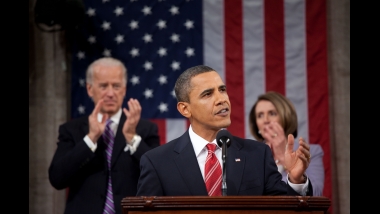
THE PRESIDENT:  Madam Speaker, Vice President Biden, members of Congress, distinguished guests, and fellow Americans:

Our Constitution declares that from time to time, the President shall give to Congress information about the state of our union.  For 220 years, our leaders have fulfilled this duty. They've done so during periods of prosperity and tranquility.  And they've done so in the midst of war and depression; at moments of great strife and great struggle.

It's tempting to look back on these moments and assume that our progress was inevitable -– that America was always destined to succeed.  But when the Union was turned back at Bull Run, and the Allies first landed at Omaha Beach, victory was very much in doubt.  When the market crashed on Black Tuesday, and civil rights marchers were beaten on Bloody Sunday, the future was anything but certain.  These were the times that tested the courage of our convictions, and the strength of our union.  And despite all our divisions and disagreements, our hesitations and our fears, America prevailed because we chose to move forward as one nation, as one people. 

Again, we are tested.  And again, we must answer history's call.

One year ago, I took office amid two wars, an economy rocked by a severe recession, a financial system on the verge of collapse, and a government deeply in debt.  Experts from across the political spectrum warned that if we did not act, we might face a second depression.  So we acted -– immediately and aggressively.  And one year later, the worst of the storm has passed.

But the devastation remains.  One in 10 Americans still cannot find work.  Many businesses have shuttered.  Home values have declined.  Small towns and rural communities have been hit especially hard.  And for those who'd already known poverty, life has become that much harder.

This recession has also compounded the burdens that America's families have been dealing with for decades –- the burden of working harder and longer for less; of being unable to save enough to retire or help kids with college. 

So I know the anxieties that are out there right now.  They're not new.  These struggles are the reason I ran for President.  These struggles are what I've witnessed for years in places like Elkhart, Indiana; Galesburg, Illinois.  I hear about them in the letters that I read each night.  The toughest to read are those written by children -– asking why they have to move from their home, asking when their mom or dad will be able to go back to work.

For these Americans and so many others, change has not come fast enough.  Some are frustrated; some are angry.  They don't understand why it seems like bad behavior on Wall Street is rewarded, but hard work on Main Street isn't; or why Washington has been unable or unwilling to solve any of our problems.  They're tired of the partisanship and the shouting and the pettiness.  They know we can't afford it.  Not now.  

So we face big and difficult challenges.  And what the American people hope -– what they deserve -– is for all of us, Democrats and Republicans, to work through our differences; to overcome the numbing weight of our politics.  For while the people who sent us here have different backgrounds, different stories, different beliefs, the anxieties they face are the same. The aspirations they hold are shared:  a job that pays the bills; a chance to get ahead; most of all, the ability to give their children a better life. 

You know what else they share?  They share a stubborn resilience in the face of adversity.  After one of the most difficult years in our history, they remain busy building cars and teaching kids, starting businesses and going back to school. They're coaching Little League and helping their neighbors.  One woman wrote to me and said, "We are strained but hopeful, struggling but encouraged." 

It's because of this spirit -– this great decency and great strength -– that I have never been more hopeful about America's future than I am tonight.  (Applause.)  Despite our hardships, our union is strong.  We do not give up.  We do not quit.  We do not allow fear or division to break our spirit.  In this new decade, it's time the American people get a government that matches their decency; that embodies their strength.  (Applause.)   
And tonight, tonight I'd like to talk about how together we can deliver on that promise.   

It begins with our economy. 

Our most urgent task upon taking office was to shore up the same banks that helped cause this crisis.  It was not easy to do. And if there's one thing that has unified Democrats and Republicans, and everybody in between, it's that we all hated the bank bailout.  I hated it -- (applause.)  I hated it.  You hated it.  It was about as popular as a root canal.  (Laughter.)  

But when I ran for President, I promised I wouldn't just do what was popular -– I would do what was necessary.  And if we had allowed the meltdown of the financial system, unemployment might be double what it is today.  More businesses would certainly have closed.  More homes would have surely been lost. 

So I supported the last administration's efforts to create the financial rescue program.  And when we took that program over, we made it more transparent and more accountable.  And as a result, the markets are now stabilized, and we've recovered most of the money we spent on the banks.  (Applause.)  Most but not all.

To recover the rest, I've proposed a fee on the biggest banks.  (Applause.)  Now, I know Wall Street isn't keen on this idea.  But if these firms can afford to hand out big bonuses again, they can afford a modest fee to pay back the taxpayers who rescued them in their time of need.  (Applause.)

Now, as we stabilized the financial system, we also took steps to get our economy growing again, save as many jobs as possible, and help Americans who had become unemployed. 

That's why we extended or increased unemployment benefits for more than 18 million Americans; made health insurance 65 percent cheaper for families who get their coverage through COBRA; and passed 25 different tax cuts.

Now, let me repeat:  We cut taxes.  We cut taxes for 95 percent of working families.  (Applause.)  We cut taxes for small businesses.  We cut taxes for first-time homebuyers.  We cut taxes for parents trying to care for their children.  We cut taxes for 8 million Americans paying for college.  (Applause.)

I thought I'd get some applause on that one.  (Laughter and applause.)

As a result, millions of Americans had more to spend on gas and food and other necessities, all of which helped businesses keep more workers.  And we haven't raised income taxes by a single dime on a single person.  Not a single dime.  (Applause.)

Because of the steps we took, there are about two million Americans working right now who would otherwise be unemployed.  (Applause.)  Two hundred thousand work in construction and clean energy; 300,000 are teachers and other education workers.  Tens of thousands are cops, firefighters, correctional officers, first responders.  (Applause.)  And we're on track to add another one and a half million jobs to this total by the end of the year.

The plan that has made all of this possible, from the tax cuts to the jobs, is the Recovery Act.  (Applause.)  That's right -– the Recovery Act, also known as the stimulus bill.  (Applause.)  Economists on the left and the right say this bill has helped save jobs and avert disaster.  But you don't have to take their word for it.  Talk to the small business in Phoenix that will triple its workforce because of the Recovery Act.  Talk to the window manufacturer in Philadelphia who said he used to be skeptical about the Recovery Act, until he had to add two more work shifts just because of the business it created.  Talk to the single teacher raising two kids who was told by her principal in the last week of school that because of the Recovery Act, she wouldn't be laid off after all. 

There are stories like this all across America.  And after two years of recession, the economy is growing again.  Retirement funds have started to gain back some of their value.  Businesses are beginning to invest again, and slowly some are starting to hire again.   

But I realize that for every success story, there are other stories, of men and women who wake up with the anguish of not knowing where their next paycheck will come from; who send out resumes week after week and hear nothing in response.  That is why jobs must be our number-one focus in 2010, and that's why I'm calling for a new jobs bill tonight.  (Applause.)  

Now, the true engine of job creation in this country will always be America's businesses.  (Applause.)  But government can create the conditions necessary for businesses to expand and hire more workers. 

We should start where most new jobs do –- in small businesses, companies that begin when -- (applause) -- companies that begin when an entrepreneur -- when an entrepreneur takes a chance on a dream, or a worker decides it's time she became her own boss.  Through sheer grit and determination, these companies have weathered the recession and they're ready to grow.  But when you talk to small businessowners in places like Allentown, Pennsylvania, or Elyria, Ohio, you find out that even though banks on Wall Street are lending again, they're mostly lending to bigger companies.  Financing remains difficult for small businessowners across the country, even those that are making a profit.

So tonight, I'm proposing that we take $30 billion of the money Wall Street banks have repaid and use it to help community banks give small businesses the credit they need to stay afloat. (Applause.)  I'm also proposing a new small business tax credit
-– one that will go to over one million small businesses who hire new workers or raise wages.  (Applause.)  While we're at it, let's also eliminate all capital gains taxes on small business investment, and provide a tax incentive for all large businesses and all small businesses to invest in new plants and equipment.  (Applause.) 

Next, we can put Americans to work today building the infrastructure of tomorrow.  (Applause.)  From the first railroads to the Interstate Highway System, our nation has always been built to compete.  There's no reason Europe or China should have the fastest trains, or the new factories that manufacture clean energy products.

Tomorrow, I'll visit Tampa, Florida, where workers will soon break ground on a new high-speed railroad funded by the Recovery Act.  (Applause.)  There are projects like that all across this country that will create jobs and help move our nation's goods, services, and information.  (Applause.) 

We should put more Americans to work building clean energy facilities -- (applause) -- and give rebates to Americans who make their homes more energy-efficient, which supports clean energy jobs.  (Applause.)  And to encourage these and other businesses to stay within our borders, it is time to finally slash the tax breaks for companies that ship our jobs overseas, and give those tax breaks to companies that create jobs right here in the United States of America.  (Applause.)

Now, the House has passed a jobs bill that includes some of these steps.  (Applause.)  As the first order of business this year, I urge the Senate to do the same, and I know they will.  (Applause.)  They will.  (Applause.)  People are out of work.  They're hurting.  They need our help.  And I want a jobs bill on my desk without delay.  (Applause.)

But the truth is, these steps won't make up for the seven million jobs that we've lost over the last two years.  The only way to move to full employment is to lay a new foundation for long-term economic growth, and finally address the problems that America's families have confronted for years.  

We can't afford another so-called economic "expansion" like the one from the last decade –- what some call the "lost decade" -– where jobs grew more slowly than during any prior expansion; where the income of the average American household declined while the cost of health care and tuition reached record highs; where prosperity was built on a housing bubble and financial speculation. 

From the day I took office, I've been told that addressing our larger challenges is too ambitious; such an effort would be too contentious.  I've been told that our political system is too gridlocked, and that we should just put things on hold for a while. 

For those who make these claims, I have one simple question: How long should we wait?  How long should America put its future on hold?  (Applause.)

You see, Washington has been telling us to wait for decades, even as the problems have grown worse.  Meanwhile, China is not waiting to revamp its economy.  Germany is not waiting.  India is not waiting.  These nations -- they're not standing still.  These nations aren't playing for second place.  They're putting more emphasis on math and science.  They're rebuilding their infrastructure.  They're making serious investments in clean energy because they want those jobs.  Well, I do not accept second place for the United States of America.  (Applause.) 

As hard as it may be, as uncomfortable and contentious as the debates may become, it's time to get serious about fixing the problems that are hampering our growth.

Now, one place to start is serious financial reform.  Look, I am not interested in punishing banks.  I'm interested in protecting our economy.  A strong, healthy financial market makes it possible for businesses to access credit and create new jobs. It channels the savings of families into investments that raise incomes.  But that can only happen if we guard against the same recklessness that nearly brought down our entire economy. 

We need to make sure consumers and middle-class families have the information they need to make financial decisions.  (Applause.)  We can't allow financial institutions, including those that take your deposits, to take risks that threaten the whole economy.  

Now, the House has already passed financial reform with many of these changes.  (Applause.)  And the lobbyists are trying to kill it.  But we cannot let them win this fight.  (Applause.)  And if the bill that ends up on my desk does not meet the test of real reform, I will send it back until we get it right.  We've got to get it right.  (Applause.)

Next, we need to encourage American innovation.  Last year, we made the largest investment in basic research funding in history -– (applause) -- an investment that could lead to the world's cheapest solar cells or treatment that kills cancer cells but leaves healthy ones untouched.  And no area is more ripe for such innovation than energy.  You can see the results of last year's investments in clean energy -– in the North Carolina company that will create 1,200 jobs nationwide helping to make advanced batteries; or in the California business that will put a thousand people to work making solar panels.

But to create more of these clean energy jobs, we need more production, more efficiency, more incentives.  And that means building a new generation of safe, clean nuclear power plants in this country.  (Applause.)  It means making tough decisions about opening new offshore areas for oil and gas development.  (Applause.)  It means continued investment in advanced biofuels and clean coal technologies.  (Applause.)  And, yes, it means passing a comprehensive energy and climate bill with incentives that will finally make clean energy the profitable kind of energy in America.  (Applause.)

I am grateful to the House for passing such a bill last year.  (Applause.)  And this year I'm eager to help advance the bipartisan effort in the Senate.  (Applause.) 

I know there have been questions about whether we can afford such changes in a tough economy.  I know that there are those who disagree with the overwhelming scientific evidence on climate change.  But here's the thing -- even if you doubt the evidence, providing incentives for energy-efficiency and clean energy are the right thing to do for our future -– because the nation that leads the clean energy economy will be the nation that leads the global economy.  And America must be that nation.  (Applause.)

Third, we need to export more of our goods.  (Applause.)  Because the more products we make and sell to other countries, the more jobs we support right here in America.  (Applause.)  So tonight, we set a new goal:  We will double our exports over the next five years, an increase that will support two million jobs in America.  (Applause.)  To help meet this goal, we're launching a National Export Initiative that will help farmers and small businesses increase their exports, and reform export controls consistent with national security.  (Applause.)

We have to seek new markets aggressively, just as our competitors are.  If America sits on the sidelines while other nations sign trade deals, we will lose the chance to create jobs on our shores.  (Applause.)  But realizing those benefits also means enforcing those agreements so our trading partners play by the rules.  (Applause.)  And that's why we'll continue to shape a Doha trade agreement that opens global markets, and why we will strengthen our trade relations in Asia and with key partners like South Korea and Panama and Colombia.  (Applause.)

Fourth, we need to invest in the skills and education of our people.  (Applause.)

Now, this year, we've broken through the stalemate between left and right by launching a national competition to improve our schools.  And the idea here is simple:  Instead of rewarding failure, we only reward success.  Instead of funding the status quo, we only invest in reform -- reform that raises student achievement; inspires students to excel in math and science; and turns around failing schools that steal the future of too many young Americans, from rural communities to the inner city.  In the 21st century, the best anti-poverty program around is a world-class education.  (Applause.)  And in this country, the success of our children cannot depend more on where they live than on their potential. 

When we renew the Elementary and Secondary Education Act, we will work with Congress to expand these reforms to all 50 states.  Still, in this economy, a high school diploma no longer guarantees a good job.  That's why I urge the Senate to follow the House and pass a bill that will revitalize our community colleges, which are a career pathway to the children of so many working families.  (Applause.) 

To make college more affordable, this bill will finally end the unwarranted taxpayer subsidies that go to banks for student loans.  (Applause.)  Instead, let's take that money and give families a $10,000 tax credit for four years of college and increase Pell Grants.  (Applause.)  And let's tell another one million students that when they graduate, they will be required to pay only 10 percent of their income on student loans, and all of their debt will be forgiven after 20 years –- and forgiven after 10 years if they choose a career in public service, because in the United States of America, no one should go broke because they chose to go to college.  (Applause.) 

And by the way, it's time for colleges and universities to get serious about cutting their own costs -– (applause) -- because they, too, have a responsibility to help solve this problem. 

Now, the price of college tuition is just one of the burdens facing the middle class.  That's why last year I asked Vice President Biden to chair a task force on middle-class families.  That's why we're nearly doubling the child care tax credit, and making it easier to save for retirement by giving access to every worker a retirement account and expanding the tax credit for those who start a nest egg.  That's why we're working to lift the value of a family's single largest investment –- their home.  The steps we took last year to shore up the housing market have allowed millions of Americans to take out new loans and save an average of $1,500 on mortgage payments.     

This year, we will step up refinancing so that homeowners can move into more affordable mortgages.  (Applause.)  And it is precisely to relieve the burden on middle-class families that we still need health insurance reform.  (Applause.)  Yes, we do.  (Applause.)

Now, let's clear a few things up.  (Laughter.)  I didn't choose to tackle this issue to get some legislative victory under my belt.  And by now it should be fairly obvious that I didn't take on health care because it was good politics.  (Laughter.)  I took on health care because of the stories I've heard from Americans with preexisting conditions whose lives depend on getting coverage; patients who've been denied coverage; families –- even those with insurance -– who are just one illness away from financial ruin.

After nearly a century of trying -- Democratic administrations, Republican administrations -- we are closer than ever to bringing more security to the lives of so many Americans.  The approach we've taken would protect every American from the worst practices of the insurance industry.  It would give small businesses and uninsured Americans a chance to choose an affordable health care plan in a competitive market.  It would require every insurance plan to cover preventive care. 

And by the way, I want to acknowledge our First Lady, Michelle Obama, who this year is creating a national movement to tackle the epidemic of childhood obesity and make kids healthier. (Applause.)  Thank you.  She gets embarrassed.  (Laughter.)

Our approach would preserve the right of Americans who have insurance to keep their doctor and their plan.  It would reduce costs and premiums for millions of families and businesses.  And according to the Congressional Budget Office -– the independent organization that both parties have cited as the official scorekeeper for Congress –- our approach would bring down the deficit by as much as $1 trillion over the next two decades.  (Applause.)

Still, this is a complex issue, and the longer it was debated, the more skeptical people became.  I take my share of the blame for not explaining it more clearly to the American people.  And I know that with all the lobbying and horse-trading, the process left most Americans wondering, "What's in it for me?"

But I also know this problem is not going away.  By the time I'm finished speaking tonight, more Americans will have lost their health insurance.  Millions will lose it this year.  Our deficit will grow.  Premiums will go up.  Patients will be denied the care they need.  Small business owners will continue to drop coverage altogether.  I will not walk away from these Americans, and neither should the people in this chamber.  (Applause.)

So, as temperatures cool, I want everyone to take another look at the plan we've proposed.  There's a reason why many doctors, nurses, and health care experts who know our system best consider this approach a vast improvement over the status quo.  But if anyone from either party has a better approach that will bring down premiums, bring down the deficit, cover the uninsured, strengthen Medicare for seniors, and stop insurance company abuses, let me know.  (Applause.)  Let me know.  Let me know.  (Applause.)  I'm eager to see it. 

Here's what I ask Congress, though:  Don't walk away from reform.  Not now.  Not when we are so close.  Let us find a way to come together and finish the job for the American people.  (Applause.)  Let's get it done.  Let's get it done.  (Applause.)

Now, even as health care reform would reduce our deficit, it's not enough to dig us out of a massive fiscal hole in which we find ourselves.  It's a challenge that makes all others that much harder to solve, and one that's been subject to a lot of political posturing.  So let me start the discussion of government spending by setting the record straight. 

At the beginning of the last decade, the year 2000, America had a budget surplus of over $200 billion.  (Applause.)  By the time I took office, we had a one-year deficit of over $1 trillion and projected deficits of $8 trillion over the next decade.  Most of this was the result of not paying for two wars, two tax cuts, and an expensive prescription drug program.  On top of that, the effects of the recession put a $3 trillion hole in our budget.  All this was before I walked in the door.  (Laughter and applause.)

Now -- just stating the facts.  Now, if we had taken office in ordinary times, I would have liked nothing more than to start bringing down the deficit.  But we took office amid a crisis.  And our efforts to prevent a second depression have added another $1 trillion to our national debt.  That, too, is a fact.

I'm absolutely convinced that was the right thing to do.  But families across the country are tightening their belts and making tough decisions.  The federal government should do the same.  (Applause.)  So tonight, I'm proposing specific steps to pay for the trillion dollars that it took to rescue the economy last year.

Starting in 2011, we are prepared to freeze government spending for three years.  (Applause.)  Spending related to our national security, Medicare, Medicaid, and Social Security will not be affected.  But all other discretionary government programs will.  Like any cash-strapped family, we will work within a budget to invest in what we need and sacrifice what we don't.  And if I have to enforce this discipline by veto, I will.  (Applause.)  

We will continue to go through the budget, line by line, page by page, to eliminate programs that we can't afford and don't work.  We've already identified $20 billion in savings for next year.  To help working families, we'll extend our middle-class tax cuts.  But at a time of record deficits, we will not continue tax cuts for oil companies, for investment fund managers, and for those making over $250,000 a year.  We just can't afford it.  (Applause.) 

Now, even after paying for what we spent on my watch, we'll still face the massive deficit we had when I took office.  More importantly, the cost of Medicare, Medicaid, and Social Security will continue to skyrocket.  That's why I've called for a bipartisan fiscal commission, modeled on a proposal by Republican Judd Gregg and Democrat Kent Conrad.  (Applause.)  This can't be one of those Washington gimmicks that lets us pretend we solved a problem.  The commission will have to provide a specific set of solutions by a certain deadline. 

Now, yesterday, the Senate blocked a bill that would have created this commission.  So I'll issue an executive order that will allow us to go forward, because I refuse to pass this problem on to another generation of Americans.  (Applause.)  And when the vote comes tomorrow, the Senate should restore the pay-as-you-go law that was a big reason for why we had record surpluses in the 1990s.  (Applause.) 
 
Now, I know that some in my own party will argue that we can't address the deficit or freeze government spending when so many are still hurting.  And I agree -- which is why this freeze won't take effect until next year -- (laughter) -- when the economy is stronger.  That's how budgeting works.  (Laughter and applause.)  But understand –- understand if we don't take meaningful steps to rein in our debt, it could damage our markets, increase the cost of borrowing, and jeopardize our recovery -– all of which would have an even worse effect on our job growth and family incomes. 

From some on the right, I expect we'll hear a different argument -– that if we just make fewer investments in our people, extend tax cuts including those for the wealthier Americans, eliminate more regulations, maintain the status quo on health care, our deficits will go away.  The problem is that's what we did for eight years.  (Applause.)  That's what helped us into this crisis.  It's what helped lead to these deficits.  We can't do it again.

Rather than fight the same tired battles that have dominated Washington for decades, it's time to try something new.  Let's invest in our people without leaving them a mountain of debt.  Let's meet our responsibility to the citizens who sent us here.  Let's try common sense.  (Laughter.)  A novel concept.

To do that, we have to recognize that we face more than a deficit of dollars right now.  We face a deficit of trust -– deep and corrosive doubts about how Washington works that have been growing for years.  To close that credibility gap we have to take action on both ends of Pennsylvania Avenue -- to end the outsized influence of lobbyists; to do our work openly; to give our people the government they deserve.  (Applause.)

That's what I came to Washington to do.  That's why -– for the first time in history –- my administration posts on our White House visitors online.  That's why we've excluded lobbyists from policymaking jobs, or seats on federal boards and commissions.

But we can't stop there.  It's time to require lobbyists to disclose each contact they make on behalf of a client with my administration or with Congress.  It's time to put strict limits on the contributions that lobbyists give to candidates for federal office. 

With all due deference to separation of powers, last week the Supreme Court reversed a century of law that I believe will open the floodgates for special interests –- including foreign corporations –- to spend without limit in our elections.  (Applause.)  I don't think American elections should be bankrolled by America's most powerful interests, or worse, by foreign entities.  (Applause.)  They should be decided by the American people.  And I'd urge Democrats and Republicans to pass a bill that helps to correct some of these problems.

I'm also calling on Congress to continue down the path of earmark reform.  Applause.)  Democrats and Republicans.  (Applause.)  Democrats and Republicans.  You've trimmed some of this spending, you've embraced some meaningful change.  But restoring the public trust demands more.  For example, some members of Congress post some earmark requests online.  (Applause.)  Tonight, I'm calling on Congress to publish all earmark requests on a single Web site before there's a vote, so that the American people can see how their money is being spent. (Applause.)

Of course, none of these reforms will even happen if we don't also reform how we work with one another.  Now, I'm not naïve.  I never thought that the mere fact of my election would usher in peace and harmony -- (laughter) -- and some post-partisan era.  I knew that both parties have fed divisions that are deeply entrenched.  And on some issues, there are simply philosophical differences that will always cause us to part ways. These disagreements, about the role of government in our lives, about our national priorities and our national security, they've been taking place for over 200 years.  They're the very essence of our democracy.

But what frustrates the American people is a Washington where every day is Election Day.  We can't wage a perpetual campaign where the only goal is to see who can get the most embarrassing headlines about the other side -– a belief that if you lose, I win.  Neither party should delay or obstruct every single bill just because they can.  The confirmation of -- (applause) -- I'm speaking to both parties now.  The confirmation of well-qualified public servants shouldn't be held hostage to the pet projects or grudges of a few individual senators.  (Applause.) 

Washington may think that saying anything about the other side, no matter how false, no matter how malicious, is just part of the game.  But it's precisely such politics that has stopped either party from helping the American people.  Worse yet, it's sowing further division among our citizens, further distrust in our government.

So, no, I will not give up on trying to change the tone of our politics.  I know it's an election year.  And after last week, it's clear that campaign fever has come even earlier than usual.  But we still need to govern. 

To Democrats, I would remind you that we still have the largest majority in decades, and the people expect us to solve problems, not run for the hills.  (Applause.)  And if the Republican leadership is going to insist that 60 votes in the Senate are required to do any business at all in this town -- a supermajority -- then the responsibility to govern is now yours as well.  (Applause.)  Just saying no to everything may be good short-term politics, but it's not leadership.  We were sent here to serve our citizens, not our ambitions.  (Applause.)  So let's show the American people that we can do it together.  (Applause.)

This week, I'll be addressing a meeting of the House Republicans.  I'd like to begin monthly meetings with both Democratic and Republican leadership.  I know you can't wait.  (Laughter.)

Throughout our history, no issue has united this country more than our security.  Sadly, some of the unity we felt after 9/11 has dissipated.  We can argue all we want about who's to blame for this, but I'm not interested in re-litigating the past. I know that all of us love this country.  All of us are committed to its defense.  So let's put aside the schoolyard taunts about who's tough.  Let's reject the false choice between protecting our people and upholding our values.  Let's leave behind the fear and division, and do what it takes to defend our nation and forge a more hopeful future -- for America and for the world.  (Applause.)

That's the work we began last year.  Since the day I took office, we've renewed our focus on the terrorists who threaten our nation.  We've made substantial investments in our homeland security and disrupted plots that threatened to take American lives.  We are filling unacceptable gaps revealed by the failed Christmas attack, with better airline security and swifter action on our intelligence.  We've prohibited torture and strengthened partnerships from the Pacific to South Asia to the Arabian Peninsula.  And in the last year, hundreds of al Qaeda's fighters and affiliates, including many senior leaders, have been captured or killed -- far more than in 2008.

And in Afghanistan, we're increasing our troops and training Afghan security forces so they can begin to take the lead in July of 2011, and our troops can begin to come home.  (Applause.)  We will reward good governance, work to reduce corruption, and support the rights of all Afghans -- men and women alike.  (Applause.)  We're joined by allies and partners who have increased their own commitments, and who will come together tomorrow in London to reaffirm our common purpose.  There will be difficult days ahead.  But I am absolutely confident we will succeed.

As we take the fight to al Qaeda, we are responsibly leaving Iraq to its people.  As a candidate, I promised that I would end this war, and that is what I am doing as President.  We will have all of our combat troops out of Iraq by the end of this August.  (Applause.)  We will support the Iraqi government -- we will support the Iraqi government as they hold elections, and we will continue to partner with the Iraqi people to promote regional peace and prosperity.  But make no mistake:  This war is ending, and all of our troops are coming home.  (Applause.)   

Tonight, all of our men and women in uniform -- in Iraq, in Afghanistan, and around the world –- they have to know that we -- that they have our respect, our gratitude, our full support.  And just as they must have the resources they need in war, we all have a responsibility to support them when they come home.  (Applause.)  That's why we made the largest increase in investments for veterans in decades -- last year.  (Applause.)   That's why we're building a 21st century VA.  And that's why Michelle has joined with Jill Biden to forge a national commitment to support military families.  (Applause.)

Now, even as we prosecute two wars, we're also confronting perhaps the greatest danger to the American people -– the threat of nuclear weapons.  I've embraced the vision of John F. Kennedy and Ronald Reagan through a strategy that reverses the spread of these weapons and seeks a world without them.  To reduce our stockpiles and launchers, while ensuring our deterrent, the United States and Russia are completing negotiations on the farthest-reaching arms control treaty in nearly two decades.  (Applause.)  And at April's Nuclear Security Summit, we will bring 44 nations together here in Washington, D.C. behind a clear goal:  securing all vulnerable nuclear materials around the world in four years, so that they never fall into the hands of terrorists.  (Applause.)

Now, these diplomatic efforts have also strengthened our hand in dealing with those nations that insist on violating international agreements in pursuit of nuclear weapons.  That's why North Korea now faces increased isolation, and stronger sanctions –- sanctions that are being vigorously enforced.  That's why the international community is more united, and the Islamic Republic of Iran is more isolated.  And as Iran's leaders continue to ignore their obligations, there should be no doubt:  They, too, will face growing consequences.  That is a promise.  (Applause.)

That's the leadership that we are providing –- engagement that advances the common security and prosperity of all people. We're working through the G20 to sustain a lasting global recovery.  We're working with Muslim communities around the world to promote science and education and innovation.  We have gone from a bystander to a leader in the fight against climate change. We're helping developing countries to feed themselves, and continuing the fight against HIV/AIDS.  And we are launching a new initiative that will give us the capacity to respond faster and more effectively to bioterrorism or an infectious disease -– a plan that will counter threats at home and strengthen public health abroad.

As we have for over 60 years, America takes these actions because our destiny is connected to those beyond our shores.  But we also do it because it is right.  That's why, as we meet here tonight, over 10,000 Americans are working with many nations to help the people of Haiti recover and rebuild.  (Applause.)  That's why we stand with the girl who yearns to go to school in Afghanistan; why we support the human rights of the women marching through the streets of Iran; why we advocate for the young man denied a job by corruption in Guinea.  For America must always stand on the side of freedom and human dignity.  (Applause.)  Always.  (Applause.)

Abroad, America's greatest source of strength has always been our ideals.  The same is true at home.  We find unity in our incredible diversity, drawing on the promise enshrined in our Constitution:  the notion that we're all created equal; that no matter who you are or what you look like, if you abide by the law you should be protected by it; if you adhere to our common values you should be treated no different than anyone else.    

We must continually renew this promise.  My administration has a Civil Rights Division that is once again prosecuting civil rights violations and employment discrimination.  (Applause.)  We finally strengthened our laws to protect against crimes driven by hate.  (Applause.)  This year, I will work with Congress and our military to finally repeal the law that denies gay Americans the right to serve the country they love because of who they are.  (Applause.)  It's the right thing to do.  (Applause.)  

We're going to crack down on violations of equal pay laws -– so that women get equal pay for an equal day's work.  (Applause.) And we should continue the work of fixing our broken immigration system -– to secure our borders and enforce our laws, and ensure that everyone who plays by the rules can contribute to our economy and enrich our nation.  (Applause.)

In the end, it's our ideals, our values that built America  -- values that allowed us to forge a nation made up of immigrants from every corner of the globe; values that drive our citizens still.  Every day, Americans meet their responsibilities to their families and their employers.  Time and again, they lend a hand to their neighbors and give back to their country.  They take pride in their labor, and are generous in spirit.  These aren't Republican values or Democratic values that they're living by; business values or labor values.  They're American values.  

Unfortunately, too many of our citizens have lost faith that our biggest institutions -– our corporations, our media, and, yes, our government –- still reflect these same values.  Each of these institutions are full of honorable men and women doing important work that helps our country prosper.  But each time a CEO rewards himself for failure, or a banker puts the rest of us at risk for his own selfish gain, people's doubts grow.  Each time lobbyists game the system or politicians tear each other down instead of lifting this country up, we lose faith.  The more that TV pundits reduce serious debates to silly arguments, big issues into sound bites, our citizens turn away.  

No wonder there's so much cynicism out there.  No wonder there's so much disappointment. 

I campaigned on the promise of change –- change we can believe in, the slogan went.  And right now, I know there are many Americans who aren't sure if they still believe we can change –- or that I can deliver it. 

But remember this –- I never suggested that change would be easy, or that I could do it alone.  Democracy in a nation of 300 million people can be noisy and messy and complicated.  And when you try to do big things and make big changes, it stirs passions and controversy.  That's just how it is.

Those of us in public office can respond to this reality by playing it safe and avoid telling hard truths and pointing fingers.  We can do what's necessary to keep our poll numbers high, and get through the next election instead of doing what's best for the next generation. 

But I also know this:  If people had made that decision 50 years ago, or 100 years ago, or 200 years ago, we wouldn't be here tonight.  The only reason we are here is because generations of Americans were unafraid to do what was hard; to do what was needed even when success was uncertain; to do what it took to keep the dream of this nation alive for their children and their grandchildren.

Our administration has had some political setbacks this year, and some of them were deserved.  But I wake up every day knowing that they are nothing compared to the setbacks that families all across this country have faced this year.  And what keeps me going -– what keeps me fighting -– is that despite all these setbacks, that spirit of determination and optimism, that fundamental decency that has always been at the core of the American people, that lives on.   

It lives on in the struggling small business owner who wrote to me of his company, "None of us," he said, "…are willing to consider, even slightly, that we might fail."

It lives on in the woman who said that even though she and her neighbors have felt the pain of recession, "We are strong.  We are resilient.  We are American."

It lives on in the 8-year-old boy in Louisiana, who just sent me his allowance and asked if I would give it to the people of Haiti. 

And it lives on in all the Americans who've dropped everything to go someplace they've never been and pull people they've never known from the rubble, prompting chants of "U.S.A.! U.S.A.!  U.S.A!" when another life was saved. 

The spirit that has sustained this nation for more than two centuries lives on in you, its people.  We have finished a difficult year.  We have come through a difficult decade.  But a new year has come.  A new decade stretches before us.  We don't quit.  I don't quit.  (Applause.)  Let's seize this moment -- to start anew, to carry the dream forward, and to strengthen our union once more.  (Applause.)

Thank you.  God bless you.  And God bless the United States of America.  (Applause.)

                                         END                   10:20 P.M. EST
 

Putting Washington at the Service of the Middle Class

Read the Transcript  |  Download Video: mp4 (865MB) | mp3 (64MB)

Ed. note: Also watch shorter video clips from the speech, broken down by topic.

In his State of the Union Address tonight, the President laid out an agenda attempting to attack one problem from every conceivable angle: the terrible squeeze felt by America’s middle class.  Fundamentally, that means prying government away from special interests and dedicating it to measures that put Americans to work and lay the foundation for a stronger economy for our country – lowering health care and tuition costs, spurring creation of the next generation of clean energy jobs.  It also means putting a cop on the beat on Wall Street, so major banks can no longer take advantage of families and taxpayers.

To do all that, though, we need to change the way Washington works.  Already the President has taken unprecedented steps in this direction, from releasing the names of all visitors to the White House for the first time ever to clamping down on the revolving door between government and lobbying.  But as much progress was made on this front in this first year, it was still only the first year, and the President will keep pushing forward, whether that’s shining sunlight on any contact between lobbyists and the White House, or pushing Congress to disclose all earmark requests in one place for Americans to see.

This was the vision that shaped the President's address, but this is not just a matter of rhetoric.  The President made clear that there is tremendously busy agenda ahead for his second year – the policies and proposals below are just examples of the plans the President laid out in his address to put government to work for the middle class.

Here are a few initiatives you might have missed in the course of the speech:

  • The President called on the Senate to pass a financial reform package. “A strong, healthy financial market makes it possible for businesses to access credit and create new jobs. It channels the savings of families into investments that raise incomes.  But that can only happen if we guard against the same recklessness that nearly brought down our entire economy.” Essential reforms include measures to protect consumers and investors from financial abuse; close loopholes, raise standards, and create accountability for supervision of major financial firms; restrict the size and scope of financial institutions to reign in excesses and protect taxpayers and address the ‘too big to fail’ problem; and establish comprehensive supervision of financial markets.
  • A vision for a clean energy economy“…to create more of these clean energy jobs, we need more production, more efficiency, and more incentives.” We will build on the historic $80 billion investment made through the Recovery Act.  The President’s vision includes investments in important technologies to diversity our energy sources and reduce our dependence on foreign oil, including:  the renewal of our nation’s nuclear energy industry after a 30-year hiatus, cutting edge biofuel and clean coal technologies, and additional offshore oil and gas drilling.  To fully transition to a clean energy economy and create millions of new American jobs, we must pass comprehensive energy and climate legislation to promote energy independence and address climate change.
  • The President will continue his push to invest in the skills and education of our people. “This year, we have broken through the stalemate between left and right by launching a national competition to improve our schools. And the idea here is simple: instead of rewarding failure, we only reward success... In this country, the success of our children cannot depend more on where they live than on their potential.” The Obama Administration supports a new vision for increasing student achievement, delivering opportunity, and supporting excellence in America’s public schools. The President’s 2011 budget supports a new framework for the Elementary and Secondary Education Act that will foster innovation, reward excellence, and promote reform in our schools, as well as invests an additional $1.35 billion to continue the historic Race to the Top program to open it up to districts in order to spur innovation and additional progress. At the same time, the Administration is moving to consolidate ineffective policies and practices. The President’s Budget eliminates six programs and consolidates 38 others into 11 new programs that emphasize using competition to allocate funds, giving communities more choices around activities, and using rigorous evidence to fund what works.
  • The President is committed to making college affordable for all Americans. “(I)n this economy, a high school diploma no longer guarantees a good job.” To increase college access and completion, the Administration will make student loans more affordable by limiting a borrower’s payments to 10 percent of his/her income and forgives remaining debt after 20 years – 10 years for public service works. We will also make permanent the American Opportunity Tax Credit. The President urges the Senate to pass the American Graduation Initiative, which invests more than $10 billion over the next decade in reforming our nation’s community colleges, promoting college completion, and moving toward the President’s goal of having the highest proportion of college graduates in the world by 2020. The President is also asking colleges and universities to do their share to make college affordable for all Americans cutting their own costs.
  • The President is making investments to ensure that the middle class benefits from this economic recovery.   “(T)he price of college tuition is just one of the burdens facing the middle class.  That's why last year I asked Vice President Biden to chair a task force on middle-class families.” The President has outlined immediate steps to reduce the strain on family budgets and help middle class families manage their child and elder care responsibilities, save for retirement and pay for college. He will double the child tax credit this year, make it easier to save for retirement with automatic IRAs for workers without access to existing retirement plans, provide  larger tax credits to match retirement savings for millions of additional workers, and provide new safeguards to protect retirement savings.
  • Changing the way we do business. “To close that credibility gap we have to take action on both ends of Pennsylvania Avenue to end the outsized influence of lobbyists; to do our work openly; to give our people the government they deserve.” The President has called for additional new lobbyist reforms, including enhanced disclosure of lobbyist contacts, strict campaign contribution limits by lobbyists, and a single earmark database, so American taxpayers find out what earmarks are being requested, and where their money is going.
  • Countering Citizens United. “I don't think American elections should be bankrolled by America's most powerful interests, or worse, by foreign entities.” Last week’s Supreme Court Citizen’s United decision opens the floodgates to special interests and foreign countries and companies bankrolling national campaigns.  The President called for bipartisan support for legislation that will remedy the Supreme Court’s unprecedented and troubling decision. 
  • The President stands by military families. “Tonight, all of our men and women in uniform...have to know that they have our respect, our gratitude, our full support.” The President’s 2011 budget announces significant new investments, totaling more than $8 billion, and protections for our nation’s military families, including increased military pay and housing allowances, increased funding for family support programs, expanded availability of affordable, high-quality child care, the renovation or replacement of schools, and expanded and improved care for wounded, ill and injured service members. 
  • The President is establishing a National Equal Pay Enforcement Task Force.  “We're going to crack down on violations of equal pay laws -– so that women get equal pay for an equal day's work.” To make sure we uphold our nation’s core commitment to equality of opportunity, the Obama Administration is implementing an Equal Pay initiative to improve compliance, public education, and enforcement of equal pay laws. The Task Force will ensure that the agencies with responsibility for equal pay enforcement are coordinating efforts and limiting potential gaps in enforcement. The Administration also continues to support the Paycheck Fairness Act, and is increasing funding for the agencies enforcing equal pay laws and other key civil rights statutes. 
  • Immigration reform. “And we should continue the work of fixing our broken immigration system - to secure our borders and enforce our laws, and ensure that everyone who plays by the rules can contribute to our economy and enrich our nation.” The President is pleased Congress is taking steps forward on immigration reform that includes effective border security measures with a path for legalization for those who are willing to pay taxes and abide by the law. He is committed to confronting this problem in practical, effective ways, using the current tools at our disposal while we work with Congress to enact comprehensive reform.
play

And here are still more initiatives the President spoke to just tonight:

  • The President will fight to recover the money American taxpayers spent to bailout the banks. To recover the rest, I've proposed a fee on the biggest banks. Now, I know Wall Street isn't keen on this idea. But if these firms can afford to hand out big bonuses again, they can afford a modest fee to pay back the taxpayers who rescued them in their time of need.”   The President has proposed the Financial Crisis Responsibility Fee, which will require the largest and most highly leveraged Wall Street firms to pay back taxpayers and provide a deterrent against excessive leverage for the largest firms. The conservative estimate for the cost of TARP in the budget is $117 billion, but the Treasury Department expects it to be much less and the fee will be in place for a minimum of ten years or however long it takes to recoup every last penny to the American taxpayer.
  • The President recognizes that Small Businesses will be key to our nation’s economic recoveryI'm proposing that we take $30 billion of the money Wall Street banks have repaid and use it to help community banks give small businesses the credit they need to stay afloat. I'm also proposing a new small business tax credit – one that will go to over one million small businesses who hire new workers or raise wages.” To get small businesses growing again, and growing our economy, the President has proposed a range of provisions that include tax incentives to spur investment; expanded access to capital and growth opportunities to create jobs; and increased support for entrepreneurship to foster innovation. He is proposing an employment tax credit for small businesses to encourage hiring, eliminating capital gains taxes on small business investments, extending enhanced small business expensing, and transferring $30 billion in resources from TARP to a new program to help community and smaller banks give small businesses the credit they need. The President and members of his Administration will announce additional details in the coming weeks
  • The President reiterates his support for continued investment in our nation’s infrastructure.  “Tomorrow, I'll visit Tampa, Florida, where workers will soon break ground on a new high-speed railroad funded by the Recovery Act. There are projects like that all across this country that will create jobs and help move our nation's goods, services, and information.” Through the Recovery Act, we made the largest investment in our nation’s infrastructure since President Eisenhower called for the creation of our national highway system over half a century ago.  In his speech, the President announced funding to make a  down-payment on a new nationwide high-speed rail system being built in-part with ARRA dollars. 
  • Tax breaks to keep jobs at home. “(I)t’s time to finally slash the tax breaks for companies that ship our jobs overseas, and give those tax breaks to companies that create jobs right here in the United States of America.”  The President has called for an end for tax breaks for companies that ship our jobs overseas to help fund tax cuts – like making the R & E credit permanent – that reward companies for investing and creating jobs in the United States.
  • The President also called on the Senate to pass a jobs bill that he can sign. “The House has passed a jobs bill…. As the first order of business this year, I urge the Senate to do the same, and I know they will. People are out of work. They are hurting. They need our help. And I want a jobs bill on my desk without delay.” The bold and difficult steps the President took to stabilize the financial system have reduced the cost of TARP by more than $200 billion, providing additional resources for job creation and for deficit reduction. In December, the President outlined a package of targeted measures to help further stimulate private sector hiring, including measures to facilitate small business growth, green jobs and infrastructure. The House has passed strong legislation - it is time for the Senate to do the same.
  • We must invest in American ingenuity and innovation. We need to encourage American innovation.” The Obama Innovation Agenda will get us closer to the President’s long-term goal of increasing combined private and public R&D investment to three percent of GDP. The Obama 2011 budget will move us closer to restoring America to first in the world in college completion; and invest in the next generation of scientists so we will not lag behind countries like China in science and engineering graduates. More details will be announced in the coming weeks.
  • We need to export more of our goods around the world. “We will double our exports over the next five years, an increase that will support two million jobs in America.” To meet this goal, we’re launching a National Export Initiative that will help farmers and small businesses increase their exports and expand their markets. Details will be announced in the coming weeks, but the NEI includes the creation of the President’s Export Promotion Cabinet and an enhancement of funding for key export promotion programs. We will work to shape a Doha trade agreement that opens markets and will continue to work with key allies like South Korea, Panama, and Colombia on trade agreements that provide real benefits to our workers.  The President and members of his Administration will announce additional details in the coming week. 
  • The President remains committed to helping Americans stay in their homes and help their homes retain their value. “… we’re working to lift the value of a family’s single largest investment – their home.” Last year, we took steps allowing millions of Americans to take out new loans and save an average of $1,500 per family on mortgage payments.  This year, we will step up programs that encourage re-financing so that homeowners can move into more affordable and sustainable mortgages.   In addition to the changes proposed last week to ensure sound risk management, the FHA is continuing to evaluate its mortgage insurance underwriting standards and its measures to help distressed and underwater borrowers through other FHA initiatives going forward.   In order to ensure American families receive the same consideration American corporations do, the Obama Administration remains supportive of efforts to allow bankruptcy proceedings to renegotiate all debts, including home mortgages.
  • As Americans are getting their budgets in order, the President is getting the nation’s financial house in order. Like any cash-strapped family, we will work within a budget to invest in what we need and sacrifice what we don’t.” The President has announced the three year, non-security discretionary spending freeze, and also called for a bipartisan Fiscal Commissionto identify policies to improve the fiscal situation in the medium term and to achieve fiscal sustainability over the long run. The President and members of his Administration will announce additional details in the coming weeks.   
  • The President’s focus on national security includes rooting out terrorists where they hide. Since the day I took office, we have renewed our focus on the terrorists who threaten our nation.” In the last year, hundreds of Al Qaeda’s fighters and affiliates have been captured or killed – far more than in 2008. 
  • The President’s commitment to Non-Proliferation results. “Even as we prosecute two wars, we're also confronting perhaps the greatest danger to the American people - the threat of nuclear weapons.” The United States and Russia are completing negotiations on the farthest-reaching arms control treaty in nearly twenty years.   He will also host a Nuclear Security Summit in April, which will bring forty-four nations together behind a clear goal: to secure all loose nuclear materials around the world in four years, so that they never fall into the hands of terrorists.
  • The President is launching a bioterror and pandemic threat initiative. “We are launching a new initiative that will give us the capacity to respond faster and more effectively to bioterrorism or an infectious disease - a plan that will counter threats at home and strengthen public health abroad.” The President called to action key U.S. Government leaders to re-design our medical countermeasure enterprise to protect Americans from bioterror or infectious health threats. We will pursue a business model that leverages market forces and reduces risk to attract pharmaceutical and biotechnology industry collaboration with the U.S. Government.
  • The President announced that he will work this year to repeal “Don’t Ask, Don’t Tell.” “I will work with Congress and the military to finally repeal the law that denies gay Americans the right to serve the country they love because of who they are.” 

Mona Sutphen is Deputy Chief of Staff


The White House

Office of the Press Secretary

Declaraciones del Presidente en Discurso sobre el Estado del la Unión

9:11 P.M. EST

EL PRESIDENTE: Señora Presidenta de la Cámara de Representantes, Vicepresidente Biden, miembros del Congreso, distinguidos invitados y conciudadanos:

Nuestra Constitución declara que, cada cierto tiempo, el Presidente debe proporcionarle al Congreso información sobre el estado de nuestra nación. Durante doscientos veinte años, nuestros líderes han cumplido con este deber. Lo han hecho durante tiempos de prosperidad y tranquilidad. Y lo han hecho en tiempos de guerra y depresión, en tiempos de gran discordia y gran pugna.

Es tentador hacer una retrospectiva de esos tiempos y suponer que nuestro progreso fue inevitable, que Estados Unidos siempre estuvo destinado a tener éxito. Pero después de la derrota de la Unión en la Batalla de Bull Run y del desembarco inicial de los Aliados en playa Omaha, el desenlace estaba muy en duda. Cuando el mercado colapsó el Martes Negro y quienes marcharon por derechos civiles fueron golpeados el Domingo Sangriento, el futuro no tenía nada de cierto. Esos fueron tiempos que sometieron a prueba la valentía de nuestras convicciones, y la fortaleza de nuestra nación. Y a pesar de todas nuestras divisiones y desacuerdos; nuestras dudas y nuestros temores; Estados Unidos prevaleció porque optamos por avanzar como una nación y un pueblo.

Nuevamente, nos hemos visto sometidos a prueba. Y nuevamente, debemos responder al llamado de la historia.

Hace un año, asumí la presidencia en medio de dos guerras, una economía conmocionada por una severa recesión, un sistema financiero al borde del colapso y un gobierno sumamente endeudado. Expertos de todo el espectro político advirtieron que si no hacíamos algo al respecto, posiblemente enfrentaríamos una segunda depresión. Por lo tanto, actuamos inmediata y enérgicamente. Y un año más tarde, lo peor de la tormenta ya pasó.

Pero quedan los daños. Uno de cada diez estadounidenses aún no puede encontrar trabajo. Muchas empresas han cerrado. La vivienda se ha devaluado. Pueblos pequeños y comunidades rurales se han visto particularmente afectados. Y para quienes ya conocían la pobreza, la vida es mucho más dura.

Esta recesión también ha hecho más pesada la carga que las familias de Estados Unidos soportan desde hace décadas: se ven obligados a trabajar más arduamente y por más tiempo por menos dinero; no pueden ahorrar suficiente para jubilarse o ayudar a los hijos con la matrícula universitaria.

O sea que estoy consciente de las ansiedades que los agobian en este momento. No son nada nuevo. Esas dificultades son el motivo por el cual me postulé a la presidencia. Estas dificultades las he presenciado durante años en lugares como Elkhart, Indiana y Galesburg, Illinois. Me entero de ellas en las cartas que leo todas las noches. Las más difíciles de leer son las que escriben los niños preguntando por qué se tienen que mudar de casa, preguntando cuándo su mamá o papá podrá volver a trabajar.

Para estos estadounidenses y tantos otros, los cambios no se han producido lo suficientemente rápido. Algunos se sienten frustrados y otros furiosos. No comprenden por qué parece que se recompensa la conducta inapropiada de Wall Street pero no el arduo trabajo de la gente promedio; o por qué Washington no ha podido o no está dispuesto a resolver ninguno de nuestros problemas. Están hartos del partidismo, el griterío y la mezquindad. Saben que no podemos darnos el lujo de hacer eso. No en este momento.

Entonces, enfrentamos importantes y difíciles desafíos. Y lo que los estadounidenses esperan –lo que merecen– es que todos nosotros, demócratas y republicanos, resolvamos nuestras diferencias y superemos el peso muerto de nuestra política. Pues si bien las personas que nos trajeron aquí provienen de diferentes esferas, y tienen historias y credos distintos, sienten la misma ansiedad. Comparten las mismas aspiraciones. Un empleo que pague las cuentas. La oportunidad de salir adelante. Más que nada, la capacidad de darles a sus hijos una vida mejor.

¿Saben qué más tienen en común? Una resistencia obstinada ante la adversidad. Tras uno de los años más difíciles en nuestra historia, siguen ocupados fabricando autos y enseñando a niños; montando empresas y retomando sus estudios. Son entrenadores de las ligas menores y ayudan a sus vecinos. Una señora me escribió, “Estamos ajustados pero tenemos esperanza, estamos pasando dificultades, pero tenemos ánimo”.

Es por este espíritu –esta gran decencia y gran fortaleza– que nunca he sentido más optimismo respecto al futuro de Estados Unidos que esta noche. (Aplausos.) A pesar de nuestras dificultades, nuestra nación es fuerte. No nos damos por vencidos. No nos rendimos. No permitimos que el temor o las divisiones nos quiten el ánimo. En esta nueva década, es hora de que los estadounidenses tengan un gobierno tan decente como ellos; que encarne su fuerza. (Aplausos.)

Y esta noche, esta noche quiero hablar sobre cómo podemos realizar esa promesa juntos.

Comienza con nuestra economía.

Nuestra tarea más urgente tras asumir el cargo fue reforzar a los mismos bancos de Wall Street cuya imprudencia ayudó a causar esta crisis. No fue fácil hacerlo. Y si hay algo que ha unido a demócratas y republicanos, y a todos los demás, es que todos odiamos el rescate de los bancos. Yo lo detesté. (Aplausos.) Yo lo detesté. Ustedes lo detestaron. Fue tan popular como una endodoncia. (Risas.)

Pero cuando me postulé a la presidencia, prometí que no solamente tomaría medidas que fueran populares. Tomaría las medidas necesarias. Y si hubiéramos permitido el colapso del sistema financiero, el desempleo posiblemente habría sido el doble de lo que es ahora. Con toda certeza, más empresas habrían cerrado. Sin duda, se habrían perdido más viviendas.

Por lo tanto, apoyé los esfuerzos del gobierno pasado de crear un programa de rescate financiero. Y cuando asumimos el programa, lo hicimos más transparente y responsable. Como resultado, los mercados ahora están estables y hemos recuperado gran parte del dinero que gastamos en los bancos. (Aplausos.) Gran parte, pero no todo.

Para recuperar el resto, he propuesto una cuota para los bancos más grandes. (Aplausos.) Bueno ya sé que a Wall Street no le gusta mucho esta idea, pero si estas firmas pueden darse el lujo de volver a dar grandes bonificaciones, pueden pagar una cuota modesta para reembolsarles a los contribuyentes que los rescataron en su momento de necesidad. (Aplausos.)
 
Ahora a medida que le dimos estabilidad al sistema financiero, también tomamos medidas para hacer que nuestra economía vuelva a crecer, preservar el mayor número posible de empleos y ayudar a los estadounidenses que se habían quedado sin empleo.

Por eso extendimos o aumentamos los beneficios de desempleo para más de 18 millones de estadounidenses; redujimos el costo del seguro médico en 65% para las familias que reciben su cobertura por medio de COBRA, y aprobamos 25 distintos recortes tributarios.

Ahora permítanme repetir: disminuimos los impuestos. Disminuimos los impuestos de 95% de las familias trabajadoras. (Aplausos.) Disminuimos los impuestos de las pequeñas empresas. Disminuimos los impuestos de quienes compran casa por primera vez. Disminuimos los impuestos de los padres que están tratando de cuidar a sus hijos. Disminuimos los impuestos de 8 millones de estadounidenses que pagan matrícula universitaria.

Pensé que lograría aplausos por eso. (Risas y aplausos.)

Como resultado, millones de estadounidenses tuvieron más dinero para gastar en gasolina y comida y otras necesidades, todo lo cual ayudó a las empresas a conservar más empleados. Y no hemos aumentado ni un centavo el impuesto a la renta de nadie. Ni un centavo. (Aplausos.)

Debido a las medidas que tomamos, aproximadamente dos millones de estadounidenses están trabajando en este momento que de otra manera estarían desempleados. (Aplausos.) 200,000 trabajan en construcción y energía limpia. 300,000 son maestros y otros trabajadores del sector educación. Decenas de miles son policías, bomberos, empleados en penitenciarías y socorristas. (Aplausos.) Y estamos por agregar 1 millón y medio de empleos adicionales a este total para fines de año.

El plan que hizo posible todo esto, desde los recortes tributarios hasta los empleos, es la Ley para la Recuperación. (Aplausos.) Correcto: la Ley para la Recuperación, también conocida como la Ley de Estímulo. (Aplausos.) Economistas de izquierda y derecha dicen que este proyecto de ley ayudó a preservar empleos y evitar catástrofes. Pero no tiene que creerles a los expertos.

Hablen con la pequeña empresa en Phoenix que aumentará el número de empleados al triple gracias a la Ley para la Recuperación.

Hablen con el fabricante de ventanas en Filadelfia que dijo que solía tener sus dudas sobre la Ley para la Recuperación, hasta que tuvo que agregar dos turnos más sólo por la demanda generada.

Hablen con la maestra que está criando sola a dos hijos a quien su directora le dijo la última semana de clases que, al fin y al cabo, no se le despediría, gracias a la Ley para la Recuperación.

Hay casos como éste en todo Estados Unidos. Y tras dos años de recesión, la economía está creciendo nuevamente. Los fondos de jubilación han comenzado a recuperar un poco de su valor.

Las empresas están comenzando a invertir nuevamente, y poco a poco, algunas están comenzando a contratar nuevamente.

Pero estoy consciente de que por cada caso de éxito, hay otros casos más de hombres y mujeres que se despiertan con la angustia de no saber de dónde vendrá su próximo cheque de pago; que mandan su currículo semana tras semana y no tienen respuesta alguna. Por eso, el empleo debe ser nuestra primera prioridad en el 2010, y por eso estoy proponiendo esta noche un nuevo proyecto de ley de empleos. (Aplausos.)

Pues bien, el verdadero motor de generación de empleo en este país siempre serán las empresas de Estados Unidos. (Aplausos.) Pero el gobierno puede crear las condiciones necesarias para que las empresas se expandan y contraten a más trabajadores.

Debemos comenzar donde se produce la mayoría de los empleos: en las pequeñas empresas, negocios que se montan cuando -- (Aplausos.) -- negocios que se montan cuando un empresario – cuando un empresario intenta toma el riesgo de hacer realidad un sueño o una empleada decide que es hora de ser su propia jefa.

     A fuerza de valor y determinación, estas empresas han resistido los embates de la recesión y están listas para el crecimiento. Pero cuando uno habla con dueños de pequeñas empresas en lugares como Allentown, Pensilvania o Elyria, Ohio, se entera de que aunque los bancos en Wall Street están otorgando préstamos nuevamente, en la mayoría de los casos es a empresas más grandes. Los dueños de pequeñas empresas en todo el país tienen dificultad para obtener financiamiento.

Entonces, esta noche propongo que tomemos $30,000 millones del dinero que los bancos de Wall Street han devuelto y lo usemos para ayudar a los bancos comunitarios a otorgarles a las pequeñas empresas el crédito que necesitan para mantenerse a flote. (Aplausos.) También estoy proponiendo un nuevo crédito tributario para pequeñas empresas que se otorgará a más de un millón de compañías pequeñas que contraten a nuevos trabajadores o aumenten sus salarios. (Aplausos.) Y aprovechemos la ocasión para eliminar también todo impuesto sobre ganancias de capital producto de inversiones de pequeñas empresas, y proporcionar un incentivo tributario para que todas las empresas, grandes o pequeñas, inviertan en nuevas plantas y equipo. (Aplausos.)

Luego, podemos poner ahora mismo a estadounidenses a trabajar construyendo la infraestructura del futuro. (Aplausos.) Desde las primeras vías ferroviarias hasta el sistema interestatal de carreteras, nuestra nación siempre se ha caracterizado por ser competitiva. No hay motivo por el cual Europa o China tengan los trenes más rápidos o las plantas más nuevas que fabrican productos de energía limpia.

Mañana, iré a Tampa, Florida, donde trabajadores pronto pondrán la primera piedra de un nuevo tren de alta velocidad financiado por la Ley para la Recuperación. (Aplausos.) Hay proyectos como ése en todo el país que generarán empleos y ayudarán a trasladar los bienes, servicios e información de nuestra nación. (Aplausos.) Debemos poner a más estadounidenses a trabajar construyendo instalaciones de energía limpia -- (Aplausos.) -- y dándoles reembolsos a los estadounidenses que hacen que su casa utilice energía más eficientemente, lo que apoya empleos de energía limpia. (Aplausos.) Y para alentar a éstas y otras empresas a permanecer dentro de nuestras fronteras, es hora de finalmente eliminar los recortes tributarios otorgados a las empresas que envían nuestros empleos al extranjero y darles dichos recortes a las empresas que generan empleos en Estados Unidos de Norteamérica. (Aplausos.)

La Cámara de Representantes ha aprobado un proyecto de ley de empleos que incluye algunas de estas medidas. (Aplausos.) Insto al Senado a que haga lo mismo como su primer acto del año, y sé que lo harán. (Aplausos.) Lo harán. (Aplausos.)La gente está sin trabajo. Está sufriendo. Necesita nuestra ayuda. Y quiero un proyecto de ley sobre empleos en mi despacho sin demora. (Aplausos.)

Pero la verdad es que estas medidas no son suficientes para recuperar los siete millones de empleos que perdimos en los últimos dos años. La única manera de pasar al pleno empleo es sentar una nueva base para el crecimiento económico a largo plazo y finalmente hacerles frente a los problemas que las familias de Estados Unidos enfrentan desde hace años.

No podemos darnos el lujo de tener una presunta “expansión” económica como la de la última década –la que algunos llaman la “década perdida”– en la que el empleo creció más lentamente que en ningún otro periodo de expansión; en la que los ingresos de la familia estadounidense promedio bajaron mientras el costo del cuidado de salud y las matrículas alcanzó niveles récord; en la que la prosperidad se basó en una burbuja de vivienda y especulación financiera.

Desde el día que asumí el mando, me han dicho que hacerles frente a nuestros grandes desafíos es demasiado ambicioso, que dichos esfuerzos serían demasiado polémicos. Me han dicho que nuestro sistema político está demasiado estancado y que deberíamos simplemente postergarlos por un tiempo.

A quienes afirman esto, les hago una simple pregunta:

¿Hasta cuándo debemos esperar? ¿Hasta cuándo debemos dejar el futuro de Estados Unidos en vilo? (Aplausos.)

Miren, desde hace décadas Washington nos viene diciendo que esperemos, incluso cuando los problemas empeoraban. Mientras tanto, China no está esperando para revitalizar su economía. Alemania no está esperando. India no está esperando. Estos países no se están cruzando de brazos. Estos países no se conforman con un segundo lugar. Están poniendo más énfasis en matemáticas y ciencias. Están reconstruyendo su infraestructura. Están haciendo inversiones importantes en energía limpia porque quieren esos empleos. Pues yo no acepto un segundo lugar para los Estados Unidos de Norteamérica. (Aplausos.)

Aunque sea difícil, aunque sea incómodo y aunque los debates sean enardecidos, es hora de dedicarnos seriamente a resolver los problemas que están entorpeciendo nuestro crecimiento.

Ahora, un lugar para comenzar es una verdadera reforma financiera. Miren, no me interesa castigar a los bancos, me interesa proteger nuestra economía. Un mercado financiero sólido y saludable hace posible que las empresas obtengan crédito y generen nuevos empleos. Convierte los ahorros de las familias en inversiones que aumentan ingresos. Pero eso sólo puede suceder si nos protegemos de la misma imprudencia que casi trajo toda nuestra economía abajo.

Es necesario que nos aseguremos de que los consumidores y las familias de clase media cuenten con la información que necesitan para tomar decisiones financieras. (Aplausos.)No podemos permitir que las instituciones financieras, entre ellas las que reciben los depósitos de ustedes, asuman riesgos que amenazan a toda la economía.

Ahora, la Cámara de Representantes ya ha aprobado una reforma financiera con muchos de estos cambios. (Aplausos.) Y los cabilderos ya están tratando de eliminarla. Pero, no podemos permitir que ganen esta batalla. (Aplausos.) Y si el proyecto de ley que termina en mi despacho no es una reforma real, lo devolveré hasta que lo hagamos correctamente. Tenemos que hacerlo correctamente. (Aplausos.)

Luego, debemos fomentar la innovación estadounidense. El año pasado, hicimos la mayor inversión en investigación básica de la historia -- (Aplausos.) -- una inversión que podría producir las celdas solares más económicas del mundo, o un tratamiento que mate las células carcinógenas sin afectar las sanas. Y ningún campo está más listo para dicha innovación que la energía. Pueden ver los resultados de la inversión del año pasado en energía limpia en la compañía de Carolina del Norte que generará 1200 empleos a nivel nacional ayudando a producir baterías avanzadas; o en la compañía de California que pondrá a mil personas a trabajar fabricando paneles solares.

Pero para generar más de estos empleos de energía limpia, necesitamos más producción, más eficiencia y más incentivos. Y eso significa construir una nueva generación de plantas nucleares seguras y no contaminantes en este país. (Aplausos.) Significa tomar decisiones difíciles sobre permitir la explotación del gas y el petróleo en zonas nuevas mar adentro. (Aplausos.) Significa la inversión continua en biocombustibles avanzados y tecnología de carbón limpio. (Aplausos.) Y sí, significa aprobar una medida integral de energía y clima con incentivos que finalmente harán que la energía limpia sea del tipo rentable en Estados Unidos. (Aplausos.)

Estoy agradecido con la Cámara de Representantes por aprobar un proyecto de ley así el año pasado. (Aplausos.) Y este año, estoy deseoso de ayudar a promover el esfuerzo bipartidista en el Senado. Sé que se ha cuestionado si podemos pagar estos cambios durante un difícil momento económico; y sé que hay quienes aún no están de acuerdo con la abrumadora evidencia científica sobre el cambio climático. Pero esta es la realidad, incluso si ustedes cuestionan la evidencia, otorgar incentivos para la eficiencia energética y energía limpia es lo acertado para nuestro futuro, porque el país que sea líder en la economía de energía limpia será el país líder en la economía mundial. Y Estados Unidos debe ser ese país. (Aplausos.)

En tercer lugar, necesitamos exportar más de nuestros bienes. (Aplausos.) Porque mientras más productos fabriquemos y vendamos a otros países, más empleos respaldaremos aquí en Estados Unidos. (Aplausos.) Por eso, esta noche, nos proponemos una nueva meta: Aumentaremos al doble nuestras exportaciones en los próximos cinco años, un aumento que respaldará dos millones de empleos en Estados Unidos. (Aplausos.) Para alcanzar este objetivo, estamos iniciando el Programa Nacional de Exportaciones, que ayudará a los agricultores y pequeñas empresas a aumentar sus exportaciones y reformará los controles de exportación de manera acorde con la seguridad nacional. (Aplausos.)

Tenemos que buscar nuevos mercados tan enérgicamente como nuestros competidores lo están haciendo. Si Estados Unidos permanece al margen mientras otros países firman tratados comerciales, perderemos la oportunidad de generar empleo y prosperidad en nuestro territorio. (Aplausos.) Para obtener esos beneficios también debemos ratificar esos acuerdos para que nuestros socios comerciales se atengan a las normas. (Aplausos.) Y por eso, este año seguiremos trabajando para formular un acuerdo comercial de Doha que abra mercados en todo el mundo, y continuaremos fortaleciendo nuestros acuerdos comerciales en Asia y aliados clave como Corea del Sur, y Panamá y Colombia. (Aplausos.)

En cuarto lugar, debemos invertir en la capacitación y educación de nuestra gente. (Aplausos.)

Este año, hemos superado el impasse entre la izquierda y derecha al iniciar una competencia nacional para mejorar nuestras escuelas. La idea aquí es simple: en vez de recompensar el fracaso, sólo recompensamos el éxito. En vez de financiar el status quo, sólo invertiremos en reformas que mejoren el desempeño académico, inspiren a los estudiantes a sobresalir en matemáticas y ciencias, y hagan que repunten las escuelas deficientes que les roban su futuro a demasiados jóvenes estadounidenses de comunidades rurales y barrios pobres urbanos. En el siglo XXI, el mejor programa para combatir la pobreza es una educación de primera calidad. (Aplausos.) Y en este país, el éxito de nuestros hijos no debe depender más de dónde viven que de su potencial.

Cuando renovemos la Ley de Educación Primaria y Secundaria, trabajaremos con el Congreso para ampliar estas reformas a todos los cincuenta estados. Sin embargo, en esta economía, un diploma de secundaria ya no garantiza un buen trabajo. Es por eso que hago un llamado al Senado para que siga los pasos de la Cámara de Representantes y apruebe un proyecto de ley que revitalice nuestras instituciones comunitarias de enseñanza superior, que son un sendero vocacional para los hijos de muchas familias trabajadoras. (Aplausos.)

 Para hacer que los estudios universitarios sean más económicos, este proyecto de ley finalmente acabará con los innecesarios subsidios, con dinero de los contribuyentes, a los bancos que otorgan préstamos estudiantiles. (Aplausos.) En vez, usemos ese dinero para darles a las familias $10,000 en créditos tributarios por cuatro años de universidad y aumentemos las becas Pell. (Aplausos.) Y digámosle además a otro millón de estudiantes que cuando se gradúen, sólo se requerirá que paguen préstamos estudiantiles hasta con diez por ciento de sus ingresos, y condonaremos toda la deuda tras veinte años, y la condonaremos en diez años si optan por el servicio público. Porque en Estados Unidos de Norteamérica, nadie debe irse a la ruina porque opta por ir a la universidad. (Aplausos.)

Y a propósito, es hora de que las universidades de dos y cuatro años tomen en serio los recortes de sus propios costos -- (Aplausos) -- porque ellos también tienen la responsabilidad de ayudar a resolver este problema.

Ahora, el precio de las matrículas universitarias es apenas una de las cargas que enfrenta la clase media. Por eso, el año pasado le pedí al Vicepresidente Biden que presidiera un Grupo de Trabajo sobre las Familias de la Clase Media. Por eso estamos aumentando a casi el doble el crédito tributario por cuidado infantil este año y facilitando los ahorros de jubilación al darle a todo trabajador acceso a una cuenta de jubilación y expandiendo el crédito tributario a quienes comienzan a ahorrar. Por eso estamos esforzándonos por aumentar el valor de la principal inversión de una familia: su vivienda. Las medidas que tomamos el año pasado para apuntalar el mercado inmobiliario han permitido que millones de estadounidenses obtengan nuevos préstamos y ahorren un promedio de $1,500 en pagos hipotecarios.

Este año, intensificaremos el refinanciamiento para que los propietarios de vivienda puedan hacer la transición a préstamos hipotecarios más al alcance de sus bolsillos. (Aplausos.) Y precisamente para aliviar la carga sobre las familias de clase media que todavía necesitamos la reforma del seguro médico. (Aplausos.) Si la necesitamos. (Aplausos.)

Ahora aclaremos algunos cosas. (Risas.) Yo no escogí enfrentar este tema para lograr una victoria legislativa para halagarme a mi mismo. Y a estas alturas se debe apreciar facilmente que no emprendí la reforma del cuidado médico por que sería algo bueno desde el punto de vista de la política. (Risas.) Emprendí la reforma por las historias que he escuchado de estadounidenses con condiciones pre-existentes cuyas vidas dependen de conseguir cobertura; pacientes a quienes se les ha negado la cobertura; y familias – aún las que tienen seguro – que están a una sola enfermedad de la ruina financiera.

Despues de casi un siglo de tratar -- gobiernos Demócratas, gobiernos Republicanos -- estamos más cerca que nunca de ofrecerle mayor seguridad en sus vidas a tantos estadounidenses. El enfoque que adoptamos protegería a todo estadounidense de las peores prácticas de la industria de seguros. Le brindaría a las pequeñas empresas y a los estadounidenses sin seguro la oportunidad de escoger una póliza al alcanze de sus bolsillos en un mercado especializado competitivo. Requeriría que toda póliza ofrezca cuidado preventivo.

Y a propósito, quiero reconocer a nuestra Primera Dama Michelle Obama, quien este año está creando un movimiento nacional para atacar la epidemia de la obesidad juvenil y lograr que nuestros hijos sean más saludables. (Aplausos.) Gracias. A ella le da pena. (Risas.)

Nuestro plan protegería el derecho de estadounidenses que tienen seguro de quedarse con su doctor y su póliza. Reduciría los costos y las primas para millones de familias y empresas. Y de acuerdo a la Oficina Congresional del Presupuesto – la organización independiente que ha sido citada por ambos partidos como el árbitro oficial del Congreso – nuestro plan reduciría el déficit por apróximadamente $1 billón durante las próximas dos décadas. (Aplausos.)

Bueno, sé que éste es un tema complejo, y en cuanto más tardó el debate, fue aumentando el escepticismo entre el público. Y yo acepto mi parte de la culpa por no haberlo explicado al pueblo estadounidense con mayor claridad. Yo se que con todas las peleas y el cabildeo y las prebendas, este proceso dejo a la mayoría de los estadounidenses preguntandose, “¿en qué me beneficio yo?”

Pero también sé que este problema no va a desaparecer. Para cuando termine de hablar esta noche, más estadounidenses habrán perdido su seguro médico. Millones lo perderán este año. Nuestro déficit aumentará.  Las primas aumentarán. Los copagos aumentarán. Se les negará a los pacientes el cuidado que necesitan. Los dueños de pequeñas empresas continuarán cancelando toda cobertura. No abandonaré a estos estadounidenses. Tampoco debe hacerlo la gente en esta cámara. (Aplausos.)

En la medida en que se calmen los ánimos, quiero que todos le den una segunda mirada al plan que hemos propuesto. Hay una razón por la cual quienes conocen mejor nuestro sistema, muchos doctores, enfermeras, y expertos en el cuidado de salud, consideran que comparado al status quo este plan sería un gran mejoramiento.  Pero si alguien de cualquier partido tiene un plan mejor que reduzca las primas, reduzca el déficit, cubra a quienes no tienen seguro, afiance el medicare para nuestras personas mayores, y acabe con los abusos de las compañías de seguro, dejenme saber. (Aplausos.) Dejenme saber. Dejenme saber. (Aplausos.) Estoy ansioso de verlo.

Esto es lo que le pido al Congreso: No le den la espalda a la reforma. No ahora. No cuando estamos tan cerca. Econtremos la manera de unirnos y terminemos el trabajo por el pueblo estadounidense. (Aplausos.) Hagámoslo. Hagámoslo. (Aplausos.)

Ahora, a pesar de que la reforma de salud reduciría nuestro déficit, no es suficiente para sacarnos del hoyo fiscal masivo en el que nos encontramos. Es un reto que hace mucho más dificil solucionar todos los otros, y que ha sido el enfoque de mucha politiquería.

Así que permitanme comenzar la discusión sobre los gastos del gobierno diciendo las cosas como son. Al comienzo de la última década, los Estados Unidos tenía un superávit presupuestal de más de $200,000 millones. (Aplausos.) Para cuando asumí la presidencia, teníamos un déficit de un año de más de $1 billón y las proyecciones durante la próxima década eran de $8 billones. La mayor parte de esto era el resultado de no haber pagado los costos de dos guerras, dos reducciones de impuestos, y un programa caro de recetas médicas. Encima de eso, los efectos de la recesión dejaron un hoyo de $3 billones en nuestro presupuesto. Todo eso fue antes de que yo entrara en funciones. (Risas y aplausos.)

Solo estoy declarando los hechos. Ahora, si hubieramos entrado en funciones durante tiempos regulares, no hubiera preferido nada más que comenzar con la reducción del déficit. Pero entramos en funciones en medio de una crisis, y nuestros esfuerzos para prevenir una segunda depresión han sumado $1 billón más a nuestra deuda nacional. Eso también es un hecho.

Estoy absolutamente convencido de que fue lo acertado. Pero familias de todo el país están ajustándose el cinturón y tomando decisiones difíciles. El gobierno federal debe hacer lo mismo. (Aplausos.) Por lo tanto, esta noche, estoy proponiendo medidas específicas para pagar el billón de dólares que fue necesario para rescatar la economía el año pasado.

A partir del 2011, estamos preparados a congelar el gasto gubernamental por tres años. (Aplausos.) El gasto relacionado con nuestra seguridad nacional, Medicare, Medicaid y el Seguro Social no se verá afectado. Pero todos los demás programas discrecionales del gobierno sí. Como cualquier familia a la que no le alcanza el dinero, trabajaremos conforme a un presupuesto para invertir en lo que necesitamos y sacrificar lo que no. Y si tengo que utilizar el veto para que nos ciñamos a esta disciplina, lo haré. (Aplausos.)

Continuaremos analizando el presupuesto, partida por partida, hoja por hoja, para eliminar programas que no podemos pagar y que no son eficaces. Ya hemos identificado $20,000 millones en ahorros para el próximo año. Para ayudar a las familias trabajadoras, extenderemos nuestros recortes tributarios para la clase media. Pero en tiempos de un déficit récord, no continuaremos los recortes tributarios para las empresas petroleras, los administradores de fondos de inversión y quienes ganan más de $250,000 al año. Simplemente no podemos darnos ese lujo. (Aplausos.)

Ahora, incluso después de pagar lo que gastamos durante mi periodo, enfrentaremos el enorme déficit que teníamos cuando asumí la presidencia. Lo que es más importante aun, los costos de Medicare, Medicaid y el Seguro Social continuarán aumentando vertiginosamente. Por eso he propuesto una Comisión Fiscal bipartidista, basada en una propuesta del republicano Judd Gregg y el demócrata Kent Conrad. (Aplausos.) Éste no puede ser uno de esos artilugios de Washington que nos permite aparentar que resolvimos un problema. La comisión tendrá que ofrecer un conjunto específico de soluciones para cierta fecha límite.

Ayer, el Senado bloqueó el proyecto de ley que habría creado esta comisión. Por lo tanto, aprobaré un decreto ejecutivo que nos permitirá proseguir, pues me rehúso a heredarle este problema a otra generación de estadounidenses. (Aplausos.) Y cuando sea hora de votar el día de mañana, el Senado debe hacer que vuelva a tener vigencia la ley que exige el pago de gastos cuando se incurre en ellos, una de las principales razones por las que tuvimos un superávit récord en los años noventa. (Aplausos.)
 
Ahora, sé que hay miembros de mi propio partido que alegan que no podemos acometer el déficit o congelar el gasto del gobierno cuando tantos aún sufren. Y estoy de acuerdo, razón por la cual esta congelación no entrará en vigor sino hasta el próximo año -- (risas) -- cuando la economía tenga mayor solidez. Así funcionan los presupuestos. (Risas y aplausos.) Pero comprendan -- comprendan: si no tomamos medidas significativas para frenar nuestra deuda, podría perjudicar nuestro mercado, aumentar el costo de los préstamos y comprometer nuestra recuperación, todo lo cual tendría un efecto aun peor en la generación de empleo y el aumento de los ingresos familiares.

De algunos de derecha, espero oír un argumento diferente: que si simplemente hacemos menos inversiones en nuestra gente, les otorgamos recortes tributarios incluyendo a los estadounidenses más acaudalados, eliminamos más normas y mantenemos el status quo en el cuidado de salud, nuestro déficit desaparecerá. El problema es que eso fue lo que hicimos durante ocho años. (Aplausos.) Eso fue lo que ayudó a llevarnos a esta crisis. Es lo que ayudó a producir este déficit. No podemos volver a hacerlo.

En vez de luchar las mismas trilladas batallas que han dominado Washington durante décadas, es hora de algo nuevo. Invirtamos en nuestro pueblo sin dejarle una montaña de deudas. Cumplamos con nuestra responsabilidad para con la gente que nos trajo aquí. Probemos usar sentido común. (Risas.) Un concepto novedoso.

Para hacer eso, debemos reconocer que enfrentamos más que un déficit de dinero en este momento. Enfrentamos un déficit de confianza: dudas profundas y corrosivas sobre la manera en que opera Washington que se vienen gestando desde hace años. A fin de cerrar esa brecha de credibilidad, debemos tomar medidas en ambos extremos de Pensilvania Avenue para acabar con la influencia desproporcionada de los cabilderos; para hacer nuestra labor a la vista de todos, y para darle a nuestro pueblo el gobierno que se merece. (Aplausos.)

Para eso vine a Washington. Por eso –por primera vez en la historia– mi gobierno publica en Internet quién visita la Casa Blanca. Y por eso hemos excluido a los cabilderos de puestos o escaños en juntas y comisiones federales que dictan política.

Pero no podemos parar allí. Es hora de requerir que los cabilderos informen de cada contacto que tienen con mi gobierno o el Congreso a favor de un cliente. Es hora de poner límites estrictos a las contribuciones que los cabilderos les dan a los candidatos a cargos federales.

Con todo el respeto debido a la separación de poderes, la semana pasada, la Corte Suprema anuló un siglo de leyes que yo creo permitirán que oleadas de intereses especiales –incluidas las empresas extranjeras– inunden nuestras elecciones con gastos ilimitados. (Aplausos.) Yo no creo que las elecciones en Estados Unidos deben ser financiadas por los intereses más poderosos de Estados Unidos, y peor aun, por entidades extranjeras. Deben ser decididas por el pueblo estadounidense. Y estoy instando a los demócratas y republicanos a que aprueben una medida para corregir algunos de estos problemas.
 
También estoy haciendo un llamado al Congreso para que continúe la reforma de asignaciones para proyectos especiales. (Aplausos.) Demócratas y Republicanos. (Aplausos.) Demócratas y Republicanos. Ustedes han recortado algunos de estos gastos y ustedes han aceptado ciertos cambios significativos. Pero se requiere hacer más para recuperar la confianza del público. Por ejemplo, algunos miembros del Congreso publican en Internet las solicitudes de asignaciones especiales. (Aplausos.) Esta noche, insto al Congreso a que publique todas las solicitudes de asignaciones especiales en un solo sitio de Internet antes de que se someta a votación para que el pueblo estadounidense pueda ver cómo se está gastando su dinero. (Aplausos.)
 
Por supuesto que ninguna de estas reformas siquiera tendrá lugar si no reformamos también la manera en que trabajamos unos con otros.

No, no soy ingenuo. Nunca pensé que el simple hecho de mi elección daría paso a la paz y la armonía -- (risas) -- y a una era de post partidismo. Sabía que ambos partidos han alimentado divisiones que están profundamente arraigadas. Y en algunos casos, simplemente hay diferencias filosóficas que siempre nos dividirán. Estos desacuerdos sobre la función del gobierno en nuestra vida, sobre nuestras prioridades nacionales y nuestra seguridad nacional vienen ocurriendo desde hace más de doscientos años. Son la esencia de nuestra democracia.

Pero lo que frustra a los estadounidenses es un Washington donde todos los días son días de elecciones. No podemos librar una campaña perpetua en la que el único objetivo es ver quién puede lograr los titulares más vergonzosos sobre el opositor, la noción de que si tú pierdes, yo gano. Ningún partido debe retrasar ni obstruir todo proyecto de ley simplemente porque puede hacerlo. La confirmación de -- (aplausos) -- le hablo a ambos partidos ahora, la confirmación de funcionarios públicos muy competentes no debe estar atada a los proyectos preferidos o los resentimientos de unos pocos senadores. (Aplausos.)

Washington quizá piense que decir cualquier cosa sobre la otra parte, por más falso que sea, no obstante el nivel de malicia, es simplemente parte del juego. Pero es precisamente ese tipo de política lo que ha evitado que partido alguno ayude a los estadounidenses. Peor aun, está creando mayor división entre nuestros ciudadanos y mayor desconfianza en nuestro gobierno.

Entonces, no, no me daré por vencido con respecto a tratar de cambiar el tono de nuestra política. Sé que es un año de elecciones. Y tras la semana pasada, está claro que la fiebre electoral ha llegado incluso antes de lo acostumbrado. Pero aún debemos gobernar.

A los demócratas les recuerdo que aún tenemos la mayoría más numerosa en varias décadas, y la gente espera que resolvamos problemas, no que salgamos corriendo. (Aplausos.) Y si los líderes republicanos insisten en que se requieren sesenta votos en el Senado para lograr cualquier cosa en esta ciudad -- una super mayoría -- entonces la responsabilidad de gobernar ahora es de ustedes también. (Aplausos.) Quizá sea bueno para la política a corto plazo simplemente decirle no a todo, pero no es liderazgo. Nos trajeron aquí para ponernos al servicio de nuestros ciudadanos, no nuestras ambiciones. (Aplausos.) Entonces, mostrémosles a los estadounidenses que podemos lograrlo juntos. (Aplausos.)

Esta semana, hablaré en una reunión de los republicanos de la Cámara de Representantes. Y me gustaría comenzar a tener reuniones mensuales con líderes tanto demócratas como republicanos. Sé que las esperan ansiosamente. (Risas.)

En toda nuestra historia, ningún asunto ha unido a este país más que nuestra seguridad. Lamentablemente, parte de la unidad que sentimos tras el 11 de septiembre se ha disipado. Podemos discutir todo lo que queramos sobre quién tiene la culpa de esto, pero no me interesa tener otro pleito sobre el pasado. Sé que todos nosotros amamos a este país. Todos nosotros estamos comprometidos con su defensa. Entonces, pongamos de lado los insultos de colegiales sobre quién es más recio. Rechacemos la falsa opción entre proteger a nuestro pueblo y defender nuestros valores. Dejemos atrás el temor y el divisionismo, y hagamos lo necesario para defender a nuestra nación y forjar un futuro más lleno de esperanza, para Estados Unidos y el mundo. (Aplausos.)

Ésa es la labor que iniciamos el año pasado. Desde el primer día de mi presidencia, hemos renovado nuestra atención a los terroristas que amenazan a nuestra nación. Hicimos considerables inversiones en nuestra seguridad nacional e interrumpimos complots que amenazaban vidas estadounidenses. Estamos llenando brechas inaceptables que delató el frustrado atentado de Navidad, con mejor seguridad en el transporte aéreo y respondiendo más rápido a nuestra información de inteligencia. Hemos prohibido la tortura y forjado alianzas más estrechas desde el Pacífico hasta el sur de Asia y la Península Arábiga. Y el año pasado, cientos de combatientes y afiliados a Al Qaida, incluidos muchos de sus principales líderes, han sido capturados o eliminados, muchos más que en el 2008.

Y en Afganistán, estamos aumentando nuestra presencia militar y capacitando a las Fuerzas de Seguridad afganas para que puedan comenzar a asumir la delantera en julio del 2011, y que nuestros soldados puedan comenzar a regresar a casa. (Aplausos.) Recompensaremos el buen gobierno, trabajar para reducir la corrupción y apoyaremos los derechos de todos los afganos, tanto hombres como mujeres. (Aplausos.) Están de nuestro lado aliados y socios que han aumentado su propio compromiso y que se congregarán mañana en Londres para reiterar nuestro propósito común. Se avecinan días difíciles. Pero estoy absolutamente seguro de que tendremos éxito.

Al llevar la lucha donde Al Qaida, estamos dejando responsablemente a Irak en manos de su pueblo. Como candidato, prometí que llevaría esta guerra a su fin, y eso es lo que estoy haciendo como Presidente. Todas nuestras tropas de combate habrán salido de Irak para fines de agosto. (Aplausos.) Apoyaremos al gobierno de Irak -- Apoyaremos al gobierno de Irak cuando tenga elecciones y continuaremos asociándonos con los iraquíes para promover la paz y prosperidad regional. Pero que no quepa la menor duda: esta guerra está concluyendo, y todos nuestros soldados regresarán a casa.  (Aplausos.)

Esta noche, todos nuestros hombres y mujeres de uniforme –en Irak, Afganistán y alrededor del mundo– deben saber que nosotros -- que cuentan con nuestro respeto, nuestra gratitud y nuestro pleno respaldo. Y así como deben contar con los recursos que necesitan en la guerra, todos tenemos la responsabilidad de apoyarlos cuando regresen. (Aplausos.) Por eso hemos hecho el mayor aumento en inversión para veteranos en varias décadas. El año pasado. (Aplausos.) Por eso estamos construyendo una Dirección de Veteranos del siglo XXI. Y por eso Michelle ha unido fuerzas con Jill Biden para forjar un compromiso nacional a fin de apoyar a las familias militares. (Aplausos.)

Ahora, incluso al librar dos guerras, también enfrentamos lo que posiblemente sea el mayor peligro para los estadounidenses: la amenaza de las armas nucleares. Me he acogido a la visión de John F. Kennedy y Ronald Reagan con una estrategia que revierte el proceso de proliferación de dichas armas y procura eliminarlas del mundo. Para reducir nuestro arsenal y lanzadores a la vez que aseguramos nuestros elementos de disuasión, Estados Unidos y Rusia estarán concluyendo negociaciones del tratado de control de armas de mayor envergadura en casi dos décadas. (Aplausos.) Y en la Cumbre sobre la Seguridad Nuclear de abril, congregaremos a cuarenta y cuatro países aquí en Washington, D.C. con un objetivo claro: el depósito seguro de todos los materiales nucleares vulnerables alrededor del mundo en cuatro años, para que nunca caigan en manos de terroristas. (Aplausos.)

Ahora, estos esfuerzos diplomáticos también nos han dado más influencia al tratar con aquellos países que insisten en trasgredir los acuerdos internacionales para obtener armas nucleares. Por eso, Corea del Norte enfrenta ahora más aislacionismo y sanciones más fuertes, las cuales se están aplicando vigorosamente. Por eso la comunidad internacional está más unida, y la República Islámica de Irán está más aislada. Y si los líderes de Irán continúan ignorando sus obligaciones, no debe haber la menor duda: ellos también enfrentarán consecuencias cada vez mayores. Eso es una promesa. (Aplausos.)

Ése es el liderazgo que estamos aportando, relaciones que promueven la seguridad y prosperidad común de todos los pueblos. Estamos trabajando por medio del G-20 para mantener una recuperación mundial perdurable. Estamos trabajando con comunidades musulmanas en todo el mundo para promover las ciencias, educación e innovación. Hemos pasado de ser espectadores a líderes en la lucha contra el cambio climático. Estamos ayudando a los países en desarrollo a alimentarse y continuamos la lucha contra el VIH/SIDA. Y estamos iniciando un nuevo programa que nos dará la capacidad de responder más rápido y eficazmente al bioterrorismo o una enfermedad infecciosa, un plan que combatirá amenazas dentro del país y mejorará la salud pública en el extranjero.

Como lo hemos hecho durante más de sesenta años, Estados Unidos está tomando estas medidas porque nuestro destino está conectado a quienes viven más allá de nuestras fronteras. Pero también lo hacemos porque es lo correcto. Por eso, al reunirnos esta noche aquí, más de 10,000 estadounidenses están trabajando con muchos países para ayudar a la gente de Haití a recuperarse y reconstruir. (Aplausos.) Por eso, apoyamos a la niña que anhela ir a la escuela en Afganistán; apoyamos los derechos humanos de las mujeres que marchan por las calles de Irán, y abogamos por el joven a quien se le negó un empleo debido a la corrupción en Guinea. Estados Unidos siempre debe estar de lado de la libertad y dignidad humana. (Aplausos.) Siempre. (Aplausos.)

En el extranjero, nuestros ideales siempre han sido la mayor fuente del poderío de Estados Unidos. Lo mismo ocurre dentro del país. Encontramos unidad en nuestra gran diversidad, en base a la promesa consagrada en nuestra Constitución: la noción de que todos somos creados iguales, que independientemente de quién eres o qué apariencia tienes, si obedeces la ley, ésta te debe proteger; que si te ciñes a nuestros valores comunes, deben tratarte igual que a todos los demás.  

Debemos renovar continuamente esta promesa. Mi gobierno cuenta con una División de Derechos Civiles que nuevamente está procesando violaciones de derechos civiles y discriminación laboral. (Aplausos.) Finalmente contamos con leyes más estrictas para protegernos de los crímenes alimentados por el odio. (Aplausos.) Este año, trabajaré con el Congreso y nuestras Fuerzas Armadas para finalmente abolir la ley que les niega a los estadounidenses homosexuales, por ser como son, el derecho de servir a la patria que aman. (Aplausos.) Es lo correcto y lo que se debe hacer. (Aplausos.)

 Vamos a tomar medidas estrictas contra las infracciones de las leyes de remuneración equitativa, para que las mujeres puedan recibir la misma paga por la misma jornada de trabajo. (Aplausos.) Y debemos continuar el trabajo de arreglar nuestro sistema dañado de inmigración; para reforzar nuestras fronteras, velar por el cumplimiento de nuestras leyes y asegurar que todos aquellos que se acojan a las reglas puedan contribuir a nuestra economía y enriquecer a nuestra nación. (Aplausos.)

A fin de cuentas, son nuestros ideales, nuestros valores los que propiciaron el desarrollo de Estados Unidos; valores que nos permitieron forjar una nación compuesta por inmigrantes de todos los rincones del mundo; valores que aún guían a nuestros ciudadanos. Todos los días, los estadounidenses cumplen con sus responsabilidades para con sus familias y sus empleadores. Una y otra vez, les dan una mano a sus vecinos y hacen aportes a su país. Se enorgullecen de su trabajo y son generosos de espíritu. Los valores que guían su vida no son valores republicanos o demócratas. Son valores estadounidenses. 

Desafortunadamente, demasiados de nuestros ciudadanos han perdido la fe en que nuestras principales instituciones –nuestras corporaciones, nuestros medios y, sí, nuestro gobierno– aún reflejan los mismos valores. Cada una de estas instituciones está repleta de hombres y mujeres honorables que realizan un trabajo importante que ayuda a que nuestro país prospere. Pero cada vez que un alto ejecutivo se otorga a sí mismo una recompensa por fracasos o un banquero arriesga lo nuestro por lucrar egoístamente, las dudas de la gente aumentan. Cada vez que los cabilderos explotan el sistema o los políticos se atacan unos a otros en vez de hacer mejoras en este país, perdemos la fe. Mientras los comentaristas de televisión más reduzcan debates serios a argumentos tontos y los temas importantes a citas jugosas, nuestros ciudadanos más se distanciarán. 

No es de extrañar que haya tanto cinismo por allí.

No es de extrañar que haya tanta decepción.

Hice campaña con la promesa de hacer cambios, cambios en los que podemos creer, decía el eslogan. Y en este momento, sé que hay muchos estadounidenses que no están seguros de si aún creen que podemos cambiar, o por lo menos, de si puedo cumplir lo ofrecido.

Pero recuerden lo siguiente: nunca insinué que el cambio sería fácil o que lo podía hacer yo solo. La democracia en una nación de trescientos millones de personas puede ser bulliciosa y confusa y complicada. Y cuando tratas de hacer cosas importantes y hacer cambios importantes, se despiertan pasiones y controversia. Simplemente es así.

Quienes ocupamos cargos públicos podemos responder a esta realidad yendo a lo seguro y evitando decir verdades que duelen, y culpando a otros. Podemos hacer lo necesario para mantener nuestra popularidad en las encuestas y llegar a las siguientes elecciones en vez de hacer lo que es mejor para la próxima generación.

Pero también sé lo siguiente: si la gente hubiese actuado de esa manera hace cincuenta años o cien años o doscientos años, no estaríamos aquí esta noche. La única razón por la cual estamos aquí es porque generaciones de estadounidenses no tuvieron temor de hacer lo difícil; de hacer lo que era necesario incluso cuando el éxito era incierto; de hacer lo necesario para mantener vivo el sueño de esta nación para sus hijos y nietos.

Nuestro gobierno ha tenido ciertos reveses políticos este año, y algunos de ellos merecidos. Pero me despierto todos los días sabiendo que no son nada comparados con los reveses que algunas familias en el país han enfrentado este año. Y lo que hace que siga adelante –lo que hace que siga luchando– es que a pesar de todos estos reveses, ese espíritu de determinación y optimismo, esa decencia de fondo que siempre ha sido central en los estadounidenses, eso sigue existiendo. 

Sigue existiendo en el dueño de una pequeña empresa en dificultades que me escribió lo siguiente sobre su compañía, “Ninguno de nosotros”, dijo, “…está dispuesto a considerar ni por un minuto que podríamos fracasar”.

Sigue existiendo en la señora que dijo que aunque ella y sus vecinos han sentido el dolor de la recesión, “Somos fuertes. Somos capaces de superar problemas. Somos estadounidenses”.

Sigue existiendo en el niño de 8 años de Luisiana, quien me acaba de enviar su mesada y me pidió que se la dé a la gente de Haití. Y sigue existiendo en todos los estadounidenses que dejaron todo lo que estaban haciendo para ir a un lugar en el que nunca han estado y sacan a personas que nunca conocieron de los escombros, provocando vítores de “¡U.S.A.! ¡U.S.A.! ¡U.S.A!” cada vez que se salva otra vida.

Ese espíritu que ha sostenido a esta nación durante más de dos siglos continúa existiendo en ustedes, su pueblo.

Hemos concluido un año difícil. Hemos pasado por una década difícil. Pero ha llegado un año nuevo. Tenemos una década nueva por delante. No nos damos por vencidos. Yo no me doy por vencido. Aprovechemos el momento, para volver a empezar, para llevar el sueño adelante y para fortalecer a nuestra nación una vez más.

Gracias. Que Dios los bendiga. Y que Dios bendiga a Estados Unidos de Norteamérica. (Aplausos.)
 

Budget Freeze-eology 101: Hatchets vs. Scalpels

So I’m on my way to do a TV interview last night on a set of middle-class initiatives we announced yesterday, when I learn that what they really want to talk about is our proposed freeze on non-security discretionary spending.  Ok — I’m flexible — and in fact, the two are related in an important way that folks need to understand.

First, an important note on timing. No one is arguing that we should take our foot off the accelerator today, when the economic recovery remains fragile and job growth has yet to return. In fact, you’ll hear from the President tomorrow night about measures we should undertake right away jumpstart job creation.   In his words and deeds, the President has made clear that recovery comes first.   But that doesn’t mean we should wait to start changing the same bad habits in Washington that left a $1.3 trillion deficit on our doorstep when we entered office in January 2009, especially when we can do so without cutting back on our jobs agenda.

Second, a little background on freeze-eology: there are two ways to do a freeze like this: (1) an across-the-board freeze on every program outside of national security; and (2) a surgical approach where overall totals are frozen but some individual programs go up and others go down. In short, a hatchet versus a scalpel. 

During the campaign, you may recall that John McCain touted option 1 – the hatchet approach of an across-the-board freeze.

The President was critical of that approach then, and we would be critical of it now. It’s not what we’re proposing.   To the contrary, the entire theory of the President’s proposed freeze is to dial up the stuff that will support job growth and innovation while dialing down the stuff that doesn’t.   Under our plan, some discretionary spending will go up; some will go down.   That’s a big difference from a hatchet. 

Take, for example, the policies we announced yesterday — a significant expansion (a 20% increase) in a program that provides services for seniors, like respite care and in-home services; a program to limit student loan repayments to 10 percent of income (after living expenses); an expansion of two tax credits, one for child care and another for retirement savings.

How can we expand these programs in the context of a freeze?  By making sure that the freeze either holds steady or increases those parts of the discretionary budget that support jobs and income security for folks who need them, while whacking the wasteful subsidies that support lobbyists and special interests.

President Obama deeply understands the various imperatives of this moment in time, even if they don’t always point in the same direction.

We must do all we can to help those who are still reeling from the impact of the great recession; we must create the economic conditions for robust, private-sector job growth, and we must make the investments in clean energy, health care, and education that will ensure that the next economic expansion is characterized by broadly shared prosperity, not narrow gains to financial speculators.

At the same time, we must take steps to move toward a sustainable fiscal position, and that’s where the discretionary freeze comes in.  

You can’t thread that needle with a hatchet.  You’ve got to use a scalpel.  That may be a truly lousy metaphor, but it’s good public policy.

Jared Bernstein is Chief Economist to Vice President Biden, and Executive Director of the Middle Class Task Force

A Closer Look

This week, CNN has been taking a good, hard look at the Recovery Act and examining some of the projects being funded across the country to create jobs and drive economic growth.  As they do this, they’re asking some questions about how Recovery dollars are being spent.  We wanted to provide the full set of facts about some of the projects featured.  For example:

On the big picture, one report claims that the Recovery Act's weatherization program, part of an unprecedented investment in energy retrofits, is moving too slowly.  A closer examination shows something different:

  • After starting a little slower than we'd hoped, the program has picked up steam and we are now on a path to reach our target of weatherizing 20,000-30,000 homes a month.
  • Grantees have now spent over $445 million in the weatherization program, and the pace of spending continues to accelerate.  The states and local agencies spent the summer gearing up - training and hiring new workers and putting in place the accountability and transparency mechanisms that are central to the Recovery Act.  In the fall, the local agencies began to weatherize homes in earnest and are continuing to increase the pace of weatherization every month.
  • And states are already able to put to work the first 50 percent of their Recovery funds.  As part of the oversight and management process under the weatherization program, states are required to weatherize 30 percent of their estimated units and demonstrate they are meeting the accountability, transparency and job creation goals of the Recovery Act before they can access the remaining 50 percent of obligated funds. 

The Cabinet Reporting to the President … and to You

When President Obama and his Cabinet took office a year ago, they faced an array of historic challenges: an economy in freefall; job losses averaging almost 700,000 a month; a middle class under assault; two wars and badly frayed global alliances; and a staggering $1.3 trillion budget deficit.

Faced with these unparalleled challenges, the President and his Cabinet went straight to work.  The Administration took bold steps to: rescue the country from a potential second Great Depression; rebuild the economy for the long-term by creating good-paying jobs, improving education, reducing health care costs, and promoting energy independence; and restore America’s standing and leadership in the world.

Over the past year, the Administration has made real progress towards these goals.  Today, I’m pleased to announce a new interactive online feature, "The President’s Cabinet Reporting to You."  Through short videos, members of the President’s Cabinet describe their agencies’ accomplishments over the past year, as well as their plans for moving the country forward.

For example:

  • Energy Secretary Chu highlights the thousands of green jobs that have been created through Recovery Act dollars;
  • Health and Human Services Secretary Sebelius talks about the success in helping to prevent the spread of the H1N1 virus;
  • Secretary of State Clinton describes her department’s efforts to restore our global partnerships; and
  • Office of Management and Budget Director Peter Orszag discusses the President’s initiative to streamline government programs that work and eliminate those that don’t.

This Friday morning, President Obama will convene the fifth Cabinet Meeting of his Administration and continue his discussions with the Cabinet about their efforts to create more jobs, rebuild the middle class, and transform our economy for the 21st Century.

Chris Lu is Assistant to the President and Cabinet Secretary

The White House

Office of the Press Secretary

Declaraciones del President Sobre Comision Fiscal Estatuaria

La seria situación fiscal que enfrenta nuestro país refleja no sólo la severa crisis económica que heredamos, sino también años de no pagar el costo de nuevas medidas políticas, entre ellas un nuevo programa de beneficios y grandes recortes tributarios que beneficiaron mayormente a la clase alta y bien conectada. El resultado fue que los superávits proyectados al inicio del pasado gobierno se transformaron en billones de dólares en déficits que amenazan la generación de empleos y crecimiento económico futuros.  

Estos déficits no ocurrieron de la noche a la mañana y no se solucionarán de la noche a la mañana. No sólo necesitamos cambiar cómo cubrimos el costo de las medidas políticas, sino que también necesitamos cambiar cómo funciona Washington. La única manera de resolver nuestros desafíos fiscales a largo plazo es resolverlos juntos, entre demócratas y republicanos.
 
Por eso apoyo firmemente la legislación que actualmente está siendo considerada con el fin de crear una comisión fiscal respaldada por ambos partidos para formular un conjunto de soluciones que resuelvan los desafíos fiscales de nuestro país, y hago un llamado a los senadores de ambos partidos para que voten por la creación de una comisión fiscal estatutaria respaldada por ambos partidos.
 
Si tomamos juntos las decisiones difíciles, nos comprometemos a pagar lo que gastamos y somos custodios responsables de nuestra economía, podremos sentar las bases para una generación sostenible de empleos y crecimiento económico a la vez que restauramos la solidez fiscal de nuestra nación.

##


The White House

Office of the Press Secretary

Statement by The President on a Statutory Fiscal Commission

The serious fiscal situation that our country faces reflects not only the severe economic downturn we inherited, but also years of failing to pay for new policies—including a new entitlement program and large tax cuts that most benefited the well-off and well-connected. The result was that the surpluses projected at the beginning of the last administration were transformed into trillions of dollars in deficits that threaten future job creation and economic growth.

These deficits did not happen overnight, and they won’t be solved overnight. We not only need to change how we pay for policies, but we also need to change how Washington works. The only way to solve our long-term fiscal challenge is to solve it together – Democrats and Republicans.

That’s why I strongly support legislation currently under consideration to create a bipartisan, fiscal commission to come up with a set of solutions to tackle our nation’s fiscal challenges – and call on Senators from both parties to vote for the creation of a statutory, bipartisan fiscal commission.

With tough choices made together, a commitment to pay for what we spend, and responsible stewardship of our economy, we will be able to lay the foundation for sustainable job creation and economic growth while restoring fiscal sustainability to our nation.

The “Volcker Rule” for Financial Institutions

January 21, 2010 | 8:15 | Public Domain

President Obama calls for new restrictions on the size and scope of financial institutions to rein in excessive risk-taking and protect taxpayers. The proposed legislation is called the “Volcker Rule” in recognition of the efforts of former Federal Reserve Chairman and current President’s Economic Recovery Advisory Board Chairman Paul Volcker.

Download mp4 (166MB) | mp3 (8MB)

Read the Transcript

Remarks by the President on Financial Reform

11:34 A.M. EST

THE PRESIDENT:  Good morning, everybody.  I just had a very productive meeting with two members of my Economic Recovery Advisory Board:  Paul Volcker, who's the former chair of the Federal Reserve Board; and Bill Donaldson, previously the head of the SEC.  And I deeply appreciate the counsel of these two leaders and the board that they've offered as we have dealt with a broad array of very difficult economic challenges. 

Over the past two years, more than seven million Americans have lost their jobs in the deepest recession our country has known in generations.  Rarely does a day go by that I don't hear from folks who are hurting.  And every day, we are working to put our economy back on track and put America back to work.  But even as we dig our way out of this deep hole, it's important that we not lose sight of what led us into this mess in the first place.

This economic crisis began as a financial crisis, when banks and financial institutions took huge, reckless risks in pursuit of quick profits and massive bonuses.  When the dust settled, and this binge of irresponsibility was over, several of the world's oldest and largest financial institutions had collapsed, or were on the verge of doing so.  Markets plummeted, credit dried up, and jobs were vanishing by the hundreds of thousands each month. We were on the precipice of a second Great Depression. 

To avoid this calamity, the American people -- who were already struggling in their own right -- were forced to rescue financial firms facing crises largely of their own creation.  And that rescue, undertaken by the previous administration, was deeply offensive but it was a necessary thing to do, and it succeeded in stabilizing the financial system and helping to avert that depression. 

Since that time, over the past year, my administration has recovered most of what the federal government provided to banks. And last week, I proposed a fee to be paid by the largest financial firms in order to recover every last dime.  But that's not all we have to do.  We have to enact common-sense reforms that will protect American taxpayers -– and the American economy -– from future crises as well.

For while the financial system is far stronger today than it was one year ago, it's still operating under the same rules that led to its near collapse.  These are rules that allowed firms to act contrary to the interests of customers; to conceal their exposure to debt through complex financial dealings; to benefit from taxpayer-insured deposits while making speculative investments; and to take on risks so vast that they posed threats to the entire system.

That's why we are seeking reforms to protect consumers; we intend to close loopholes that allowed big financial firms to trade risky financial products like credit defaults swaps and other derivatives without oversight; to identify system-wide risks that could cause a meltdown; to strengthen capital and liquidity requirements to make the system more stable; and to ensure that the failure of any large firm does not take the entire economy down with it.  Never again will the American taxpayer be held hostage by a bank that is "too big to fail."

Now, limits on the risks major financial firms can take are central to the reforms that I've proposed.  They are central to the legislation that has passed the House under the leadership of Chairman Barney Frank, and that we're working to pass in the Senate under the leadership of Chairman Chris Dodd.  As part of these efforts, today I'm proposing two additional reforms that I believe will strengthen the financial system while preventing future crises.

First, we should no longer allow banks to stray too far from their central mission of serving their customers.  In recent years, too many financial firms have put taxpayer money at risk by operating hedge funds and private equity funds and making riskier investments to reap a quick reward.  And these firms have taken these risks while benefiting from special financial privileges that are reserved only for banks.

Our government provides deposit insurance and other safeguards and guarantees to firms that operate banks.  We do so because a stable and reliable banking system promotes sustained growth, and because we learned how dangerous the failure of that system can be during the Great Depression. 

But these privileges were not created to bestow banks operating hedge funds or private equity funds with an unfair advantage.  When banks benefit from the safety net that taxpayers provide –- which includes lower-cost capital –- it is not appropriate for them to turn around and use that cheap money to trade for profit.  And that is especially true when this kind of trading often puts banks in direct conflict with their customers' interests.

The fact is, these kinds of trading operations can create enormous and costly risks, endangering the entire bank if things go wrong.  We simply cannot accept a system in which hedge funds or private equity firms inside banks can place huge, risky bets that are subsidized by taxpayers and that could pose a conflict of interest.  And we cannot accept a system in which shareholders make money on these operations if the bank wins but taxpayers foot the bill if the bank loses.

It's for these reasons that I'm proposing a simple and common-sense reform, which we're calling the "Volcker Rule" -- after this tall guy behind me.  Banks will no longer be allowed to own, invest, or sponsor hedge funds, private equity funds, or proprietary trading operations for their own profit, unrelated to serving their customers.  If financial firms want to trade for profit, that's something they're free to do.  Indeed, doing so –- responsibly –- is a good thing for the markets and the economy.  But these firms should not be allowed to run these hedge funds and private equities funds while running a bank backed by the American people.

In addition, as part of our efforts to protect against future crises, I'm also proposing that we prevent the further consolidation of our financial system.  There has long been a deposit cap in place to guard against too much risk being concentrated in a single bank.  The same principle should apply to wider forms of funding employed by large financial institutions in today's economy.  The American people will not be served by a financial system that comprises just a few massive firms.  That's not good for consumers; it's not good for the economy.  And through this policy, that is an outcome we will avoid.

My message to members of Congress of both parties is that we have to get this done.  And my message to leaders of the financial industry is to work with us, and not against us, on needed reforms.  I welcome constructive input from folks in the financial sector.  But what we've seen so far, in recent weeks, is an army of industry lobbyists from Wall Street descending on Capitol Hill to try and block basic and common-sense rules of the road that would protect our economy and the American people.

So if these folks want a fight, it's a fight I'm ready to have.  And my resolve is only strengthened when I see a return to old practices at some of the very firms fighting reform; and when I see soaring profits and obscene bonuses at some of the very firms claiming that they can't lend more to small business, they can't keep credit card rates low, they can't pay a fee to refund taxpayers for the bailout without passing on the cost to shareholders or customers -- that's the claims they're making.  It's exactly this kind of irresponsibility that makes clear reform is necessary.

We've come through a terrible crisis.  The American people have paid a very high price.  We simply cannot return to business as usual.  That's why we're going to ensure that Wall Street pays back the American people for the bailout.  That's why we're going to rein in the excess and abuse that nearly brought down our financial system.  That's why we're going to pass these reforms into law.

Thank you very much, everybody.

END
11:42 A.M. EST

Close Transcript