

Latest News
Alleviating the Burden of Circumstance
Posted by on October 27, 2014 at 9:35 AM EST
Peter Yang is being honored as an Affordable Care Act Champion of Change.
I believe that we are all products not only of our choices but also of our circumstances. There is a surprisingly prevalent misconception that people in adverse situations somehow deserve the hardships they face. Working in my community in Georgia, I’ve come to regard that idea as severely misguided; I have met so many hardworking individuals who, despite their best efforts, are trapped in a socioeconomic pit that they cannot dig themselves out of.
I first became involved in my community as an undergraduate at Emory University, when I saw the incredible impact of volunteerism in the surrounding community. During this time, I met many of the leaders and visionaries of the Asian American community in Georgia. Inspired by these individuals, upon graduation, I moved on to work at the Center for Pan Asian Community Services, where I was tasked with outreach for the Affordable Care Act during the first period of Open Enrollment. Prior to this work, my sole experience with the Affordable Care Act had been learning about its intricacies in a classroom setting. As I learned more about the program and its effect on the communities we serve, I began to see the law as a huge step in the right direction to improve the lives of the individuals that struggled with adverse circumstances.
Adequate access to health care is an essential part of human society. Some would even argue that it is a human right. Yet, the United States is severely behind the majority of other developed countries in providing that access. Georgia is home to one of the fastest growing populations of immigrants and refugees, and these individuals often lack adequate health insurance coverage. The more I worked with these individuals, the more I saw the human beings whose lives were impacted by the ACA.
The law has been successful thus far, but we still have more work to do. I am deeply honored to be selected as a Champion of Change but also just as honored that I have had the opportunity to serve these communities by promoting the Affordable Care Act.
Peter Yang is the Affordable Care Act Program Coordinator at the Center for Pan Asian Community Services.
Learn more about Health CareUsing Partnerships to Reach Into Communities
Posted by on October 27, 2014 at 9:35 AM EST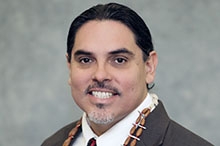
Mark LeBeau is being honored as an Affordable Care Act Champion of Change.
In California, tribal governments, tribal health programs, and the California Rural Indian Health Board (CRIHB) worked together to develop and share educational materials about the Affordable Care Act prior to its passage. Upon enactment of the ACA, CRIHB partnered with the Northwest Portland Area Indian Health Board, Oklahoma City Area Inter-Tribal Health Board, and United South and Eastern Tribes to develop tribal-specific educational materials about the legal rights of tribes and American Indian and Alaska Natives (AIANs) under the ACA. These partners each contributed funds to help make this work a reality.
This program became known as the Tribal Education and Outreach Consortium (TEOC). The people involved in this work became highly knowledgeable about the subject matter and formed a training program called TEOC University, which trained trainers to present the information to tribal communities. This was the first tribal work of this type in the United States, and the TEOC materials have been distributed throughout Indian Country.
Today, a number of federal and state offices provide these materials. Many of these materials have been reviewed and updated by CRIHB and the other members of TEOC. One of the most well-known programs we’ve helped with has been the National Indian Health Outreach and Education Initiative (NIHOE). This is a partnership between the Indian Health Service (HIS), the National Congress of American Indians, the National Indian Health Board, and representatives from each of the 12 IHS Areas. The partnership develops consumer-oriented materials to assist AIANs in understanding their opportunities under the ACA. Together, the partners provide local trainings, national marketing tools, and e-resources that clearly explain health reform changes and their impact on tribal communities. CRIHB has presented these materials to tribal governments, Indian health programs, and Indian communities and organizations.
To ensure the successful roll-out of the ACA in California, CRIHB policy staff have been meeting with state officials on a regular basis. In addition, CRIHB has reached out to the Northwest Portland Area Indian Health Board (NPAIHB) for input in developing successful implementation strategies and tactics.
These strategies and tactics were incorporated into a proposal developed by CRIHB, which was presented to the state as a necessary and fundable ACA program. Eventually, the state agreed to fund our program. As a result of this work, the Covered California Tribal Community Mobilization program was created and funded at $250,000. The grant designated funds to support implementation of the ACA AIAN provisions and to meet the tribal consultation requirements outlined in federal guidance. While this grant will end in December of 2014, I and the rest of the folks at CRIHB will continue to seek additional financial resources in order to continue to implement this important work for Indian Country.
Mark LeBeau is Executive Director at the California Rural Indian Health Board.
Learn more about Health CarePromoting Libraries for Affordable Care Act Outreach
Posted by on October 27, 2014 at 9:35 AM EST
Jamie Markus is being honored as an Affordable Care Act Champion of Change.
As the Library Development Manager at the Wyoming State Library, I spend my time creating and coordinating programs that enhance library services offered to our state’s 580,000 residents. The Library Development Office staff manages, promotes, and supports many exciting statewide library projects.
In July 2013, the Institute of Museum and Library Services, the American Library Association, and other partner organizations launched an e-health initiative, asking all types of libraries to support educational and outreach efforts surrounding the Health Insurance Marketplace. The Library Development Office at the Wyoming State Library took the lead in coordinating with potential partners in Wyoming.
As the project progressed, I realized that libraries would become key partners in the outreach effort due to their status as community centers and trusted sources of information. I met and talked with as many organizations as I could find to discuss how Wyoming’s libraries could help to support the efforts of Healthcare Navigators and those working to inform residents about the Affordable Care Act, the Health Insurance Marketplace, and the HealthCare.gov website.
The Wyoming State Library designed and supplied 15,000 Health Insurance Marketplace handouts to Wyoming libraries, including twenty-three public libraries, seven community college libraries, a tribal college library, and the University of Wyoming libraries. More than 90 library outlets in nearly every major community in the state had the opportunity to provide these handouts to library patrons.
I participated in an untold number of meetings, teleconferences, webinars, and email exchanges to promote the idea of using library public meeting spaces and public access computers to those groups involved in educational events and insurance sign-up workshops on the Affordable Care Act and Health Insurance Marketplace. I also coordinated the production of two state-wide webinars and two programs at the 2013 Wyoming Library Association Annual Conference, informing library staff about the Affordable Care Act, the Health Insurance Marketplace, our Wyoming partners, and available resources.
The demand for information about the Affordable Care Act was high. I was glad to be able to promote libraries as a safe and trusted place for outreach organizations to put residents in touch with the information they wanted and needed.
Jamie Markus is the Library Development Manager at the Wyoming State Library.
Learn more about Health CareSerious Illness Taught Me the Value of Insurance
Posted by on October 27, 2014 at 9:35 AM EST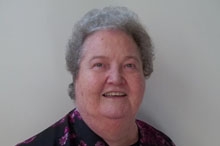
Cecelia Smaha is being honored as an Affordable Care Act Champion of Change.
I don’t remember driving home from work with the Georgia Department of Labor on November 19, 1999. I had flu-like symptoms and felt awful that day. My housemate was so alarmed when I arrived home that she tried to get me to call an ambulance. I refused because my insurance would not pay for the ambulance if the hospital didn’t admit me. I didn’t think I was that sick, and I couldn’t afford to pay the ambulance fee.
Blessed by God to have such a caring housemate, I made it through the weekend. But on Monday, I ended up in the hospital in a coma and was placed in the acute intensive care unit. Three weeks later, I awoke from the coma to learn that I’d had a severe E. coli bacterial infection and was lucky to be alive.
I was in the hospital for seven weeks, but I also had a long period of recuperation to follow that hospital stay. I never gave any thought to the cost of my hospital stay until I got the bill from the hospital. I couldn’t fathom paying almost a quarter of a million dollars! And that bill didn’t even include any of the doctors’ bills nor the aftercare with home nurses. I didn’t have that kind of money. The only thing I owned was my car.
I was advised not to pay anything until I checked with my insurance company. As it turned out, my insurance paid for everything. Because of residual effects from this illness, I still have medical complications, but my insurance continues to pay. This was a lesson of a lifetime: Everyone needs insurance.
On December 12, 2001, I was privileged to become an associate of the Institute of the Sisters of Mercy of the Americas South Central Community. In this role, I help provide services to people who are less fortunate, including the economically poor and the less well-educated. When the Affordable Care Act passed, I was jubilant. I saw this as an opportunity to put Mercy into action. I jumped at the chance to help spread information about the ACA through Get Covered America in Georgia.
I gave my time and energy to helping get the word out at churches, on the streets, and by working 10 hours each week for more than two and a half months at our local Kmart. Through a mutual agreement with Kmart and Get Covered America, I was privileged to do an event at our local Kmart, where I set up a table and greeted customers, explaining the Affordable Care Act to local shoppers. Through these opportunities, I helped make contact with over 2,000 Georgians.
I look forward to working with Get Covered America again this year. I am also spreading the word about my state’s refusal to expand Medicare, and I’m working to ensure its expansion—because nobody should be left without health insurance.
Cecelia Smaha is an associate of the Institute of the Sisters of Mercy of the Americas South Central Community.
Learn more about Health CareThe Affordable Care Act as Viewed by a Sister of Mercy
Posted by on October 27, 2014 at 9:35 AM EST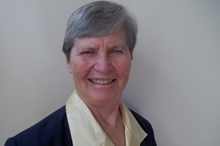
Joan Serda is being honored as an Affordable Care Act Champion of Change.
As an educator, I know the importance of health care. I’ve always had the privilege of having health insurance, so I’ve never had to worry about paying a medical bill or paying for a prescription. I haven’t had to be concerned about how to pay for the care of a sick child, spouse, or parent.
In Georgia, there is a lot of poverty, and many people don’t have health insurance. In Bibb County, where I live, there are tens of thousands of young people without health insurance.
Emergency rooms are not the answer to good health care. They are intended for emergencies. Emergency room visits are time-consuming and should be a last resort. They result in very expensive care and no follow-up. Often, patients don’t improve, and visits simply reoccur.
The Affordable Care Act is a step in the right direction, enabling many to obtain health insurance that they can afford. If children are healthy, they will learn more, and our schools will improve. If adults are healthy, they will be able to work more effectively and help their children grow, be healthy, and contribute to society.
I know a woman who had a possible cancer but refused to go to the doctor because she couldn’t afford it. But now, through the Affordable Care Act, she was able to get insurance and see a doctor. Another woman I know had insurance through her employer, but coverage through the ACA drastically reduced her premium without sacrificing health insurance coverage.
As a Sister of Mercy, I vowed to serve the poor, sick, and uneducated. Working with Get Covered America gave me the opportunity to help people become better educated about health coverage. I volunteered for ten hours a week to help people understand the Affordable Care Act. Many people were unaware of the opportunities available, and many had seen and heard false information. Some were fearful of something new and did not understand how health insurance works. Much education is needed, so I will continue as a volunteer for Get Covered America during the upcoming enrollment period.
Joan Serda is the Assistant Justice Coordinator for the Sisters of Mercy of the Americas South Central Community.
Learn more about Health CareThe Impact of Positive Change
Posted by on October 27, 2014 at 9:35 AM EST
Vanessa Abernathy is being honored as an Affordable Care Act Champion of Change.
Each generation has contributed to the social, political, and economic change that has made America great. I have been privileged to witness one of the greatest periods of change in American history, as well as to make a contribution to it by supporting the implementation of the Affordable Care Act. I am honored to be nominated as a White House Champion of Change and would like to thank Get Covered America for the opportunity to serve my country.
The objective of the Affordable Care Act is to provide everyone with access to affordable health insurance. We are achieving this goal through positive and peaceful change. ACA was enacted after a nationwide discussion about what health insurance should look like. There were heated town meetings in communities across the nation. We witnessed negotiations and opinions from the medical industry, unions, and elected officials. We saw our democracy in action with the passage of ACA and are still experiencing peaceful and positive change as challenges to the law are argued in the judicial system.
The national movement to ensure affordable health insurance for all Americans has been a life-changing experience for me. I have joined thousands of volunteers throughout the country going door-to-door and church-to-church, asking my neighbors if they know about ACA and if they need health insurance. That personal contact reminded me of so many historic campaigns that required volunteers to spread the word and call Americans to action. It has been a humbling experience for me to join thousands of volunteers all over the country to help our fellow Americans understand how the ACA Marketplace works, that financial assistance is available, and that there are people certified by the federal government to help them navigate the process.
I moved to Fairmont, North Carolina, in May 2013 and started my volunteer work with Get Covered America the following August. I spoke to churches and media outlets. I distributed flyers and talked to customers in small businesses, including nail salons, restaurants, professional service firms, and beauty shops. I felt a particular sense of pride and fulfillment when I visited Spanish-speaking businesses and offered flyers written in Spanish about ACA and local enrollment events because I knew that we were doing our best to reach out to all Americans.
I’ve worked in six counties in southeast North Carolina. I’ve traveled hundreds of miles spreading the word about the Affordable Care Act and the importance of health insurance and helping to organize enrollment events. But I haven’t been alone in this movement. Pastors and community leaders have opened doors to me. Friends and family have continually reaffirmed my work. And Navigators and certified application counselors have been partners in supporting insurance enrollment under ACA.
Our work is not over. The second open enrollment period for insurance under the Affordable Care Act begins on November 15, 2014. Mahatma Gandhi is paraphrased as saying, “You must be the change you wish to see in the world.” We all can impact the future of our country through volunteering and advocating for positive change.
Vanessa Abernathy works on Affordable Care Act outreach in North Carolina.
Learn more about Health CareDedicating His Life So Others Could Live Their Own
Posted by on October 27, 2014 at 9:35 AM EST
Andrew Cray is being honored posthumously as an Affordable Care Act Champion of Change.
Andrew Cray dedicated his life to making sure others could live their own.
Every day, Andrew fought tirelessly for lesbian, gay, bisexual, and transgender, or LGBT, Americans to be treated with dignity and fairness. His work touched so many lives in so many ways, from working to secure protections for LGBT homeless youth to collaborating with the Obama Administration to implement the Supreme Court’s marriage equality rulings. At the center of his work, however, was his belief that the foundation of equality rests on the ability of all Americans to access comprehensive, affordable, and inclusive health care.
Andrew was just 28 years old when cancer tragically took his life this past August, but his passion for equity in and access to health insurance existed long before his diagnosis. As a transgender man, Andrew knew the challenges and the needs of the LGBT community personally and was all too familiar with the common occurrence of transgender people being denied insurance simply because of their gender identity, as well as with the startling statistics. According to a recent Center for American Progress report, one in three LGBT people with incomes at or below 4 times the federal poverty line lacked insurance, and 72% of gay, lesbian, and bisexual people reported experiencing discrimination when attempting to find coverage through their employer for a same-sex partner. The eternal optimist that he was, Andrew believed that, with the right reforms and the improvements, those numbers could change.
Like many LGBT Americans, Andrew saw the Affordable Care Act as a vehicle for change and an opportunity to open up life-saving medical care to a community too often systemically and financially excluded. After passage, he worked with the White House and the Department of Health and Human Services to end discrimination against LGBT people by health insurance companies. He collaborated with the federal government and state governments to ensure accurate data collection on sexual orientation and gender identity, which will serve as the foundation of future LGBT health advocacy. Andrew also worked with various partners to ensure that many of the new insurance options were inclusive of same-sex couples and transgender Americans.
As important as these reforms are, he also knew that, for the law to work, people needed to be educated and enrolled, which is why he, along with colleagues at the Center for American Progress, Sellers Dorsey, and the Federal Agencies Project, co-founded Out2Enroll. Over the last year, Out2Enroll has helped educate and connect countless LGBT Americans with their new coverage options under the Affordable Care Act.
All of this work took on a new meaning for Andrew when, in September 2013, he was diagnosed with cancer. Throughout his treatment, he continued his legal advocacy and outreach work but also decided to utilize his personal story to convince young Americans, including young LGBT Americans, to enroll in health insurance. In an op-ed in The Advocate, Andrew wrote, “Our LGBT community is resilient and strong, and particularly for those of us who are young and have our entire lives in front of us, it may feel like we are invincible. I’ve learned the hard way that I’m not.”
Several months later, this past July, Andrew found out that his cancer had returned and that it was terminal. As his partner, and soon to be wife, I sat with Andrew as we discussed what he wanted to do with the time he had left. He said he wanted to continue his life’s work: fighting to ensure that all Americans, including LGBT Americans, can access life-saving medical care.
One month later, Andrew passed away far too quickly and far too young, but the benefits of his work live on. As he wrote in The Advocate last March, “Cancer has taken a lot from me physically and emotionally. But it hasn’t taken away my voice…I want to make sure other young LGBT people understand why getting covered is so important. I hope that my community will listen when I say — please, take care of yourselves. Be out, be healthy, and get covered."
Sarah McBride is the Special Assistant for LGBT Progress at the Center for American Progress and authored this blog post on behalf of Andrew Cray. Andrew Cray was a policy analyst at the Center for American Progress. He was her husband and colleague.
Learn more about Health CareAt the Intersection: Community, Policy, and Engagement
Posted by on October 27, 2014 at 9:35 AM EST
Niiobli Armah IV is being honored as an Affordable Care Act Champion of Change.
Since the inception of the Affordable Care Act, the NAACP has remained committed to ensuring that communities of color understand the benefits provided by the ACA and the importance of its implementation. The NAACP began by forging a number of partnerships with organizations across the nation to guarantee that communities of color remain a priority demographic for the implementation of the ACA. The NAACP Board of Directors passed a resolution identifying health coverage as a critical civil rights issue and mandating that all 38 state conferences in the organization facilitate workshops around the ACA at their fall 2013 conventions. We have focused on making sure communities of color are aware of their options under the ACA and have opportunities to participate in Open Enrollment activities.
I have found that ACA outreach is most successful when we focus not on health care but rather on upward mobility and quality of life. At its essence, health care affords millions of Americans the opportunity to go to work daily and provide for their families. Health insurance is a safety net that is often taken for granted. In designing our outreach strategy, I knew that we had to build a narrative that resonates with our communities.
The issue of health disparities naturally rose to the surface. People of color are diagnosed later than others, and they often die early from preventable diseases. Getting other organizations to understand the uniqueness of engaging communities of color has been a high priority for our outreach efforts. Organizations have struggled with what they define as “hard to reach communities,” but I believe there is no such thing as a community impossible to reach. After participating in many meetings with organizations thinking through community engagement, I have come to understand that the traditional approach needs adjusting. Singular interventions and initiatives focused on one particular issue are less successful than those that are more comprehensive and view an issue in its totality. Neither advocacy groups nor the communities they serve have the option of choosing what issues will take priority. For example, the same communities experiencing poor health outcomes are simultaneously dealing with issues of unemployment, education, violence, and mental health.
The second Open Enrollment Period begins on November 15, and we charge ourselves and other community organizations to find innovative ways to bring the important message of health care to the constituents they serve. No longer can we operate within silos by choosing what issue areas communities should prioritize. Instead, we must find the intersection of multiple issues so that we can address community problems holistically. To appropriately address health equity, more work must be done at the interaction of multiple issues.
Niiobli Armah IV is the Director of Health Programs for the National Association for the Advancement of Colored People.
Learn more about Health Care
- &lsaquo previous
- …
- 16
- 17
- 18
- 19
- 20
- 21
- 22
- 23
- 24
- …
- next &rsaquo
Twitter