

Latest News
Promoting Libraries for Affordable Care Act Outreach
Posted by on October 27, 2014 at 9:35 AM EST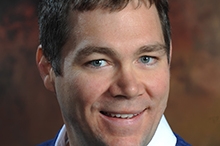
Jamie Markus is being honored as an Affordable Care Act Champion of Change.
As the Library Development Manager at the Wyoming State Library, I spend my time creating and coordinating programs that enhance library services offered to our state’s 580,000 residents. The Library Development Office staff manages, promotes, and supports many exciting statewide library projects.
In July 2013, the Institute of Museum and Library Services, the American Library Association, and other partner organizations launched an e-health initiative, asking all types of libraries to support educational and outreach efforts surrounding the Health Insurance Marketplace. The Library Development Office at the Wyoming State Library took the lead in coordinating with potential partners in Wyoming.
As the project progressed, I realized that libraries would become key partners in the outreach effort due to their status as community centers and trusted sources of information. I met and talked with as many organizations as I could find to discuss how Wyoming’s libraries could help to support the efforts of Healthcare Navigators and those working to inform residents about the Affordable Care Act, the Health Insurance Marketplace, and the HealthCare.gov website.
The Wyoming State Library designed and supplied 15,000 Health Insurance Marketplace handouts to Wyoming libraries, including twenty-three public libraries, seven community college libraries, a tribal college library, and the University of Wyoming libraries. More than 90 library outlets in nearly every major community in the state had the opportunity to provide these handouts to library patrons.
I participated in an untold number of meetings, teleconferences, webinars, and email exchanges to promote the idea of using library public meeting spaces and public access computers to those groups involved in educational events and insurance sign-up workshops on the Affordable Care Act and Health Insurance Marketplace. I also coordinated the production of two state-wide webinars and two programs at the 2013 Wyoming Library Association Annual Conference, informing library staff about the Affordable Care Act, the Health Insurance Marketplace, our Wyoming partners, and available resources.
The demand for information about the Affordable Care Act was high. I was glad to be able to promote libraries as a safe and trusted place for outreach organizations to put residents in touch with the information they wanted and needed.
Jamie Markus is the Library Development Manager at the Wyoming State Library.
Learn more about Health CareDedicating His Life So Others Could Live Their Own
Posted by on October 27, 2014 at 9:35 AM EST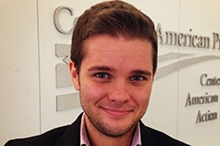
Andrew Cray is being honored posthumously as an Affordable Care Act Champion of Change.
Andrew Cray dedicated his life to making sure others could live their own.
Every day, Andrew fought tirelessly for lesbian, gay, bisexual, and transgender, or LGBT, Americans to be treated with dignity and fairness. His work touched so many lives in so many ways, from working to secure protections for LGBT homeless youth to collaborating with the Obama Administration to implement the Supreme Court’s marriage equality rulings. At the center of his work, however, was his belief that the foundation of equality rests on the ability of all Americans to access comprehensive, affordable, and inclusive health care.
Andrew was just 28 years old when cancer tragically took his life this past August, but his passion for equity in and access to health insurance existed long before his diagnosis. As a transgender man, Andrew knew the challenges and the needs of the LGBT community personally and was all too familiar with the common occurrence of transgender people being denied insurance simply because of their gender identity, as well as with the startling statistics. According to a recent Center for American Progress report, one in three LGBT people with incomes at or below 4 times the federal poverty line lacked insurance, and 72% of gay, lesbian, and bisexual people reported experiencing discrimination when attempting to find coverage through their employer for a same-sex partner. The eternal optimist that he was, Andrew believed that, with the right reforms and the improvements, those numbers could change.
Like many LGBT Americans, Andrew saw the Affordable Care Act as a vehicle for change and an opportunity to open up life-saving medical care to a community too often systemically and financially excluded. After passage, he worked with the White House and the Department of Health and Human Services to end discrimination against LGBT people by health insurance companies. He collaborated with the federal government and state governments to ensure accurate data collection on sexual orientation and gender identity, which will serve as the foundation of future LGBT health advocacy. Andrew also worked with various partners to ensure that many of the new insurance options were inclusive of same-sex couples and transgender Americans.
As important as these reforms are, he also knew that, for the law to work, people needed to be educated and enrolled, which is why he, along with colleagues at the Center for American Progress, Sellers Dorsey, and the Federal Agencies Project, co-founded Out2Enroll. Over the last year, Out2Enroll has helped educate and connect countless LGBT Americans with their new coverage options under the Affordable Care Act.
All of this work took on a new meaning for Andrew when, in September 2013, he was diagnosed with cancer. Throughout his treatment, he continued his legal advocacy and outreach work but also decided to utilize his personal story to convince young Americans, including young LGBT Americans, to enroll in health insurance. In an op-ed in The Advocate, Andrew wrote, “Our LGBT community is resilient and strong, and particularly for those of us who are young and have our entire lives in front of us, it may feel like we are invincible. I’ve learned the hard way that I’m not.”
Several months later, this past July, Andrew found out that his cancer had returned and that it was terminal. As his partner, and soon to be wife, I sat with Andrew as we discussed what he wanted to do with the time he had left. He said he wanted to continue his life’s work: fighting to ensure that all Americans, including LGBT Americans, can access life-saving medical care.
One month later, Andrew passed away far too quickly and far too young, but the benefits of his work live on. As he wrote in The Advocate last March, “Cancer has taken a lot from me physically and emotionally. But it hasn’t taken away my voice…I want to make sure other young LGBT people understand why getting covered is so important. I hope that my community will listen when I say — please, take care of yourselves. Be out, be healthy, and get covered."
Sarah McBride is the Special Assistant for LGBT Progress at the Center for American Progress and authored this blog post on behalf of Andrew Cray. Andrew Cray was a policy analyst at the Center for American Progress. He was her husband and colleague.
Learn more about Health CarePuerto Rico is Ready to Work. ¡Ahora!
Posted by on October 22, 2014 at 2:48 PM ESTThe President is focused every day on strengthening the American economy and creating good jobs. As part of his year of action, the President will do whatever he can to help put Americans back to work. Just last week, the Obama Administration announced several steps to promote employment opportunities, including a U.S. Labor Department grant of $7 million to develop the Puerto Rico Technoeconomic Corridor which will promote job training for the long-term unemployed. This grant was announced as part of a nearly $170 million "Ready to Work" programs to support and scale innovative collaborations between employers, nonprofit organizations and federal job training programs to help connect ready-to-work Americans with ready-to-be-filled jobs.
Federal funds of $7,026,880 will be allocated to Puerto Rico’s Technoeconomic Corridor to provide long-term unemployed workers with individualized counseling, training, supportive and specialized services that lead to rapid employment in the western municipalities of Aguada, Aguadilla, Añasco, Moca, Rincón, Cabo Rojo, Lajas, Hormigueros, Maricao, Las Marias, Mayagüez, San Germán, Sabana Grande, Isabela, Guánica, Quebradillas and San Sebastián. The Puerto Rico Technoeconomic Corridor is a non-profit established to enable Puerto Rico’s economic development by stimulating innovation-inducing collaborations among industry, academia and government.
This grant aligns closely with the job-driven training principles outlined in Vice President Biden’s report reviewing federal employment and training programs, which highlights successful job-driven training strategies, details executive actions that are being taken by the Federal Government, and includes new commitments by employers, non-profits, unions and innovators to share best practices and help Americans attain and advance in in-demand jobs and careers.
This grant follows a significant investment announced in April 2014 by Puerto Rico’s Governor and the Department of Commerce regarding Lufthansa Technik’s plans to build a new aviation maintenance, repair and overhaul ("MRO") facility in Puerto Rico to service short-haul and medium-haul aircraft. The government of Puerto Rico secured this investment through the efforts of the President’s Task Force on Puerto Rico, the Department of Commerce’s SelectUSA’s program and the advocacy of several high-level U.S. officials, including the Vice President and the Secretary of Commerce.
And today, the Department of Agriculture announced $237 million in new funding for 91 projects in 38 states, including the Commonwealth of Puerto Rico to establish broadband and wireless internet services, install infrastructure, and provide advanced communications technology to help rural public television stations complete the transition from analog to digital broadcast signals. This funding will provide critical resources to further bolster Puerto Rico’s economic development. The Obama Administration is committed to working through the Puerto Rico Task Force to identify collaborations that will advance Puerto Rico’s economic development priorities. This recent grant and initiatives to help long-term unemployed with opportunities to get back to work and maximize their full potential are part of a series of steps taken by the President to continue to expand opportunity for all and ensure that Puerto Rico’s best days are ahead.
Chris Lu is the Deputy Secretary of Labor. James Albino is the Executive Director of the President’s Task Force on Puerto Rico.
Disability Is My Strength
Posted by on October 20, 2014 at 2:00 PM EST
Jenny Lay-Flurrie is being honored as a Disability Employment Champion of Change.
As a person with a disability who is passionate about enabling others with disabilities, I am humbled and honoured to be a White House Champion of Change.
My journey with disability started early. By the age of 5, my hearing was already declining, a process that would continue over the next 30+ years. As a teenager and even through most of my twenties, I felt that I needed to hide my disability. My hearing loss is now profound, but by asking for the help I need and seeing my disability as a strength, I have been able to make myself – and now my employer – stronger. I am fortunate to work for a company that empowers and enables people to be successful. I wake up excited every morning, eager to get to work. I’m lucky to be in a position to make a difference, and this fact drives me to do more every day.
I am a Senior Director at Microsoft, leading the Trusted Experience Team (TExT), which focuses on privacy, online safety, and accessibility. Our goal is to provide a positive experience for all customers. As with any great journey, mine started by taking big terrifying steps. The first was to identify to Microsoft as a person with a disability. I joined the deaf ‘huddle’ group at Microsoft and went on to create and lead the DisAbility Employee Resource Group (ERG), a community of amazing people with disabilities, advocates, colleagues, and parents who share best practices and elevate understanding. At our first annual ‘Ability Summit’ four years ago, 80 people showed up. This past spring, 800 people came to Redmond headquarters to spend the day, which featured our CEO Satya Nadella, Washington Governor Jay Inslee, and many others. The theme of the summit was “Imagine, Build, Enable,” and we have taken that to heart at Microsoft.
In 2012, we announced the Disability Answer Desk (DAD), providing specialized support for customers with disabilities. Today, DAD helps about 4,000 customers a month do more with Microsoft products and services. The team is made up of talented people both with and without disabilities. In addition, I work with the Washington State Disability Taskforce, a public-private group focused on driving representation of people with disabilities in state government to at least 5%. Lastly, I sit on the US Business Leadership Network (USBLN) board of directors, which works towards disability inclusion in the workplace. It’s more “than just doing the right thing;” it’s about enabling people to be successful and achieve their dreams. It’s about changing lives, just as mine was changed.
At Microsoft, we are imagining and building technology for people with disabilities. During our company-wide ‘Hackathon’, we had projects focused on improving technology for people with deafness, blindness, autism, and more. Out of nearly three thousand submitted “hacks,” six of these projects placed in the top 100. I’m most proud of our work with former NFL player Steve Gleason, who is living with ALS, to help create prototype technology to independently move a wheelchair via eye tracking. This work won the 2014 Microsoft Hackathon Grand Prize!
My disability motivates me to strive for a higher bar—a new level of independence and empowerment. It helps me to understand and have empathy for our customers. I work to drive this understanding into Microsoft to create better products. So go on, if you want to know more about your customers, take that step and hire a person with a disability. They’ll teach you all you need to know.
Jenny Lay-Flurrie is a Senior Director at Microsoft, leading the Trusted Experience Team (TExT).
We Can All Be Change Leaders: Employing People with Many Abilities
Posted by on October 20, 2014 at 2:00 PM EST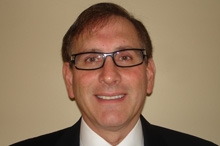
David Bartage is being honored as a Disability Employment Champion of Change.
I am surprised and incredibly honored to be recognized as a White House Champion of Change for Disability Employment. What began as a small project has led to be my passion, encouraging businesses to find good-paying and sustainable employment opportunities for people with disabilities.
In 2010, the Procter & Gamble (P&G) site in Auburn, Maine, began planning to add a customization (FlexiCenter) center into their 24/7 manufacturing operation. During our initial discussions, we discussed how we should staff this center and quickly concluded that we should reapply a staffing model we saw at Walgreen’s Distribution Center, in which 30% to 40% of the employees were people with disabilities.
A local hiring agency for people with disabilities recommended me to reach out to the Maine Bureau of Rehabilitation Services (ME BRS) to develop strategies to integrate individuals with disabilities into our new customized packaging facility, the FlexiCenter. P&G and ME BRS partnered together to identify people with disabilities, the individuals were trained and assessed by ME BRS, and they were then re-assessed in the P&G workplace. ME BRS also worked with our manufacturing site, providing training to all our employees to better prepare us to encourage and support inclusion in the workplace.
Today, more than three years after opening the doors to the FlexiCenter, 40% of the FlexiCenter employees are individuals with disabilities, working alongside workers who have not disclosed any disability, performing the same jobs with the same expectations and same pay. Some of the benefits of the FlexiCenter include: increased productivity, zero safety incidents, zero quality incidents, 90% reduction in turnover, a significant improvement in morale, reduced hiring costs, reduced training costs, and increased “goodwill” in Maine.
As I was getting involved with our FlexiCenter, I worked with the Maine State Chamber of Commerce, the Maine Department of Health and Human Services, and the ME BRS to start up the Maine Business Leadership Network (ME BLN). Since its inception, I have been the business leader of the ME BLN. The ME BLN is a state affiliate of the United States Business Leadership Network (USBLN). The ME BLN offers member employers resources for recruiting candidates with disabilities, information on disability issues, recognition for best disability employment practices, and exposure to an untapped market for their goods and services. We also view our role as that of a catalyst and a "connecting point" to promote dialogue and sharing of best practices between employers in a peer-to-peer setting.
Upon meeting someone for the first time, we are often times asked, “What do you do?” When asked that question, I imagine that for many the first response is what you do for a living. We take a lot of pride in what we do, and it helps to define who we are. It gives us an identity.
Over the last several years, I have seen what employment opportunities have done for our P&G employees with disabilities. It has given them an identity. It has provided them with an opportunity to be integrated into everyday life. It has impacted the employee and the employee’s family. I have heard parents thank us for giving their child an opportunity to work. They have expressed concern that they felt they had to outlive their child to provide them support. They now have hope that their sons and daughters can make it on their own.
What started as a project has turned into a passion for helping others and spreading the word of sustainable employment opportunities for people with disabilities. I encourage you to get started and make a positive change in your own way.
David Bartage is the Plant Finance Manager for the Procter & Gamble, Auburn, ME facility leading the Auburn sites’ efforts in hiring people with disabilities.
That Won’t Work—Let’s Do This Instead
Posted by on October 20, 2014 at 2:00 PM EST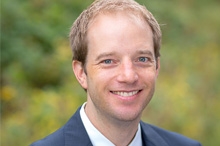
Tim Springer is being honored as a Disability Employment Champion of Change.
During the dot-com boom in the late 1990s, I was a student at Stanford working on the problem of the day: how to make it big. My friends and I were discussing a recent overseas trip. One of my fellow students, a wheelchair user, commented that some of the places he visited were inaccessible to him and that it would have been helpful if there had been a resource to consult regarding accessibility when traveling. That gave me a great idea about how to provide a valuable service to individuals with disabilities—by creating a website to provide this type of information online.
As it turns out though, we were not the only ones with this idea. While we were building the website, we found out that at least four other firms were working on similar projects. We realized that our project was probably not going to be successful.
But as part of our work, we had become familiar with the concept of web accessibility, which means ensuring websites and applications can be used effectively by people with disabilities. So, in industry parlance, we pivoted. A pivot is what an entrepreneur does when he or she is too dumb to quit when finding out that the business plan no longer makes any sense—“That idea clearly won’t work, so let’s do this other thing instead.” That pivot, however, gave us the chance to have a far larger impact. Instead of making one website accessible, we could make them all accessible. Out of this was born the heart of SSB BART Group. We had a vision of creating a world where all digital systems were accessible.
From the very early days we understood the value of hiring technologists with disabilities. Uniquely qualified to identify and develop working solutions to digital accessibility challenges, these creative, knowledgeable, and dynamic professionals have brought an unrivaled level of insight, passion, and dedication to our company. Today, nearly half of our team of accessibility analysts, developers, and consultants are individuals with disabilities. At SSB, we see this as a compelling competitive advantage. It allows us to offer solutions to our customers that address their core concerns. I am honored to work with such remarkable people on a daily basis.
At the end of the day, our team views access to technology as a profound empowering force in the lives of individuals with disabilities. On a fundamental level, I believe that everyone has the right to participate in society to the fullest extent of their abilities. It is my belief that society works best when we focus on accepting differences among people and facilitating broad participation in society. My goal is to provide a base for that participation and an even playing field in an increasingly digital economy. As CEO of SSB BART Group, I am dedicated to the realization of that dream.
Tim Springer is the founder and CEO of SSB BART Group, which provides technology accessibility compliance solutions to corporations, government agencies, and educational institutions.
It’s the Economy!
Posted by on October 20, 2014 at 2:00 PM EST
John Robinson is being honored as a Disability Employment Champion of Change.
Did you know that individuals with disabilities have $2.7 trillion in annual disposable income in the United States? Did you know that the unemployment rate for individuals with disabilities is 12.3%, as compared to 5.5% for able-bodied citizens? Now imagine what the disposable income would be in the United States the unemployment rates of those two groups was the same.
It's the economy! We live in an economy that is built upon growth. Yet, we are seeing the baby boomers leaving the workforce. We see an increased population of individuals with disabilities in aging citizens, soldiers coming back from service injured, and individuals with developmental disabilities. We as a society need to be able to filling positions with individuals with disabilities. If our economy is to grow, this population must be utilized.
Twenty-five years ago, at the beginning of the Americans with Disabilities Act, I had just graduated from Syracuse University with a degree in television, radio, and film management. Many of my peers received job offers around the United States, while I moved back in with my parents and cleaned swimming pools to make ends meet. I had strong grades, had a successful internship in Boston, and was well prepared for an entry-level position. Unfortunately, society was not ready for a quadruple amputee looking for gainful employment in media. It took me four years before I was offered an entry-level position inside a television station.
Twenty-five years later, I am proud to have had a long career inside the television industry. I am equally proud of my advocacy work on behalf of individuals with disabilities. At Our Ability, we are working inside American companies to facilitate employment opportunities for individuals with disabilities. We are using our communications experience to help facilitate internal messaging. We are building disability etiquette training seminars inside companies. We are building an online portal for individuals with disabilities to be able to upload their skill set—Our Ability Connect. As the founder of Our Ability, I am very purposely building the foundation that I and so many others needed 25 years ago.
I know we are on the right path. With the changing regulations for federal contractors and subcontractors, there is now an increased interest from businesses to find out more about including people with disabilities in their workforce. I can see it in the seminars I give to human resource managers, who pick up the pens and take notes especially when I talk about disability etiquette and sensitivity. There is an increased awareness about communicating effectively with people who are deaf and visually impaired. This expanded understanding of how to communicate with coworkers is vital to a successful inclusive organization.
While it seems like an impossible goal to level the unemployment statistics between individuals with disabilities and able-bodied citizens, it is something we all need to work towards. Our global economy is built upon growth, and by including individuals with disabilities in the next 25 years we can increase that $2.7 trillion annual disposable income.
Why are the statistics so important? Employment is only one portion of the total self-worth of the individual, but it is quite possibly the most important. We all identify ourselves by where we work. It's one of the first things we mentioned when we introduced ourselves to someone new. We all understand how inferior we feel when we are unemployed or underemployed. This is especially true with someone with a disability. By opening opportunities for inclusive hiring inside major companies, we are not only affecting our economy but are also building the next generation of confident individuals. We as a society are truly becoming inclusive.
John Robinson is Managing Partner and CEO of Our Ability, a company owned and operated by people with disabilities for people with disabilities.
Hands On @ Hyatt – A Public-Private Partnership That Works
Posted by on October 20, 2014 at 2:00 PM EST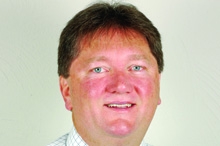
John Ficca is being honored as a Disability Employment Champion of Change.
As the Director of Hands On Education, it is an honor to accept this recognition on behalf of our program and our partners—Hyatt Hotels and State Vocational Rehabilitation agencies funded by the U.S. Department of Education. I owe the program’s success to a unique public-private partnership and to our focus on the individuals that we serve.
Hands On @ Hyatt is a state-funded training program that prepares individuals with disabilities for employment in the hospitality industry. Our students are paid employees of Hyatt and learn from some of the best chefs and managers in the industry. Graduates leave with increased confidence, employability skills, a certificate of completion, and the ability to use Hyatt as a recent employment reference.
The program began in 1998 at the Grand Hyatt in Tampa Bay. The Florida State Division of Vocational Rehabilitation (DVR) took a chance and funded the program on a fee-for-service basis. DVR’s mission is to help individuals with disabilities get a job, keep a job, or return to work. Our challenge, then, was to prove that people with disabilities could be successfully employed in this work environment. The first summer of our program was incredible—all of our students obtained employment.
Our Hyatt partners began asking why we just trained in the kitchen. “Why not other departments? Why are we just training at one Hyatt Hotel? Why not Orlando and Miami?” 16 years later, Hands On @ Hyatt is operating in 32 Hyatt Hotels in states all across the country.
Thanks to the Council of State Administrators of Vocational Rehabilitation (CSAVR), our expansion has been a relatively easy process. CSAVR is a professional organization made up of VR Directors in all 50 states, Washington, D.C., and the territories. This includes the Directors of the vocational rehabilitation agencies that serve individuals who are visually impaired. CSAVR sponsors the National Employment Team, and they have been extremely involved with every new Hands On @ Hyatt location. Also, local school districts have helped us identify youth who could benefit from this type of training.
To date, the partnership has trained over 1,500 individuals with disabilities and observed above average post-training employment outcomes. It is with great pride that I accept this award on behalf of our program, our partners, and the individuals that we serve.
John Ficca is the founder and Program Director of Hands On Educational Services, Inc.
- &lsaquo previous
- …
- 17
- 18
- 19
- 20
- 21
- 22
- 23
- 24
- 25
- …
- next &rsaquo
Twitter