
Champions of Change Blog
Promoting Libraries for Affordable Care Act Outreach
Posted by on October 27, 2014 at 10:35 AM EDT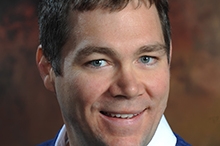
Jamie Markus is being honored as an Affordable Care Act Champion of Change.
As the Library Development Manager at the Wyoming State Library, I spend my time creating and coordinating programs that enhance library services offered to our state’s 580,000 residents. The Library Development Office staff manages, promotes, and supports many exciting statewide library projects.
In July 2013, the Institute of Museum and Library Services, the American Library Association, and other partner organizations launched an e-health initiative, asking all types of libraries to support educational and outreach efforts surrounding the Health Insurance Marketplace. The Library Development Office at the Wyoming State Library took the lead in coordinating with potential partners in Wyoming.
As the project progressed, I realized that libraries would become key partners in the outreach effort due to their status as community centers and trusted sources of information. I met and talked with as many organizations as I could find to discuss how Wyoming’s libraries could help to support the efforts of Healthcare Navigators and those working to inform residents about the Affordable Care Act, the Health Insurance Marketplace, and the HealthCare.gov website.
The Wyoming State Library designed and supplied 15,000 Health Insurance Marketplace handouts to Wyoming libraries, including twenty-three public libraries, seven community college libraries, a tribal college library, and the University of Wyoming libraries. More than 90 library outlets in nearly every major community in the state had the opportunity to provide these handouts to library patrons.
I participated in an untold number of meetings, teleconferences, webinars, and email exchanges to promote the idea of using library public meeting spaces and public access computers to those groups involved in educational events and insurance sign-up workshops on the Affordable Care Act and Health Insurance Marketplace. I also coordinated the production of two state-wide webinars and two programs at the 2013 Wyoming Library Association Annual Conference, informing library staff about the Affordable Care Act, the Health Insurance Marketplace, our Wyoming partners, and available resources.
The demand for information about the Affordable Care Act was high. I was glad to be able to promote libraries as a safe and trusted place for outreach organizations to put residents in touch with the information they wanted and needed.
Jamie Markus is the Library Development Manager at the Wyoming State Library.
Learn more about Health CareYou Too Can Make a Difference
Posted by on October 27, 2014 at 10:35 AM EDT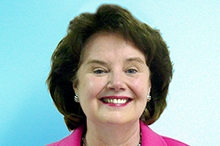
Pat Halpin-Murphy is being honored as an Affordable Care Act Champion of Change.
I am truly grateful to have been selected as a White House Champion of Change. I can’t tell you how much it means to me to be honored with this award.
As the President and Founder of the Pennsylvania Breast Cancer Coalition (PBCC), I lead a non-profit organization dedicated to finding a cure for breast cancer now so that our daughters won’t have to. I’m a breast cancer survivor, and twenty-five years ago when I was diagnosed I found that there wasn’t an organization in Pennsylvania dedicated to supporting women and families facing breast cancer. I founded the PBCC in 1993 to fill this void. In our twenty-year history, the PBCC has paved the way for countless legislative victories that support women and families across the state.
The best part of my work is talking to women about their experience with breast cancer and finding out what we can do to help meet their needs. For instance, we learned that many women were diagnosed with breast cancer in late stages because they have dense breast tissue. Upon learning this, we didn’t just sit by and wait for something to be done. Rather, we sprang into action and convinced Pennsylvania State Senator Bob Mensch to introduce legislation to help women with dense breast tissue receive improved information and screening so that they could be diagnosed at an earlier stage.
I believe that we all have the capacity to make a difference in our communities. Former U.S. Senator Harris Wofford made a tremendous impression on me as a leader. He recognized that each person has so much to contribute if only given the opportunity. He listened to people’s ideas and encouraged them to make those ideas become realities. Senator Wofford believed that everyone could contribute to their community. I truly believe that we can all make a difference. That’s the best part of this work. I’ve come to realize that, by simply standing up and taking action, we can all be “Champions of Change.”
Pat Halpin-Murphy is the President and Founder of the PA Breast Cancer Coalition.
Learn more about Health CareWe Can All Be Change Leaders: Employing People with Many Abilities
Posted by on October 20, 2014 at 3:00 PM EDT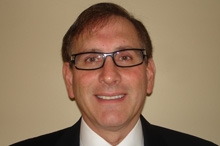
David Bartage is being honored as a Disability Employment Champion of Change.
I am surprised and incredibly honored to be recognized as a White House Champion of Change for Disability Employment. What began as a small project has led to be my passion, encouraging businesses to find good-paying and sustainable employment opportunities for people with disabilities.
In 2010, the Procter & Gamble (P&G) site in Auburn, Maine, began planning to add a customization (FlexiCenter) center into their 24/7 manufacturing operation. During our initial discussions, we discussed how we should staff this center and quickly concluded that we should reapply a staffing model we saw at Walgreen’s Distribution Center, in which 30% to 40% of the employees were people with disabilities.
A local hiring agency for people with disabilities recommended me to reach out to the Maine Bureau of Rehabilitation Services (ME BRS) to develop strategies to integrate individuals with disabilities into our new customized packaging facility, the FlexiCenter. P&G and ME BRS partnered together to identify people with disabilities, the individuals were trained and assessed by ME BRS, and they were then re-assessed in the P&G workplace. ME BRS also worked with our manufacturing site, providing training to all our employees to better prepare us to encourage and support inclusion in the workplace.
Today, more than three years after opening the doors to the FlexiCenter, 40% of the FlexiCenter employees are individuals with disabilities, working alongside workers who have not disclosed any disability, performing the same jobs with the same expectations and same pay. Some of the benefits of the FlexiCenter include: increased productivity, zero safety incidents, zero quality incidents, 90% reduction in turnover, a significant improvement in morale, reduced hiring costs, reduced training costs, and increased “goodwill” in Maine.
As I was getting involved with our FlexiCenter, I worked with the Maine State Chamber of Commerce, the Maine Department of Health and Human Services, and the ME BRS to start up the Maine Business Leadership Network (ME BLN). Since its inception, I have been the business leader of the ME BLN. The ME BLN is a state affiliate of the United States Business Leadership Network (USBLN). The ME BLN offers member employers resources for recruiting candidates with disabilities, information on disability issues, recognition for best disability employment practices, and exposure to an untapped market for their goods and services. We also view our role as that of a catalyst and a "connecting point" to promote dialogue and sharing of best practices between employers in a peer-to-peer setting.
Upon meeting someone for the first time, we are often times asked, “What do you do?” When asked that question, I imagine that for many the first response is what you do for a living. We take a lot of pride in what we do, and it helps to define who we are. It gives us an identity.
Over the last several years, I have seen what employment opportunities have done for our P&G employees with disabilities. It has given them an identity. It has provided them with an opportunity to be integrated into everyday life. It has impacted the employee and the employee’s family. I have heard parents thank us for giving their child an opportunity to work. They have expressed concern that they felt they had to outlive their child to provide them support. They now have hope that their sons and daughters can make it on their own.
What started as a project has turned into a passion for helping others and spreading the word of sustainable employment opportunities for people with disabilities. I encourage you to get started and make a positive change in your own way.
David Bartage is the Plant Finance Manager for the Procter & Gamble, Auburn, ME facility leading the Auburn sites’ efforts in hiring people with disabilities.
Disability Is My Strength
Posted by on October 20, 2014 at 3:00 PM EDT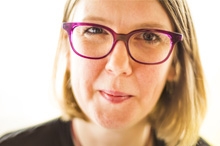
Jenny Lay-Flurrie is being honored as a Disability Employment Champion of Change.
As a person with a disability who is passionate about enabling others with disabilities, I am humbled and honoured to be a White House Champion of Change.
My journey with disability started early. By the age of 5, my hearing was already declining, a process that would continue over the next 30+ years. As a teenager and even through most of my twenties, I felt that I needed to hide my disability. My hearing loss is now profound, but by asking for the help I need and seeing my disability as a strength, I have been able to make myself – and now my employer – stronger. I am fortunate to work for a company that empowers and enables people to be successful. I wake up excited every morning, eager to get to work. I’m lucky to be in a position to make a difference, and this fact drives me to do more every day.
I am a Senior Director at Microsoft, leading the Trusted Experience Team (TExT), which focuses on privacy, online safety, and accessibility. Our goal is to provide a positive experience for all customers. As with any great journey, mine started by taking big terrifying steps. The first was to identify to Microsoft as a person with a disability. I joined the deaf ‘huddle’ group at Microsoft and went on to create and lead the DisAbility Employee Resource Group (ERG), a community of amazing people with disabilities, advocates, colleagues, and parents who share best practices and elevate understanding. At our first annual ‘Ability Summit’ four years ago, 80 people showed up. This past spring, 800 people came to Redmond headquarters to spend the day, which featured our CEO Satya Nadella, Washington Governor Jay Inslee, and many others. The theme of the summit was “Imagine, Build, Enable,” and we have taken that to heart at Microsoft.
In 2012, we announced the Disability Answer Desk (DAD), providing specialized support for customers with disabilities. Today, DAD helps about 4,000 customers a month do more with Microsoft products and services. The team is made up of talented people both with and without disabilities. In addition, I work with the Washington State Disability Taskforce, a public-private group focused on driving representation of people with disabilities in state government to at least 5%. Lastly, I sit on the US Business Leadership Network (USBLN) board of directors, which works towards disability inclusion in the workplace. It’s more “than just doing the right thing;” it’s about enabling people to be successful and achieve their dreams. It’s about changing lives, just as mine was changed.
At Microsoft, we are imagining and building technology for people with disabilities. During our company-wide ‘Hackathon’, we had projects focused on improving technology for people with deafness, blindness, autism, and more. Out of nearly three thousand submitted “hacks,” six of these projects placed in the top 100. I’m most proud of our work with former NFL player Steve Gleason, who is living with ALS, to help create prototype technology to independently move a wheelchair via eye tracking. This work won the 2014 Microsoft Hackathon Grand Prize!
My disability motivates me to strive for a higher bar—a new level of independence and empowerment. It helps me to understand and have empathy for our customers. I work to drive this understanding into Microsoft to create better products. So go on, if you want to know more about your customers, take that step and hire a person with a disability. They’ll teach you all you need to know.
Jenny Lay-Flurrie is a Senior Director at Microsoft, leading the Trusted Experience Team (TExT).
It’s the Economy!
Posted by on October 20, 2014 at 3:00 PM EDT
John Robinson is being honored as a Disability Employment Champion of Change.
Did you know that individuals with disabilities have $2.7 trillion in annual disposable income in the United States? Did you know that the unemployment rate for individuals with disabilities is 12.3%, as compared to 5.5% for able-bodied citizens? Now imagine what the disposable income would be in the United States the unemployment rates of those two groups was the same.
It's the economy! We live in an economy that is built upon growth. Yet, we are seeing the baby boomers leaving the workforce. We see an increased population of individuals with disabilities in aging citizens, soldiers coming back from service injured, and individuals with developmental disabilities. We as a society need to be able to filling positions with individuals with disabilities. If our economy is to grow, this population must be utilized.
Twenty-five years ago, at the beginning of the Americans with Disabilities Act, I had just graduated from Syracuse University with a degree in television, radio, and film management. Many of my peers received job offers around the United States, while I moved back in with my parents and cleaned swimming pools to make ends meet. I had strong grades, had a successful internship in Boston, and was well prepared for an entry-level position. Unfortunately, society was not ready for a quadruple amputee looking for gainful employment in media. It took me four years before I was offered an entry-level position inside a television station.
Twenty-five years later, I am proud to have had a long career inside the television industry. I am equally proud of my advocacy work on behalf of individuals with disabilities. At Our Ability, we are working inside American companies to facilitate employment opportunities for individuals with disabilities. We are using our communications experience to help facilitate internal messaging. We are building disability etiquette training seminars inside companies. We are building an online portal for individuals with disabilities to be able to upload their skill set—Our Ability Connect. As the founder of Our Ability, I am very purposely building the foundation that I and so many others needed 25 years ago.
I know we are on the right path. With the changing regulations for federal contractors and subcontractors, there is now an increased interest from businesses to find out more about including people with disabilities in their workforce. I can see it in the seminars I give to human resource managers, who pick up the pens and take notes especially when I talk about disability etiquette and sensitivity. There is an increased awareness about communicating effectively with people who are deaf and visually impaired. This expanded understanding of how to communicate with coworkers is vital to a successful inclusive organization.
While it seems like an impossible goal to level the unemployment statistics between individuals with disabilities and able-bodied citizens, it is something we all need to work towards. Our global economy is built upon growth, and by including individuals with disabilities in the next 25 years we can increase that $2.7 trillion annual disposable income.
Why are the statistics so important? Employment is only one portion of the total self-worth of the individual, but it is quite possibly the most important. We all identify ourselves by where we work. It's one of the first things we mentioned when we introduced ourselves to someone new. We all understand how inferior we feel when we are unemployed or underemployed. This is especially true with someone with a disability. By opening opportunities for inclusive hiring inside major companies, we are not only affecting our economy but are also building the next generation of confident individuals. We as a society are truly becoming inclusive.
John Robinson is Managing Partner and CEO of Our Ability, a company owned and operated by people with disabilities for people with disabilities.
Recruitment of All Abilities Is Just Good Business
Posted by on October 20, 2014 at 3:00 PM EDT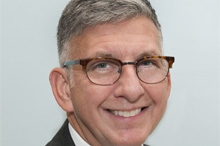
Oswald Mondejar is being honored as a Disability Employment Champion of Change.
As an immigrant from Cuba, my mother cherished the American virtues of freedom, independence, and opportunity. She told my sister and me that, in this country, anything is possible. The honor of being selected as a Champion of Change by the White House is proof of that. It’s so humbling because I know that I’m merely representing the work and voices of so many others who paved the way.
Growing up with a limb difference, I learned from an early age that my biggest challenge would always be overcoming others perceived “limitations” of what I could and could not do. There’s no place that another’s perception about your abilities has a greater impact than in the workplace. I got my first job at age 13, and seeing my name on a paycheck for the work I’d done was empowering. A job wasn’t simply about survival; it provided dignity, camaraderie with coworkers, and a fully independent life.
Fast forward to a career spent in Human Resources, and what I have seen is that people with disabilities are seldom given a fair chance to show what they can do. To many employers, the workplace is full of impediments (physical barriers, policies and, yes, attitudes), that make it “too much trouble” to hire them. While we’ve made great progress, there’s more work to be done.
Unemployment and underemployment for people with disabilities remain incredibly high, and that is a call to action for all of us. Our charge is to seek out and find creative solutions to these old challenges.
Working at Spaulding Rehabilitation Network (SRN) has been a great opportunity. At SRN, I have helped develop the “Working Partners” program, a first of its kind public/private partnership focusing on providing people with disabilities the skills and support they need to join the workforce and improve their overall quality of life. Like any worthy endeavor, it takes an intrepid group of collaborators to be successful, and I am incredibly fortunate to partner with my colleagues from Partners HealthCare and the Massachusetts Rehabilitation Commission (MRC) to make this all possible. Through Working Partners, qualified candidates with disabilities work directly with an embedded MRC employment specialist and Spaulding’s hiring managers to navigate the employment process with the ultimate goal of job placement at SRN or within Partners HealthCare.
But Working Partners does more than provide assistance with finding a job. With their new positions, candidates are empowered to take more control over their lives. They feel the great sense of pride that comes with entering or re-entering the work force and contributing their talents to something far greater than themselves.
While many businesses and agencies speak about diversity or inclusion, much of this talk is hollow. In order to truly progress, leading companies must see what efforts like Working Partners are; just good business. The productivity and talent that people with disabilities can contribute is only limited by our own perceptions of what is possible.
Oswald “Oz” Mondejar is the Senior Vice President for Mission and Advocacy for Partners Continuing Care, the non-acute care division of Partners HealthCare based in Boston, Massachusetts.
- &lsaquo previous
- …
- 11
- 12
- 13
- 14
- 15
- 16
- 17
- 18
- 19
- …
- next &rsaquo

White House Blogs
- The White House Blog
- Middle Class Task Force
- Council of Economic Advisers
- Council on Environmental Quality
- Council on Women and Girls
- Office of Intergovernmental Affairs
- Office of Management and Budget
- Office of Public Engagement
- Office of Science & Tech Policy
- Office of Urban Affairs
- Open Government
- Faith and Neighborhood Partnerships
- Social Innovation and Civic Participation
- US Trade Representative
- Office National Drug Control Policy
categories
- AIDS Policy
- Alaska
- Blueprint for an America Built to Last
- Budget
- Civil Rights
- Defense
- Disabilities
- Economy
- Education
- Energy and Environment
- Equal Pay
- Ethics
- Faith Based
- Fiscal Responsibility
- Foreign Policy
- Grab Bag
- Health Care
- Homeland Security
- Immigration
- Innovation Fellows
- Inside the White House
- Middle Class Security
- Open Government
- Poverty
- Rural
- Seniors and Social Security
- Service
- Social Innovation
- State of the Union
- Taxes
- Technology
- Urban Policy
- Veterans
- Violence Prevention
- White House Internships
- Women
- Working Families
- Additional Issues