
Office of Science and Technology Policy Blog
After Nearly Bombing in College, a Career in National Security
Posted by on February 23, 2010 at 1:35 PM EDT[Ed. Note: Recently, OSTP began highlighting first-person tales by some of the women scientists and engineers working here—part of a larger effort by OSTP and the Obama Administration to encourage girls and women and other under-represented groups to study and pursue careers in these fields. It’s also a great way for us at OSTP to get to know one another better and to learn interesting tidbits about each other's pasts—as is the case with today’s post.]
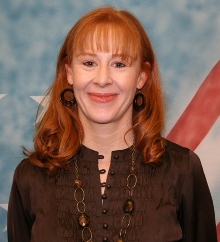 As an engineer and Senior Policy Analyst here in the White House Office of Science and Technology Policy, I am enjoying a rewarding career exploring issues that surround such complex questions as “What is the best way to respond to a radiological emergency, such as an accidental contamination event or intentional nuclear incident?” and “How can America best safeguard nuclear materials and support nonproliferation?”
But my future was not always so assured.
When I started college, my primary objective was rather simple: to graduate and obtain a secure job. My family had moved a total of six times during my childhood as a consequence of layoffs that affected the mining industry, where my father was employed. My parents were adamant that a college education could result in stable employment opportunities. I was interested in engineering right from the beginning, but found college overwhelming in comparison to my small town upbringing in New Mexico and Arizona. I also found it challenging to be in a discipline that was clearly under-represented by women and craved the companionship of girlfriends. Three-quarters of the way through freshman year, I quit. I packed up my dorm room and convinced my mother to move me home during spring break.
My reprieve was brief. Monday morning following spring break my parents moved me right back and I asked the Dean of Engineering to give me the opportunity to finish my freshman year. He reinstated my scholarships and provided me the gift of a second chance. It was during that final one-quarter of my freshman year that I came to appreciate that your “roots”—as valuable as they can be—can sometimes root you a bit too securely to familiar places and situations and work against your deepest desire to move on and try new things. It takes courage, and support from a community, to break ties and form new ones.
Happily I found that support from teachers, mentors and fellow students, and the pursuit of education became my grand passion for the next nine years. I worked in cooperative education programs throughout undergraduate and graduate school, earning a Bachelor’s of Science in civil engineering from New Mexico State University and a Masters and PhD in environmental engineering from Georgia Institute of Technology. I intended to pursue a career in academia as a research professor, but prior to accepting a position opted to delay that path to acquire post-doctoral experience at Los Alamos National Laboratory (LANL). My experience at LANL changed my career ambitions. I found my true calling in a career supporting our national security through nuclear nonproliferation; research to support emergency responder preparedness; and environmental remediation. I turned down my academic opportunity and joined the LANL Chemistry Division as a research engineer two years after starting my post-doc.
I have three pieces of advice, particularly for women considering a career in science, technology, engineering, or mathematics (STEM), all formed as a consequence of my personal path in an engineering and science career.
First, you don’t have to love math or science to earn a career in STEM. You only have to possess courage and determination. The benefits of a career in STEM far outweigh the challenges of math and science.
Second, take your education to the highest level that you can. A doctorate in a STEM discipline provides not only a stable employment platform but the opportunity to choose your career direction and be your own boss.
Third, volunteer early and often. I started tutoring in the sixth grade and I have learned so much more from the people that I have tutored than they have learned from me. Volunteer as a tutor, work in a soup kitchen, or clean medians in your neighborhood. Do what you can to give back to your community and learn from the people you meet on your journey. It’s as certain as a law of physics: you will get back 100-fold.
Tammy Taylor is a Senior Policy Analyst in OSTP’s National Security and International Affairs Division
A Long Distance Relationship
Posted by on February 18, 2010 at 12:28 PM EDTIn his latest such conversation, President Obama joined Congressional leaders and middle school children to congratulate astronauts aboard the International Space Station and the Space Shuttle Endeavour during a call from the Roosevelt Room of the White House:
I just wanted to let you guys know how proud we are of all of you at what you guys have been accomplishing. I've had a chance to take a look at what Tranquility Module is doing. Everybody here back home is excited about this bay on the world that you guys are opening up, and Stephen Colbert at least is excited about his treadmill.
And so we just wanted to let you know that the amazing work that's being done on the International Space Station not only by our American astronauts but also our colleagues from Japan and Russia is just a testimony to the human ingenuity; a testimony to extraordinary skill and courage that you guys bring to bear; and is also a testimony to why continued space exploration is so important, and is part of the reason why my commitment to NASA is unwavering.
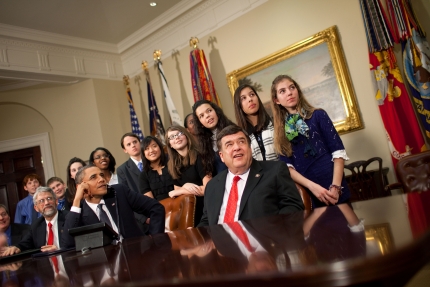
President Barack Obama, along with Congressional leaders and middle school children, congratulate astronauts aboard the International Space Station and the Space Shuttle Endeavour during a call from the Roosevelt Room of the White House. February 17, 2010. (Official White House Photo by Samantha Appleton)
Incidentally, there aren't many better agencies on the internet than NASA -- check out their new release of photos from the Wide-field Infrared Survey Explorer for example, and get a daily dose of the best of outer space by following them on Twitter.
UPDATE: Check out our "Educate to Innovate" initiative page to learn more about the program that brought these middle schoolers to the White House.
Learn more about TechnologySecond U.S. Science Envoy Begins Travel
Posted by on February 12, 2010 at 7:22 PM EDTThe program referenced in the following release was first announced by the President in Cairo on June 4. Secretary of State Hillary Clinton announced the first three envoys in Marrakech in November: Bruce Alberts, Editor of Science, former National Academy of Sciences (NAS) president, and UCSF biochemistry professor; Elias Zerhouni, former National Institutes of Health director and Johns Hopkins professor; and Ahmed Zewail, who in addition to his academic work is a member of the President’s Council of Advisors on Science and Technology. Other prominent U.S. scientists will be invited to join the U.S. Science Envoy program in the coming months, expanding the scope of the program to countries and regions around the globe.
The envoys are scheduled to meet with heads of state, ministers, and representatives from the scientific, education, nonprofit, and business communities to identify opportunities for new partnerships in science and technology. They will investigate opportunities in all areas of science and technology, including math, engineering, health, energy, climate change research, and green technologies. Although the envoys are private citizens, they will share what they learn on these trips with the U.S. Government, and the relationships they build will help reaffirm our renewed commitment to global engagement.
The following has been cross-posted from the U.S. Department of State.
The second U.S. Science Envoy, Dr. Elias Zerhouni, departed February 10 on a ten-day trip to France, Qatar, Saudi Arabia, and Kuwait. On this trip, Dr. Zerhouni will seek areas for cooperation on health, science and technology, and education in meetings with heads of state, ministers, and representatives from the scientific, education, nonprofit, and business communities. Dr. Zerhouni also plans to travel to North Africa in early March. Dr. Zerhouni will report his recommendations to the White House following each trip.
Dr. Zerhouni, M.D., served as Director of the National Institutes of Health (NIH) from 2002 to 2008. Under his leadership, Dr. Zerhouni initiated the NIH’s Roadmap for Medical Research, established a research program to address the obesity epidemic and made health disparities a research priority. Currently, Dr. Zerhouni is a senior advisor to Johns Hopkins University School of Medicine and has been instrumental in creating the University’s Institute for Cell Engineering. He also sits on the Board of Trustees of the King Abdullah University of Science and Technology, which opened in Saudi Arabia last September.
The U.S. Science Envoy Program is a core element of the Administration’s commitment to global engagement in science and technology. President Obama first announced the program in Cairo last June, with Secretary Clinton naming the first three envoys—Dr. Zerhouni, Dr. Ahmed Zerwail and Dr. Bruce Alberts—in Marrakech last November. Dr. Zewail recently traveled to Egypt and Turkey and Dr. Alberts plans to travel to Indonesia this spring.
Learn more aboutWelcome to OSTP's New and Improved Website
Posted by on February 10, 2010 at 3:55 PM EDTWelcome to OSTP’s new and improved website and blog. As loyal followers may have noticed, ostp.gov now automatically redirects to our modernized and easy-to-navigate new digs at whitehouse.gov/ostp.
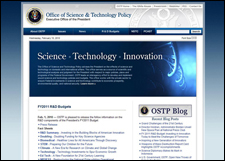
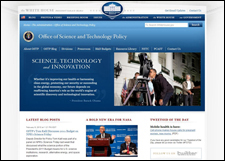
Old site: So 1990s New site: Totally 2010A few words about our new site: We still have our trusty blog, our main mode of communicating with the public, where you will find frequent updates on OSTP and related activities (it’s like an OSTP diary). We also still have our Pressroom, where we will keep you more formally apprised of news, and dedicated pages focused on the Nation’s R&D Budgets as well as the President’s Council of Advisors on Science and Technology and the National Science and Technology Council. But we have a few new items as well, including a front-page center column that will focus on various topics of interest—such as NASA’s new plan for exploration and the recently released FY2011 R&D Budget, currently featured—to be updated periodically.
With regard to the blog, many of you know that we have long used a WordPress-based public comment function to get input from you on a range of issues, most recently via our Public Access Policy Forum. That comment functionality is just now being built into the Drupal platform upon which our new blog is built. Please stay tuned for that function’s relaunch. In the meantime, you can reach us via the Contact Us page.
Finally, we have moved our Tweetoid of the Day (#TOTD on Twitter) to the front of our main site; it’s not just on our blog anymore. Please continue to send us ideas for our TOTD via Twitter—anything science-y and tech-y including staggering statistics, interesting news items, or fun facts.
Please explore our new site, let us know if you find a glitch before we do, and contact us if you need access to a document that was on the old site but has not yet migrated to the new one (as all eventually will, a process slowed right now by the weather-related government shut-down).
We look forward to educating, informing, and perhaps even entertaining you.
Learn more about TechnologyOSTP's Tom Kalil Discusses 2011 Budget on NPR's Science Friday
Posted by on February 9, 2010 at 2:21 PM EDTTom Kalil, OSTP’s Deputy Director for Policy, was invited to be a panelist on NPR’s Science Friday last week. Kalil joined host Ira Flatow and several other guests in a discussion of the recent rollout of President Obama’s 2011 Budget, focusing on the science, research, and development portfolio.
During the 43 minute program the panelists discussed how science made out in the 2011 Budget (hint, it did very well!). Additionally, the conversation centered on the major U.S. scientific institutions and the affects the budget will have on a myriad of issues, including research, alternative energy, and space exploration. More information on the 2011 R&D Budgets is available here.
A podcast of last Friday’s show is available on NPR’s website.
Learn more about TechnologySeeking Game-Changing Solutions to Childhood Obesity
Posted by on February 4, 2010 at 5:00 PM EDTYesterday the White House Office of Science & Technology Policy (OSTP) and the U.S. Department of Agriculture hosted a workshop to gather insight from leading experts in the fields of gaming and technology to inform the development of a nutrition game-design challenge. The U.S. Department of Agriculture’s Food, Nutrition, and Consumer Services is preparing to launch the Innovations for Healthy Kids Challenge, a call to American entrepreneurs, software developers, and students to use a recently released USDA nutrition data set to create innovative, fun, and engaging web-based learning applications that motivate kids, especially “tweens” (aged 9-12) and their parents, to eat more healthfully and be more physically active.
Thirty-one experts joined the meeting—some via teleconference—to offer their knowledge and experience related to game design, entertainment technology, social media, and skill contests, in reaction to a previously circulated concept paper outlining key components of the contest.
Our intention here is to invite you to join this discussion. Here are some of the major design-related themes, that emerged from the Workshop, around which we’d like to get input from you:
- Goal: We discussed the potential for games – powered by nutrition data – to change behavior in our target segment (“tweens” between the ages of 9-12 and their parents). Design questions focused on whether the contest should result in a finished, high-impact game or one that continually evolves over time (“gaming as a service”). How would you recommend we address this question in the design of our contest?
- Incentives: We discussed government limitations on the size of the prize ($3,000 – a purse we’ve awarded in public service announcement contests as well). Design questions focused on the degree to which other stakeholders might supplement the prize with privately raised funds; develop new markets for educational games, including schools, parents, and after-school programs; and recognize finalists at the White House or other venues. What incentives would you recommend we deploy to maximize high quality participation?
- Final Product: We acknowledged a spectrum of potential final products– including “back of the envelope” ideas, game story boards, working prototypes, and market-ready “final” products. In addition, we discussed the possibility of multiple phases to capture the breadth and quality of potential submissions (perhaps an early round seeking top ideas/story boards to be developed into games in round two). How should we design the competition in a manner that inspires and empowers both professionals willing to volunteer hours to the competition and students willing to build a game that doubles as a semester class assignment? How do we address the myriad game product categories – from casual games to fully developed titles?
- Your Commitment: A great deal of the conversation focused on how individuals might complement the official competition with commitments they could offer from their respective positions – whether it would be incorporating nutrition data in already-developed games, faculty assigning class time towards building nutrition games, or organizations spreading the word about the contest. How might you be willing to help? Please post any commitments your firm, foundation, school or other organization might be willing to offer as we build a national movement to address childhood obesity.
Thank you in advance for your ideas on these important questions.
Aneesh Chopra is Chief Technology Officer of the United States
Learn more about Technology
- &lsaquo previous
- …
- 149
- 150
- 151
- 152
- 153
- 154
- 155
- 156
- 157
- …
- next &rsaquo


White House Blogs
- The White House Blog
- Middle Class Task Force
- Council of Economic Advisers
- Council on Environmental Quality
- Council on Women and Girls
- Office of Intergovernmental Affairs
- Office of Management and Budget
- Office of Public Engagement
- Office of Science & Tech Policy
- Office of Urban Affairs
- Open Government
- Faith and Neighborhood Partnerships
- Social Innovation and Civic Participation
- US Trade Representative
- Office National Drug Control Policy
categories
- AIDS Policy
- Alaska
- Blueprint for an America Built to Last
- Budget
- Civil Rights
- Defense
- Disabilities
- Economy
- Education
- Energy and Environment
- Equal Pay
- Ethics
- Faith Based
- Fiscal Responsibility
- Foreign Policy
- Grab Bag
- Health Care
- Homeland Security
- Immigration
- Innovation Fellows
- Inside the White House
- Middle Class Security
- Open Government
- Poverty
- Rural
- Seniors and Social Security
- Service
- Social Innovation
- State of the Union
- Taxes
- Technology
- Urban Policy
- Veterans
- Violence Prevention
- White House Internships
- Women
- Working Families
- Additional Issues