Energy and Environment Latest News
Building Regional Energy Innovation Clusters
Posted by on June 22, 2010 at 8:10 AM ESTThe Administration is working to empower scientists, business leaders, investors, government leaders, and entrepreneurs to harness American ingenuity to create affordable clean energy and high-paying jobs. In President Barack Obama’s most recent address to the nation, he called for a national mission to “unleash America’s innovation” to create a clean energy economy. Unleashing America’s innovation requires a critical mass of scientists and researchers, working together in an entrepreneurial ecosystem to bring these technologies to market and investors to take them to scale. Through a series of energy conferences, and by fostering Regional Energy Innovation Clusters the Administration is bringing these key players together to create a critical mass of information, human capital, and financial resources. These clusters are organic communities of entrepreneurs, investors, scientists and engineers, able to work in a spirit of collaboration to create new technologies, and make them an everyday reality.
Last week the path to clean energy and oil independence ran through the American heartland. Entrepreneurs, business leaders, investors, university researchers, non-profits, along with local government and White House officials met together in Omaha, Nebraska for the first of three regional Energy Innovation Conferences. Throughout the day, over two hundred attendees gathered in Omaha to discuss energy challenges, share approaches to address these challenges, and begin to coordinate solutions. Participants also made invaluable connections with one another to increase collaboration among various sectors of the economy necessary for building Regional Energy Innovation Clusters and a clean energy economy.
The Administration has also stepped up to help innovators and entrepreneurs in the Midwest to spur a successful Regional Innovation Cluster. The Administration highlighted over $30 million dollars in funding for Nebraska, Iowa and Missouri for worker training in green jobs, in order to create the workforce necessary to fuel the region’s Innovation Cluster. The Department of Energy is also working with businesses to provide badly needed capital for new ventures to supplement the millions of dollars already invested by DOE in the Midwest. The Department of Labor is working to address critical human development and leadership capital gaps. And the Department of Agriculture recently issued $2.7 million of new funding for projects in rural areas that generate renewable energy or increase access to capital for innovative businesses and farmers.
These conferences are a key first step to connecting the dots that build the network that lead to Regional Energy Innovation Clusters across the country to spur new technologies and bring them to the marketplace. The Administration is confident that the ties created in Omaha, along with continued support for job training and seed capital, will foster collaboration across the business, government and research communities, encourage innovation, and apply it in the future clean energy economy.
Ginger Lew is Senior Counselor to the White House National Economic Council and the Small Business Administration
Open for Questions: Energy and Climate Legislation with Heather Zichal
Posted by on June 21, 2010 at 12:47 PM ESTEd. Note: The live chat with Heather Zichal on energy and climate legislation has been postponed until next week. Stay tuned for details on the new date and time.
On Wednesday, President Obama will meet with a bipartisan group of Senators to discuss the need for comprehensive energy and climate legislation this year. Following that meeting, Heather Zichal, Deputy Assistant to the President for Energy and Climate Change, will host a live chat on WhiteHouse.gov to take your questions on energy and climate change legislation.
You can watch the chat live starting at 3 PM EDT on Wednesday June 23, right here on WhiteHouse.gov/live and submit your questions via Facebook and Twitter.
Learn more about Energy and EnvironmentClean Energy and the Summer of Recovery
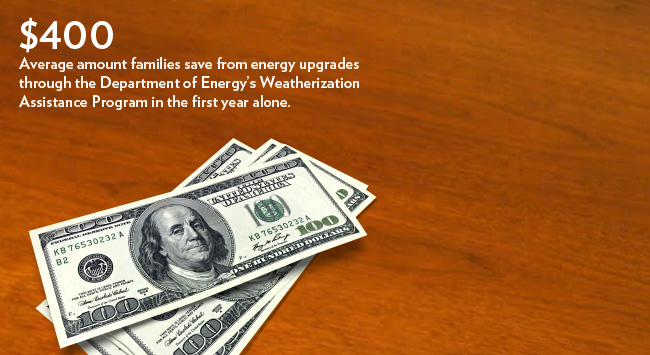
Posted by on June 18, 2010 at 3:07 PM ESTToday I’m with Senator Jeanne Shaheen in New Hampshire to congratulate the state on meeting a major milestone under the Recovery Act. New Hampshire and eleven other states have now weatherized more than 30 percent of the homes they planned to complete under the Recovery Act. Increasing the energy efficiency of homes is especially important for New Hampshire, where more than half of homes use oil for heating.
Learn more about Energy and EnvironmentFollow Up: Answers to Your Questions on BP Oil Spill
Posted by on June 18, 2010 at 11:45 AM ESTOn Tuesday evening immediately following the President’s address in the Oval Office, White House Press Secretary Robert Gibbs took questions submitted and voted on by the public during the course of the day. Over 7,200 questions were submitted, and we didn’t have a chance to get to all of them during the live chat. Below are answers to some of the most popular questions in each category that we didn’t have a chance to answer on Tuesday.
Learn more about Deepwater BP Oil Spill, Energy and EnvironmentPartnerships for Regional Energy Innovation in Omaha, Nebraska
Posted by on June 17, 2010 at 4:00 PM ESTIn supporting this priority, the administration convened a regional conference on energy innovation yesterday in Omaha, Nebraska, focused on connecting entrepreneurs and small enterprise with representatives from organizations across sectors. This conference was a unique partnership between the City of Omaha, Gallup, the Kauffman Foundation, and the Department of Energy. Nearly two hundred attendees met at Gallup University’s Omaha Campus to discuss issues ranging from regional gap funding and human capital needs, to collaboration and the early adoption of energy innovation.
This meeting continued conversations that began in Washington D.C. on May 7, hosted by a variety of offices in the White House, and led by Undersecretary of Energy at the U.S. Department of Energy, Dr. Kristina Johnson. Undersecretary Johnson presented the opening address at Omaha’s convening, where she discussed the importance of increasing our nation's use of clean energy and the necessity of diversifying our energy use portfolios. Ted Zoller, Director of the Center for Entrepreneurial Studies at the University of North Carolina Chapel Hill, presented the afternoon keynote remarks on regional energy innovation clusters and the interconnectivity of energy markets and sector leaders. Finally, a series of deep dive sessions and issue reporting concluded the conference.
In attendance were representatives from local, regional, and national organizations, federal representation from the White House National Economic Council and Domestic Policy Council, theU.S. Department of Energy, the U.S. Department of Agriculture, the U.S. Department of Defense, and theU.S. Small Business Administration, as well as representation from the United Nations. Additionally, local government was represented by the Omaha Mayor Jim Suttle, State Senators Haar and Mello, and the Nebraska Commissioner of Labor, Catherine Lang.
During the conference, organizations in each sector identified their role in addressing both near-term and long-term energy challenges, stressing the necessity of integrated and coordinated solutions. Private corporations and venture capital firms expressed their interest in providing business acumen to start-up enterprises. They also indicated that the focus of organizational advancement needs to be directed toward human capital development, not simply increases of financial capital into the market.
Academia, including the Universities of Nebraska, Minnesota, Chicago, North Carolina Chapel Hill, and Arizona State, as well as regional community colleges, discussed its role in addressing the human capital needs identified by the attendees, and described its ability to create environments that spur constant innovation and business start-up opportunities. Philanthropic foundations such as the Kauffman Foundation, the MacArthur Foundation, and the A.E. Casey Foundation identified their strengths in working strategically with multiple stakeholders to address organizational needs, and their role in supplying risk capital to support energy innovation and human capital development. Finally, non-profits, including the Nebraska Community Foundation, the Innovation Accelerator, and the Center for Rural Affairs explained their role in working with local communities. Through their on-the-ground experience and relationships, they are able to identify local needs and interventions best supported by the other sectors represented at the conference.
The day concluded with a reception co-convened by the Meeting of the Minds and the engineering firm HDR. Overall, yesterday’s conference presented a unique cross-section of perspectives, provided an atmosphere for new cross-sector partnerships, and made progress for the administration’s ongoing efforts to advance dialogue and understanding between all sectors of the economy.
The President's Meeting with BP Executives: "An Important Step Towards Making the People of the Gulf Coast Whole Again"
Posted by on June 16, 2010 at 2:51 PM ESTEarlier today President Obama met with BP Chairman Carl-Henric Svanberg and other BP in the Roosevelt Room at the White House. They discussed the ongoing efforts to stop the oil leaking into the Gulf of Mexico and BP’s responsibility not only to pay for the cost of the cleanup of the oil spill, but also to compensate residents and businesses that have suffered financially as a result of the oil spill.
In his remarks after the meeting, the President announced that BP has agreed to set aside $20 billion to pay economic damage claims to people and businesses that have been affected by the oil spill:
This $20 billion will provide substantial assurance that the claims people and businesses have will be honored. It’s also important to emphasize this is not a cap. The people of the Gulf have my commitment that BP will meet its obligations to them. BP has publicly pledged to make good on the claims that it owes to the people in the Gulf, and so the agreement we reached sets up a financial and legal framework to do it.
Another important element is that this $20 billion fund will not be controlled by either BP or by the government. It will be put in a escrow account, administered by an impartial, independent third party. So if you or your business has suffered an economic loss as a result of this spill, you’ll be eligible to file a claim for part of this $20 billion. This fund does not supersede either individuals’ rights or states’ rights to present claims in court. BP will also continue to be liable for the environmental disaster it has caused, and we’re going to continue to work to make sure that they address it.
BP and the Administration agreed to appoint Ken Feinberg, who administered the claims process for victims of 9/11, to run the independent claims process.
Calling this agreement "an important step towards making the people of the Gulf Coast whole again," the President reiterated the importance of keeping the families and businesses of the Gulf Coast, many of whom are still recovering from Hurricanes Katrina and Rita, at the forefront of the oil spill recovery process.
During a private conversation with Chairman Svanberg I emphasized to him that for the families that I met with down in the Gulf, for the small business owners, for the fishermen, for the shrimpers, this is not just a matter of dollars and cents; that a lot of these folks don’t have a cushion. They were coming off Rita and Katrina; coming off the worst economy that this country has seen since the Great Depression, and this season was going to be the season where they were going to be bouncing back. Not only that, but this happened, from their perspective, at the worst possible time, because they’re making their entire income for the year in the three or four months during which folks can take their boats out, people are coming down for tourism.
And so I emphasized to the chairman that when he’s talking to shareholders, when he is in meetings in his boardroom, to keep in mind those individuals; that they are desperate; that some of them, if they don’t get relief quickly, may lose businesses that have been in their families for two or three generations. And the chairman assured me that he would keep them in mind.
That’s going to be the standard by which I measure BP’s responsiveness. I think today was a good start, and it should provide some assurance to some of the small business owners and individuals down in the Gulf who I was visiting with that BP is going to meet its responsibilities. But I indicated to the chairman that, throughout this process, as we work to make sure that the Gulf is made whole once again, that the standard I’m going to be applying is whether or not those individuals I met with, their family members, those communities that are vulnerable, whether they are uppermost in the minds of all concerned. That’s who we’re doing this work for.
Learn more about the claims process and escrow account here.
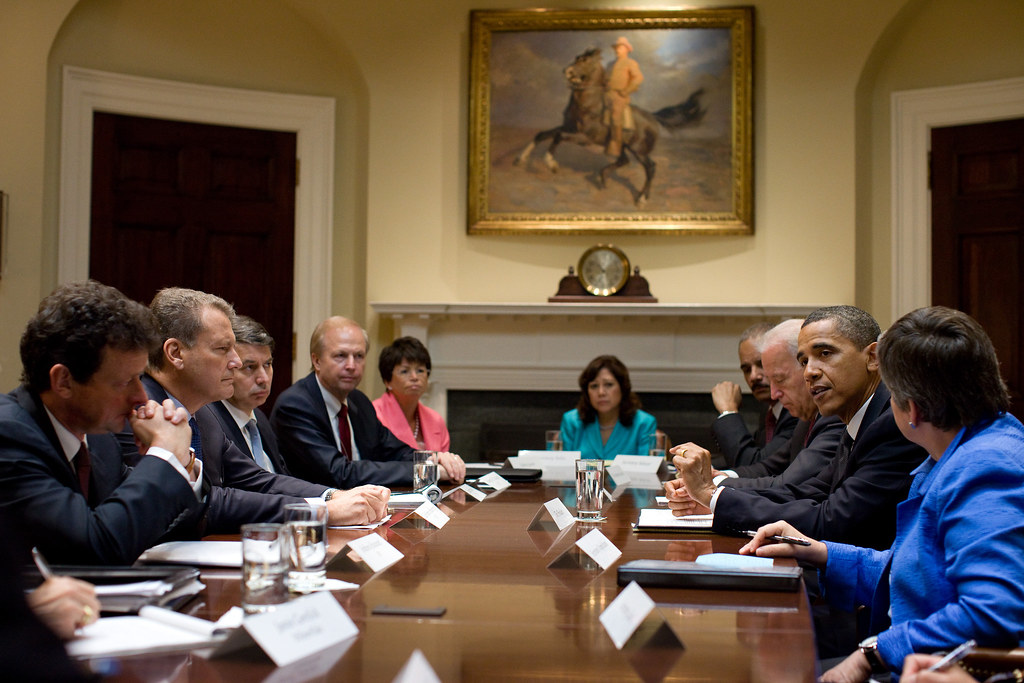
President Barack Obama and Vice President Joe Biden meet with BP executives in the Roosevelt Room of the White House, June 16, 2010, to discuss the BP oil spill in the Gulf of Mexico. Pictured, from left, are BP CEO Tony Hayward, BP Chairman Carl-Henric Svanberg, BP General Counsel Rupert Bondy, BP Managing Director Robert Dudley, Senior Advisor Valerie Jarrett, Labor Secretary Hilda Solis, Attorney General Eric Holder, and Homeland Security Secretary Janet Napolitano. (Official White House Photo by Pete Souza)
- &lsaquo previous
- …
- 168
- 169
- 170
- 171
- 172
- 173
- 174
- 175
- 176
- …
- next &rsaquo
Related Videos
-
 May 09, 2014 8:21 AM
Inside the White House: Solar Panels
-
 September 01, 2016 8:25 PM
President Obama Delivers a Statement to the Press
White House Blogs
- The White House Blog
- Middle Class Task Force
- Council of Economic Advisers
- Council on Environmental Quality
- Council on Women and Girls
- Office of Intergovernmental Affairs
- Office of Management and Budget
- Office of Public Engagement
- Office of Science & Tech Policy
- Office of Urban Affairs
- Open Government
- Faith and Neighborhood Partnerships
- Social Innovation and Civic Participation
- US Trade Representative
- Office National Drug Control Policy