


Energy and Environment Latest News
Solyndra: Illustrating a Recovery Act Supply Chain
Posted by on May 26, 2010 at 11:08 AM ESTEd. Note: Read the President's remarks in California as well as the Vice President's statement on the new CBO analysis showing the Recovery Act being responsible for up to 2.8 million jobs.
President Obama is in Fremont, California today to visit Solyndra, Inc, an innovative solar panel manufacturer that is building a new facility with funding made possible by the Recovery Act. Here's a look at what they're doing:
The direct benefits of this investment are easy to see. The plant expansion now underway has already enabled the creation of over 3,000 construction-related jobs and Solyndra estimates that the new factory could create as many as 1,000 long-term jobs in operations and supply. Likewise, a formerly empty field will soon be home to a state-of-the-art manufacturing plant that produces clean energy products that can be exported to the world.
What the television cameras won’t capture are the indirect benefits of supporting Solyndra. The impact of Solyndra’s success is being felt throughout the chain of companies that supply Solyndra with goods and materials.The project is creating jobs around the country. Construction materials for the facility itself are being manufactured by workers in Arkansas, Washington, Pennsylvania, Wisconsin and 18 other states. The advanced manufacturing equipment is being made by workers in Michigan, Tennessee, Colorado, and 8 other states. The raw materials to run the facility will come from 15 states including Wisconsin, Ohio, and Kentucky. When the first solar panels are shipped in late 2010, they will be delivered by freight companies and installed by even more new workers.
The map below from Solyndra shows where they have ordered the materials to construct the new facility. Many of the companies in these states have added workers of their own to handle the new orders.

This map from Solyndra shows the states supplying advanced manufacturing equipment to the company.

The Recovery Act’s investment in clean energy is having a ripple effect throughout our economy. A recent survey by Frost and Sullivan of 676 clean energy companies found that while only 3 percent of those companies directly received Recovery Act funds more than 50 percent recognized a positive impact from that legislation.
We still have a long way to go to get America’s economy back on track and to make the United States the world leader in clean energy technologies, but companies like Solyndra and Recovery Act investments like this one are helping drive progress across the country.
Matt Rogers is Senior Advisor to Secretary of Energy Steven Chu
Learn more about Economy, Energy and EnvironmentToday's Youth Protecting Tomorrow's Environment
Posted by on May 24, 2010 at 7:04 PM ESTLast week I was proud to join President Obama to honor the 2010 President’s Environmental Youth Award (PEYA)winners.
These young people could be our next clean energy innovators and environmental advocates and they’re setting the bar for environmental stewardship in every corner of our country – from places as far apart as Westerly, Rhode Island and Homer, Alaska.
As Administrator of the US Environmental Protection Agency I was proud to honor each and every one of them – and glad to thank them for making our jobs at EPA a little easier.
The projects focused on everything from environmental education, recycling and conservation to clean energy, local cleanups and international outreach.
In these ten projects, chosen out of more than 140 entries, we see a future filled with healthier, cleaner communities, and a safer planet for today's generation and generations to come.
This year's PEYA award winners and participants put in lots of hard work and showed amazing dedication. Most importantly, they made an impact in their communities and inspired change in the places they call home. I’m excited to see what’s in store for our country with all of these young people as our future leaders.

EPA Administrator Lisa Jackson meets with Presidential Environmental Youth Awards winner Maggie O'Brien. May 20, 2010.
Lisa P. Jackson is the Administrator of the Environmental Protection Agency.
Learn more about Energy and EnvironmentTalking to the Governors
Posted by on May 24, 2010 at 4:36 PM ESTThis morning the President took part in the daily briefing call with Gulf Coast Governors on the BP oil spill. Governors Jindal of Louisiana, Barbour of Mississippi, Riley of Alabama, and Crist of Florida. Press Secretary Robert Gibbs issued the following statement about the call:
The President reiterated the Administration’s sense of urgency for dealing with the oil spill, assured the governors that the federal government is bringing the best science and expertise to the table and underscored his commitment to continuing our strong collaboration with the state and local governments. Department of Homeland Security Secretary Napolitano, Rear Admiral Neffinger, EPA Administrator Jackson and Commerce Department Principal Deputy Under Secretary for Oceans and Atmosphere Monica Medina provided the regular daily briefing on operations, leak stabilization, environmental impact and oil trajectories.
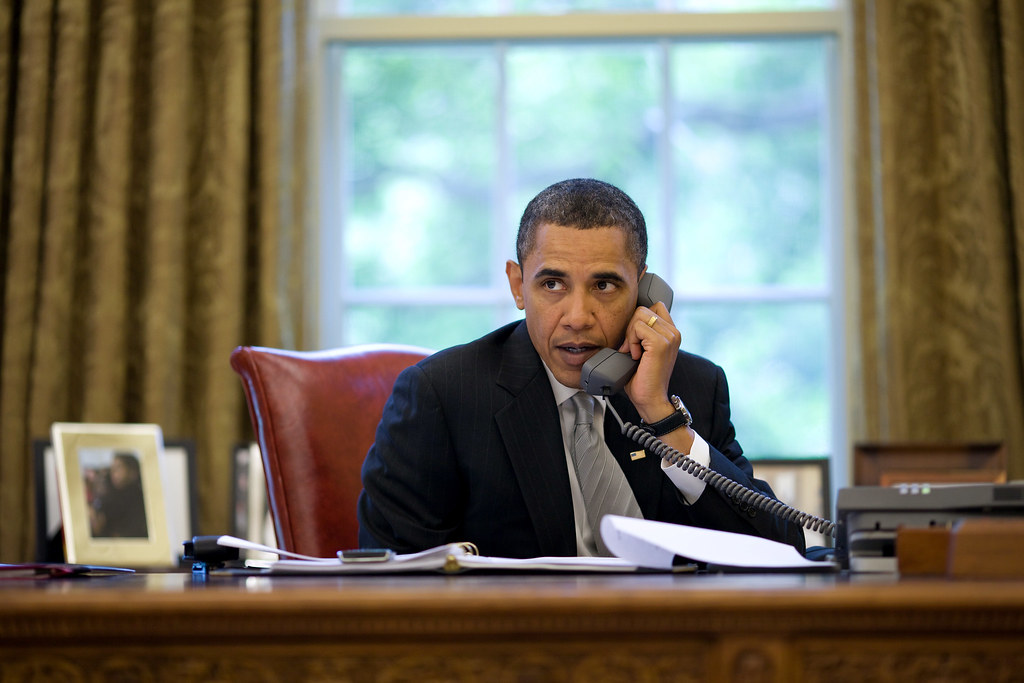
President Barack Obama discusses the response to the BP oil spill, during a phone call with Gulf Coast governors in the Oval Office, May 24, 2010. (Official White House Photo by Pete Souza)
Learn more about Deepwater BP Oil Spill, Energy and EnvironmentClimate Adaptation Summit This Week
Posted by on May 24, 2010 at 10:48 AM ESTLast spring, OSTP Director John P. Holdren called upon the University Corporation for Atmospheric Research to work with OSTP to host a summit to improve planning and communications among the range entities currently laying plans to adapt to climate change. That Summit will take place this week—May 25 to 27—and will bring together about 150 invited users and providers of climate adaptation information from diverse climatological regions and economic sectors to provide insight into:
- what is needed for effective climate adaptation and vulnerability assessments,
- how the nation should be organized in the public (federal and local) and private sectors.
The summit is not intended to debate what climate change will and won’t look like. Rather, using the best available information about projected climate change and impacts, the meeting participants will be asked to examine needs, knowledge, and appropriate roles to help this national planning effort in the near-term and long-term. The insights from this meeting will be incorporated into Federal climate adaptation programs and research planning. For more information, see the Media Advisory.
Learn more about Energy and EnvironmentWeekly Address: BP Spill Independent Commission
Posted by on May 22, 2010 at 5:00 AM ESTThe President announces that the independent commission he created for the BP Deepwater Horizon Oil Spill and Offshore Drilling will be chaired by former Florida Governor and Senator Bob Graham and former EPA Administrator Bill Reilly. He promises accountability not just for BP, but for those in government who bore responsibility.
- Learn more about the government response.
- Learn more about the commission.
- Read the Executive Order establishing the commission.
Viewing this video requires Adobe Flash Player 8 or higher. Download the free player.Learn more about Deepwater BP Oil Spill, Energy and EnvironmentSummary of the Federal Government’s Role in BP’s Effort to Stop the BP Oil Leak
Posted by on May 21, 2010 at 7:38 PM ESTNobody in this government will be satisfied until BP stops the leak, the oil is cleaned up and the affected people along the Gulf are fully compensated.
BP, as a responsible party, is charged with capping their leaking oil well and paying for the response and recovery. After Exxon Valdez, and through the Oil Pollution Act of 1990, no longer can a company cause a disaster like this and then expect the taxpayers to clean up their mess.
However, the USG, as led by the Department of Homeland Security with Admiral Thad Allen serving as the National Incident Commander, is overseeing these actions.
In addition, the Federal On Scene Coordinator Rear Admiral Mary Landry coordinates the response on the front line, oversees BP’s efforts, and directs additional actions where necessary.
Since the Deepwater Horizon exploded on April 20th, the United States government has taken and will continue to take an all hands on deck posture to ensure we are doing everything we can to help BP stop this leak.
With the source being 5,000 feet under the ocean’s surface, this has been extremely difficult and the oil companies are the only ones who have the equipment for this.
Government scientists and engineers are currently working with BP to use the best, most advanced technology that exists to try to stop the flow of oil as quickly as possible.
The Department of Energy has engaged some of the world’s top scientific and engineering minds from Sandia, Los Alamos and Livermore Labs—to lend their expertise. These government scientists are reviewing every plan on the table, validating those that are moving forward and providing additional expertise and input on new tactics.
Heidi Avery is White House Deputy Homeland Security Advisor
Learn more about Deepwater BP Oil Spill, Energy and Environment
- &lsaquo previous
- …
- 172
- 173
- 174
- 175
- 176
- 177
- 178
- 179
- 180
- …
- next &rsaquo
Related Videos
-
 May 09, 2014 8:21 AM
Inside the White House: Solar Panels
-
 September 01, 2016 8:25 PM
President Obama Delivers a Statement to the Press
White House Blogs
- The White House Blog
- Middle Class Task Force
- Council of Economic Advisers
- Council on Environmental Quality
- Council on Women and Girls
- Office of Intergovernmental Affairs
- Office of Management and Budget
- Office of Public Engagement
- Office of Science & Tech Policy
- Office of Urban Affairs
- Open Government
- Faith and Neighborhood Partnerships
- Social Innovation and Civic Participation
- US Trade Representative
- Office National Drug Control Policy