Energy and Environment Latest News
Blogging to the Middle: For Green Jobs, the First Step is Training
Posted by on June 2, 2009 at 10:48 AM ESTLast Tuesday at the Fourth Middle Class Task Force Meeting in Denver, Vice President Biden announced a $500 million green jobs training program designed to connect people to opportunities in the clean energy economy. (Vice President Joe Biden speaks at a middle class task force even at the Denver Museum of Science and Nature in Denver, Colorado, Tuesday, May 26, 2009. Official White House Photo by David Lienemann)For many, small investments in training in new technology can pay off. Tom Fittus was at the Task Force meeting. A licensed electrician, Tom was looking for a new job after his old employer’s business slowed down. He enrolled in a two week solar-specific job training course and was hired by Namaste Solar, a small business in Colorado that builds and designs solar electric systems. Tom’s boss Blake Jones said Tom’s course made him "stick out" when he was considering hiring Tom, and considers specialized green job training as a substantial competitive advantage for both job seekers and businesses. Blake has even increased Namaste’s workforce by 20% this year and plans on increasing it by 40% by 2010- with help from the American Recovery and Reinvestment Act.Roby Roberts of Vestas America, a wind turbine manufacturer, also shared the story of his company. Vestas is investing $1.5 billion in manufacturing facilities in Colorado that will employ 2,500 people when in operation. After it is built, Vestas’s Pueblo plant will be using more than two Golden Gate Bridges of steel to build wind turbine towers every year. A barrier to expanding its operations in the United States is finding skilled workers. That’s why Vestas is training the workforce it will need in Pueblo through a partnership with the local community college.
 (Vice President Joe Biden speaks at a middle class task force even at the Denver Museum of Science and Nature in Denver, Colorado, Tuesday, May 26, 2009. Official White House Photo by David Lienemann)Garett Reppenhagen, a veteran who served as a sniper in Iraq and in Kosovo, was also at the Task Force meeting. Garett is a member of Veterans Green Jobs, an organization representing veterans of every branch of military who have enrolled in the Veterans Green Jobs Academy, a training and deployment program in energy efficiency and conservation. When these veterans graduate from their green jobs training on June 2nd, they will be leaders in green building, energy and renewable energies. As our troops return from Iraq and Afghanistan, green jobs offer high paying opportunities for veterans that cannot be outsourced.These are just three examples of why the $500 million green jobs training program is critical – whether to help someone update their skills so they can work on new technology like solar panels or to support the development of a skilled clean energy workforce to attract investment by renewable energy companies – investing in training is the first step toward expanding opportunities for the middle class in our clean energy economy.Terrell McSweeny is Domestic Policy Advisor for the Vice President.
Learn more about Economy, Energy and EnvironmentGreen Jobs and a New Foundation; Empleos Verdes y Una Nueva Base Económica
Posted by on May 27, 2009 at 2:27 PM ESTWith the President in Nevada talking about clean energy, Green Jobs, and the Recovery Act, Labor Secretary Hilda Solis talks about all of that from her perspective -- in English and Spanish:[Update - Also read it in Chinese (pdf)!]As the Secretary of Labor, I believe investing in our nation’s clean energy future will not only secure America’s energy supply and promote economic stability, but also advance all of our communities.Investments in the green economy can revitalize old industries, create new industries and generate new jobs for our workforce. These are jobs that will stay in the United States and cannot be outsourced. They will help pave a pathway out of poverty; strengthen urban and rural communities. Through these jobs we can export products - not paychecks. And these jobs will help rebuild a strong middle class and protect the health of our citizens and planet.In the past several months, I had the opportunity to visit workers who are receiving training and acquiring new skills for green jobs. In places like the Community College of Allegheny County in Pennsylvania and the East Los Angeles Skill Center, underserved adults are being trained for green jobs like the ones the Recovery Act is creating. These jobs range from the manufacturing of advanced batteries and wind turbines to the installation of solar panels and skills to conduct energy audits.The Labor Department officially announced plans to release $500 million from the Recovery Act for grants to prepare workers for careers like these. These funds will help both dislocated and incumbent workers, at-risk youth and underserved communities. $50 million of that money will assist communities affected by auto industry restructuring. The competition for grant money is anticipated to begin in June 2009.Through these grants and the partnerships I have entered into with the Departments of Housing and Urban Development, Energy and Education, we are working to rebuild our economy in a more equitable manner, one that is inclusive of all Americans regardless of socio-economic background or gender. Together we can help individuals enter career pathways leading to economic self-sufficiency. The new foundation green jobs can provide long-term security for the economy as a whole, and bring security to a family to help pay their mortgage, get their children health care, and put food on their table.In these tough economic times, there are those that argue that we can’t afford to focus on the environment. But if we work to create a new clean energy economy, we can both make our planet cleaner, and provide good stable work for all Americans.
******Como la Secretaria de Trabajo, creo que al invertir en una economía basada en la energía limpia no solamente aseguramos nuestro futuro en materia de energía, sino nuestro progreso económico y, al mismo tiempo, creamos oportunidades para todas nuestras comunidades.Inversiones en una economía verde pueden crear nuevas industrias y nuevos trabajos. Estos trabajos no pueden ser exportados. Estos trabajos pueden ayudar a revitalizar nuestras comunidades y a crear oportunidades para personas pobres. Mediante estos trabajos podemos exportar productos y no los salarios de nuestros trabajadores. Estos trabajos pueden crear una clase media más grande y proteger la salud de nuestros ciudadanos y nuestro planeta.En los últimos meses, he tenido la oportunidad de visitar trabajadores que están recibiendo entrenamiento y se están preparando para aprovechar estos nuevos empleos verdes. Ejemplos son el Community College del condado de Allegheny en Pensilvania y el centro de capacitación (Skill Center) en el este de Los Ángeles, donde adultos están siendo entrenados para los trabajos verdes que serán creados por la Ley de Recuperación y Reinversión. Estos trabajos incluyen la manufactura de baterías y turbinas de viento, instalaciones de paneles solares, y la auditoria del uso de energía.El Departamento de Labor anunció oficialmente sus planes de hacer públicos $500 millones de la Ley de Recuperación y Reinversión en forma de becas para preparar a los trabajadores en carreras como estas. Estos fondos ayudarán a trabajadores que han perdido sus empleos, trabajadores nuevos y trabajadores jóvenes. $50 millones serán otorgados a trabajadores afectados por la reestructuración de la industria automotriz. El proceso de licitación para recibir este dinero comenzará en Junio del 2009.Mediante estas becas y los acuerdos establecidos con los Departamentos de Energía, Educación, y Vivienda y Desarrollo Urbano, estamos trabajado para crear una economía mas equitativa que incluya a todas las personas sin importar su antecedente económico y social o su sexo. Juntos podemos asistir a los trabajadores y ponerlos en camino hacia un futuro más prospero. Los empleos verdes pueden sentar una nueva base para nuestra economía y darles la seguridad económica a las familias para pagar sus hipotecas, pagar el seguro médico de sus hijos y alimentar a sus familias.En estos tiempos de crisis hay individuos que dicen que no podemos invertir en el medio ambiente. Pero si creamos una economía basada en la energía limpia, podemos limpiar nuestro medioambiente y al mismo tiempo crear nuevos y buenos trabajos para todos.
(DOL Photo/Shawn Moore)Learn more about Energy and EnvironmentBlogging to the Middle
Posted by on May 27, 2009 at 8:49 AM ESTJared Bernstein, the Executive Director of the Middle Class Task Force and the Vice President's Chief Economist, puts recent events on clean energy and the economy into perspective:Hey, taskforce fans. We’re just back from Denver where we hosted our fourth meeting. It was on the green economy and the opportunities therein for middle-class folks. VP Biden was joined by all kinds of interesting partners from our world, including Secretary of Labor Hilda Solis; Secretary of Housing and Urban Development Shaun Donovan; Secretary of Agriculture Tom Vilsack; Deputy Secretary of Energy Dan Poneman; United States Trade Representative Ron Kirk; and Special Advisor for Green Jobs, Enterprise and Innovation at the White House Council on Environmental Quality, Van Jones.Once again, the Vice-President hosted a town-hall style meeting because that’s the best way for him and the rest of this crew to learn what middle-class families are going through right now, and how these issues resonate with them (read the Vice President’s opening remarks).
(Vice President Joe Biden speaks at a middle class task force even at the Denver Museum of Science and Nature in Denver, Colorado, Tuesday, May 26, 2009. Official White House Photo by David Lienemann)Those who’ve been with us from the beginning will notice that this is our second taskforce meeting on this topic of green jobs. This is no accident: our emphasis on green energy occurs at the intersection of two of the Obama Administration’s most important policy initiatives: protecting the environment and creating good jobs.On the first point—fighting back against global warming—this past week has been a good one. On Tuesday the President hosted an historic event where stakeholders who have been at odds for years on this stuff came together to support a much higher mileage standard for vehicles. (BTW, IMHO one of President Obama’s more important skills is the ability to take folks who traditionally line up on opposite sides and bring them together—you see it in health care too.)The administration’s plan to promote clean energy use also made some headway in Congress last week.Then there’s green jobs, which we define broadly (and loosely—there is no official definition) as jobs that help to improve the environment in some way. That includes blue collar workers building out the smart grid to efficiently move the wind power (green, renewable energy) across the land. It includes "weatherizers" who can diagnose and repair the energy inefficiencies in your house or business. And it includes the green manufacturers who made those wind turbines or the scientists and lab technicians who developed those renewable energy sources and weatherization materials.It’s important to see the connection between these various initiatives: our clean energy agenda, mileage standards, and green jobs. By setting higher mileage standards and by promoting incentives to use clean energy (while reducing our dependence on foreign oil), we create new demand for the science, techniques, products, and tools to meet the standards. We help to grow the market for more efficient engines and new production techniques that reduce carbon emissions. And a growing market means more jobs for middle-class families.Now, with new markets come new labor demands, and new demand requires new supply. In this case, we’ll need more workers with the skills to meet the demands, and that’s a big focus of our Denver meeting. We’re announcing a great, new green jobs training program funded by $500 million from the Recovery Act.So, go green, and go taskforce!(Vice President Joe Biden speaks at a middle class task force even at the Denver Museum of Science and Nature in Denver, Colorado, Tuesday, May 26, 2009. Official White House Photo by David Lienemann)Learn more about Economy, Energy and EnvironmentMiddle Class Task Force: Returning to the Scene of the Green
Posted by on May 22, 2009 at 1:44 PM ESTNext week on May 26th the Middle Class Task Force will hold its fourth official meeting entitled "Building a Strong Middle Class through a Green Economy." The town hall style meeting will be held at the Denver Museum of Nature and Science where the President signed the Recovery Act and kicked off a new wave of green jobs across the country.The first meeting of the Task Force was also on this topic -- held in Philadelphia it explored the vision and possibilities of green jobs. This meeting will start looking at how those possibilities are becoming reality, and how the full potential of that vision be reached. The impressive roster of attendees will include Vice President Biden (Chair of Task Force), Labor Secretary Hilda Solis, HUD Secretary Shaun Donovan, Secretary of Agriculture Tom Vilsack, Deputy Secretary of Energy Daniel Poneman, US Trade Representative Ron Kirk, and Van Jones, Special Advisor for Green Jobs, Enterprise and Innovation at the White House Council on Environmental Quality.Learn more about Economy, Energy and EnvironmentPERAB: First Official Memo
Posted by on May 20, 2009 at 2:07 PM ESTFollowing the first official quarterly meeting of the President’s Economic Recovery Advisory Board this morning, the memo below was proposed to the Board by board member John Doerr for discussion: (President Barack Obama, flanked by Paul Volcker, left, and General Electric Chief Executive Officer Jeffrey Immelt, right, comments during the Economic Recovery Advisory Board meeting in the Roosevelt Room of the White House Wednesday, May 20, 2009. Official White House photo by Pete Souza.)Learn more about Economy, Energy and Environment
A Culture Change on Climate Change
Posted by on May 19, 2009 at 1:17 PM ESTViewing this video requires Adobe Flash Player 8 or higher. Download the free player.download .mp4 (165.1 MB) | read the transcript"For what everyone here believes, even as views differ on many important issues, is that the
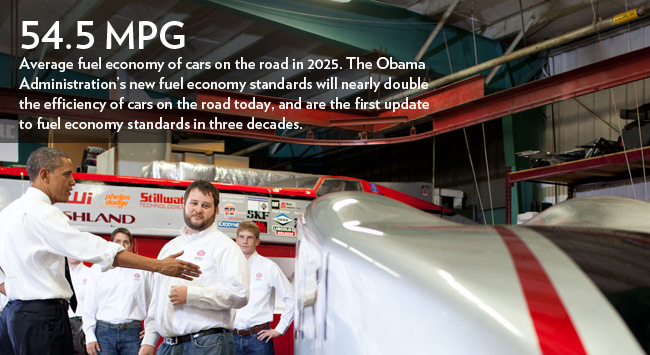
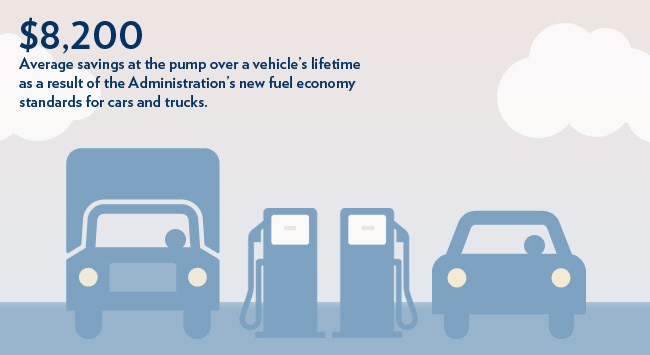
status quo is no longer acceptable."This week the makings of a change in the culture of Washington will be on display, and as the President’s words above indicate there could be no better example than today’s announcement of a breakthrough on fuel economy and greenhouse gas emissions standards. Whereas these issues seemed destined to be the subject of eternal political clashing just last year, today the President was joined on stage by the Presidents, CEOs, or other top executives from Ford, Toyota, General Motors, Honda, Chrysler, BMW AG, Nissan, Mercedez-Benz, Mazda, Volkswagon, and the United Auto Workers to announce a new consensus.In the course of his remarks, the President made clear that ending America’s dependence on fossil fuels will be one of the greatest challenges the country has faced, and that this is only one of steps already being taken to address it. However, he also made clear that this was a historic day:Think about this. Consider how much has changed all around us. Think of how much faster our computers have become. Think about how much more productive our workers are. Think about how everything has been transformed by our capacity to see the world as it is, but also to imagine a world as it could be.That's what's been missing in this debate for too long, and that's why this announcement is so important, for it represents not only a change in policy in Washington but the harbinger of a change in the way business is done in Washington. No longer will we accept the notion that our politics are too small, our nation too divided, our people too weary of broken promises and lost opportunities to take up a historic calling. No longer will we accept anything less than a common effort, made in good faith, to solve our toughest problems.And that is what this agreement seeks to achieve.Addressing those concerned about whether these changes would mean a higher cost for their cars, the President explained that any costs would be offset in just three years, and that "over the life of a vehicle, the typical driver would save about $2,800 by getting better gas mileage."A top auto industry spokesman summed it up in a statement before the event began: "What's significant about the announcement is it launches a new beginning, an era of cooperation. The President has succeeded in bringing three regulatory bodies, 15 states, a dozen automakers and many environmental groups to the table… We're all agreeing to work together on a National Program."Indeed, leaders from environmental groups were in the audience applauding. One environmental group put it the same way this morning that the President did this afternoon: "Everybody wins." The program covers model year 2012 to model year 2016 and ultimately requires an average fuel economy standard of 35.5 mpg in 2016 with a projected reduction in oil consumption of approximately 1.8 billion barrels over the life of the program. Or, in the President’s words, "more oil than we imported last year from Saudi Arabia, Venezuela, Libya, and Nigeria combined."The President was also joined on stage by Carol M. Browner, Assistant to the President for Energy and Climate Change, who helped spearhead what she called "an incredible step forward for our country"; EPA Administrator Lisa P. Jackson, who noted that "A supposedly 'unsolvable' problem was solved by unprecedented partnerships"; and Transportation Secretary Ray LaHood, who called the program "the biggest leap in history to make automobiles more fuel efficient."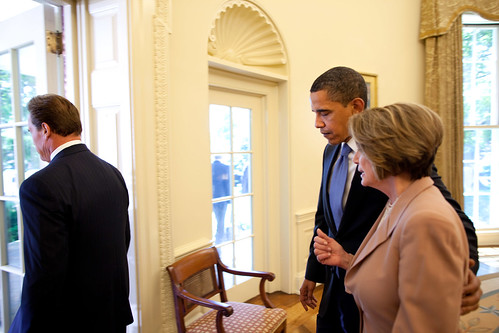 (President Barack Obama escorts Speaker of the House Nancy Pelosi (D-Calif) from the Oval Office to the Rose Garden for the announcement of new fuel and emission standards for cars and trucks. At left is Governor Arnold Schwarzenegger (R-Calif). Official White House Photo by Pete Souza)Learn more about Economy, Energy and Environment

- &lsaquo previous
- …
- 198
- 199
- 200
- 201
- 202
- 203
- 204
- 205
- 206
- next &rsaquo
Related Videos
-
 May 09, 2014 8:21 AM
Inside the White House: Solar Panels
-
 September 01, 2016 8:25 PM
President Obama Delivers a Statement to the Press
White House Blogs
- The White House Blog
- Middle Class Task Force
- Council of Economic Advisers
- Council on Environmental Quality
- Council on Women and Girls
- Office of Intergovernmental Affairs
- Office of Management and Budget
- Office of Public Engagement
- Office of Science & Tech Policy
- Office of Urban Affairs
- Open Government
- Faith and Neighborhood Partnerships
- Social Innovation and Civic Participation
- US Trade Representative
- Office National Drug Control Policy