Energy and Environment Latest News
Cleaning house
Posted by on January 28, 2009 at 9:53 PM ESTInterior Secretary Ken Salazar kicked off the daily press briefing today with his plans for cleaning out a department that has become famous for scandal."Over the last eight years, the Department of Interior has been tarnished by ethical lapses, of criminal behavior that has extended to the very highest levels of government," he said.He’s taking over a Department plagued by Jack Abramoff-related scandals and another involving sex and drug use by Interior employees, and promised to clean house."We will work to reform the Department of the Interior, to restore the public's trust and confidence in the highest levels of ethics and accountability that the American people deserve," he said.He then took a couple of questions, before handing the podium over to Press Secretary Gibbs. Highlights below – you can read the full remarks below.On off-shore drilling:
Salazar: With respect to the Outer Continental Shelf, as President Obama made very clear during the campaign, we will look at the OCS in connection with a comprehensive energy program for the nation. One of the signature issues that President Obama will work on very hard, has worked on very hard, and will continue to work on very hard is the development of a comprehensive energy strategy. We need to address the economic opportunity here at home, the environmental insecurity that comes from global warming, and also the national security issues. And so, as we move forward with the development of our oil and gas resources, both onshore and offshore, it has to be a part of a set of a comprehensive energy program.On oil and gas exploration on federal lands:
Salazar: There are a number of different regulations and actions that were taken by the Bush administration, some of them in the midnight hour as their term expired here, and we have all of those on the table and we're taking a look at them. There are some which are bad and which need a new direction. There are probably some which will be kept in place. [Regarding] the approach to oil and gas development -- it has to be done in the context of a comprehensive energy plan. And it also has to be done with the right kind of balance. There are places where it is appropriate to explore and to develop oil and gas resources, and there are places that are not appropriate.On President Obama’s meeting today with Pentagon officials:
Gibbs: With the status of forces agreement that puts an end date on our involvement there -- we're no longer involved in a debate about whether, but how and when. That's a process the President wants to take seriously; wants to ensure the safety of our troops as we remove our combat brigades; wants to, as I've said repeatedly, provide the responsibility and the opportunity for the Iraqis to do more in governing their own country; and as I said, to do this in a way that seeks the consultation of all those leaders….Everyone understands that our force structure there will change, but that we have to do so in a way that protects the troops that we have there now.On specific elements of the economic stimulus package (which several hours later the House approved):
Gibbs: Let's focus on the larger picture...As we get focused on this number and that number and 2/100ths of 1 percent and all this kind of stuff, understand what we've seen in just the last 48 hours: 70,000 people since Monday have gotten pink slips from the companies that they work for, right? The unemployment figures that came out just yesterday from the Bureau of Labor Statistics found every state in the country's -- every state in the country saw job loss....We think if members focus on this bill they'll see that it moves the economy forward; that money will be spent in this economy, 75 percent of it in the first 18 months; that jobs will be created, jobs will be saved, money will get put back into people's pockets. This, along with a financial stability package, reregulation, and a plan to deal with home foreclosures, will push this economy forward and put people back to work. And hopefully one day we can come up here and I won't have to answer a question based on the fact that another company has decided to lay off 2,000 or 10,000 or 20,000 people.On Secretary Gates' comments yesterday that, "We need to be very careful about the nature of our goals we set for ourselves in Afghanistan":
Gibbs: [Yes], it's going to take quite some time and we have to be realistic about both that timeline and those goals. The President said that Afghanistan and the border between Afghanistan and Pakistan represent the central front on the war on terror; that today in those places, terrorists likely plot their next steps both against governments in that region, as well as against us. And the safety and the security of the American people are utmost on the President's agenda. Through that comprehensive review, we'll adjust whatever we need to, to meet goals and time lines as it relates to Afghanistan.On the rate of spending of the stimulus plan:
Gibbs: The reason that some of this money isn't completely spent out in '09 and 2010 is ... I don't think we're going to wake up on January 1, 2011, you know, like Dorothy in the Wizard of Oz, and we're going to go from black and white to color. We're still going to have a lot of battles to face and economic hardship to move the economy to a better place. So that the investment and the stimulus that happen as a result of this legislation don't drop off like a cliff, some of that money bleeds into 2011. The CBO I think talked in its report about the fact that that money would then -- would create jobs in 2011. I don't want to get hung up on sort of these rigid times and not understand that we're going to wake up the beginning of 2011 and want people to be employed, families to be borrowing money to buy the things that they want to, like cars or loans for their kids to go to school, and to have healthy small businesses that are creating jobs. All that stuff has got to happen; it's not just going to all happen overnight.On the President's upcoming trip to Canada:
Gibbs: I think it is safe to say that the health of each economy and the health of the global economy will be a large part of that agenda. And I strongly anticipate, as was the case when the then President-elect met with the leader of Mexico, that trade will be a part of that docket.
PRESS BRIEFING
BY PRESS SECRETARY ROBERT GIBBS
AND SECRETARY OF INTERIOR KEN SALAZAR
January 28, 2009
James S. Brady Press Briefing RoomMR. GIBBS: Good afternoon, guys. Before we get started, I wanted to introduce Secretary Salazar, who is going to make his second trip as our Secretary of the Interior tomorrow -- he's going to go out West. And I've invited him here to talk a little bit about the reform agenda that he's going to take with him on that trip, and answer a few questions. And then we'll get back to our regularly scheduled programming. So, Secretary.SECRETARY SALAZAR: Thank you, Robert.President Obama has immediately set high ethical standards for all of government as part of his reform agenda. As part of that commitment and implementing the reform agenda, I intend to do my part in the Department of Interior to make sure that scandals that have occurred in the past are properly dealt with, and that the problems that we uncover are fixed so that they don't occur again.President Obama immediately made clear that the type of ethical transgressions, the blatant conflicts of interest, waste and abuses that we have seen over the last eight years will no longer be tolerated. Nowhere is President Obama's commitment to reform and to cleaning up the waste, fraud and abuse of the past more important than at the Department of Interior, which I now lead on his behalf.Over the last eight years, the Department of Interior has been tarnished by ethical lapses, of criminal behavior that has extended to the very highest levels of government. The former deputy secretary of the department under the Bush administration, Steven Griles, was sent to prison. It is a department that the American people associate with Jack Abramoff. And it is a department that was tarnished by a scandal involving sex, drugs and inappropriate gifts from the oil and gas companies that the employees were in charge of overseeing.The Lakewood, Colorado, office of the Minerals Management Service is taxed with making sure that taxpayers, the American taxpayers, collect their fair share from oil and gas development on their public lands. Last year that office collected $23 billion. That's $23 billion on behalf of the American people. Yet during the last administration, some of the employees of that office violated the public trust by accepting gifts and employment contracts from the very oil and gas companies that they were supposed to be holding accountable.Some employees engaged in blatant and criminal conflicts of interest and self-dealing. It is one of the worst examples of corruption, abuse and of government putting special interests before the public interest.Tomorrow I will be traveling to the Lakewood MMS office to meet with the employees. I there will be announcing our own review of what happened, what has been done to address it, and what additional steps need to be taken.It will be clear that we will no longer tolerate those types of lapses at any level of government, from political appointees or career employees. This is only the first step of our long-term effort to enact comprehensive top-to-bottom reforms within the Department of Interior. The American people should be proud of their government, all of their government. Those who work for the government should be proud of their service to the American people. We will work to reform the Department of the Interior, to restore the public's trust and confidence in the highest levels of ethics and accountability that the American people deserve.And with that, I'd be happy to take a few questions from the audience.Q Secretary, what about -- can you clarify where the administration is right now on whether you're going to overturn the Bush policy on exploring offshore oil and gas drilling, et cetera?SECRETARY SALAZAR: With respect to the Outer Continental Shelf, as President Obama made very clear during the campaign, we will look at the OCS in connection with a comprehensive energy program for the nation. One of the signature issues that President Obama will work on very hard, has worked on very hard, and will continue to work on very hard is the development of a comprehensive energy strategy. We need to address the economic opportunity here at home, the environmental insecurity that comes from global warming, and also the national security issues.And so, as we move forward with the development of our oil and gas resources, both onshore and offshore, it has to be a part of a set of a comprehensive energy program.Q So do you believe there should be more?Q Does that mean it's on hold? It means there will be no drilling under this order until you've done this review; is that what that means?SECRETARY SALAZAR: No, not at all. The current status of the OCS --Q I mean, no expansion -- obviously there is some now -- but expansion -- are you saying that expansion is on hold pending this comprehensive energy policy?SECRETARY SALAZAR: The status of the OCS right now is that the five-year plan of the Department of Interior that governs the OCS has been opened up, okay? And so it is now a plan that is being formulated. And as that plan gets formulated it is going to have to fit in with a comprehensive energy plan that President Obama wants for the nation, which is a signature issue and one in which the Department of Interior will be intimately involved in supporting the President's goals to get America to a point of energy independence for all the reasons that I articulated earlier.Q Mr. Secretary, during the transition, the co-chair of the transition for President Obama, John Podesta, said that the President would be overturning some of the executive orders and presidential orders President Bush had put into place about oil and gas exploration on federal lands. We have not seen any executive orders or presidential orders overturning them, and I'm wondering if they're pending, and if you think it's wise to limit where the United States is able to explore for energy during this time of energy crisis, where we're getting all our oil from abroad.SECRETARY SALAZAR: The answer to that question is that there are a number of different regulations and actions that were taken by the Bush administration, some of them in the midnight hour as their term expired here, and we have all of those on the table and we're taking a look at them. There are some which are bad and which need a new direction. There are probably some which will be kept in place. And so we are now in the process, having now been in the Department of Interior's position, really, for only about a week, at taking a look at all of these regulations.On the more fundamental issue which I think you are addressing, which is the approach to oil and gas development -- it has to be done in the context of a comprehensive energy plan. And it also has to be done with the right kind of balance. There are places where it is appropriate to explore and to develop oil and gas resources, and there are places that are not appropriate. And so that's part of what we'll move forward with in the agenda at the Department of Interior.Q Of the incidents that you cited in your opening statement, were most of those political appointees? Were some career? And in the week in which you've been in office, have any ongoing ethics violations been brought to your attention?SECRETARY SALAZAR: The report the Inspector General referred to -- there are actually three investigations that were conducted by the Inspector General -- some of them had to do with very high-level employees within the Department of Interior and engaging in self-dealing and other kinds of inappropriate relations with outside interests. Some of the -- two of the investigations dealt with gifts and sex and drugs actually taking place in transactions in the very government buildings where MMS has its responsibilities. So we're taking a look at that, and tomorrow we'll have some additional announcements on where we want to take all those issues.Q But are they political appointees, or are they career people who are still working for you?SECRETARY SALAZAR: They're both. They're both.Thank you.MR. GIBBS: Thank you.SECRETARY SALAZAR: Now you get the hot seat.MR. GIBBS: Exactly. (Laughter.)SECRETARY SALAZAR: Can I sit up here and watch you -- (sits in Helen Thomas's seat.) (Laughter.)MR. GIBBS: He wants to sit -- there you go. (Laughter.)Q Don't block my view. (Laughter.)MR. GIBBS: Under one condition, that I don't get any hard questions from you in the middle of that -- in the middle of that chair. I might have --Q -- questions to ask him.MR. GIBBS: I might have spoken far too soon.Q Ask him something we don't know about -- (laughter.)MR. GIBBS: Yes. And definitely no talking to those guys on either side of you who -- I'm going to get asked about some acreage leasing on --Q The first time we have a Secretary in the first row.MR. GIBBS: He's -- well, I want to say this was helpfully provided to my by CBS News so that I would -- (laughter) -- this is day nine of the Obama presidency -- a service of CBS News. So I thought I would -- got a kick out of that. I thought that was pretty good.Let me make a few announcements before we entertain everyone but Secretary Salazar's questions. The President has made a call to President Motlanthe of South Africa. And we'll have a readout on that at the conclusion of this. The President met -- had his economic daily briefing this morning in the Oval Office. In addition to Secretary Geithner and Dr. Summers, he was joined by Paul Volcker, who, as you know, is in charge of the President's Economic Recovery Advisory Board. And the main topic of discussion was financial reregulation, a topic that the President spoke about yesterday on Capitol Hill, and you'll hear certainly more of as we move forward.Lastly, as you all know, the President intends to make his first foreign trip as President to Canada. He will make that trip on February the 19th. Canada is a vitally important ally, and the President looks forward to the opportunity to speak with Prime Minister Harper and visit our neighbor to the north. So please add that to your appropriate planning schedules.And lastly, the President looks forward to the House's action this evening on a recovery and reinvestment plan that he believes tonight is likely to take an important first step in getting our economy back on track and saving -- plan to save or create 3 or 4 million jobs, as I said, begin to get our economy moving again. The President looks forward to that vote, and we'll have some comments on that later. I think, again, tonight starts the beginning of what we know is going to be a long process as it relates to that, but I think tonight will be a very important first step.With that -- Jennifer.Q Thanks. I want to talk about the meeting he's having at the Pentagon this afternoon. You talked, and Secretary Gates has talked about a process that's underway. There was the meeting last week, there's the meeting today, there's going to be one specifically on Afghanistan next week, there will be others. But can you talk a little bit more about how long you guys expect this process to take, how it works? I mean, you said yesterday that he has to go through all this in order to make decisions on the troop posture. And there are several different options, different formulations being put together at the Pentagon, being presented to him of how he can do what it is he wants to do. So can you just explain more about how this is going to work?MR. GIBBS: Yes. Well, I think the most important thing -- and the President spoke about this, as many of you heard, throughout the campaign, and both during the transition and now as President of the United States -- that -- and as I said yesterday, the Secretary of Defense was very clear on this -- that he wanted to put everybody that was involved in these decisions in front of the President so the President could hear all of their advice.The President committed, as a part of this process, to speak with commanders both on the ground in Iraq and Afghanistan, as well as region-wide commanders, to get their perspective as he laid out a new mission for Iraq. I think everybody understands that the developments over the past few months in Iraq, with the status of forces agreement that puts an end date on our involvement there -- we're no longer involved in a debate about whether, but how and when. That's a process the President wants to take seriously; wants to ensure the safety of our troops as we remove our combat brigades; wants to, as I've said repeatedly, provide the responsibility and the opportunity for the Iraqis to do more in governing their own country; and as I said, to do this in a way that seeks the consultation of all those leaders.The process began on the 21st, as you guys know, in the Situation Room, continues today at the Pentagon. I think there will be at least one more meeting that will involve General McKiernan to discuss specifically Afghanistan.I don't anticipate the process will take an inordinate amount of time. I think one of the things the President expects to hear today, and one of the -- what we all heard yesterday in the testimony from Secretary Gates is how important improving our position in Afghanistan is, and secondly, how we are at a point now where many of our forces are stretched very, very thin, and the burden that we put on not just the soldiers every day, but on the many family members that stay here and pray for their loved ones and care for their children.So I think we've got a deliberate process that the President will be able to receive that information and make some key determinations as we change that mission in Iraq.Q So can you be more specific about when we might hear from him?MR. GIBBS: I think it will be relatively soon. I don't want to set an exact date, though I think it will be relatively shortly. I think the President and -- the President has received a lot of information; the Pentagon has been planning for quite some time -- partly because of the new agreements. They understand -- everyone understands that our force structure there will change, but that we have to do so in a way that protects the troops that we have there now.Q Robert, can you talk about the policy toward Afghanistan? Specifically, the New York Times article today said that there was going to be a shift in the policy, more emphasis on fighting insurgents, less emphasis on development. Can you talk about that?MR. GIBBS: Yes, let me -- I guess before I get into some of the back-and-forth, let me try to clarify some of I think what we believed was erroneous reporting overnight.As I just said, there is a review of our policy in Afghanistan. That policy review continues in order to ensure our success in that region, but that that policy review is not yet completed. Secondly, we support the democratically elected President of Afghanistan. And lastly, the President has emphasized in the campaign and in the transition and emphasizes now the importance of long-term development both in Afghanistan and in the region.I mean, I think one of the interesting things when we were involved in the meeting on Iraq was you didn't just have, sitting around that table or on the video conference, you didn't just have members of the military or the military planning. You had Ambassador Crocker, who was providing a very important political update on upcoming elections and the political environment in Iraq, as well as at that meeting the State Department was represented by former Ambassador Burns.The President has long believed that whether it's in Iraq or in Afghanistan, that there -- though it's the central front on the war on terror in Afghanistan, or whether it relates to Afghanistan or Iraq, that there's not simply a military solution to that problem; that only through long-term and sustainable development can we ever hope to turn around what's going on there.So I would caution you -- I know the importance of getting stories out into newspapers; they may not altogether be finished by the time they get printed.Q But he's talked about the Europeans may be focusing more on the development, so the development wouldn't be forgotten about, but the Americans would focus on fighting insurgency. Is that part of it realistic --MR. GIBBS: Well, I think that the -- and I think the President certainly has talked about this; you all heard him talk about it particularly on his trip overseas during the campaign and in his speech in Berlin, and in his discussions recently with leaders in Europe, he's talked to them not only about increased troop commitments, but also on that development piece that's so crucial.But again, before we read too much into what was in that report, I think it's important to understand that the review -- the comprehensive review that this administration has undertaken about our policy in Afghanistan is not yet complete. So I caution you to say that a lot of decisions have thus been made based on an incomplete report.Q Okay. Also, his relationship with Karzai -- he met with Karzai last July -- the article suggests that he's no longer going to be doing the video conferences that President Bush did.MR. GIBBS: That's -- well, again, that's part of the policy review, and when that's completed, we'll have a better sense of what that is. Again, we support the democratically elected President of Afghanistan, and look forward to working with him and with others to ensure peace and stability and safety in the region.Q Robert, building on the eloquent comments of Secretary Salazar about ethics and accountability in government, is the President bothered at all that Secretary Geithner has picked as his chief of staff a former lobbyist for Goldman Sachs who has obviously -- that company has benefitted from government bailouts. Doesn't that punch a hole in what the President signed just last week in terms of preventing lobbyists like that from serving in his administration?MR. GIBBS: No, the President -- well, let's -- again, let's step back and talk about the broader issue of ethics and transparency in this administration. As I've said from this podium, and as you all read in papers throughout the country, that the ethics and transparency executive orders that the President signed the first day institute a policy that covers this administration unlike any policy we've seen in any previous administration in the history of our country. The President spoke about this during the campaign, but he also spoke about the notion that no policy was going to be perfect. The President, in his election campaign, didn't take money from lobbyists or from PACs -- again, not a perfect policy, but a step in the right direction of changing the way Washington works.We've talked about the fact that there are people that are good public servants who wish to serve their government again, who are -- through some stringent ethics requirements and recusals, they will be able to participate in helping this government. But we have, again, the strongest ethics and transparency policy that govern the executive branch and the workings of this White House that we've seen in the history of our country.Q But if it's a strong -- even if it's a strong policy, does it mean anything if people are getting waivers to go around it?MR. GIBBS: Well, again, you know, let's caution ourselves as to the number of people that are going to work both in this building and in the executive branch and how many waivers we have. Again, I think if the people that follow this issue most closely, whether it's political analysts or think tanks throughout this city who have seen the way this city works, have seen the revolving door and watched how administrations conduct their business, have rendered the conclusion that the policy that we have is the strongest that any administration in the history of our country has had, I think that speaks for itself.Those very same people that labeled that policy the strongest of any administration in history also said they thought it made sense for a limited number of waivers to ensure that people could continue to serve the public.Q Senator Mitchell, in fact, right now is in the Mideast, and Bloomberg has reported that the firm that he chaired -- they have all kinds of lobbying clients in the Mideast, for example. So how can he go to the Mideast when his -- the firm --MR. GIBBS: Let's not take a lot of things and misconstrue, right? You know, let's not take --Q Which part is misconstrued?MR. GIBBS: Well, has Senator Mitchell lobbied?Q He is not registered lobbyist, but he is chair --MR. GIBBS: Okay. So let's not --Q -- business, so isn't that another way to get around it?MR. GIBBS: I assume that maybe media organizations are owned by different businesses that conduct different things that might not altogether represent the interests of the media interest in general. But let's not take a group and an example and try to squish it into something that it's not.Q He's been the head of a firm that has all kinds of lobbyists with business in the Mideast and all around the world --MR. GIBBS: But you asked me about --Q -- website says they have all these contacts in the Mideast. And so, even if he's technically not lobbying, this firm is making money off of his --MR. GIBBS: I hate to be ticky-tack about it, but technically he's not lobbying.Q He's not a registered lobbyist, but you know how --MR. GIBBS: But, Ed, to lobby the federal government you have to be registered. I mean, I hate to -- I understand the semantic hurdles that you're setting forward for the policy, but let's understand, he wasn't a lobbyist, he wasn't registered to lobby, and if you're not registered to lobby you can't be a lobbyist. That's why people have rendered the policy to be the strongest that it's been for any administration.Q But, Robert, the broader point is what's the point of having the strongest policy if you're going to have waivers, especially at key posts that are some of the most high-profile and most important --MR. GIBBS: Let me -- we will distribute to you the quotes from the people that rendered the decision that we have the strongest lobbying and transparency proposals, but also spoke out for a limited number of waivers to ensure that highly qualified people can serve in the public interest.But again, we have a policy that governs this White House and this administration unlike anything that has been covered from this room or has been seen in this city. That's the bottom line, and that's irrefutable.Jake.Q Robert, on the stimulus package, the President yesterday told a closed-door meeting of House Republicans that there was spending in the bill that he didn't like. And obviously he took action, calling Congressman Waxman to remove the part having to do with birth control. Now, there is a $335 million provision for education for sexually transmitted diseases. There still is in the bill $50 million funding for the National Endowment for the Arts. And that's the House. And I understand your emphasis in the Senate, but in the Senate there are earmarked projects, as well: $70 million for a supercomputer for NOAA, $75 million for education for smoking cessation. President Obama can tell these Democratic senators and members of the House, take the stuff out of the bill. He obviously did so with Congressman Waxman. Why doesn't he do it for all these earmarks?MR. GIBBS: Well, let me talk a little bit about what he said yesterday at these meetings, because he said that there's no doubt this will produce a process whereby every person does not like 100 percent of every part of the bill, but that would be true whether Democrats were writing the bill, or Republicans were writing the bill. And he said that to two rooms full of Republicans, of which I think there was pretty broad agreement.This is a process based on a series of principles and framework that our economic team and the President sent to Capitol Hill to create a plan that we believe will move this economy along. I know there is a tendency, and there always will be, to focus on, as I mentioned yesterday, 2/100ths of 1 percent of a piece of legislation. I have a hard time believing that the 98/100ths of the other 99 percent aren't the large focus of members of Congress that are going to vote both today and over the course of the next few weeks.Q President Obama had that problem, calling Chairman Waxman and telling him to remove 2/100ths of 1 percent from the bill when he saw that it was a hurdle.MR. GIBBS: But again, let's focus on the larger picture. Let's focus on the fact that we have $275 billion in tax cuts to put money directly into the pockets of hardworking Americans that will spend that money and get our economy moving again. Let's focus on the fact that there is $550 billion in spending that will put people back to work.But as we get focused on this number and that number and 2/100ths of 1 percent and all this kind of stuff, understand what we've seen in just the last 48 hours, Jake: 70,000 people since Monday have gotten pink slips from the companies that they work for, right? The unemployment figures that came out just yesterday from the Bureau of Labor Statistics found every state in the country's -- every state in the country saw job loss. Every state in the country. The layoffs continue today, with Boeing announcing an additional 10,000 jobs that will be shed over the course of the year.Q That's precisely my point. Wouldn't it be better to take that $75 million, instead of sending it to a smoking cessation program, to send it to these people that are out of work?MR. GIBBS: Well, I think the vast majority, the great bulk of that bill, does exactly that. We hope that Republicans and Democrats alike look at not just whatever page you're focusing on but whatever other pages they've decided not to focus on, and understand that the program that is being crafted -- and it will change -- there's a great tendency, and we've done this over the last few days in this room, to try to figure out what the score of the baseball game is after the third inning, okay? My team would probably be great if we stopped doing that. This is a long process that we hope is concluded by President's Day recess, because -- and the President heard this from CEOs today -- we can't afford to wait. We have to act.Tonight the House, we believe, will take an important step. We think if members focus on this bill they'll see that it moves the economy forward; that money will be spent in this economy, 75 percent of it in the first 18 months; that jobs will be created, jobs will be saved, money will get put back into people's pockets. This, along with a financial stability package, reregulation, and a plan to deal with home foreclosures, will push this economy forward and put people back to work. And hopefully one day we can come up here and I won't have to answer a question based on the fact that another company has decided to lay off 2,000 or 10,000 or 20,000 people.Q The President was incredibly well received yesterday by Republicans. They called him everything from sincere, to nice, to brilliant. One said he talks more like a Republican than a Democrat. I mean, they obviously like him and they think he's very serious about this. Yet it appears he has had no effect on the vote -- perhaps a handful or a couple of votes. Is it frustrating or disappointing to him to go up there, to be so well received and have no effect on the vote?MR. GIBBS: No, again, this is a many-vote, many-day process. There will be a vote tonight, there will be a vote next week, there will be votes the weeks after that, until we eventually have what we think will be a bipartisan proposal to get this economy moving again. Again, I hesitate to call the game after the third inning. I hate to declare the winner. I hate to declare that -- I know we'll have analysis to write, but let's not stop after the third inning and tell us who won in the ninth. It's a long process --Q But don't --MR. GIBBS: Hold on -- look, I don't -- the President, as I said from this podium yesterday, believes that the three or so hours he spent on Capitol Hill were well spent yesterday. We're having bipartisan leaders come down to the White House tonight. Congress Wamp of Tennessee said that what he saw from the President yesterday was not a PR stunt, that it was sincere, as the quotes that you read suggest. The President is very serious about this. Whether it all happens overnight in terms of votes, we'll wait and see. But my sense is that over the long run, listening to both parties, changing the way this town works and listens to each other is important not just as we focus on this piece of legislation, but as we focus on the many ideas and the many pieces of legislation that are going to have to be undertaken in order to move the economy forward.Q Can I, Robert, follow up -- and I'd like to give it to Secretary Salazar, if I could -- no. I want to ask about --MR. GIBBS: He's going to ask me a softball --Q -- the cocktail party tonight. What was the genesis of that idea? And it's evenly divided, six and six, I believe, from the House, and five and five, party-wise from the Senate --MR. GIBBS: That's so the basketball games are easier. (Laughter.)Q Is that going to be the way it is around here? Is he going to have just as many Republicans visiting him here as Democrats? And is he going to see the Republicans just as often on the Hill as the Democrats? Is it going to be that bipartisan?MR. GIBBS: Well, I think the second part -- as I said yesterday, I don't -- the offer was made; he accepted that offer to come to Capitol Hill yesterday. Congressman Pence invited him back and said the door was always open. And I said I thought the President would likely take him up on that opportunity. He's serious about that.I don't know the particular ratios of tonight. I think it's -- we have an equal number of leaders on both sides of the aisle and in both the House and the Senate that the President looks forward to getting to know better, to being able to establish a strong working relationship with, to move the priorities of the American people forward.At the end of the day, the President understands that both he and Congress will be judged by what we can all do for the American people. And I think that is a step in this process toward being able to work together and provide some hope and hopefully some better times for the American people.Q Robert, the head of the CBO went up to the Senate Budget Committee today and said that the TARP, the financial bailout, hundreds of billions of dollars short. Do you guys concur with that assessment from the CBO?MR. GIBBS: I have -- I did not see that report before I came out here. I know that, as I've said, the economic team continues to work on a series of proposals for the President to look at. Again, during the economic daily briefing the President had today, he had Mr. Volcker in to talk about financial reregulation. What we talked about yesterday on Capitol Hill was not one thing or one aspect that will solve our economic crisis, but instead, how an economic recovery and reinvestment plan, a financial stability package, and a reregulation package all together can help move the economy forward.The one thing I did see -- now that you've mentioned our good friends at the CBO -- the CBO says that without stimulus, "the shortfall in the nation's output relative to its potential would be the largest -- in terms of both length and depth -- since the Great Depression." I think those are clear words from the Congressional Budget Office in understanding if anyone needed any more numbers to understand how very important it is that the House take these important steps tonight and that the Senate soon follow, and ultimately we get to the President's desk a recovery and reinvestment plan.Q It's my understand that the conversation with Senate Republicans with the President had to do a lot with the bigger picture --MR. GIBBS: It did.Q -- of the economic environment. Did he get suggestions of how -- because if this CBO report is true, and it sounds like you believe -- you like to quote from the CBO, so you must believe that they --MR. GIBBS: There are occasions in which I have read the CBO.Q -- this is accurate reporting -- did they give you suggestions of how you can sell the American people on this idea that you're going to have to get billions of more dollars in taxpayer money?MR. GIBBS: I think the main message -- and I struggle every day just to be the spokesperson for one individual in this town, so I very much hesitate to speak for an entire group --Q But you were in the room.MR. GIBBS: I was in the room, so let me give you my impression, which was, the main message that I heard -- and I heard it again on cable this morning from members -- Republican members of the Senate -- was that -- and this is a concept the President agrees quite strongly with -- and that is that one aspect of this alone isn't going to solve our problems and isn't going to fully or adequately address the economic crisis; that only by addressing each of the legs of this stool will we create something that can stand on its own.I don't think they got -- I don't recall, at least, getting into specific numbers. You know, they -- I think both the President and Senate Republicans understand the urgency of the next set of funds being used differently, more transparently, with a far greater eye to actual lending of money. We've all been reminded in the last couple days how entities can get money from the American taxpayers and seek to use it poorly. And thankfully, that, I think because of the outrage of Capitol Hill and some phone calls, got stopped. But the focus was more on the notion that many things had to happen in order for our economy to get moving again. I think Senate Republicans and I think the President are heartened that there is agreement that tackling one won't solve it; we are going to have to work together and on parallel tracks to address many of these problems over the course of --Q Is it fair to characterize it that he wasn't just lobbying for a stimulus, he was lobbying for all three legs of the stool --MR. GIBBS: I think he was agreeing with the discussion that each of these aspects is extremely important if we are to see the economy recover and Americans get put back to work.Q Robert, all of these pages that you see as being selectively picked apart when questions are raised about they add up to a lot of money in tight times -- to what extent do you see any further paring of those kinds of programs before this thing comes out of conference and goes to a final vote?MR. GIBBS: I think this largely proves my somewhat maybe possibly weak baseball analogy that, again, this is a -- if the vote is happening in the third inning, we've still got six more innings to go. So you can look at each one of these things each and every day; I think it's more important to see where we end up.Q They keep score each inning.MR. GIBBS: They do. They do. But they don't declare winners -- you get up and stretch at one point during the game and there's a man that says you can't buy beer after a certain time. But the umpire doesn't declare the game over except for one point in the game. (Laughter.) So I guess I would stress that even if you get up to stretch and buy beer, they only call one winner. So let's hope that that one winner is the American people because both teams have worked together.Q Oooh!Q Wow!MR. GIBBS: I'll take two. I'll -- (laughter.) Yes, sir.Q To follow up on that, the President today and previously has talked about skepticism. Aren't these the very kinds of programs that engender skepticism? Smoking cessation programs and these kinds of things?MR. GIBBS: Well, again, here's my point, is let's write a story on the money that's going to go to rebuild schools that the President visited, like the ones in South Carolina that haven't been refurbished or redone since I think it was 1899. Right? I think there's a lot more money that goes to something like that, that will put people back to work in South Carolina, which has seen its unemployment rate grow to 9.5 percent, according to the Bureau of Labor Statistics just yesterday. Or let's focus on building roads and bridges in a place like Michigan, that's watched its unemployment rate increased to 10.6 percent as of yesterday, according to the Bureau of Labor Statistics. Or any other investments in jobs, or health care, or energy in a place like California that watched 80,000 jobs be shed just last month, according to the Bureau of Labor Statistics.I think we can get focused on a lot of different things. I think it is important to understand and to look at the long view of this, to understand that there are committee processes, there's votes, there's the Rules Committee, there's the floor, there's amendments, there's final passage -- there's all these fancy legislative terms. But let's look at the final product that we get, and understand that the President hopes, sincerely hopes, that each person looks at the totality of the package and what it will do to get the economy moving again.Q Robert, a logistical question -- can we expect to hear from him after the House vote?MR. GIBBS: We will have something for you after that vote. I'm not entirely sure what form it will take.Q Robert, I'd like to go back to the oil drilling, OCS. Is it the goal, or once this review is completed, will there be more oil drilling? Or will there be little change?MR. GIBBS: Let me get some legislative advice on this as it relates to where we are in the policy. I know that Congress did not renew the ban on offshore oil drilling. The President, as the Secretary said, supports some new drilling as it relates to a larger and more comprehensive energy independence plan. I think you heard the President say throughout the campaign, much like the financial crisis that we face, that it's not one thing that's likely to -- that we're likely to do on any given day and wake up and be far less dependent on foreign oil. It's not going to just be drilling offshore, just like it's not just going to be wind or solar energy, or just going to be biofuels. It's going to be all of those things taken together. I think that's what the President hopes to do. I think a down payment on that larger investment to getting ourselves to energy independence is contained within the recovery and reinvestment plan that he thinks and hopes will move forward.Q I understand that. But he shifted his position when the gas was about 4 bucks a gallon.MR. GIBBS: I think both candidates shifted their position. Amazing how politicians can do that as it relates to the whims of their constituents.Q But what I'm getting at is will there likely be more drilling once this review --MR. GIBBS: I think that, as I said yesterday, the President supports increased exploration, domestically, for more energy, just as the President also believes that that will only make a difference if we take a whole series of steps to both reduce the demand, as well as increase an energy supply to make ourselves truly energy independent.Q Robert, I want to start with Afghanistan. And if you'd be kind enough, I want to ask a follow-up on the economic stimulus. Yesterday, Secretary Gates said the following: "We need to be very careful about the nature of our goals we set for ourselves in Afghanistan." He also said, "The civilian casualties are doing U.S. and NATO forces enormous harm." As the review goes forward, can you tell the American people what are the specific goals for this new policy in Afghanistan, and how will the implementation of that policy confront this issue of civilian casualties?And also on Afghanistan, Secretary Gates said he believes NATO nations are now more prepared than they were under President Bush to offer more forces in Afghanistan. Since you've given us written readouts on the President's calls with NATO leaders on Afghanistan, is Secretary Gates right in making this assertion?MR. GIBBS: Well, I'm certainly not going to question Secretary Gates' assertion. I think those are backed up by discussions that both the President has had as well as the Secretary has had. I think honestly the best answer to what our goals are in Afghanistan, as well as the path that we have to take to ensure that we meet those goals, is best contained in what Secretary Gates said yesterday, that it's going to take quite some time and that we have to be realistic about both that timeline and those goals.The President said that -- and as I restated earlier -- that Afghanistan and the border between Afghanistan and Pakistan represent the central front on the war on terror; that today in those places, terrorists likely plot their next steps both against governments in that region, as well as against us. And the safety and the security of the American people are utmost on the President's agenda. Through that comprehensive review, we'll adjust whatever we need to, to meet goals and time lines as it relates to Afghanistan.Go ahead.Q That's it on Afghanistan? Okay. On the economic stimulus, Alice Rivlin -- Democrat, supporter of this President -- has looked at spending to create jobs both from a congressional perspective and from the Office of Management and Budget -- said yesterday that she's concerned that, structurally, the stimulus plan doesn't focus all of its attention on immediate job creation; that there's programmatic things -- some of them have been raised here in the briefing today -- that while it may be preferable and maybe should be done, shouldn't be in a stimulus plan; that the stimulus plan should focus 100 percent of its spending and legislative intensity on immediate job creation. Is the structural debate over what's going to be in this bill over as far as the White House is concerned, and it's a just a matter of the overall dollars? How do you evaluate that, I would probably say, from her point of view, helpful criticism of the way this bill is currently structured?MR. GIBBS: Well, look, I think there are probably opinions on either side of this debate. The President believes that the rough outlines of the plan as they are now, both in tax cuts and in direct spending, present the best way forward in helping the health of our economy. Obviously, as I said yesterday and as the -- the President will meet with Republicans today, or see Republicans today -- he's listening to ideas. I think the structure of what that might ultimately -- that ultimate structure is certainly something that will be -- that will move around and be debated not just this afternoon and tonight on the floor of the House, but later on in the Senate and in committees. And the President is ready, willing, and able to listen to good ideas, as I said yesterday. The President believes ultimately we have to get a good plan quickly to the American people.There are, I think, some disagreements, and I would disagree with some of the characterizations of -- I've seen -- again, I've seen people say that hiring cops isn't a stimulus program. As I said yesterday, if you're about to fire cops, hiring cops is a stimulus program; it creates jobs.I think increasing Pell grants and letting kids go to college without having to borrow tens of thousands of dollars helps our economy grow. The President is committed to ensuring that 75 percent of the money in this plan is spent out in 18 months to create jobs, but also to lay the groundwork for long-term investments and long-term economic growth. We are not going to be out of the woods after only a certain period of time. There are obviously going to be time periods after that where we're going to have to continue to do -- we're going to have to continue to make investments in order to continue that economic growth and that job growth.This isn't a one-time deal. We are going to have to work actively, not just this year, not just next year, but likely the year after that. The stimulus program isn't going to, in and of itself, solve every problem. We've got a lot of work to do, and it's going to take a long time to get that done.Q Robert.MR. GIBBS: Yes.Q To follow up on Major, by your own definition, only 75 percent of this is short-term stimulus, or 65 percent, according to CBO. What was the reason for not taking that extra whatever it is, 25 or 35 percent -- which is a lot of money -- $900 billion -- since it's not short-term stimulus, however worthy an investment it might be, and actually paying for it, instead of just adding it to the deficit, since by your definition it's not short-term stimulus?MR. GIBBS: Let's understand -- let's take the larger question for a second, because the President has said -- and they talked about this yesterday, particularly in the House, and I forget whether this came up a lot in the Senate -- but if we don't take steps right now to grow our economy, a $1.2 trillion deficit that this President inherited from his predecessor is not going to get any better. We're not going to grow the economy, we're not going to see a lessening of those deficits if unemployment hits 10 percent, or if nobody can borrow money because banks can't lend it and people don't have jobs to do it.So the first thing we have to do -- we have to take actions necessary in the short-term to ensure economic growth that will ultimately reduce that deficit once the economy begins to grow again.The reason that some of this money isn't completely spent out in '09 and 2010 is precisely what I just talked to Major about. I don't think we're going to wake up on January 1, 2011, you know, like Dorothy in the Wizard of Oz, and we're going to go from black and white to color. We're still going to have a lot of battles to face and economic hardship to move the economy to a better place.So that the investment and the stimulus that happen as a result of this legislation don't drop off like a cliff, some of that money bleeds into 2011. The CBO I think talked in its report about the fact that that money would then -- would create jobs in 2011. I don't want to get hung up on sort of these rigid times and not understand that we're going to wake up the beginning of 2011 and want people to be employed, families to be borrowing money to buy the things that they want to, like cars or loans for their kids to go to school, and to have healthy small businesses that are creating jobs. All that stuff has got to happen; it's not just going to all happen overnight.Q One other thing. I don't want to nitpick, but yesterday you were very eloquent in your defense of re-sodding the Mall, which is no longer in the plan.MR. GIBBS: I almost made it out of here without -- (laughter.)Q So have you changed your mind on that now that it seems like Congress has decided that that wasn't as stimulative as you very convincingly presented yesterday? (Laughter.)MR. GIBBS: I should make you a committee chair. I think it demonstrates the perils of playing umpire in the third inning. (Laughter.)Goyal, I said I would call on you, so I will call on you now.Q Thank you, Mr. Gibbs. Two questions, please, quick ones. Before my question I first want to really bring my best wishes and congratulations to President Obama and the First Lady from the Indian American community and 1 billion-plus people in India.MR. GIBBS: I will pass that along.Q And my question is that, many people around the globe are expecting too much from the President because of the change is coming --MR. GIBBS: You mean people in this room? (Laughter.)Q No, people around the -- in the region of South Asia, let's say, and India. What change are we expecting as far as U.S.-India relations are concerned, and especially the terrorism in the region that President has been talking about, and including you?MR. GIBBS: Well, without getting into a lot of specifics, Goyal, I think that the President believes that obviously the U.S. and India are natural friends and natural allies. The President looks forward over the course of this term to deepen the partnership that's been built between the two countries over these past many years, to strengthen those ties. He will have more to say about that in the future.And I think the President -- the President would like to certainly express and extend his best wishes to the Prime Minister as he recovers from surgery, and looks forward to talking to him soon. And I can come give you guys a readout on that.Q And second, as far as -- I met a lady at the 15th and K Street on a wheelchair, very old lady and disabled, of course, and I asked her that -- she said, you go to the White House. I said, yes. "Can I -- can you pass on my message to the President Obama." I said, what do you want from him? And she said, tell him, please, increase in the disability payments.MR. GIBBS: Increase the disability payments?Q Yes.MR. GIBBS: I will pass that along to both the President and his advisors.Q And on the trip to Canada -- what will the President's message to Canada be regarding the economic crisis given that Canada is the U.S.'s largest trading partner?MR. GIBBS: Well, I think -- without getting into what a bilateral agenda might be for that trip, I think it is safe to say that the health of each economy and the health of the global economy will be a large part of that agenda. And I strongly anticipate, as was the case when the President met -- then President-elect met with the leader of Mexico, that trade will be a part of that docket.Q When might he meet with McKiernan?MR. GIBBS: I will try to see if that -- I don't know that it's been slated in the schedule yet, but I know that it has --Q Days? Weeks?MR. GIBBS: Let me try to see if I can get a little bit better guidance on that.END 2:29 P.M. ESTPress Briefing Highlights
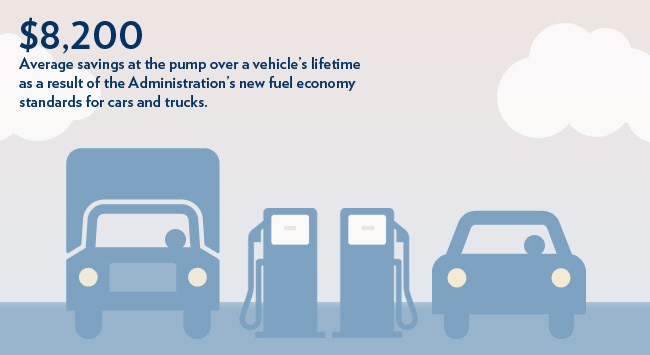
Posted by on January 26, 2009 at 6:30 PM ESTThis afternoon, in his second press briefing, White House Press Secretary Robert Gibbs fielded questions on energy independence, the stimulus package, and the auto industry. Here are some selected responses from the press conference.On the remaining bailout funds:"I do think what is incredibly important for you and for the American people to understand is the President believes that -- and outlined this to Congress before they voted -- we have to use the second $350 billion far differently than we used the first $350 billion to address the foreclosure crisis, to do so in a way that's transparent, so the American people will know where the money is going. There was a report today in the Wall Street Journal that many of the banks that had gotten money are actually lending less now that they have that money. That clearly has to change. The point of that money was to go to banks to free up lending, free up credit, capital…. We're going to change the way that money works to ensure that money that is injected into banks is used to provide small businesses with loans, to provide families with college or auto loans. We have to do so in a way that's transparent. And we have to make sure that there's some change in executive compensation as it relates to entities that participate in that program or get the money."On how today's memoranda regarding environmental policy might impact the nation's struggling auto industry:"The particular action that the President took today was to take legislation that Congress approved in December of 2007, and President Bush signed, and in January of 2009 implement changed CAFE standards for model year 2011. So I don't think it comes as any surprise to automakers or consumers that a change in our fuel mileage standards was on the horizon. In fact, between December of 2007 and October of 2010 -- which is when manufacturers begin the next model year -- we believe, and I've seen testimony from the auto companies, that changing those fuel mileage standards is certainly doable. The President wants to work with the auto industry to ensure that the fuel-efficient cars of tomorrow are produced and built here in America for Americans to buy. And I think that government working with the auto industry can ensure that we have a sustainable path toward the production or more fuel-efficient autos, that those fuel-efficient autos will be more appealing to American consumers, and that that can be a win-win for both. The actions that the President took today put us on the path when we realize a fuel efficiency standard of 35 miles to the gallon -- it's 27.5 now -- 35 miles to the gallon will constitute a savings of 2 million barrels of oil a day, which is roughly comparable to the amount of oil that we import each day from the Persian Gulf."And later, in response to a similar question:"I think what ultimately we'll come up with is something that moves along the twin goals of ensuring a strong manufacturing sector while at the same time ensuring that we take the necessary steps to reduce our dependence on foreign oil."In response to the question, What is a green job, anyway?, Gibbs replied:"Each year, at least at the end of last year, you had tax credits for wind energy jobs -- there's a one-year tax credit, right. And so the -- every year in August or September, there's a huge scurry to make sure that next year's tax credit is available. Well, if you're going to build a windmill [sector] the size of which is going to produce energy to lower the power costs of millions of Americans, there's some lead time that's involved. So in instituting a renewed tax credit in this economic stimulus bill to give the producers of wind energy some understanding of what's available for them to use in creating these jobs and to give them some economic certainty is important. That's just one example….You've got biofuel jobs. You've got solar projects. I think there's any number of clean energy jobs that can drive not only our path towards energy independence, but also a path towards creating jobs."There were also a lot of questions about the President's plans for bipartisanship. Gibbs said that President Obama will hear out Congressional Republicans in two meetings on Capitol Hill tomorrow -- first with the House GOP, then the Senate GOP."The President is very serious about this….[T]he job announcements today underscore the necessity that Washington not respond to the latest crisis simply by doing what Washington always does best and does more frequently, and that is get into too much of a back and forth and have important issues that the American people are concerned about become a political football. That's why the President is willing and eager to go first to have Republican leaders and Democratic leaders here, and now to go talk only with Republican leaders tomorrow to seek their input. And we hope that this is a process that will continue until the bill goes through Congress and the President has something that he can sign."The goal is to seek their input. He wants to hear their ideas. If there are good ideas -- and I think he assumes there will be -- that we will look at those ideas; that those ideas will go through a process in Congress; they'll be debated and voted on….And I think because of that bipartisan dialogue we'll create a better economic plan for the American people when all is said and done."
Learn more about Economy, Energy and EnvironmentFrom peril to progress (Update 1: Full Remarks)
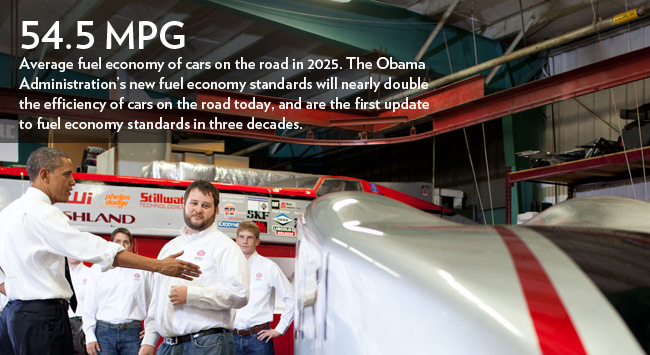
Posted by on January 26, 2009 at 4:35 PM EST"This moment of peril must be turned to one of progress," President Barack Obama said this morning, as he signed two Presidential Memoranda aimed at getting us on the path to energy independence.In what he called "a down payment on a broader and sustained effort to reduce our dependence on foreign oil," President Obama directed the Department of Transportation (DOT) to establish higher fuel efficiency standards for carmakers' 2011 model year. The standard, known as Corporate Average Fuel Economy (CAFE), was established in 1975 in the wake of the Arab Oil Embargo.The second memo paves the way for California and more than a dozen other states to raise emissions standards above and beyond the national standard. They'd asked to do so before, but the Bush administration had denied the request."Instead of serving as a partner, Washington stood in their way," President Obama said. "The days of Washington dragging its heels are over."Before he opened his remarks, President Obama took a moment to address the new raft of bad economic news of the past few days -- including job cuts at Microsoft, The Home Depot, and Sprint/Nextel.Read the President's full remarks below.
Remarks by the President
on Jobs, Energy Independence, and Climate Change
East Room of the White House
January 26, 2009Good morning. Before I begin today's announcement, I want to say a few words about the deepening economic crisis that we've inherited and the need for urgent action.Over the last few days we've learned that Microsoft, Intel, United Airlines, Home Depot, Sprint Nextel, and Caterpillar are each cutting thousands of jobs. These are not just numbers on a page. As with the millions of jobs lost in 2008, these are working men and women whose families have been disrupted and whose dreams have been put on hold.We owe it to each of them and to every, single American to act with a sense of urgency and common purpose. We can't afford distractions and we cannot afford delays. And that is why I look forward to signing an American Recovery and Reinvestment Plan that will put millions of Americans to work and lay the foundation for stable growth that our economy needs and that our people demand. These are extraordinary times and it calls for swift and extraordinary action.At a time of such great challenge for America, no single issue is as fundamental to our future as energy. America's dependence on oil is one of the most serious threats that our nation has faced. It bankrolls dictators, pays for nuclear proliferation, and funds both sides of our struggle against terrorism. It puts the American people at the mercy of shifting gas prices, stifles innovation and sets back our ability to compete.These urgent dangers to our national and economic security are compounded by the long-term threat of climate change, which if left unchecked could result in violent conflict, terrible storms, shrinking coastlines and irreversible catastrophe. These are the facts and they are well known to the American people -- after all, there is nothing new about these warnings. Presidents have been sounding the alarm about energy dependence for decades. President Nixon promised to make our energy -- our nation energy independent by the end of the 1970s. When he spoke, we imported about a third of our oil; we now import more than half.Year after year, decade after decade, we've chosen delay over decisive action. Rigid ideology has overruled sound science. Special interests have overshadowed common sense. Rhetoric has not led to the hard work needed to achieve results. Our leaders raise their voices each time there's a spike in gas prices, only to grow quiet when the price falls at the pump.Now America has arrived at a crossroads. Embedded in American soil and the wind and the sun, we have the resources to change. Our scientists, businesses and workers have the capacity to move us forward. It falls on us to choose whether to risk the peril that comes with our current course or to seize the promise of energy independence. For the sake of our security, our economy and our planet, we must have the courage and commitment to change.It will be the policy of my administration to reverse our dependence on foreign oil, while building a new energy economy that will create millions of jobs. We hold no illusion about the task that lies ahead. I cannot promise a quick fix; no single technology or set of regulations will get the job done. But we will commit ourselves to steady, focused, pragmatic pursuit of an America that is free from our energy dependence and empowered by a new energy economy that puts millions of our citizens to work.Today, I'm announcing the first steps on our journey toward energy independence, as we develop new energy, set new fuel efficiency standards, and address greenhouse gas emissions. Each step begins to move us in a new direction, while giving us the tools that we need to change.First, we must take bold action to create a new American energy economy that creates millions of jobs for our people. The American Recovery and Reinvestment Plan before Congress places a down payment on this economy. It will put 460,000 Americans to work, with clean energy investments and double the capacity to generate alternative energy over the next three years. It will lay down 3,000 miles of transmission lines to deliver this energy to every corner of our country. It will save taxpayers $2 billion a year by making 75 percent of federal buildings more efficient. And it will save working families hundreds of dollars on their energy bills by weatherizing 2 million homes.This is the boost that our economy needs, and the new beginning that our future demands. By passing the bill, Congress can act where Washington has failed to act over and over again for 30 years. We need more than the same old empty promises. We need to show that this time it will be different. This is the time that Americans must come together on behalf of our common prosperity and security.Second, we must ensure that the fuel-efficient cars of tomorrow are built right here in the United States of America. Increasing fuel efficiency in our cars and trucks is one of the most important steps that we can take to break our cycle of dependence on foreign oil. It will also help spark the innovation needed to ensure that our auto industry keeps pace with competitors around the world.We will start by implementing new standards for model year 2011 so that we use less oil and families have access to cleaner, more efficient cars and trucks. This rule will be a down payment on a broader and sustained effort to reduce our dependence on foreign oil. Congress has passed legislation to increase standards to at least 35 miles per gallon by 2020. That 40 percent increase in fuel efficiency for our cars and trucks could save over 2 million barrels of oil every day -- nearly the entire amount of oil that we import from the Persian Gulf.Going forward, my administration will work on a bipartisan basis in Washington and with industry partners across the country to forge a comprehensive approach that makes our economy stronger and our nation more secure.Third, the federal government must work with, not against, states to reduce greenhouse gas emissions. California has shown bold and bipartisan leadership through its effort to forge 21st century standards, and over a dozen states have followed its lead. But instead of serving as a partner, Washington stood in their way. This refusal to lead risks the creation of a confusing and patchwork set of standards that hurts the environment and the auto industry.The days of Washington dragging its heels are over. My administration will not deny facts, we will be guided by them. We cannot afford to pass the buck or push the burden onto the states. And that's why I'm directing the Environmental Protection Agency to immediately review the denial of the California waiver request and determine the best way forward. This will help us create incentives to develop new energy that will make us less dependent on oil that endangers our security, our economy, and our planet.As we move forward, we will fully take into account the unique challenges facing the American auto industry and the taxpayer dollars that now support it. And let me be clear: Our goal is not to further burden an already struggling industry. It is to help America's automakers prepare for the future. This commitment must extend beyond the short-term assistance for businesses and workers. We must help them thrive by building the cars of tomorrow, and galvanizing a dynamic and viable industry for decades to come.Finally, we will make it clear to the world that America is ready to lead. To protect our climate and our collective security, we must call together a truly global coalition. I've made it clear that we will act, but so too must the world. That's how we will deny leverage to dictators and dollars to terrorists. And that's how we will ensure that nations like China and India are doing their part, just as we are now willing to do ours.It's time for America to lead, because this moment of peril must be turned into one of progress. If we take action, we can create new industries and revive old ones; we can open new factories and power new farms; we can lower costs and revive our economy. We can do that, and we must do that. There's much work to be done. There is much further for us to go.But I want to be clear from the beginning of this administration that we have made our choice. America will not be held hostage to dwindling resources, hostile regimes, and a warming planet. We will not be put off from action because action is hard. Now is the time to make the tough choices. Now is the time to meet the challenge at this crossroad of history by choosing a future that is safer for our country, prosperous for our planet, and sustainable.Those are my priorities, and they're reflected in the executive orders that I'm about to sign. Thank you so much for being here.Learn more about Energy and EnvironmentPresident Barack Obama's Inaugural Address
Posted by on January 21, 2009 at 1:27 PM ESTYesterday, President Obama delivered his Inaugural Address, calling for a "new era of responsibility." Watch the video here:Viewing this video requires Adobe Flash Player 8 or higher. Download the free player.Inaugural AddressBy President Barack Hussein ObamaMy fellow citizens: I stand here today humbled by the task before us, grateful for the trust you've bestowed, mindful of the sacrifices borne by our ancestors.I thank President Bush for his service to our nation -- (applause) -- as well as the generosity and cooperation he has shown throughout this transition.Forty-four Americans have now taken the presidential oath. The words have been spoken during rising tides of prosperity and the still waters of peace. Yet, every so often, the oath is taken amidst gathering clouds and raging storms. At these moments, America has carried on not simply because of the skill or vision of those in high office, but because we, the people, have remained faithful to the ideals of our forebears and true to our founding documents.So it has been; so it must be with this generation of Americans.That we are in the midst of crisis is now well understood. Our nation is at war against a far-reaching network of violence and hatred. Our economy is badly weakened, a consequence of greed and irresponsibility on the part of some, but also our collective failure to make hard choices and prepare the nation for a new age. Homes have been lost, jobs shed, businesses shuttered. Our health care is too costly, our schools fail too many -- and each day brings further evidence that the ways we use energy strengthen our adversaries and threaten our planet.These are the indicators of crisis, subject to data and statistics. Less measurable, but no less profound, is a sapping of confidence across our land; a nagging fear that America's decline is inevitable, that the next generation must lower its sights.Today I say to you that the challenges we face are real. They are serious and they are many. They will not be met easily or in a short span of time. But know this America: They will be met. (Applause.)On this day, we gather because we have chosen hope over fear, unity of purpose over conflict and discord. On this day, we come to proclaim an end to the petty grievances and false promises, the recriminations and worn-out dogmas that for far too long have strangled our politics. We remain a young nation. But in the words of Scripture, the time has come to set aside childish things. The time has come to reaffirm our enduring spirit; to choose our better history; to carry forward that precious gift, that noble idea passed on from generation to generation: the God-given promise that all are equal, all are free, and all deserve a chance to pursue their full measure of happiness. (Applause.)In reaffirming the greatness of our nation we understand that greatness is never a given. It must be earned. Our journey has never been one of short-cuts or settling for less. It has not been the path for the faint-hearted, for those that prefer leisure over work, or seek only the pleasures of riches and fame. Rather, it has been the risk-takers, the doers, the makers of things -- some celebrated, but more often men and women obscure in their labor -- who have carried us up the long rugged path towards prosperity and freedom.For us, they packed up their few worldly possessions and traveled across oceans in search of a new life. For us, they toiled in sweatshops, and settled the West, endured the lash of the whip, and plowed the hard earth. For us, they fought and died in places like Concord and Gettysburg, Normandy and Khe Sahn.Time and again these men and women struggled and sacrificed and worked till their hands were raw so that we might live a better life. They saw America as bigger than the sum of our individual ambitions, greater than all the differences of birth or wealth or faction.This is the journey we continue today. We remain the most prosperous, powerful nation on Earth. Our workers are no less productive than when this crisis began. Our minds are no less inventive, our goods and services no less needed than they were last week, or last month, or last year. Our capacity remains undiminished. But our time of standing pat, of protecting narrow interests and putting off unpleasant decisions -- that time has surely passed. Starting today, we must pick ourselves up, dust ourselves off, and begin again the work of remaking America. (Applause.)For everywhere we look, there is work to be done. The state of our economy calls for action, bold and swift. And we will act, not only to create new jobs, but to lay a new foundation for growth. We will build the roads and bridges, the electric grids and digital lines that feed our commerce and bind us together. We'll restore science to its rightful place, and wield technology's wonders to raise health care's quality and lower its cost. We will harness the sun and the winds and the soil to fuel our cars and run our factories. And we will transform our schools and colleges and universities to meet the demands of a new age. All this we can do. All this we will do.Now, there are some who question the scale of our ambitions, who suggest that our system cannot tolerate too many big plans. Their memories are short, for they have forgotten what this country has already done, what free men and women can achieve when imagination is joined to common purpose, and necessity to courage. What the cynics fail to understand is that the ground has shifted beneath them, that the stale political arguments that have consumed us for so long no longer apply.The question we ask today is not whether our government is too big or too small, but whether it works -- whether it helps families find jobs at a decent wage, care they can afford, a retirement that is dignified. Where the answer is yes, we intend to move forward. Where the answer is no, programs will end. And those of us who manage the public's dollars will be held to account, to spend wisely, reform bad habits, and do our business in the light of day, because only then can we restore the vital trust between a people and their government.Nor is the question before us whether the market is a force for good or ill. Its power to generate wealth and expand freedom is unmatched. But this crisis has reminded us that without a watchful eye, the market can spin out of control. The nation cannot prosper long when it favors only the prosperous. The success of our economy has always depended not just on the size of our gross domestic product, but on the reach of our prosperity, on the ability to extend opportunity to every willing heart -- not out of charity, but because it is the surest route to our common good. (Applause.)As for our common defense, we reject as false the choice between our safety and our ideals. Our Founding Fathers -- (applause) -- our Founding Fathers, faced with perils that we can scarcely imagine, drafted a charter to assure the rule of law and the rights of man -- a charter expanded by the blood of generations. Those ideals still light the world, and we will not give them up for expedience sake. (Applause.)And so, to all the other peoples and governments who are watching today, from the grandest capitals to the small village where my father was born, know that America is a friend of each nation, and every man, woman and child who seeks a future of peace and dignity. And we are ready to lead once more. (Applause.)Recall that earlier generations faced down fascism and communism not just with missiles and tanks, but with the sturdy alliances and enduring convictions. They understood that our power alone cannot protect us, nor does it entitle us to do as we please. Instead they knew that our power grows through its prudent use; our security emanates from the justness of our cause, the force of our example, the tempering qualities of humility and restraint.We are the keepers of this legacy. Guided by these principles once more we can meet those new threats that demand even greater effort, even greater cooperation and understanding between nations. We will begin to responsibly leave Iraq to its people and forge a hard-earned peace in Afghanistan. With old friends and former foes, we'll work tirelessly to lessen the nuclear threat, and roll back the specter of a warming planet.We will not apologize for our way of life, nor will we waver in its defense. And for those who seek to advance their aims by inducing terror and slaughtering innocents, we say to you now that our spirit is stronger and cannot be broken -- you cannot outlast us, and we will defeat you. (Applause.)For we know that our patchwork heritage is a strength, not a weakness. We are a nation of Christians and Muslims, Jews and Hindus, and non-believers. We are shaped by every language and culture, drawn from every end of this Earth; and because we have tasted the bitter swill of civil war and segregation, and emerged from that dark chapter stronger and more united, we cannot help but believe that the old hatreds shall someday pass; that the lines of tribe shall soon dissolve; that as the world grows smaller, our common humanity shall reveal itself; and that America must play its role in ushering in a new era of peace.To the Muslim world, we seek a new way forward, based on mutual interest and mutual respect. To those leaders around the globe who seek to sow conflict, or blame their society's ills on the West, know that your people will judge you on what you can build, not what you destroy. (Applause.)To those who cling to power through corruption and deceit and the silencing of dissent, know that you are on the wrong side of history, but that we will extend a hand if you are willing to unclench your fist. (Applause.)To the people of poor nations, we pledge to work alongside you to make your farms flourish and let clean waters flow; to nourish starved bodies and feed hungry minds. And to those nations like ours that enjoy relative plenty, we say we can no longer afford indifference to the suffering outside our borders, nor can we consume the world's resources without regard to effect. For the world has changed, and we must change with it.As we consider the role that unfolds before us, we remember with humble gratitude those brave Americans who at this very hour patrol far-off deserts and distant mountains. They have something to tell us, just as the fallen heroes who lie in Arlington whisper through the ages.We honor them not only because they are the guardians of our liberty, but because they embody the spirit of service -- a willingness to find meaning in something greater than themselves.And yet at this moment, a moment that will define a generation, it is precisely this spirit that must inhabit us all. For as much as government can do, and must do, it is ultimately the faith and determination of the American people upon which this nation relies. It is the kindness to take in a stranger when the levees break, the selflessness of workers who would rather cut their hours than see a friend lose their job which sees us through our darkest hours. It is the firefighter's courage to storm a stairway filled with smoke, but also a parent's willingness to nurture a child that finally decides our fate.Our challenges may be new. The instruments with which we meet them may be new. But those values upon which our success depends -- honesty and hard work, courage and fair play, tolerance and curiosity, loyalty and patriotism -- these things are old. These things are true. They have been the quiet force of progress throughout our history.What is demanded, then, is a return to these truths. What is required of us now is a new era of responsibility -- a recognition on the part of every American that we have duties to ourselves, our nation and the world; duties that we do not grudgingly accept, but rather seize gladly, firm in the knowledge that there is nothing so satisfying to the spirit, so defining of our character than giving our all to a difficult task.This is the price and the promise of citizenship. This is the source of our confidence -- the knowledge that God calls on us to shape an uncertain destiny. This is the meaning of our liberty and our creed, why men and women and children of every race and every faith can join in celebration across this magnificent mall; and why a man whose father less than 60 years ago might not have been served in a local restaurant can now stand before you to take a most sacred oath. (Applause.)So let us mark this day with remembrance of who we are and how far we have traveled. In the year of America's birth, in the coldest of months, a small band of patriots huddled by dying campfires on the shores of an icy river. The capital was abandoned. The enemy was advancing. The snow was stained with blood. At the moment when the outcome of our revolution was most in doubt, the father of our nation ordered these words to be read to the people:"Let it be told to the future world...that in the depth of winter, when nothing but hope and virtue could survive... that the city and the country, alarmed at one common danger, came forth to meet [it]."America: In the face of our common dangers, in this winter of our hardship, let us remember these timeless words. With hope and virtue, let us brave once more the icy currents, and endure what storms may come. Let it be said by our children's children that when we were tested we refused to let this journey end, that we did not turn back nor did we falter; and with eyes fixed on the horizon and God's grace upon us, we carried forth that great gift of freedom and delivered it safely to future generations.Thank you. God bless you. And God bless the United States of America. (Applause.)Learn more about Defense, Economy, Energy and Environment, Fiscal Responsibility, Foreign Policy, Health Care, Service, Veterans
Related Videos
-
 May 09, 2014 8:21 AM
Inside the White House: Solar Panels
-
 September 01, 2016 8:25 PM
President Obama Delivers a Statement to the Press
White House Blogs
- The White House Blog
- Middle Class Task Force
- Council of Economic Advisers
- Council on Environmental Quality
- Council on Women and Girls
- Office of Intergovernmental Affairs
- Office of Management and Budget
- Office of Public Engagement
- Office of Science & Tech Policy
- Office of Urban Affairs
- Open Government
- Faith and Neighborhood Partnerships
- Social Innovation and Civic Participation
- US Trade Representative
- Office National Drug Control Policy