
Energy and Environment Latest News
A Guide for Regional Marine Planning
Posted by on July 19, 2013 at 4:23 PM EDTToday, the National Ocean Council released a Marine Planning Handbook to support the efforts of regions that choose to engage marine industries, stakeholders, the public, and government to advance their economic development and conservation priorities.
Each coastal region of the country has its own interests and ways of doing business, but all regions want to support their marine economies and coastal communities. Voluntary marine planning is a science-based tool that provides regionally tailored information that all ocean interests can use to reduce conflicts, grow ocean industries, and support the healthy natural resources that our economy and communities depend on.
Federal, state and local governments have a variety of roles and responsibilities when it comes to the ocean, and make decisions every day that impact ocean resources, industries and coastal communities. Regions that choose to do marine planning are guaranteeing that the public and marine stakeholders will shape these decisions early on, promoting better outcomes for everyone. Regions can define what they want to address and how they do so, in ways that reflect their unique interests and priorities. At the same time, some components of planning – like making sure the public and stakeholders have a chance to engage – are common to all regions. The Handbook provides guidance on how regions can address their priorities through a bottom-up, transparent, science-based process.
The Handbook reflects the extensive public and stakeholder input received in the development of the National Ocean Policy and its Implementation Plan. We will update it as needed to reflect the lessons learned in regions and ensure it continues to be a useful guide for successful, collaborative planning.
Read the Marine Planning Handbook here.
Deerin Babb-Brott is the National Ocean Council Director.
Learn more about Energy and EnvironmentReducing Wildfire Risk and Protecting Our Drinking Water in a Changing Climate
Posted by on July 19, 2013 at 11:44 AM EDTAmericans are all too familiar with the devastation catastrophic wildland fires can wreak on the landscape. Fire takes lives, destroys homes, impacts wildlife, and devastates millions of acres of valuable forests and grasslands every year. But what is lesser known is that these fires also severely damage watersheds—the very lands that provide clean and abundant drinking water for millions of Americans every day.
To address this problem, Agriculture Secretary Tom Vilsack and Interior Secretary Sally Jewell this week announced an historic agreement between the Department of Agriculture's Forest Service and the Department of the Interior’s Bureau of Reclamation to focus on proactively restoring forest lands around important watersheds and preventing costly, destructive wildfires in these areas.
The partnership is included in President Obama’s Climate Action Plan as a means to reduce wildfire risk, protect critical infrastructure, and lessen the impacts of climate change, which include higher risks of large and destructive wildfires. The damage caused to rivers, dams, and irrigation systems after a wildfire can be tremendous. Clearing out the sediment and ash left behind is costing the nation millions of dollars every year, and the impacts of climate change are expected to continue to intensify. Climate change also exacerbates dry conditions, which can slow the natural recovery time after a wildfire.
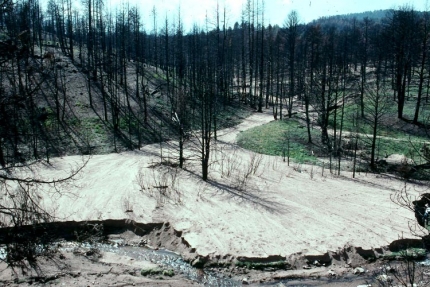
Heavy rains after a wildfire caused this heavy sediment deposit (Photo Credit: R. H. Meade, U.S. Geological Survey)
Learn more about Energy and EnvironmentMinimizing Healthcare’s Environmental Footprint
Posted by on July 17, 2013 at 3:38 PM EDT
Jeff Thompson is being honored as a Champion of Change for his work on the front lines to protect public health in a changing climate.
It wasn’t too long ago when you would rarely hear “healthcare” and “sustainability” in the same sentence. After all, many healthcare organizations thought their purpose was solely to take care of patients in a hospital or clinic. But at Gundersen Health System, headquartered in the Midwestern city of La Crosse, Wisconsin, we believe it is also our responsibility to help our patients and communities stay well, and part of that is caring for the health of the environment.
We started working on a number of projects in 2003, but in 2008 we took a hard look in the mirror. We knew that healthcare buildings are some of the most energy intensive buildings around (2.5 times more so than commercial office buildings according to the Department of Energy). We knew that our energy costs were rising at an alarming rate of $350,000 per year and growing, and those costs were being passed along to patients in the form of higher healthcare costs. We needed to take a hard look at our practices and take the necessary steps to improve our environmental impact. It was the right thing to do for our patients, our staff, and the communities we serve.
We developed our sustainability program, called Envision®, and set a goal that surprised many in the healthcare community: energy independence in 2014. As the CEO of Gundersen Health System, I can tell you that we’re on track to accomplish that goal through vigorous energy conservation measures and renewable energy partnerships.
Our Envision team started with “low hanging fruit.” An energy audit in 2008 opened our eyes to dozens of energy saving opportunities available. We examined our heating/cooling systems, lighting, and employee behavior and used a number of measures to improve energy efficiency and reduce energy demand. By the end of 2009, those efforts led to a 25 percent improvement in our energy efficiency. Our $2 million investment saves the organization more than $1 million every year in energy costs.
But energy conservation measures will only take us so far toward our energy independence goal. The rest will come from renewable energy projects. We tapped into a number of natural resources and several government entities and private businesses who saw the benefits of renewable energy partnerships for our communities. Some of our most successful projects are those we’ve accomplished with community partners.
For example, we worked with our local county government to use previously wasted methane gas from the landfill and turned it into a renewable energy source. The project created a revenue source for La Crosse County, saves our health system hundreds of thousands of dollars and made our Onalaska Campus 100 percent energy independent. We also partnered to develop a wind farm with the rural village of Cashton, Wisconsin, and Organic Valley, the largest cooperative of organic farms in the country. The wind farm generates enough electricity to power 1,000 homes. It is a source of income for both Gundersen and Organic Valley, and a source of pride for the people who live in Cashton.
Our goals are to decrease pollution and save healthcare dollars. Along the way, we have been able to inspire our staff and community with projects ranging from energy conservation and renewable energy to sustainable foods and waste management. Gundersen Health System is one of thousands of healthcare organizations in our country. If we all join together and work toward the same goal through programs like the Healthier Hospitals Initiative, think of the difference we can make in the health or our communities. Minimizing our environmental footprint is not just a trend. It’s the right thing to do for our patients, our communities and our country. We all just need to look in the mirror, understand we are part of the problem and take action to become part of the solution.
Jeff Thompson is Chief Executive Officer of Gundersen Health System.
Learn more about Energy and Environment, Health CareProtecting Human Health in a Changing Climate
Posted by on July 17, 2013 at 3:02 PM EDT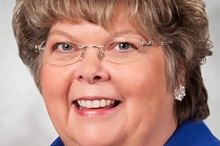
Therese Smith is being honored as a Champion of Change for her work on the front lines to protect public health in a changing climate.
Climate change and public health go hand in hand. Illustrating this point, in Healthy People 2020 the Department of Health and Human Services outlines its objective to promote health for everyone through a healthy environment. To do that, we must focus on six different areas including outdoor air quality, our homes and communities, ground water, toxic substances and hazardous wastes in our air, water and land, and our entire global environment.
My job as a public health professional is to try and make a difference one person at a time, one place at a time, if at all possible, by educating, volunteering, and letting people know that clean air is everyone’s responsibility—we all need to breathe it!
The American Lung Association of the Midland States has given me a platform to educate more people about the link between air quality and chronic conditions, such as lung disease, diabetes, and heart disease. As an advocate in various clean air campaigns, I continue to make sure that everyone everywhere gets the chance to breathe the cleanest air possible, both indoors and out.
I work in my community and across the state of Michigan through Blue Cross Blue Shield of Michigan as a Health Advocate and Chronic Condition Case Manager to educate members about lung disease and the importance of a healthy environment. I educate members with asthma, chronic obstructive pulmonary disease, and other respiratory illnesses that are affected by poor air quality.I make sure they understand how they can make small changes to protect their health on ozone action days, when weather conditions make it likely that ground-level ozone will approach unhealthy levels and are cautious about air pollutants to help improve their quality of life and hopefully their environment too.
I am currently working on my PhD in Public Policy and Administration with a focus on Health Policy to make a difference in changing the course of health policy – to make a difference in the world – so we can all breathe cleaner air.
Therese Smith is a Nurse.
Learn more about Energy and Environment, Health CareSupporting Military Readiness and Training through Environmental Conservation
Posted by on July 17, 2013 at 2:43 PM EDTLast week, the Obama Administration announced a new federal, local, and private sector collaboration that will preserve agricultural lands and restore and protect wildlife habitat, all while helping to sustain military readiness.
Known as the “Sentinel Landscapes” partnership, the effort is kicking off with a pilot at Joint Base Lewis-McChord, an important training facility for our troops in the South Puget Sound region of Washington State, and home to some of the last remaining native prairie habitat for wildlife in the state.
This unique convergence of landscapes comes with unique challenges. Namely, as development comes closer and closer to the base, at-risk species in the area take refuge in the only land that can’t be developed, the military base itself. The presence of these species can then bring restrictions to the base’s ability to engage in certain training activities.
In a unique collaboration, the U.S. Department of Agriculture, the U.S. Department of Interior, and the Department of Defense will work together and with private landowners and state and local partners, including the non-profit Center for Natural Lands Management, to preserve and restore habitat around the base to ensure at-risk species can survive, while also improving military readiness by ensuring training activities can proceed unimpeded.
Protecting Health in a Changing Climate
Posted by on July 17, 2013 at 2:26 PM EDT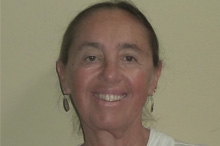
Dr. Linda Rudolph is being honored as a Champion of Change for her work on the front lines to protect public health in a changing climate.
In 2004, I was the local health officer and public health director in Berkeley, California. We worked to improve children’s health by making it easier for kids to walk or bike to school, promoting better access to healthy foods through community gardens and local farmers markets, and reducing exposures to chemicals and pollutants that trigger asthma. Do you see the connections to climate change? I didn’t, at first.
But as California began tackling climate change, two things quickly became apparent to me. First, the impacts of climate change exacerbate many of our most serious health problems – the very chronic diseases I was seeing in all of the communities I served, and which were (and continue to be) especially prevalent in low income communities with limited resources for health care. Second, many of the strategies that reduce greenhouse gas emissions and strengthen community resilience in the face of climate change are the very same strategies that help us to reduce obesity and chronic illness.
I now believe that climate change itself is the greatest health threat we face in the 21st century. I focus on climate change in my professional work, because if we don’t act urgently and comprehensively, climate change will undermine all our other public health efforts. I’ve also started advocating for climate action as a private citizen, in my personal time, because to truly move the needle (or thermometer) on climate change, we must also engage the passion, activism and voice of every American.
People everywhere care about their health and about the health and well-being of their children and grandchildren. But health workers have a critically important role to play in addressing climate change. We can connect the dots: warmer temperatures can mean higher ozone levels, longer pollen seasons, and more asthma and allergies. More droughts can mean higher food prices, greater food insecurity, and more obesity and diabetes.
Public health professionals can engage with community partners to identify assets and solutions that build community resilience and fight climate change at the same time. For example, parks and tree canopies soak up carbon and other pollutants, create safe places for kids to play and provide shade to help prevent heat illness. A healthy community design offers transportation options that increase physical activity, decrease air pollution and preserve nearby farmlands and open space.
We can find win-win solutions that fight carbon pollution and climate change, reduce health inequities, and improve the health of everyone in our communities, but it will take a different kind of public health work. It will require that we collaborate closely with those who work in transportation, housing, agriculture, and many other sectors, and that we engage deeply with people in the most vulnerable communities. All of us need to let our policy makers and leaders know that we need to act vigorously on climate change right now, to protect the health of our children, ourselves, our neighbors, and our communities.
My work has shown me that climate action can make our communities more vibrant, attractive and livable. It can make our food systems more diverse and sustainable, our air and water cleaner, and our communities greener and more walkable, all of which will have huge health benefits. In California, we’ve already begun to accomplish some of this, thanks to state climate change legislation championed across party lines and supported and strengthened by the involvement of public health professionals, community advocates and organizations, and residents of communities throughout the state. As a nation, we must do the same – work together to take climate change action that benefits our health now, and protects our health into the future.
Dr. Linda Rudolph is the Co-Director of Climate Change and Public Health Project at Public Health Institute.
Learn more about Energy and Environment, Health Care
- &lsaquo previous
- …
- 51
- 52
- 53
- 54
- 55
- 56
- 57
- 58
- 59
- …
- next &rsaquo
Related Videos
-
 May 09, 2014 9:21 AM
Inside the White House: Solar Panels
-
 September 01, 2016 9:25 PM
President Obama Delivers a Statement to the Press
White House Blogs
- The White House Blog
- Middle Class Task Force
- Council of Economic Advisers
- Council on Environmental Quality
- Council on Women and Girls
- Office of Intergovernmental Affairs
- Office of Management and Budget
- Office of Public Engagement
- Office of Science & Tech Policy
- Office of Urban Affairs
- Open Government
- Faith and Neighborhood Partnerships
- Social Innovation and Civic Participation
- US Trade Representative
- Office National Drug Control Policy