Health Care Blog
Two New Studies: Health Reform Benefits Small Business
Posted by on September 2, 2010 at 9:01 AM ESTUnder the old health care system, many businesses found it difficult, if not impossible to provide health insurance benefits to their workers. Over the past decade the percentage of small firms offering coverage decreased and many businesses have suffered under the weight of high health care costs.
The Affordable Care Act helps make it easier for employers to provide health benefits. This year, small businesses are eligible for health care tax credits and starting in 2014, small businesses with up to 100 employees will have access to state-based Small Business Health Options Program (SHOP) Exchanges, which will expand their purchasing power. Additionally, the Business Roundtable estimated that provisions in the legislation could save $3,000 per person in health costs.
Learn more about Health CareNew Resources for Employers and Unions to Help Keep Health Coverage Accessible and Affordable
Posted by on August 31, 2010 at 9:58 AM ESTIf you are an employer, you know how difficult it can be to find – and provide– health insurance for your retired employees who are age 55 or older and not yet eligible for Medicare.
Some Americans who retire before they are eligible for Medicare see their life savings disappear because of medical bills and exorbitant rates in the individual health insurance market. And the cost of insurance can be out of reach for individuals looking to buy health coverage on their own.
Many employers would like to help their employees make this transition comfortably and provide access to health insurance past retirement. But in these tough economic times, it is difficult for employers to keep up with skyrocketing health care costs for employees and retirees.
The Affordable Care Act’s Early Retiree Reinsurance Program will make it a little easier for employers to provide high-quality health benefits to their retirees.
Learn more about Health CareLandmark: Number of Donut Hole Rebate Checks Passes One Million
Posted by on August 30, 2010 at 1:14 PM ESTCross-posted from HealthCare.gov
On August 10th, you may have seen Jenny Backus’ post on HealthCare Notes noting that the third round of donut hole rebate checks went into the mail.
Recently, we hit a major milestone: the millionth check was sent out over the weekend.
If you haven’t heard about the rebate checks before, they are the first step in closing the prescription drug coverage gap under the Affordable Care Act. This gap is commonly referred to as the ‘donut hole.’ We know that many people with Medicare have tight budgets and some may skip or alter the medicines their doctors recommend they take in order to save money in the donut hole. That is dangerous and unacceptable. And that’s why the Affordable Care Act takes steps to close this coverage gap.This year, as qualifying people with Medicare enter the ‘donut hole,’ Medicare will send them a tax-free, one-time rebate check for $250. Next year, if you reach the ‘donut hole,’ you will receive a 50 percent discount when buying covered brand-name prescription drugs.
If you are eligible for this assistance, remember, you don’t need to do anything special to receive the check. People who qualify for the one-time check do not need to sign up, since their checks are mailed automatically when they enter the donut hole. So just make sure to check the mailbox.
Just a reminder: you should never give out personal information to anyone who is not a trusted source. If anyone asks for your personal information you are encouraged to contact 1-800-MEDICARE and report the inquiry. You can also visit www.stopmedicarefraud.gov for more information.
We hope that the latest round of checks will ease the burden on individuals recently entering the donut hole. This is just one of several ways that the Affordable Care Act strengthens Medicare so make sure you check out Medicare.gov and other areas of HealthCare.gov for more information.Don Berwick is Administrator of the Centers for Medicare and Medicaid Services
Learn more about Health CareAn Unexpected Answer on the Affordable Care Act & the Deficit
Posted by on August 27, 2010 at 12:24 PM ESTThroughout the debate on the Affordable Care Act, the Administration was focused on ways to bring down costs and decrease long term deficits - and independent analysts repeatedly validated these efforts as successful. But many critics continued to insist that the bill would somehow bust the budget anyway, despite proof to the contrary.
Well, to his credit perhaps, one Senator who opposed reform recently put his money where his mouth was, as they say, and asked the nonpartisan Congressional Budget Office (CBO) to examine the impact of repealing parts of the Affordable Care Act on the deficit over the next 10 years. As you have likely heard, some of those who opposed reform have adopted repeal as their new rallying cry, so the answer he got may have come as a bit of a surprise to him:
Finally, you asked what the net deficit impact would be if certain provisions of PPACA and the Reconciliation Act that were estimated to generate net savings were eliminated…If those provisions were repealed, CBO estimates that there would be an increase in deficits similar to its original estimate of $455 billion in net savings over that period.
In other words, repealing these provisions would add about $455 billion to the deficits over the next 10 years, hardly a contribution to our long term fiscal stability. As we say, we commend the Senator for his genuine concern for America’s budget deficits, a concern we have all clearly shared. We invite him and any others in Congress who opposed reform and who share that genuine concern to now embrace the Affordable Care Act as one of the most important deficit reduction laws in recent memory, which it clearly is.
The Affordable Care Act is already strengthening our health care system. Small businesses are eligible for tax cuts to help provide coverage to their employees, eligible seniors are receiving $250 checks to help with the cost of their prescription drugs and new consumer protections that put the American people in charge of their own care take effect in less than a month. Further, the new law strengthens the long-term viability of Medicare that millions of seniors depend on, by cutting waste and fraud, and increasing efficiency. It is also improving quality of care and giving consumers new benefits. But repealing the law means a larger budget deficit, and a health care system that gives insurance companies all the power.
As the CBO has once again made clear, we can’t afford to go back.
Stephanie Cutter is Assistant to the President for Special Projects
Learn more about Health CareStrengthening the Gulf's Health Care Infrastructure for Generations to Come
Posted by on August 27, 2010 at 11:02 AM ESTWe can’t look back on the five years since Hurricane Katrina ripped through Louisiana, Mississippi, and Alabama’s Gulf Coast communities without recognizing the extraordinary determination of the people who live there. When the wind subsided and the clouds cleared, more than 1800 people had lost their lives; and property damage was as high as $75 billion. But folks rolled up their sleeves and got to work.
Our job at the Department of Health and Human Services was to make sure the health system was there for them. There are families who have called the Gulf region home for generations, and they aim to call it home for generations to come. That’s why this Department worked quickly in the immediate aftermath of the storm to provide emergency services and supplies to the region, and it’s why we have set out to rebuild the health care infrastructure to meet Gulf communities’ long-term medical needs.
The Power of Information at Your Fingertips
Posted by on August 24, 2010 at 6:01 PM ESTCross-posted from HealthCare.gov
HealthCare.gov puts the power of information at your fingertips. Not only can you learn about how the Affordable Care Act affects you, but you can also search for both public and private health coverage options through a new, easy to use health insurance finder tool.
Based on your answers to a series of questions, the insurance finder produces a menu of potential coverage choices – personalized just for you.
We’ve made it even easier for you to search for coverage options (or help others search for them) by developing a widget that you can embed on your website. Check it out!
This widget is no longer available.
Todd Park is the Chief Technology Officer at the Department of Health and Human Services
Learn more about Health Care
- &lsaquo previous
- …
- 142
- 143
- 144
- 145
- 146
- 147
- 148
- 149
- 150
- …
- next &rsaquo
From the Press Office
Related Videos
-
 December 13, 2016 5:04 PM
Signing Ceremony for the 21st Century Cures Act
-
 December 10, 2016 5:00 AM
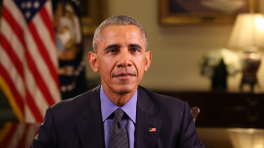
Weekly Address: It’s Time to Get Covered on the Health Insurance Marketplace