Health Care Blog
Secretary Sebelius Discusses Health Care Security
Posted by on January 8, 2010 at 11:00 AM ESTOver the Holidays we talked about the road to health reform beginning back in the Transition period a year ago with the Health Care Community Discussions. Another stretch of that road has been on HealthReform.gov, which has served as a one-stop shop for just about everything anybody would want to know about reform. Now, as we enter the final stretch of that road, Health and Human Services Secretary Kathleen Sebelius discusses how health reform will provide more security and stability for American families in her latest video update at the site.
Learn more about Health CarePutting It All in Perspective
Posted by on January 5, 2010 at 10:18 AM ESTWith Congress now needing only to combine ideas from the House and Senate versions of health insurance reform into one final bill to send the President, there is an unavoidable temptation among the media to focus on the five percent of differences between the two versions, instead of the remarkable 95 percent the bills have in common. But, even as difficult work does remain, it is important not to lose perspective of how far we have come and how close we are to the enacting health reform.
The reality is that the two versions of reform legislation are vastly similar – built upon a shared foundation that will provide stability and security for Americans with insurance, affordable options for those without, and lower costs for families, businesses, and the government.
Both the House and Senate versions of health insurance reform rest upon the following building blocks:
- Insurance reforms to protect consumers from insurance company worst-practices – like denying coverage based on pre-existing conditions, capping total coverage, and dropping or watering down coverage when you get sick and need it most
- Consumer protections that will restrict how much of your premium dollars insurance companies can spend on marketing, profits, salaries.
- Creation of a health exchange to increase consumer choice and guarantee coverage
- A commitment to expanding health coverage
- Affordable health options, with subsidies for working families and a hardship waiver
- Tax credits to help small businesses afford coverage
- Improvements in the health status of our population by investing in prevention and chronic disease management
- Making preventive care completely free – with no copayments or deductibles
- Lowering the cost of health care for our seniors
- Improving the quality and extending the life of Medicare
- Strengthening our primary care workforce
- Reforming the delivery system
- Ensuring that reform is not only fully paid for, but actually significantly reduces the federal deficit.
So as you follow the health reform debate in the media, don't fall prey to the cynicism and pessimism of a lot of the chattering class and remember that we are on the precipice of a historic accomplishment that will make a real difference in the lives of American families.
Dan Pfeiffer is White House Communications Director
Learn more about Health CareReality Check: Health Care Costs Under the Status Quo are the Real Danger
Posted by on January 5, 2010 at 6:00 AM EST
Today we got a striking reminder of what defenders of the status quo are defending, and the future that lies ahead if opponents of reform get their way. And this isn't fear-mongering based on some deceptive distortion as we so often hear from those opponents, it's cold hard facts.
Today, the actuaries at the Center for Medicare and Medicaid Services released a report and new data on health spending that confirms what families and businesses around this country already know: The need for health insurance reform is urgent. Rising health care costs are eating into family budgets, forcing employers to cut back; and health spending is taking up a greater and greater percentage of America’s economic output. The report, published in the journal Health Affairs, shows that health spending as a percentage of GDP has increased from 15.9 per cent in 2007 to 16.2 per cent in 2008. That means more than one in six dollars in this country is tied up in the health care system. The growth of health care spending is unsustainable. The time to act is now. America cannot wait any longer.
There is a glimmer of good news in the report: Health spending slowed somewhat compared to the the year before. The numbers are still shocking: National health spending reached $2.3 trillion, or $7681 per person in 2008: The highest in the world. And the reason the rate of spending slowed in this year was because of the economic slowdown. Employers and families were simply forced to cut back. Employers are spending less on health insurance because many no longer provide benefits to their workers. We know that many employers simply can’t afford the high cost. Many families who have lost their jobs and health insurance went without the care and prescription drugs they need.
Families are struggling to keep up with the cost of health care. The share of family income spent on health care grew from 5.3% to 5.9% in one year.
Government was also handed a higher bill. Health spending on Medicare grew by 8.6 percent, driven in part by the high cost of private Medicare Advantage plans. Health insurance reform legislation will eliminate wasteful overpayments to insurance companies while protecting guaranteed Medicare benefits and strengthening the Medicare Trust Fund.
The data make clear that our economy and our families can no longer afford the health care status quo. The reform proposals being considered in Congress will help drive down the cost of health care while strengthening Medicare for our seniors and improving the quality of care for all Americans. Changing the way we handle hospitalizations to prevent mistakes and unnecessary readmissions and creating incentives in the payment system to reward quality of care rather than just the quantity of care are just some of the important reforms that will help us achieve this critical goal.
And we are closer to passing these reforms than ever before. President Obama’s leadership and the hard work of members of Congress have brought us to an historic moment. After decades of waiting, 2010 will be the year we make health reform a reality.
Nancy-Ann DeParle is the Director of the White House Office of Health Reform
Learn more about Health CareOpponents of Reform Cry "Repeal," Vow to Fight On for the Insurance Industry
Posted by on December 30, 2009 at 6:00 AM ESTYesterday POLITICO reported that, before it even becomes law, opponents of health care reform – including former House Speaker Newt Gingrich – are already talking about repealing it. Certainly there is a fundamental disagreement here, since many opponents of reform – again including Gingrich – appear to think that insurance companies can do no wrong.
First, it does seem like another example of opposition at any cost to want to repeal a law before its even enacted.
Second, everyone should be very clear what is being called for here. At a time when insurance companies are finally about to be reined in, and when American families are finally about to be given control over their own health care, opponents of reform are advocating that insurance companies once again be allowed to run wild. Specifically, if they have their way.
- Insurance companies will once again be able to deny coverage to anyone with a pre-existing condition like diabetes, high blood pressure or asthma.
- Insurance companies will once again be able to drop coverage when you get sick and need it most.
- Insurance companies will once again be able to impose annual or lifetime caps on coverage and charge unlimited out-of-pocket expenses.
And here are some of the benefits that these opponents of reform would want to overturn:
- Make preventive care completely free – with no co-payments or deductibles.
- Provide tax credits to help small businesses and hard-working families afford quality coverage.
- Create a new insurance exchange – essentially a marketplace – where individuals and small businesses can compare cost and quality and shop for the plan that is right for them.
We’ve said it before here, but I’ll say it again: for President Obama, this isn’t about him or about the Democratic Party. It’s about solving a problem that we’ve talked about for decades – a crisis that is bankrupting American families, putting American companies out of business, and exploding our national deficit.
Dan Pfeiffer is White House Communications Director
Learn more about Health CareWhere the Road to Health Reform Began
Posted by on December 29, 2009 at 11:05 AM ESTAbout a year ago, those of us working on the Presidential Transition were taking the first steps on the road towards reforming our health care system under the Obama Administration. We knew that this wasn’t an academic issue or an issue just for the political scoreboards – we had to hear from the American people first on exactly what problems they were facing, and what they wanted to see changed.
And so in December 2008, we invited Americans across the country to host and participate in Health Care Community Discussions to talk about the problems they faced with the health care system and proposed solutions. Over 9,000 Americans in all 50 states and the District of Columbia signed up during the holiday season to host a Health Care Community Discussion, coming from every walk of life – patients, doctors, nurses, religious leaders, first responders, and small business owners. Robert from Indiana explained, “Our neighbors include a broad and diverse cross-section of America. Within a few miles we have steel mills, inner cities, suburbs, and farms...Our event will demonstrate…the level of understanding among Americans regarding the need for access [to health care] by all Americans, and ideas for achieving that goal.” Elizabeth from South Carolina noted that her discussion would “show everyone that even the true middle class is really struggling with this issue.” Across the country, over 30,000 friends, family, neighbors, and co-workers gathered in homes, offices, coffee shops, fire houses, universities, and community centers to discuss reforming our health care system.
After each Health Care Community Discussion, hosts were asked to submit the results of a Participant Survey as well as a report that summarized the group’s main concerns and suggestions. The health reform team and a group of dedicated volunteers read and analyzed 3,276 group reports, a process that was as rewarding and illuminating as it was time-consuming. When we held the White House Forum on Health Reform in March of this year, launching our push from the White House in earnest, President Obama received a final report on the Discussions: “Americans Speak on Health Reform: Report on Health Care Community Discussions.”
And now, as we move into the final stretch of this road towards the historic passage of health insurance reform, we wanted to take a look at how the legislation we’ve seen emerge from Congress addresses many of the concerns, questions, suggestions, and solutions we heard about a year ago.
Learn more about Health CareReality Check: For Opponents, It Was Never About the Bill
Posted by on December 24, 2009 at 12:50 PM ESTToday’s Republican talking point of the day is that the historic health reform bill passed today represents the first major piece of social legislation to be passed without a single vote from across the aisle.
Well that may be true. But it’s not a commentary on this bill. It’s a commentary on the Republican Party, whose leaders made a determination that they were going to put party over progress. That's never happened before when the nation took on big challenges.
President Obama made it clear from the very beginning of this process that he wanted to work with members of both parties to craft the best bill possible. He even kicked off his efforts by inviting stakeholders from across the political spectrum to the White House to share ideas.
Contrary to what one Republican Senator said today, Democrats did not “do the HELP Committee bill completely Democrat” without “even ask[ing] one Republican opinion.” In fact, they accepted more than 150 Republican amendments.
In putting together the Finance Committee bill, Senator Baucus held months of bipartisan discussions. The Committee held a day-long bipartisan health care summit, convened three bipartisan roundtables, and even issued three bipartisan policy papers laying out the options from which the Committee chose to craft its bill.
Once the bill hit the Senate floor, Republicans passed up the chance to offer constructive amendments. Instead they chose to obstruct votes and offer six separate motions to essentially start from scratch.
The sad truth is that Congressional Republican leaders decided early on that their best move was to “delay, define, and derail” reform – not to find common ground on a bill both parties could support. They made clear their hopes that health insurance reform would be President Obama’s “Waterloo” and that it would “break him” politically.
In the process, they lost sight of the fact that this was never about President Obama – it was about the families struggling to keep up with skyrocketing premiums; the small businesses forced to choose covering employees and staying afloat; the 15,000 Americans who lost insurance every day this year. Today’s vote was a victory for them.
Dan Pfeiffer is White House Communications Director
Learn more about Health Care
- &lsaquo previous
- …
- 174
- 175
- 176
- 177
- 178
- 179
- 180
- 181
- 182
- …
- next &rsaquo
From the Press Office
Related Videos
-
 December 13, 2016 5:04 PM
Signing Ceremony for the 21st Century Cures Act
-
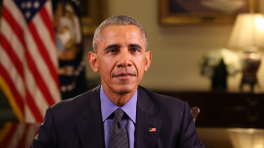 December 10, 2016 5:00 AM
Weekly Address: It’s Time to Get Covered on the Health Insurance Marketplace