Health Care Blog
In Any State, at Any Time: A Reminder of the Urgency of Health Reform
Posted by on February 9, 2010 at 5:34 PM ESTIn our current health insurance system, too many Americans are at the whim of private, for-profit insurance companies who are raking in billions in profits each year, while policyholders struggle to make ends meet in this tough economy. Insurance companies can raise premiums or slash benefits, and there's not much families can do about it, especially if they have preexisting conditions that would make it hard to get other coverage.
That is exactly what is playing out right now in California, where Anthem Blue Cross recently announced that on March 1, many of its 800,000 policyholders could see a rate increase of up to 39 percent. What's more, Anthem also declared that it may adjust rates more frequently than once-a-year, making it impossible for families to anticipate and plan for such increases.
For many Californians, including two individuals profiled by the LA Times, this is devastating news. Keith Knueven, a graphic designer in California, is about to see his health insurance rates climb by 37%, from $297 per month to $393. Mark Weiss, a podiatrist, and his wife will see their annual policy rise from $20,184 to $27,336 -- a 35% increase. And if that weren't enough, as these Americans are facing dramatic rate increases, Anthem's parent company WellPoint reported $2,740,000,000 in profits during the last quarter of 2009.
What's happening in California can happen in any state. It's clear that we need health insurance reform that will give American families the secure, affordable coverage they need and put a stop to insurance company abuses and control out-of-pocket costs. We're closer than ever to reforming our health insurance system. Now is the time to finish the job.
In the meantime, I think Californians and the American people deserve an explanation, so yesterday, I sent a letter to the President of Anthem Blue Cross. While Anthem has made some comments to the press, they haven't given us the full answer we deserve. I am eagerly awaiting their reply.
The letter I sent to Anthem Blue Cross is below.
Learn more about Health CareReaching Across the Aisle on Jobs and Health Reform
Posted by on February 9, 2010 at 4:31 PM ESTUPDATE: Read the invitation sent out for the bipartisan health reform meeting, as well as the invite list.
Following up on the unique conversation the President held with House Republicans at their retreat, the President invited bipartisan leadership from Congress to the White House to discuss job creation and the economy. Making a surprise appearance at the daily press briefing afterwards, the President relayed some thoughts on the meeting:
THE PRESIDENT: ...And at this critical time in our country, the people sent us here expect a seriousness of purpose that transcends petty politics. That's why I'm going to continue to seek the best ideas from either party as we work to tackle the pressing challenges ahead. I am confident, for example, that when one in 10 of our fellow citizens can't work, we should be able to come together and help business create more jobs. We ought to be able to agree on providing small businesses with additional tax credits and much needed lines of credit. We ought to agree on investments in crumbling roads and bridges, and we should agree on tax breaks for making homes more energy-efficient -- all of which will put more Americans to work. Many of the job proposals that I've laid out have passed the House and are soon going to be debated in the Senate. We spent a lot of time in this meeting discussing a jobs package and how we could move forward on that. And if there are additional ideas, I will consider them as well. What I won't consider is doing nothing in the face of a lot of hardship across the country.
This meeting was also in advance of a bipartisan summit on health reform that the President convened for February 25th. This meeting has already garnered significant attention, with Press Secretary Robert Gibbs making clear that while the meeting is very much about inviting valuable ideas from Republicans, it is by no means about backing away from the challenges facing the American people. The President laid out his expectations for a constructive conversation:
Q After meeting with you, John Boehner came out and told us, "The House can't pass the health care bill it once passed; the Senate can't pass the health care bill it once passed. Why would we have a conversation about legislation that can't pass?" As a part of that, he said you and your White House and congressional Democrats should start over entirely from scratch on health care reform. How do you respond? Are you willing to do that?
THE PRESIDENT: Well, here's how I responded to John in the meeting, and I've said this publicly before. There are some core goals that have to be met. We've got to control costs, both for families and businesses, but also for our government. Everybody out there who talks about deficits has to acknowledge that the single biggest driver of our deficits is health care spending. We cannot deal with our deficits and debt long term unless we get a handle on that. So that has to be part of a package.
Number two, we've got to deal with insurance abuses that affect millions of Americans who've got health insurance. And number three, we've got to make health insurance more available to folks in the individual market, as I just mentioned, in California, who are suddenly seeing their premiums go up 39 percent. That applies to the majority of small businesses, as well as sole proprietors. They are struggling.
So I've got these goals. Now, we have a package, as we work through the differences between the House and the Senate, and we'll put it up on a Web site for all to see over a long period of time, that meets those criteria, meets those goals. But when I was in Baltimore talking to the House Republicans, they indicated, we can accomplish some of these goals at no cost. And I said, great, let me see it. And I have no interest in doing something that's more expensive and harder to accomplish if somebody else has an easier way to do it.
So I'm going to be starting from scratch in the sense that I will be open to any ideas that help promote these goals. What I will not do, what I don't think makes sense and I don't think the American people want to see, would be another year of partisan wrangling around these issues; another six months or eight months or nine months worth of hearings in every single committee in the House and the Senate in which there's a lot of posturing. Let's get the relevant parties together; let's put the best ideas on the table. My hope is that we can find enough overlap that we can say this is the right way to move forward, even if I don't get every single thing that I want.
But here's the point that I made to John Boehner and Mitch McConnell: Bipartisanship can't be that I agree to all the things that they believe in or want, and they agree to none of the things I believe in and want, and that's the price of bipartisanship, right? But that's sometimes the way it gets presented. Mitch McConnell said something very nice in the meeting about how he supports our goals on nuclear energy and clean coal technology and more drilling to increase oil production. Well, of course he likes that; that's part of the Republican agenda for energy, which I accept. And I'm willing to move off some of the preferences of my party in order to meet them halfway. But there's got to be some give from their side as well. That's true on health care; that's true on energy; that's true on financial reform. That's what I'm hoping gets accomplished at the summit.
Learn more about Economy, Health CareGibbs Responds to Boehner, Cantor
Posted by on February 8, 2010 at 8:10 PM ESTWhite House Press Secretary Robert Gibbs just responded to a letter sent today from House Republican Leader John Boehner and House Republican Whip Eric Cantor regarding the proposed bipartisan health care summit:
The President is adamant that we seize this historic moment to pass meaningful health insurance reform legislation. He began this process by inviting Republican and Democratic leaders to the White House on March 5 of last year, and he’s continued to work with both parties in crafting the best possible bill. He’s been very clear about his support for the House and Senate bills because of what they achieve for the American people: putting a stop to insurance company abuses, extending coverage to millions of hardworking Americans, getting control of rising premiums and out-of-pocket costs, and reducing the deficit.
The President looks forward to reviewing Republican proposals that meet the goals he laid out at the beginning of this process, and as recently as the State of the Union Address. He’s open to including any good ideas that stand up to objective scrutiny. What he will not do, however, is walk away from reform and the millions of American families and small business counting on it. The recent news that a major insurer plans to raise premiums for some customers by as much as 39 percent is a stark reminder of the consequences of doing nothing.
Read HHS Secretary Kathleen Sebelius' letter to Anthem Blue Cross calling on them to publicly justify their extreme premium hikes at the same time their parent company sees soaring profits.
Learn more about Health CareForty Million Kids and Counting
Posted by on February 4, 2010 at 2:00 PM ESTOne year ago today, within weeks of taking office, President Obama signed into law a reauthorization of the Children's Health Insurance Program (CHIP). This legislation, along with provisions in the Recovery Act strengthening Medicaid, brought much-needed health coverage to millions of families.
The expansion of the Children's Health Insurance Program and the strengthening of Medicaid helped ensure 40 million kids from all across America could see a doctor if they got sick. It meant that, in the face of a recession, their parents did not have to choose between the health of their kids and paying rent or the heating bill. These programs have been critically important for families.
Taking a closer look at the last year, we found that millions of children's lives were changed as a result of these federal programs. An additional 2.6 million children gained coverage through Medicaid or the Children's Health Insurance Program during the 2009 fiscal year.
While we are proud of how far we've come, we think we can do better. There are millions of children who are eligible for Medicaid or the Children's Health Insurance Program, but don't have coverage.
That’s why we're challenging states, local governments, community-based organizations, health centers, faith-based organizations, as well as other federal departments to help enroll the 5 million children who are eligible for Medicaid or the Children's Health Insurance Program but do not currently have coverage. To do our part, we've already issued outreach grants, launched a new website, and brought together 500 people at a National Child Health Summit, and we will be doing much more to reach out to federal agencies and states on ways to cut out the red tape in enrollment and renewals. We will also be closely monitoring progress on all fronts.
We've compiled resources and information, both in English and in Spanish, in one website called www.InsureKidsNow.gov. This website offers state-specific information about the Children's Health Insurance Program and Medicaid for families and professionals.
Nothing is more important than the health and well-being of our children. We are determined to build on our existing efforts to cover kids and to make sure that no child goes without health care in America.
Kathleen Sebelius is Secretary of Health and Human Services
Learn more about Health CareThe First Lady Reflects and Looks Forward on the Today Show
Posted by on February 3, 2010 at 11:07 AM ESTIt's been a little over a year since First Lady Michelle Obama stepped into her role at the White House, and she sat down today with Matt Lauer from the Today Show and reflected on her time so far and her future goals -- click here to watch the video.
She noted that she would like to look back and feel like she affected somebody's life because she was here, which brings on her new initiative on childhood obesity, an increasing problem in the nation, since statistics show that one in three kids is obese. "The most shocking sort of reality that really hits you is that the young generation is on track for the first time in this nation’s history of being less healthy, having a shorter life span than their parents." The First Lady said the problem is solvable, and they will be striving for attainable goals, but the broad vision is to "change the health status of an entire generation."
On balancing her work with being a mother: "I find a level of comfort in that role." She acknowledged that there are challenges, but that she remains the same person she was before she entered the White House. "What people have seen over the course of the year is really Michelle." She maintained the same for the President, who she says despite challenges that face the nation, "handled the pressure with that same level of grace that he came here with."
Learn more about Health CareStill Not a "Government Takeover"
Posted by on January 31, 2010 at 12:21 PM ESTIn an appearance on a morning news show today, House Minority Leader John Boehner repeatedly charged that the health insurance reform bills being considered in Congress represent a “big government takeover” of health care.
It’s important to know that’s just not true. The claim of a “government takeover” is a time-worn attack raised by opponents of reform whenever real change is in sight. But the bills passed by the House and Senate would enact nothing of the sort.
The legislation would create a marketplace where private insurance companies would compete for business, and it would expand coverage by providing subsidies for Americans to purchase affordable coverage from private insurers. At the same time, the legislation would put the brakes on rising health care costs and put an end to insurance company abuses.
That's not a "government takeover": it's the solution to problems that have plagued our health care system for decades and slowed American competitiveness. And if the specifics sound familiar, it's because this legislation is very much like the bipartisan approach proposed by former Senate leaders Bob Dole, Howard Baker, and Tom Daschle, and the health care system supported by Senator-elect Scott Brown in Massachusetts.
Unfortunately, the knowing repetition of false claims has become a defining characteristic of this debate – and as the President said on Friday to House Republicans, that’s a loss for everyone:
“So I am absolutely committed to working with you on these issues, but it can’t just be political assertions that aren’t substantiated when it comes to the actual details of policy. Because otherwise, we’re going to be selling the American people a bill of goods.”
The President also stressed the broader point that in these trying times, the American people expect more from their elected officials than the same old political tactics:
“But we’ve gotten caught up in the political game in a way that’s just not healthy. It’s dividing our country in ways that are preventing us from meeting the challenges of the 21st century. I’m hopeful that the conversation we have today can help reverse that.”
If you haven’t seen the video of President Obama’s remarkable question-and-answer with House Republicans yet, you can check it out here.
Dan Pfeiffer is White House Communications Director
Learn more about Health Care
- &lsaquo previous
- …
- 171
- 172
- 173
- 174
- 175
- 176
- 177
- 178
- 179
- …
- next &rsaquo
From the Press Office
Related Videos
-
 December 13, 2016 5:04 PM
Signing Ceremony for the 21st Century Cures Act
-
 December 10, 2016 5:00 AM
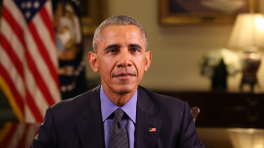
Weekly Address: It’s Time to Get Covered on the Health Insurance Marketplace