Health Care Blog
The President on Health Care: "We are Going to Get this Done"
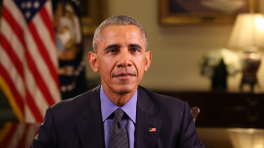
Posted by on July 17, 2009 at 4:42 PM ESTIn his remarks today at the White House, the President reiterated that health care reform cannot wait, and pledged to get it done this year. It is not the time to slow down, as consensus continues to build on the urgent need for reform. This week, the American Nurses Association and American Medical Association, two organizations who know the realities of health care firsthand, announced their support of legislation that will lower costs, expand coverage, and assure choice. The President explained that we are closer than ever before to passing real reform and this is not the time to slow down, pledging that the legislation will lower costs, expand coverage, assure choice and be deficit-neutral:In these past weeks, we've also built consensus around specific reforms on which there hasn't been consensus before. Let me list some of those. And I want to particularly applaud the efforts of the committees in the House and the Senate who have worked long and hard to make this progress. We're now at a point where most everyone agrees that we need to invest in preventative and wellness programs that can save us money and help lead healthier lives. We have an agreement on the need to simplify the insurance forms and paperwork that patients have to fill out everytime they go to a hospital or see a doctor. We have an agreement on the need to reform our health insurance system so if you lose your job, change your job, or start a small business, you can still get affordable health insurance. We have an agreement on the need to prevent insurance companies from denying coverage to Americans with pre-existing medical conditions. And we have agreement on the need for a health insurance exchange, a marketplace where people can compare prices and quality and choose the health care plan that best suits their needs. (President Barack Obama makes a statement on healthcare legislation in the Diplomatic Room of the White House, Friday, July 17, 2009. Official White House Photo by Lawrence Jackson)By cutting hundreds of billions in unnecessary spending and unwarranted giveaways to insurance companies, we can cover 2/3 of the costs just from these savings. The President also emphasized that the bill must also work to slow health care costs in the long run. He called for an independent board to help identify best practices and eliminate waste and ineffeciences:I realize there's going to be a lot of debate and disagreement on how best to achieve these long-term savings. Our proposal would change incentives so that providers will give patients the best care, not just the most expensive care, which will mean big savings over time. This is what we mean when we say that we need delivery system reform. I have proposed to Congress, and I am actually confident that they may adopt these proposals, that an independent group of doctors and medical experts will oversee long-term cost savings measures. Every year there's a new report that details how much waste and inefficiency there is in Medicare, how best practices are not always used, and how many billions of dollars could be saved. Unfortunately, this report ends up sitting on a shelf, and what we want to do is force Congress to make sure that they are acting on these recommendations to bend the cost curve each and every year so that we're changes that will reduce costs for families and for taxpayers. We need an independent group that is empowered to make these changes, and that's something that we've proposed. I'm confident that if we work with the foremost experts in the field, we can find a way to eliminate waste, slow the growth of health care costs, and provide families more security in the long term.
(President Barack Obama makes a statement on healthcare legislation in the Diplomatic Room of the White House, Friday, July 17, 2009. Official White House Photo by Pete Souza)The President concluded his remarks by emphasizing that reform will get done this year, because we cannot afford to wait:Now, I realize that the last few miles of any race are the hardest to run, but I have to say now is not the time to slow down, and now is certainly not the time to lose heart. Make no mistake, if we step back from this challenge at this moment, we are consigning our children to a future of skyrocketing premiums and crushing deficits. There's no argument about that. If we don't achieve health care reform, we cannot control the costs of Medicare and Medicaid and we cannot control our long-term debt and our long-term deficits. That's not in dispute. So we're going to have to get this done. If we don't get health care reform done now, then no one's health insurance is going to be secure because you're going to continue to see premiums going out-of-pocket costs going up at astronomical rates, and people who lose their jobs are having a pre-existing medical condition or changing their jobs finding themselves in a situation where they cannot get health care. And that’s not a future I accept for the United States of America. And that’s why those who are betting against this happening this year are badly mistaken. We are going to get this done. We will reform health care. It will happen this year.Learn more about Health CareBuilding a Bipartisan Consensus
Posted by on July 16, 2009 at 2:59 PM ESTContinuing his effort to deal with Senators and Representatives of both parties in good faith, the President met with Republican Senator Olympia Snowe of Maine and Democratic Senator Ben Nelson of Nebraska today at the White House, where they discussed the progress of health care legislation currently being crafted by the Senate.
(President Barack Obama meets with Senator Ben Nelson of Nebraska to discuss health care reform in the Oval Office, July 16, 2009. Official White House Photo by Pete Souza)
Learn more about Health CareMore Stable and Secure Health Care For Seniors
Posted by on July 16, 2009 at 1:00 PM ESTVice President Biden and members of the Middle Class Task Force just concluded a health care reform discussion in Alexandria, Virginia. Along with Health and Human Services Secretary Kathleen Sebelius, White House Office of Health Reform Director Nancy-Ann DeParle, and Barry Rand, CEO of AARP, the Vice President led a discussion with older Americans on how reforming health care will lower costs, cut waste, create stability and improve quality for them. (Vice President Joe Biden speaks at a Middle Class Task Force meeting on healthcare at Dr. Oswald Durant Memorial Center in Alexandria, Virginia, Thursday, July 16, 2009. Official White House Photo by David Lienemann)As health reform advances this summer, it’s important to recognize the benefits for two key groups that are all too familiar with the toll rising costs of health care are taking on their security: seniors and early retirees aged 50-64.Seniors face increasing health care costs while living off of fixed incomes – a situation that often forces them to make tough decisions– like cutting doses of important drugs to save money. The Medicare Doughnut Hole – the gap in prescription drug coverage that millions of seniors fall into- costs seniors a total of $15 billion dollars a year.Health care reform will help close that gap by providing deep discounts for medications for seniors who are stuck in that hole and allowing seniors to access more affordable generic drugs. Health reform will also ensure Medicare beneficiaries access to their doctors, fund 100% of preventative care, and cut the bureaucracy between seniors and their doctors by simplifying paperwork, computerizing medical records, and making sure that forms are easy to read for seniors. Health reform will prevent any insurance company from denying coverage based on a person’s underlying health status, and it will end discrimination that charges you more if you’re sick.
 (Health and Human Services Secretary Kathleen Sebelius answers a question along with President Joe Biden during a Middle Class Task Force meeting on healthcare at Dr. Oswald Durant Memorial Center in Alexandria, Virginia, Thursday, July 16, 2009. Official White House Photo by David Lienemann)Americans aged 50-64 are often the most at vulnerable and at risk in the current health care system. Too young for Medicare, they experience sky high insurance premiums and costs because of their age. Premiums for 50-64 year olds buying coverage on the open market were three times that of their peers who were lucky enough to have employer coverage. And that’s for people who aren’t automatically excluded because of a pre-existing condition.Health care reform will lower costs for 50-64 year old Americans by providing assistance to employer health plans to encourage them to cover recent retirees and by giving individuals access to an insurance exchange where participants will be able to compare prices of health plans – including a public plan - and decide which option is right for them. Individuals will be eligible for help paying for insurance in the exchange based on their income. And in order to market a plan in the Exchange, insurance companies will have to comply with its rules: no denial of coverage for pre-existing conditions; no discrimination based on age; and fair prices, for good benefits.
 (Vice President Joe Biden kneels on the floor to talk to a woman in a wheelchair after a Middle Class Task Force meeting on healthcare at Dr. Oswald Durant Memorial Center in Alexandria, Virginia, Thursday, July 16, 2009. Official White House Photo by David Lienemann)Everyone will have the security of knowing that if they lose their job, or if someone in their family develops a chronic disease or has a pre-existing condition, they will be able to find affordable health care for their families in the exchange.Vice President Biden and the Middle Class Task Force are working to ensure that as Americans age, their care is stable and secure, affordable and effective.Terrell McSweeny is Domestic Policy Advisor to the Vice PresidentLearn more about Health Care, Seniors and Social Security
Nurses Join the Call for Health Care Reform
Posted by on July 15, 2009 at 2:14 PM ESTViewing this video requires Adobe Flash Player 8 or higher. Download the free player.download .mp4 (104.3) | read the transcriptThis afternoon the President was joined by members of the American Nurses Association in the Rose Garden, where he spoke strongly on the urgent need for health care reform. He explained that the status quo is not an option, and that deferring reform is akin to defending that status quo.The President praised nurses as an essential component to our health care system, saying without them, many in underserved areas would not receive health care at all. Because they work so closely with patients, nurses know as well as anybody why reform is desperately needed:And that's why it's safe to say that few understand why we have to pass reform as intimately as our nation's nurses. They see firsthand the heartbreaking costs of our health care crisis. They hear the same stories that I've heard across this country -- of treatment deferred or coverage denied by insurance companies; of insurance premiums and prescriptions that are so expensive they consume a family's entire budget; of Americans forced to use the emergency room for something as simple as a sore throat just because they can't afford to see a doctor.And they understand that this is a problem that we can no longer defer. We can't kick the can down the road any longer. Deferring reform is nothing more than defending the status quo -- and those who would oppose our efforts should take a hard look at just what it is that they're defending. Over the last decade, health insurance premiums have risen three times faster than wages. Deductibles and out-of-pocket costs are skyrocketing. And every single day we wait to act, thousands of Americans lose their insurance, some turning to nurses in emergency rooms as their only recourse.Rising costs are unsustainable, which is why reform benefits all Americans, whether they are insured or not. The President assured that those who like their health care can keep it, and reform will save you money by bringing down costs, providing more choices, and keeping insurance companies honest. Inaction is not an option, but real progress is being made. The President commended the hard work being done in Congress as key committees in the House and Senate have put forth their plans:Yesterday, the House introduced its health reform proposal. Today, thanks to the unyielding passion and inspiration of our friend Ted Kennedy, and to the bold leadership of Senator Chris Dodd, the Senate HELP Committee reached a major milestone by passing a similarly strong proposal for health reform. It's a plan that was debated for more than 50 hours and that, by the way, includes 160 Republican amendments -- a hopeful sign of bipartisan support for the final product, if people are serious about bipartisanship.Both proposals will take what's best about our system today and make it the basis for our system tomorrow -- reducing costs, raising quality, and ensuring fair treatment of consumers by the insurance industry. Both include a health insurance exchange, a marketplace that will allow families and small businesses to compare prices, services, and the quality, so they can choose the plan that best suits their needs. And among the choices available would be a public health insurance option that would make health care more affordable by increasing competition, providing more choices, and keeping insurance companies honest. Both proposals will offer stability and security to Americans who have coverage today, and affordable options to those who don't.
The President emphasized that we will get health care reform done, because Americans need reform to succeed: for the patients, families, businesses, hospitals, doctors and nurses:
America's nurses need us to succeed, not just on behalf of the patients that they sometimes speak for. If we invest in prevention, nurses won't have to treat diseases or complications that could have been avoided. If we modernize health records, we'll streamline the paperwork that can take up more than one-third of the average nurse's day, freeing them to spend more time with their patients. If we make their jobs a little bit easier, we can attract and train the young nurses we need to make up a nursing shortage that's only getting worse. Nurses do their part every time they check another healthy patient out of the hospital. It's now time for us to do our part.Learn more about Health CareDr. Regina Benjamin: Nominee for Surgeon General
Posted by on July 13, 2009 at 11:49 AM ESTViewing this video requires Adobe Flash Player 8 or higher. Download the free player.download .mp4 (159.8 MB) | read the transcript
The President announced his nominee for the U.S. Surgeon General, Dr. Regina Benjamin, today at the White House. Dr. Benjamin has an extensive and distinguished career in medicine. She is the Founder and CEO of the Bayou La Batre Rural Health Clinic in Alabama, which aims to provide primary care to people of any age regardless of their financial situation. She previously served as Chair of the Federation of State Medical Boards of the United States, and as the Associate Dean for Rural Health at the University of South Alabama College of Medicine. Additionally, she was chosen as President of the Medical Association of Alabama in 2002, becoming the first African-American woman to be president of a state medical society. She was also the first African-American woman and physician under 40 to be elected to the American Medical Association Board of Trustees. She received the Nelson Mandela Award for Health and Human Rights in 1998, among other honors.The President emphasized this experience in his remarks, chronicling her dedication to providing health care for her rural community in the face of adversity:And that's why, even though she could have left the state to make more money as a specialist or as a doctor in a wealthier community, Regina Benjamin returned to Alabama and opened a small clinic in Bayou La Batre.When people couldn't pay, she didn't charge them. When the clinic wasn't making money, she didn't take a salary for herself. When Hurricane George destroyed the clinic in 1998, she made house calls to all her patients while it was rebuilt. When Hurricane Katrina destroyed it again and left most of her town homeless, she mortgaged her house and maxed out her credit cards to rebuild that clinic for a second time. She tended to those who had been wounded in the storm, and when folks needed medicine, she asked the pharmacist to send the bill her way.
And when Regina's clinic was about to open for the third time, and a fire burned it to the ground before it could serve the first patient, well, you can guess what Dr. Benjamin did. With help from her community, she is rebuilding it again. One disabled patient brought her an envelope with $20 inside. Another elderly man said simply, "Maybe I can help. I got a hammer."
For nearly two decades, Dr. Regina Benjamin has seen in a very personal way what is broken about our health care system. She's seen an increasing number of patients who've had health insurance their entire lives suddenly lose it because they lost their jobs or because it's simply become too expensive. She's been a relentless promoter of prevention and wellness programs, having treated too many costly and -- diseases and complications that didn't have to happen. And she's witnessed the shortage of primary care physicians in the rural and underserved areas where she works.
But for all that she's seen and all the tremendous obstacles that she has overcome, Regina Benjamin also represents what's best about health care in America -- doctors and nurses who give and care and sacrifice for the sake of their patients; those Americans who would do anything to heal a fellow citizen.
 (President Barack Obama with Surgeon General nominee Dr. Regina Benjamin in the Rose Garden of the White House, July 13, 2009. Official White House Photo by Lawrence Jackson)As the President explained, through this personal experience working with the poor and uninsured, Dr. Benjamin understands firsthand the urgent need for health care reform. As Surgeon General, she will be the people’s health advocate, and will play a key role in health care reform. In her remarks, Dr. Benjamin explained how she sees her role:My hope, if confirmed as Surgeon General, is to be America's doctor, America's family physician. As we work toward a solution to this health care crisis, I promise to communicate directly with the American people to help guide them through whatever changes may come with health care reform.
 (Dr. Regina Benjamin, President Barack Obama's Surgeon General nominee, at the announcement in the Rose Garden of the White House, Monday, July 13, 2009. Official White House Photo by Lawrence Jackson)Learn more about Health Care
Blogging To the Middle: Rising Health-Care Costs and Small Businesses
Posted by on July 10, 2009 at 12:28 PM ESTMary Anne Murray is a small-business owner in Newark, Delaware. Her home care company serves hundreds of senior citizens providing home health-care services. As a small-business owner, Mary Anne faces the challenge of providing health-care insurance to her employees in the face of rising health-care costs. Currently, Mary Anne is able to cover her full-time employees but worries how rising health-care costs will affect her workers and company’s competitiveness.
Across America, the Middle Class Task Force hears stories just like Mary Anne’s. Small businesses are facing higher costs, fewer options, and decreasing coverage. As a result, employers are forced to make tough choices between offering health insurance to their employees or staying competitive in a 21st-century economy by cutting back on health insurance for their workers or even getting rid of it altogether.
Today, the Middle Class Task Force hosted a roundtable discussion on the rising costs of health care for small-business owners and employees and heard first-hand accounts of the tolls that high costs are taking on middle-class families across America. Vice President Biden and Secretary Sebelius led the discussion with small-business owners and employees.

The Middle Class Task Force today also released a report examining how the current health-care system has failed the middle class and why we must enact health-care reform this year.
The status quo is unsustainable. We must enact health-care reform that will help Mary Anne and the thousands of small-business owners like her by giving them access to a health insurance marketplace—an exchange—where they will be able to compare prices of health plans and choose the one that works best for them. In order to market a plan in the exchange, insurance companies will have to comply with its rules: No denial of coverage for pre-existing conditions; limits on premium variation related to age; fair prices, for decent benefits; and guaranteed renewal of coverage. For small businesses, administrative costs will be lower and plans will be more affordable.
As health-care reform moves forward, President Obama, Vice President Biden, and other task-force members will work to ensure that small-business owners and employees aren’t bogged down by the burden of high health-care costs. President Obama and Vice President Biden believe that no employers should have to choose between staying competitive and providing health care for their employees, and that’s why this administration is working to make sure that small-business owners like Mary Anne don’t have to make that choice.
Visit the Middle Class Task Force website and provide us with your story about how rising health-care costs have affected your family.
(Vice President Joe Biden is photographed by a an attendee of the healthcare roundtable in room 350 of the EEOB, Friday, July 10, 2009. Official White House Photo by David Lienemann)
Terrell McSweeny is Domestic Policy Advisor to the Vice President.Learn more about Economy, Health Care
- &lsaquo previous
- …
- 199
- 200
- 201
- 202
- 203
- 204
- 205
- 206
- 207
- …
- next &rsaquo
From the Press Office
Related Videos
-
 December 13, 2016 5:04 PM
Signing Ceremony for the 21st Century Cures Act
-
 December 10, 2016 5:00 AM
Weekly Address: It’s Time to Get Covered on the Health Insurance Marketplace