Health Care Blog
Streaming at Noon: Health Care Stakeholder Discussion on Health Disparities and Health Reform
Posted by on June 9, 2009 at 10:10 AM ESTWatch the live-stream. [UPDATE: This event has now concluded.]In discussing health reform, it is always difficult to conceive of what the statistics really mean when every individual represented has their own story of heart-wrenching decisions, cascading consequences, and tragedy compounded by frustration. Nowhere is that more true than when it comes to the disparities in health care that minorities and low-income Americans see, as the new report from HHS makes clear:Reduced Access to CareAccess to quality care is vital to overall health and wellness, and health insurance plays a key role. In the United States, racial and ethnic minorities and low-income populations experience serious disparities in rates of insurance and access to health care.Health Insurance
More than one in three Hispanics and American Indians – and just under one in five African Americans – are uninsured. In comparison, only about one in eight whites lacks health insurance.Four in 10 low-income Americans do not have health insurance, and half of the nearly 46 million uninsured people in the United States are poor. About one-third of the uninsured have a chronic disease, and they are six times less likely to receive care for a health problem than the insured. In contrast, 94% of upper-income Americans have health insurance.Lack of a Primary Care Provider and Usual Source of Care
A primary care provider and a facility where a person receives regular care substantially improve health outcomes. However, Hispanics are only half as likely to have a usual source of care as whites. What's more, half of Hispanics and more than a quarter of African Americans do not have a regular doctor, compared with only one fifth of whites.Low-income Americans are three times less likely to have a usual source of care compared to those with higher incomes – and almost half of low-income Hispanics lack a usual source of care.Read the full report, watch the live-stream, or read the live-blog from Rebecca Adelman of HHS below once this event starts.1:40: The meeting just concluded with loud applause. Secretary Sebelius thanked the stakeholders for their remarks today, and their work every day on these issues. She said as we work to enact health care reform legislation this year, she is very committed to also working within HHS to address these alarming health care disparities.1:34: Nancy Zirkin from the Leadership Conference on Civil Rights is affirming the importance of improving data collection in underserved communities. We must learn the causes of health problems in minority communities to learn to what extent genetics or the environment are factors.1:27: As the meeting begins to wind down, Rea Panares, Director of Minority Health Initiatives at Families USA, says that this conversation about health care reform is a new opportunity to close the gap in health care access and quality for minorities.1:25: Barbara Kornblau with the Special Olympics is asking the stakeholders and Administration officials gathered to keep Americans with disabilities part of the conversation around health disparities, as disabilities can confront members of any ethnic or racial group.1:15: Obesity is one of the major topics of discussion today. According to the new HHS report, seven out of ten African-Americans aged 18-64 are obese or overweight. This statistic points to another problem, which is that many ethnic and racial minorities. do not have a primary care physician who could educate them of the importance of prevention and the dangers of obesity. More than a quarter of African-Americans and half of Hispanics do not have a regular doctor, according to the report.1:05: Stacey Bohlen, Executive Director of the National Indian Health Board, just spoke passionately about health care conditions in Indian Country. "The disease we suffer from is anonymity," she said. The health care system, despite help from the Indian Health Service and private programs in tribal areas, is starving. She is urging the Administration to focus on obtaining more data about the health of Native Americans, and she also highlights that most of the diseases plaguing tribal communities such as diabetes, alcoholism, heart disease, and HIV/AIDS are preventable.12:55: Secretary Sebelius cites the new HHS report on health care disparities in the United States, singling out a few dramatic statistics. 48 percent of African-American adults have chronic diseases, and the rate of HIV/AIDS infection among African-Americans is seven times that of White men and women. She notes that minorities are more likely to be uninsured and are less likely to have access to quality care when they need it. We are here today, she says, because we all agree the system is broken, and we have to all work together to do something about it.12:45: Office of Public Engagement Director Tina Tchen opens by encouraging the stakeholders to stay involved in the health reform effort after this meeting concludes. We are at a critical juncture, she says, and your continued involvement will help push is over the top.12:40: Nancy-Ann DeParle, OPE Director Tina Tchen and HHS Secretary Sebelius just opened the Health Disparities Stakeholder Discussion on the fourth floor of the Old Executive Office Building. Gathered here with them are 26 representatives of racial, ethnic, and other minority groups to discuss persisting disparities in our health care system. Nancy-Ann DeParle says in her opening remarks that the issue of health care disparities is both a health issue and a civil rights issue that we must resolve. Who you are, where you are from, and how much money you have should not determine your ability to access quality health care, she says.Learn more about Civil Rights, Health CareWeekly Address: President Obama Calls for Real Health Care Reform
Posted by on June 5, 2009 at 10:59 PM ESTThe President makes clear that as Congress works through health care reform legislation, it must include fundamental changes that lower costs, ensure Americans have choices, and establish access to quality, affordable health care for all Americans. "But what we can’t welcome," the President says, "is reform that just invests more money in the status quo – reform that throws good money after bad habits."Viewing this video requires Adobe Flash Player 8 or higher. Download the free player.Learn more about Health CareStreaming at 12:30: Health Care Stakeholder Discussion with Women’s Groups
Posted by on June 5, 2009 at 9:30 AM ESTToday the White House holds another Health Care Stakeholder Discussion, this time with women’s groups, and keeping with the tradition of transparency in these meetings that goes back to the original White House Forum on Health Reform, it will be streamed at our very own WhiteHouse.gov/live.Watch the meeting at WhiteHouse.gov/live. [UPDATE: This event has concluded]There’s no question that the problems with the current health care system affect everybody, but as the recent HHS report demonstrated women in particular are struggling with rising health care costs and finding quality, affordable health care. Today’s discussion will be hosted by White House Office of Health Reform Director Nancy-Ann DeParle, Domestic Policy Council Director Melody Barnes, and Office of Public Engagement Director Tina Tchen, who also joined HHS Secretary Sebelius at a roundtable with women small business owners a few weeks ago.
Rebecca Adelman of the Department of Health and Human Services gives us a play-by-play:12:35: In the final minutes of the meeting, the discussion revolved around ways these stakeholder groups can help in the health reform effort. Many participants noted the strong enthusiasm for health care reform around the country, and the importance of a public education plan as details of the proposal are announced. As Tina Tchen closed the meeting by expressing her intention to work in cooperation with the stakeholder groups in the months ahead, several participants praised the administration for understanding that health care reform is not just a top down process, but a bottom up process.
12:20: There is wide agreement about the need for health care reform among the diverse constituencies at the meeting. Sabrina Corlette, Director of Health Policy Programs at the National Partnership of Women and Families, notes that as a plan is crafted in Congress, it is crucially important that the plan's details are transparent and easily understandable so that women and their families can make informed choices about their health care options.
12:05: The shortage.of nurses and primary care physicians is another issue about which many of the participants are expressing concern. Some women in America have health insurance, but no doctors, or they visit their OB-GYN as their primary care physician because of doctor shortages in many communities.
11:49: The impressive group of stakeholders are delving quickly into the issues of health care quality and affordability. How do we address health care disparities? How do we achieve equity in health care? Many of the participants are emphasizing that women are required to pay more for health care coverage than men, excluding the cost of maternity coverage. Marcia Greenberger, Co-President of the National Women's Law Center, says that the issue of affordability cannot be underscored enough.
11:38: Tina Tchen and Melody Barnes thank the stakeholders for joining the meeting. Both are expressing how much of a priority health care reform is for President Obama this year. Melody Barnes explains that as she traveled around the country for the Regional White House forums on health reform over the past three months, she heard stories that she brings with her to work every day. Neera Tanden, Counselor to HHS Secretary Sebelius, says that now is the moment when our work on health care reform over the last decade could come to fruition: "This is the moment where the rubber hits the road."11:35: Nancy-Ann DeParle just opened the Women's Health Care Stakeholder meeting. This is a remarkable gathering of 30 women who are here to discuss how we can make the health care system work for women. Premiums in the private market for young women are often higher than they are for men, and 21 million women and girls went without health insurance in 2007. To set the scene: sitting beside Nancy-Ann at the table are Melody Barnes, Director of the Domestic Policy Council at the White House, Director of the Office of Public Engagement Tina Tchen, and HHS's Neera Tanden. Nancy-Ann emphasized in her opening remarks that this meeting is just one way we are hearing from women as we work to reform our health care system this year.Learn more about Health Care, WomenThe President Spells Out His Vision on Health Care Reform
Posted by on June 3, 2009 at 1:56 PM ESTYesterday the President met with some key Senators on health reform, emphasizing the urgency of the situation in his remarks beforehand: "So we can't afford to put this off, and the dedicated public servants who are gathered here today understand that and they are ready to get going, and this window between now and the August recess I think is going to be the make-or-break period. This is the time where we've got to get this running."Today the White House released a letter sent by the President to Senators Ted Kennedy and Max Baucus, the Chairmen of the key committees in the Senate handling health care reform, spelling out in detail what he would like to see in this historic legislation. The full letter is below:
June 2, 2009The Honorable Edward M. Kennedy
The Honorable Max Baucus
United States Senate
Washington, D.C. 20510Dear Senator Kennedy and Senator Baucus:The meeting that we held today was very productive and I want to commend you for your leadership -- and the hard work your Committees are doing on health care reform, one of the most urgent and important challenges confronting us as a Nation.In 2009, health care reform is not a luxury. It's a necessity we cannot defer. Soaring health care costs make our current course unsustainable. It is unsustainable for our families, whose spiraling premiums and out-of-pocket expenses are pushing them into bankruptcy and forcing them to go without the checkups and prescriptions they need. It is unsustainable for businesses, forcing more and more of them to choose between keeping their doors open or covering their workers. And the ever-increasing cost of Medicare and Medicaid are among the main drivers of enormous budget deficits that are threatening our economic future.In short, the status quo is broken, and pouring money into a broken system only perpetuates its inefficiencies. Doing nothing would only put our entire health care system at risk. Without meaningful reform, one fifth of our economy is projected to be tied up in our health care system in 10 years; millions more Americans are expected to go without insurance; and outside of what they are receiving for health care, workers are projected to see their take-home pay actually fall over time.We simply cannot afford to postpone health care reform any longer. This recognition has led an unprecedented coalition to emerge on behalf of reform -- hospitals, physicians, and health insurers, labor and business, Democrats and Republicans. These groups, adversaries in past efforts, are now standing as partners on the same side of this debate.At this historic juncture, we share the goal of quality, affordable health care for all Americans. But I want to stress that reform cannot mean focusing on expanded coverage alone. Indeed, without a serious, sustained effort to reduce the growth rate of health care costs, affordable health care coverage will remain out of reach. So we must attack the root causes of the inflation in health care. That means promoting the best practices, not simply the most expensive. We should ask why places like the Mayo Clinic in Minnesota, the Cleveland Clinic in Ohio, and other institutions can offer the highest quality care at costs well below the national norm. We need to learn from their successes and replicate those best practices across our country. That's how we can achieve reform that preserves and strengthens what's best about our health care system, while fixing what is broken.The plans you are discussing embody my core belief that Americans should have better choices for health insurance, building on the principle that if they like the coverage they have now, they can keep it, while seeing their costs lowered as our reforms take hold. But for those who don't have such options, I agree that we should create a health insurance exchange -- a market where Americans can one-stop shop for a health care plan, compare benefits and prices, and choose the plan that's best for them, in the same way that Members of Congress and their families can. None of these plans should deny coverage on the basis of a preexisting condition, and all of these plans should include an affordable basic benefit package that includes prevention, and protection against catastrophic costs. I strongly believe that Americans should have the choice of a public health insurance option operating alongside private plans. This will give them a better range of choices, make the health care market more competitive, and keep insurance companies honest.I understand the Committees are moving towards a principle of shared responsibility -- making every American responsible for having health insurance coverage, and asking that employers share in the cost. I share the goal of ending lapses and gaps in coverage that make us less healthy and drive up everyone's costs, and I am open to your ideas on shared responsibility. But I believe if we are going to make people responsible for owning health insurance, we must make health care affordable. If we do end up with a system where people are responsible for their own insurance, we need to provide a hardship waiver to exempt Americans who cannot afford it. In addition, while I believe that employers have a responsibility to support health insurance for their employees, small businesses face a number of special challenges in affording health benefits and should be exempted.Health care reform must not add to our deficits over the next 10 years -- it must be at least deficit neutral and put America on a path to reducing its deficit over time. To fulfill this promise, I have set aside $635 billion in a health reserve fund as a down payment on reform. This reserve fund includes a number of proposals to cut spending by $309 billion over 10 years --reducing overpayments to Medicare Advantage private insurers; strengthening Medicare and Medicaid payment accuracy by cutting waste, fraud and abuse; improving care for Medicare patients after hospitalizations; and encouraging physicians to form "accountable care organizations" to improve the quality of care for Medicare patients. The reserve fund also includes a proposal to limit the tax rate at which high-income taxpayers can take itemized deductions to 28 percent, which, together with other steps to close loopholes, would raise $326 billion over 10 years.I am committed to working with the Congress to fully offset the cost of health care reform by reducing Medicare and Medicaid spending by another $200 to $300 billion over the next 10 years, and by enacting appropriate proposals to generate additional revenues. These savings will come not only by adopting new technologies and addressing the vastly different costs of care, but from going after the key drivers of skyrocketing health care costs, including unmanaged chronic diseases, duplicated tests, and unnecessary hospital readmissions.To identify and achieve additional savings, I am also open to your ideas about giving special consideration to the recommendations of the Medicare Payment Advisory Commission (MedPAC), a commission created by a Republican Congress. Under this approach, MedPAC's recommendations on cost reductions would be adopted unless opposed by a joint resolution of the Congress. This is similar to a process that has been used effectively by a commission charged with closing military bases, and could be a valuable tool to help achieve health care reform in a fiscally responsible way.These are some of the issues I look forward to discussing with you in greater detail in the weeks and months ahead. But this year, we must do more than discuss. We must act. The American people and America's future demand it.I know that you have reached out to Republican colleagues, as I have, and that you have worked hard to reach a bipartisan consensus about many of these issues. I remain hopeful that many Republicans will join us in enacting this historic legislation that will lower health care costs for families, businesses, and governments, and improve the lives of millions of Americans. So, I appreciate your efforts, and look forward to working with you so that the Congress can complete health care reform by October.Sincerely,BARACK OBAMALearn more about Health CareThe Economic Case for Health Care Reform
Posted by on June 2, 2009 at 11:40 AM ESTThis morning the White House Council of Economic Advisers issued a pivotal report entitled "The Economic Case for Health Care Reform," explaining in the greatest depth to date why health reform is vital for the future of the American economy. The release comes on the same day that the President is visiting leaders on Capitol Hill to discuss the urgency of getting the job done at this unique moment in history.Read -- or even skim -- the full report (pdf), which is full of startling charts and analysis. The rise in costs for businesses alone is enough to demonstrate how imperative the issue is: Christina Romer, Chair of the CEA, led the press conference announcing the report this morning, and also penned an op-ed for Yahoo! News discussing it:Years of diagnosis on the ills of the U.S. health system have produced no cure. Health care expenditures in this country are currently 18 percent of GDP and, without change, will keep rising, until they account for nearly one-third of our total output by 2040. Even with this exorbitant bill, about 46 million Americans lack health insurance coverage today, and this number is predicted to rise to 72 million over the next three decades.She goes on to discuss the impact bringing down costs will have on families, writing, "For a typical family of four, income would be higher than it otherwise would have been by approximately $2,600 in 2020 (in 2009 dollars) and by nearly $10,000 in 2030." But she notes that the effects are even further reaching than that, explaining how health reform can impact GDP, the deficit, unemployment, standard of living, and the labor market.Learn more about Economy, Health Care
Director Orszag Continues the Conversation on Health Care Costs
Posted by on June 1, 2009 at 12:36 PM ESTOMB Director Peter Orszag posts another contribution to the conversation on health care costs:"As the debate about health care reform takes center stage this summer, more and more commentators will be focusing – rightly – on the impact of reform on the federal budget."Read the full post on what he calls "A 'Belt and Suspenders' Approach to Fiscally Responsible Health Reform."Learn more about Fiscal Responsibility, Health Care
- &lsaquo previous
- …
- 203
- 204
- 205
- 206
- 207
- 208
- 209
- 210
- 211
- …
- next &rsaquo
From the Press Office
Related Videos
-
 December 13, 2016 5:04 PM
Signing Ceremony for the 21st Century Cures Act
-
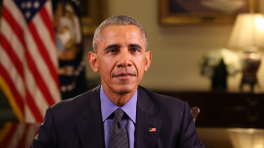 December 10, 2016 5:00 AM
Weekly Address: It’s Time to Get Covered on the Health Insurance Marketplace