Health Care Blog
Coming Together, Bringing Down Costs
Posted by on May 11, 2009 at 12:21 PM ESTViewing this video requires Adobe Flash Player 8 or higher. Download the free player.download .mp4 (114.4 MB) | read the transcriptToday the President hosted a meeting that marked one of the most promising signs for health reform to date, and not only because the topic was saving more than $2 trillion on health care costs. Representatives from hospitals, the insurance industry, medical device and pharmaceutical companies, labor and physicians came to the White House to discuss major steps being taken to lower health care costs across the board. The President explained the significance of having so many diverse stakeholders at the table:And that's what makes today's meeting so remarkable -- because it's a meeting that might not have been held just a few years ago. The groups who are here today represent different constituencies with different sets of interests. They've not always seen eye to eye with each other or with our government on what needs to be done to reform health care in this country. In fact, some of these groups were among the strongest critics of past plans for comprehensive reform.But what's brought us all together today is a recognition that we can't continue down the same dangerous road we've been traveling for so many years; that costs are out of control; and that reform is not a luxury that can be postponed, but a necessity that cannot wait. It's a recognition that the fictional television couple, Harry and Louise, who became the iconic faces of those who opposed health care reform in the '90s, desperately need health care reform in 2009. And so does America.
 (President Barack Obama meeting with healthcare stakeholders in the Roosevelt Room at White House May 11, 2009. Official White House Photo by Pete Souza)
- Read the full attendee list
- Read the letter sent by the groups to the President (pdf)
- Read the full fact sheet (pdf)
In short, the coalition has agreed to reduce the annual health care spending growth rate by 1.5 percentage points for the next 10 years, a change that could result in savings of roughly $2,500 for American families. Some of the changes the coalition is working on, explained fully in the fact sheet, include:- Improving Care after Hospitalizations and Reduce Hospital Readmission Rates.
- Reducing Medicare Overpayments to Private Insurers through Competitive Payments.
- Reducing Drug Prices.
- Improving Medicare and Medicaid Payment Accuracy.
- Expanding the Hospital Quality Improvement Program.
The President closed his remarks making clear that this was just the beginning, and certainly no stopgap measure: "So the steps that are being announced today are significant. But the only way these steps will have an enduring impact is if they are taken not in isolation, but as part of a broader effort to reform our entire health care system." And while so much debate over politics and policy can get lost in the mire of facts and figured, the President made clear that his focus is squarely on one thing:Ultimately, the debate about reducing costs -- and the larger debate about health care reform itself -- is not just about numbers; it's not just about forms or systems; it's about our own lives and the lives of our loved ones. And I understand that. As I've mentioned before during the course of the campaign, my mother passed away from ovarian cancer a little over a decade ago. And in the last weeks of her life, when she was coming to grips with her own mortality and showing extraordinary courage just to get through each day, she was spending too much time worrying about whether her health insurance would cover her bills. So I know what it's like to see a loved one who is suffering, but also having to deal with a broken health care system. I know that pain is shared by millions of Americans all across this country.Today is a hopeful day.Learn more about Fiscal Responsibility, Health CareStreaming Now: Stakeholder Discussion on Rural Health Care
Posted by on May 4, 2009 at 9:01 AM ESTThis morning Nancy-Ann DeParle, Director of the White House Office of Health Reform, is meeting with rural Americans in the fourth in a series of White House Health Care Stakeholder Discussions.- Watch the live stream. [UPDATE: This event has now concluded]
The meeting will be held against the backdrop of a new report out of HHS, which you can find at HealthReform.gov, entitled "Hard Times in the Heartland: Health Care in Rural America." A few of the key reasons rural communities particularly need health reform this year, from the report:- Nearly one in five of the uninsured – 8.5 million people – live in rural areas.
- Rural residents pay on average for 40% of their health care costs out of their own pocket, compared with the urban share of one-third.
- In a multi-state survey, one in five insured farmers had medical debt.
Late Update: Rebecca Adelman of HHS reports back on the meeting:Health care in rural America has been a significant topic of conversation at every health reform stakeholder event held at the White House over the past three months, and for good reason. Rural Americans are being hit especially hard by the skyrocketing cost of health care, and many live hundreds of miles away from the physicians and hospitals they need for treatment. Earlier today, representatives from rural communities met with White House office of Health Reform Director Nancy-Ann DeParle to discuss the state of the health care system outside America’s largest cities.There are nearly 50 million people living in rural America who face unique challenges accessing quality and affordable health care. Rural Americans are more likely to live in poverty, and have fewer providers in their communities. They report more health problems, and are more likely to be without health insurance than citizens living in urban areas. They are also more likely to delay medical treatment because they cannot afford it. According to a new study released today on www.healthreform.gov, nearly one in five of the uninsured – 8.5 million people – live in rural areas.The meeting participants gathered at the White House included farmers, ranchers, teachers, and fishermen, who spoke of their shared difficulty affording health care. Dr. Wayne Meyers, a pediatrician and organic farmer in rural Maine, summed it up by saying: "For most rural people, cost is the bottom line…health care costs are eating us alive." Many participants expressed frustration that farmers who spend their lives growing healthy food for the nation are struggling to afford medical care they need to live healthy lives. Jon Bailey, Director of the Rural Research and Analysis Program, spoke to the difficulty many small businesses are having in rural areas as they attempt to remain profitable while paying huge sums for health care coverage. Bailey said, "If we don’t solve the health care issues of small businesses, and farmers and ranchers and fishermen in rural areas, we won’t have an entrepreneurial economy, and that means we won’t have much of an economy in rural America."Mary Wakefield, Administrator of the Health Resources and Services Administration within the U.S. Department of Health and Human Services and Congressman Mike Ross (D-AR) were both on hand to listen. Congressman Ross closed the meeting by thanking Nancy-Ann DeParle and President Obama for their attention to rural health care issues, and for bringing together a diverse group from outside Washington, D.C. to share their experiences and concerns. DeParle made a point to emphasize the President’s commitment to enacting comprehensive health reform that will help rural Americans by lowering costs, guaranteeing choice of doctors and plans, and assuring quality and affordable coverage for all Americans.
Learn more about Health CareRetrospective in Missouri
Posted by on April 29, 2009 at 3:53 PM ESTViewing this video requires Adobe Flash Player 8 or higher. Download the free player.Today the President was in Arnold, Missouri for a town hall, and took a moment to be retrospective in his opening remarks:Today marks 100 days since I took the oath of office to be your President. (Applause.) One hundred days. It's a good thing. Thank you. Thank you. (Applause.)Now, back in November, some folks were surprised that we showed up in
But here's the thing -- my campaign wasn't born in
He spoke at length of progress he believed he had made in this short time, from the Recovery Act to the Budget Resolution, but quickly added: "I want to warn you, there will be setbacks. It will take time. But I promise you I will always tell you the truth about the challenges that we face and the steps that we are taking to meet them."The questions covered a wide range of topics. On the auto industry, and Chrysler in particular, he made clear that he strongly believes
We don't know yet whether the deal is going to get done. I will tell you that the workers at Chrysler have made enormous sacrifices -- enormous sacrifices -- to try to keep the company going. One of the key questions now is, are the bond holders, the lenders, the money people, are they willing to make sacrifices, as well? We don't know yet, so there's still a series of negotiations that are taking place.
Asked about the challenges facingThe deal I've got to strike with teachers, though -- I may not get as much applause on this -- (laughter) -- is I would like to work with teachers and the teachers unions, because I'm a union guy, but I do believe -- (applause) -- but I do believe that it's important for the unions to work flexibly with school districts in a consensual fashion to find ways so that if you've got a really excellent teacher, after 15, 20 years, they can get paid a little bit more -- right? -- if they're doing a really good job. (Applause.) And now the flip side -- I'm telling you, I'm getting to the point where I'm not going to get applause. (Laughter.) If you've got a bad teacher who can't -- after given all the support and the training that they need is just not performing up to snuff, we've got to find that person a new job. (Applause.)
Asked about the future of Social Security, he reiterated his long-standing support for raising the cap on the payroll tax for wealthy Americans and saying that Social Security is actually the easy fix compared to health care costs:What we face long term, the biggest problem we have is that Medicare and Medicaid -- health care costs are sky-rocketing, and at the same time as the population is getting older, which means we're using more health care -- you combine those two things, and if we aren’t careful, health care will consume so much of our budget that ultimately we won't be able to do anything else. We won't be able to provide financial assistance to students; we won't be able to help build green energy; we won't be able to help industries that get into trouble; we won't have a national park system; we won't be able to do what we're supposed to do on our veterans. Everything else will be pushed aside because of Medicare and Medicaid. That's the problem that we really confront.That's why I've said we've got to have health reform this year -- (applause) -- to drive down costs and make health care affordable for American families, businesses and for our government. (Applause.)
So, you know, when you see -- those of you who are watching certain news channels that -- on which I'm not very popular -- (laughter) -- and you see folks waving tea bags around -- (laughter) -- let me just remind them that I am happy to have a serious conversation about how we are going to cut our health care costs down over the long term, how we're going to stabilize Social Security. Claire and I are working diligently to do basically a thorough audit of federal spending. But let's not play games and pretend that the reason is because of the Recovery Act, because that's just a fraction of the overall problem that we've got.
Having taken questions directly from the public this morning, the President returns to the White House tonight for a prime time press conference. Watch it streamed at 8:00 at WhiteHouse.gov/live.UPDATE: The President met with several people who submitted their stories of service through our site after the town hall.
 (President Barack Obama poses for a photo with service volunteers Wednesday, April 29, 2009, at Fox High School in St. Louis, Mo. Official White House Photo by Pete Souza)
Weekly Updates on Health Reform
Posted by on April 29, 2009 at 8:39 AM ESTOver at HealthReform.gov, they have started a new series of weekly updates -- watch the latest from Nancy-Ann DeParle, Director of the White House Office on Health Reform:This video is no longer available.
We have highlighted a lot of what HealthReform.gov has to offer, from their reports demonstrating the urgency of reform, to the videos they house from the White House Forum on Health Reform and Regional Forums, to the stories they compiled from thousands of Americans across the country showing the unimaginable strain problems in the health care system can put on people's lives. Pay them a visit to see why health reform has to happen this year, and why it is worth keeping on top of these updates every week. You can also show your support for the President’s commitment to pass comprehensive health reform this year, including controlling costs, guaranteeing choice of doctor, and assuring high-quality, affordable health care for every American.
Learn more about Health CareDelivering on Change, an Inside Look
Posted by on April 28, 2009 at 8:15 PM ESTPete Souza and the White House Photo Office bring us an exclusive, massive, unique look at the President’s term so far. Take a few minutes to get a different perspective from the images on television every day.Learn more about Economy, Energy and Environment, Fiscal Responsibility, Foreign Policy, Health CareSworn In, Straight to Work
Posted by on April 28, 2009 at 8:01 PM EST (The new Secretary of Health and Human Services, Kathleen Sebelius, is briefed on the 2009 H1N1 flu by John Brennan, assistant to the President for Homeland Security, in the Situation Room of the White House on April 28, 2009. Sebelius was sworn in moments earlier in the Oval Office. Chief of Staff Rahm Emanuel, right, and National Security chief of staff Mark Lippert are in background. Official White House Photo by Pete Souza)
(The new Secretary of Health and Human Services, Kathleen Sebelius, is briefed on the H1N1 flu by John Brennan, assistant to the President for Homeland Security, in the Situation Room of the White House on April 28, 2009. Sebelius was sworn in moments earlier in the Oval Office. Official White House Photo by Pete Souza)Learn more about Health Care


- &lsaquo previous
- …
- 205
- 206
- 207
- 208
- 209
- 210
- 211
- 212
- 213
- next &rsaquo
From the Press Office
Related Videos
-
 December 13, 2016 5:04 PM
Signing Ceremony for the 21st Century Cures Act
-
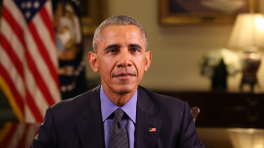 December 10, 2016 5:00 AM
Weekly Address: It’s Time to Get Covered on the Health Insurance Marketplace