Health Care Blog
How Far We've Come: Cecilia Munoz on AIDS
Posted by on July 23, 2012 at 11:05 AM ESTThis week, the 2012 International AIDS Conference is being held in Washington, D.C. The Conference provides an opportunity for Administration officials to reflect on the effect that HIV/AIDS has had in their own lives, and how far we’ve come in the fight against the terrible disease. In the below video, Cecilia Muñoz, Director of the White House Domestic Policy Council, shares how HIV/AIDS has personally impacted her life.
Learn more about , Health CareHow Far We've Come: Brad Kiley on AIDS
Posted by on July 23, 2012 at 10:56 AM ESTThis week, the 2012 International AIDS Conference is being held in Washington, D.C. The Conference provides an opportunity for Administration officials to reflect on the effect that HIV/AIDS has had in their own lives, and how far we’ve come in the fight against the terrible disease. In the below video, Brad Kiley, Director of the Office of Management and Administration, shares how HIV/AIDS has personally impacted his life.
Learn more about , Health CarePresident Obama Welcomes 2012 International AIDS Conference Attendees
Posted by on July 22, 2012 at 12:52 PM ESTWatch the AIDS 2012-Turning the Tide video here.
This week, the 19th International AIDS Conference comes to the U.S. for the first time since 1990- thanks to bipartisan action by Presidents Obama and George W. Bush and the Congress to lift the ban on people living with HIV entering the United States. Thirty thousand participants are expected to attend the world's largest HIV/AIDS conference.
The Obama Administration is taking action to turn the tide on HIV/AIDS by strengthening the scientific investments that have revolutionized prevention and care for people living with HIV. Under President Obama’s leadership, the Administration has increased overall funding to combat HIV/AIDS to record levels. We have launched the first comprehensive National HIV/AIDS Strategy for the United States to prevent and treat HIV in America. Globally, the Obama Administration has committed to treating 6 million people by the end of 2013 and is increasing the impact and sustainability of our investments. Take a minute to watch President Obama's welcome video for conference attendees.
Learn more about , Foreign Policy, Health CareAIDS Memorial Quilt in the White House
Posted by on July 20, 2012 at 8:34 PM ESTThe return of the International AIDS conference to the U.S. marks a moment to celebrate the American leadership and efforts that have transformed the response to the epidemic, to remember the lives lost to this disease, and to recommit to the vision of an AIDS-free generation.
One enduring symbol of the lives that have been lost is the AIDS Memorial Quilt. First started in 1987, the quilt now contains the names of more than 94,000 of individuals who have died of AIDS on more than 47,000 panels. The quilt was first displayed on the National mall in 1987. During the conference, panels of the quilt will be shown on the mall and in over 50 locations throughout the District of Columbia metropolitan area, including the White House.
Earlier this week a section of the Quilt was put on display in the East Wing, so that the hundreds of visitors that go through the halls of the building each day can stop and remember the human toll that this disease has taken, and how far we’ve come as a country in the fight against HIV/AIDS. While much work remains to be done, we all look forward to the day when there are no more panels to add to the quilt. Thanks to our collective efforts, that day is closer than ever.
As President Obama said on World AIDS Day, together we can and we will win this fight.
Grant Colfax is the Director of the Office of National AIDS Policy
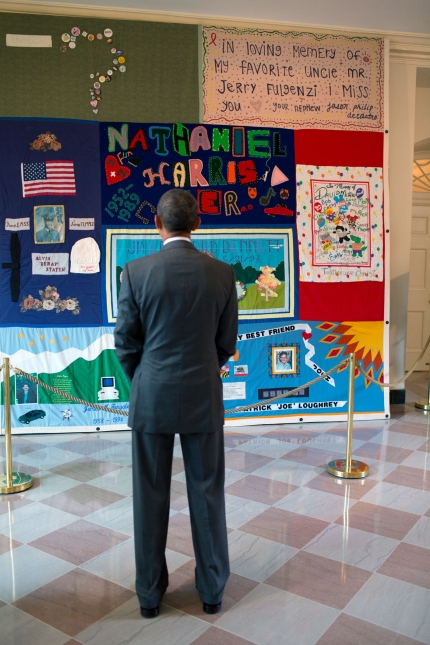
President Barack Obama views a section of the AIDS quilt on display in the Booksellers area of the White House, July 18, 2012. (Official White House Photo by Pete Souza)
Learn more about , Foreign Policy, Health CareVice President Biden Speaks To Seniors About Retirement Security
Posted by on July 16, 2012 at 5:52 PM EST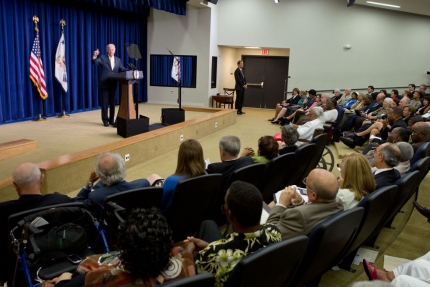
Vice President Joe Biden delivers remarks at a White House Community Leaders briefing on Seniors Issues, in the South Court Auditorium at the White House, July 16, 2012. (Official White House Photo by David Lienemann)
Today, the Vice President spoke to more than 100 community leaders from across the country representing over 60 seniors groups that are part of the Leadership Council of Aging Organizations. He told the audience that when it comes to Social Security and Medicare, “the question is what are we going to do to strengthen and sustain these programs now and for the future.” In contrast, Congressional Republicans are trying to weaken or dismantle these programs.
Last year, Congressman Paul Ryan proposed to end traditional Medicare. His plan, which was embraced by his Republican colleagues, would give seniors a voucher to buy private insurance and hold them responsible for any costs that exceed the value of the voucher. As a result, the typical 65-year-old’s out-of-pocket health care costs would double over time. While Congressman Ryan introduced a revised plan this year, it still relies on a voucher system that would increase the financial burden on seniors.
President Obama and Vice President Biden want to strengthen Medicare and secure the program for the future. Our health care law extends the life of Medicare by eight years by taking smart steps like cutting waste and fraud and creating incentives to cut down on hospital readmissions. These steps will save seniors in traditional Medicare an average of $160 on premiums and copays in 2012 alone. In addition, the law has already saved 5.3 million seniors an average of $600 on prescription drugs by closing the “donut hole,” and has ensured that over 30 million have access to free preventive services like cancer screenings and annual wellness visits.
Health Care and the House of Representatives: By the Numbers
Posted by on July 11, 2012 at 3:58 PM ESTThe health care law President Obama signed in 2010 is already making a positive difference in the lives of millions of Americans. 6.6 million young adults have health insurance on their parent’s plan. 5.3 million people with Medicare saved $3.7 billion on their prescription drugs. And 54 million Americans have had their private insurance plan expand to cover preventive services without co-payments or deductibles.
But rather than move on and act on the President’s plans to cut taxes and strengthen the economy, today House Republicans voted to repeal the health care law. And this is far from the first time Congressional Republicans have chosen to re-fight old political battles:
- Today’s vote in the House marks the 33rd time House Republicans have voted to roll back the health care law.
- Since being sworn in, the House has voted in 15 of 19 months to “repeal, defund, or dismantle” the Affordable Care Act.
- The House has voted to “repeal, defund, or dismantle” the Affordable Care Act nearly 2 times a month on average.
The last thing Congress should do is start over on health care by raising taxes on the middle class and repealing the entire law. Instead, Congress should enact the President’s proposal which extends the current tax rates for every single American family on their first $250,000 of income, ensuring that middle class families don’t see a tax hike at the end of the year.
Learn more about Health Care, Taxes
- &lsaquo previous
- …
- 73
- 74
- 75
- 76
- 77
- 78
- 79
- 80
- 81
- …
- next &rsaquo
From the Press Office
Related Videos
-
 December 13, 2016 5:04 PM
Signing Ceremony for the 21st Century Cures Act
-
 December 10, 2016 5:00 AM
Weekly Address: It’s Time to Get Covered on the Health Insurance Marketplace