Health Care Blog
Kiersten-Care: Using the Health Care Tax Credit to Take Care of Employees
Posted by on June 19, 2012 at 3:25 PM ESTEd. Note: This was originally published on Healthcare.gov
Kiersten Firquain founded Bistro Kids in Kansas City, KS, seven years ago to provide locally sourced organic “kid-friendly” food to as many students as possible. While her chefs were cooking up healthy food for youngsters, she wanted to do something for her employees’ health. The health care law tax credit for small businesses, she says, made it possible to offer them health insurance.
“We talked to our chefs and employees and asked, ‘What’s something you would like from Bistro Kids?’ And one of the things that kept coming up was insurance,” Kiersten says.
Bistro Kids qualified for about $1,500 per year in tax credits under the health care law, the Affordable Care Act, which made a huge difference to a small business like hers. For one of her chefs, Kiersten says, health insurance means a $5 co-pay for a prescription instead of a $250 cost, which her chef would not have been able to afford.
Learn more about Economy, Health CareAshley-Care: Health Care Coverage Without Stress for a Young Adult
Posted by on June 19, 2012 at 3:09 PM ESTEd. Note: This is a cross post from Healthcare.gov
Today, 3.1 million people are newly insured thanks to a provision in the law that enables young adults to stay on their parents’ health care plans. Ashley Drew is one of them. Ashley, a young woman from Scarborough, Maine, was born with Cystic Fibrosis, a life-threatening chronic disease. She spends a lot of time in hospitals getting special IV antibiotics, respiratory therapy and physical therapy to clear her lungs and fight infections. One month in the intensive care unit cost her about $144,000; her last stay was for three months.
Ashley was diagnosed with end-stage lung disease and waited on two transplant lists for more than 500 days. She recently successfully underwent a double lung transplant.
Because of the health care law, the Affordable Care Act, young adults under the age of 26 may be able to stay on their parents’ health insurance, and for Ashley, this has made all the difference. Staying on her parents’ insurance allowed her to pursue her education to become a music teacher and to study instrumental conducting – at a pace she could handle with her health condition – and not worry about how to make sure she had coverage.
“The fact that the Affordable Care Act is in effect, it’s amazing, because it’s horrible to have to worry and stress about your health and, in my case, something that everyone takes for granted: breathing,” Ashley says. “Everyone deserves to breathe, but unfortunately without health insurance that’s not a reality for some people.”
Without the security that staying on her parents’ insurance plan provides, Ashley says she would be spending all her time trying to figure out how to come up with the money for her treatment.
Ashley believes the benefits under the law are important for people who don’t have her immediate health concerns as well. “I think the Affordable Care Act brings peace of mind to people all over this country because you don’t know when something’s going to happen,” she says. “Just to know that you have health insurance … You’re not going to lose your car and you’re not going to end up homeless because you got sick.”
If you have a story like Ashley’s, share it at HealthCare.gov/MyCare and join the conversation on Facebook and Twitter.
Learn more about how the Affordable Care Act is helping Young Adults: For more information:
- Abby-Care: Health Coverage for Young Adults Under 26
- StevenCare: Insurance for Young Adults Under Age 26
- Carol-Care and Justin-Care: Extending Coverage on a Parent’s Health Plan
Dori Salcido is the Acting Assistant Secretary for Public Affairs at the U.S. Department of Health and Human Services.
Learn more about Health CareEntrepreneurs and Innovators Rock 3rd Annual Health Datapalooza
Posted by on June 18, 2012 at 2:45 PM ESTImagine a scenario where a patient, from her mobile phone, can find the best possible health care provider and securely book an appointment; where she and her doctor have the latest treatment information at their fingertips; and where this information helps improve or even save her life.
This scenario, and many others like it, is now being brought to life by entrepreneurs and innovators leveraging the power of data to improve health and health care. Last week, we had the amazing experience of joining nearly 1,600 rock-star innovators who packed into the Health Data Consortium’s third annual Health Datapalooza here in Washington.
Using health-related data that are being made accessible in computer-readable form from federal and state agencies, and other sources, entrepreneurs are creating new applications and services that help: consumers find the best health care provider for their families; doctors deliver the best possible care; mayors make better-informed policy decisions; and much more.
Learn more about Health Care, TechnologyWhite House Hosts Meeting on Global Health Security
Posted by on June 15, 2012 at 9:58 AM ESTYesterday, U.S. Homeland Security Advisor John Brennan hosted a roundtable discussion with World Health Organization (WHO) Director-General Dr. Margaret Chan and senior officials from across the U.S. Government. This was a first of its kind meeting, with high-level leadership from the National Security Staff, U.S. Federal government agencies and departments, and the WHO to discuss common areas of interest in the area of global health security. Attendees included a wide range of stakeholders from across the U.S. Government, including those representing the fields of health, defense, law enforcement, international development, foreign affairs, security, animal and agriculture health, and science.
Participants discussed the steps needed to advance key elements of a U.S. Government - WHO memorandum of understanding on global health security, signed last year on the margins of the United Nations General Assembly. The discussion included topics such as the implementation of the International Health Regulations (IHR) — a key framework for WHO Member States in the detection, reporting, and response of public health emergencies of international concern. At the 2011 United Nations General Assembly, President Obama signaled the importance of IHR in meeting the challenge of fighting all biological dangers, noting: “Today, I urge all nations to join us in meeting the WHO’s goal of making sure all nations have core capacities to address public health emergencies in place by 2012. That is what our commitment to the health of our people demands.”
Learn more about , Foreign Policy, Health CareFive Is a Magic Number
Posted by on June 13, 2012 at 4:34 PM ESTIn one of the greatest humanitarian achievements of the past 50 years, child mortality has dropped by 70 percent world-wide. Tomorrow, the U.S., led by the U.S. Agency for International Development and in partnership with UNICEF and the Governments of Ethiopia and India, is launching a global effort to build upon these dramatic successes and end preventable child deaths.
How will we save five million children’s lives each year by 2035?
First, by focusing our efforts on those places where the most deaths of children under five-years-old occur. That includes the five countries that account for 50 percent of child deaths worldwide (India, Nigeria, Democratic Republic of the Congo, Pakistan and Ethiopia) and the 19 other countries that account for the next 30 percent of deaths. And, within those countries, targeting the populations most in need -- often rural, low-income and marginalized groups.
Seventh Annual World Elder Abuse Awareness Day
Posted by on June 13, 2012 at 2:00 PM ESTElder abuse comes in many forms. It is recognized by experts as a public health crisis for which there are no socio-economic borders. Millions of older Americans are abused, neglected, or exploited each year, and estimates suggest that a large majority of these cases go unreported.
To shed light on this problem, June 15th has been designated as World Elder Abuse Awareness Day, with 2012 marking the 7th anniversary of World Day.
This year, on June 14th, the White House Office of Public Engagement, in collaboration with federal partners from the Administration for Community Living/Department of Health and Human Services, the Consumer Financial Protection Bureau, and the Department of Justice, is hosting a day-long symposium to highlight the problem of elder abuse, neglect, and exploitation.
- &lsaquo previous
- …
- 77
- 78
- 79
- 80
- 81
- 82
- 83
- 84
- 85
- …
- next &rsaquo
From the Press Office
Related Videos
-
 December 13, 2016 5:04 PM
Signing Ceremony for the 21st Century Cures Act
-
 December 10, 2016 5:00 AM
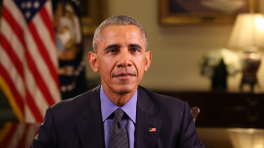
Weekly Address: It’s Time to Get Covered on the Health Insurance Marketplace