Health Care Blog
Getting the Information Out to the Most Vulnerable
Posted by on March 21, 2012 at 10:10 AM EST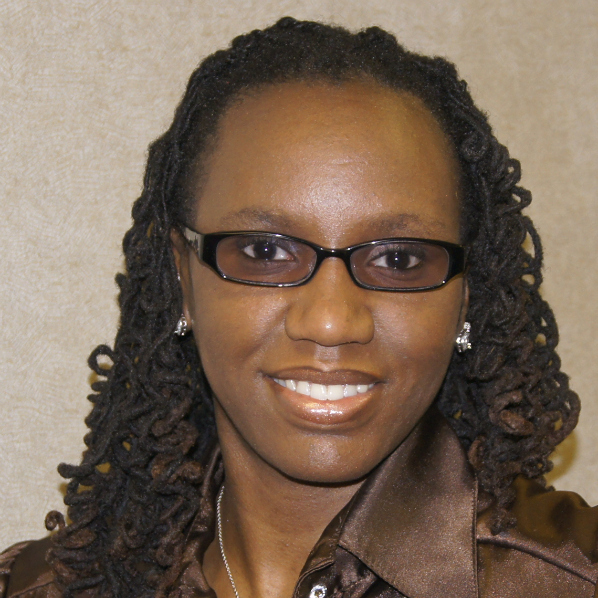
It is an honor to be nominated for the White House Champions of Change. My Pastor Dr. Ternae Jordan Sr. once told me that in order to fulfill my true purpose, it should become “my ministry.” That’s what I have the honor of doing on my job every day as the Regional Coordinator for the State Health Insurance Assistance Program (SHIP) at the Southeast Tennessee Area Agency on Aging and Disability. One of the problems that I see and strive to address is the fact that many within the community are disproportionately isolated from services and information due to barriers within many service delivery systems. It is my desire to increase awareness of topics important to seniors and caregivers as well as to continually strive to inform and educate the community about health insurance.
As the SHIP Regional Coordinator, I saw a need to be innovative on how to reach the most vulnerable individuals throughout the Southeast TN region who were struggling to understand their health insurance benefits as well engage them in receiving services. Those innovative ways have included many activities to impact the community. However, the greatest has been reaching out to community faith-based organizations to assist Medicare beneficiaries with both accessing benefits and providing health education.
Making ACA Policy Plain: A Personal Approach
Posted by on March 21, 2012 at 10:05 AM EST
If you asked my high school teachers would I be involved in health policy and education, you would have heard a resounding ‘NO’. My interest in these areas began as an undergraduate at Virginia Tech, and was cultivated as I entered the workforce as a paramedic. I realized that I had a talent for policy and a love of teaching, and was fortunate to have been supported in developing these skills by an amazing group of peers and mentors. I obtained a graduate degree from Radford University, and ultimately entered medical school at the Edward Via Virginia College of Osteopathic Medicine.
I love my work as a osteopathic physician, but realized early in medical school that most clinicians did not participate in policy making, legislation, or political activism. I started seeking out opportunities for learning more about health policy, and again was fortunate to have the support of my professional family. Through the American Osteopathic Association (AOA) I learned how to contact my legislators and start thinking about the implications that local, state, and federal policy have on healthcare and the patients I treat. More formal training came through the Paul Ambrose Scholars and the Training in Policy Studies (TIPS) programs which taught me necessary skills to critically review policy and serve as a resource to policymakers.
Affirming the Good News of the Affordable Care Act
Posted by on March 21, 2012 at 10:01 AM EST
I am grateful to receive this Champion of Change honor and I accept this on behalf of my volunteer co workers in the Kansas City metro area. I understand I am being honored for my work educating local groups about the Affordable Care Act (ACA). We are a “bottom up” effort to generate and coordinate requests to speak to trade groups, professional groups, health care providers, seniors, women’s groups, teachers, union workers and subscribers in public libraries. We will go anywhere we can to speak and generate an invitation to educate more citizens about the law.
To date we have reached over 1,224 people in 72 different settings groups, in two states and six counties in Missouri and Kansas. Also, we brought Wendell Potter, author of Deadly Spin to our public library where 550 people heard his experience in the shareholder-driven commercial health insurance world.
We match the experts on the ACA and to the needs of the group. We augment the work of existing advocacy organizations. Recently we added a Train the Trainer Ambassador level layer to expand our capacity to provide the education to the least well informed citizens. We are working our way into the schedules of public libraries, church groups, and social clubs. The ACA is the law and we share that with all the attendees. We greet skepticism with facts, doubt with accomplishments. Not everyone is receptive to the information but we keep on generating requests and those speaking engagements have a way of begetting more invitations. Our volunteer committee has no legal status, no money. We have good people (two social workers, a nurse, a researcher and a teacher). We have lots of missionary zeal to spread the word about the benefits and changes in the Affordable Care Act.
Unifying the Effects of the Affordable Care Act Across Communities
Posted by on March 21, 2012 at 9:52 AM EST
The ACA "WIN" program was developed by Cathy Glasson of SEIU Local 1199 Iowa. The concept and program was introduced to us at a Nurse Alliance of California meeting in July 2011. I was so intrigued that I and another nurse, Olga Desai of Local 1000, decided right then and there that we should try this as a joint project between our two unions. It really just sort of dawned on us that if we did it together, we might pull it off! Olga did the turnout and got the word out at her worksite in Delano, a town north of Bakersfield. When I mentioned this to other nurses, my colleagues and Nurse Alliance participants, they just ran with it! It turned out we had wonderful cross section of nurses, from the Operating Room, Emergency Room, Mental Health, Advanced Practice and Rural Health.
Every one of those nurses embraced the ACA program because they saw how it could make a difference for the patient population they work with day in and day out. We completed the SEIU Nurse Alliance Webinar Training and scheduled our first class in Delano, California, which is at the very edge of a very large county. It was a small class but we reached out to Mental Health workers and Corrections Nurses with great success.
We were so excited, we immediately began looking at where we could expand the program. We help several classes, and in November 2012, we held a class with more than 100 Public Health nurses being educated on the ACA.
Including All Americans in Affordable Health Care
Posted by on March 21, 2012 at 9:45 AM EST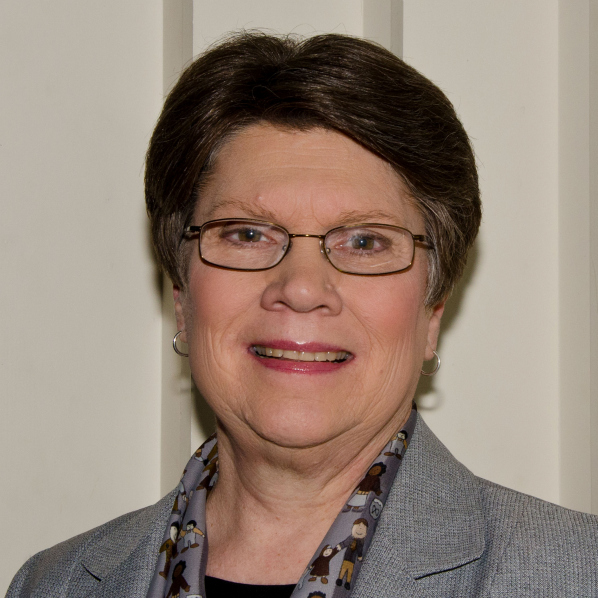
On behalf of the Faithful Reform in Health Care network, whose members are at the heart of my work, it is my honor and a great privilege to be named a White House Champion of Change. This recognition at this moment is particularly meaningful as we observe the second anniversary of the Patient Protection and Affordable Care Act. Representing the first time in our history that we made a national legislative commitment to making health care accessible to almost everyone who lives in the United States, this commitment addresses the moral imperative of health care for all. It is that commitment which has called people of faith into this work.
For decades, faith communities have worked both individually and collectively to move our nation toward a more inclusive and just system of health care – with particular focus on those who are poor and vulnerable. Since 2008, members and friends of Faithful Reform have been guided in their work by A Faith-Inspired Vision of Health Care, a collaborative statement of faith values based on the sacred writings and social principles of the interfaith community. Signed by hundreds of organizations and thousands of individuals representing every state, this statement was delivered to President Obama and Members of Congress on several occasions to help identify the faith community's perspective on how a present day government might respond to the moral imperative of health care for all. This vision states, "As people of faith, we envision a society where each person is afforded health, wholeness, and human dignity.” That vision embraces a system of health care that is inclusive, affordable, accessible, and accountable. Our support for various provisions of the Affordable Care Act is based on this vision statement.
Educate + Engage + Empower = Action
Posted by on March 21, 2012 at 9:35 AM EST
I have always had a deep sense that the power to impact injustice lies within the power to educate, engage, and empower those connected to the injustices. The Patient Protection and Affordable Care Act is a monumental national victory for all Americans. It is important to me to use the law’s full name because, when saying “Affordable Care Act,” it is easy to forget that this law doesn’t just tackle issues of affordability, but also addresses the much needed protection for patients from an unjust, discriminatory, and often greed-based system.
This national victory is one that should be celebrated as the second anniversary rolls around. However, misinformation has quickly tainted the victory party. The need to educate diverse consumers on what has actually been accomplished is key. I find that educating others is most successful when done on a level that directly connects with the audience, which often means omitting complicated language. It is also successfully done when we get back to the basics of shared human and social values. Shared values-based education is what starts the drumbeat for a movement and sets the pace towards progress.
In health care justice, we share common values that our health care system should be affordable, accessible, and inclusive, reflecting respect and valuing the integrity of people. It should be fair, just, accountable, and offer a high standard of quality. While we may not intimately know every section of the law, we can agree on certain things, like the fact that a change needed to happen. We can agree that young adults should be able to pursue their American dream without worrying about accessing affordable care and that young children should not be turned away from care because they have a pre-existing condition. We can agree that a system that discriminates some cannot be called fair or just. We can also agree that doing nothing or doing what we’ve always done is not an option that will lead to change.
By getting back to a values-based way of educating audiences about the Affordable Care Act, we make the necessity to progress health care justice an “us” issue and not a “those people” issue. This idea of “us” means that everyone has locked arms and is moving forward together towards successful implementation. What we say and how we say it when educating others has to lead back to our shared values. Often, by being in a defensive position, we answer the questions asked without addressing the person asking the question. They are a person connected to a community of people with whom they share information and experiences. They have had negative experiences with the health care system that need to be changed and positive ones that need to be built upon. Education is a powerful tool to bring awareness and support to a cause.
- &lsaquo previous
- …
- 87
- 88
- 89
- 90
- 91
- 92
- 93
- 94
- 95
- …
- next &rsaquo
From the Press Office
Related Videos
-
 December 13, 2016 5:04 PM
Signing Ceremony for the 21st Century Cures Act
-
 December 10, 2016 5:00 AM
Weekly Address: It’s Time to Get Covered on the Health Insurance Marketplace