The White House

Office of the Press Secretary

Press Briefing by Press Secretary Jay Carney, 1/5/2012

James S. Brady Press Briefing Room

11:56 A.M. EST

MR. CARNEY:  Hello, everyone.  Thanks for being here.  It’s always good to see your faces.

Q    Hi, Jay, how you doing?

Q    It’s good to see you, Jay.  (Laughter.)

MR. CARNEY:  Right back at you.  Welcome to the White House for your daily briefing.  I have -- I just want to make a brief announcement -- or not an announcement, just a reminder, because I know you all have seen this.  But today the White House announced Summer Jobs Plus, which is a new call to action for businesses, nonprofits and government to work together to provide pathways to employment for low-income and disconnected youth in the summer of 2012.  Already 32 organizations and four federal agencies have come together to commit to creating nearly 180,000 employment opportunities for low-income youth this summer, 70,000 of which are paid jobs or internships.

The President proposed $1.5 billion, as I know you all know, for high-impact summer jobs and year-round employment for low-income youths ages 16-24 in the American Jobs Act as part of the Pathways Back to Work fund.  When Congress failed to act, the federal government and private sector came together to commit -- to make that commitment that was announced today.

The President has set a goal of reaching 250,000 employment opportunities by the start of summer, at least 100,000 of which will be placements in paid jobs and internships.  Today’s announcement is well on the way to meeting that goal, and we thank the private sector participants in this. 

As you know, part of the President’s approach to all of our economic challenges is to do everything he can, working with Congress on the important things we can do and must do legislatively, working through his executive authority and working with the private sector, to keep all of the energy of his administration focused on creating jobs and growing the economy.

With that, I will begin with The Associated Press.  Ben Feller. 

Q    Thanks, Jay.  I wanted to ask you first about the fallout from the recess appointments.  I understand the White House’s position on why it did what it did, but in doing so, of course, you had to expect that the Republicans would not be happy -- and that’s obviously putting it mildly; the reaction was pretty fierce.  I’m wondering how you think this will affect any other issues that you might seek to work on with Congress.

MR. CARNEY:  We will, as I just said, continue to work with Congress on the issues that we have to address together.  The President, any President, can’t put 400,000 teachers back to work by himself.  He needs legislation, he needs Congress to cooperate and do the things that they have done in the past in a bipartisan way to put those folks back in the classroom or to put construction workers back on the job building our infrastructure or to do any of a number and a long list of things that can and should be done through Congress.  And he looks forward to working with Congress on that.

I know you know, Ben, that this President is hardly the first to make a recess appointment.  In fact, he has made far fewer -- far fewer -- as President this far in his term than either of his two predecessors, and that would include President George W. Bush.  President Bush had made 61 recess appointments by this point in his term.  By contrast, President Obama has only recess appointed 32 individuals now, including the four yesterday -- 18 which -- of which, rather, have been confirmed since.

So I certainly am aware of some of the reaction that you noted.  The fact is, the President firmly believes he has the constitutional authority to act as he did.  And they can make a lot of process arguments about it.  We feel very strongly that the Constitution and the legal case is strongly on our side. 

But more importantly, this isn’t about process, this isn’t about whether or not Congress is in session.  And if I could digress for a minute, I think all of you should run up to Capitol Hill, check out the House and Senate and see if you can find a single member of Congress, and then tell me on this working day for most Americans whether or not Congress is in session.

But what it’s really about is the absolute urgency to install Richard Cordray as our consumer watchdog so that he can get to work today, as the CFPB has already announced, protecting middle-class Americans, protecting seniors from dishonest non-bank mortgage brokers, the kind who took advantage of that elderly couple the President met with yesterday in Cleveland, or to help students not get taken advantage of when they’re dealing with their student loans, or folks who deal with payday lenders. 

I mean, we need -- average Americans need somebody representing their interests in Washington.  Lord knows that financial institutions have armies of lobbyists here, well paid, looking out for them.  The American people need Richard Cordray where he is now thanks to the action the President took yesterday.

Q    But can’t you see how it seems a little incongruous to continue to say that the President looks forward to working with them at the same time that he gives statements that he did yesterday -- “I’m not going to take no for an answer, I’m not going to have -- let an ideological minority stop me” -- then the response from the Republicans about it’s a power grab, he’s arrogant.  It doesn’t necessarily seem to lend itself to the next day, “look forward to work with them.”

MR. CARNEY:  I don’t think that anybody expected or expects Washington to be a campfire where everybody holds hands together and sings Kumbaya.  That’s not what the nation’s business is about.

As the President made clear when he was running for this office, his number-one priority was to ensure that when he became President, Washington stopped ignoring some of the very difficult challenges that faced the country.  And he has taken many of those on, head on, and has put in place solutions to some of those very serious challenges we face.

And look, he has worked cooperatively with Congress from the moment he took the oath of office, and he will continue to do so.  But the case here is pretty stark.  The Republicans unfortunately in the Senate simply refused to allow Richard Cordray to have an up or down vote -- not for any reason that had to do with his qualifications.  Senator after senator -- Republican -- has said this is nothing about Richard Cordray; he’s very qualified.  Republican attorneys general across the country have endorsed him.  In the cloture vote, he received a majority of the U.S. Senate.  But the Republicans filibustered.  Why?  Because they don’t even want the Consumer Financial Protection Bureau to be in operation.  They certainly don’t want it to have the powers that it has, by law, protecting American citizens from the kinds of practices that helped lead to the worst financial crisis and the worst recession since the Great Depression.

If they want to change the law, they should -- going back to what we can do -- what they can do, legislatively -- they should try to pass a law to change it.

But it is the law of the land, and it passed and it was signed into law by the President because he is absolutely committed to the Wall Street reform piece of this and to the reforms that could not be implemented fully until Richard Cordray was in office, as he is today.

Q    One quick campaign question for you.  From the campaign side of President Obama’s apparatus, I guess you’d say, the focus continues to be on Mitt Romney.  I’m wondering, does the President look at this as an open Republican race right now, or does he look at this as Mitt Romney still leads?

MR. CARNEY:  As I think I said yesterday in the gaggle on Air Force One, the President and I spoke briefly, just took note of the results from Iowa.  He didn’t make an assessment of what’s going to happen in the race or who he’s going to run against.  I think he knows from experience, very personal experience, that primaries can play out in a variety of different and unexpected ways.  So he’s focused right now, honestly, on his job.  He doesn’t have a primary to worry about, and that affords him the luxury, if you will, but the importance of continuing to focus on what he can do as President to grow the economy and create jobs and, as you heard him today, to deal with our national security and our defense strategy.

So just talking -- idle conversations in the hallways, I think we know pretty much what you know, because we get it from you guys in the press, about that process.  It’s certainly interesting and we’ll pay attention to it as folks on the sideline for now.  But I don’t really have an assessment at this point as to where it’s going to head, and if I did know I might make a trip out to Vegas.

Yes, sir.

Q    Also, on the Cordray recess appointment, what, if any, concern does the White House have that the likely legal challenges to his appointment may -- could undermine his ability to do his job, his legitimacy?  And how concerned at all is the President that the Republicans could retaliate by withholding or by resisting compromise on things like extending the payroll tax cuts for the full year, or perhaps even harden their opposition, their resistance to further nominations?

MR. CARNEY:  Well, on the first point, I don’t want to anticipate legal challenges that we haven’t seen yet, and I wouldn’t be able to assess them adequately since, as you know, I am not a lawyer.  I can only say that we feel very confident about the legal foundation upon which the President made this decision.

And I would just go back to what I said before about relations with Congress and the fact that we have important business to do.  And I would be surprised if Republicans wanted to argue that even though the chambers are empty, even though many members of Congress have described what they’re on now as a recess, even though it’s been made abundantly clear as a matter of public record that there is no intent for Congress to conduct any business until they return from this recess, all of which plays into our argument that they’re in recess, in a sustained recess -- if they want to make that case and then, because they’re mad about that, not extend the payroll tax cut for the American people, that would be a shocker.  I think that would be very unfortunate for the 160 million Americans who, just as was the case in December, for January 1st, could not afford and should not be saddled with what would be essentially a $1,000 tax hike over frustration or pique with the fact that this President acted because Congress wouldn’t on a very important job -- the installation of a consumer watchdog whose sole responsibility, as I think you saw was announced today by the CFPB, is to make sure that average Americans are not taken advantage of by dishonest financial institutions.  I think that -- it’s not a debate that we’re hoping to have, but if we were to have it I think we’d be confident we would win it.

Q    And are there any further recess appointments in the pipeline or was this just a one-day flurry?

MR. CARNEY:  I have no announcements to make about appointments or nominations today.

Let me move -- Chris.

Q    Thanks, Jay.  The New Hampshire legislature this month is expected to vote on a bill that would repeal the same-sex marriage law there.  The Democratic governor has said he’d veto any such measure that came to his desk, but the Republicans have a super majority in the legislature and they could potentially have the votes to override this veto.  Both Rick Perry and Mitt Romney have said they support the repeal of the marriage law there, but what does the President hope is the outcome of this vote?

MR. CARNEY:  Chris, I honestly haven’t spoken to him about that state issue, so I would have to take the question and see if there’s anything I can get back to you.

Q    The President has said that he -- states should decide how to best address the marriage issue themselves.  If the legislature decides to repeal that marriage law will he support that decision?

MR. CARNEY:  Again, that’s an “if-if” question and I haven’t had the conversation with him or with any of the senior staff about it.  So let me take that and see if we can get a response to you.

Yes, Julie.

Q    Senator Grassley says that he’s going to write a letter to the Department of Justice asking if President Obama got a new opinion before appointing Cordray.  Did the White House talk to the Department of Justice?  And why won’t they say whether they talked or not?

MR. CARNEY:  Let me -- I think I actually can say that we routinely consult with the Department of Justice on a range of legal matters, but we also routinely don’t delve into the specifics of any confidential legal guidance that the President or the White House in general would receive in the course of those consultations.  So, I mean, I think that’s just standard operating procedure.

Let me move around.  Norah.

Q    Jay, most Americans start the new year -- they start a new diet or a new exercise regime, or try and look at the new year as a fresh start.  And the President has --

MR. CARNEY:  Did you see my list?  (Laughter.) 

Q    Exactly.  Start drinking less.  (Laughter.) 

MR. CARNEY:  You found out this isn’t water.  (Laughter.) 

Q    The President chose to start the new year with an intentionally provocative action, something completely unprecedented, in appointing Richard Cordray.  Why would he choose to start the new year by angering Republicans on Capitol Hill?  Was this about politics?

MR. CARNEY:  He chose to start the new year with an action that is designed to take care of and protect average Americans who have to deal with these non-financial institutions, and because of the way the law was written, the CFPB, the Consumer Financial Protection Bureau, could not implement and effectively oversee those non-bank financial institutions and therefore could not protect American citizens without having Richard Cordray in place. 

And as I just said, unfortunately Senate Republicans, as a matter of ideology and politics and just the sheer fact that they don’t like Wall Street reform, I guess, or they don’t want those protections in place for average Americans, refused to allow an up or down vote on somebody who is broadly acknowledged to be enormously qualified for the job, has broad bipartisan support across the country, and who even among those very Republicans who filibustered his nomination is viewed as qualified for the post.  They just don’t want the post to exist in the way that it’s written into the law.

So he took action because Congress wouldn’t on something that -- because every day we didn’t have a consumer watchdog, every day Richard Cordray was out there waiting for, or hoping for, congressional Republicans or Senate Republicans to choose protecting average Americans over Wall Street and financial institutions and their lobbyists was a day when those Americans were not protected.  So that’s why he acted.

He didn’t -- it wasn’t a deliberately provocative thing.  It was a deliberately decisive move to ensure that those protections could be in place and be implemented.

Q    And is the President now prepared for the reaction in terms of what’s coming from Republicans?  I spoke with some yesterday who said that they have been working with the President; they approved all but two of his judicial nominees, they’ve approved a number of executive appointments, and that quote, “that’s going to be very tough to do now.”  They view this as provocative.

MR. CARNEY:  President Obama has 74 nominees currently pending on the Senate floor.  By contrast, at this time in 2003, President Bush had only 42 nominees pending on the floor.  President Obama currently has a total of 181 nominees pending before the Senate.  Those nominees have been pending before the Senate for an average of 165 days, or almost five and a half months.

So while they certainly have approved a handful or some nominees, and there have been -- there has been -- there have been ebbs and flows in that process, the fact of the matter is we’ve had an unprecedented level of obstruction when it comes to the confirmation, often confirmation of routine appointments and nominations.  So that’s -- I take issue with that supposition. 

And I would just say -- look, the President looks forward to working with Congress, with Republicans in Congress as well as Democrats, on the very important challenges that face the country, and the challenges that -- for which the solutions require congressional action.  And he -- going back to an earlier question -- he certainly expects that the Congress will extend the payroll tax cut, extend unemployment insurance; that they will do that without drama because it’s the right thing to do.  It’s a tax cut for 160 million Americans, the kind of thing that Republicans, at least in theory, are supposed to be for.

So we expect that the President will be able to and will work to cooperate with Congress on a number of areas.  And as I said earlier this week, we actually are fairly hopeful about the prospect of greater cooperation.  Because not just the President is running for reelection, but all of the House and a third of the Senate, and everybody has to answer to their constituents.  And I think constituents to members of Congress are going to want to know what their elected representatives did, and what actions they took, beyond obstruction, to help the economy grow and create jobs.

Q    And then can I get your reaction on the appointments to the National Labor Relations Board?  Mitt Romney said today that the President has now packed it with “union stooges.”  And he said that the board’s actions are simply un-American, and what the President did was political payback for the unions helping him with his campaign.

MR. CARNEY:  Well, I would make two points.  First of all, there were three nominees.  One of them was a Republican who’s been languishing; hadn’t even gotten a committee vote for a year. 

Secondly, I find it a little rich that on this and on the appointment of Richard Cordray to be the nation’s consumer watchdog, that the former governor of Massachusetts decided to take a position, in both cases, against the security and protection of working and middle-class Americans, because -- the President made those recess appointments to the NLRB because the NLRB did not have enough members anymore to function.  And it’s an agency, an independent agency, that is designed to protect workers’ rights. 

The President thinks that’s important.  He thinks it’s important to protect workers’ rights.  He thinks it’s important, in the case of the CFPB and Richard Cordray, to protect consumers from the abuses of payday lenders or mortgage -- non-bank mortgage brokers or student loan organizations or businesses.  So that’s my comment on that.

Ken.

Q    Jay, in the new defense cuts, the strategic review, one of the areas to escape the axe is the East Asia Pacific region.  Is there a way that the -- how should China perceive that?  Is this being done largely with China in mind?

MR. CARNEY:  It’s an excellent question.  As you heard the President make clear during his Asia trip -- APEC, East Asia Summit -- in November, the President is committed to rebalancing our focus, both in our national security and defense strategies, on Asia. 

The President’s position as a candidate as well as since he’s been in office was that for -- because of the intense focus on Iraq, principally, as well as the Middle East in general, that followed 9/11, we had as a nation not been paying enough attention to Asia.  And that is broadly the case and broadly the President’s view with regard to economics, diplomacy, as well as foreign policy and national security. 

So he made clear that in this defense strategy review, that he insisted on it and he was deeply engaged in it and met with the Secretary of Defense and the Chairman of the Joint Chiefs, as well as the combatant commanders, because he wanted a strategy to drive the choices that were made around the budget, not the other way around; not because there were budget cuts passed into law by the Budget Control Act, voted on in a bipartisan way, that that number shouldn’t drive our defense strategy, but a strategy should then be developed that was best for the country, best for our future, and that the -- and then the budget would address that.

So his commitment to, as you said, sort of maintaining our presence and even heightening it in Asia is part of that overall rebalancing. 

Yes, and then Jessica.  Sorry.

Q    Just to follow up on -- okay, thank you -- what message then might this send to North Korea?  And is there any concern that this new focus on Asia might be provoking in any way this new untested leader?

And then domestically on the same issue, defense companies are talking about losing hundreds of jobs, potentially thousands as a result of these defense cuts.  What do you say to that?

MR. CARNEY:  As regards North Korea and the change in leadership there, I mean, obviously that’s a recent development and the President’s focus on Asia and his goal of rebalancing our strategic view towards Asia long predates that, so there’s no relation there.  And our position on North Korea remains as it was.

On the issue of budget cuts, these are the product of a bipartisan bill, the Budget Control Act that was passed, as you know, in August.  And the fact of the matter is that after 9/11, for good reason, our defense budget increased rather dramatically and for a sustained period of time.  And over the past three years our defense budget has been increasing.  So we are making sensible choices that reflect our need to get our fiscal house in order, and we are making those choices driven by a strategy rather than just giving the Defense Department an across-the-board haircut, because that would be irresponsible. 

We’re eliminating old Cold War programs to ensure that we can enhance our investment in intelligence, reconnaissance and other areas that are more suited for modern-day defense strategy. 

So there’s no question that there are difficult choices involved in this, but the fact of the matter is that even with these cuts our budget, defense budget, will be substantial and larger even than it was towards the end of the Bush administration. 

Yes, Jessica.

Q    You touched on this in the gaggle yesterday, but I wanted to just press you a little further.  Quoting some of the things the President said as senator when he opposed John Bolton’s recess appointment, he said, “It’s the wrong thing to do,” and he said, “This process means we’ll have less credibility and, ironically, be less equipped, in this case, to reform the United Nations.”

Now, I know in the gaggle you said that was -- you posed it because he didn’t like John Bolton’s policies.  But in this case he likes Cordray’s policies.  How does this go to the substance of the matter, which is the recess appointment itself?

MR. CARNEY:  Sure.  Well, the point I was making -- again, I think I’ve cited the statistics on recess appointments, which is a constitutional authority allowed to every President and which has been exercised by this President’s predecessors in far greater degree.

Secondly, the distinction here is that, as I’ve noted, Richard Cordray has broad bipartisan support.  There is no question about his qualifications for this job.  In the case of Mr. Bolton there were a great many questions about his qualifications for the job, and a great deal of opposition to his nomination on the merits, on his qualifications, and that makes this quite different.  This is an effort to deny Richard Cordray the opportunity to serve in this position because of opposition to the position itself and opposition to Wall Street reform, not because of opposition to this nominee. 

And the fact is CFPB exists because it is the law.  The position exists because it is the law.  It was passed by the House and the Senate.  It was signed into law by the President.  If Republicans want to change that they can do it legislatively, or they can try to.  In the meantime, the nation’s consumers deserve to have this consumer watchdog in place, and that’s why the President acted as he did.

Q    A broader question about some of the executive muscle he’s been flexing lately.  When he was a candidate in 2008, he railed against the executive powers that the Bush-Cheney White House had expanded, but now he is, as I said, flexing a lot of executive muscle.  Has he flip-flopped on that position, or --

MR. CARNEY:  I think there are apples and oranges here in terms of the use and extent of executive authority.  I would simply point to the stats I just gave you about recess appointments, which is a well-established tradition and authority granted by the Constitution to Presidents of the United States, an authority that this President has used discriminatingly by comparison to President Bush, for example. 

And going back to -- this is not an either/or proposition.  You don’t decide to simply act with your executive authority and not act with Congress because this President is committed to doing everything he can within his power to help the American people, to grow the economy and to create jobs.  That’s his number-one priority.  And that includes working with Congress, because on so many of these important issues Congress has to be part of the solution, has to be part of the effort to cooperate --

Q    Did gridlock in Congress change his opinion?

MR. CARNEY:  Well, we have certainly experienced gridlock on some issues and we’ve experienced a great deal of obstruction on the Richard Cordray nomination and other issues.  But he exercises his executive authority I think in a very judicious manner.  And as you and others have often pointed out, some of the things that he is able to do through his executive authority as regards -- as relates to jobs and the economy are sometimes very small in their impact, but that doesn’t mean they’re not worth doing. 

And the fact is he will do things, small, medium and large, that he can do through his executive authority, that he can do working with the private sector, as he did today -- or as the White House did today with the Summer Jobs Plus program -- and then he will continue to press the Congress to take action on the American Jobs Act and to take action broadly on jobs and the economy, through the payroll tax cut extension, through the extension of unemployment insurance, through the absolute urgent need to do something about our infrastructure as a long-term economic growth matter and also as a way of putting idle construction workers back to work.  I mean, that should be a goal that we all share, and traditionally, Republicans and Democrats have shared and have acted on.

So, again, we remain hopeful that we can work with Congress, that we will work with Congress, and that that cooperation would be driven by the demands of the American people and the constituents, those folks who sent members to Congress and sent the President to the Oval Office.

Mark.

Q    Yes, Jay, speaking of jobs, tomorrow’s jobs numbers -- I know you’re not in the predictions business, but can you talk about the --

MR. CARNEY:  I’ll throw it out there.  (Laughter.) 

Q    If you’re going to Vegas you may as well do that, too.  Can you talk about the hopes and the expectations, and specifically about the first jobs numbers of the year and how they might set the tone for what the President is going to speak about in the State of the Union speech and also what he says on the campaign trail in the months ahead?

MR. CARNEY:  I wouldn’t dare to go there.  What I can tell you is, as I’ve said before, that --

Q    Why?

MR. CARNEY:  Well, because it would sound like a prediction and I just don’t have one.  So we look at these things as -- and our economists look at these things as sort of longer-term trends.  One number is not decisive, whether it’s good or bad. 

What we are focused on -- we can’t control data, right?  What we are focused on is what we can do to help grow the economy, to help create jobs, so that that unemployment number comes down, so that the job creation number goes up, so that the growth number goes up.  But we can’t spend a lot of time worrying about what those numbers are going to be because we don’t control that directly.  We can only do what we can do.  And that’s why this President is so focused on doing everything he can, from Summer Jobs Plus programs, to helping folks with their mortgages, to putting people back to work through the American Jobs Act.

Q    Can I follow up with a couple logistical questions?  A, are we going to hear from the President on the jobs numbers tomorrow?  Are we going to hear from --

MR. CARNEY:  I don’t have a scheduling announcement to make. 

Q    The other question is, the President has talked about wanting to get right to work on extending the payroll tax cuts.  Are there negotiations already underway on getting the full year?

MR. CARNEY:  Well, I don’t have any specifics for you.  I’m sure that there are conversations being had, but beyond that I don’t have any details.  I mean, we certainly look forward to that action being taken as soon as possible to ensure that there’s no doubt in the minds of the American people who would be affected by the failure to extend the payroll tax cut that the extension will happen.

Q    But nothing involving the White House right now?

MR. CARNEY:  I don’t have any details on that, no.

Ed.

Q    Jay, on recess appointments, earlier you said, I don’t think anybody expects Washington to be a campfire where everyone sits around and sings Kumbaya.  What about hope and change?  I thought there was an expectation -- the President said that if he got elected, maybe it wouldn’t be singing around a campfire but the situation would improve.  Has he just given up on that?

MR. CARNEY:  I think that, in some ways, I answered your question before I got it, which is that the President’s promise was not just to change atmospherics but to change the way Washington did business and to change it by working together collaboratively with Congress and others in Washington to get people here to focus on challenges that they had ignored for too long -- that we had ignored for too long. 

And that included the need for Wall Street reform; the need for health care reform, a project 100 years in the making that had experienced numerous efforts and failures; the need to deal with our energy policy to get it focused on “all of the above” approach in terms of our energy sources, to reduce our dependence on foreign oil and to ensure that we were competitive in the 21st century in clean energy industries and doing things that helped our environment as well as helped our economy. 

And he has done these.  Saving the automobile industry, and because of the crisis brought on in the automobile industry by the devastating recession, insisting at great political peril, as I’m sure you all reported on at the time, that we need to have a vibrant, thriving American automobile industry.  He was not willing to write it off, but in exchange for taxpayer assistance, insisting that those companies reform themselves and make themselves more competitive. 

And that’s what he’s done.  And he didn’t do it alone.  He did it with Congress in almost all cases.  So it is true that partisanship prevails still and the tone is not what you would hope.  But the important thing here for the American people is that we change the way we do business, that we address the challenges that had loomed like elephants in the room that everybody ignored for too long.  And that’s what this President has done.

Q    But when you say “change the way you do business,” on the substance of how recess appointments go forward, you guys cite all kinds of legal precedent --

MR. CARNEY:  Including Bush administration -- Bush arguments right?

Q    -- we quoted and others quoted yesterday saying that you had the constitutional power to do this.  Nevertheless, when you say now they’re in recess, they’re not working -- Democrats, like Harry Reid, as recently as 2008, when George W. Bush was in office, agreed with the Bush White House -- which he was not friendly with -- that when they’re in pro forma session, then in fact they’re not in recess.  They’re open for business.  They’re not doing a lot, but there was an agreement that President Bush would not do -- he did plenty of recess appointments.  But when they were in pro forma session, he did not.  He accepted that precedent.  And Harry Reid as recently as 2008 was saying this.

MR. CARNEY:  Well, he didn’t take advantage of, or he didn’t act on the legal opinion of his own OLC and others who actually argued the opposite.  So --

Q    After they left the Bush administration.

MR. CARNEY:  But look, I think their opinions are quite clear.  And I think you reported one of them in your piece.

Q    It was not an official position of the Bush administration.

MR. CARNEY:  Our legal standing here we are very confident on. 

Q    Right.

MR. CARNEY:  And on the absolute need to ensure that the CFPB has its full authority and its powers to protect Americans, middle-class consumers, from dishonest non-financial institutions, we’re very comfortable with that and the need to act.

Q    Sure.  People agree.  But there was -- when we talk about Kumbaya and all this, Harry Reid -- who didn’t like George W. Bush, called him a liar, all kinds of other things -- agreed that when -- that this was in place and that he would not do these recess appointments.  And President Bush didn’t defy that.

So how are you improving this tone that you’re talking about when you’re changing that gentleman’s agreement that was in effect just three --

MR. CARNEY:  You’re talking about process here.  On the one hand --

Q    Process matters, because --

MR. CARNEY:  On the one hand, you’re talking about whether -- I mean, I defy you to find anything like a quorum, anything like even enough people to fill this room up on Capitol Hill who are elected members of Congress.  You might find them in very warm places or snowy places having fundraisers.  But you won’t find them in Capitol Hill because they are in recess.

And we can’t wait for a process that has proven itself to be broken to fix itself.  And with regards to the President’s constitutional authority, which you’ve said he has, he’s going to exercise it.  Because we have to have Richard Cordray in place in order to protect American consumers. 

And the argument against that is either -- on the other side is either a process argument, or, more truthfully, is an argument about the fact that they don’t even want the Consumer Financial Protection Bureau, and they want to weaken it or water it down or eliminate it because they seem to believe that after all we went through in 2007 and 2008, the unbelievable harm that the financial crisis caused to this economy and to the American people, we don’t need new rules; Wall Street should go back to the way it was; the financial institutions should be -- should regulate themselves. 

They can take that on the road and try and sell it, but I don’t think there are going to be many buyers.

Q    But last thing on that point -- you’ve said that several times in this briefing and other places -- that basically Republicans just want to do away with -- they don’t have problems with Richard Cordray as a man, they think --

MR. CARNEY:  I’m just quoting them.

Q    And they’ve said that, it’s absolutely true.  However, Republicans do have a substantive point they make on this that you’re not mentioning, which is that he has an office with $500 million, and they think that it’s unaccountable and that there should be oversight of that so he’s not just going after businesses.  Do you at least agree that there should be some safeguards in place -- there should be consumer protections -- but there should also be protections to make sure he doesn’t have $500 million in a fishing expedition?

MR. CARNEY:  But Ed, as you know, the kind of oversight that exists for the CFPB is no different than as exists for other independent agencies, by and large.  It is part of the law that was passed and signed into law by the President, and if they want to introduce changes to the structure or oversight of the CFPB through legislation they should do that.  But they should not block a highly qualified nominee for a job that exists in law out of ideological pique, because it’s hurting the American people and it’s certainly not doing them any good, I think, politically.  But that’s just my advice.

Yes.

Q    If the President were to go ahead -- were planning to go ahead with a controversial recess appointment, why didn’t he just appoint the person who invented the office to begin with -- Elizabeth Warren? 

MR. CARNEY:  That’s a golden oldie.  I think she’s running for Senate.  (Laughter.)

Q    She wouldn’t be running for Senate if the President had made a recess appointment.

MR. CARNEY:  Well, I don’t know about that.  I mean, I think, look, we have enormous regard for Elizabeth Warren.  She did a terrific job in setting up this agency.  Richard Cordray is, as she herself has said, the right man for the job, the right person for the job, and enormously qualified.  And as I mentioned at the top, she’s I think engaged in a campaign of her own right now.  So --

Q    Did you guys give her a heads up that you were going to do the recess appointment for Cordray?

MR. CARNEY:  I don’t believe so, but --

Q    You didn’t give her the courtesy call that you were recess appointing someone else?

MR. CARNEY:  She’s running for Senate, Hans.  A courtesy call?  No, I don’t believe we did.

Q    Well, she just said this agency was her baby.

MR. CARNEY:  Hans, I don’t believe we did.

Q    Just one more question.  There seems to be some legal question whether Richard Cordray can be paid, because it’s a recess appointment.  Do you know whether or not he’ll actually be paid?

MR. CARNEY:  I assume, as with other recess appointments, he has all the -- everything that comes with it.  But I don’t have a specific answer to that.

Q    Okay.  And you made the shocking allegation that there were fundraisers in warm and snowy places going on around the country. 

MR. CARNEY:  I’m just guessing.  (Laughter.)

Q    Is the implication that just because Congress isn’t here in session that they’re not working?

MR. CARNEY:  Only in Washington would not being in the office, not even being in the town where your office exists, qualify as being on the job.  I mean, Congress -- if Congress is in session they’re supposed to be somewhere, like, close to the capital.

So, look, train your cameras on the chambers.  See if you can find any folks there.

Q    They don’t let our cameras in, but I take your point.  (Laughter.)

MR. CARNEY:  I wonder why.  (Laughter.)

Laura.

Q    Thanks.  You spoke at length about the fact that the frustration that Richard --

MR. CARNEY:  It wasn’t that long.

Q    -- Richard Cordray -- over the course of two days -- that Richard Cordray was being bottled up and held up by the Senate, unwilling to approve his -- even vote on his nomination.  Two of the three NLRB nominees were just put forth last month, just a few weeks ago.  The Senate hasn’t had time to act on that.  What’s the justification for a recess appointment for them?

MR. CARNEY:  Well, we need the agency to function so that workers’ rights continue to be protected.  It’s an independent agency that cannot function without a certain number of board members, one.  Two, any doubt about the Senate’s intention, or the Republicans in the Senate’s intention of allowing any nominee to come forward can be -- was demonstrated by the fact that they wouldn’t even allow the Republican nominee to get to a committee vote so -- who had been there for almost a year.

So the President acted because Congress wouldn’t, and it was clear that Congress wouldn’t -- and numerous senators have made clear they won’t.  And we have to have that -- these independent agencies exist for a reason, and the President believed that it was essential to make sure that that agency could function.

Q    Well, I have two follow-ups to that.  The first is, if it’s so critical for the agency to function -- everybody knew when those vacancies were coming -- why didn’t the President nominate somebody earlier so the Senate would have time to confirm them in a -- should they be so inclined, in a timely fashion?

MR. CARNEY:  Well, I think he was hoping that the Senate would confirm the Republican who had been up there for a long time.  There was I think a Democrat who was recess appointed who was -- they refused to confirm in the past.  So, again, the Senate Republicans’ disposition towards this could not have been more clear and their intentions could not have been more clear.

And the fact is, it was simply a matter of the agency could not act and function without having the requisite number of board members.

Q    So the standard for the Senate bottling somebody up is now statements by senators about their intentions, whether they plan or don’t plan to move on a --

MR. CARNEY:  Well, I mean, you know how Congress works.  Maybe there should be a day where, for example, with the filibusters, senators actually have to hang around and filibuster -- properly act out the verb, right?  But instead, all they have to do is, like, tug on their ear and suddenly a vote goes down.

So, unfortunately, that’s how it works.  So we -- Laura, we could have a -- I think at the -- out of deference to your colleagues, we can have this esoteric conversation later.  But I think the President, I think with clear justification, believed that he had to do this in order to ensure that this independent agency could function.

Toshi.

Q    Thank you, Jay.  Next week, Treasury Secretary Geithner will go to Japan and China.  I’m not going to ask about the details, but can you give us a sense of general expectation by Japan administration on his visit and on potential deliverables?

MR. CARNEY:  Well, no, I won’t talk about deliverables.  I mean, this is part of his responsibilities as Treasury Secretary.  I don’t think he’s been to China since last spring.  I could be wrong about that, but I think it’s roughly that.  And this is part of our engagement with Asia that we’ve talked about already, and in the case of Japan, an important ally.  But I don’t have any more details on it.  Maybe Treasury does.

Yes.

Q    We’re approaching the one-year anniversary of the Gabby Giffords shooting.  And she’s of course going to do things this weekend and mark it in a certain way.  And when the President spoke and gave that really moving -- by a lot of accounts -- speech, he talked about taking steps on gun safety and gun control in the months ahead.  Does he have plans of actually following through on that a year later?

MR. CARNEY:  Well, I think we -- did we publish that?  I think we have put forward some positions on this, and I don’t have anything new for you on it.  And I don’t have anything for you on the anniversary itself.  It obviously was a -- I mean, it’s a solemn occasion given that -- I mean, it’s a remarkable recovery that Congresswoman Giffords has made, but we can never forget the lives lost on that day.

Yes.

Q    Jay, under the President’s defense initiative that he announced today, will the United States still have the ability or not have the ability to fight and win two major wars at the same time in different places?

MR. CARNEY:  I believe Secretary Panetta, following the President, spoke at length about the broader defense strategy and the -- what underlies it.  So I would point you to his remarks for a better assessment of that.

Q    He said we can do -- the United States would be able to do more than one thing at a time.

MR. CARNEY:  Well, that’s without question.

Q    But I guess the question is, does that include fighting and winning two major wars at the same time?

MR. CARNEY:  Look, what I can say is, again, you should -- I think there is ample comment on this from the Secretary of Defense about what the strategy is and what it allows our military forces to achieve.  What is true is that we are at the end of a decade of war. 

Just when this President took office we had 180,000 troops in Iraq and Afghanistan, and we’re now down to half that, and the President is, as you know, as part of his Afghanistan strategy, committed to further drawing down Afghan forces gradually.

And that creates opportunities and allows us to rebalance our defense strategy.  But for details about how that is underpinned, if you will, I would point you to the Secretary of Defense.

Q    Thanks, Jay.

Q    Are you guys willing to acknowledge that you’re working with Yusuf Qaradawi on the peace talks with the Taliban?

MR. CARNEY:  I don’t have any information on that.

Mark, I feel like I owe you one.  You’ve been raising your hand for a bit.

Q    Thanks.  Based on White House Counsel’s legal analysis, if the Senate had come into pro forma session every day instead of every three or four days, would that have made a difference?

MR. CARNEY:  I will leave it to the lawyers to analyze it or to provide further detail for you on it.  Our assessment is that Congress has been in recess and has made every indication that it will be in recess for a sustained period of time, and that gaveling in and gaveling out for seven seconds does not constitute a recess with regard to the President’s constitutional authority.

I mean, let’s take the other -- I guess going to maybe Laura’s question or somebody else’s -- the other side of the extreme here, which is that if these gimmicks were all a Senate needed -- the Senate needed to do to prevent the President from exercising his constitutional authority -- any President -- then no Senate would -- I mean, no President would ever be able to exercise it because --

Q    Well, in the last two years, the Bush administration --

MR. CARNEY:  Well, but -- and we’re saying that this is a gimmick versus a constitutionally enshrined authority.  And we feel very comfortable, as a legal matter, that the Constitution trumps gimmicks.

Thanks.

Q    And has the White House made a decision on when to notify Congress about the debt limit and to start the 15-day clock rolling on that?

MR. CARNEY:  I have nothing new for you on that.  Thanks, Mark.

END
12:45 P.M. EST

President Obama Outlines a New Global Military Strategy

20120105 President Obama at the Pentagon

President Barack Obama delivers remarks on the Defense Strategic Review in the Press Briefing Room at the Pentagon in Arlington, Va., Jan. 5, 2012. (Official White House Photo by Pete Souza)

This morning, President Obama traveled to the Pentagon to discuss a major shift in the nation's strategic military objectives -- with a goal of moving away from the expansive wars in Iraq and Afghanistan and toward a different posture that emphasizes a new focus for the future.

This is what the President said from the Pentagon briefing room:

We will be strengthening our presence in the Asia Pacific, and budget reductions will not come at the expense of that critical region. We’re going to continue investing in our critical partnerships and alliances, including NATO, which has demonstrated time and again -- most recently in Libya -- that it’s a force multiplier. We will stay vigilant, especially in the Middle East. 

As we look beyond the wars in Iraq and Afghanistan -- and the end of long-term nation-building with large military footprints -- we’ll be able to ensure our security with smaller conventional ground forces. We’ll continue to get rid of outdated Cold War-era systems so that we can invest in the capabilities that we need for the future, including intelligence, surveillance and reconnaissance, counterterrorism, countering weapons of mass destruction and the ability to operate in environments where adversaries try to deny us access. 

So, yes, our military will be leaner, but the world must know the United States is going to maintain our military superiority with armed forces that are agile, flexible and ready for the full range of contingencies and threats.

The President also outlined another important objective -- ensuring those who wear the uniform of the United States receive the care and the benefits they've earned: 

We’re also going to keep faith with those who serve, by making sure our troops have the equipment and capabilities they need to succeed, and by prioritizing efforts that focus on wounded warriors, mental health and the well-being of our military families. And as our newest veterans rejoin civilian life, we’ll keep working to give our veterans the care, the benefits and job opportunities that they deserve and that they have earned.

Watch the President's speech.

Read the Transcript  |  Download Video: mp4 (101MB) | mp3 (10MB)

The White House

Office of the Press Secretary

Presidential Memorandum -- Delegation of a Certain Function and Authority Conferred upon the President by Section 1235(c) of the Ike Skelton National Defense Authorization Act for Fiscal Year 2011

MEMORANDUM FOR THE SECRETARY OF STATE

SUBJECT: Delegation of a Certain Function and Authority Conferred upon the President by Section 1235(c) of the Ike Skelton National Defense Authorization Act for Fiscal Year 2011

By the authority vested in me as President by the Constitution and the laws of the United States, including section 301 of title 3, United States Code, I hereby delegate to you the function and authority conferred upon the President by section 1235(c) of the Ike Skelton National Defense Authorization Act for Fiscal Year 2011, Public Law 111-383, to make the specified report to the Committees on Armed Services, Foreign Relations, Homeland Security and Governmental Affairs, and Appropriations of the Senate and the Committees on Armed Services, Foreign Affairs, Oversight and Government Reform, and Appropriations of the House of Representatives.

You are authorized and directed to publish this memorandum in the Federal Register.

BARACK OBAMA

President Obama Speaks on the Defense Strategic Review

January 05, 2012 | 10:34 | Public Domain

President Obama speaks unveils the Defense Strategic Review, which clarifies our strategic interests around the world and guides our defense priorities and spending over the coming decade.

Download mp4 (101MB) | mp3 (10MB)

Read the Transcript

Remarks by the President on the Defense Strategic Review

The Pentagon

11:00 A.M. EST

THE PRESIDENT:  Good morning, everybody.  The United States of America is the greatest force for freedom and security that the world has ever known.  And in no small measure, that’s because we’ve built the best-trained, best-led, best-equipped military in history -- and as Commander-in-Chief, I’m going to keep it that way. 

Indeed, all of us on this stage -- every single one of us -- have a profound responsibility to every soldier, sailor, airman, Marine and Coast Guardsman who puts their life on the line for America.  We owe them a strategy with well-defined goals; to only send them into harm’s way when it’s absolutely necessary; to give them the equipment and the support that they need to get the job done; and to care for them and their families when they come home.  That is our solemn obligation.

And over the past three years, that’s what we’ve done.  We’ve continued to make historic investments in our military -- our troops and their capabilities, our military families and our veterans.  And thanks to their extraordinary service, we’ve ended our war in Iraq.  We’ve decimated al Qaeda’s leadership.  We’ve delivered justice to Osama bin Laden, and we’ve put that terrorist network on the path to defeat.  We’ve made important progress in Afghanistan, and we’ve begun to transition so Afghans can assume more responsibility for their own security.  We joined allies and partners to protect the Libyan people as they ended the regime of Muammar Qaddafi.

Now we’re turning the page on a decade of war.  Three years ago, we had some 180,000 troops in Iraq and Afghanistan.  Today, we’ve cut that number in half.  And as the transition in Afghanistan continues, more of our troops will continue to come home.  More broadly, around the globe we’ve strengthened alliances, forged new partnerships, and served as a force for universal rights and human dignity.

In short, we’ve succeeded in defending our nation, taking the fight to our enemies, reducing the number of Americans in harm’s way, and we’ve restored America’s global leadership.  That makes us safer and it makes us stronger.  And that’s an achievement that every American -- especially those Americans who are proud to wear the uniform of the United States Armed Forces -- should take great pride in. 

This success has brought our nation, once more, to a moment of transition.  Even as our troops continue to fight in Afghanistan, the tide of war is receding.  Even as our forces prevail in today’s missions, we have the opportunity -- and the responsibility -- to look ahead to the force that we are going to need in the future.

At the same time, we have to renew our economic strength here at home, which is the foundation of our strength around the world.  And that includes putting our fiscal house in order.  To that end, the Budget Control Act passed by Congress last year -- with the support of Republicans and Democrats alike -- mandates reductions in federal spending, including defense spending.  I’ve insisted that we do that responsibly.  The security of our nation and the lives of our men and women in uniform depend on it. 

That’s why I called for this comprehensive defense review -- to clarify our strategic interests in a fast-changing world, and to guide our defense priorities and spending over the coming decade -- because the size and the structure of our military and defense budgets have to be driven by a strategy, not the other way around.  Moreover, we have to remember the lessons of history.  We can’t afford to repeat the mistakes that have been made in the past -- after World War II, after Vietnam -- when our military was left ill prepared for the future.  As Commander in Chief, I will not let that happen again.  Not on my watch.   
We need a start -- we need a smart, strategic set of priorities.  The new guidance that the Defense Department is releasing today does just that.  I want to thank Secretary Panetta and General Dempsey for their extraordinary leadership during this process.  I want to thank the service secretaries and chiefs, the combatant commanders and so many defense leaders -- military and civilian, active, Guard and reserve -- for their contributions.  Many of us met repeatedly -- asking tough questions, challenging our own assumptions and making hard choices.  And we’ve come together today around an approach that will keep our nation safe and our military the finest that the world have ever known.

This review also benefits from the contributions of leaders from across my national security team -- from the departments of State, Homeland Security and Veterans Affairs, as well as the intelligence community.  And this is critical, because meeting the challenges of our time cannot be the work of our military alone -- or the United States alone.  It requires all elements of our national power, working together in concert with our allies and our partners.

So I’m going to let Leon and Marty go into the details.  But I just want to say that this effort reflects the guidance that I personally gave throughout this process.  Yes, the tide of war is receding.  But the question that this strategy answers is what kind of military will we need long after the wars of the last decade are over.  And today, we’re fortunate to be moving forward from a position of strength.

As I made clear in Australia, we will be strengthening our presence in the Asia Pacific, and budget reductions will not come at the expense of that critical region.  We’re going to continue investing in our critical partnerships and alliances, including NATO, which has demonstrated time and again -- most recently in Libya -- that it’s a force multiplier.  We will stay vigilant, especially in the Middle East. 

As we look beyond the wars in Iraq and Afghanistan -- and the end of long-term nation-building with large military footprints -- we’ll be able to ensure our security with smaller conventional ground forces.  We’ll continue to get rid of outdated Cold War-era systems so that we can invest in the capabilities that we need for the future, including intelligence, surveillance and reconnaissance, counterterrorism, countering weapons of mass destruction and the ability to operate in environments where adversaries try to deny us access. 

So, yes, our military will be leaner, but the world must know the United States is going to maintain our military superiority with armed forces that are agile, flexible and ready for the full range of contingencies and threats.

We’re also going to keep faith with those who serve, by making sure our troops have the equipment and capabilities they need to succeed, and by prioritizing efforts that focus on wounded warriors, mental health and the well-being of our military families.  And as our newest veterans rejoin civilian life, we’ll keep working to give our veterans the care, the benefits and job opportunities that they deserve and that they have earned.

Finally, although today is about our defense strategy, I want to close with a word about the defense budget that will flow from this strategy.  The details will be announced in the coming weeks.  Some will no doubt say that the spending reductions are too big; others will say that they’re too small.  It will be easy to take issue with a particular change in a particular program.  But I’d encourage all of us to remember what President Eisenhower once said -- that “each proposal must be weighed in the light of a broader consideration:  the need to maintain balance in and among national programs.”  After a decade of war, and as we rebuild the source of our strength -- at home and abroad -- it’s time to restore that balance.

I think it’s important for all Americans to remember, over the past 10 years, since 9/11, our defense budget grew at an extraordinary pace.  Over the next 10 years, the growth in the defense budget will slow, but the fact of the matter is this:  It will still grow, because we have global responsibilities that demand our leadership.  In fact, the defense budget will still be larger than it was toward the end of the Bush administration.  And I firmly believe, and I think the American people understand, that we can keep our military strong and our nation secure with a defense budget that continues to be larger than roughly the next 10 countries combined.

So again, I want to thank Secretary Panetta, Chairman Dempsey, all the defense leaders who are on this stage, and some who are absent, for their leadership and their partnership throughout this process.  Our men and women in uniform give their very best to America every single day, and in return they deserve the very best from America.  And I thank all of you for the commitment to the goal that we all share:  keeping America strong and secure in the 21st century, and keeping our Armed Forces the very best in the world. 

And with that, I will turn this discussion over to Leon and to Marty, who can explain more and take your questions. 

So thank you very much.  I understand this is the first time a President has done this.  It’s a pretty nice room.  (Laughter.)

Thank you guys.

END
11:12 A.M. EST

Close Transcript

The White House

Office of the Press Secretary

Remarks by the President on the Defense Strategic Review

The Pentagon

11:00 A.M. EST

THE PRESIDENT:  Good morning, everybody.  The United States of America is the greatest force for freedom and security that the world has ever known.  And in no small measure, that’s because we’ve built the best-trained, best-led, best-equipped military in history -- and as Commander-in-Chief, I’m going to keep it that way. 

Indeed, all of us on this stage -- every single one of us -- have a profound responsibility to every soldier, sailor, airman, Marine and Coast Guardsman who puts their life on the line for America.  We owe them a strategy with well-defined goals; to only send them into harm’s way when it’s absolutely necessary; to give them the equipment and the support that they need to get the job done; and to care for them and their families when they come home.  That is our solemn obligation.

And over the past three years, that’s what we’ve done.  We’ve continued to make historic investments in our military -- our troops and their capabilities, our military families and our veterans.  And thanks to their extraordinary service, we’ve ended our war in Iraq.  We’ve decimated al Qaeda’s leadership.  We’ve delivered justice to Osama bin Laden, and we’ve put that terrorist network on the path to defeat.  We’ve made important progress in Afghanistan, and we’ve begun to transition so Afghans can assume more responsibility for their own security.  We joined allies and partners to protect the Libyan people as they ended the regime of Muammar Qaddafi.

Now we’re turning the page on a decade of war.  Three years ago, we had some 180,000 troops in Iraq and Afghanistan.  Today, we’ve cut that number in half.  And as the transition in Afghanistan continues, more of our troops will continue to come home.  More broadly, around the globe we’ve strengthened alliances, forged new partnerships, and served as a force for universal rights and human dignity.

In short, we’ve succeeded in defending our nation, taking the fight to our enemies, reducing the number of Americans in harm’s way, and we’ve restored America’s global leadership.  That makes us safer and it makes us stronger.  And that’s an achievement that every American -- especially those Americans who are proud to wear the uniform of the United States Armed Forces -- should take great pride in. 

This success has brought our nation, once more, to a moment of transition.  Even as our troops continue to fight in Afghanistan, the tide of war is receding.  Even as our forces prevail in today’s missions, we have the opportunity -- and the responsibility -- to look ahead to the force that we are going to need in the future.

At the same time, we have to renew our economic strength here at home, which is the foundation of our strength around the world.  And that includes putting our fiscal house in order.  To that end, the Budget Control Act passed by Congress last year -- with the support of Republicans and Democrats alike -- mandates reductions in federal spending, including defense spending.  I’ve insisted that we do that responsibly.  The security of our nation and the lives of our men and women in uniform depend on it. 

That’s why I called for this comprehensive defense review -- to clarify our strategic interests in a fast-changing world, and to guide our defense priorities and spending over the coming decade -- because the size and the structure of our military and defense budgets have to be driven by a strategy, not the other way around.  Moreover, we have to remember the lessons of history.  We can’t afford to repeat the mistakes that have been made in the past -- after World War II, after Vietnam -- when our military was left ill prepared for the future.  As Commander in Chief, I will not let that happen again.  Not on my watch.   
We need a start -- we need a smart, strategic set of priorities.  The new guidance that the Defense Department is releasing today does just that.  I want to thank Secretary Panetta and General Dempsey for their extraordinary leadership during this process.  I want to thank the service secretaries and chiefs, the combatant commanders and so many defense leaders -- military and civilian, active, Guard and reserve -- for their contributions.  Many of us met repeatedly -- asking tough questions, challenging our own assumptions and making hard choices.  And we’ve come together today around an approach that will keep our nation safe and our military the finest that the world have ever known.

This review also benefits from the contributions of leaders from across my national security team -- from the departments of State, Homeland Security and Veterans Affairs, as well as the intelligence community.  And this is critical, because meeting the challenges of our time cannot be the work of our military alone -- or the United States alone.  It requires all elements of our national power, working together in concert with our allies and our partners.

So I’m going to let Leon and Marty go into the details.  But I just want to say that this effort reflects the guidance that I personally gave throughout this process.  Yes, the tide of war is receding.  But the question that this strategy answers is what kind of military will we need long after the wars of the last decade are over.  And today, we’re fortunate to be moving forward from a position of strength.

As I made clear in Australia, we will be strengthening our presence in the Asia Pacific, and budget reductions will not come at the expense of that critical region.  We’re going to continue investing in our critical partnerships and alliances, including NATO, which has demonstrated time and again -- most recently in Libya -- that it’s a force multiplier.  We will stay vigilant, especially in the Middle East. 

As we look beyond the wars in Iraq and Afghanistan -- and the end of long-term nation-building with large military footprints -- we’ll be able to ensure our security with smaller conventional ground forces.  We’ll continue to get rid of outdated Cold War-era systems so that we can invest in the capabilities that we need for the future, including intelligence, surveillance and reconnaissance, counterterrorism, countering weapons of mass destruction and the ability to operate in environments where adversaries try to deny us access. 

So, yes, our military will be leaner, but the world must know the United States is going to maintain our military superiority with armed forces that are agile, flexible and ready for the full range of contingencies and threats.

We’re also going to keep faith with those who serve, by making sure our troops have the equipment and capabilities they need to succeed, and by prioritizing efforts that focus on wounded warriors, mental health and the well-being of our military families.  And as our newest veterans rejoin civilian life, we’ll keep working to give our veterans the care, the benefits and job opportunities that they deserve and that they have earned.

Finally, although today is about our defense strategy, I want to close with a word about the defense budget that will flow from this strategy.  The details will be announced in the coming weeks.  Some will no doubt say that the spending reductions are too big; others will say that they’re too small.  It will be easy to take issue with a particular change in a particular program.  But I’d encourage all of us to remember what President Eisenhower once said -- that “each proposal must be weighed in the light of a broader consideration:  the need to maintain balance in and among national programs.”  After a decade of war, and as we rebuild the source of our strength -- at home and abroad -- it’s time to restore that balance.

I think it’s important for all Americans to remember, over the past 10 years, since 9/11, our defense budget grew at an extraordinary pace.  Over the next 10 years, the growth in the defense budget will slow, but the fact of the matter is this:  It will still grow, because we have global responsibilities that demand our leadership.  In fact, the defense budget will still be larger than it was toward the end of the Bush administration.  And I firmly believe, and I think the American people understand, that we can keep our military strong and our nation secure with a defense budget that continues to be larger than roughly the next 10 countries combined.

So again, I want to thank Secretary Panetta, Chairman Dempsey, all the defense leaders who are on this stage, and some who are absent, for their leadership and their partnership throughout this process.  Our men and women in uniform give their very best to America every single day, and in return they deserve the very best from America.  And I thank all of you for the commitment to the goal that we all share:  keeping America strong and secure in the 21st century, and keeping our Armed Forces the very best in the world. 

And with that, I will turn this discussion over to Leon and to Marty, who can explain more and take your questions. 

So thank you very much.  I understand this is the first time a President has done this.  It’s a pretty nice room.  (Laughter.)

Thank you guys.

END
11:12 A.M. EST

We Can't Wait to Help Young Americans Find Jobs

Your first job brings you more than just a steady paycheck – the experience teaches young people life and work skills that serve them long after the job is done. But as our nation continues to recover the deepest recession since the Great Depression, American youth are struggling to get the work experience they need for jobs of the future.

Today President Obama announced a new initiative, Summer Jobs+, that will make a difference.

“America’s young people face record unemployment, and we need to do everything we can to make sure they’ve got the opportunity to earn the skills and a work ethic that come with a job. It’s important for their future, and for America’s. That’s why I proposed a summer jobs program for youth in the American Jobs Act – a plan that Congress failed to pass. America’s youth can’t wait for Congress to act. This is an all-hands-on-deck moment. That’s why today, we’re launching Summer Jobs+, a joint initiative that challenges business leaders and communities to join my Administration in providing hundreds of thousands of summer jobs for America’s youth,” said President Obama.

Summer Jobs+ is a call to action for businesses, non-profits, and government to work together to provide pathways to employment for low-income and disconnected youth in the summer of 2012. The President proposed $1.5 billion for high-impact summer jobs and year-round employment for low-income youth ages 16-24 in the American Jobs Act as part of the Pathways Back to Work fund. When Congress failed to act, the Federal government and private sector came together to commit to creating nearly 180,000 employment opportunities for low-income youth in the summer of 2012, with a goal of reaching 250,000 employment opportunities by the start of summer, at least 100,000 of which will be placements in paid jobs and internships.

A centerpiece of the program will be the Summer Jobs+ Bank , a one-stop search tool for youth to access postings from participating employers that is targeted to launch in 60 days, which will use the same technology that powers the Veterans Jobs Bank that was launched late last year. Employers who want to offer opportunities to America’s young people can find out more here.

Related:
Find out why one intern tells her peers it is "critical" for them to take advantage of this opportunity

Related Topics: Economy

President Obama Discusses Richard Cordray in Shaker Heights

20120104 President Obama in Shaker Heights

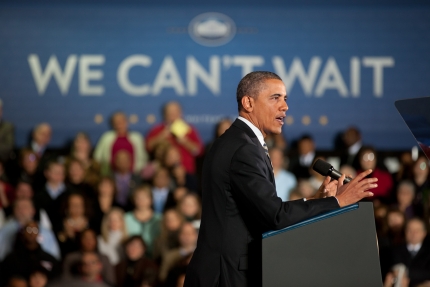
President Barack Obama delivers remarks on the economy at Shaker Heights High School,Shaker Heights, Ohio, Jan. 4, 2012. Richard Cordray, former Ohio Attorney General and nominee as director of the Consumer Financial Protection Bureau shares the stage with the President. (Official White House Photo by Chuck Kennedy)

President Obama was in Shaker Heights, Ohio this afternoon to talk about the fight to help secure a better future for the middle class -- and his decision to appoint Richard Cordray to lead the Consumer Financial Protection Bureau.

Speaking before a packed house at Shaker Heights High School, the President said protecting consumers is too important to wait:

When Congress refuses to act, and as a result, hurts our economy and puts our people at risk, then I have an obligation as President to do what I can without them. I’ve got an obligation to act on behalf of the American people. And I’m not going to stand by while a minority in the Senate puts party ideology ahead of the people that we were elected to serve. Not with so much at stake, not at this make-or-break moment for middle-class Americans. We’re not going to let that happen. 

Richard Cordray, the former attorney general of Ohio, joined President Obama as he spoke, and the President outlined his credentials:

You know, you look at him and you think, this guy is not somebody who’s going around picking fights. And yet, this fight on behalf of consumers is something that Richard has been waging here in Ohio for the better part of two decades.
    
As your attorney general, he helped recover billions of dollars in things like pension funds on behalf of retirees. He protected consumers from dishonest lending practices. Before that, Richard was the state treasurer, where he earned a reputation for working with folks from across the spectrum -- Democrats, Republicans, bankers, consumer advocates -- had a great reputation across the board doing the right thing.
    
And, Cleveland, you’ve seen the difference that Richard can make for consumers, and I have, too. And that’s why I want Richard to keep standing up for you -- not just here in Ohio, but for consumers all across the country.

The job ahead of Mr. Cordray is nothing less than ensuring the integrity of our financial system. The President said:

[We] know what would happen if Republicans in Congress were allowed to keep holding Richard’s nomination hostage. More of our loved ones would be tricked into making bad financial decisions. More dishonest lenders could take advantage of some of the most vulnerable families. And the vast majority of financial firms who do the right thing would be undercut by those who don't.

See, most people in the financial services industry do the right thing, but they're at a disadvantage if nobody is enforcing the rules. We can't let that happen. Now is not the time to play politics while people’s livelihoods are at stake. Now is the time to do everything we can to protect consumers, prevent financial crises like the one that we’ve been through from ever happening again. That starts with letting Richard do his job.

To see the full remarks, watch the video.

Read the Transcript  |  Download Video: mp4 (212MB) | mp3 (20MB)


Related Topics: Economy, Financial Reform, Ohio

Reining in Predatory Lenders with a Consumer Watchdog

20120104 President Obama meets with the Eason family

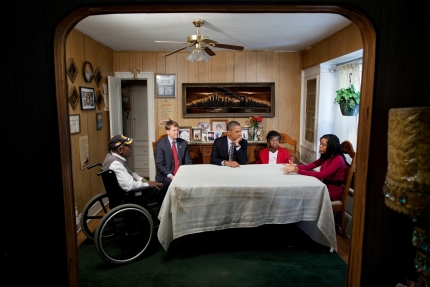
President Barack Obama participates in a discussion with, from left: Mr. William Eason; Richard Cordray, former Ohio Attorney General and nominee as director of the Consumer Financial Protection Bureau; Mrs. Endia Eason; and Deonna Kirkpatrick, Communications Director ESOP (Empowering and Strengthening Ohio's People), at the Eason home in Cleveland, Ohio, Jan. 4, 2012. (Official White House Photo by Pete Souza)

For William and Endia Eason, the trouble began in 2001. Officials in Cleveland issued the couple a citation to make repairs to bring their home up to code.

Then a mortgage broker knocked on their door, telling the Easons that they needed a loan to get the work done. They would go to jail, he said, unless they made the changes, and after telling them it was too late to back out of the loan process, the broker talked the couple into borrowing $8,000 to repair their steps, garage, and roof.

He also convinced them to open up a line of credit -- backed by the deed on their home -- that he said would help them make the changes to the house. The repairs never got done, however, and the loan flipped multiple times.

After living in their home for 30 years, the Easons suddenly found themselves owing almost $80,000. When they fell behind on the payments, the lender started the foreclosure process. In desperation, the Easons reached out to a nonprofit that assists victims of predatory lending -- and with support from that nonprofit, they were able to convince the mortgage company to write off part of the loan and back away from foreclosure. The mortgage broker, on the other hand, made $4,000 from the deal and walked away.

That's the story that William and Endia Eason told President Obama when they met with him today, and it's the perfect illustration for why he appointed Richard Cordray to lead the Consumer Financial Protection Bureau.

This week, CFPB is officially launching a service that could have helped the Easons. They're establishing a 1-800 hotline for mortgage related consumer complaints. The Bureau will forward each issue to the proper financial institution for review and resolution. And if the institution doesn't resolve the issue, CFPB will investigate the complaint directly and make sure that the financial institutions are held accountable under Federal law.

If we'd had the Consumer Financial Protection Bureau ten years ago, the Easons and families like them across the country could have turned to this resource for help.

But going forward, the Bureau will be a watchdog for anyone who owns a mortgage, uses a credit card, or applies for a loan. And that's good news for families like the Easons.

Josh Earnest is Principal Deputy Press Secretary and Special Assistant to the President.

Related Topics: Economy, Financial Reform, Ohio

The White House

Office of the Press Secretary

President Obama Announces Recess Appointments to Key Administration Posts

WASHINGTON, DC – President Obama announced today his intent to recess appoint four individuals to fill key administration posts that have been left vacant.

• Richard Cordray, Director, Consumer Financial Protection Bureau
• Sharon Block, Member, National Labor Relations Board
• Terence F. Flynn, Member, National Labor Relations Board
• Richard Griffin, Member, National Labor Relations Board

President Obama said, “The American people deserve to have qualified public servants fighting for them every day - whether it is to enforce new consumer protections or uphold the rights of working Americans.  We can’t wait to act to strengthen the economy and restore security for our middle class and those trying to get in it, and that’s why I am proud to appoint these fine individuals to get to work for the American people.”

The President announced his intent to recess appoint the following individuals:

Richard Cordray, Director, Consumer Financial Protection Bureau
Richard Cordray is Chief of Enforcement at the Consumer Financial Protection Bureau.  Immediately prior, Cordray served as Attorney General of Ohio from January 2009 to January 2011.  As Attorney General, Cordray recovered more than $2 billion for Ohio’s retirees, investors and business owners and took major steps to help protect its consumers from fraudulent foreclosures and financial predators.  Prior to his tenure as Ohio’s Attorney General, Cordray spent two years as Ohio’s State Treasurer and four as the Treasurer of Franklin County, Ohio.  In 2008, he received a Financial Services Cham pion award from the U.S. Small Business Administration and a Government Service Award from NeighborWorks America.  In 2005, he was named “County Leader of the Year” by American City & County Magazine.  Earlier in his career, Cordray was an adjunct professor at the Ohio State University College of Law (1989-2002), served as a State Representative for the 33rd Ohio House District (1991-1993), was the first Solicitor General in Ohio’s history (1993-1994), and was a sole practitioner and Of Counsel to Kirkland & Ellis (1995-2007).  Cordray has argued seven cases before the United States Supreme Court, including by special appointment of both the Clinton and Bush Justice Departments.  Cordray is a graduate of Michigan State University, Oxford University, and the University of Chicago Law School.  He was Editor-in-Chief of the University of Chicago Law Review and later clerked for U.S. Supreme Court Justices Byron White and Anthony Kennedy.

Sharon Block, Member, National Labor Relations Board
Sharon Block is the Deputy Assistant Secretary for Congressional Affairs at the U.S. Department of Labor.  Between 2006 and 2009, Ms. Block was Senior Labor and Employment Counsel for the Senate HELP Committee, where she worked for Senator Edward M. Kennedy. Ms. Block previously served at the National Labor Relations Board as senior attorney to Chairman Robert Battista from 2003 to 2006 and as an attorney in the appellate court branch from 1996 to 2003.  From 1994 to 1996, she was Assistant General Counsel at the National Endowment for the Humanities, and from 1991 to 1993, she was an associate at Steptoe & Johnson.  She received a B.A. in History from Columbia University and a J.D. from Georgetown University Law Center where she received the John F. Kennedy Labor Law Award.

Terence F. Flynn, Member, National Labor Relations Board
Terence F. Flynn is currently detailed to serve as Chief Counsel to NLRB Board Member Brian Hayes.  Mr. Flynn was previously Chief Counsel to former NLRB Board Member Peter Schaumber, where he oversaw a variety of legal and policy issues in cases arising under the National Labor Relations Act.  From 1996 to 2003, Mr. Flynn was Counsel in the Labor and Employment Group of Crowell & Moring, LLP, where he handled a wide range of labor and employment issues, including collective bargaining negotiations, litigation of unfair labor practices, defense of ERISA claims, and wage and hour disputes, among other matters.  From 1992 to 1995, he was a litigation associate at the law firm David, Hager, Kuney & Krupin, where he counseled clients on federal, state, and local employment and wage hour laws, NLRB arbitrations, and other labor relations disputes.  Mr. Flynn started his law career at the firm Reid & Priest, handling labor and immigration matters from 1990 to 1992.  He holds a B.A. degree from University of Maryland, College Park and a J.D. from Washington & Lee University School of Law.

Richard Griffin, Member, National Labor Relations Board
Richard Griffin is the General Counsel for International Union of Operating Engineers (IUOE).  He also serves on the board of directors for the AFL-CIO Lawyers Coordinating Committee, a position he has held since 1994.  Since 1983, he has held a number of leadership positions with IUOE from Assistant House Counsel to Associate General Counsel.   From 1985 to 1994, Mr. Griffin served as a member of the board of trustees of the IUOE’s central pension fund.  From 1981 to 1983, he served as a Counsel to NLRB Board Members.  Mr. Griffin holds a B.A. from Yale University and a J.D. from Northeastern University School of Law.

President Obama Speaks on Appointing Richard Cordray

January 04, 2012 | 22:21 | Public Domain

President Obama appoints Richard Cordray to be the nation’s top consumer watchdog as Director of the Consumer Financial Protection Bureau.

Download mp4 (212MB) | mp3 (20MB)

Read the Transcript

Remarks by the President on the Economy

Shaker Heights High School
Shaker Heights, Ohio

1:26 P.M. EST

THE PRESIDENT:  Hello, Ohio!  (Applause.)  Ah, it is good to be back in Ohio.  (Applause.)  It is good to be back in Shaker Heights -- (applause) -- home of the Red Raiders.  (Applause.) 

AUDIENCE MEMBER:  Mr. President, I love you!

THE PRESIDENT:  I love you back.  And I'm glad to be back.  (Applause.)  I'm glad to be here. 

I want to thank your mayor, Earl Leiken, for hosting us today; -- (applause) -- your superintendent, Mark Freeman; -- (applause) -- the principal here, Mike Griffith.  (Applause.)  Well, and I know -- I'm pretty sure we've got a couple of congresspeople here, but I don't see them.  Where are they?  Okay, we've got Marcia Fudge.  (Applause.) Marcy Kaptur is here. (Applause.)  Dennis Kucinich.  (Applause.)  Betty Sutton in the house.  (Applause.)  Outstanding members of Congress, doing the right thing every day.  So we thank them all for being here.  (Applause.)

Now, I understand the folks here at this school have a pretty good basketball team.  (Applause.)  Boys and girls.  (Applause.)  Unfortunately, I have no eligibility left.  (Laughter.)  So I can't play with you.

I want to wish everybody a happy New Year -- 2012 is going to be a good year.  (Applause.)  It's going to be a good year.   And one of my New Year's resolutions is to make sure that I get out of Washington and spend time with folks like you.  (Applause.)  Because folks here in Ohio and all across the country -- I want you to know you’re the reason why I ran for this office in the first place.  You remind me what we are still fighting for.  You inspire me.  (Laughter.)  Okay, you do.  You remind me that this country is all about folks who work hard and where responsibility pays off, an America where anybody who puts in the effort and plays by the rules can get ahead. 

That’s the America you deserve.  (Applause.)  That’s the America we’re working to build.  That’s why I told Congress before the New Year they couldn’t leave for vacation until we made sure 160 million working Americans wouldn’t get hit with a tax hike on January 1st.  (Applause.) 

Now, this wasn’t easy.  It should have been easy, but it wasn’t.  But in the end, we got members of both parties to come together and make sure that you could keep more money in your paychecks each month.  And you’re keeping that extra $40 in every paycheck because we made sure that we didn’t stunt the recovery. We made sure that families got the break that they need.  And that means more security for your families.  It also means a boost for our economy at a time when we've got to do everything we can to keep it growing.  Because more money spent by more Americans means more businesses hiring more workers. 

And so when I -- when Congress returns, I’m going to urge them to extend this tax cut all the way through 2012, with no drama, no delay.  (Applause.)  Do the right thing.  It is a no-brainer.  Let’s get it done.  Let’s pass these tax cuts.  (Applause.)

Now, we still have more to do.  So today, we’re taking another important step -- one that will bring us closer to the economy that we need, an economy where everybody plays by the same rules. 

AUDIENCE MEMBER:  Yes!

THE PRESIDENT:  And to help us do that, I’m joined by somebody you might recognize -- Richard Cordray.  (Applause.)  Son of Ohio; a good, good man.  (Applause.)  Today I’m appointing Richard as America’s consumer watchdog.  (Applause.)  And that means he is going to be in charge of one thing:  looking out for the best interests of American consumers.  Looking out for you.  (Applause.) 

His job will be to protect families like yours from the abuses of the financial industry.  His job will be to make sure that you’ve got all the information you need to make important financial decisions.  Right away, he’ll start working to make sure millions of Americans are treated fairly by mortgage brokers and payday lenders and debt collectors.  In fact, just this week, his agency is opening up a simple 1-800 number that you can call to make sure you’re getting a fair deal on your mortgage, and hold banks and brokers accountable if you’re not.  (Applause.) 

Now, I nominated Richard for this job last summer, so you may be wondering why am I appointing him today.  It would be a good question.  (Laughter.)  For almost half a year, Republicans in the Senate have blocked Richard’s confirmation.

AUDIENCE:  Booo --

THE PRESIDENT:  They refused to even give Richard and up or down vote.  Now, this is not because Richard is not qualified.  There's no question that Richard is the right person for the job. He’s got the support of Democrats and Republicans around the country.  A majority of attorney generals -- Richard is a former attorney general -- a majority of attorney generals from both parties across the country have called for Richard to be confirmed.  Your local members of Congress who are here today -- they support him.  He has the support of a majority in the Senate.  Everyone agrees Richard is more than qualified.

So what’s the problem, you might ask.  The only reason Republicans in the Senate have blocked Richard is because they don’t agree with the law that set up a consumer watchdog in the first place.  They want to weaken the law.  They want to water it down.  And by the way, a lot of folks in the financial industry have poured millions of dollars to try to water it down. 

That makes no sense.  Does anybody think that the reason that we got in such a financial mess, the worst financial crisis since the Great Depression, the worst economic crisis in a generation -- that the reason was because of too much oversight of the financial industry?

AUDIENCE:  No!

THE PRESIDENT:  Of course not.  We shouldn’t be weakening oversight.  We shouldn’t be weakening accountability.  We should be strengthening it -- especially when it comes to looking out for families like yours.  (Applause.)

THE PRESIDENT:  The financial firms have armies of lobbyists in Washington looking out for their interest.  You need somebody looking out for your interest and fighting for you, and that's Richard Cordray.  (Applause.)

Now, I have to say Richard is a really nice guy.  (Laughter.)  You know, you look at him and you think, this guy is not somebody who’s going around picking fights.  And yet, this fight on behalf of consumers is something that Richard has been waging here in Ohio for the better part of two decades.  (Applause.)

As your attorney general, he helped recover billions of dollars in things like pension funds on behalf of retirees.  He protected consumers from dishonest lending practices.  Before that, Richard was the state treasurer, where he earned a reputation for working with folks from across the spectrum -- Democrats, Republicans, bankers, consumer advocates -- had a great reputation across the board doing the right thing.

And, Cleveland, you’ve seen the difference that Richard can make for consumers, and I have, too.  And that’s why I want Richard to keep standing up for you -- not just here in Ohio, but for consumers all across the country.

Now, every day that Richard waited to be confirmed -- and we were pretty patient.  I mean, we kept on saying to Mitch McConnell and the other folks, let’s go ahead and confirm him. Why isn’t he being called up?  Let’s go.  Every day that we waited was another day when millions of Americans were left unprotected.  Because without a director in place, the consumer watchdog agency that we’ve set up doesn’t have all the tools it needs to protect consumers against dishonest mortgage brokers or payday lenders and debt collectors who are taking advantage of consumers.  And that’s inexcusable.  It’s wrong.  And I refuse to take no for an answer.  (Applause.)

So I’ve said before that I want to look for every possible opportunity to work with Congress to move this country forward and create jobs.  I’m going to look for every opportunity to try to bridge the partisan divide and get things done -- because that’s what the American people need right now.  And that means putting construction workers back on the jobs repairing our roads and our bridges.  (Applause.)  That means keeping our teachers in the classrooms.  (Applause.)  That means keeping our cops and firefighters doing what they do, protecting us every day.  (Applause.)  That means helping small businesses get ahead.  (Applause.)  That means serving our veterans as well as they’ve served us, like this young man right in the front.  We are grateful for him, for his service.  (Applause.) 

These are ideas that have support from Democrats; they have support from Republicans around the country, independents around the country.  I want to work with Congress to get them done. 

But when Congress refuses to act, and as a result, hurts our economy and puts our people at risk, then I have an obligation as President to do what I can without them.  (Applause.)  I’ve got an obligation to act on behalf of the American people.  And I’m not going to stand by while a minority in the Senate puts party ideology ahead of the people that we were elected to serve.  (Applause.)  Not with so much at stake, not at this make-or-break moment for middle-class Americans.  We’re not going to let that happen.  (Applause.)

For way too long, we’ve had a financial system that was stacked against ordinary Americans.  Banks on Wall Street played by different rules than businesses on Main Street.  They played by different rules than a lot of community banks who were doing the right thing across the country -- hidden fees, fine print that led consumers to make financial decisions that they didn’t always understand. 

Richard and I, before we came here, had an opportunity to visit with a wonderful elderly couple -- the Easons.  And Mr. Eason is a former Marine, served in the Korean War.  Ms. Eason makes a really good sweet potato pie.  She gave me one.  (Applause.)  I’m going to eat it later, after.  (Laughter.)  I didn't want to eat it before because I didn't want to get sleepy having a big piece of pie right before.  (Laughter.)

But their story was the story of a lot of folks in this region, where a mortgage broker came to them, said that they could do some home repair for a few thousand dollars, and they ended up getting scammed; the loans got flipped.  They ended up owing $80,000, almost losing their home, and the repairs were never made. 

Those kinds of practices, that’s not who we are.  We cannot allow people to be taken advantage of.  And it’s not just because it’s bad for those individuals.  All that risky behavior led -- helped to contribute to the economic crisis that we’re all still digging ourselves out of.  All those subprime loans, all those foreclosures, all the problems in the housing market -- that’s all contributing to an economy that’s not moving as fast as we want it. 

And that’s why, last year, we put in place new rules -- new rules of the road to make sure that a few bad apples in the financial sector can’t break the law, they can’t cheat consumers, they can’t put our entire economy in danger.  And many of these provisions are already starting to make a difference.  For the first time in history, we put in place a consumer watchdog -- someone whose only job is to look out for the interests of everyday Americans.

And we are so fortunate to have somebody like Richard who’s willing to do it, despite great sacrifice to his family.  He’s the right man for the job.  (Applause.)

So if you’re a student -- I see some young people out here  -- (applause) -- his job will be to protect you from dishonest lending practices and to make sure that you’ve got the information you need on student loans.  (Applause.)  He has already started up an initiative called “Know Before You Owe.”  (Laughter.)  That’s a good slogan -- “Know Before You Owe.”  You don’t want to owe and then know.  (Laughter.)

If you’re a veteran, he’ll help make sure that you aren’t taken advantage of when you’re coming home from serving your country.  And it turns out that military families are some of the folks who are most vulnerable to some of these financial abuses. 
If you’re a senior, Richard is going to help make sure you don’t lose your home or your retirement because somebody saw you as an easier target.  And that’s what happened to the Easons.  Endia, who I think is here -- Ms. Eason, are you here?  You’re somewhere here.  There’s -- Ms. Eason is down there.  Ninety-one years old.  (Applause.)  And as I mentioned, Ms. Eason’s husband, William, is a former Marine -- also a former boxer.  So don’t mess with him.  (Laughter.) 

And I just want to repeat, 10 years ago they were approached by a broker who offered them a loan to make needed repairs on their home; made everything sound easy.  The Easons agreed.  Broker ended up disappearing.  They get left with $80,000 in debt, almost lose their home.  They didn’t lose it because of the intervention of some terrific non-for-profits that Richard, when he was treasurer here in Ohio, helped to support.  (Applause.)

East Side -- that's right.  (Applause.)

Now, the Easons are good people.  They're what America is all about.  They worked hard.  They served their country.  They saved their money.  They didn't live high on the hog.  It’s a modest house.  They earned the right to retire with dignity and with respect, and they shouldn’t have to worry about being tricked by somebody who's out to make a quick buck.  And they need somebody who is going to stand up for them, and millions of Americans need somebody who is going to look out for their interests.  And that person is Richard Cordray.  (Applause.)

And we know what would happen if Republicans in Congress were allowed to keep holding Richard’s nomination hostage.  More of our loved ones would be tricked into making bad financial decisions.  More dishonest lenders could take advantage of some of the most vulnerable families.  And the vast majority of financial firms who do the right thing would be undercut by those who don't.

See, most people in the financial services industry do the right thing, but they're at a disadvantage if nobody is enforcing the rules.  We can't let that happen.  Now is not the time to play politics while people’s livelihoods are at stake.  Now is the time to do everything we can to protect consumers, prevent financial crises like the one that we’ve been through from ever happening again.  That starts with letting Richard do his job.

So I know -- let me just close by saying this.  I know that you're hearing a lot of promises from a lot of politicians lately.  Today you’re only going to hear one from me.  As long as I have the privilege of serving as your President, I promise to do everything I can every day, every minute, every second, to make sure this is a country where hard work and responsibility mean something and everybody can get ahead.  Not just those at the very top, not just those who know how to work the system, but everybody. 

That's what America has always been about.  (Applause.)  That's what America is going to be about today and tomorrow and 10 years from now and 20 years from now.  And with the help of people like Richard Cordray, that's the country that we will always be. 

Thank you.  God bless you.  God bless the United States of America.  (Applause.)

END
1:48 P.M. EST

Close Transcript