The White House

Office of the Press Secretary

Statement by the Press Secretary on the Death of Cuban Activist Wilmar Villar

President Obama’s thoughts and prayers are with the wife, family, and friends of Wilmar Villar, a young and courageous defender of human rights and fundamental freedoms in Cuba who launched a hunger strike to protest his incarceration and succumbed to pneumonia.

Villar’s senseless death highlights the ongoing repression of the Cuban people and the plight faced by brave individuals standing up for the universal rights of all Cubans.  The United States will not waver in our support for the liberty of the Cuban people.  We will remain steadfast in our outreach to the Cuban people through unlimited Cuban American family visits and remittances, purposeful travel, and humanitarian assistance to dissidents and their families in support of their legitimate desire to freely determine Cuba’s future.

From the Archives: The Inauguration of President Barack Obama

On this day in 2009, Barack Obama was sworn into office as the 44th President of the United States. Watch him take the oath and deliver his inaugural address below, and read the full transcript here.

At 12:01 that day, the very first post on the White House blog went up. Read it here now: Change Has Come to WhiteHouse.gov.

Related Topics:

West Wing Week: 01/20/12 or "The Time is Always Right to Do What is Right"

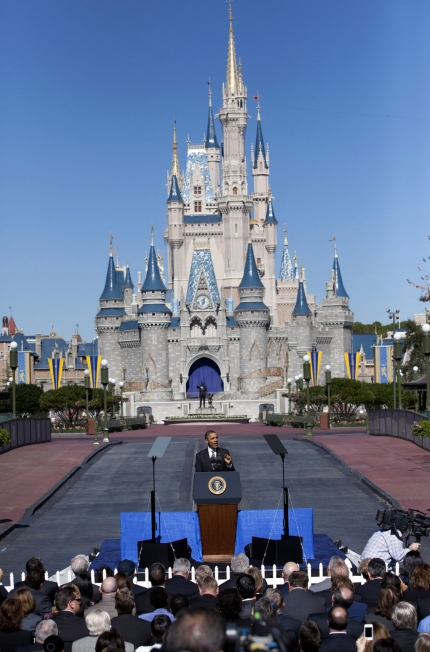
This week, the President called for government reform through reorganization and a new Cabinet position, honored Martin Luther King, Jr., welcomed the Tuskegee airmen, the King of Jordan, and the 2011 World Series Champs, and traveled to the Magic Kingdom to unveil the latest “We Can’t Wait” action.


Related Topics: Economy, Pennsylvania

West Wing Week: 1/20/12 or "The Time is Always Right to do What is Right"

January 19, 2012 | 4:27 | Public Domain

Welcome to the West Wing Week, your guide to everything that's happening at 1600 Pennsylvania Ave. This week, the President called for government reform through reorganization and a new Cabinet Position, honored Martin Luther King, Jr, welcomed the Tuskegee Airmen, the King of Jordan and the 2011 World Series Champs, and traveled to the Magic Kingdom to unveil the latest “We Can’t Wait” action to aid job creation through executive action. That's January 13th to January 19th or "The time is always right to do what is right."

Download mp4 (140MB)

The White House

Office of the Press Secretary

Remarks by the President at a Campaign Event

Private Residence
New York, New York

8:04 P.M. EST

THE PRESIDENT:  I am so thrilled to be here, not only because of the extraordinary hospitality of Spike and Tonya and Jackson and Satchel, but also because I see a lot of good friends around the room.  And so I just want to thank you in advance for everything that you’ve done in the past and everything that I know you’re committed to doing this year.

Tonya, I saw Bamboozled a while back.  (Laughter.)

MR. LEE:  Sleep and eat! 

MS. LEE:  Sometimes you got to wonder.  (Laughter.)

THE PRESIDENT:  Some of you may not remember that film -- which is okay.  (Laughter.)  On the other hand, I prefer to tell the story, which I told when you guys hosted us in Martha’s Vineyard, about a little known fact -- I’m not sure this has been reported by the press -- that on my first official date with Michelle I took Michelle to see Do the Right Thing.  (Applause.)  First official date. 

MR. LEE:  You remember what I said?

THE PRESIDENT:  Yes.

MR. LEE:  I said, good thing you didn’t choose Driving Miss Daisy.  (Laughter and applause.)

THE PRESIDENT:  That’s true.  Spike wasn’t maybe quite as famous, as the movie had just come out, and I was showing my sophistication in selecting this independent filmmaker, and she was impressed.  And I think --

MR. LEE:  Glad to help you.  (Laughter.)

THE PRESIDENT:  I’m just saying, I think you helped me out that day.  (Laughter.)  So it worked out -- which is why I’ve always had a soft spot for Spike Lee in my heart.  What I’ve also always enjoyed is Spike serving as a foil for my Chicago Bulls -- (laughter) -- year after year after year after year.  (Laughter.) 

But these guys, it’s true, they have been great friends ever since I started this incredible journey in politics on the national scene.  And to see their incredibly accomplished and good-looking children, and to see how well Tonya has done with her writing, it’s just wonderful.

So thank you so much for hosting this --

MR. LEE:  Thank you.

THE PRESIDENT:  -- spectacular event.  (Applause.)

I’m going to be very brief so that we have some time for questions and conversation.  We’re obviously at a historic moment in this country’s history.  We’re coming off of the worst financial crisis since the Great Depression -- an economic contraction of the likes that we haven’t seen in our lifetime.  Around the world there are transformations taking place in the Middle East, in Eastern Europe and Asia that are extraordinarily challenging.

But this is also a moment of great promise.  And what we’ve tried to do over the last three years is to not only solve a crisis, not only make sure that we didn’t tip into a Great Depression, and started getting economic growth going again and jobs growing again -- we’ve now had 22 straight months of private sector job growth and the economy is on the mend, although not where it needs to be -- not only have we been able to end a war in Iraq and start managing a transition in Afghanistan, not only have we passed historic health care legislation that’s already having an impact on 2.5 million young people who have health insurance as we speak because of that law, and been able to end practices like “don’t ask, don’t tell,” that were so fundamentally contrary to who we are as a country, but what we’ve also tried to do is begin to lay the foundation to deal with problems that have been building up for decades.

An education system that is still not where it needs to be to make sure that our young people can compete in the 21st century.  Making sure that we have a tax code that is fair and equitable, so that hardworking Americans don't feel like other folks are playing by a different set of rules.  Making sure that our financial system is stable and conducive to economic growth, as opposed to just speculation and arbitrage.

And so what we’ve also tried to do is to take a long view about where America needs to be in order for us to succeed in this 21st century, not for us -- everybody in this room is going to be doing fine -- but for children and grandchildren and future generations who are going to be able to proudly say that America continues to be the land of opportunity, and it continues to be the one indispensable nation around the world that people look to for leadership and clarity of values.

I couldn't be prouder of the track record we’ve established over the last three years.  But we’ve got a lot more work to do.  And the only way we’re going to accomplish it is to win this election.  We could not have a sharper contrast this year than is going to be presented.  And if some of you want to wander off to watch the debate -- (laughter) --

AUDIENCE MEMBER:  No, thank you!

THE PRESIDENT:  If you need some motivation -- (laughter)  -- feel free.  Because the country actually is not as divided as Washington is.  I think people still are looking for common-sense solutions.  I think people believe that we can have economic growth and make sure that the ladders of upward mobility are still there for everybody.  I think people believe that we can be tough on those who would try to do us harm, but still abide by due process and our values. 

I think people believe that it’s possible for us to grow and to build, but still conserve our incredible natural resources and make sure we’re passing on a planet that is livable for the next generation. 

I think people believe that there’s no contradiction between excellence and diversity, and that making sure that everybody -- regardless of race or gender or sexual orientation -- is able to live out their dreams if they’re willing to work hard and be responsible, that that's what America is all about.  I think most people believe that.  But it’s those values of hard work and responsibility, everybody getting a fair share -- everybody getting a fair shake and everybody doing their fair share and everybody playing by the same set of rules -- that’s what’s at stake in this election. 

And I’m absolutely confident we’re going to win this thing.  But the reason I’m confident is because of the people in this room.  The reason I’m confident is because of the folks I meet out on the campaign trail.  The reason I’m confident is I have extraordinary faith in the American people.  And if we’re working hard, if we’ve got as much passion and energy and focus as we did in 2008, we’re going to win, because our vision of the country I think is more consistent with who we are and our history. 

But we can’t take it for granted.  There are going to be a lot of headwinds.  The economy is still in tough shape for a lot of people.  And I am, as the most visible elected official in the land, rightly held more responsible than anybody else for things I control and for things I don’t control.  And that means that we’re going to have to go out there and actively make the case. 

So part of my message to all of you is, as wonderful as it is to be in this elegant setting with these elegant people, we’re also going to have to hit the streets.  And we’re also going to have to persuade friends and family and coworkers, and knock on doors and make phone calls and raise money.   

And not all of it is going to be glamorous and not all of it is going to be elegant and not all of it is going to be fun.  But things that are worthwhile are always hard.  And change is hard, but you should take confidence from the last three years that change is possible. 

And I promise you that one commitment I will make to you tonight is that I will work even harder this year than I did in 2008 and I’m even more passionate about this election.  (Applause.)  I’m more determined than I was in 2008 that we're going to win in 2012. 

So, thank you very much, everybody.  Thank you.  (Applause.)

END 
8:14 P.M. EST

The White House

Office of the Press Secretary

Remarks by the President at a Campaign Event

Apollo Theater
New York, New York

THE PRESIDENT:  Hello, New York!  (Applause.)  Hello, New York!  Hello, Harlem!  (Applause.)  Ah, it is good to be here tonight!  (Applause.)

AUDIENCE:  Four more years!  Four more years!  Four more years! 

THE PRESIDENT:  Thank you so much. 

I want to begin by just thanking Ny for the incredible introduction and being such a great mom.  And we're so proud of her.  (Applause.)  Thank you.  I want to thank our emcee,     Lin-Manuel Miranda -- we appreciate you.  (Applause.) 

I want to thank the incredible performers this evening -- (applause) -- one of my favorites, India Arie in the house.  (Applause.)  There she is.  I love India.

And then to know that Reverend Al Green was here -- (applause.)  (Sings) -- "I'm so in love with you" -- (applause.)  Those guys didn’t think I would do it.  I told you I was going to do it.  (Laughter.)  The Sandman did not come out.  (Applause.)  Don't worry, Rev., I cannot sing like you.  But I just wanted to show my appreciation.  (Laughter.)

I also want to acknowledge a couple of outstanding members of Congress with us here today -- Congressman Charlie Rangel -- (applause) -- and Congressman Jerry Nadler are in the house.  (Applause.)

All right, you guys have a seat.  I've got something to say.  (Applause.)

AUDIENCE MEMBER:  Thank you, Mr. President.

THE PRESIDENT:  Thank you.  (Applause.)  No, thank you.  Because I am here tonight not just because I need your help; I’m here because your country needs your help.  (Applause.)  

There was a reason why so many of you got involved in the campaign in 2008, worked your hearts out.  And it wasn’t because you thought it was going to be easy.  When you decide to support somebody named Barack Hussein Obama for President you're not doing it because you think it's a cakewalk.  (Laughter.) 

You did it because you understood the campaign wasn’t about me.  It was about a vision that we shared for America.  A vision that wasn’t narrow and cramped.  It wasn’t an idea that in America you just look out for yourself, and the most powerful among us can just play by their own rules.  It was a vision that was big and compassionate and bold, and it said, in America, if you work hard you've got a chance.  You got a chance to get ahead.  Doesn’t matter where you were born.  It doesn’t matter what you look like.  (Applause.)  It doesn’t matter what your name is.  If you’re willing to work hard, if you got some talent, some idea, if you’re motivated, you can make it. 

And it was a vision that said we’re greater together than we are on our own.  (Applause.)  That when everybody gets a fair shot and everybody does their fair share and everybody is playing by the same set of rules, then we all do better.  (Applause.)  We all do better.

That’s a vision we shared.  That was the change we believed in.  And we knew it wasn’t going to come easy.  We knew it wouldn’t come quickly.  We knew there would be resistance.  We knew there would be setbacks.  But because of what you did in 2008, we’ve started to see concrete examples of that change. 

Think about it.  Change is the first bill I signed into law that enshrines a very simple proposition:  You get an equal day’s pay for an equal’s day work, because we want our daughters treated just as well as our sons.  (Applause.)  That’s what change is.

Change is the decision we made to rescue the auto industry from collapse -- (applause) -- even when there were folks saying no, and wanted to let Detroit go bankrupt.  And now, one million jobs were saved, and local businesses have picked up again, and GM is once again the largest auto company in the world.  (Applause.)  And we are seeing cars rolling off those assembly lines stamped with three proud words:  Made in America.  (Applause.)

Change is the decision we made to stop waiting for Congress to do something about our oil addiction, and finally raised our fuel efficiency standards on our cars so that by the next decade, every car is going to be getting 55 miles per gallon.  (Applause.)  That will save you money.  That will save our environment.  It’s good for our national security.  That’s what change is.  We got that done.

Change was the fight that we had to stop sending $60 billion in unnecessary subsidies to the banks in the student loan program -- take that $60 billion out, give it directly to the students so that millions of young people all across America are able to afford a college education.  (Applause.)  That’s change. 

Change is the health care reform bill that we passed after a century of trying -- (applause) -- that says, if you get sick in America, you will not go bankrupt.  And we’ve already got 2.5 million young people with health insurance who didn't have it, and seniors getting help on their prescription drugs.  (Applause.)  And Americans won’t be denied coverage because of preexisting conditions or insurance companies dropping them right when they need the care most.  That’s what change is.  (Applause.)

Change is the fact that for the first time in our history, you don't have to hide who you love in order to serve this country that you love.  (Applause.)  “Don’t ask, don’t tell” is over.  We don't believe in discrimination in this country.  (Applause.)  That’s part of who we are.  That’s what change is. 

And change is keeping one of the first promises I made in 2008.  We ended the war in Iraq and we brought our troops home.  (Applause.)  And in the meantime, we refocused our efforts on the terrorists who actually attacked us on 9/11.  (Applause.)  And thanks to the extraordinary men and women in uniform and our intelligence agencies, al Qaeda is weaker than it’s ever been, and Osama bin Laden will never walk this Earth again.  That’s what change is.  (Applause.)

Now, you guys have been paying attention.  None of this has been easy.  Some of it was risky.  We were opposed by lobbyists and special interests.  Millions of dollars were spent trying to maintain the status quo.  And a lot of the things we did weren’t always popular at the time, certainly not with the crowd in Washington. 

But part of the reason we were able to get it done is because of you, because I knew that all across America your voices were still being heard.  You guys were still knocking on doors.  You were making phone calls.  You were rooting for us, because you understood that as hard as this was, it was consistent with the vision that we campaigned so hard to bring about. 

You kept up the fight long after the election was over.  And that should make you proud.  And it should make you hopeful.  It shouldn’t make you complacent, it shouldn’t make you satisfied, because everything we did over the last three years is now at stake in this election.  The very core of what this country stands for -- that idea that no matter who you are, you can make it; the idea that we’re all in it together; the idea that if there’s a child somewhere who's not getting a good education, that affects me; the idea that if there’s a senior somewhere losing her home, that affects me -- that idea is at stake in this election.  (Applause.)

The crisis that struck in the months before I took office put more Americans out of work than any time since the Great Depression.  We’ve got a chart that shows in the months right before I took office, 4 million jobs lost; the months right after I took office, another 4 million, before our economic policies had a chance to take effect.

We’ve been growing ever since.  (Applause.)  We’ve been adding jobs ever since.  But this was a profound crisis.  But it was also a culmination of a decade where middle-class families fell further and further behind, and more and more good jobs, manufacturing jobs left our shores.  And suddenly, our prosperity was built on risky financial deals, or homes we couldn’t afford, or everybody running up their credit cards.  And we racked up greater and greater debt, and incomes fell and wages flat-lined, and the cost of everything from college to health care to food went through the roof. 

These problems didn’t happen overnight; we weren’t going to solve them overnight.  It’s going to take more than a few years to meet the challenges that have been decades in the making.  The American people understand that.  What they don’t understand is leaders who refuse to take action.  (Applause.)  They’re sick and tired of watching people who are supposed to represent them put party ahead of country, or the next election before the next generation.  (Applause.)  

President Kennedy once said -- after he took office he said, the thing that surprised him most about Washington was that it was as bad as he had been saying it was.  (Laughter.)  I can relate to that.  (Laughter.)  You’ve got the top Republican in the Senate who said his top priority was beating me.  (Laughter.)  That’s his top priority. 

My top priority is putting Americans back to work.  (Applause.)  My top priority is making sure our kids are getting a good education.  (Applause.)  My top priority is making sure that everybody has affordable, accessible health care.  (Applause.)

His top priority is beating me.  That shows you things aren’t on the level.  That’s how you end up with the Republicans in Congress voting against proposals that they used to support.  (Applause.) 

You saw them in December all tied up in knots because we were proposing tax cuts for workers and small businesses, and they always said they were the party of tax cuts.  Suddenly -- (laughter) -- didn’t know what to do.  Proposals to rebuild roads and bridges -- that didn't used to be a Democratic issue.  It used to be we understood building America was good for America.  Putting cops and teachers back to work, back in the classroom, back on the streets.  (Applause.)  They will fight with everything they have to protect tax cuts for me, for the wealthiest Americans, and then, suddenly, they get confused when it comes to tax cuts for the middle class.

Now, maybe they thought this was smart political strategy.  Maybe they thought it would advance Mitch McConnell’s agenda to beat me.  But it’s not a strategy to create jobs.  It’s not a strategy to strengthen our middle class.  It’s not a strategy to help America succeed. 

So we’ve got a choice this year.  We have not seen a choice this stark in years.  (Applause.)  I mean, even in 2008, the Republican nominee wasn’t a climate change denier.  (Laughter.)  He was in favor of immigration reform.  He was opposed to torture.  (Laughter and applause.) 

The contrast this year could not be sharper.  So the question is not whether people are still hurting; people are still hurting profoundly.  A lot of folks out there still out of work looking for work.  The question is, what do we do about it?  The debate that we need to have in this election is about where do we go from here. 

The Republicans in Congress, the candidates running for President, they’ve got a very specific idea about where they want to take this country.  (Laughter.)  They want to reduce the deficit by gutting our investments in education, by gutting our investments in research and technology, by letting our roads and our bridges and our airports deteriorate. 

I’ve already signed a trillion dollars’ worth of spending cuts, proposed even more.  And I think it’s time for us to reduce the deficit by asking those of us who are most fortunate to pay their fair share.  (Applause.)  To pay their fair share.  (Applause.) 

And by the way, let me just say this -- because I’ve been hearing a lot of these Republicans talking about, oh, that’s class warfare, and he just wants to redistribute, and doesn’t believe in work, and he’s trying to create an entitlement society, and this and that and the other.  Let me be absolutely clear:  I should pay more taxes, and folks in my income bracket should pay more taxes, and certainly folks who are making billions of dollars should pay more taxes, not because I want to take their money and just give it to somebody else.  It’s because we’ve got basic investments and basic functions that have to be carried out in this 21st century if we’re going to be able to compete.

We’re going to have to train our young people so that they can get the high-skilled jobs of the future.  (Applause.)  We’re going to have to make sure that we’ve got the best broadband lines and the best infrastructure to move products and services.  We’re going to have to make sure that we have the basic science and technology research that allows us to stay on the cutting-edge of innovation, because other countries are making these investments and they’re catching up.

And if we are going to do all that without leaving a mountain of debt for our kids, while still maintaining the strongest military on Earth, while still making sure that Social Security and Medicare are there for future generations, that our seniors are protected -- then all of us have to do our part.  (Applause.) 

And that should not be a Democratic idea or a Republican idea.  It’s about responsibility.  It’s about taking responsibility for the country.  (Applause.)  And when all of us take responsibility, we all do better.  That’s the idea.  (Applause.)  

The Republicans in Congress and on the campaign trail, these guys running for President -- (laughter) -- want to -- why do you laugh?  (Laughter.)  They’re running for President.  (Laughter.)  They are.  And they want to take Medicare and make it a form of private insurance, so that seniors shop around with a voucher, even if it doesn’t cover the costs of their medicine or their care. 

Now, I think we can lower the cost -- we have to lower the cost of Medicare -- with reforms that still guarantee a dignified retirement for seniors, because they’ve earned it.  (Applause.)  These folks act like this is an entitlement that was unearned.  Folks paid into this system.  They worked hard to have some sense of security.  (Applause.)  Our reforms should reflect that.   

They think the best way for America to compete for new jobs and businesses is to follow other countries in a race to the bottom.  So they say, well, look, if -- China lets you pay low wages, so they want to roll back our minimum wage or our right to collectively bargain.  They say, well, if companies can pollute in some of these other countries, so they want to get rid of protections that ensure we have clean air and clean water. 

Look, we should not have any more regulation than is required for the health and safety of the American people.  Nobody likes red tape.  Nobody likes bureaucracy.  That’s why I actually -- I’ve reformed government so that we initiated fewer regulations than the previous administration, with a lot more benefit, much lower costs relative to the benefits, looking to streamline government.  We’re saving businesses billions of dollars in reduced paperwork.  So we are not interested in regulation for regulation’s sake.  But I do not believe in this notion that we should have a race to the bottom.  That shouldn’t be what we’re competing for. 

We should be competing to win that race to the top.  We should be competing to make our schools the best in the world.  (Applause.)  We should be competing to make sure that our workers have the best skills and the best training so they get the best pay.  (Applause.)  We should be making sure that college is within reach of everybody.  (Applause.) 

We should be in a race to give our businesses the best roads and airports.  We should be in a race to support the scientists and the researchers -- (applause) -- that create the next clean-energy breakthrough, or the medicine that might cure pernicious diseases.  We should be in a race to make sure that the next generation of manufacturing doesn’t take root in Asia or in Germany, but takes root in Detroit, and in Pittsburgh, and in Cleveland, and in New York.  (Applause.)  I don’t want this to be a nation that just buys and consumes and borrows.  I want us to be known for building and selling all over the world.  (Applause.)

And that’s a race -- this competition for middle-class security, for advanced technology, for having the best workers in the world -- this is a race I know we can win.  But America is not going to win if we do the same things, if we respond to our economic challenges with the same old, tired "cut taxes for wealthy people; let companies do whatever they want even if it’s harming other folks, and somehow prosperity is going to trickle down to everybody else."

AUDIENCE:  Booo --

THE PRESIDENT:  Look, we tried that.  (Laughter and applause.)  I don’t know if you remember, but we tried that.  It never worked.  It didn’t work when it was tried in the decade before the Great Depression.  It’s not what led to the incredible boom in the '50s and the '60s that created the greatest middle class on Earth.  It did not work back in 2001 and ’02, and ’03, and ’04, and ’05, and ’06 -- (laughter) -- where we had the slowest job growth of any decade. 

We can’t go back to this brand of you’re-on-your-own economics.  I believe we’ve got a stake in everybody’s success.  If we can attract outstanding teachers by giving her the pay and the support and the training she deserves, she is going to educate the next Steve Jobs.  (Applause.)  And not only will we have whatever the next iPad is, but we’ll also all see the economy grow.

If we provide faster Internet service to some rural business somewhere and now suddenly they have access to the entire global market, or some business right here in Harlem that’s selling something that previously they could only sell in a few blocks and now they can sell it anywhere, that means suddenly they can start hiring more workers.  They’ve got customers now all over the world.  (Applause.)  Countries will do better -- our whole country will do better.

This is not a Democratic idea or a Republican idea.  Abraham Lincoln, first Republican President -- he understood this -- launched the Transcontinental Railroad, the National Academy of Scientists -- or of Sciences, the first land-grant college, all while dealing with the Civil War.  A Republican. 

Teddy Roosevelt called for a progressive income tax, because he understood that you can’t pretend you’re for equality of opportunity when you have huge inequality and you’re not creating ladders for success for people.  A Republican.  

Dwigh Eisenhower built the Interstate Highway System, invested in math and science education so we could compete in the race to space.  Republican. 

There were Republicans in Congress that supported FDR giving millions of returning heroes, including my grandfather, the chance to go college on the G.I. Bill.  (Applause.)  That idea is as old as this country. 

And that idea, it’s still there.  That sense of common purpose, it’s still there.  We tapped into it in 2008, and it’s still out there all across the country.  I see it everywhere I go.  It may not be in Washington, it may not be in Congress, but it’s out there.  You talk to folks on Main Streets, town halls, VFW halls, barbershops -- they understand this.  Our politics may be divided, but people understand we’re all in this together.  (Applause.)  They understand that no matter who we are, we rise or fall as one nation and as one people.

And that’s what’s at stake right now.  That’s what this election is about. 

Now, I know these have been three tough years.  I know that some of the change folks wanted hasn’t come as fast as people hoped for.  I know that after all the stuff that has gone on in Washington, it’s tempting sometimes to just say, you know what, it’s not possible; the system’s broken; we give up.  That’s tempting.  But remember what I used to say in the last campaign.  I said this -- I repeated it over and over again:  Real change, big change, it’s hard.  It takes time.  It takes more than a single term.  It takes more than a single President. 

What it takes is ordinary citizens like you who just keep on fighting, keep pushing, keep inching the country closer and closer and closer to our ideals.  That’s how the Greatest Generation defeated fascism and yanked us out of a Great Depression and built the largest middle class in history.  That’s how young people from every background were able to suffer billy clubs and fire hoses to ensure that our children grew up in a country where your race is no barrier to what you can become.  (Applause.)

Change is hard, but we know it’s possible.  We’ve seen it.  I’ve lived it.  I’ve lived it.  I’ve seen it. 

And so, as we go into this election year, I want everybody to understand, yes, my hair is grayer, yes, we’ve got some dings and some dents, and, yes, this financial crisis has been a wakeup call, but you know what, there is no other country that doesn’t envy our position.  They understand that this country is still that last, best hope.  (Applause.)  And they are counting -- the world is counting, and our fellow citizens are counting on us not giving up, not giving into despair. 

If you want to end the cynicism and the game-playing and the point-scoring and the sound bytes that pass for politics these days, then you’ve got to send a message this year, starting right now, that you refuse to back down; that you will not give up; that you intend to keep hoping and keep pushing and keep fighting just as hard as you did four years ago.  You are going to keep believing in change.  (Applause.) 

And if you are willing to do that, if you are going to work just as hard, if you’re able to generate that same passion and commitment, then I’ll be there next to you.  Because I’ve often said -- I said in 2008, I’m not a perfect man.  I’m not a perfect President.  But I promise you that I’ve kept that promise I made to you in 2008, I would always tell you what I thought, I would always tell you where I stood, and I would wake up every single day fighting as hard as I can for you.  (Applause.)

I am just as determined now as I was then.  (Applause.)  And if you are willing to stand alongside me, we will knock those obstacles out of the way.  We will reach for that vision of America that we believe in -- in our hearts -- and change will come.  (Applause.)  If you will work harder than you did last time, change will come.  (Applause.) 

If you keep on believing, we’ll finish what we started in 2008.  Change will come.  If you fight with me and press on with me, I promise you change will come.  And we will remind everybody just why it is that the United States of America is the greatest nation on Earth.

Thank you.  God bless you.  God bless the United States of America.  (Applause.)

END               
10:30 P.M. EST

President Obama on Boosting Travel and Tourism

January 19, 2012 | 12:34 | Public Domain

Speaking from Disney World, the President unveils plans to establish a new national tourism strategy focused on creating jobs.

Download mp4 (120MB) | mp3 (12MB)

Read the Transcript

President Obama Promotes Tourism from Disney World

[[nid:114007]]

In the United States, tourism is big business. In fact, it's the number one service that we export. In 2010, we welcomed nearly 60 million international visitors to America, and they helped to boost our economy to the tune of $134 billion.

And President Obama thinks we should do even more to boost that trend, which is why he traveled to Walt Disney World in Orlando, Florida. Speaking from Main Street USA, he announced:

[Today,] I directed my administration to send me a new national tourism strategy focused on creating jobs. And some of America’s most successful business leaders –- some who are here today –- have signed up to help. We’re going to see how we can make it easier for foreign tourists to find basic information about visiting America. And we’re going to see how we can attract more tourists to our national parks. We want people visiting not just Epcot Center, but the Everglades, too. The more folks who visit America, the more Americans we get back to work.  It’s that simple.   

The President said that his goal is to ensure that the United States is the top tourist destination in the world. He announced efforts to expand the Global Entry Program, which makes it easier for frequent visitors to the United States -- who've undergone a background check -- to travel in and out of our borders. He told the audience that he'd directed his administration to add additional nations to the list of those whose citizens are allowed to visit America without a tourist visa.

And in changing world where the middle class is booming in places like China, India, and Brazil, the President announced steps to make it easier for people from those countries to choose the United States as a place for their vacations:

[Today] I’m directing the State Department to accelerate our ability to process visas by 40 percent in China and in Brazil this year. We’re not talking about five years from now or 10 years from now -- this year.

These are all things the President is doing right now -- as part of the We Can't Wait campaign.

Do you think your community is a great place to visit? Tell us about it on Twitter using the hashtag #VisitUS.

Close Transcript

The White House

Office of the Press Secretary

Remarks by the President at a Campaign Event

Bellecour Reception Area
Daniel Restaurant
New York, New York

6:15 P.M. EST

THE PRESIDENT:  Hello, everybody!  Hello!  Hello!  (Applause.)  Everybody, please have a seat.  Have a seat.  Thank you.  You’re going to make me blush.  (Laughter.)  Well, it is wonderful to be back in New York and it is wonderful to be with all of you. 

I understand that you already had a chance to talk with the outstanding junior senator from New York, and Kirsten is doing a wonderful job, so all of you guys should be very proud.  I’m sure that a number of you supported her in previous campaigns and will continue to do so.

As I look around the room I see some old friends -- not in years, but -- some of you in years -- (laughter) -- but who have known me for a very long time, people who supported me in my first U.S. Senate race -- Andy supported me in my first state Senate race.

Q    Bobby Rush.  

THE PRESIDENT:  That’s exactly right. 

I’m going to speak very briefly at the top because I want to spend most of my time in conversation.  We’re obviously living through a historic time.  We just went through the worst financial crisis in our history since the Great Depression, worst financial crisis.  We have an Arab Spring that is transforming an entire region of the world.  The structure of the global economy, the changes in technology all are happening at a breathless pace.

And I think that -- when I think back to the last three years, I could not be prouder of what we’ve been able to do in averting a depression, saving an auto industry.  We’ve now seen 22 consecutive months of job growth in the private sector.  We’re starting to see manufacturing come back to the United States. 

On the international stage we’ve been able to manage the end of one war and the beginning of a transition of another.  We have been on the right side of democracy.  We’ve strengthened our alliances, restored respect for the United States around the world. 

On issues of equity and the values that we care most deeply about, we’ve made enormous advances -- ending “don’t ask, don’t tell" -- (applause) -- making sure that equal pay for equal work is -- (applause) -- appointing two really smart women to the Supreme Court.  (Applause.)

But we have so much more work to do.  We’ve got so many things that remain to tackle.  We have an economy that, although now is getting close to where we were before the financial crisis struck, continues to struggle with these long-term trends that had been going on for decades, where middle-class families felt less and less secure; where the education system wasn’t equipping our kids to compete in a global economy; where we had an absence of an energy policy; a health care system that was bleeding companies and the federal treasury dry, and not providing any care for millions of people.

And so part of our task is to tell a story about everything that we’ve gotten done over the last three years so that people have confidence that change is possible.  It’s not easy, it’s messy, there are times where it’s frustrating, sometimes we experience setbacks -- but change occurs, meaningful change that concretely helps people’s lives.  But even as we tell that story, we’ve also got to tell a story about where this country needs to go. 

I’ve never felt more confident about the capacity of America to meet the moment and assure a solid future for our kids and our grandkids.  But it’s going to require more work, and it’s going to require us making good choices.  And this year is going to be as stark a choice as we have seen -- a starker choice than we saw in 2008. 

I mean, think about it.  In 2008, I was running against a Republican nominee who agreed that we should ban torture, agreed that we should close Guantanamo, believed in climate change, had worked on immigration reform.  And so as profound as the differences were between myself and John McCain, there was some sense of convergence when it came to some very important issues. 

If you’ve been listening to the Republican debates, they have moved.  (Laughter.)  I’ve stayed here.  (Laughter.)  They’ve gone in a different direction.

Now, that’s going to make for a hugely important, hugely consequential election -- partly because we need to win this election to consolidate all the gains that we’ve made over the last three years and make sure that financial reform is actually implemented effectively and not watered down, and somebody like a Richard Cordray as the head of the Consumer Financial Protection Bureau is able to prevent people from being subjected to predatory lending; partly because health care reform still has to be implemented. 

We already have 2.5 million young people who have insurance because of that bill, and millions of seniors who are saving money on prescription drugs because of that bill.  But there are a whole bunch of folks with preexisting conditions who are still going to need help, and a whole bunch of working families who still don't have health insurance and they’re going to need those exchanges that we’re setting up put in place so that they can get affordable health care. 

But it’s not just a matter of implementing many of the things we’ve already done.  It’s a matter of meeting the requirements to get to where we need to go.  We’re going to have to solve this fiscal crisis that we’re in, in a way that’s balanced and fair, and in which everybody does their fair share. 

We’re going to have to make sure that we are investing in community colleges and early childhood education, so that everybody genuinely has a fair shot.  We’re going to have to rebuild America.  In a city like New York, we’ve got tens, hundreds of billions of dollars of infrastructure work where we could put construction workers, right now, who are sitting at home, back to work, making ourselves more productive to meet the challenges of a 21st century economy.

We’re going to have to make sure that the budgets for the NIH and NSF and all our basic research in science is maintained so that we continue to be the leading innovators in the world.

We’re going to have to make sure that all the work we’ve done over the last three years to restore America’s standing in the world, that that’s preserved, and that people everywhere continue to see America as the one indispensable nation in assuring that there’s an international order that thinks about everybody, and not just thinks in terms of raw power.

So this is a big deal, this race.  And I am very confident about our prospects.  As tough as the economic environment is, as many headwinds as we’re experiencing, I believe we’re going to win.  But that belief is premised on my confidence in you, that you guys are going to step up, that you are going to show the same kind of resolve and determination and enthusiasm that you showed in 2008. 

If you do, then I think we’ll win the argument, because I think we have a better vision for the future.  And I continue to have this profound confidence and faith in the American people, and that a vision of a America that gives everybody opportunity and is inclusive, and considers our values important to project around the world and in our own government -- I think that’s what they want to -- that’s how they think about America as well.

So I hope all you guys are ready to go --

AUDIENCE MEMBER:  Fired up.

THE PRESIDENT:  I hope you’re fired up.  (Laughter.)  And I don't -- I’m glad you guys wrote checks, but I don't just want your money.  I’m going to want your ideas and your time and your energy and your effort.  And if you give me that, I promise you I will be working harder this time than I did in 2008.  All right?

Thank you very much, everybody.  (Applause.)

END
6:25 P.M. EST

The White House

Office of the Press Secretary

Remarks by the President at a Campaign Event

Main Reception Area
Daniel Restaurant
New York, New York

5:18 P.M. EST

THE PRESIDENT:  Thank you!  Thank you so much.  Thank you, everybody.  (Applause.)  Thank you, everybody.  Please have a seat.

It is wonderful to be back in New York, and it is wonderful to be among so many wonderful friends.  As I look around the room, I’ve got people who’ve supported me when nobody could pronounce my name -- (laughter) -- and I was running for the United States Senate.  In fact, I’ve got a couple people here who supported me when I was running for the State Senate.  (Applause.)  My Chicago contingent here.  (Laughter.)   

I want to thank all the organizers who helped pull this together.  I also want to give a special shout-out to one of the finest mayors that this city has ever had, Ed Koch, who's here.  (Applause.)  We are grateful to him. 

We’re going to spend most of our time in a conversation.  I don't want to give a long speech -- partly because I have three more events tonight.  (Laughter.)  But the main reason is I want to save most of the time for a conversation and a dialogue between us.

But let me just, first of all, say that we’re obviously living in historic times.  When I first came into office, we were going through the worst financial crisis since the Great Depression, and so, understandably, a lot of my time and most of the country’s attention was consumed by, how do we get America back on its feet. 

But we were also in the midst of two wars.  We were also coming out of a period in which America’s leadership around the world had declined.  And what we’ve been able to do I think over the last three years is to not only avert a Great Depression, not only save an auto industry, not only get the economy moving in the right direction -- although we’ve still got a long way to go -- but we were also able to end a war that had distracted us from our most ardent enemies; we were able to decimate al Qaeda; we were able to beef up what we were doing in Afghanistan in a way that now allows us to take a transition and start bringing our troops home there, and turn over the security needs of the Afghan people to Afghan security forces.

But what we were also able to do I think is to restore a sense of America as the sole, indispensable power -- a country that, whether it’s responding to an earthquake or a tsunami, or it’s dealing with a dictator that is about to ruthlessly butcher his people, we aren’t out there alone.  We’re able to mobilize around a set of values and a set of principles, and ensure that the international rules of the road are followed.

And it’s because of that extraordinary work that my Secretary of State, Hillary Clinton, has been able to do, that our entire national security team has been able to execute, that America is stronger now than it was three years ago.  But what’s also true is the world is going through the kinds of changes that we haven’t seen in a generation.  And obviously nowhere is that more true than in the Middle East. 

Now, I’m sure we’re going to have a chance to take some questions on these issues, but I want to just make a couple of key points.

Since I’ve been in office, we have unequivocally said that Israel’s security is non-negotiable, and that we will do everything that’s necessary to make sure that Israel is able to thrive and prosper as a secure Jewish state.  Part of that has been to make sure that we’ve got the strongest military cooperation that we’ve ever had between our two nations.  That’s not my opinion, by the way, that’s the Israeli government’s opinion. 

Part of it is by making sure that as the Arab Spring swept through the region, that we are pushing hard on countries like Egypt to make sure that they continue to abide by the peace treaties that have served both countries well.

Part of it is mobilizing an unprecedented campaign of sanctions and pressure on Iran, and stating unequivocally that we’re not going to tolerate a nuclear weapon in the hands of this Iranian regime.  And we’ve been able to organize folks like China and Russia that previously would have never gone along with something like this.  And it’s been so effective that even the Iranians have had to acknowledge that their economy is in a shambles. 

When I came into office, Iran was united and the world was divided.  And now what we have is a united international community that is saying to Iran, you’ve got to change your ways. 

Now, this doesn't mean that we’re where we need to be.  The Arab Spring can still go in a whole multitude of directions, and this is going to be a very delicate time for us to make sure that the legitimate aspirations of ordinary people for democracy and economic opportunity doesn’t get channeled by demagogues in ways that are dangerous for America’s security interests or Israel’s security interests. 

We still have situations like Syria where people are being slaughtered.  And, obviously, that has huge ramifications for the region.  Iran still has not made the right choice in terms of taking a path that would allow it to rejoin the community of nations and set aside its nuclear ambitions.  And, obviously, we still have not made the kind of progress that I would have liked to have seen when it comes to peace between Israel and the Palestinians -- a peace, by the way, that I believe is not just good for the Palestinians, but is profoundly in the strategic interest of Israel.  (Applause.)

So we’ve still got a lot of work to do.  And my main message tonight is going to be I’m going to need you in order for us to finish that work.  We’re not going to be able to succeed in fully transitioning from a time in which the United States was isolated and at war and disregarded around the world to one in which we have restored a sense of balance and vision and purpose to world affairs unless we can continue on the effective path that we’re on. 

And, obviously, the American people are still keenly interested in making sure that the economy is working.  And that’s going to dominate the debate.  And although I believe that we’ve got a great story to tell on that front, although I can tick off statistics about how we’ve had 22 straight months of private sector job growth and that we’re starting to see companies actually bringing jobs back to the United States because of our renewed competitive posture, and I can talk about the investments that we’re making in basic research and science to make sure that we maintain our innovative edge, and I can talk about all the things we’ve done in government to make it more efficient and leaner so that it can more effectively serve the American people -- despite all those stories that we’ve got to tell, unemployment is still too high and a lot of people are still hurting, and the housing market is still weak, and state and local governments are still trying to figure out how to balance their books.

So in that environment, this is still going to be a tough race, regardless of who they nominate.  And the most important thing that we can do on the foreign policy front is make sure that we’ve got an America in which everybody has got a fair shot, everybody is doing their fair share, everybody is playing by the same rules, and we once again create a sense of opportunity and optimism here in the United States.  Because when that happens, then America looks outward and it realizes the critical role that it plays in world affairs.  And when folks are struggling, we turn inward, and sometimes we don’t realize how important it is for us to be involved in some of these critical issues. 

This is a group, obviously, that spends a lot of time thinking both about domestic issues and international issues.  And my main message to you is I intend to win, but I’m going to need your help doing it.  (Applause.)

And over the next 10 months, when we are having as clear a contrast between the parties and as profound a debate as we’ve seen in a very long time about the direction that America needs to take, I hope you know that the values you cherish, what you stand for, what you believe in, are the things I cherish and I believe in and I’m willing to fight for. 

And if you have that confidence in me -- because I certainly have that confidence in you -- then I’m absolutely positive that not only will we win the election but, more importantly, we’re going to be able to continue this path that we started in 2008. 

Thank you very much, everybody.  Thank you.  (Applause.)

END
5:29 P.M. EST

President Obama Promotes Tourism from Disney World

President Obama talks tourism at Walt Disney World

President Barack Obama delivers remarks on a strategy that will significantly help boost tourism and travel during a statement at the Magic Kingdom Theme Park at the Walt Disney World Resort in Orlando, Florida, Jan. 19, 2012. (Official White House Photo by Sonya N. Hebert)

In the United States, tourism is big business. In fact, it's the number one service that we export. In 2010, we welcomed nearly 60 million international visitors to America, and they helped to boost our economy to the tune of $134 billion.

And President Obama thinks we should do even more to boost that trend, which is why he traveled to Walt Disney World in Orlando, Florida. Speaking from Main Street USA, he announced:

[Today,] I directed my administration to send me a new national tourism strategy focused on creating jobs. And some of America’s most successful business leaders –- some who are here today –- have signed up to help. We’re going to see how we can make it easier for foreign tourists to find basic information about visiting America. And we’re going to see how we can attract more tourists to our national parks. We want people visiting not just Epcot Center, but the Everglades, too. The more folks who visit America, the more Americans we get back to work.  It’s that simple.   

The President said that his goal is to ensure that the United States is the top tourist destination in the world. He announced efforts to expand the Global Entry Program, which makes it easier for frequent visitors to the United States -- who've undergone a background check -- to travel in and out of our borders. He told the audience that he'd directed his administration to add additional nations to the list of those whose citizens are allowed to visit America without a tourist visa.

And in changing world where the middle class is booming in places like China, India, and Brazil, the President announced steps to make it easier for people from those countries to choose the United States as a place for their vacations:

[Today] I’m directing the State Department to accelerate our ability to process visas by 40 percent in China and in Brazil this year. We’re not talking about five years from now or 10 years from now -- this year.

These are all things the President is doing right now -- as part of the We Can't Wait campaign.

Do you think your community is a great place to visit? Tell us about it on Twitter using the hashtag #VisitUS.

Related Topics: Economy, Florida