Best Wishes for the Lunar New Year from President Obama

In advance of the upcoming holiday, President Obama recorded a message sending his best wishes to all those celebrating the Lunar New Year, both in the United States and around the world:

Read his full message below:

Michelle and I want to send our best wishes to everyone celebrating the Lunar New Year, including Asian Americans and Pacific Islanders.

Growing up in Hawaii, I remember all the excitement surrounding the Lunar New Year – from the parades and the fireworks to the smaller gatherings with family and friends.  It has always been a time for celebration and hope.  And this year, as Americans here at home and around the world welcome the Year of the Dragon, it’s important to remember that our country is stronger because of our diversity.  We are richer because of the different cultures that make up this country.

So to all those celebrating the Lunar New Year, I wish you and your loved ones peace, prosperity, and good health.

The White House

Office of the Press Secretary

Remarks by the President Unveiling a Strategy to Help Boost Travel and Tourism

Walt Disney World Resort
Orlando, Florida

12:40 P.M. EST

THE PRESIDENT:  Hello, everybody!  (Applause.)  I am glad to be at Disney World!  (Applause.)  The Magic Kingdom.  This is outstanding.

Well, let me begin by thanking Ruben for that extraordinary introduction.  And he was too bashful -- maybe he’s not supposed to do this.  I will do it.  His restaurant is called Zaza [Yaya’s].  (Applause.)  New Cuban diners.  So everybody check it out.  And I told him, he was -- on the way out, he was wondering, I don’t know, I don’t do this a lot.  He’s a natural.  (Laughter.)  We’re going to have to run him for something.  (Laughter.) 

But thank you so much for taking the time.  It is great to be here.  It is rare that I get to do something that Sasha and Malia envy me for.  (Laughter.)  That doesn’t happen very often.  Maybe for once they’ll actually ask me at dinner how my day went.  (Laughter.)

And I confess, I am excited to see Mickey.  It’s always nice to meet a world leader who has bigger ears than me.  (Laughter.) 

I want to acknowledge the presence of one of Florida’s outstanding mayors, the mayor of Orlando -- Buddy Dyer is in the house.  (Applause.)  We’ve got two outstanding members of my Cabinet -- Interior Secretary Ken Salazar -- (applause) -- and Commerce Secretary John Bryson.  (Applause.)  Because they’re focused on what brings us here today, and that’s creating jobs and boosting tourism. 

You just heard what a huge difference tourism makes for small businesses like Ruben’s.  Every year, tens of millions of tourists all over the world come to visit America.  Makes sense.  You got the greatest country on Earth -- people want to come.  As folks in Orlando know, that’s good for our economy.  It means people are renting cars and they’re staying in hotels and they’re eating at restaurants and they’re checking out the sights.  It means people are doing business here in the United States.  In 2010, nearly 60 million international visitors helped the tourism industry generate over $134 billion.  Tourism is the number-one service that we export.  Number one.  And that means jobs. 

More money spent by more tourists means more businesses can hire more workers.  This is a pretty simple formula.  And that’s why we’re all here today -- to tell the world that America is open for business.  We want to welcome you, and to take concrete steps to boost America’s tourism industry so that we can keep growing our economy and creating more jobs here in Florida and all across the country.

Now, here’s the good news:  We’ve got the best product to sell.  I mean, look at where we are.  We’ve got the most entertaining destinations in the world.  This is the land of extraordinary natural wonders -– from the Rocky Mountains to the Grand Canyon; from Yellowstone to Yosemite. 

This is the land where we do big things, and so have incredible landmarks, like the Golden Gate Bridge and the Empire State Building; the Hoover Dam; the Gateway Arch.  This is the land of iconic cities and all their sights –- from Independence Hall in Philadelphia to Faneuil Hall in Boston; from the Space Needle in Seattle to the skyline of my hometown in Chicago.  It’s a nice skyline, for those of you who have never been there.  (Laughter.)  All right, a couple of Chicagoans back there.  (Laughter.)

But I’m here today because I want more tourists here tomorrow.  I want America to be the top tourist destination in the world.  (Applause.)  The top tourist destination in the world.  (Applause.)  And this is something that we’ve been focused on for some time.

Two years ago, I signed a bill into law called the Travel Promotion Act.  It had broad support of both Democrats and Republicans.  And as you know, that doesn’t always happen.  (Laughter.)  And it set up a new nonprofit organization called Brand USA.  Its job is to pitch America as a travel destination for the rest of the world to come to visit. 

You guys see advertising for other countries, other destinations, here in the United States, right?  Well, we’ve got to do the same thing, so that when people are thinking about where they want to travel, where they want to spend their vacation, we want them to come here.  And so that’s already in place, but we’ve got to do more.

So today, I directed my administration to send me a new national tourism strategy focused on creating jobs.  And some of America’s most successful business leaders –- some who are here today –- have signed up to help.  We’re going to see how we can make it easier for foreign tourists to find basic information about visiting America.  And we’re going to see how we can attract more tourists to our national parks.  We want people visiting not just Epcot Center, but the Everglades, too.  The more folks who visit America, the more Americans we get back to work.  It’s that simple.   

Now, just as we do a better job of marketing our tourist destinations, we’ve also got to make it easier for tourists to make the visit.  There’s a good reason why it’s not easy for anybody to get a visa to come to America.  Obviously, our national security is a top priority.  We will always protect our borders and our shores and our tourist destinations from people who want to do us harm.  And unfortunately, such people exist, and that’s not going to change. 

But we also want to get more international tourists coming to America.  And there’s no reason why we can’t do both.  We can make sure that we’re doing a good job keeping America secure while at the same time maintaining the openness that’s always been the hallmark of America and making sure that we’re welcoming travelers from all around the world.

So one step we’re taking is the expansion of something called the Global Entry Program.  It’s a program that protects our borders and makes life easier for frequent travelers to and from the United States.  Now, getting into the program requires an extensive background check.  But once you’re in, once you’ve proven yourself to be a solid individual who is coming here for business or recreation purposes, instead of going through long lines at immigration, we can scan your passport, your fingerprints, and you’re on your way. 

So it’s a great example of how we’re using new technology to maintain national security and boost tourism at the same time.  And we’re now going to make it available to almost all international travelers coming to the United States.  If they’re willing to submit themselves to the background checks necessary, we can make sure that we’re facilitating their easy travel into the United States.  (Applause.)

There are some additional steps, though, that we can take.  Right now, there are 36 countries around the world whose citizens can visit America without getting a tourist visa.  After they go online they get pre-cleared by Homeland Security, and there’s only one thing they have to do and that’s book a flight.  And that’s been a great boost for tourism.  Over 60 percent of our visitors don’t require a visa, and in most cases that’s because of this program.

Today, I’m directing my administration to see if we can add more countries to it.  (Applause.)  We want more folks to have an easier time coming to the United States.

And let’s also realize that in the years ahead, more and more tourists are going to come from countries not currently in this program -- countries with rapidly growing economies, huge populations, and emerging middle classes; countries like China and India, and especially important here in Florida, Brazil, a huge population that loves to come to Florida.  (Applause.)  But we make it too hard for them.  More and more of their people can now afford to visit America who couldn’t come before, and in fact, over the next four years, the tourists traveling from those countries we expect to more than double.

But we want them coming right here.  We want them spending money here, in Orlando, in Florida, in the United States of America, which will boost our businesses and our economy. 

So today, I’m directing the State Department to accelerate our ability to process visas by 40 percent in China and in Brazil this year.  We’re not talking about five years from now or 10 years from now -- this year.  (Applause.) 

We’ve already made incredible progress in this area.  We’ve better staffed our embassies and our consulates.  We’ve streamlined services with better technology.  Waiting times for a visa are down.  But applications keep on going up -- they are skyrocketing.  People want to come here.  And China and Brazil are the two countries which have some of the biggest backlogs.  And these are two of the countries with some of the fastest-growing middle classes that want to visit and have disposable income -- money that they want to spend at our parks and our monuments and at businesses like Ruben’s.

So that’s what this is all about:  telling the world that America is open for business; making it as safe and as simple as possible to visit; helping our businesses all across the country grow and create jobs; helping those businesses compete and win.

Ultimately, that’s how we’re going to rebuild an economy where hard work pays off, where responsibility is rewarded, and where anybody can make it if they try.  That’s what America is all about.  That’s part of the reason why people want to come here, because they know our history.  They know what the American Dream has been all about.  And a place like Disneyland represents that quintessentially American spirit.  This image is something that’s recognized all around the world, and this weather -- (laughter) -- is something that people appreciate all around the world, including the northern parts of this country.  (Laughter.)  

So we want everybody to come.  All who are watching, Disney World and Florida are open for business, but we want people all around the world to know the same.  And we are going to do everything we can to make sure that we’re continuing to boost tourism for decades to come. 
    
Thank you very much, everybody.  God bless you.  God bless the United States of America.

END                    
12:53 P.M. EST

The White House

Office of the Press Secretary

Statement from The President on the Retirement of Congressman Maurice Hinchey

As a native New Yorker, Maurice Hinchey has served the people of the Empire State for over 35 years. Prior to his time in office, Maurice proudly served his country as a member of the United States Navy.  He then went on to serve as a member in the state assembly for eighteen years, followed by ten consecutive terms as a U.S. Representative for the 22nd Congressional District of New York.  Throughout his career Maurice has been a champion for the middle class, leading the charge for renewable energy and Wall Street reform and working tirelessly to get Americans back to work.  Michelle and I join the people of New York in thanking Congressman Hinchey for his service.

The White House

Office of the Press Secretary

Press Gaggle by Press Secretary Jay Carney en route Orlando, Florida, 1/19/2012

Aboard Air Force One
En Route Orlando, Florida

11:03 A.M. EST

MR. CARNEY:  Okay, everybody ready?  We can’t wait.  Thank you for coming today on the President’s trip to Orlando, Florida.  As you know, he will be visiting Disney World, Main Street USA, where he will be announcing an executive order and other initiatives, new initiatives, aimed at significantly increasing travel and tourism in the United States.

As I’m sure you’re aware, the U.S. tourism and travel industry is a substantial component of U.S. GDP and employment.  It represents 2.7 percent of GDP and 7.5 million jobs; that was in 2010.  With international travel alone, the United States supporting 1.2 million jobs. 

The industry, the travel and tourism industry, estimates that more than 1 million jobs could be created over the next decade if we increased our market share of the international tourism market -- share of the international tourism market.

That’s why the President is making the announcements he is today, because making the United States the number-one destination for international tourists is a job creator.  The fact of the matter is that when so-called long-haul tourists, foreign travelers come to the United States, they spent on average $4,000 per person here.  So that’s business that we want to capture here in the United States.

So through an executive order and some other initiatives, the President is calling for a national strategy to make the United States the world’s top travel and tourism destination.  The number of travelers from emerging economies -- and this is one of the targets of the President’s initiative -- emerging economies with growing middle classes such as China, Brazil and India is projected to grow by 135 percent, 274 percent and 50 percent respectively by 2016 compared to 2010.  So there’s an enormous opportunity there.

I won’t go into too many of the details -- I know you have paper -- but the President has signed an executive order tasking the Secretaries of Commerce and Interior to co-lead an interagency task force to develop recommendations for national travel and tourism strategy to promote domestic and international travel opportunities.  He has tasked the Departments of State and Homeland Security with increasing non-immigrant visa processing capacity in China and Brazil by 40 percent in 2012, and ensuring that 80 percent of non-immigrant visa applicants are interviewed within three weeks of receipt of application.

There are a variety of other initiatives attached to this and I think you have the paper on them.

With that, I will take your questions.

Q    Jay, does the President think that his administration could approve an alternate route for Keystone before 2013, knowing that that might ease some of the anger from unions and Republicans?  Or is 2013 still the earliest that you could foresee approval?

MR. CARNEY:  Julie, as you know, this is a process conducted by and overseen by the State Department -- the State Department in accordance with many years of precedent, many administrations, because it involves a transnational pipeline.  The State Department, in reviewing these kinds of things, determines the duration, the amount of time that is needed to do the proper evaluations of a permit request -- permit application.

I think that it’s important to remember -- because I heard some reporting this morning that just missed some of the facts here -- that the State Department made the announcement because of the decision to change the route and there needed to be a delay, more time allowed for a new route to be developed and then a new route to be reviewed.  That was in November. 

So two months ago, Republicans, in a purely political move, inserted an extraneous provision in the tax cut -- payroll tax cut extension bill back in December calling for an arbitrary 60-day deadline, insisting that the administration make this decision in that timeframe.  So it’s been two months since the original decision by the State Department.

TransCanada, the company involved here, has not even identified an alternate route yet.  Not because they’re moving slowly -- in fact, they’re not -- but because this is a process that requires careful consideration and study to ensure that it makes sense for the company, to ensure that it makes sense for the United States and the equities that we have to weigh when considered this kind of project, including economic security, the health and safety of the American people, environmental impacts, job-creation impact.

So it is a fallacy to suggest that anything besides the arbitrary insistence by House Republicans on setting a false deadline is responsible for the decision that the administration made yesterday, and the President conferred with.

Q    So, given all that, it would --

MR. CARNEY:  I would refer you to the State Department about what -- what kind of timeframe would be required to review a new permit request that would establish an alternate route through Nebraska.  I mean, remember -- and again, this is another thing that needs to be corrected because there was some -- I think Ed Henry was talking about how the governor of Nebraska was now in favor of an expedited process.  Let’s be clear, the governor of Nebraska wrote the administration asking the State Department to deny the permit -- wrote in August on the proposed route and requesting an alternate route.

He has said that he is in favor of an alternate route, and that being approved once an alternate route is identified.  But that route itself has not even been identified, let alone been reviewed, so I think that needs to be clarified.

Q    Was any consideration given to a partial permit process perhaps that would let work start at each end, knowing that there would be some alternate route in --

MR. CARNEY:  Well, I would refer you again to the State Department, which oversees this process in a nonpolitical, substantive way.  It seems to me that you can’t -- if you pre-approve portions of a permit, you’re basically guaranteeing -- you’ve made your decision ahead of time.  The issue is that the entire -- a proposal for a pipeline needs to be submitted, reviewed appropriately, with all factors weighed and considered before a decision is made.  What the Republicans did in a moment of political pique -- because they were upset about the fact that the President was insisting that they extend the tax cut for 160 million Americans -- inserted a provision within that bill to arbitrarily set a deadline that has resulted in what the State Department made clear what happened, is that they had to deny the permit because they had no -- there was no way to review the request.  There’s not even an alternate route proposed yet. 

But in terms of how the review process works, I would refer you to the State Department.

Q    The Iranians this morning made what you can only describe as rather threatening comments, warning that allies of the United States in the Middle East risk placing themselves in a dangerous situation because of their close collaboration with Washington.  What assurances is Washington providing to your friends in the Middle East that it would shield them from any reprisals from Iran for that close collaboration?

MR. CARNEY:  I mean, I don’t have any specific assurances, except that obviously we have important relationships with our allies and friends in the region as we do around the world.  I think this is another example of provocative rhetoric emerging from Iran that’s designed purely to distract attention from the fact that the Iranian refusal to abide by its international obligations has resulted in the most extensive and effective sanctions regime ever applied to Iran, that has caused great pressure to be put on the Iranian economy, and has created divisions within the Iranian leadership.

So I think this is just another example of that kind of attempt to distract attention from the impact of a policy approach that this President put into place when he came into office that has united the international community and put a spotlight on the fact that it is the Iranian leadership that has refused to negotiate in good faith and has refused to live up to its international obligations.

Q    Do you guys have the news on up front?

MR. CARNEY:  I did in my cabin, yes.

Q    Has the President seen Perry’s dropout?

MR. CARNEY:  Well, he was in the cabin speaking with Secretary Bryson with the TV on, so he might have noticed it, but I didn’t discuss it with him.

Q    So no reaction from the President on that?

MR. CARNEY:  None to report.

Q    Is Bryson with him?

MR. CARNEY:  Bryson is on board.  Yes, Secretary Bryson is on board.

Q    Anyone else we didn’t see?

MR. CARNEY:  No, I don’t think so, but I could check.

Q    Jay, I know you’ve said you don’t want to get ahead of the President’s State of the Union address, but could you talk sort of in a more maybe a broader sense about whether -- the fact that the President proposed a big jobs bill, a $450 billion plan, that has had moderate -- only small parts of it or modest parts of it be adopted by Congress.  And now you guys are rolling out continued sort of smaller-scale actions on this, “We Can’t Wait.”  Are you going to see like a big visionary kind of speech that sort of sets a big agenda?  Or is it going to be something a little more realistic of, here’s what we’re able to do right now over the next several months to get this economy moving on this sort of smaller, more dedicated scale that he’s been rolling out these plans?

MR. CARNEY:  I won’t preview any specifics of the President’s State of the Union address.  But if your suggestion is that the President is going to give up in his efforts to convince Congress of the absolute necessity to take action to put Americans back to work and grow the economy, the answer is no. 

Q    But I mean, he’s still going to talk --

MR. CARNEY:  And it is incumbent upon the Republicans in Congress who blocked portions of the American Jobs Act; who refused to vote yes to putting 400,000 teachers and first responders back to work; who refused to vote yes to put tens of thousands of construction workers back to work rebuilding our infrastructure to either explain why to their constituents, or, we hope, do the right thing -- reconsider their position, and take up those initiatives and pass them.

Q    So he’s going to continue to harp on that theme, even next week and the --

MR. CARNEY:  He will continue to focus on his number-one priority, which is doing everything he can, working collaboratively with Congress through the legislative process, and also using his executive authority, as he is today, to promote economic growth and job creation.  There is no higher priority for the President, and no more important task for the United States government to undertake.

Because we suffered a tremendous body blow in this country -- the worst financial crisis since the Great Depression, terrible unemployment, terrible shrinkage of our economy.  And we’ve been steadily recovering, but it’s a long -- it’s a long path, and we need to keep moving.

Q    The President’s said month after month, through the fall and even now, proposing new actions.  I mean, what more can he offer next week?

MR. CARNEY:  Let’s review.  Because of the President’s focus on -- because of the President’s focus on and unrelenting focus on that, we’ve forced the Republicans in Congress to agree to a payroll tax cut, which they initially said they didn’t want -- ironically, because in theory anyway, it is supposed to be a priority of Republicans to cut taxes.  But for some reason, they were more fiercely devoted to protecting the tax breaks for the wealthiest Americans than they were to extending a tax break to 160 million middle-class Americans.

And I think -- I would just point to the analysis of everyone here and every one of your colleagues on how successful politically the Republicans’ approach was to the payroll tax cut debate.  We look forward to the Congress, without drama, extending the payroll tax cut for the full calendar year and to working with the President and his team on other bipartisan measures.

Q    You guys have called that the last -- the full extension of the payroll tax cut the last must-do legislation.  Is that it, then?  Is the President going to make clear that that’s --
MR. CARNEY:  It’s not even close to it.  We will be pushing Congress to take action on a variety of measures, including the other elements of the American Jobs Act and I’m sure other things for which you should stay tuned.

The point was simply that it is with absolute necessity that the payroll tax cut be extended through the calendar year, because we’re confident that even as perplexing sometimes as the positions are that some members of the Republican caucus take -- in the House in particular -- we do not believe that they want to face reelection in November having to explain to their constituents why they raised taxes on almost all of them.

Q    That’s not the full review I thought we were going to get.  I mean, there was a big windup there.

Q    That was good, that was good.

MR. CARNEY:  You want more?  Because I got more.

Q    Hey, Jay, can I just have you clarify one thing in the tourism report?  That jobs number that’s at the top, that’s just sort of a general estimate of jobs that could be created, but that’s not --

MR. CARNEY:  That’s the tourism industry --

Q    Right, but that’s not specific to what the President is proposing?

MR. CARNEY:  No, not -- because obviously there are a lot of moving -- it’s a complex industry with a lot of moving pieces to it.  But the tourism industry itself says with an increase of market share over the course of a decade, it could lead to an additional 1 million jobs.  And our interest is doing everything we can because it is such a growing and significant industry that contributes already to our gross domestic product and to jobs in America.  We want to take advantage of that. 

I mean, this is the United States of America.  We have just -- including Orlando today, but all over the country just fantastic places for tourists to visit in all 50 of our states, and we want -- I think that the United States has not done what a number of countries have done, which is really promote what we have to offer here to international tourists, and we’re going to take up that cause to bring more visitors here so that they can enjoy all that America has to offer.

Q    Is the President more of a Disney World or a Disneyland kind of guy?  (Laughter.)

MR. CARNEY:  I actually did talk with him about this.  He’s visited -- he grew up the western part of the country, he’s visited Disneyland, but I think this might be his first visit to Disney World.

Q    So just for the record, the President prefers the theme park in California, where there are fewer electoral votes that he has a chance of actually -- that are contested electoral votes -- than Disney World?  

MR. CARNEY:  The President is very excited about visiting Disney World today.

Q    His second-favorite Disney theme park, in the state of Florida with 29 electoral votes.  

MR. CARNEY:  That’s not at all what I’m saying.  I’m just making the point that I believe -- I’ll have to double-check, we had this conversation this morning that when he was a child he visited Disneyland in California.

Q    Tourism is a big industry in both Washington, D.C., and New York, and the President is headed to New York later today for campaign events.  Why not do this event in either of those two places?

MR. CARNEY:  You make a great point that there are premier tourist destinations in a lot of places across the country.  There may be -- there are few as iconic as Disney World.  It’s a --

Q    The fake Statue of Liberty is more iconic than the real Statue of Liberty?

MR. CARNEY:  Not at all.  I don’t want to rank them.  But I think it’s certainly I think an apt choice given how familiar folks are around the world with Disney World.

Q    Could you talk about how the four airports were -- or the four cities were chosen for the airports to have these global entry kiosks to --

MR. CARNEY:  You know, I --

Q    They just happen to be in battleground states.

MR. CARNEY:  I would refer you to the Department of Homeland Security for that.

Q    I have an oil question that’s not Keystone.  Settlement talks with BP -- have those bubbled up -- if you’ll excuse the pun -- to the White House level yet?

MR. CARNEY:  I would have to take that question.  I don’t know.

Q    Okay, thanks.

MR. CARNEY:  Anybody got anything else?  Anybody have a favorite ride, experience?

Q    I want to go on Magic Mountain.

Q    Alister Bull of Reuters was just talking about Magic Mountain since the first thing he arrived at Andrews.  (Laughter.)

Q    Did the President say --

MR. CARNEY:  Space Mountain, right?  Isn’t it --

Q    There’s Space Mountain and Magic Mountain.

MR. CARNEY:  I did Space Mountain a lot.

Q    Space Mountain is in the dark.  That’s a good one, too.

MR. CARNEY:  You know what’s great is the -- is it the Tower of Terror or something -- like the one with the -- what is it called? 

Q    -- with the drop?

MR. CARNEY:  Yes.  What’s that called?

Q    It’s Tower of Terror.

MR. CARNEY:  Yes, I always -- with the Twilight Zone theme?  Fantastic.

Q    Did the President say anything about what his daughters’ reaction was to his coming for the first time to Disney World without them?

MR. CARNEY:  He didn’t.  I know I didn’t tell my kids because it would be --

Q    Have the girls been to Disney World before, or Disneyland?

MR. CARNEY:  I have to check.  I don’t know.

Q    Is there any chance the President is going to do a ride?

MR. CARNEY:  We have no plans for that.

Q    OTR to Space Mountain.

Q    Thanks, Jay.

MR. CARNEY:  All right, good to see you all.

Q    Thank you.

END
11:20 A.M. EST

The White House

Office of the Press Secretary

Letter -- Continuation of the National Emergency with Respect to Terrorists who Threaten to Disrupt the Middle East Peace Process

TEXT OF A LETTER FROM THE PRESIDENT
TO THE SPEAKER OF THE HOUSE OF REPRESENTATIVES
AND THE PRESIDENT OF THE SENATE

January 19, 2012

Dear Mr. Speaker: (Dear Mr. President:)

Section 202(d) of the National Emergencies Act (50 U.S.C. 1622(d)) provides for the automatic termination of a national emergency unless, within 90 days prior to the anniversary date of its declaration, the President publishes in the Federal Register and transmits to the Congress a notice stating that the emergency is to continue in effect beyond the anniversary date. In accordance with this provision, I have sent to the Federal Register for publication the enclosed notice stating that the national emergency declared with respect to foreign terrorists who threaten to disrupt the Middle East peace process is to continue in effect beyond January 23, 2012.

The crisis with respect to grave acts of violence committed by foreign terrorists who threaten to disrupt the Middle East peace process that led to the declaration of a national emergency on January 23, 1995, has not been resolved. Terrorist groups continue to engage in activities that have the purpose or effect of threatening the Middle East peace process and that are hostile to United States interests in the region. Such actions constitute an unusual and extraordinary threat to the national security, foreign policy, and economy of the United States. For these reasons, I have determined that it is necessary to continue the national emergency with respect to foreign terrorists who threaten to disrupt the Middle East peace process and to maintain in force the economic sanctions against them to respond to this threat.

Sincerely,

BARACK OBAMA

The White House

Office of the Press Secretary

Notice -- Continuation of the National Emergency with Respect to Terrorists who Threaten to Disrupt the Middle East Peace Process

CONTINUATION OF THE NATIONAL EMERGENCY WITH RESPECT TO TERRORISTS WHO THREATEN TO DISRUPT THE MIDDLE EAST PEACE PROCESS

On January 23, 1995, by Executive Order 12947, the President declared a national emergency pursuant to the International Emergency Economic Powers Act (50 U.S.C. 1701-1706) to deal with the unusual and extraordinary threat to the national security, foreign policy, and economy of the United States constituted by grave acts of violence committed by foreign terrorists who threaten to disrupt the Middle East peace process. On August 20, 1998, by Executive Order 13099, the President modified the Annex to Executive Order 12947 to identify four additional persons who threaten to disrupt the Middle East peace process. On February 16, 2005, by Executive Order 13372, the President clarified the steps taken in Executive Order 12947.

Because these terrorist activities continue to threaten the Middle East peace process and to pose an unusual and extraordinary threat to the national security, foreign policy, and economy of the United States, the national emergency declared on January 23, 1995, and the measures adopted to deal with that emergency must continue in effect beyond January 23, 2012. Therefore, in accordance with section 202(d) of the National Emergencies Act (50 U.S.C. 1622(d)), I am continuing for 1 year the national emergency with respect to foreign terrorists who threaten to disrupt the Middle East peace process.

This notice shall be published in the Federal Register and transmitted to the Congress.

BARACK OBAMA

America's First Tourists

What's the best place in the world to go on vacation?
 
Why the United States, of course. President Obama today unveiled an ambitious plan to make this country the #1 tourist destination in the world. The President was speaking at Walt Disney World in Florida, which is one of the most popular attractions in America, but he wanted to make sure people think about all the other great places worth visiting -- especially the national treasure of our National Parks System. And he speaks from experience, because over the past few years the First Family have been privileged to visit many of this country's most beautiful destinations:
 
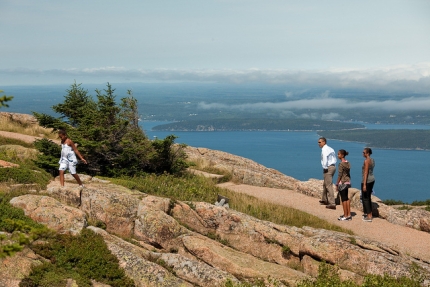
Acacia State Park, Maine
President Barack Obama and his family hike at Acadia National Park

President Barack Obama and his family hike on Cadillac Mountain at Acadia National Park in Maine, July 16, 2010. (Official White House Photo by Pete Souza)

Grand Canyon, Arizona
President Barack Obama at the Grand Canyon

President Barack Obama looks at the Grand Canyon in Arizona on Aug. 16, 2009. (Official White House Photo by Pete Souza)

The White House

Office of the Press Secretary

Executive Order -- Establishing Visa and Foreign Visitor Processing Goals and the Task Force on Travel and Competitiveness

By the authority vested in me as President by the Constitution and the laws of the United States of America, and to improve visa and foreign visitor processing and travel promotion in order to create jobs and spur economic growth in the United States, while continuing to protect our national security, it is hereby ordered as follows:

Section 1. Policy. The travel and tourism industry is one of our Nation's leading service sectors and sources of exports. However, the U.S. market share of spending by international travelers fell from 17 percent to 11 percent of the global market from 2000 to 2010, more than a 30 percent decrease in our share of the global market. This decrease was due primarily to increased international competition, changing patterns in global development, and, to some degree, more stringent security requirements imposed after 2001. Given the importance of the travel and tourism industry to the U.S. economy and job creation, a coordinated policy, consistent with protecting our national security, is needed to support a prosperous and secure travel and tourism industry in the United States.

Steady progress has been made since 2010, when my Administration launched the National Export Initiative and the Travel Promotion Act was signed into law. While our processes for moving people and goods across our borders are now both more secure and more efficient, new initiatives are needed to enable us to better capitalize on the economic opportunities presented by a dynamic 21st century travel and tourism industry.

Sec. 2. Visa and Foreign Visitor Processing. (a) The Assistant to the President for Homeland Security and Counterterrorism shall, consistent with Presidential Policy Directive 1 or any successor documents and in coordination with the Assistant to the President and Cabinet Secretary, maintain an interagency process for coordinating the implementation of regulatory improvements and the evaluation of legislative proposals to enhance and expedite travel to and arrival in the United States by foreign nationals, consistent with national security requirements.

(b) The Secretaries of State and Homeland Security, in consultation with the Assistant to the President for Homeland Security and Counterterrorism, the Director of the Office of Management and Budget, and the heads of such agencies as appropriate, shall develop an implementation plan, within 60 days of the date of this order, describing actions to be undertaken, including those that build upon efforts underway, to achieve the following:

(i) increase nonimmigrant visa processing capacity in China and Brazil by 40 percent over the coming year;
(ii) ensure that 80 percent of nonimmigrant visa applicants are interviewed within 3 weeks of receipt of application, recognizing that resource and security considerations and the need to ensure provision of consular services to U.S. citizens may dictate specific exceptions;

(iii) increase efforts to expand the Visa Waiver Program and travel by nationals of Visa Waiver Program participants; and

(iv) expand reciprocal recognition programs for expedited travel, such as the Global Entry program.

This plan should also identify other appropriate measures that will enhance and expedite travel to and arrival in the United States by foreign nationals, consistent with national security requirements, as well as any potential challenges in achieving the stated goals of this subsection.

(c) Within 180 days of the date of this order, and periodically thereafter, the Secretaries of State and Homeland Security shall jointly submit through the Assistant to the President for Homeland Security and Counterterrorism a report to the President describing the progress on achieving the goals set forth in this section (as well as areas of concern or barriers to achieving those goals) to ensure the country remains secure while increasing travel and tourism to the United States.

(d) The Secretary of Commerce shall establish and maintain a publicly available website that provides updated metrics from across the Federal Government to assist industry and travelers in understanding the current status of the industry and its relevance to the economy, statistics on visa processes in key travel and tourism markets, and entry times into the United States.

Sec. 3. Task Force on Travel and Competitiveness. (a) A Task Force on Travel and Competitiveness (Task Force) is hereby established to develop the National Travel and Tourism Strategy described in this section. The Secretaries of Commerce and the Interior shall serve as Co-Chairs of the Task Force. The Task Force shall also include the heads of the following executive departments and agencies (agencies), or senior level officials designated by them:

(i) Department of State;
(ii) Department of the Treasury;
(iii) Department of Agriculture;
(iv) Department of Labor;
(v) Department of Transportation;

(vi) Department of Homeland Security;
(vii) Army Corps of Engineers;
(viii) Office of the United States Trade Representative;
(ix) Export-Import Bank; and
(x) Other agencies invited to participate by the Task Force Co-Chairs.

(b) The Secretaries of Commerce and the Interior, in consultation with the Director of the Office of Management and Budget, the Assistant to the President for Homeland Security and Counterterrorism, the Assistant to the President for Economic Policy, and the Assistant to the President for Domestic Policy, shall coordinate the overall work of the Task Force and assist its members in performing the responsibilities described herein.

(c) The Task Force shall develop a National Travel and Tourism Strategy with recommendations for new policies and initiatives to promote domestic and international travel opportunities throughout the United States with the goal of increasing the United States market share of worldwide travel, including obtaining a greater share of long-haul travel from Brazil, China, and India. Such recommendations shall include, among other things, strategies to promote visits to the United States public lands, waters, shores, monuments, and other iconic American destinations, thereby expanding job creation in the United States. The Task Force shall also consider recommendations to promote and expand travel and tourism opportunities in rural communities. In addition, the National Travel and Tourism Strategy shall identify any barriers to increasing the United States market share of worldwide travel, and any other related areas of concern. The Task Force shall deliver the National Travel and Tourism Strategy to the President within 90 days of the date of this order.

(d) The Task Force, through the Secretary of Commerce, shall also coordinate with the Corporation for Travel Promotion (currently doing business as Brand USA, a non-profit corporation established by the Travel Promotion Act of 2009 to promote travel to the United States) and the Tourism Policy Council, established by the United States National Tourism Organization Act of 1996. The Secretary of Commerce shall serve as the liaison between the Task Force and the United States Travel and Tourism Advisory Board (Board) chartered by the Secretary and shall consider the Board's advice in his or her role with the Task Force.

(e) The Tourism Policy Council coordinates policies concerning travel promotion and ensures consistency and cooperation among agencies, as set forth in the United States National Tourism Organization Act of 1996. The Task Force shall consult with the Tourism Policy Council where appropriate to facilitate the development of the National Travel and Tourism Strategy.

Sec. 4. General Provisions. (a) This order shall be implemented consistent with applicable law, and subject to the availability of appropriations.

(b) Nothing in this order shall be construed to impair or otherwise affect:

(i) the authority granted by law to an executive department, agency, or the head thereof; or

(ii) the functions of the Director of the Office of Management and Budget relating to budgetary, administrative, or legislative proposals.

(c) This order is not intended to, and does not, create any right or benefit, substantive or procedural, enforceable at law or in equity by any party against the United States, its departments, agencies, or entities its officers, employees, or agents, or any other person.

BARACK OBAMA

The White House

Office of the Press Secretary

We Can’t Wait: President Obama Takes Actions to Increase Travel and Tourism in the United States

This morning, President Obama will sign an Executive Order and announce new initiatives to significantly increase travel and tourism in the United States. The U.S. tourism and travel industry is a substantial component of U.S. GDP and employment, representing 2.7% of GDP and 7.5 million jobs in 2010 – with international travel to the United States supporting 1.2 million jobs alone. The travel and tourism industry projects that more than 1 million American jobs could be created over the next decade if the U.S. increased its share of the international travel market. Today’s announcement offers important steps to bolster job creation through a range of steps to better promote the United States as a tourism destination and improve secure visa processing. This is the most recent of a series of executive actions the President has announced to put Americans back to work and strengthen the U.S. economy.

“Every year, tens of millions of tourists from all over the world come and visit America. And the more folks who visit America, the more Americans we get back to work. We need to help businesses all across the country grow and create jobs; compete and win. That’s how we’re going to rebuild an economy where hard work pays off, where responsibility is rewarded, and where anyone can make it if they try,” said President Obama.

According to the U.S. Department of Commerce, international travel resulted in $134 billion in U.S. exports in 2010 and is the nation’s largest service export industry, with 7% of total exports and 24% of service exports. The Bureau of Economic Analysis estimates that every additional 65 international visitors to the United States can generate enough exports to support an additional travel and tourism-related job. According to the travel industry and Bureau of Economic Analysis, international travel is particularly important as overseas or “long-haul” travelers spend on average $4,000 on each visit.

Today’s announcement calls for a national strategy to make the United States the world’s top travel and tourism destination, as part of a comprehensive effort to spur job creation. The number of travelers from emerging economies with growing middle classes – such as China, Brazil, and India – is projected to grow by 135%, 274%, and 50% respectively by 2016 when compared to 2010.  Nationals from these three countries contributed approximately $15 billion dollars and thousands of jobs to the U.S. economy in 2010.  In addition, Chinese and Brazilian tourists currently spend more than $6,000 and $5,000 respectively each, per trip, according to the Department of Commerce. The Department of State has made tremendous progress in processing non-immigrant visas from these key markets, allowing them to issue more than 7.5 million visas in the last fiscal year, a 17% increase from the previous fiscal year. In the 2011 fiscal year, consular officers adjudicated more than a million visa applications in China and more than 800,000 in Brazil, representing 34 % growth in China and 42% growth in Brazil. Improving visa processing capacity for China and Brazil is particularly important because of this growth.

KEY HIGHLIGHTS:

Today’s Executive Order charges several agencies to take part in efforts to increase travel and tourism in the United States:

  • The Secretaries of Commerce and the Interior will be charged with:
    • Co-leading an interagency task force to develop recommendations for a National Travel & Tourism Strategy to promote domestic and international travel opportunities throughout the United States, thereby expanding job creation. This Task Force will coordinate with the Corporation for Travel Promotion (currently doing business as BrandUSA), a non-profit corporation established by Congress through the Travel Promotion Act of 2009 to promote travel to the United States, and the Tourism Policy Council to ensure private sector participation and cross-agency coordination.
    • A particular focus of the Task Force will be on strategies for increasing tourism and recreation jobs by promoting visits to our national treasures. The Department of the Interior manages iconic destinations in our national parks, wildlife refuges, cultural and historic sites, monuments and other public lands that attract travelers from around the country and the globe. In 2010, more than 400 million visits were made by American and international travelers to these lands, contributing nearly $50 billion in economic activity and 400,000 jobs. Eco-tourism and outdoor recreation also have an outsize impact on rural economies, particularly in Arizona, California, Colorado, Florida, Nevada, North Carolina, Oregon, Utah and Wyoming.
  • The Department of State and the Department of Homeland Security will be charged with:
    • Increasing non-immigrant visa processing capacity in China and Brazil by 40% in 2012.
    • Ensuring that 80% of non-immigrant visa applicants are interviewed within three weeks of receipt of application.
    • Increasing efforts to expand the Visa Waiver Program and travel by nationals eligible to participate in the Visa Waiver Program, and expanding reciprocal trusted travel programs for expedited travel (such as the Global Entry program).
  • The Department of Commerce will be charged with:
    • Establishing and maintaining a publicly available website with key information and statistics from across the Federal Government to assist industry and travelers in understanding visa processes in key travel and tourism markets, and entry times into the United States.

Additional initiatives announced today include:

  • New Pilot Program and Rule Change for Visa Processing in China and Brazil:
    • Today, the Departments of State and Homeland Security announced a pilot program to simplify and speed up the non-immigrant visa process for certain applicants, including the ability to waive interviews for some very low-risk applicants, such as individuals from any country renewing non-immigrant visas, or, in Brazil, younger or older first-time applicants. Link to fact sheet HERE for more information.
  • Final Rule to Expand and Make the Global Entry Program Permanent:
    • Global Entry is a program within the Department of Homeland Security, U.S. Customs and Border Protection that was created as a pilot in 2008 to facilitate expedited clearance for pre-approved, low-risk travelers upon arrival in the United States. Through a final rule, the Administration will expand and make the Global Entry program permanent. Due in part to innovative public-private partnerships, the Global Entry program now has more than 246,000 members, more than one million trusted travelers have Global Entry benefits, and efforts are underway to expand enrollment even further. There are currently 131 Global Entry kiosks at 20 airports and since launching, members have used Global Entry kiosks over 1.7 million times, saving CBP officers over 36,450 inspection hours—staff hours that CBP has then re-allocated to expedite regular passenger queues. This final rule will allow the program to be expanded to an additional 4 airports in Minneapolis, Charlotte, Denver and Phoenix, making the Global Entry program and expedited clearance available in airports that service approximately 97% of international travelers.
  • Appoint new members to the U.S. Travel and Tourism Advisory Board:
    • A new membership of 32 private sector CEOs have been appointed by Commerce Secretary Bryson to serve on the U.S. Travel and Tourism Advisory Board. The Advisory Board will build upon the work undertaken by the past Board addressing travel facilitation, visa policy, improving the international travel entry experience, aviation security, energy security, crisis communications and research and data, among other issues. This Board consists of corporate executives across the nation, representing all aspects of the travel and tourism industry, who are appointed to a two-year term to advise the Secretary of Commerce on policies affecting the travel and tourism industry. See the full list of new members HERE.
  • Nomination of Taiwan to Visa Waiver Program:
    • Currently, more than 60% of international tourists do not require a U.S. visa, in most cases because they travel under the Visa Waiver Program.  The Secretary of State has formally requested that the Secretary of Homeland Security consider Taiwan for the Visa Waiver Program. Over the past year, Taiwan has undertaken significant efforts to improve its law enforcement and document security standards to meet the strict requirements for Visa Waiver Program eligibility. Under the Visa Waiver Program, participating nationals can travel to the United States for tourism or business for stays of 90 days or less without obtaining a visa. The program was established to promote travel and tourism with our foreign partners, stimulate the tourism industry, and permit the Department of State to focus consular resources in other areas. Since November 2008, the Department of Homeland Security has added nine countries to the Visa Waiver Program, bringing the program total to 36 countries. 

The White House

Office of the Press Secretary

Readout of the President’s Call with Canadian Prime Minister Harper

President Obama called Prime Minister Harper to personally convey his Administration's decision on the Keystone pipeline.  The President also reaffirmed the close alliance and friendship between the United States and Canada.