The White House

Office of the Press Secretary

FACT SHEET: President Obama’s Blueprint to Make The Most of America’s Energy Resources

In his State of the Union Address, President Obama laid out a Blueprint for an America Built to Last, underscoring his commitment to an all-of-the-above approach that develops every available source of American energy. This commitment includes the safe and responsible production of our oil and natural gas resources. Today, American oil production is at the highest level in eight years and last year we relied less on foreign oil than in any of the past 16 years.

At the same time, the President believes we need to double-down on clean energy in the United States. Transitioning to cleaner sources of energy will enhance our national security, protect the environment and public health, and grow our economy and create new jobs. Over the past few years, renewable energy use has nearly doubled. In fact, in 2011, the United States reclaimed the position as the world’s leading investor in clean energy – but staying on top will depend on smart, aggressive action moving forward.

President Obama will begin the second day of his post-State of the Union swing with an event at a UPS facility in Las Vegas, focusing on the importance of American workers developing American-made energy for an economy that’s built to last. Following this event, the President will travel to Buckley Air Force Base in Aurora, Colorado to deliver remarks on American energy and the steps his Administration is taking to promote energy security.

President Obama’s Plan to Advance Safe Production of Oil and Gas Resources To Create Jobs, Enhance Energy Security, and Cut Pollution

Make a new lease sale in the Gulf of Mexico to move forward on our national commitment to safe and responsible oil and gas development: In his State of the Union Address, the President directed the Department of Interior to finalize a national offshore energy plan that makes 75% of our potential offshore resources available for development by opening new areas for drilling in the Gulf and Alaska. On Thursday, the President will take a concrete step forward to develop our oil and gas resources, announcing that the Department of Interior will hold a new lease sale in the Gulf of Mexico. This lease sale will make approximately 38 million acres available, and could result in the production of 1 billion barrels of oil and 4 trillion cubic feet of natural gas.

Promote safe, responsible development of the near 100-year supply of natural gas, supporting more than 600,000 jobs while ensuring public health and safety: In 2009, we became the world’s leading producer of natural gas. In the State of the Union, the President directed the Administration to ensure safe shale gas development that, according to independent estimates, will support more than 600,000 jobs by the end of the decade. These actions will include moving forward with common-sense new rules to require disclosure of the chemicals used in fracking operations on public lands.

Reducing our dependence on oil by encouraging greater use of natural gas in transportation: The President’s plan includes: proposing new incentives for medium- and heavy-duty trucks that run on natural gas or other alternative fuels; launching a competitive grant program to support communities to overcome the barriers to natural gas vehicle deployment; developing transportation corridors that allow trucks fueled by liquefied natural gas to transport goods; and supporting programs to convert municipal buses and trucks to run on natural gas and to find new ways to convert and store natural gas.

Harnessing American ingenuity to catalyze breakthrough technologies for natural gas: The Advanced Research Projects Agency – Energy (ARPA-E) will announce a new research competition in the coming months that will engage our country’s brightest scientists, engineers and entrepreneurs to find ways to harness our abundant supplies of domestic natural gas to lessen our dependence of foreign oil for vehicles. The breakthrough technologies they will develop, whether they are for new ways to fuel our cars with natural gas or a method to turn that gas into liquid fuel, promise to break our dependence on foreign oil for our cars and trucks, allow us to breathe cleaner air, and ultimately save consumers at the pump. To date ARPA-E has hosted four rounds of competitions and attracted over 5000 applications from research teams, which has resulted in approximately 180 cutting edge projects.

The President’s Commitment to Clean Energy

Doubling the share of electricity from clean energy sources by 2035: The centerpiece of the Administration’s strategy is a Clean Energy Standard, or “CES” – a flexible approach that harnesses American ingenuity and innovation, and channels it toward a clean energy future. By creating a market here at home for innovative clean energy technologies, we will unleash the ingenuity of our entrepreneurs and ensure that America leads the world in clean energy.

Supporting clean energy with targeted tax incentives: The President supports renewing and extending a number of proven and successful provisions that are crucial to the continued growth of the domestic clean energy sector. This includes tax incentives for clean energy manufacturing, which could create up to 100,000 jobs, and the Production Tax Credit to support investment in the deployment of clean energy technologies like wind and solar.

Opening public lands for private investments in clean energy: To enhance energy security and create new jobs, the Department of the Interior is committed to issuing permits for 10 gigawatts of renewable generation capacity – enough to power 3 million homes – from new projects on our public lands by the end of 2012.

Securing renewable energy for the U.S. Navy: Securing a safe, clean and reliable energy supply for our nation’s defense forces is essential to carrying out missions vital to the security of the United States. The Department of Navy has committed to adding 1 gigawatt of renewable energy produced from sources like solar, wind, and geothermal to its energy portfolio for shore-side installations – enough to power 250,000 homes.  Using existing authorities such as power purchase agreements, the Navy will ensure these energy projects are cost neutral and require no up-front investments by the government.

President Obama Speaks on an Economy Built to Last

January 25, 2012 | 23:00 | Public Domain

President Obama outlines his blueprint for an America built to last, which includes a strong manufacturing industry, at the Intel Ocotillo campus.

Download mp4 (220MB) | mp3 (21MB)

Read the Transcript

Remarks by the President at Intel Ocotillo Campus, Chandler, AZ

Chandler, Arizona

4:31 P.M. MST

THE PRESIDENT:  Thank you.  (Applause.)  Thank you.  (Applause.)  Well, thank you, everybody.  It is good to be in Arizona.  (Applause.)  The weather is good.  You can't have better weather than this, can't do it.

I want to thank Preston for that wonderful introduction.  I want to acknowledge a few folks we have with us this afternoon.  Mayor Tibshraeny is here.  Give him a big round of applause.  (Applause.)  Mayor Stanton is here.  (Applause.)  All the tribal leaders who are here today.  (Applause.)

AUDIENCE MEMBER:  -- Barack es mi hermano!

THE PRESIDENT:  Mi hermano -- mucho gusto.  (Applause.)

Let me say how happy I was to see one particular Arizonan last night -- Gabby Giffords.  (Applause.)  I was able to give her a big hug and just tell her we could not be happy -- more happy to see her.  I mean, she just looked gorgeous last night.  And she's been an inspiration.  Her husband, Mark, has been just a great friend and a great public servant and a hero to so many of us.  And Michelle and I are going to be thinking of her as she continues her recovery here in Arizona.  And she loves this state and she loves all of you.  So it was wonderful to see her.  (Applause.) 

Now, last year, I had the chance to tour one of Intel's plants in Oregon.  And basically, the engineers explained what happens inside these factories, and I pretended that I understood -- (laughter) -- what they were talking about.  It's true.  We were on this tour and we were looking through these microscopes and you'd look at some little spots in the microscope and you'd say, well what's that?  And they'd say, well, that's atoms.  (Laughter.)  Really?  And it was so remarkable that my trip director who was with me -- he said, this stuff is like magic.  (Laughter.)  How do they do this?

And while I was there, Intel's CEO, Paul Otellini, someone whose advice I rely on as a member of my Jobs Council -- (applause) -- announced -- he announced that Intel would be building a new factory here in Arizona.  (Applause.)  A factory which will turn out some of the fastest and most powerful computer chips on Earth.  (Applause.)  A factory so big, I’m told that right there is the world’s largest land-based crane -- (applause) -- can pull up to, what is it, 4,000 tons?  Is that right, Preston?

MR. OTELLINI:  Yes, sir.

THE PRESIDENT:  Four thousand.  So not only that, but Paul informs me that the microscopes that they're going to have here will be twice as good as the ones they had -- (laughter) -- up in Oregon.  So I decided I had to check this out for myself -- because, honestly -- first of all, who wants to miss out a chance to see the crane?  (Laughter.)  That thing is huge.

But there’s a more important reason that I’m here.  I’m here because the factory that’s being built behind me is an example of an America that is within our reach.  An America that attracts the next generation of good manufacturing jobs.  An America where we build stuff and make stuff and sell stuff all over the world. (Applause.)

We can do that.  But we've got to come together.  We've got to come together and restore the basic American promise that if you work hard, you can do well enough to raise a family and own a home, send your kids to college, put a little away for retirement, maybe come down to Arizona.  (Applause.)  Where the weather is like this all the time.  (Laughter.)  It never gets above 70 degrees, does it?  (Laughter.)  That’s what people are looking for.  They don't expect anybody to give them anything, but they want to be able to earn and deserve security, the ability to take care of their families, dignity in their retirement.  That's what Americans are looking for.  That's what they deserve.  (Applause.)

Now, we’re still recovering from one of the worst economic crises in three generations.  We lost nearly 4 million jobs in the six months before I took office; another 4 million before our policies had a chance to take full effect.  But here's the good news.  Over the last 22 months, our businesses have created more than 3 million jobs.  (Applause.)  Last year, they created the most jobs since 2005.  Today, American manufacturers are hiring again, and creating jobs for the first time since the 1990s.

So our economy is getting stronger, and we’ve come too far to turn back now.  (Applause.)  After all that’s happened, there are folks in Washington who want to do that, who want to turn back.  It’s like they’re suffering from a case of collective amnesia.  (Laughter.)  They want to go back to the very same policies that got us into this mess -- same policies that have stacked the deck against middle-class Americans for too many years.  A philosophy that says we’re better off if everybody is just fending for themselves and everybody can play by their own rules. 

I’m here to say they’re wrong.  I don’t accept the notion that there’s nothing we can do to accept -- to meet our nation’s greatest challenges.  There are all kinds of steps we can take.  We can’t go back to an economy that’s weakened by outsourcing and bad debt and phony financial profits.

And last night, at the State of the Union, I laid out a vision of how we move forward.  (Applause.)  Laid out a blueprint for an economy built to last.  It’s an economy built on the American manufacturing, with more good jobs and more products made in America.  It’s an economy built on American energy fueled by homegrown and alternative energy sources that make us more secure and less dependent on foreign oil.  (Applause.)  It’s an economy built on the skills of American workers, getting people the education and the training they need so they’re prepared for the jobs of today and ready to compete for the jobs of tomorrow.

And most importantly, it’s an economy that’s built on a renewal of American values -- hard work, responsibility, the same set of rules for everybody, from Wall Street to Main Street.  (Applause.)  That has to be our future.  That’s how we restore the basic American promise.  And it starts with manufacturing --both old industries but also new industries, like Intel. 

Look at what’s happened in the auto industry.  On the day I took office, it was on the verge of collapse.  Some people said we should let it die.  But we had a million jobs at stake, and I refused to let that happen.  (Applause.)  And so we said to the auto companies, in exchange for help, we’re going to demand responsibility.  We’ve got to make sure that the industry retools and restructures.  And that’s what they did.  And over the past two years, the entire industry has added nearly 160,000 jobs.  GM is number one in the world again.  Ford is investing in new plants.  (Applause.)  Chrysler is on the mend.  The American auto industry is back.

Now, what’s happening in Detroit can happen in other industries.  I want it to happen all across Arizona.  (Applause.) This project, thanks to the leadership of Paul and the incredible engineering prowess of Intel, this project is going to employ thousands of construction workers who will put in more than 10 million hours on the job.  When this factory is finished, Intel will employ around 1,000 men and women, making the computer chips that power everything from your smart phone to your laptop to your car.  (Applause.)

As an American, I’m proud of companies like Intel, who create jobs here.  We all are.  So let’s help them grow and hire even faster.  We have a huge opportunity to create more high-tech manufacturing jobs in the United States, and bring some of these jobs back from overseas.  But we’re going to have to seize the moment.  That starts with changing our tax system.  (Applause.)

Right now, companies get all kinds of tax breaks when they move jobs and profits overseas.  But when a company chooses to stay in America, it gets hit with one of the highest tax rates in the world.  That doesn’t make sense.  We’ve been talking about changing it for years.  Republicans and Democrats have said that doesn’t make sense.  Well, let’s get it done.  (Applause.)  Let’s stop rewarding businesses that ship jobs overseas.  Let’s reward companies like Intel that are investing and creating jobs right here in the United States of America.  (Applause.)

Now, look, we live in a global economy.  If a company wants to do business overseas, of course it’s their right.  But we shouldn’t subsidize it.  What we should do are subsidize and help and give tax breaks to companies that are investing here, that bring jobs back from overseas, high-tech manufacturers like Intel.

Today, my administration is laying out several concrete actions we could take right now that would discourage companies from outsourcing jobs and encourage them to invest in the United States.  Congress needs to send me this tax reform.  I want to sign it right away, because I want to put more people to work right here in the United States.  (Applause.)

Now, while we’re at it, we need to make it easier for American businesses to sell our products all over the world.  Two years ago, I set a goal of doubling U.S. exports within five years, which will create good, new manufacturing jobs.  And we are on track to meet that goal.  And soon, thanks to the new trade agreements that I’ve signed, there are going to be new cars on the streets of other countries that are imported from Detroit and Toledo and Chicago.  (Applause.)

And we need to invest in education.  (Applause.)  We want tomorrow's workers -- we want Arizona's workers -- to have the skills they need for the jobs like the ones that will be opening up here.  And I have to tell you, I've been to these plants at Intel -- young people, you'd better have done some math before you get in here.  (Laughter.)  You can't just kind of wander in and you didn't do some math in school.  (Laughter.) 

And I want to thank Intel for leading the way, because they're investing in startups, they're supporting science and math education, they're helping to train new engineers.  Paul is chairing a project that we initiated through the Jobs Council.  We're looking to get thousands more engineers all across America. And for the young people who are out there who are thinking about a profession, think about engineering.  We can use more engineers all across America.  (Applause.)

We’re also going to need to look at clean energy and innovation in the energy field.  We have -- as I said last night, oil production is higher than it's been in eight years.  We're actually importing less oil as a percentage than any time in the last 16 years.  So we're opening up the oil and the gas industry here in the United States.  But they don't need subsidies.  We need to stop subsidizing oil companies, and use that money to invest in clean energies like wind and solar and high-tech batteries.  (Applause.)  Those are industries that are already creating new jobs and making us even less dependent on foreign oil. 

And an economy built to last also means we've got to renew American values:  fair play, shared responsibility.  (Applause.)

When it comes to tax policy, my first priority right now is to stop a tax hike on 160 million working Americans at the end of next month.  (Applause.)  People can’t afford losing $40 out of each paycheck.  Not right now.  Your voices convinced Congress to extend this middle-class tax cut before.  I need your help again. Let Congress know:  Pass this tax cut without drama, without delay.  Get it done.  It's good for the economy.  (Applause.) 

But in the longer run, we’re going to have to both invest in our future -- invest in education so we're producing more engineers, invest in clean energy, invest in our infrastructure  -- and we have to do all this at the same time as we've got to get our fiscal house in order.  And that means we've got to make choices. 

Right now, we’re supposed to spend nearly a trillion dollars more on what was intended to be a temporary tax cut for the wealthiest 2 percent of Americans.  A quarter of all millionaires pay lower tax rates than millions of middle-class households.  Warren Buffett pays a lower tax rate than his secretary.  I know because his secretary was at the State of the Union yesterday.  (Laughter.)  That just doesn't make any sense. 

Because we've got to make choices:  We could keep those tax breaks for folks like me, or we could keep investing in everything that's going to make this country strong -- education and basic research, and our military, and caring for our veterans.  (Applause.)   

So I've said, let's follow the Buffett Rule -- named after Warren:  If you make more than $1 million a year, you should pay a tax rate of at least 30 percent.  (Applause.)  On the other hand, if you make less than $250,000 a year -- which is 98 percent of you -- your taxes shouldn’t go up.  (Applause.)  And I just want to make clear, the reason I proposed this is not because we begrudge financial success in this country.  We strive for it.  We encourage it.  I want everybody here to be rich.  Go out there, work, create new businesses.  Fulfill your dreams.  But I think asking a billionaire to pay at least as much as his secretary in taxes is just common sense, especially when we’re trying to figure out how to reduce our deficit. 

And I promise you, look, Warren Buffett will do fine. (Laughter.)  I will do fine.  We don’t need more tax breaks.  The middle class needs help.  (Applause.)  They’re the ones who’ve seen wages stall.  They’re the ones who’ve seen the cost of everything from groceries to college tuition go up.  You’re the ones who need a break.

Again, we don’t begrudge success in America.  We encourage it.  We aspire to it.  When we talk about everybody paying their fair share, it’s not because anybody envies the rich.  Earlier today, Bill Gates said that he agrees that Americans who can afford it should pay their fair share.  I promise you, Bill Gates doesn’t envy rich people.  (Laughter.)  He feels pretty comfortable that he’s doing okay.  It just has to do with basic math.  We’re going to have to reduce our deficit, and if I get tax breaks that I don’t need and the country can’t afford, if a Bill Gates or a Warren Buffett get tax breaks that they don’t need and can’t afford, then one of two things is going to happen.  Either it adds to our deficit, or it’s going to take away from somebody else -- whether it’s a senior or a student or a family who’s trying to get by.  And that’s not right.  That’s not who we are.

Each of us is only here because somebody somewhere felt a responsibility to the country and people felt a responsibility to each other.  Because we understood that we’re all in this together. 

Intel’s former CEO, the legendary Andy Grove, he said it best.  He said, look, I feel an obligation to my shareholders.  I run a business; they’ve invested; I’ve got to make sure they get a good return.  That’s how the free market works, that’s how it’s supposed to work, that’s what produces the extraordinary wealth of this country.  But he also said -- and I’m quoting here -- “There is another obligation I feel personally, given everything I’ve achieved in my career -- and a lot of what Intel has achieved -- were made possible by a climate of democracy, an economic climate and investment climate provided by the United States.”

So his argument was his first obligation to his shareholders, but he also has an obligation to this country that provided extraordinary opportunity.  And that’s something that all of us feel, or something that we should all feel.

I think Andy Grove was right.  This nation is great because we built it together, because we overcame challenges together.  I believe we can do it again.  (Applause.)  I believe it because we've done it in the past.  I believe it because I see it in places like Chandler.  I believe it when I talk to folks like you.  I know this country exists only because generations of Americans have worked hard, have fulfilled their responsibilities, have cared for their families, but they've also cared for their communities and they've also looked out for each other.  (Applause.)  They've lived out the idea that we're in this together.

These values are not Democratic values or Republican values; they're American values.  (Applause.)  We've got to return to those values.  It's our turn to be responsible.  It's our turn to leave an America that's built to last.

So we're going to keep moving on American manufacturing.  We are going to keep moving on American energy.  We are going to keep making sure that American workers get the skills they need. We are going to invest in American innovation and basic science and research.  We are going to make sure that we are training those engineers that we need.  We are going to make sure that we return to the values of fair play and responsibility.

And I know that if we work together with common purpose, we can build an economy that gives everybody a fair shot.  We can meet this challenge, and we'll remind the world once again just why the United States of America is the greatest nation on Earth. (Applause.)

Thank you very much, Arizona.  God bless you.  God bless America.  (Applause.)

END                     
4:55 P.M. MST

Close Transcript

The White House

Office of the Press Secretary

Remarks by the President at Intel Ocotillo Campus, Chandler, AZ

Chandler, Arizona

4:31 P.M. MST

THE PRESIDENT:  Thank you.  (Applause.)  Thank you.  (Applause.)  Well, thank you, everybody.  It is good to be in Arizona.  (Applause.)  The weather is good.  You can't have better weather than this, can't do it.

I want to thank Preston for that wonderful introduction.  I want to acknowledge a few folks we have with us this afternoon.  Mayor Tibshraeny is here.  Give him a big round of applause.  (Applause.)  Mayor Stanton is here.  (Applause.)  All the tribal leaders who are here today.  (Applause.)

AUDIENCE MEMBER:  -- Barack es mi hermano!

THE PRESIDENT:  Mi hermano -- mucho gusto.  (Applause.)

Let me say how happy I was to see one particular Arizonan last night -- Gabby Giffords.  (Applause.)  I was able to give her a big hug and just tell her we could not be happy -- more happy to see her.  I mean, she just looked gorgeous last night.  And she's been an inspiration.  Her husband, Mark, has been just a great friend and a great public servant and a hero to so many of us.  And Michelle and I are going to be thinking of her as she continues her recovery here in Arizona.  And she loves this state and she loves all of you.  So it was wonderful to see her.  (Applause.) 

Now, last year, I had the chance to tour one of Intel's plants in Oregon.  And basically, the engineers explained what happens inside these factories, and I pretended that I understood -- (laughter) -- what they were talking about.  It's true.  We were on this tour and we were looking through these microscopes and you'd look at some little spots in the microscope and you'd say, well what's that?  And they'd say, well, that's atoms.  (Laughter.)  Really?  And it was so remarkable that my trip director who was with me -- he said, this stuff is like magic.  (Laughter.)  How do they do this?

And while I was there, Intel's CEO, Paul Otellini, someone whose advice I rely on as a member of my Jobs Council -- (applause) -- announced -- he announced that Intel would be building a new factory here in Arizona.  (Applause.)  A factory which will turn out some of the fastest and most powerful computer chips on Earth.  (Applause.)  A factory so big, I’m told that right there is the world’s largest land-based crane -- (applause) -- can pull up to, what is it, 4,000 tons?  Is that right, Preston?

MR. OTELLINI:  Yes, sir.

THE PRESIDENT:  Four thousand.  So not only that, but Paul informs me that the microscopes that they're going to have here will be twice as good as the ones they had -- (laughter) -- up in Oregon.  So I decided I had to check this out for myself -- because, honestly -- first of all, who wants to miss out a chance to see the crane?  (Laughter.)  That thing is huge.

But there’s a more important reason that I’m here.  I’m here because the factory that’s being built behind me is an example of an America that is within our reach.  An America that attracts the next generation of good manufacturing jobs.  An America where we build stuff and make stuff and sell stuff all over the world. (Applause.)

We can do that.  But we've got to come together.  We've got to come together and restore the basic American promise that if you work hard, you can do well enough to raise a family and own a home, send your kids to college, put a little away for retirement, maybe come down to Arizona.  (Applause.)  Where the weather is like this all the time.  (Laughter.)  It never gets above 70 degrees, does it?  (Laughter.)  That’s what people are looking for.  They don't expect anybody to give them anything, but they want to be able to earn and deserve security, the ability to take care of their families, dignity in their retirement.  That's what Americans are looking for.  That's what they deserve.  (Applause.)

Now, we’re still recovering from one of the worst economic crises in three generations.  We lost nearly 4 million jobs in the six months before I took office; another 4 million before our policies had a chance to take full effect.  But here's the good news.  Over the last 22 months, our businesses have created more than 3 million jobs.  (Applause.)  Last year, they created the most jobs since 2005.  Today, American manufacturers are hiring again, and creating jobs for the first time since the 1990s.

So our economy is getting stronger, and we’ve come too far to turn back now.  (Applause.)  After all that’s happened, there are folks in Washington who want to do that, who want to turn back.  It’s like they’re suffering from a case of collective amnesia.  (Laughter.)  They want to go back to the very same policies that got us into this mess -- same policies that have stacked the deck against middle-class Americans for too many years.  A philosophy that says we’re better off if everybody is just fending for themselves and everybody can play by their own rules. 

I’m here to say they’re wrong.  I don’t accept the notion that there’s nothing we can do to accept -- to meet our nation’s greatest challenges.  There are all kinds of steps we can take.  We can’t go back to an economy that’s weakened by outsourcing and bad debt and phony financial profits.

And last night, at the State of the Union, I laid out a vision of how we move forward.  (Applause.)  Laid out a blueprint for an economy built to last.  It’s an economy built on the American manufacturing, with more good jobs and more products made in America.  It’s an economy built on American energy fueled by homegrown and alternative energy sources that make us more secure and less dependent on foreign oil.  (Applause.)  It’s an economy built on the skills of American workers, getting people the education and the training they need so they’re prepared for the jobs of today and ready to compete for the jobs of tomorrow.

And most importantly, it’s an economy that’s built on a renewal of American values -- hard work, responsibility, the same set of rules for everybody, from Wall Street to Main Street.  (Applause.)  That has to be our future.  That’s how we restore the basic American promise.  And it starts with manufacturing --both old industries but also new industries, like Intel. 

Look at what’s happened in the auto industry.  On the day I took office, it was on the verge of collapse.  Some people said we should let it die.  But we had a million jobs at stake, and I refused to let that happen.  (Applause.)  And so we said to the auto companies, in exchange for help, we’re going to demand responsibility.  We’ve got to make sure that the industry retools and restructures.  And that’s what they did.  And over the past two years, the entire industry has added nearly 160,000 jobs.  GM is number one in the world again.  Ford is investing in new plants.  (Applause.)  Chrysler is on the mend.  The American auto industry is back.

Now, what’s happening in Detroit can happen in other industries.  I want it to happen all across Arizona.  (Applause.) This project, thanks to the leadership of Paul and the incredible engineering prowess of Intel, this project is going to employ thousands of construction workers who will put in more than 10 million hours on the job.  When this factory is finished, Intel will employ around 1,000 men and women, making the computer chips that power everything from your smart phone to your laptop to your car.  (Applause.)

As an American, I’m proud of companies like Intel, who create jobs here.  We all are.  So let’s help them grow and hire even faster.  We have a huge opportunity to create more high-tech manufacturing jobs in the United States, and bring some of these jobs back from overseas.  But we’re going to have to seize the moment.  That starts with changing our tax system.  (Applause.)

Right now, companies get all kinds of tax breaks when they move jobs and profits overseas.  But when a company chooses to stay in America, it gets hit with one of the highest tax rates in the world.  That doesn’t make sense.  We’ve been talking about changing it for years.  Republicans and Democrats have said that doesn’t make sense.  Well, let’s get it done.  (Applause.)  Let’s stop rewarding businesses that ship jobs overseas.  Let’s reward companies like Intel that are investing and creating jobs right here in the United States of America.  (Applause.)

Now, look, we live in a global economy.  If a company wants to do business overseas, of course it’s their right.  But we shouldn’t subsidize it.  What we should do are subsidize and help and give tax breaks to companies that are investing here, that bring jobs back from overseas, high-tech manufacturers like Intel.

Today, my administration is laying out several concrete actions we could take right now that would discourage companies from outsourcing jobs and encourage them to invest in the United States.  Congress needs to send me this tax reform.  I want to sign it right away, because I want to put more people to work right here in the United States.  (Applause.)

Now, while we’re at it, we need to make it easier for American businesses to sell our products all over the world.  Two years ago, I set a goal of doubling U.S. exports within five years, which will create good, new manufacturing jobs.  And we are on track to meet that goal.  And soon, thanks to the new trade agreements that I’ve signed, there are going to be new cars on the streets of other countries that are imported from Detroit and Toledo and Chicago.  (Applause.)

And we need to invest in education.  (Applause.)  We want tomorrow's workers -- we want Arizona's workers -- to have the skills they need for the jobs like the ones that will be opening up here.  And I have to tell you, I've been to these plants at Intel -- young people, you'd better have done some math before you get in here.  (Laughter.)  You can't just kind of wander in and you didn't do some math in school.  (Laughter.) 

And I want to thank Intel for leading the way, because they're investing in startups, they're supporting science and math education, they're helping to train new engineers.  Paul is chairing a project that we initiated through the Jobs Council.  We're looking to get thousands more engineers all across America. And for the young people who are out there who are thinking about a profession, think about engineering.  We can use more engineers all across America.  (Applause.)

We’re also going to need to look at clean energy and innovation in the energy field.  We have -- as I said last night, oil production is higher than it's been in eight years.  We're actually importing less oil as a percentage than any time in the last 16 years.  So we're opening up the oil and the gas industry here in the United States.  But they don't need subsidies.  We need to stop subsidizing oil companies, and use that money to invest in clean energies like wind and solar and high-tech batteries.  (Applause.)  Those are industries that are already creating new jobs and making us even less dependent on foreign oil. 

And an economy built to last also means we've got to renew American values:  fair play, shared responsibility.  (Applause.)

When it comes to tax policy, my first priority right now is to stop a tax hike on 160 million working Americans at the end of next month.  (Applause.)  People can’t afford losing $40 out of each paycheck.  Not right now.  Your voices convinced Congress to extend this middle-class tax cut before.  I need your help again. Let Congress know:  Pass this tax cut without drama, without delay.  Get it done.  It's good for the economy.  (Applause.) 

But in the longer run, we’re going to have to both invest in our future -- invest in education so we're producing more engineers, invest in clean energy, invest in our infrastructure  -- and we have to do all this at the same time as we've got to get our fiscal house in order.  And that means we've got to make choices. 

Right now, we’re supposed to spend nearly a trillion dollars more on what was intended to be a temporary tax cut for the wealthiest 2 percent of Americans.  A quarter of all millionaires pay lower tax rates than millions of middle-class households.  Warren Buffett pays a lower tax rate than his secretary.  I know because his secretary was at the State of the Union yesterday.  (Laughter.)  That just doesn't make any sense. 

Because we've got to make choices:  We could keep those tax breaks for folks like me, or we could keep investing in everything that's going to make this country strong -- education and basic research, and our military, and caring for our veterans.  (Applause.)   

So I've said, let's follow the Buffett Rule -- named after Warren:  If you make more than $1 million a year, you should pay a tax rate of at least 30 percent.  (Applause.)  On the other hand, if you make less than $250,000 a year -- which is 98 percent of you -- your taxes shouldn’t go up.  (Applause.)  And I just want to make clear, the reason I proposed this is not because we begrudge financial success in this country.  We strive for it.  We encourage it.  I want everybody here to be rich.  Go out there, work, create new businesses.  Fulfill your dreams.  But I think asking a billionaire to pay at least as much as his secretary in taxes is just common sense, especially when we’re trying to figure out how to reduce our deficit. 

And I promise you, look, Warren Buffett will do fine. (Laughter.)  I will do fine.  We don’t need more tax breaks.  The middle class needs help.  (Applause.)  They’re the ones who’ve seen wages stall.  They’re the ones who’ve seen the cost of everything from groceries to college tuition go up.  You’re the ones who need a break.

Again, we don’t begrudge success in America.  We encourage it.  We aspire to it.  When we talk about everybody paying their fair share, it’s not because anybody envies the rich.  Earlier today, Bill Gates said that he agrees that Americans who can afford it should pay their fair share.  I promise you, Bill Gates doesn’t envy rich people.  (Laughter.)  He feels pretty comfortable that he’s doing okay.  It just has to do with basic math.  We’re going to have to reduce our deficit, and if I get tax breaks that I don’t need and the country can’t afford, if a Bill Gates or a Warren Buffett get tax breaks that they don’t need and can’t afford, then one of two things is going to happen.  Either it adds to our deficit, or it’s going to take away from somebody else -- whether it’s a senior or a student or a family who’s trying to get by.  And that’s not right.  That’s not who we are.

Each of us is only here because somebody somewhere felt a responsibility to the country and people felt a responsibility to each other.  Because we understood that we’re all in this together. 

Intel’s former CEO, the legendary Andy Grove, he said it best.  He said, look, I feel an obligation to my shareholders.  I run a business; they’ve invested; I’ve got to make sure they get a good return.  That’s how the free market works, that’s how it’s supposed to work, that’s what produces the extraordinary wealth of this country.  But he also said -- and I’m quoting here -- “There is another obligation I feel personally, given everything I’ve achieved in my career -- and a lot of what Intel has achieved -- were made possible by a climate of democracy, an economic climate and investment climate provided by the United States.”

So his argument was his first obligation to his shareholders, but he also has an obligation to this country that provided extraordinary opportunity.  And that’s something that all of us feel, or something that we should all feel.

I think Andy Grove was right.  This nation is great because we built it together, because we overcame challenges together.  I believe we can do it again.  (Applause.)  I believe it because we've done it in the past.  I believe it because I see it in places like Chandler.  I believe it when I talk to folks like you.  I know this country exists only because generations of Americans have worked hard, have fulfilled their responsibilities, have cared for their families, but they've also cared for their communities and they've also looked out for each other.  (Applause.)  They've lived out the idea that we're in this together.

These values are not Democratic values or Republican values; they're American values.  (Applause.)  We've got to return to those values.  It's our turn to be responsible.  It's our turn to leave an America that's built to last.

So we're going to keep moving on American manufacturing.  We are going to keep moving on American energy.  We are going to keep making sure that American workers get the skills they need. We are going to invest in American innovation and basic science and research.  We are going to make sure that we are training those engineers that we need.  We are going to make sure that we return to the values of fair play and responsibility.

And I know that if we work together with common purpose, we can build an economy that gives everybody a fair shot.  We can meet this challenge, and we'll remind the world once again just why the United States of America is the greatest nation on Earth. (Applause.)

Thank you very much, Arizona.  God bless you.  God bless America.  (Applause.)

END                     
4:55 P.M. MST

President Obama Speaks on an Economy Built to Last in Iowa

January 25, 2012 | 27:47 | Public Domain

President Obama visits Conveyor Engineering and Manufacturing in Cedar Rapids, Iowa and speaks about strengthening our economy and building an American that’s built to last.

Download mp4 (265MB) | mp3 (26MB)

Read the Transcript

Remarks by the President at Conveyor Engineering and Manufacturing in Cedar Rapids, Iowa

Conveyor Engineering and Manufacturing
Cedar Rapids, Iowa

11:47 A.M. CST

THE PRESIDENT:  Thank you!  Hello, Iowa!  Hello, Cedar Rapids!  (Applause.)  All right.  Thank you.  Thank you, everybody.  Please have a seat. 

It is great to be back in Iowa, although it is a little colder here -- (laughter) -- than it was in Washington.  I want to thank Jeff for the introduction.  It’s good to see your governor, Governor Branstad, and Mayor Corbett.  Outstanding members of the congressional delegation.  All kinds of good friends.  In fact, this whole row here, if I start introducing them, it will make my speech twice as long, but I love these guys.  And it is wonderful to be back here in Iowa.

I know there’s been a lot of excitement here over the past couple of months.  It kind of made me nostalgic.  (Laughter.)  I used to have a lot of fun here in Iowa.  I remember a great backyard barbecue out in Marion way back in 2007.  Good burgers.  I did not have as much gray hair back then.  (Laughter.)

But when I think about all the days I spent in Iowa, so much of my presidency, so much about what I care about, so much what I think about every day, has to do with the conversations that I had with you.  People’s backyards, VFW halls.  Those conversations I carry with me.

All across this state, in all 99 counties -- and I was in I think just about every county -- we talked about how for years the middle class was having a tougher time.  Hard work had stopped paying off for too many people.  Good jobs and manufacturing were leaving our shores.

Folks at the very, very top saw their incomes rise like never before, but most Americans, most folks in Iowa, were just trying to stay afloat.  And that was before the financial crisis hit in 2008.

The crisis struck right at the end of a long campaign, but we didn’t even understand at that point how bad that crisis was going to be.  And millions of our neighbors were put out of work.

But we did know then what we know today -- that when we come together as a country, there’s no reason why we can’t restore that basic American promise, that if you work hard, you can do well.

America is not about handouts.  America is about earning everything you’ve got.  But if you’re willing to put in the work, the idea is that you should be able to raise a family and own a home; not go bankrupt because you got sick, because you’ve got some health insurance that helps you deal with those difficult times; that you can send your kids to college; that you can put some money away for retirement.  That’s all most people want.

Folks don’t have unrealistic ambitions; they do believe that if they work hard they should be able to achieve that small measure of an American Dream.  That’s what this country is about.  That’s what you deserve.  That’s what we talked about during the campaign. 
    
Now, today, three years after the worst economic storm in three generations, we are making progress.  Our businesses have created more than 3 million jobs over the last 22 months.  If you look at a job chart, if you look at a chart of what’s happened in terms of jobs in America, we lost 4 million jobs before I took office, another 4 million in the few months right after I took office, before our economic policies had a chance to take effect, and we’ve been growing and increasing jobs ever since -- 3 million over the last 22 months.  Last year, we created the most jobs since 2005.  And today, American manufacturers like this one are hiring again, creating jobs for the first time since the 1990s.  And that’s good news. 

Our economy is getting stronger.  We’ve got a lot of work to do, but it’s getting stronger.  And we’ve come way too far to turn back now.  After everything that’s happened, there are people in Washington who seem to have collective amnesia.  They seem to have forgotten how we got into this mess.  They want to go back to the very same policies that got us into it -- the same policies that have stacked the deck against middle-class Americans for years. 

And their philosophy, what there is of it, seems to be pretty simple:  We’re better off when everybody is left to fend for themselves, and everybody can play by their own rules.  And I’m here to say they’re wrong.  (Applause.)  We’re not going to go back to an economy weakened by outsourcing and bad debt and phony financial profits.  That’s not how America was built.  We’re not going to go back to that.

So last night, in the State of the Union, I laid out my vision for how we move forward.  I laid out a blueprint for an economy that is built to last.  (Applause.) 

It’s an economy built on American manufacturing, with more good jobs and more products made right here in the United States of America.  (Applause.)  It’s an economy built on American energy, fueled by homegrown and alternative energy sources that make us more secure and less dependent on foreign oil.  (Applause.)  And by the way, there’s a connection between those two things.  This company right here, some of its key customers are folks who are active in alternative energy.  There are jobs to be had -- and Iowa knows all about it -- when we are pursuing aggressively clean energy and alternative energy.

It’s an economy built on the skills of American workers -- getting people the education and the training they need so they’re prepared for the jobs of today, and they’re ready to compete for the jobs of tomorrow.

And most importantly, it’s an economy that’s built on a renewal of American values, heartland values.  (Applause.)  Values that Iowa knows something about -- hard work, responsibility, and the same set of rules for everybody, from Wall Street to Main Street.  (Applause.)

That has to be our future.  That’s how we restore that basic American promise.  And it starts with manufacturing. 

Look what happened in our auto industry.  On the day I took office, it was on the verge of collapse.  And some even said we should let it die.  I’ve got the clips in case -- (laughter) -- because I remember.  They were beating the heck out of me.  “Why are you doing this?  Why are you intervening?”

But we stood to lose a million jobs -- not just in the auto industry, but all the suppliers, all the related businesses.  So I refused to let that happen.

In exchange for help -- see, keep in mind, that the administration before us, they had been writing some checks to the auto industry with asking nothing in return.  It was just a bailout, straight -- straightforward.  We said we’re going to do it differently.

In exchange for help, we also demanded responsibility from the auto industry.  We got the industry to retool and to restructure.  We got workers and management to get together, figure out how to make yourselves more efficient.

And over the past two years, that entire industry has added nearly 160,000 jobs.  GM is number one in the world again.  Ford is investing billions in new American plants.  Chrysler is growing faster.  (Applause.)  So today, the American auto industry is back.

And I want what’s happening in Detroit to happen in other industries.  I want it to happen in Cleveland and Pittsburgh and Raleigh.  And I want it to happen right here in Cedar Rapids, Iowa.  (Applause.)

Now, it’s already happening at places like Conveyor.  These folks make some big stuff.  I just got a tour -- a quick tour from Graig and Jeff, met some of the workers here, and they told me the story of how Conveyor started.  Like so many other wonderful American companies, it started in a garage.  Couldn’t make that up.  Today, they employ 65 people -– from engineers and welders to assembly line workers and salespeople.  They specialize in making augers -- giant screws -– and they’re used to mix and move everything from cement to chocolate.  They don’t use the same ones for -- (laughter) -- just in case you were wondering.

So Conveyor has doubled in size twice over the last 16 years, and over the next several years, they’re hoping to double again. 

See, right now, we have a huge opportunity to help companies like this hire more workers because what’s -- here’s what’s happening globally.  Obviously, the economy had shifted all around the world.  And we were getting more competition from other countries like China that were catching up and have very low wage rates.  We had technology that was displacing a lot of workers.  But here’s what’s going on:  It’s getting more expensive to do business in China now.  Their wages are going up.  Transportation costs to ship a big auger over here, it starts becoming cost prohibitive.

Meanwhile, America is getting more productive.   We’ve become more efficient.  We are as competitive as we’ve ever been.  So for a lot of companies, it’s starting to make a lot more sense to bring jobs back home.

But we’ve got to seize that opportunity.  We’ve got to help these companies succeed.  And it starts with changing our tax code.  It starts with changing our tax code.  (Applause.)
 
Now, right now, companies get all kinds of tax breaks when they move jobs and profits overseas.  Think about that.  A company that chooses to stay in America gets hit with one of the highest tax rates in the world.  That’s wrong.  It doesn’t make sense.  We’ve got to stop rewarding businesses that ship jobs overseas, reward companies like Conveyor that are doing business right here in the United States of America.  (Applause.)

Now, before the other side gets all excited, let me be clear:  If you’re a company that wants to outsource jobs or do business around the world, that’s your right.  It’s a free market.  But you shouldn’t get a tax break for it.  Companies that are bringing jobs back from overseas should get tax breaks.  High-tech manufacturers should get tax breaks.  Manufacturers like Conveyor that stamp products with three proud words:  Made in America.  Those are the folks who should be rewarded through our tax code.  (Applause.)

Jeff and Graig told me that if we pass tax reforms like these, they’d be able to buy more equipment for their facility.  So let’s do it.  Today, my administration is laying out several concrete actions we could take right now to discourage outsourcing and encourage investing in America.  You need to tell Congress to send me this tax reform plan.  I will sign it right away. 

We need to make it easier for American businesses to do business here in America, and we also need to make it easier for American businesses to sell our products other places in the world.  I don’t want to export our jobs; I want to export our goods and our services.

So two years ago, I set a goal of doubling U.S. exports within five years.  And by the way, Iowa, you should be interested that obviously a big chunk of those exports are also agricultural, which is doing wonders for this state’s economy.   The agricultural sector is doing very well.  But I also want us to export manufacturing.

And we’re on track to meet our goal of doubling exports; actually we’re ahead of schedule.  Exports has been one of the strengths of this recovery.  And soon, thanks to new trade agreements I’ve signed, not only are we going to be sending more soy beans into South Korea, but we’re also going to start seeing new cars on the streets of Seoul, South Korea, imported from Detroit and Toledo and Chicago.  (Applause.)

I don’t mind Kias being sold here, I just want to make sure that they’re also buying some Chevys and some Fords.  So we’re going to keep boosting American manufacturing.  We’re going to keep training workers with the skills they need to find these jobs.  We’re going to keep creating new jobs in American energy, including alternative energy that’s been a source of strength for a lot of rural communities in Iowa.  And an economy built to last also means making sure that there’s a sense of fair play and shared responsibility.

Now, most immediately -- I was talking about taxes on business -- the most immediate thing we need to do with our tax code is make sure that we stop a tax hike on 160 million working Americans at the end of next month.  (Applause.)  People can’t afford losing $40 out of each paycheck.  Not right now.  Your voices convinced Congress to extend this middle-class tax cut before.  You remember there was a little resistance there at the end of last year?  But you guys sent a message:  Renew that payroll tax cut, strengthen the economy.  But they only extended it for two months.  We now have to extend it for the entire year.  So I need your help to make sure they do it again.  Tell Congress to pass this tax cut without drama, without delay.  (Applause.)  No soap operas.  Just get it done.

In the longer run, if we’re going to invest in our future, we’ve also got to get our fiscal house in order.  You hear a lot of talk about deficits and debt.  And those are legitimate concerns, although the most important thing we can do to actually reduce the debt is to grow the economy.  So we can’t abandon our investments in things like manufacturing and education investment because if we’re growing faster, the debt and deficits start coming down, the numbers get easier to manage.  You can’t just cut your way out of it.  It’s just like a family.  If you are struggling to get out of debt, but you decide, well, I’ll just -- I won’t repair the roof or the boiler, and I’ll stop sending my kid to college, that’s not the way you’re going to solve your long-term problems. 

Now, we’re going to have to make some tough choices, though.  And right now, we are scheduled to spend nearly $1 trillion more on what was intended to be a temporary tax cut for the wealthiest 2 percent of Americans.  A quarter of all millionaires pay lower tax rates than millions of middle-class households.  Warren Buffett pays a lower tax rate than his secretary.  Warren Buffett’s secretary was at the State of the Union last night -- just to confirm -- (laughter) -- that fact.

Now, does that make any sense to you?  Do we want to keep these tax cuts for folks like me who don’t need them?  I’m doing okay.  (Laughter.)  I really am.  And look, nobody likes paying taxes.  I understand that.  So if we didn’t need it, if the country was in a surplus like it was back in 2000, I’d understand us saying, well, let’s try to let millionaires keep every last dime.  I get that.  But that’s not the situation we’re in.  And so we’ve got to make choices.

Do we want to keep investing in everything that’s important to our long-term growth -- education, medical research, our military, caring for our veterans -- all of which are expensive? Or do we keep these tax cuts for folks who don’t need them and weren’t even asking for them?  Because we can’t do both.  I want to be very clear about this.  We cannot do both.  (Applause.)  You’ve got to choose.

So I believe we should follow what we call the Buffett Rule:  If you make more than a million dollars a year -- I don’t mean that you’ve got a million dollars’ worth of assets.  I don’t mean a family that’s been saving all their lives and doing well and is comfortable, and finally they’ve got a little nest egg.  If you make more than a million dollars a year, you should pay a tax rate of at least 30 percent.  (Applause.)  If, on the other hand, you make less than $250,000 a year, which includes 98 percent of you, your taxes shouldn’t go up.  (Applause.)  

And by the way, if we do that and we make some smart cuts in other areas, we can get this deficit and debt under control and still be making the investments we need to grow the economy.  (Applause.) 

A lot of -- I hear folks running around calling this class warfare.  This is not class warfare.  Let me tell you something, asking a billionaire to pay at least as much as his secretary, that’s just common sense.  (Applause.)  That’s common sense.  I mean, we’re talking about going back to tax rates that we had under Bill Clinton -- when, by the way, the economy grew faster and jobs increased much faster.  And in the meantime, Warren Buffett will do fine.  (Laughter.)  I will do fine.  We don’t need tax breaks.  You do.  You’re the ones who’ve seen your wages stall, the cost of everything from groceries to college tuition going up.  So I want to give you a break.  I don’t need a break.

Look, we don’t begrudge success in America.  This family business right here, I want them to thrive.  I want these guys to keep growing and growing and growing.  (Applause.)  And hire and hire and hire.  When we talk -- when Americans talk about folks like me paying my fair share in taxes, it’s not because Americans envy the rich.  Most of them want to get rich.  Most of them will work hard to try to do well financially.  It’s because if I get a tax break I don’t need and the country can’t afford, then either it’s going to add to our deficit -- and that’s what happened between 2000 and 2008, basically.  All these tax cuts just added to the deficit because they weren’t paid for, so it takes money out of the treasury. 

Or, alternatively, if we’re going to close that deficit, somebody else is going to have to pick up the tab.  It might be a senior who now suddenly has to pay more for their Medicare.  It’s got to be a student who’s suddenly having to pay more for their student loan.  It might be a family that’s just trying to get by and suddenly their tax rates go up.  That’s not right.  That’s not who we are. 

One of the biggest disagreements I have with some folks in Washington is the nature of America’s success.  Each of us is only here because somebody somewhere felt a responsibility to each other and felt a responsibility to our country’s future.  And that starts within our own families.  It starts with us making sure our kids are responsible and we’re instilling in them the values of hard work and doing your homework and treating other people with respect.  But then it expands from there, to our neighborhoods and our communities.  And we recognize that if everybody is getting a fair shot, everybody has a chance to do better. 

That’s what built this country.  Now it’s our turn to be responsible.  Now it’s our turn to leave an America that’s built to last.  And I think we can do it.  (Applause.)  I’m confident we can do it.  I believe it because of what I see in places like Cedar Rapids, what I hear when I meet the folks who are gathered here today. 

I mean, think about what you’ve accomplished coming back from those floods.  (Applause.)  Now, that wasn’t a matter of just each person being on their own.  It was a matter of everybody pulling together -- (applause) -- to rebuild a city and make it stronger than it was before.  That’s how we work.  And that FEMA assistance wasn’t -- it didn’t come out of nowhere.  It came around because, as a country, as a United States of America, we decide, you know what, when any part of the country gets in trouble, we’re going to step in and help out.  That’s what we do.  (Applause.)

This country only exists because generations of Americans worked together, and looked out for each other, and believed that we’re stronger when we rise together.  And those values are not Democratic values or Republican values.  Those are American values.  Those are the values we have to return to.  (Applause.)

So we’re going to keep on moving on American energy.  We’re going to keep on moving on American manufacturing.  We are going to push hard to make sure that American workers have the skills they need to compete.  And we’re going to make sure that everything we do abides by those core American values that are so important. 

And I know that if we work together and in common purpose, we can build an economy that gives everybody a fair shot.  We can meet this challenge.  And we’ll remind everybody just why it is the United States of America is the greatest nation on Earth.

Thank you, everybody.  God bless you.  God bless America.  (Applause.)

END                
12:15 P.M. CST

Close Transcript

Everything You Need to Know About the President's Blueprint for Manufacturing

President Barack Obama looks at an agricultural auger in Cedar Rapids

President Barack Obama looks at an agricultural auger while touring Conveyer Engineering and Manufacturing in Cedar Rapids, Iowa, Jan. 25, 2012. (Official White House Photo by Pete Souza)

Since the end of 2009, business investment has grown by a rate of 18 percent, and exports have increased by 32 percent -- for a total of $2 trillion.

That's good news for American manufacturing, which has added 334,000 jobs in the past two years.

Last night, in the State of the Union, President Obama said that his Blueprint for an America that lasts begins with manufacturing. He talked about the revival of the American auto industry and said that what is happening in Detroit can happen in Cleveland, Pittsburgh, or Raleigh.

To achieve that vision, the President focused on three key themes. 

The White House

Office of the Press Secretary

Remarks by the President at Conveyor Engineering and Manufacturing in Cedar Rapids, Iowa

Conveyor Engineering and Manufacturing
Cedar Rapids, Iowa

11:47 A.M. CST

THE PRESIDENT:  Thank you!  Hello, Iowa!  Hello, Cedar Rapids!  (Applause.)  All right.  Thank you.  Thank you, everybody.  Please have a seat. 

It is great to be back in Iowa, although it is a little colder here -- (laughter) -- than it was in Washington.  I want to thank Jeff for the introduction.  It’s good to see your governor, Governor Branstad, and Mayor Corbett.  Outstanding members of the congressional delegation.  All kinds of good friends.  In fact, this whole row here, if I start introducing them, it will make my speech twice as long, but I love these guys.  And it is wonderful to be back here in Iowa.

I know there’s been a lot of excitement here over the past couple of months.  It kind of made me nostalgic.  (Laughter.)  I used to have a lot of fun here in Iowa.  I remember a great backyard barbecue out in Marion way back in 2007.  Good burgers.  I did not have as much gray hair back then.  (Laughter.)

But when I think about all the days I spent in Iowa, so much of my presidency, so much about what I care about, so much what I think about every day, has to do with the conversations that I had with you.  People’s backyards, VFW halls.  Those conversations I carry with me.

All across this state, in all 99 counties -- and I was in I think just about every county -- we talked about how for years the middle class was having a tougher time.  Hard work had stopped paying off for too many people.  Good jobs and manufacturing were leaving our shores.

Folks at the very, very top saw their incomes rise like never before, but most Americans, most folks in Iowa, were just trying to stay afloat.  And that was before the financial crisis hit in 2008.

The crisis struck right at the end of a long campaign, but we didn’t even understand at that point how bad that crisis was going to be.  And millions of our neighbors were put out of work.

But we did know then what we know today -- that when we come together as a country, there’s no reason why we can’t restore that basic American promise, that if you work hard, you can do well.

America is not about handouts.  America is about earning everything you’ve got.  But if you’re willing to put in the work, the idea is that you should be able to raise a family and own a home; not go bankrupt because you got sick, because you’ve got some health insurance that helps you deal with those difficult times; that you can send your kids to college; that you can put some money away for retirement.  That’s all most people want.

Folks don’t have unrealistic ambitions; they do believe that if they work hard they should be able to achieve that small measure of an American Dream.  That’s what this country is about.  That’s what you deserve.  That’s what we talked about during the campaign. 
    
Now, today, three years after the worst economic storm in three generations, we are making progress.  Our businesses have created more than 3 million jobs over the last 22 months.  If you look at a job chart, if you look at a chart of what’s happened in terms of jobs in America, we lost 4 million jobs before I took office, another 4 million in the few months right after I took office, before our economic policies had a chance to take effect, and we’ve been growing and increasing jobs ever since -- 3 million over the last 22 months.  Last year, we created the most jobs since 2005.  And today, American manufacturers like this one are hiring again, creating jobs for the first time since the 1990s.  And that’s good news. 

Our economy is getting stronger.  We’ve got a lot of work to do, but it’s getting stronger.  And we’ve come way too far to turn back now.  After everything that’s happened, there are people in Washington who seem to have collective amnesia.  They seem to have forgotten how we got into this mess.  They want to go back to the very same policies that got us into it -- the same policies that have stacked the deck against middle-class Americans for years. 

And their philosophy, what there is of it, seems to be pretty simple:  We’re better off when everybody is left to fend for themselves, and everybody can play by their own rules.  And I’m here to say they’re wrong.  (Applause.)  We’re not going to go back to an economy weakened by outsourcing and bad debt and phony financial profits.  That’s not how America was built.  We’re not going to go back to that.

So last night, in the State of the Union, I laid out my vision for how we move forward.  I laid out a blueprint for an economy that is built to last.  (Applause.) 

It’s an economy built on American manufacturing, with more good jobs and more products made right here in the United States of America.  (Applause.)  It’s an economy built on American energy, fueled by homegrown and alternative energy sources that make us more secure and less dependent on foreign oil.  (Applause.)  And by the way, there’s a connection between those two things.  This company right here, some of its key customers are folks who are active in alternative energy.  There are jobs to be had -- and Iowa knows all about it -- when we are pursuing aggressively clean energy and alternative energy.

It’s an economy built on the skills of American workers -- getting people the education and the training they need so they’re prepared for the jobs of today, and they’re ready to compete for the jobs of tomorrow.

And most importantly, it’s an economy that’s built on a renewal of American values, heartland values.  (Applause.)  Values that Iowa knows something about -- hard work, responsibility, and the same set of rules for everybody, from Wall Street to Main Street.  (Applause.)

That has to be our future.  That’s how we restore that basic American promise.  And it starts with manufacturing. 

Look what happened in our auto industry.  On the day I took office, it was on the verge of collapse.  And some even said we should let it die.  I’ve got the clips in case -- (laughter) -- because I remember.  They were beating the heck out of me.  “Why are you doing this?  Why are you intervening?”

But we stood to lose a million jobs -- not just in the auto industry, but all the suppliers, all the related businesses.  So I refused to let that happen.

In exchange for help -- see, keep in mind, that the administration before us, they had been writing some checks to the auto industry with asking nothing in return.  It was just a bailout, straight -- straightforward.  We said we’re going to do it differently.

In exchange for help, we also demanded responsibility from the auto industry.  We got the industry to retool and to restructure.  We got workers and management to get together, figure out how to make yourselves more efficient.

And over the past two years, that entire industry has added nearly 160,000 jobs.  GM is number one in the world again.  Ford is investing billions in new American plants.  Chrysler is growing faster.  (Applause.)  So today, the American auto industry is back.

And I want what’s happening in Detroit to happen in other industries.  I want it to happen in Cleveland and Pittsburgh and Raleigh.  And I want it to happen right here in Cedar Rapids, Iowa.  (Applause.)

Now, it’s already happening at places like Conveyor.  These folks make some big stuff.  I just got a tour -- a quick tour from Graig and Jeff, met some of the workers here, and they told me the story of how Conveyor started.  Like so many other wonderful American companies, it started in a garage.  Couldn’t make that up.  Today, they employ 65 people -– from engineers and welders to assembly line workers and salespeople.  They specialize in making augers -- giant screws -– and they’re used to mix and move everything from cement to chocolate.  They don’t use the same ones for -- (laughter) -- just in case you were wondering.

So Conveyor has doubled in size twice over the last 16 years, and over the next several years, they’re hoping to double again. 

See, right now, we have a huge opportunity to help companies like this hire more workers because what’s -- here’s what’s happening globally.  Obviously, the economy had shifted all around the world.  And we were getting more competition from other countries like China that were catching up and have very low wage rates.  We had technology that was displacing a lot of workers.  But here’s what’s going on:  It’s getting more expensive to do business in China now.  Their wages are going up.  Transportation costs to ship a big auger over here, it starts becoming cost prohibitive.

Meanwhile, America is getting more productive.   We’ve become more efficient.  We are as competitive as we’ve ever been.  So for a lot of companies, it’s starting to make a lot more sense to bring jobs back home.

But we’ve got to seize that opportunity.  We’ve got to help these companies succeed.  And it starts with changing our tax code.  It starts with changing our tax code.  (Applause.)
 
Now, right now, companies get all kinds of tax breaks when they move jobs and profits overseas.  Think about that.  A company that chooses to stay in America gets hit with one of the highest tax rates in the world.  That’s wrong.  It doesn’t make sense.  We’ve got to stop rewarding businesses that ship jobs overseas, reward companies like Conveyor that are doing business right here in the United States of America.  (Applause.)

Now, before the other side gets all excited, let me be clear:  If you’re a company that wants to outsource jobs or do business around the world, that’s your right.  It’s a free market.  But you shouldn’t get a tax break for it.  Companies that are bringing jobs back from overseas should get tax breaks.  High-tech manufacturers should get tax breaks.  Manufacturers like Conveyor that stamp products with three proud words:  Made in America.  Those are the folks who should be rewarded through our tax code.  (Applause.)

Jeff and Graig told me that if we pass tax reforms like these, they’d be able to buy more equipment for their facility.  So let’s do it.  Today, my administration is laying out several concrete actions we could take right now to discourage outsourcing and encourage investing in America.  You need to tell Congress to send me this tax reform plan.  I will sign it right away. 

We need to make it easier for American businesses to do business here in America, and we also need to make it easier for American businesses to sell our products other places in the world.  I don’t want to export our jobs; I want to export our goods and our services.

So two years ago, I set a goal of doubling U.S. exports within five years.  And by the way, Iowa, you should be interested that obviously a big chunk of those exports are also agricultural, which is doing wonders for this state’s economy.   The agricultural sector is doing very well.  But I also want us to export manufacturing.

And we’re on track to meet our goal of doubling exports; actually we’re ahead of schedule.  Exports has been one of the strengths of this recovery.  And soon, thanks to new trade agreements I’ve signed, not only are we going to be sending more soy beans into South Korea, but we’re also going to start seeing new cars on the streets of Seoul, South Korea, imported from Detroit and Toledo and Chicago.  (Applause.)

I don’t mind Kias being sold here, I just want to make sure that they’re also buying some Chevys and some Fords.  So we’re going to keep boosting American manufacturing.  We’re going to keep training workers with the skills they need to find these jobs.  We’re going to keep creating new jobs in American energy, including alternative energy that’s been a source of strength for a lot of rural communities in Iowa.  And an economy built to last also means making sure that there’s a sense of fair play and shared responsibility.

Now, most immediately -- I was talking about taxes on business -- the most immediate thing we need to do with our tax code is make sure that we stop a tax hike on 160 million working Americans at the end of next month.  (Applause.)  People can’t afford losing $40 out of each paycheck.  Not right now.  Your voices convinced Congress to extend this middle-class tax cut before.  You remember there was a little resistance there at the end of last year?  But you guys sent a message:  Renew that payroll tax cut, strengthen the economy.  But they only extended it for two months.  We now have to extend it for the entire year.  So I need your help to make sure they do it again.  Tell Congress to pass this tax cut without drama, without delay.  (Applause.)  No soap operas.  Just get it done.

In the longer run, if we’re going to invest in our future, we’ve also got to get our fiscal house in order.  You hear a lot of talk about deficits and debt.  And those are legitimate concerns, although the most important thing we can do to actually reduce the debt is to grow the economy.  So we can’t abandon our investments in things like manufacturing and education investment because if we’re growing faster, the debt and deficits start coming down, the numbers get easier to manage.  You can’t just cut your way out of it.  It’s just like a family.  If you are struggling to get out of debt, but you decide, well, I’ll just -- I won’t repair the roof or the boiler, and I’ll stop sending my kid to college, that’s not the way you’re going to solve your long-term problems. 

Now, we’re going to have to make some tough choices, though.  And right now, we are scheduled to spend nearly $1 trillion more on what was intended to be a temporary tax cut for the wealthiest 2 percent of Americans.  A quarter of all millionaires pay lower tax rates than millions of middle-class households.  Warren Buffett pays a lower tax rate than his secretary.  Warren Buffett’s secretary was at the State of the Union last night -- just to confirm -- (laughter) -- that fact.

Now, does that make any sense to you?  Do we want to keep these tax cuts for folks like me who don’t need them?  I’m doing okay.  (Laughter.)  I really am.  And look, nobody likes paying taxes.  I understand that.  So if we didn’t need it, if the country was in a surplus like it was back in 2000, I’d understand us saying, well, let’s try to let millionaires keep every last dime.  I get that.  But that’s not the situation we’re in.  And so we’ve got to make choices.

Do we want to keep investing in everything that’s important to our long-term growth -- education, medical research, our military, caring for our veterans -- all of which are expensive? Or do we keep these tax cuts for folks who don’t need them and weren’t even asking for them?  Because we can’t do both.  I want to be very clear about this.  We cannot do both.  (Applause.)  You’ve got to choose.

So I believe we should follow what we call the Buffett Rule:  If you make more than a million dollars a year -- I don’t mean that you’ve got a million dollars’ worth of assets.  I don’t mean a family that’s been saving all their lives and doing well and is comfortable, and finally they’ve got a little nest egg.  If you make more than a million dollars a year, you should pay a tax rate of at least 30 percent.  (Applause.)  If, on the other hand, you make less than $250,000 a year, which includes 98 percent of you, your taxes shouldn’t go up.  (Applause.)  

And by the way, if we do that and we make some smart cuts in other areas, we can get this deficit and debt under control and still be making the investments we need to grow the economy.  (Applause.) 

A lot of -- I hear folks running around calling this class warfare.  This is not class warfare.  Let me tell you something, asking a billionaire to pay at least as much as his secretary, that’s just common sense.  (Applause.)  That’s common sense.  I mean, we’re talking about going back to tax rates that we had under Bill Clinton -- when, by the way, the economy grew faster and jobs increased much faster.  And in the meantime, Warren Buffett will do fine.  (Laughter.)  I will do fine.  We don’t need tax breaks.  You do.  You’re the ones who’ve seen your wages stall, the cost of everything from groceries to college tuition going up.  So I want to give you a break.  I don’t need a break.

Look, we don’t begrudge success in America.  This family business right here, I want them to thrive.  I want these guys to keep growing and growing and growing.  (Applause.)  And hire and hire and hire.  When we talk -- when Americans talk about folks like me paying my fair share in taxes, it’s not because Americans envy the rich.  Most of them want to get rich.  Most of them will work hard to try to do well financially.  It’s because if I get a tax break I don’t need and the country can’t afford, then either it’s going to add to our deficit -- and that’s what happened between 2000 and 2008, basically.  All these tax cuts just added to the deficit because they weren’t paid for, so it takes money out of the treasury. 

Or, alternatively, if we’re going to close that deficit, somebody else is going to have to pick up the tab.  It might be a senior who now suddenly has to pay more for their Medicare.  It’s got to be a student who’s suddenly having to pay more for their student loan.  It might be a family that’s just trying to get by and suddenly their tax rates go up.  That’s not right.  That’s not who we are. 

One of the biggest disagreements I have with some folks in Washington is the nature of America’s success.  Each of us is only here because somebody somewhere felt a responsibility to each other and felt a responsibility to our country’s future.  And that starts within our own families.  It starts with us making sure our kids are responsible and we’re instilling in them the values of hard work and doing your homework and treating other people with respect.  But then it expands from there, to our neighborhoods and our communities.  And we recognize that if everybody is getting a fair shot, everybody has a chance to do better. 

That’s what built this country.  Now it’s our turn to be responsible.  Now it’s our turn to leave an America that’s built to last.  And I think we can do it.  (Applause.)  I’m confident we can do it.  I believe it because of what I see in places like Cedar Rapids, what I hear when I meet the folks who are gathered here today. 

I mean, think about what you’ve accomplished coming back from those floods.  (Applause.)  Now, that wasn’t a matter of just each person being on their own.  It was a matter of everybody pulling together -- (applause) -- to rebuild a city and make it stronger than it was before.  That’s how we work.  And that FEMA assistance wasn’t -- it didn’t come out of nowhere.  It came around because, as a country, as a United States of America, we decide, you know what, when any part of the country gets in trouble, we’re going to step in and help out.  That’s what we do.  (Applause.)

This country only exists because generations of Americans worked together, and looked out for each other, and believed that we’re stronger when we rise together.  And those values are not Democratic values or Republican values.  Those are American values.  Those are the values we have to return to.  (Applause.)

So we’re going to keep on moving on American energy.  We’re going to keep on moving on American manufacturing.  We are going to push hard to make sure that American workers have the skills they need to compete.  And we’re going to make sure that everything we do abides by those core American values that are so important. 

And I know that if we work together and in common purpose, we can build an economy that gives everybody a fair shot.  We can meet this challenge.  And we’ll remind everybody just why it is the United States of America is the greatest nation on Earth.

Thank you, everybody.  God bless you.  God bless America.  (Applause.)

END                
12:15 P.M. CST

The White House

Office of the Press Secretary

Press Gaggle by Press Secretary Jay Carney en route Cedar Rapids, IA, 1/25/2012

Aboard Air Force One
En Route Cedar Rapids, Iowa  
 

11:24 A.M. EST
 
MR. CARNEY:  Good morning, everyone.  How are you?  Welcome to the first leg of the President's three-day trip following his State of the Union address. 
 
As you know, I believe, President Obama will visit Conveyor Engineering and Manufacturing in Cedar Rapids, Iowa, to discuss the American manufacturing pillar he laid out in last night's State of the Union address.
 
Conveyor Engineering and Manufacturing specializes in handcrafted custom machinery for large-scale processing of raw agricultural products used in the ethanol, food service, and related industries.  The family-owned business employs approximately 65 workers, and began as a small shop in 1977.  Three years ago, Conveyor moved into a new custom-built facility that more than doubled the size of its manufacturing space. 
 
Under the new manufacturing policies the President proposed in the State of the Union, Conveyor would receive an increased manufacturing tax credit. 
 
At the company, the President will tour the factory floor and deliver remarks to an audience of several hundred, including employees and invited guests.
 
During the three-stop tour, led by President Graig Cone, and operations manager Jeff Baxter, the President will see custom machinery that will be shipped to clients across the country.  Prior to his remarks, the President will be introduced by Mr. Baxter, the operations manager. 
 
I can also give you a little readout on the next stop, if that would be helpful.
 
Q    Yes.
 
MR. CARNEY:  The President will visit Intel's Ocotillo campus in Chandler, Arizona, to deliver remarks on American manufacturing.  The Ocotillo campus is the site of a new chip manufacturing facility called Fab 42, whose groundbreaking Intel announced when President Obama visited the company's Oregon facility last February.
 
Intel is making a $5 billion investment to build the new Fab 42 facility, bringing thousands of construction and permanent manufacturing jobs to Arizona.  When completed in 2013, Fab 42 will be the most advanced high-volume semiconductor manufacturing plant in the world.  Intel would benefit from a number of the policies President Obama laid out in the State of the Union address, including tax breaks for high-tech manufacturers and companies that choose to stay or bring jobs back to America.
 
The President will deliver remarks to an audience of several thousand people including Intel employees and guests in front of the Fab 42 construction site.  He will be introduced by Preston McDaniel, the senior program manager responsible for all aspects of Intel's Fab 42 factory construction.
 
That is my readout of the upcoming events, at the beginning of this fantastic trip.  Questions, please.
 
Q    Can you tell us about the Somali pirate operation and what led the President to make those remarks to Leon Panetta last night?
 
MR. CARNEY:  Well, it is true that the President, when he saw the Secretary of Defense, as well as the Chairman of the Joint Chiefs, was congratulating them on a successful mission because he had been informed at, I believe, 6:43 p.m. of the success of the mission to rescue the American hostage as well as the Danish hostage.
 
What led to it was the President was apprised of the fact that Jessica Buchanan had been taken hostage back on, I believe it was October 25th -- he was apprised of it the next day, of the kidnapping, and was updated on it regularly. 
 
I think the Department of Defense has more details on this, but the decision to go ahead with this rescue mission was made because there was information concerning the deteriorating health of Ms. Buchanan, as well as a window of opportunity to try to execute this mission.  The President made the decision about 9:00 p.m. on -- let me make sure I get this right -- 9:00 p.m. on Monday night -- that's right -- when his counterterrorism advisor, John Brennan, briefed the President in the residence at approximately 9:00 p.m. on Monday night.  And the President authorized the operation to proceed.
 
Throughout the day yesterday, the President received updates from Mr. Brennan and was told at 6:43 p.m. that Ms. Buchanan and Mr. Thisted were safe and in U.S. hands.
 
Q    Jay, did the President speak to the SEAL team or the SEAL team commander today expressing his --
 
MR. CARNEY:  I have no calls to report.  He did call -- upon return from finishing the State of the Union address, he called Ms. Buchanan's father at 10:32 p.m. -- John Buchanan -- and informed him of the successful mission. 
 
Q    Was there any concurrent Situation Room monitoring of this whole thing, like the situation that went on during the bin Laden operation?
 
MR. CARNEY:  I would refer you to the Department of Defense for that kind of information.  The mission was, as you would expect, monitored very closely throughout --
 
Q    I mean, in the White House Situation Room --
 
MR. CARNEY:  I think I just said that John Brennan was briefing the President regularly in his offices in the White House.
 
Q    How does the President feel today about how the State of the Union went last night, the reaction to it?
 
MR. CARNEY:  He feels very positive.  He feels -- he felt good about the speech.  He felt very satisfied with the way the speech came together and the message about laying out a Blueprint for an America Built to Last was both -- was well received both in the hall and outside, across the country.
 
So he understands that while many millions of Americans watched the speech last night, that part of his responsibility as President to try to move this agenda forward is to get out and talk about it around the country, which is why he's embarked on this trip today.
 
Q    Jay, the President has been talking about "we can’t wait," but yesterday he talked a lot about initiatives that would require congressional action, some of which have failed in the past -- oil subsidies -- cutting oil subsidies, fee on big banks, those sorts of things.  What kind of expectation does he honestly have that these things will happen, or are they merely kind of leverage points in order to get other things from them?
 
MR. CARNEY:  I’ll make two points, Jim -- I appreciate the question.  As we’ve said all along, the President is using every tool in his toolbox to try to advance his economic and jobs agenda.  That includes working with Congress on things that require legislative action, but it also includes doing everything he can through executive action.  And that was reflected in the State of the Union address last night.  That has always been the case, and again, it was reflected last night.
 
He’s not naïve about the kind of resistance that he’s faced from Republican members of Congress and the obstructionist approach that many Republicans have taken to what is by any clear-eyed definition a very common-sense, centrist agenda.  But he’s also optimistic that there will be opportunities this year to move important pieces of business through Congress, not because suddenly Republicans will relent out of charity or goodwill, but because they will be under pressure from their constituents to show that they’re doing something constructive to grow the economy and create jobs.
 
As I’ve said before, every single member of the House of Representatives who’s not retiring is up for reelection this fall, not just the President.  A third of the Senate is up for reelection.  And each of those elected representatives will have to explain to his or her constituents what they did in this Congress that helped the United States of America, helped the economy, helped create jobs.  And if the answer is, I just opposed everything that President Obama put forward because President Obama put it forward, even though a lot of his ideas reflected input from Republicans or had their genesis in bipartisan proposals of the past, I think that’s a hard message to sell.
 
So we’re hopeful that on a broad array of issues, whether it’s helping ensure that Americans -- that every American can refinance, every responsible homeowner can refinance his or her home mortgage loan, or extending the payroll tax cut, or taking the action that the President will talk about today to enhance American manufacturing, make changes that are deficit-neutral to enhance American manufacturing -- is it really the position -- would it be the position of any member of Congress that they're against building the American manufacturing sector in this country, increasing the number of jobs that are available to Americans from that sector of the economy?  Again, I’d like to hear the argument for that one.
 
Q    On the Buffett Rule, how did the President ultimately settle on 30 percent?  And what have you guys thought about to put in place to prevent it from hitting small businesses?
 
MR. CARNEY:  Well, first of all, I’m not going to give you a schedule of how broad individual tax reform would break down and what impact it would have on capital gains or dividends or -- the principle the President laid out would guide, he believes very strongly should guide, tax reform.  The 30 percent makes a lot of sense and it’s not surprising because Warren Buffett, on this issue, himself has made a lot of sense, and it was the figure I believe Mr. Buffett also put forward.
 
Again, it’s a principle, and there’s a lot of data to back it up, that there are a lot of very fortunate Americans, millionaires and billionaires, who pay taxes at a substantially lower rate than many, many millions of Americans of more modest means.  The President simply believes that as a matter of principle, that unfairness ought to be changed.  And not because it’s class warfare, but because we have important priorities that need to be addressed in this country -- our national security, our investments in education and infrastructure, our commitments to our seniors -- and we are in a situation where we have to be very mindful of our fiscal health.
 
So those are choices that have to be made, because if you don’t insist that the tax code be fairer, that everyone does their fair share, then somebody else has to get stuck with the bill:  seniors, middle-class Americans, kids with disabilities. 
 
It’s just -- it’s a choice that -- or you just load up on the deficit and the debt.  And the President is opposed to that. We’ve heard of a lot of tax plans lately that, among other things, would do the reverse of the Buffett Rule.  They would lower taxes for millionaires and billionaires who are paying at a much lower rate than a lot of Americans with moderate incomes or eliminate them entirely.  That’s not the right approach.  And in addition to doing that -- or as a result of doing that, they would further add to our deficit and debt.  The President believes that’s the wrong approach.
 
Q    Jay, he had a fairly pointed tone against the lack of bipartisanship in Washington yesterday.  Are we going to see that tone continue in these next five stops?
 
MR. CARNEY:  Well, I’ll let you be the judge of that as we move through these three days.  The President feels very strongly that outside of the Beltway, the nation is not nearly as divided as it is in Washington, and that the partisanship for partisanship’s sake is excessive and frustrating for most Americans.  They just want to see Washington work on the problems that they face every day.
 
So I think, broadly speaking, the tone that the President adopted last night will be reflected going forward, but it was also a very positive and optimistic tone.  He is -- he rejects the idea that there are challenges out there that we can't solve. He rejects the idea that America is somehow in decline.  In fact, he feels just the opposite. 
 
And the remarkable progress that has been made in the last couple of years since the worst recession since the Great Depression only reinforces his opinion that we’re going to emerge stronger and better and with an economy that's built to last, as opposed to one that's built on ephemeral bubbles like the housing bubble or the Internet bubble or the financial sector bubble.
 
Q    The President had some stern words for China last night on its trade practices.  Are we going to hear more of that on this trip as he visits factories?
 
MR. CARNEY:  Well, again, today he’s focusing on what I described before about his -- the manufacturing pillar.  Now, there’s an element here to that that has to do with enforcement on trade, as he talked about last night.
 
When the President discussed this during his Asia trip, that everybody has got to play by the same set of rules, and that's important because he knows that when American manufacturers are put on a level playing field, they're the best there are, and they can compete.  So obviously that's an important part of his agenda.  But I don't want to quantify how much that will be a focal point in today’s events, for example, but it is an important aspect of what he discussed last night.
 
Q    How would that proposal on education work, Jay, where the President said that schools -- colleges or universities that raise tuition would see a decrease in federal funding? 
 
Q    And does that need legislative approval?
 
MR. CARNEY:  The President will be discussing that specific proposal on Friday at Ann Arbor, so I’m going to let him give you more details.  But the general principle is that if universities and colleges are not doing a good job of keeping costs down, or costs keep going up, then their support from the federal government will go down.
 
He believes that's very important because American -- higher education cannot become an unaffordable luxury for regular Americans because if it does, the impact on our long-term economic prospects will be very negative.  So he’s committed to making sure that higher education -- quality higher education remains accessible to Americans of all economic backgrounds.
 
Q    But where would the teeth be?  I mean, how would you enact --
 
MR. CARNEY:  I would let -- I would ask you to wait for the President to provide more details, and we’ll provide more details on Friday.  Today’s focus is manufacturing.
 
Q    Will he specify the manufacturing rate that he wants to see?
 
MR. CARNEY:  Yes, he will specify -- he will give specifics today, and we’ll provide you more details today about actions that Congress could take right away in a deficit-neutral way to enhance American manufacturing.
 
Q    Did he talk to you about seeing Gabby Giffords on the floor yesterday?
 
MR. CARNEY:  He just said it was wonderful to see her -- briefly when we were on the plane earlier talking about it.  And you could tell I thought, personally, when you watched it.  But that's all he said -- it was wonderful to see her.
 
Q    Jay, back to the 30 percent tax rate.  Does the White House believe that Mitt Romney’s recently disclosed taxes and the effective rate of 14-15 percent that he pays provides a foundation for making the argument?
 
MR. CARNEY:  The President’s approach on this issue long predates recent developments in the other party’s primary campaign.  As you know, he’s been talking about the Buffett Rule for a number of months now.  And the President’s ideas are not focused on any individual.  They're focused on a general principle that millionaires and billionaires, folks who have had the good fortune of succeeding, thanks to all that this country has to offer, need to do their fair share; that they should not be paying taxes at a lower rate because of loopholes or irregularities in the tax system than average Americans.
 
Q    But as you know events propel ideas, so is this an event that propels your idea?
 
MR. CARNEY:  Well, again, the idea well predates the event that you’re describing, and again, it’s not targeted towards an individual.  If this is a purely sort of campaign question about the President versus a potential Republican nominee, I’d refer you to Chicago.
 
Everybody good?  Good.  Anything else?
 
Q    How are you doing?
 
MR. CARNEY:  I'm great.  I’m a little tired, but pretty pumped up.  It was a great night last night, for a variety of reasons, the speech and the mission.
 
END   
11:44 A.M. EST

The White House

Office of the Press Secretary

FACT SHEET: President Obama’s Blueprint to Support U.S. Manufacturing Jobs, Discourage Outsourcing, and Encourage Insourcing

In his State of the Union address, President Obama laid out a Blueprint for an America Built to Last, encouraging companies to create manufacturing jobs in the United States while removing deductions for shipping jobs overseas and encouraging insourcing. During the past two years, we have begun to see positive signs in American manufacturing – with the manufacturing sector adding more than 300,000 jobs since December 2009, with companies engaging in the emerging trend of “insourcing” by bringing jobs back and making additional investments in the United States. Manufacturing jobs are growing for the first time since the late 1990s. 
 
The proposals the President is describing today are designed to build on this progress.  They include six proposals that Congress should act on immediately to encourage job growth in the United States and that are fully paid for by closing tax loopholes that encourage the shifting of jobs and shielding of profits overseas.  The President is also calling for Congress to extend current temporary tax incentives this year to bring more certainty to the near-term economy and for fundamental tax reform that would encourage more investment in America with a new international minimum tax, a lower rate for American manufacturing, and a simpler, broader tax code.
 
The President is proposing the following revenue-neutral reform package to support manufacturing, discourage outsourcing, and encourage insourcing that Congress should act on immediately:
 
1. Removing tax deductions for shipping jobs overseas and providing new incentives for bringing them back home (revenue neutral): The tax code currently allows companies moving operations overseas to deduct their moving expenses – and reduce their taxes in the United States as a result.  The President is proposing to change that.  These deductions will be denied, and companies will no longer be provided deductions for moving their operations abroad. At the same time, the President is proposing to give a 20 percent income tax credit for the expenses of moving operations back into the United States to help companies bring jobs home.
 
 For example: If a company was closing a plant to move that plant overseas and incurred $1 million in expenses – ranging from the cost of scrapping equipment to shipping physical capital to clean up costs – it could right now deduct those expenses, and get a tax reduction of $350,000 (assuming the firm faces the 35 percent statutory tax rate).  The President proposes to eliminate this tax deduction.  And, if a corporation moving jobs to the U.S. incurred similar expenses, the President proposes to provide that company with a tax credit of $200,000 to help offset these costs and encourage investment here at home.
 
2. Targeting the domestic production incentive on manufacturers who create jobs here at home and doubling the deduction for advanced manufacturing (revenue neutral):  In conjunction with the President’s broader commitment to corporate tax reform, the Administration is proposing measures to provide incentives for manufacturing in the United States.  The Administration is proposing to reform the current deduction for domestic production by more narrowly focusing it on manufacturing activities—for example, it would no longer cover oil production.  These savings would be invested in expanding the deduction for manufacturers and doubling for advanced manufacturing technologies from its current level of 9 percent to 18 percent.
 
3. Introducing a new Manufacturing Communities Tax Credit to encourage investments in communities affected by job loss ($6 billion in credits) The President is proposing a new credit for qualified investments that help finance projects in communities that have suffered a major job loss event. This credit will provide $2 billion per year in incentives for three years.  For this purpose, a major job loss event occurs when a military base closes or a major employer closes or substantially reduces a facility or operating unit, resulting in permanent mass layoffs.  The tax credit would support qualified investments in this affected community – made in conjunction with State Economic Development Agencies and other local entities – that improve local economic growth.
 
4. Providing temporary tax credits to drive nearly $20 billion in domestic clean energy manufacturing ($5 billion in credits):  The President is proposing to extend tax credits to drive nearly $20 billion of investment in domestic clean energy manufacturing, ensuring new windmills and solar panels will incorporate parts that are produced and assembled by American workers.  This Advanced Energy Manufacturing Tax Credit – which was oversubscribed more than three times over – goes to investments in clean energy manufacturing in the United States. The additional $5 billion in tax credits the President is proposing will leverage nearly $20 billion in total investment in the United States.
 
5. Reauthorizing 100% expensing of investment in plants and equipment ($4 billion) The President is proposing to extend for all of 2012 a provision that allows businesses to expense the full cost of their investments in equipment, spurring investment in the United States.  Over the next two years, this would provide businesses large and small with $50 billion in tax relief, with much of that recovered by the Treasury in subsequent years.
 
6. Closing a loophole that allows companies to shift profits overseas (raises $23 billion):  Corporations right now can abuse the tax system by inappropriately shifting profits overseas from intangible property created in the United States.  The President is proposing to close this loophole.
 
At the same time as the President is calling for immediate enactment of this plan, he is also pushing forward on a framework for corporate tax reform that would encourage even greater investment in the United States, while eliminating tax advantages for outsourcing.  This framework will include:
 
Making companies pay a minimum tax for profits and jobs overseas and investing the savings in cutting taxes here at home, especially for manufacturing: The President is proposing to eliminate tax incentives to ship jobs offshore by ensuring that all American companies pay a minimum tax on their overseas profits, preventing other countries from attracting American business through unusually low tax rates.  The savings would be invested in cutting taxes here at home, especially for manufacturing.
 
Making permanent an expanded Research and Experimentation Tax Credit:  The President has proposed to make permanent the Research and Experimentation Tax Credit, while enhancing and simplifying the credit. About 70 percent of the benefit directly supports jobs in the United States, and every dollar spent encourages U.S.-based investment, as only research and experimentation performed in the United States is eligible.
 
Simplify the tax code and close loopholes: Over the nearly three decades since the last comprehensive reform effort, the tax system has been loaded up with special deductions, credits, and other tax expenditures that help well-connected special interests, but do little for our Nation’s economic growth.  The President’s framework will close these loopholes and simplify the tax code so businesses can focus on investing and creating jobs rather than filling out tax forms.
 
Building on Progress
 
• Providing tax incentives to help businesses grow and invest: Building off earlier measures, the President signed into law a provision that allowed businesses, both large and small, to immediately write off 100% of the costs of new investment in equipment in the United States.  This is among the 17 tax cuts the President has signed into law for small businesses, including measures that temporarily eliminated capital gains taxes on key small business investments and raised expensing limits for small firms. 
 
• Providing tax incentives to support domestic investment in clean energy technology manufacturing:  The Recovery Act’s Advanced Energy Manufacturing Tax Credit provided $2.3 billion in incentives that catalyzed an additional $5.4 billion in private sector investment in projects to manufacture the next generation of solar, wind, geothermal, vehicle, energy efficiency, and other clean energy technologies. 
 
• Temporary tax cuts to increase investment and jobs: The President has signed into law $200 billion in tax relief and incentives for America’s businesses to encourage them to make new investments and create new jobs – relief that was paid out over the last three years.  This includes provisions that directly benefit those businesses that did the most to boost investment and hiring.
 
• Cracking down on overseas tax avoidance and loopholes:  The President has taken strong steps to crack down on overseas tax evasion and loopholes – measures that will save billions of dollars over the next decade and make sure that everyone plays by the same rules.  This includes signing into law the Foreign Account Tax Compliance Act, which targets tax evasion by U.S. citizens holding investments in foreign accounts, as well as measures to crack down on abuse of foreign tax credits through games that allowed multinational companies to inappropriately reduce the amount of taxes they paid here at home.
 

The White House

Office of the Press Secretary

Statements on the President’s State of the Union Address

Nevada Senator Harry Reid
 
“President Obama offered common-sense solutions that will create jobs and put our country on a path to economic fairness. The policies proposed by the President will narrow the inequality gap in our country while making America a leader in clean energy technology, and continue the revival of our manufacturing sector. With millions of middle-class families in Nevada and across America making sacrifices every day, Democrats are united behind the principle that millionaires and billionaires should pay their fair share as well.
 
“To turn these job-creating proposals into reality, we need Republicans to work with us, and refrain from turning straightforward issues into all-or-nothing battles. I am optimistic that this year, Republicans will turn away from the Tea Party, and listen to the American people instead.”
 
Illinois Senator Dick Durbin

 
“Tonight we heard the President lay out a plan for an American economy that values hard work, promotes fairness and rewards responsibility. He spoke about an economy based on American energy and manufacturing and built by the highest skilled workers in the world.”
 
“I support that plan and the President’s vision for an America that helps those who are suffering, emboldens those who are working hard and playing by the rules and levels the playing field for everyone – not just the privileged few.”
 
California Senator Barbara Boxer
 
“President Obama laid out a blueprint for building an economy that works for every American.
 
“The President’s eloquent optimism stands in marked contrast to the angry tone Americans have been hearing on the campaign trail from his opponents.
 
“I welcome his call to action for us to work together to strengthen the middle class, create clean energy jobs, help responsible homeowners stay in their homes, protect the environment from toxins such as mercury and rebuild America’s infrastructure.
 
“I will do everything I can to bridge the partisan divide and we can start right away by passing a bipartisan surface transportation bill that saves or creates millions of jobs.”
 
New Mexico Senator Jeff Bingaman
 
“I thought President Obama laid out a very good blueprint for how we can accelerate economic growth in our country – to create jobs now and to lay the foundation for a strong economy for the next several decades.  I think it’s important for us to focus on rebuilding manufacturing jobs in our country, and to develop a labor force that can do the work that needs to be done.  I also agree with the president that we need to focus on our own energy sources to meet our economic needs.  All of that, I think, is very positive and would be good for the country.  I hope the Congress will rise to the challenge and work with President Obama over the next several months.”
 
Missouri Senator Claire McCaskill
 
"The vision President Obama laid out to bolster manufacturing, like we did at the Ford plant in Kansas City, and invest in our work force is a starting point that we all should be able to support.  Missouri's middle class families can't endure more partisanship, brinksmanship, and political games.  They expect us to work together and be willing to compromise.  I'm ready to work towards that goal."
 
Virginia Senator Mark Warner
 
"I agree with the President: To jumpstart our economic recovery, we must work together to boost jobs and investments in manufacturing and refocus our efforts on quality job training and rebuilding American infrastructure. I was pleased to see the President endorse several elements of my bipartisan efforts to promote entrepreneurship and cut government duplication and waste.
 
I firmly believe that the best thing we can do to restore confidence is to reach agreement on a plan that addresses our deficits and debt, and I will continue to work with a growing bipartisan coalition in the House and Senate to come up with a responsible plan that fixes our nation's finances."
 
Washington Senator Maria Cantwell
 
“Jobs need to be our top priority. Tonight, the President put forth opportunities to grow our economy and strengthen America’s future: supporting American manufacturing jobs, investing in clean energy innovation, and providing affordable education and quality job training to keep our nation competitive.
 
“Washington state is a national leader in many industries including aerospace, biotech, clean energy technology, software, and agriculture. We need policies that will help the manufacturing sector grow. We also need to invest in growing a skilled workforce capable of filling the jobs that employers need. That includes Washington’s aerospace industry, which needs thousands more skilled aerospace workers to keep pace with growth.
 
“We are at a pivotal point for the competitiveness of our nation. Now is the time for Congress to put differences aside and work together to seize the great market opportunities before us and build a stronger America that puts Main Street first.”
 
Delaware Senator Tom Carper
 
"Tonight, the President delivered an honest assessment of the strong state of our union and provided a plan to build on our past success to ensure a stronger America – one, as the President said, that is 'built to last.' The President's blueprint for a stronger America parallels many of my goals and initiatives for the First State, specifically our need to rebuild the American workforce, to support and strengthen our recovering economy and to reinvest in American ingenuity so we can maximize our nation's great potential. 
 
"While we have made a lot of progress in putting people back to work with 22 straight months of private sector job growth, more needs to be done.  One of my top priorities this year will continue to be supporting initiatives that spur job growth and create a nurturing environment where businesses in Delaware and beyond can grow and preserve jobs. 
 
"One thing that has struck me about this economic recovery is that it is being led by a different sector of our economy. In the past, we've seen recoveries driven by the housing market, construction, and consumer spending. However, this recovery is being led by our manufacturing sector, as well as an increase in our exported goods and services, specifically within the agriculture industry. Many of us remember a time – not that long ago – when this nation built everything. And with this economic recovery we have seen a resurgence of the signature 'Made in America.' We are building and growing things in America again, and our economy has produced 29 consecutive months of growth in our nation's manufacturing base. Companies like General Electric are investing in skilled American workers to build advanced technologies. And America's auto companies – once on life-support – are back with full force, building new plants, rolling out new models and hiring thousands of American men and women. 
 
"Right behind the muscle of our manufacturing industry is the success of our nation's farms and livestock. From the soybean fields in Harrington to the chicken growers in Millsboro, and across our nation to the crops in the South, Midwest, and West, we are producing the foods sold and enjoyed around the world. Between the strength of our manufacturing and agriculture industries, we are on track to meet and even exceed the President's goal of doubling our exports by 2014.
 
"When I travel up and down Delaware, I see countless examples of our nation's great achievements and our boundless potential. I see it in our schools, in our workforce and in our businesses. When we set our minds to it and work together, this nation can achieve great things.  The President's 'to do' list for 2012 and beyond is an ambitious one, but these are attainable goals that we should strive for. 
 
"Over the coming weeks and months, Congress must look for ways to come together and resolve our differences in order to strengthen our nation. Every day, I try to bring the spirit of Delaware to Washington, D.C. to get results. That spirit of cooperation and common sense is one we need more than ever in our nation's capital." 
 
Delaware Senator Chris Coons
 
“President Obama tonight laid out a positive vision for where our country is headed, powered by an economy built to work for all Americans. I share President Obama’s belief that if you work hard and play by the rules in this country, you deserve a fair shot at economic fairness, and I look forward to working with him this year to restore the economic fairness we seem to have lost. President Obama’s blueprint touches all the right areas if you’re trying to build an economy that works for everyone. For the first time in 15 years, America’s manufacturing sector is growing again. We need to invest in that momentum, grow domestic and clean energy production, and enhance the skills of American workers. Importantly, we have to do it in a bipartisan way that is economically fair to all Americans.”
 
Oregon Senator Ron Wyden
 
“President Obama laid out his plan to help hard working Americans get back on their feet and rebuild an economy devastated by the financial collapse of 2008. One of the most encouraging things I heard from the President tonight was his interest in ending the perverse incentives that the broken tax code gives to American businesses to ship jobs overseas. Revamping our tax code and particularly scrapping those incentives will mean more job creation in the U.S. and more opportunities to support a middle class that has seen their prospects diminish for decades.
 
The President is right when he says that unfair trade practices have made it harder for U.S. manufacturers in the green goods sector and others to compete with their Chinese counterparts. With increased enforcement we can level the playing field for American workers and I look forward to working with him and the Administration to improve enforcement of our trade laws.”
 
Oregon Senator Jeff Merkley
 
“Tonight, President Obama focused on our most important challenge as a nation: how to make America work for working Americans again.  For the last three and half decades, the wealthy have done very well, while the middle class has flat-lined or worse. I agree with the President that much more needs to be done to help rebuild the American middle class and support our working families. 
 
“I am heartened that President Obama realizes that more needs to be done to take on the foreclosure meltdown. The last three years have seen modest measures that have failed to stop the massive wave of foreclosures that have overwhelmed many communities.  We must bring the same energy and commitment that was used to save the financial sector in 2008 and 2009 to help stabilize and restore our housing market.  With five to eight million more foreclosures on the horizon, we must do all that we can to keep families in their homes.  It’s the right thing to do for those families and it’s essential for sustained economic recovery.   This recession started with the collapse of the housing market, and until we deal with the foreclosures, underwater mortgages, and falling home values, we won’t get our economy back on track.
 
“If we’re going to re-make our economy to once again make opportunity and prosperity for middle class families and small businesses the top priority, we have to end the abuses and excesses on Wall Street that caused our economic crisis.  That’s exactly what we aimed to do with the Merkley-Levin provisions to end high-stakes gambling with taxpayer-backed deposits.  I’m glad President Obama reaffirmed his support for this common-sense rule and the other rules of the road that will bring accountability and stability back to our banking system.
 
“I also appreciate the President’s emphasis on rebuilding our manufacturing base. In the last twenty years we have seen millions of jobs swept away overseas. That is unacceptable. If we don’t build things in America, we won’t have a middle class in America.  Unfair trade practices by China are driving a huge loss of America’s manufacturing jobs, and I applaud the President for committing to ending these practices.
 
“And I absolutely agree with President Obama that we’re not going to be able to effectively meet these goals if we don’t fix the broken rules in the U.S. Senate.  I have been pushing for reform for over a year, and I will continue to push for reforms so the Senate can do the people’s business.
 
“Bottom line: we have a choice to make about what kind of country we want to live in.  The President laid out a vision of a country that comes together to tackle big challenges and make sure that our economy works not for the 1% or 10% but for 100% of Americans.   I am proud to fight for that vision, and hope to work together with colleagues from both parties to get things done for the American people.”
 

Congresswoman Nancy Pelosi (CA-8)

“Tonight, the President delivered a strong vision to the American people of an economy that’s built to last, that ensures a thriving middle class, that promotes fairness for working families, and that reignites the American dream.

“The pillars of President Obama’s agenda are consistent with the American values of fairness, opportunity, and responsibility, and reflect the commitment of House Democrats to our ‘Make It In America’ initiative, to rebuilding America, to strengthening our communities, to securing our energy future, and to providing students and workers the skills to succeed.

“The President and Democrats agree: America’s prosperity only goes as far as the success of our workers, the education of our children, the growth of our small businesses, and the economic security of our middle class.  We also share the firm belief in freeing politics from special interests; indeed, only with fairness in our political system can we have fairness for the middle class.  Together, we can fulfill the promise of an America built to last.”
Congressman Robert C. "Bobby" Scott (VA-03)
 

"Our economy has added a total of 3.2 million private sector jobs over the last 22 months, but the President and Congressional Democrats realize that we must do more to create jobs and accelerate our economic recovery. The wealthiest Americans have seen their bank accounts and stock portfolios continue to grow despite the economy, while too many American families have seen declining housing values, their incomes eroded, and are struggling to make ends meet in the wake of the deepest recession since the Great Depression.

"Tonight, I believe the President laid out a strong blueprint that will ensure the long term success of our economy and better address economic inequality by calling for a greater emphasis on American manufacturing, American energy, and investment in the skills and competitiveness of the American workforce."

Congressman George Miller (CA-7)
 
"President Obama gave a very strong and optimistic speech about our country, but made equally strong challenge to Congress to stop blocking efforts to rebuild the middle class and move America forward. I give this speech and its message to all Americans very high marks."
 

Congresswoman Marcia L. Fudge (OH-11)

"The President was clear tonight: we've made progress but we need to do more to create jobs or we risk permanent harm to the middle class and the ability of millions of Americans to experience the American dream. Democrats and Republicans in Congress should unite around supporting job creation. Members can either stand in the way of progress or lead the way to a stronger economy, based on investing in infrastructure, improving America's schools, helping small businesses thrive and grow, and extending a payroll tax cut that will put money in the pockets of consumers. This is not the time to shortchange our veterans, or our seniors and disabled who rely on Social Security and Medicare. We need to invest in our nation, so our children have the same opportunity that previous generations had to get ahead."
 

Congressman Ben Ray Luján (NM-3)

“Tonight, President Obama outlined a plan forward that will help lay the foundation for a stronger tomorrow and an America that is built to last.  His agenda recognizes the struggles the people in New Mexico continue to endure and the need for job creation right now, while investing in areas that will create long-term economic growth to ensure that the United States truly remains the land of opportunity.
 
“As the President made clear, we must invest in our most precious resource – the American people.  We need to strengthen our schools, put a college education in reach for more Americans, and ensure that the innovative spirit of America’s entrepreneurs has the opportunity to flourish and drive our economy forward. 
 
“Restoring our manufacturing sector, investing in American energy, and unleashing new innovations are essential to creating good jobs in our communities.  The President’s emphasis on incentivizing high-tech manufactures to build it here at home, cracking down on unfair trade practices, and making it easier for a start-up to develop that next big idea will spur economic growth in New Mexico.  With our national labs and universities, we are positioned to be a leader in the effort to grow new businesses that will Make It in New Mexico.
 
“Over the past few years, the people of New Mexico have paid the price for an economy that for too long was not focused on Main Street, working people, and the values of middle-class Americans.  Tonight President Obama reaffirmed our commitment to the enduring American value that hard work and playing by the rules will open the doors of opportunity for all.  Working together, I know that we can restore this principle that provides strength for all those seeking their piece of the American Dream.”
 
Congressman Charles Rangel (NY-15)
 
“In his State of the Union Address tonight, President Obama provided the American people with hope that our nation is headed in the right direction. He presented a plan that will rebuild our country’s foundation to sustain every American rather than just a wealthy few. By focusing on American manufacturing, energy dependence, skills for American workers and our country’s core values he framed our Democratic vision that will guide current and future generations on the road to rebuilding the American Dream.

President Obama’s address comes at a pivotal time for the American Middle-Class. His call for tax reform in which everyone pays their fair share must be answered. We cannot build a solid economy unless the responsibility is shared by everyone. Giving tax incentives to small businesses and manufactures that keep jobs in America and hire American workers rather than a handful of corporations and billionaires will pump life back into our hard working middle-class who is the backbone of our nation.

President Obama also turned a new page for American energy by outlining an economy fueled by homegrown and alternative energy sources free from foreign dependence. These efforts will create jobs powered by American workers and ingenuity. To accomplish this, the President reaffirmed my belief that we must make sure our students and workers get the education and training they need so that we have a workforce ready for the challenges of the 21st century.

I commend President Obama’s leadership. His call for fairness for all and responsibility from all is crucial for our nation’s future. I look forward to working with my Colleagues in Congress to support President Obama’s blueprint. This is a time when we need to join together – it's not about being a Democrat or a Republican -- it's about every American working as one nation to rebuild a lasting economy and a better future for all."

Congressman Charles A. Gonzalez (TX-20)

“What the President laid out this evening was a choice-- for the leaders of this country as well as the people of America.  We can remain entrenched in an unproductive partisan debate or we can unite and work together on the issues necessary to create growth and prosperity.  At a time when we see a shrinking middle class, our country needs to restore our values to ensure hard work pays off and that Americans can work and retire with dignity.

“I‘m glad the president believes that we have a lot of work to do. Even though there has been consistent private sector job growth for the past 22 months, unemployment levels are simply unacceptable. With 11% of Hispanics left jobless in the wake of a housing crisis and financial meltdown, President Obama and Congress must do everything we can to jump start our economy and to avoid creating another legacy of boom-and-bust cycles.

“Latinos have so much at stake. Caucasians have 18 times more household wealth than their Hispanic peers, but we can help narrow the achievement gap by building an economy that will last for all Americans.

“I was glad to see that President Obama invited Juan Jose Redín, an attorney from North Hollywood, California, who came to the U.S. from  Ixtapan de la Sal, Mexico at the age of 10. After years of studying, working hard and playing by the rules, Juan earned his citizenship under California's Assembly Bill 540 and graduated with honors from UCLA. He now practices law and is a shining example of how passing the DREAM Act could bring positive change in our communities.

“Mayor of San Antonio Julian Castro’s presence at tonight’s State of the Union is a testament to San Antonio’s leadership and willingness to come together to provide a better life for its citizens. Both San Antonio and the rest of the country still have a lot of work to get our economy on the path to sustained prosperity, but utilizing the initiatives laid out by the President this evening, we have a better opportunity to create an America that is built to last.

Congressman Xavier Becerra (CA-31)
"President Obama could not have been clearer:  This is a make or break moment for America’s middle class and a defining moment in our nation’s history.

As our economy continues to recover from the worst economic recession since the Great Depression we must ensure that all Americans get a fair shot at the American Dream.  That means if you work hard and play by the rules you will be rewarded, but everyone must play by the same set of rules.  And all Americans, no matter how big their bank account, must pay their fair share.  We cannot afford to go back to the same failed policies that got us into this mess in the first place.

This is our time. So, as President Obama said, let’s meet the moment and overcome the challenges we face by providing our students and workers with the education and training they need to compete in the twenty-first century; jump starting American manufacturing so that we can Make It In America again; fueling our economic recovery with homegrown renewable energy; and reaffirming our American values of fairness and responsibility."
 

Congressman Maurice Hinchey (NY-22)

"President Obama has articulated a vision for an economy that lifts up all Americans - not just the wealthiest 1 percent. This path forward recognizes that we face a make or break moment for the middle class and those trying to reach the middle class. While our economy has shown encouraging signs of recovery since 2008, the underlying economic problems, which have been evident for decades, continue to hinder our ability to ensure economic security and the promise of America for those who work hard and play by the rules.

"We simply cannot afford to settle for a country where a shrinking number of people do extremely well, while a growing number of Americans can barely get by. Since 1979, the top 1 percent of Americans have seen their incomes grow by 275 percent, and in recent years the top one-fifth of income earners raked in more than the rest of the country combined.  To address this crisis we must take bold action to reform our tax code so that millionaires and billionaires no longer pay a smaller percent of their income in taxes than their secretaries and personal drivers.

"We must also invest in rebuilding American infrastructure so that it can sustain a 21st century economy, and restore our manufacturing sector so that we make things in America again. Our schools need to be well funded so that we can retain and hire good teachers who can educate a skilled workforce, and we must shift away from a fossil fuel based economy and towards a sustainable and renewable energy future.

"The path forward set forth by President Obama is a prescription for a stronger America where the dreams we have for our children can come true. It is a sharp departure from the picture of austerity and decline painted by those who are focused on winning the next election instead of winning our future."

Congressman Eliot Engel (NY-17)

“The President’s speech tonight was essentially a strategic plan to bolster the American Dream – which is slipping out of reach for far too many Americans.  President Obama cited the fear of losing out on the American Dream for low- to middle-income families as the reason he sought public office.  As the son of an ironworker growing up in public housing, and educated in New York City Public Schools and at the City University of New York, this struck close to home for me.  I was afforded the opportunity to one day serve my country in the United States Congress.  As a parent, we always seek better opportunities for our children than we had ourselves.  That should be the case for all American families.
 
“Our economy has come a long way since the dark days back in 2007-08 when we were losing hundreds of thousands of jobs each month.  We cannot ignore 22 consecutive months of growth, and over three million private sector jobs added since the President’s first State of the Union address.  Recovery has been slower than anyone wants, but the fact remains our economy is getting better.
 
“We must return to the days where both parties worked together for the good of the country.  Compromise cannot continue to be a dirty word.  Our challenges are far too great for us to continue self-defeating partisanship.  Our goals should be for the betterment of the American people, not cold-hearted electoral politics. 
 
“I was pleased to hear the President sees energy as one of the main avenues for shoring up the American Dream.  Clean energy investments created tens of thousands of good paying jobs in recent years. Reducing pollution will also protect the health of all Americans by, cutting down the rates of serious diseases.  Promoting alternative fuel sources will help lead our country to a future free from dependence on foreign governments, many of which are hostile to our interests.  Oil production has never been higher, and Democrats must remember we must avoid saying no all of the time and find other ways to produce domestic energy sources. 
 
“Far too many families can barely keep pace with their mortgage payments and household expenses.  Our focus must remain on jobs and the economy, and rebuilding our crumbling infrastructure.  However, we are sadly mistaken if we lose sight of the crisis our public education system faces.  We must reform No Child Left Behind, or every American will be left behind.   We must fix our borders and reform our immigration system.  We cannot forget that immigration done correctly has made our country the successful melting pot it is today.  We must also finally come to grips that health care in this nation is a right and not a privilege. We have much more that needs to be accomplished to keep America great, and enable more people to take part in the American Dream. 
 
“I am hopeful that 2012 will be more productive than 2011, when manufactured crises dominated our national rhetoric.  Americans expect more from their government, and we should demand it of ourselves.  We must show that we can still come together to preserve and expand the American Dream.”
 
Congresswoman Chellie Pingree (ME-01)
 
“I was glad to hear the President put the economy front and center in his speech. He is absolutely right that we need to make fixing the economy and making it work for the middle class the number one goal.  I agree that we have to bring American manufacturing jobs home, invest in education and clean energy and protect Medicare and Social Security.  And it’s time to end tax breaks for the rich and time for the wealthiest to start paying their fair share.”
 
Congressman Baca (CA-43)                                                                                                                         
 
“I applaud President Obama for putting forward a bold plan of action to create jobs, strengthen the middle class, and lay out a blueprint for an economy that’s built to last.”
 
“With unemployment at 8.5% across the nation, and near 13% in San Bernardino County, creating home grown jobs and putting more Americans back to work must be our number one priority.  Tonight, the President spoke of a vision to create jobs through a renewed focus on American manufacturing, American energy, American workers, and a renewal of American values.  As the President said, it’s long past time to stop rewarding businesses that ship jobs overseas, and start rewarding companies that create jobs right here in America.”
 
“As the President pointed out, the economic security of the middle class has eroded for decades.  Too many jobs have been outsourced overseas – and while the most fortunate amongst us have seen their incomes rise like never before, the vast majority of Americans are struggling with growing costs and shrinking paychecks.  It is imperative we ensure that all Americans play by the same rules and pay their fair share as we work to bring fiscal stability, create new jobs, and grow our economy over the long term.  But we can only overcome the obstacles we face if we move forward with a sense of cooperation and unity.” 
 
“Moving forward, I stand ready to work with all my colleagues – Democrats, Republicans, and Tea Party Members alike - to strengthen employment for our veterans and returning troops, provide greater economic security for American women and families, increase educational opportunities for young people, and secure additional federal funding for worthy local projects.”   
 
“I am also encouraged that President Obama spoke of the need for comprehensive immigration reform.  It is long past time we moved to fix America’s broken immigration system.  Only through comprehensive immigration reform will we reach a humane policy that brings families out of the shadows while also strengthening our economy, and safeguarding our national security.”
 
“I am proud to continue to serve the people of California’s Inland Empire during these historic times.  We have a long road ahead of us, but with the strength and determination of the American people, and the leadership of President Obama and the Congress, we can create more jobs here at home, strengthen our economic recovery, and make sure the United States truly is a nation of opportunity for everyone.”
 
Congressman Wm. Lacy Clay (MO-1)
 
“Tonight’s speech demonstrated  President Obama’s positive vision, and reminded me of Presidents Bill Clinton and Franklin Roosevelt. President Obama outlined a clear vision about what is really at stake for middle-class families. American manufacturing and the skilled jobs that it creates is already showing real strength. ‪We’re seeing that in the St. Louis region at companies like Boeing and General Motors. The President also talked about American energy and oil and gas exploration, and how he intends to expand it in a responsible way. I support his plans for energy independence. Under President Obama’s leadership, the economy is growing again. The economy has added a total of 3.2 million private sector jobs over the last 22 months.  ‪But too many families are still hurting and unemployment is much too high. So we have a lot of work left to do. President Obama and I intend to keep moving forward and rebuild an economy where hard work pays off and responsibility is rewarded – an economy built to last…for everyone.”
Congressman Steny H. Hoyer (MD-5)

“Tonight, President Obama stood before Congress and the American people and asked us to envision the stronger union we can achieve together.  The plan he laid out is rooted in the same values of fairness and responsibility that have enabled generations of Americans to climb ladders of opportunity and pass their faith in the American Dream on to their children.

“The President’s blueprint draws on many of the ideas House Democrats have put forward in our Make It In America plan for job creation and economic competitiveness.  Our Make It In America plan will help manufacturers expand and hire more workers, develop American energy and support new, home-grown alternative energy technologies, and invest in education to build the competitive workforce of the future.

“President Obama also spoke of his commitment to deficit reduction so we can afford these investments in America’s future, and I share that goal.  Putting our fiscal house in order will provide certainty to businesses and to families, and is important for our nation’s long-term economic strength.  Reform of our tax code should be part of that discussion, and reflect our values and promote the growth of our economy and jobs.

“Under this President’s leadership, we have made tremendous progress in our fight against al-Qaeda -- including the daring raid that killed Osama bin Laden and the demise of Anwar al-Awlaki, among other key terrorist leaders.  After eight years of determination and heroism from our troops in Iraq, President Obama kept his promise and withdrew our forces in a way that was safe, dignified, and is consistent with our security interests in the region.
“The vision the President talked about tonight is forward-looking and based on the principle that all deserve a fair shot at making it in America.  I hope Republicans and Democrats will join together over the coming year to address the common challenges we face.”

Congressman Chris Van Hollen (MD-8)
 

“Tonight, President Obama laid out the stark situation our nation faces – we are at a crossroads. Will we invest in America’s future and help working families build a better future for themselves and their children? Or will we go back to politics that worked for the wealthiest and Wall Street but failed Main Street?  I believe the President has put forth a clear path to give every American a fair shot at success and allow every child a chance at a better future.
 

“Our economic recovery has come a long way, but there is no question that we still have work to do.  Putting Americans back to work and spurring economic growth is priority number one for President Obama and Democrats in Congress. The President’s four pillars for a country and an economy built to last – American manufacturing, American energy, skills for American workers, and a renewal of American values – are an important blueprint for a successful future for our nation.  At the same time, we must work now to put in place a balanced plan to reduce the deficit over the long-term.
 

“The American dream is not dead – but it is becoming increasingly difficult for people to achieve.  I hope that my Republican colleagues will work with us to rebuild an economy that works for everyone, not just special interests.  There is simply too much at stake.”
 

Congressman Martin Heinrich (NM-1)
 
“Like the President, I believe our country is at a pivotal moment with much at stake, including the future of America’s middle class.
 
“As the son of an electrician and a factory worker, and now a parent myself, I know what it’s like to hope for a better future for the next generation. But right now the playing field is uneven. Tax rates for the ultra-rich are at record lows and income inequality is at a record high.
 
“Republicans have seized this pivotal moment to suggest that instead of fighting for our middle class, they want to double down on their failed economic policies and threaten our seniors with cuts to Medicare and Social Security. Millionaires and billionaires, like candidate Mitt Romney, pay lower taxes than middle-class working families—yet Republicans in Congress want to make the Bush tax cuts permanent.
 
“The Bush tax cuts have proven ineffective at stimulating job growth, and must be ended.
 
“My commitment remains stronger than ever to growing New Mexico’s economy, because parents deserve a fair chance at sending their kids to college, paying for quality health care, and saving for retirement. By investing in math and science education, encouraging innovation and manufacturing—both of which New Mexico is positioned to excel in—and strengthening Social Security and Medicare, we will grow our middle class and we will all be better off.”

Congressman David Price (NC-04)

"Tonight, President Obama reiterated that he will fight for what's right: the promise of America should be for all, not just the wealthy few. For the past three years, he has worked with Democrats in Congress, he has fought to reform health care, rein in Wall Street, expand access to higher education, and most important of all, start a recovery that has added 3.2 million private sector jobs over the last 22 months. I have been proud to stand with him.

"But we must do more. We are in a make or break moment for our middle class, and those trying to reach it. President Obama's blueprint to restore and revitalize our middle class—focused on promoting education, research, and clean energy and developing innovative businesses and manufacturing here at home—is the right one. I also applaud the President's call for a return to tax fairness for working Americans. Warren Buffett's Secretary, Debbie Bosanek, was in attendance tonight. She should not pay a greater percentage of her income in taxes than her billionaire boss. Nor should seniors, or students, or families working hard to get by pay a greater percentage than those who earn more than a million dollars a year.

"Our middle class is the engine of our nation's economic growth, but the top one percent now control more wealth than the bottom 90 percent. This inequality is neither accidental nor inevitable–it is the result of a deliberate policy agenda pursued by Republican administrations and Republicans in Congress that views tax cuts for the wealthy as more important than investments in public education, research, infrastructure and innovation. This is not the way America is supposed to work. I will fight alongside the President to revitalize our middle class. We must again employ government as an instrument of our common purpose if we are to restore an economy that rewards hard work and responsibility.

"Going forward, I am hopeful that Democrats and Republicans in Congress will come together in good faith to work with the President, beginning with a year-long extension of the payroll tax cut and unemployment benefits. If House Republicans continue to stand in his way and insist on returning to the same policies that brought about the economic crisis, they will have to explain their obstructionism to the American people."

Congressman Steve Rothman (NJ-9)
 

“President Obama said that we all have to come together to create jobs for the American people, reduce the deficit, strengthen the middle class, and get our economy back on the right track.  The President put forth a vision for a stronger economy that works for everyone, not just the wealthiest among us. I stand with President Obama in that fight. Thanks to President Obama, America’s economy has improved over the past three years. We have had twenty-two months of private sector job growth and we have kept our economy from going over a cliff, but there is much further to go for the millions of people who are still out of work or who are struggling with rising costs and shrinking paychecks. In addition to improving our nation at home, President Obama has strengthened America abroad and kept our nation safe. As commander in chief, the President has put terrorists on the run, most notably with the killing of Osama Bin Laden, and helped topple murderous dictators like Muammar Qadhafi. The President accomplished these great feats without spilling the blood of a single American soldier and while, at the same time, bringing our troops back from Iraq. President Obama continues to prove that he is the right person to lead our nation during these challenging times.”

Congressman John Sarbanes (MD-3)
 
"The President made a forceful case that our long term economic prospects are tied to the strength of the middle class. The recent economic crisis eroded this strength but it is within our power to bring it back. The American Dream has always been about the opportunity to make a good life for your family. It is time to make those opportunities a reality again for all working Americans."
 
Congresswoman Terri A. Sewell (D-AL)

“Tonight, President Obama presented his vision and plan to grow the American economy. He set forth a four pillar plan for an economy that is “built to last,” based on American manufacturing, American energy, training for American workers and a renewal of American values. I share the President’s concern that working families and middle class Americans are being left behind.  I believe that government plays an essential role in building a fair society that works for everyone not just the wealthy few.

I know that we in the 7th Congressional District of Alabama cannot afford to wait. Our families, small businesses, seniors and workers deserve a lifeline now. We can all benefit when we invest in working families, everyone pays their fair share and we provide incentives for businesses to hire workers and to make things right here in America.

I applaud President Obama on his commitment to reigniting the American dream and for providing ladders of opportunity for all Americans to succeed. His plan addresses the issues critical to the constituents of my district—overcoming barriers to job creation, ending the housing foreclosure crisis, work force development, tax reform and investing in infrastructure. These are the issues that affect Alabamians and all Americans. Now is the time for Congress to set aside partisan politics and take action.  I look forward to working with the President and my colleagues in Congress to implement this strategic plan to restore fairness and promote opportunity for all Americans.”

Congressman Heath Shuler (NC-11)

“Tonight the President outlined a blueprint to rebuild the economy, revitalize American manufacturing, and put our country on a long-term fiscally sustainable path. The President is right that we must do more to level the playing field for American workers, reward companies that keep and create jobs here in the United States, and pass an agenda that helps our small businesses succeed. He is also right that we must go bigger than the $2 trillion in cuts and savings Congress has already implemented and pass a comprehensive, balanced deficit reduction plan that includes reforms to the tax code and entitlement programs. The President’s bipartisan Simpson-Bowles Fiscal Commission has already laid out the framework for such a plan --- $4 trillion in comprehensive cuts and savings over the next 10 years and long-term reductions in spending. I am currently working with a bipartisan, bicameral group of lawmakers to turn this framework into legislation and give Congress the opportunity to pass a substantive deficit reduction plan that the President can sign into law.

“As President Obama said in his speech tonight, our nation is great because we built it together. I am hopeful that both Democrats and Republicans in Congress will heed the President’s call to action and work together in a bipartisan manner to rebuild our economy, pay down our debt, and move our country forward.”
 
Congressman Sander Levin (MI-12)
 
“With our economy on the way back and our nation a safer place thanks to his leadership, President Obama laid out a positive, powerful and persuasive vision of the importance of the middle class and American manufacturing. The president articulated an action plan that sets our priorities in the right place – middle class opportunity, tax fairness, and a make it in America manufacturing policy.

“The divisive policies of many Republicans in Congress – who blame the unemployed for unemployment, put gridlock over government action, and protect tax breaks for the very wealthiest – simply leave the middle class behind.”

Congresswoman Judy Chu (CA-32)

“It’s been too long since hard work paid off for the American people.  President Obama’s blueprint for an economy that’s built to last is a plan to make sure that every hardworking American gets their due,” said Congresswoman Chu.  “This is a make or break moment for the middle class, and it comes down to whether we want a society that only benefits the privileged elites, or one that gives a fair shot to anyone willing to do their fair share.”
Congresswoman Chu is well-aware of the challenges of getting Americans back to work.  She noted the importance of American manufacturing, and of allowing small businesses to provide those manufacturing jobs.

“As the senior Californian on the Small Business Committee, I know firsthand that reinvigorating American manufacturing must include small businesses.  Creating two out of every three new jobs, they are the key to new employment for millions and a vibrant economy for our country.
“President Obama laid out a plan for an America that is within our grasp if we work together to achieve it.  I call on House Republicans to work with Democrats to help us make this blueprint a reality for the American people.”

Congressman Joe Courtney (CT-2)

“Tonight, President Obama rightly kept Washington’s focus on our continued economic recovery. The blueprint he set forth addresses many of the concerns I am hearing in eastern Connecticut. I am pleased that he emphasized manufacturing jobs and ensuring that workers’ training and skills match the needs of businesses and sectors that are bringing our economy back.

“The President’s focus on education, especially partnerships between community colleges and businesses is critical to creating the jobs of tomorrow. In particular Asnuntuck Community College in Enfield is already leading that effort, and legislation like the bipartisan Public Private Vocational Partnership Act will give this effort an additional boost. A college education is key to success in today’s economy, and I am encouraged by the President’s continued efforts to rein in college costs and help young people repay the student loans that have weighed them down too heavily for too long.”
 
Congressman David Cicilline (D-RI)
 
"Tonight, President Obama outlined a plan to rebuild our economy with proposals focused on manufacturing, innovation, investments in our infrastructure, and workforce training - proposals similar to the ones that I have been working hard to advance over the past year."
 
"If the House Republican leadership is serious about working together and with the President to put America back to work, they should immediately consider measures like my Offshoring Prevention Act, that would end tax breaks for companies that shift jobs overseas. In addition, we should work together to strengthen American manufacturers by passing legislation included in the Make it in America agenda, such as my Make it in America Block Grant Program Act.  I look forward to continuing to fight for commonsense proposals like these that will benefit hardworking Rhode Island families."
 
"Rhode Islanders want Congress to move beyond ideological differences to make get things done for our country.  After so much unnecessary conflict last year, let's put aside partisanship and send the President bills like these that will advance not just the interests of Democrats or Republicans, but of every American family.  Regardless of our political party, we should all work to put our country back on the right track."

Congresswoman Mazie K. Hirono (HI-02)

“Tonight, the President talked about creating jobs for our middle class families by investing in our American industries, our roads and bridges, as well as investing in American energy. In Hawaii, we are so dependent on imported oil. Taking advantage of our natural resources to develop sustainable, renewable fuel will help us create local jobs with local companies. Most importantly, this will help end our dependence on imported oil. Common sense approaches by government that boost our economy, like President Obama laid out tonight, are exactly what people want to see.

“The President also stressed the need to invest in our people – from making sure our keiki get a good education to helping American workers learn new skills to compete in the global economy. President Obama has some great initiatives to make the dream of a college education a reality for more students in Hawaii.

“There’s a lot of work to do in the year ahead to get our economy moving again. That’s why I sat with my friend and Republican colleague, Congressman Don Young of Alaska. It is my hope that Congress will continue its work in that spirit of bipartisanship.”

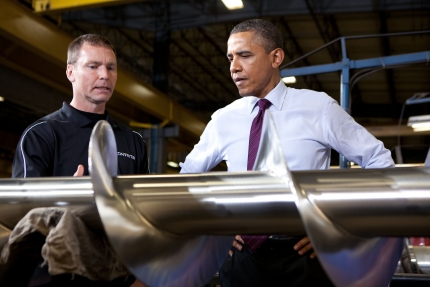
The White House

Office of the Press Secretary

FACT SHEET: National Strategy for Global Supply Chain Security

“International trade has been and continues to be a powerful engine of United States and global economic growth.  In recent years, communications technology advances and trade barrier and production cost reductions have contributed to global capital market expansion and new economic opportunity.  The global supply chain system that supports this trade is essential to the United States’ economy and security and is a critical global asset.”

- National Strategy for Global Supply Chain Security, 2012

The United States and other nations worldwide rely upon the efficient and secure movement of goods across and within our borders to provide food, medicine, energy, and an abundance of other products that feed our domestic critical infrastructure sectors, drive our economies, and support our ways of life.   We have a shared, mutual interest in working collaboratively to strengthen this vital global asset.

Global Supply Chains: Global asset and vital to our economic and security interests

As the global supply chain becomes more complex and global in scope, it is increasingly at risk from disruptions including natural hazards, accidents, and malicious incidents.  Events like Hurricane Katrina in 2005, the eruption of the Eyjafjallajokull volcano in Iceland in 2010, and the Japan earthquake and tsunami of 2011; failing infrastructures such as the I-35 bridge collapse in 2007; terrorist attacks such as 9/11, and more recent plots involving air cargo shipments filled with explosives shipped via Europe and the Middle East to the United States, remind us that even localized disruptions can escalate rapidly and impact U.S. interests and the broader global community.  We must collectively address the challenges posed by these threats and strengthen our national and international policies accordingly.

National Strategy for Global Supply Chain Security

Through the National Strategy for Global Supply Chain Security, we establish the United States Government’s policy to strengthen the global supply chain in order to protect the welfare and interests of the American people and secure our Nation’s economic prosperity.  Our focus in this Strategy is the worldwide network of transportation, postal, and shipping pathways; assets and infrastructure by which goods are moved from the point of manufacture until they reach an end consumer; and supporting communications infrastructure and systems. 

The Strategy includes two goals:

• To Promote the Efficient and Secure Movement of Goods – The first goal is to promote the timely and efficient flow of legitimate commerce while protecting and securing the supply chain from exploitation, and reducing its vulnerability to disruption.  To this end we will enhance the integrity of goods as they move through the global supply chain.  We will also understand and resolve threats early in the process, and strengthen the security of physical infrastructure, conveyances, and information assets while seeking to maximize trade through modernizing supply chain infrastructure and processes.

• To Foster a Resilient Supply Chain – The second goal is to foster a global supply chain system that is prepared for and can withstand evolving threats and hazards and that can recover rapidly from disruptions.  To achieve this we will prioritize efforts to mitigate systemic vulnerabilities and refine plans to reconstitute the flow of commerce after disruptions.

Our approach is informed by the following guiding principles:

• To Galvanize Action – Integrate and spur efforts across the United States Government, as well as with State, local, tribal and territorial governments, the private sector, and the international community.

• To Manage Supply Chain Risk – Identify, assess, and prioritize efforts to manage risk by utilizing layered defenses and adapting our security posture according to the changing security and operational environment.

Engaging Partners and the Path Forward

Upon the release of the Strategy, the Departments of State and Homeland Security will lead a six month engagement period with the international community and industry stakeholders.  The purpose of these engagements is to solicit feedback and specific recommendations on how to implement the Strategy in a cost effective and collaborative manner. 
We are particularly interested in receiving views and recommendations from stakeholders on a number of priority areas upon which we will focus our immediate implementation efforts.  These priorities include: 
• Refining our understanding of global supply chain threats and risks across air, land, and sea pathways; 
• Improving threat detection and information analysis as well as sharing capabilities;
• Building resilient critical infrastructures and fostering a system that can absorb shocks and maintain continuity in the face of disruptions;
• Improving our capacity for commerce by modernizing and expanding our domestic infrastructures, streamlining government processes, and creating innovative solutions to speed the movement of legitimate goods across our borders; and
• Embracing and advancing global standards and encouraging collaboration with other stakeholders seeking to contribute to this collective mission.