The White House

Office of the Press Secretary

Presidential Memorandum -- Accelerating Technology Transfer and Commercialization of Federal Research in Support of High-Growth Businesses

MEMORANDUM FOR THE HEADS OF EXECUTIVE DEPARTMENTS AND AGENCIES

SUBJECT: Accelerating Technology Transfer and Commercialization of Federal Research in Support of High Growth Businesses

Section 1Policy.  Innovation fuels economic growth, the creation of new industries, companies, jobs, products and services, and the global competitiveness of U.S. industries.  One driver of successful innovation is technology transfer, in which the private sector adapts Federal research for use in the marketplace.  One of the goals of my Administration's "Startup America" initiative, which supports high growth entrepreneurship, is to foster innovation by increasing the rate of technology transfer and the economic and societal impact from Federal research and development (R&D) investments.  This will be accomplished by committing each executive department and agency (agency) that conducts R&D to improve the results from its technology transfer and commercialization activities.  The aim is to increase the successful outcomes of these activities significantly over the next 5 years, while simultaneously achieving excellence in our basic and mission focused research activities.

I direct that the following actions be taken to establish goals and measure performance, streamline administrative processes, and facilitate local and regional partnerships in order to accelerate technology transfer and support private sector commercialization.

Sec. 2Establish Goals and Measure Progress.  Establishing performance goals, metrics, and evaluation methods, as well as implementing and tracking progress relative to those goals, is critical to improving the returns from Federal R&D investments.  Therefore, I direct that:

(a)  Agencies with Federal laboratories shall develop plans that establish performance goals to increase the number and pace of effective technology transfer and commercialization activities in partnership with non federal entities, including private firms, research organizations, and non profit entities.  These plans shall cover the 5 year period from 2013 through 2017 and shall contain goals, metrics, and methods to evaluate progress relative to the performance goals.  These goals, metrics, and evaluation methods may vary by agency as appropriate to that agency's mission and types of research activities, and may include the number and quality of, among other things, invention disclosures, licenses issued on existing patents, Cooperative Research and Development Agreements (CRADAs), industry partnerships, new products, and successful self sustaining spinoff companies created for such products.  Within 180 days of the date of this memorandum, these plans shall be submitted to the Office of Management and Budget (OMB) which, in consultation with the Office of Science and Technology Policy (OSTP) and the Department of Commerce, shall review and monitor implementation of the plans.

(b)  The Interagency Workgroup on Technology Transfer, established pursuant to Executive Order 12591 of April 10, 1987, shall recommend to the Department of Commerce opportunities for improving technology transfer from Federal laboratories, including:  (i) current technology transfer programs and standards for assessing the effectiveness of these programs; (ii) new or creative approaches to technology transfer that might serve as model programs for Federal laboratories; (iii) criteria to assess the effectiveness and impact on the Nation's economy of planned or future technology transfer efforts; and (iv) an assessment of cooperative research and development venture programs.

(c)  The Secretary of Commerce, in consultation with other agencies, including the National Center for Science and Engineering Statistics, shall improve and expand, where appropriate, its collection of metrics in the Department of Commerce's annual technology transfer summary report, submitted pursuant to 15 U.S.C. 3710(g)(2).

(d)  The heads of agencies with Federal laboratories are encouraged to include technology transfer efforts in overall laboratory evaluation.

Sec. 3Streamline the Federal Government's Technology Transfer and Commercialization Process.  Streamlining licensing procedures, improving public availability of federally owned inventions from across the Federal Government, and improving the executive branch's Small Business Innovation Research (SBIR) and Small Business Technology Transfer (SBTT) programs based on best practices will accelerate technology transfer from Federal laboratories and other facilities and spur entrepreneurship.  Some agencies have already implemented administrative changes to their SBIR and SBTT programs on a pilot basis and achieved significant results, such as reducing award times by 50 percent or more.  Over the past year, some agencies have also initiated pilot programs to streamline the SBIR award timeline and licensing process for small businesses.  In addition, some agencies have developed new short term exclusive license agreements for startups to facilitate licensing of inventions to small companies.  Therefore:

(a)  Agencies with Federal laboratories shall review their licensing procedures and practices for establishing CRADAs with the goal of reducing the time required to license their technologies and establish CRADAs to the maximum practicable extent.

(b)  The Federal Chief Information Officer and the Assistant to the President and Chief Technology Officer shall, in coordination with other agencies:  (i) list all publicly available federally owned inventions and, when available, licensing agreements on a public Government database; (ii) develop strategies to increase the usefulness and accessibility of this data, such as competitions, awards or prizes; and (iii) report their initial progress to OMB and OSTP within 180 days of the date of this memorandum.

(c)  The heads of agencies participating in the SBIR and SBTT programs shall implement administrative practices that reduce the time from grant application to award by the maximum practicable extent; publish performance timelines to increase transparency and accountability; explore award flexibility to encourage high quality submissions; engage private sector scientists and engineers in reviewing grant proposals; encourage private sector co investment in SBIR grantees; partner with external organizations such as mentoring programs, university proof of concept centers, and regional innovation clusters; and track scientific and economic outcomes.  The OMB, OSTP, and the Small Business Administration shall work with agencies to facilitate, to the extent practicable, a common reporting of these performance measures.

Sec. 4Facilitate Commercialization through Local and Regional Partnerships.  Agencies must take steps to enhance successful technology innovation networks by fostering increased Federal laboratory engagement with external partners, including universities, industry consortia, economic development entities, and State and local governments.  Accordingly:

(a)  I encourage agencies with Federal laboratories to collaborate, consistent with their missions and authorities, with external partners to share the expertise of Federal laboratories with businesses and to participate in regional technology innovation clusters that are in place across the country.

(b)  I encourage agencies, where appropriate and in accordance with OMB Circular A 11, to use existing authorities, such as Enhanced Use Leasing or Facility Use Agreements, to locate applied research and business support programs, such as incubators and research parks, on or near Federal laboratories and other research facilities to further technology transfer and commercialization.

(c)  I encourage agencies with Federal laboratories and other research facilities to engage in public-private partnerships in those technical areas of importance to the agency's mission with external partners to strengthen the commercialization activities in their local region.

Sec. 5General Provisions.  (a)  For purposes of this memorandum, the term "Federal laboratories" shall have the meaning set forth for that term in 15 U.S.C. 3703(4).

(b)  This memorandum shall be implemented consistent with applicable law and subject to the availability of appropriations.

(c)  Nothing in this memorandum shall be construed to impair or otherwise affect the functions of the Director of OMB relating to budgetary, administrative, and legislative proposals.

(d)  Independent agencies are strongly encouraged to comply with this memorandum.

(e)  This memorandum is not intended to, and does not, create any right or benefit, substantive or procedural, enforceable at law or in equity by any party against the United States, its departments, agencies, or entities, its officers, employees, or agents, or any other person.

BARACK OBAMA

The White House

Office of the Press Secretary

Presidential Memorandum -- Making it Easier for America's Small Businesses and America's Exporters to Access Government Services to Help Them Grow and Hire

MEMORANDUM FOR THE HEADS OF EXECUTIVE DEPARTMENTS AND AGENCIES

SUBJECT:  Making it Easier for America's Small Businesses and America's Exporters to Access Government Services to Help Them Grow and Hire

As I outlined in my State of the Union address to the Congress on January 25, 2011, winning the future in the global economy will require a Government that wisely allocates its scarce resources to maximize efficiency and effectiveness so that it can best support American competitiveness, innovation, and job growth.  If we are to thrive in the global economy, and make America the best place on Earth to do business, we need to equip our Government with the tools necessary to support innovation and job growth in the 21st century.

Accordingly, we must make it easier for businesses to access the full range of Government programs and services without having to waste effort navigating their way through the Federal bureaucracy.  At the same time, we must further streamline and coordinate Federal programs to reduce costs and provide customer oriented service.

Businesses looking for assistance from the Federal Government should feel like they are interacting with one entity, rather than a number of separate, albeit linked, components.  This means adopting a "No Wrong Door" policy that uses technology to quickly connect businesses to the services and information relevant to them, regardless of which agency's website, call center, or office they go to for help.

In addition, a business's interactions with the Federal Government should be individualized and efficient.  If the private sector can allow consumers to customize interactions so that they receive only the information they want, in the form they want it, so can the Federal Government.

Today, I am directing a first wave of changes focused on both small businesses and businesses of all sizes that want to begin or increase exporting (exporters), because those businesses help drive economic growth and have the most to gain from Federal assistance.  We plan to use the resulting improvements as a model for future reforms so that, in time, all businesses and all citizens receive the highest level of customer service when they interact with the Federal Government. 

Accordingly, I direct the following:

(1)  All executive departments and agencies (agencies) shall work with a Steering Committee co chaired by the Federal Chief Information Officer, Assistant to the President and Chief Technology Officer, and Chief Performance Officer (the Co Chairs) to carry out the directives in this memorandum within 90 days of the date of this memorandum, unless a provision of this memorandum expressly states otherwise.  The Steering Committee shall include senior policy and technical representatives, appointed by the heads of their respective agencies, from the Departments of State, Defense, Agriculture, Commerce, and Veterans Affairs, the Small Business Administration (SBA), the General Services Administration (GSA), the Export-Import Bank, and other agencies designated by the Co Chairs.  The Co Chairs and representatives from the Department of Commerce and SBA shall serve as the Executive Committee of the Steering Committee, which shall coordinate the strategy, design, development, launch, and operation of BusinessUSA, a common, open, online platform and web service with dedicated resources that will, as a first step, disseminate core information regarding the Federal Government's programs and services relevant to small businesses and exporters.   

(2)  Agencies shall work with the Steering Committee to develop and launch an introductory version of BusinessUSA.  BusinessUSA shall be designed, tested, and built with the active feedback of U.S. businesses and relevant online communities.  To the extent appropriate, practicable, and permitted by law, the BusinessUSA platform shall integrate related State and local government services as well as those of private sector partners. 

(3)  Agencies shall make information regarding their small business and export programs and services accessible through BusinessUSA.  To accomplish this in a uniform fashion, the Steering Committee shall develop a common set of standards for content available through BusinessUSA, which shall identify the types of programs and services to be included initially on BusinessUSA and a structure for organizing and presenting such information.  These standards shall be used by all agencies in the creation, presentation, and delivery of information regarding their programs and services, to the extent practicable and permitted by law. 

(4)  Agencies shall also work with the Steering Committee to develop new content for BusinessUSA that synthesizes information available across agencies to better serve small businesses and exporters.  Among other things, agencies shall work together to aggregate on the BusinessUSA platform statistical, demographic, and other raw Government datasets of particular interest to small businesses and exporters, making Government data more easily accessible and spurring innovative uses of the data through business oriented web or mobile applications.

(5)  Agencies shall integrate BusinessUSA, including ready access to the BusinessUSA website, into their current websites, call centers, and field offices to ensure that small businesses and exporters have access to the wide range of Government programs and services at each entry point into the Federal Government.  During the year following the date of this memorandum, agencies shall work with GSA and the Office of Management and Budget to enhance the centralized call center for responding to public questions about Federal programs and services (1 800 FED INFO) to add expertise with Government programs and services for small businesses and exporters.

(6)  (a)  Nothing in this memorandum shall be construed to impair or otherwise affect:

(i)   authority granted by law or Executive Order to an agency, or the head thereof; or

(ii)  functions of the Director of the Office of Management and Budget relating to budgetary, administrative, or legislative proposals.

(b)  BusinessUSA shall be operated by a single hosting agency under the Executive Committee's coordination.  To the extent permitted by law, agencies shall reimburse the hosting agency for the cost of establishing, maintaining, and operating BusinessUSA.

(c)  This memorandum shall be implemented consistent with applicable law and subject to the availability of appropriations.

(d)  This memorandum is not intended to, and does not, create any right or benefit, substantive or procedural, enforceable at law or in equity by any party against the United States, its departments, agencies, or entities, its officers, employees, or agents, or any other person.

(7)  The Director of the Office of Management and Budget is authorized and directed to publish this memorandum in the Federal Register.

BARACK OBAMA

The White House

Office of the Press Secretary

Statement by the President on the Selection of Prince Nayif bin Abd al-Aziz as Crown Prince of Saudi Arabia

I congratulate King Abdullah and the Saudi people on the selection of Prince Nayif bin Abd al-Aziz Al Saud as Crown Prince and Deputy Prime Minister of the Kingdom of Saudi Arabia. Crown Prince Nayif has served his nation with dedication and distinction for more than 35 years as Minister of Interior, and as Second Deputy Prime Minister since 2009. We in the United States know and respect him for his strong commitment to combating terrorism and supporting regional peace and security. The United States looks forward to continuing our close partnership with Crown Prince Nayif in his new capacity as we strengthen the deep and longstanding friendship between the United States and Saudi Arabia.

The White House

Office of the Press Secretary

Op-ed by President Obama: A firewall to stop Europe's crisis spreading

The full text of the op-ed by President Barack Obama is printed below. The piece, published in today’s Financial Times, can be read online HERE.

A firewall to stop Europe’s crisis spreading
By Barack Obama

When leaders of the largest economies meet next week in France, our citizens will be watching for the same sense of common purpose that allowed us to rescue the global economy two years ago from a financial crisis that was sparked by years of irresponsibility.

Because of the co-ordinated action the G20 took then, the global economy began to grow again. Emerging economies rebounded. In the US, we’ve had 19 straight months of private sector job growth and added more than 2.5m private sector jobs.

Still, progress has not come fast enough and today the global recovery remains fragile. Around the world, hundreds of millions of people are unemployed. Disruptions in oil supplies, the tragic earthquake in Japan, and Europe’s financial crisis have contributed to the slowdown. Emerging economies have begun to slow. Global demand is weakening.

Our challenge is clear. We must stay focused on the strong, sustainable and balanced growth that boosts global demand and creates jobs and opportunity for our people. This requires action in several areas.

First, as the world’s largest economy, the US will continue to lead. The single most effective thing we can do to get the global economy growing faster is to get the US economy growing faster. That’s why my highest priority is putting Americans back to work. It’s why I’ve proposed the American Jobs Act, which independent economists have said would create nearly 2m jobs, boost demand and increase US economic growth. It’s why I signed landmark trade agreements with South Korea, Colombia and Panama to create jobs, keep us on track to double our exports and preserve American competitiveness.

At the same time, we’re building on the nearly $1,000bn in spending cuts agreed this summer. I’ve put forward a comprehensive and balanced plan to substantially reduce our deficit over the next few years in a way that does not hamper the current recovery and that lays the foundation for future growth.
Second, the crisis in Europe must be resolved as quickly as possible. This week, our European allies made important progress on a strategy to restore confidence in European financial markets, laying a critical foundation on which to build.

Given the scope of the challenge and the threat to the global economy, it is important for all of us that this strategy be implemented successfully – including building a credible firewall that prevents the crisis from spreading, strengthening European banks, charting a sustainable path for Greece and tackling the structural issues at the heart of the current crisis.

The European Union is America’s single largest economic partner and a critical anchor of the global economy. I am confident that Europe has the financial and economic capacity to meet this challenge, and the US will continue to support our European partners as they work to resolve this crisis.
Third, each nation must do its part to ensure that global growth is balanced and sustainable so we avoid slipping into old imbalances. For some countries, this means confronting their own fiscal challenges. For countries with large surpluses, it means taking additional steps to support growth. For export-oriented economies, it means working to boost domestic demand. A critical tool for accelerating that shift is greater flexibility in exchange rates, including exchange rates that are market-driven.

Avoiding old imbalances also means moving ahead with financial reforms that can help prevent another financial crisis. In the US, we’re implementing the strongest reforms since the Great Depression. Across the G20, we need to make sure banks maintain the capital they need to withstand shocks, and there needs to be greater oversight and transparency to avoid excessive risks, especially with regard to derivatives.

Finally, the G20 nations must deepen co-operation on the range of global challenges that affect our shared prosperity. We need to move ahead with our commitment to phase out subsidies for fossil fuels and transition to 21st-century clean-energy economies. As we promote the development that gives nations a path out of poverty, we can focus on the infrastructure, finance and good governance that unleash growth. Even as we work to save lives from the drought and famine in the Horn of Africa, we need to continue investing in the food security and agricultural productivity that make future famines less likely and communities more self-sufficient.

When we met in London two years ago, we knew that putting the global economy on the path to recovery would be neither easy nor quick. But together, we forged a response that pulled the global economy back from the brink of catastrophe. That’s the leadership we’ve demonstrated before. That’s the leadership we need now – to sustain economic recovery and put people back to work, in our own countries and around the world.

The writer is US president

West Wing Week: 10/28/11 or "We Can't Wait"

October 27, 2011 | Public Domain

Welcome to the West Wing Week, your guide to everything that's happening at 1600 Pennsylvania Ave. This week, the President announced he'd keep his promise to bring our troops home from Iraq, honored the nation's top scientists and inventors, embarked on a three day Western swing to urge Congress to pass the American Jobs Act and announced major new executive actions that will help middle class families in this difficult economy. That's October 21st to October 27th or "We Can't Wait"

Download mp4 (162.5MB)

West Wing Week: 10/28/11 or "We Can't Wait"

This week, the President announced he'd keep his promise to bring our troops home from Iraq, honored the nation's top scientists and inventors, embarked on a three day Western swing to urge Congress to pass the American Jobs Act, and announced major new executive actions that will help middle class families in this difficult economy.

Watch West Wing Week here

President Obama Takes a Question on Euro Debt Deal

October 27, 2011 | 7:40 | Public Domain

President Obama answers a question about the European debt agreement during a bilateral meeting with Prime Minster Petr Necas of the Czech Republic.

Download mp4 (73MB) | mp3 (7MB)

Read the Transcript

Remarks by President Obama and Prime Minister Necas of the Czech Republic before Bilateral Meeting

3:21 P.M. EDT

        PRESIDENT OBAMA:  Well, I want to extend a heartfelt welcome to Prime Minister Necas and his delegation.  This gives me a chance to return the hospitality that the Czech people have provided me on the two occasions that I’ve had an opportunity to visit.  I’ve always been someone who not only wanted to visit but -- wanted to visit the Czech Republic, but also because I come from Chicago -- we’ve got a lot of people who are originally from the Czech Republic, and they’ve made enormous contributions to our country as well.

        Let me say first at the top, the Prime Minister just came from Brussels, where he was part of the negotiations around the eurozone crisis.  I’m glad to see that progress was made in the recent meetings.  I think it is an important first step.  We’ve seen that, although it’s very complicated, obviously the countries of the eurozone and all of Europe are committed to the European project and are intent on making sure that it continues.

        So we’ve seen that the message that they are going to deal with this in a serious way has calmed markets all around the world.  It will help lay the predicate for long-term economic growth not only in Europe but around the world.  The key now is to make sure that it is implemented fully and decisively, and I have great confidence in the European leadership to make that happen.

        With respect to the relationship between the United States and the Czech Republic, it continues to be strong.  The Czech Republic is one of our greatest allies and has provided the kind of support and cooperation on both security and non-security issues that is a mark of a true ally.  As a fellow NATO member, we have consistently reaffirmed our Article 5 commitment that says that an attack on any one of us is an attack on all of us, and that we have to make sure that we continue to have the kind of strong mutual defense posture that’s required.  And the Czech Republic has reflected that commitment in the extraordinary efforts it has made in Afghanistan, for which we are deeply appreciative.

        I will tell you that when you talk to American commanders in Afghanistan and you ask them who are some of our best and most effective partners, they consistently say the Czech Republic.  And so we are very grateful for their contributions, and we are going to be working and collaborating with them as we move into a transition process where we increasingly make sure that Afghans are taking the security lead in their country.

        We also are going to have an opportunity to discuss a range of economic and commercial ties and issues.  We want to continue to deepen our relationship around research and development, around civil nuclear power, around how we can strengthen trade between our two countries.  And so, over all, I think it’s fair to say that, although the relationship between the United States and the Czech Republic economically is very strong, it can always be stronger.  And we’re going to look for additional opportunities for collaboration.

        Finally, let me just say that the Czechs continue to inspire the world with their own transition from being behind the Iron Curtain to freedom and democracy.  And so their strong stance on issues of human rights and democracy and freedom around the world is extraordinarily important.  And I know the Prime Minister is committed to making sure that the Czech Republic continues to send a signal around the world, whether it’s in the wake of the Arab Spring, or other countries where freedom and democracy have not yet been achieved, that they are able to continue to set a great example and provide the kind of leadership and technical assistance that’s so important for many of these countries.

        So, overall, Mr. Prime Minister, I want to thank you for your leadership not only in our bilateral relations, but the Czech Republic’s leadership in many multilateral fora.  We want to welcome you and I hope that you enjoy your stay here.

        PRIME MINISTER NECAS:  Thank you.  Thank you, Mr. President, for your kind words.  Thank you for your hospitality you have shown to me and to my delegation.

        We are indeed allies in numerous endeavors in Europe and around the world.  We are together in Afghanistan.  We are ready to work together on the process of transition in this country.  

        We are preparing a major summit in Chicago, Mr. President’s hometown, and also, as he stated, we have many Czech connections.

        It will be necessary to create a framework for keeping our defense capability in the current economical situation.  I would like to discuss the issue of the project to create a special helicopter pilot training center of excellence, as a part of a Smart Defense initiative within NATO.  

        We would like to discuss, of course, the economical situation -- the situation on both sides of the Atlantic, vis-à-vis the current crisis of eurozone, and last but not least, the promotion of human rights and democracy around the world.

        We would like to discuss our participation within Open Government Partnership initiative, and of course, a discussion concerning center for civil nuclear cooperation -- because we do appreciate your strong leadership, your announcement that you’d like to have a vision of a world without nuclear weapons that was announced in Prague.  

        Thank you.

        PRESIDENT OBAMA:  Welcome.

        Q    Mr. President, do you think that the deal in Europe will help prevent another recession?   

        PRESIDENT OBAMA:  There has been progress.  And so the key now is to make sure that there’s strong follow-up, strong execution of the plans that have been put forward.  But I was very pleased to see that the leaders of Europe recognize that it is both in Europe’s interest and the world’s interest that the situation is stabilized.  And I think they’ve made significant progress over the last week.  And the key now is just to make sure that it drives forward in an effective way.  

        But it will definitely have an impact on us here in the United States.  If Europe is weak, if Europe is not growing, as our largest trading partner, that’s going to have an impact on our businesses and our ability to create jobs here in the United States.

        Thanks.  Thank you so much.

END 3:30 P.M. EDT

Close Transcript

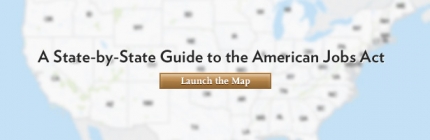
Mapping Out the American Jobs Act

The American Jobs Act is a big proposal that can be hard to visualize, so we wanted to put together a new tool to help show the impact.

Our new map breaks down specific ways the President's plan helps to create jobs and put money back in families' pockets, state by state.

If you wanted to see what a typical tax cut looks like for a family in Texas, it's right here: $1,460.

Teacher jobs in North Carolina? 13,400.

Money for roads and bridges in Colorado? $494.8 million.

Take the time to dig in and learn how the American Jobs Act would help your state and community -- and share the map with those you know.


The European Debt Crisis

Talk with Prime Minister Petr Necas of the Czech Republic

President Barack Obama holds a bilateral meeting with Prime Minister Petr Necas of the Czech Republic, in the Oval Office, Oct. 27, 2011. (Official White House Photo by Pete Souza)

President Obama’s meeting with Prime Minster Petr Necas of the Czech Republic came in the wake of an announcement that European leaders reached an agreement to cut Greek debt and solve the Eurozone crisis.

Before his trip to the White House, Prime Minister Necas had been involved with those talks in Brussels.

In a statement, President Obama pledged to support our allies Europe:

We welcome the important decisions made last night by the European Union which lay a critical foundation for a comprehensive solution to the Eurozone crisis. We look forward to the full development and rapid implementation of their plan. We will continue to support the EU and our European allies in their efforts to address this crisis as we work together to sustain the global recovery and put our people back to work.

Speaking to reporters with the prime minister, President Obama reiterated those remarks.

"I think they made significant progress over the last week," he said. "The key now is just to make sure that it drives forward in an effective way.


Related Topics: Economy, Foreign Policy

The White House

Office of the Press Secretary

Remarks by President Obama and Prime Minister Necas of the Czech Republic before Bilateral Meeting

Oval Office

3:21 P.M. EDT

        PRESIDENT OBAMA:  Well, I want to extend a heartfelt welcome to Prime Minister Necas and his delegation.  This gives me a chance to return the hospitality that the Czech people have provided me on the two occasions that I’ve had an opportunity to visit.  I’ve always been someone who not only wanted to visit but -- wanted to visit the Czech Republic, but also because I come from Chicago -- we’ve got a lot of people who are originally from the Czech Republic, and they’ve made enormous contributions to our country as well.

        Let me say first at the top, the Prime Minister just came from Brussels, where he was part of the negotiations around the eurozone crisis.  I’m glad to see that progress was made in the recent meetings.  I think it is an important first step.  We’ve seen that, although it’s very complicated, obviously the countries of the eurozone and all of Europe are committed to the European project and are intent on making sure that it continues.

        So we’ve seen that the message that they are going to deal with this in a serious way has calmed markets all around the world.  It will help lay the predicate for long-term economic growth not only in Europe but around the world.  The key now is to make sure that it is implemented fully and decisively, and I have great confidence in the European leadership to make that happen.

        With respect to the relationship between the United States and the Czech Republic, it continues to be strong.  The Czech Republic is one of our greatest allies and has provided the kind of support and cooperation on both security and non-security issues that is a mark of a true ally.  As a fellow NATO member, we have consistently reaffirmed our Article 5 commitment that says that an attack on any one of us is an attack on all of us, and that we have to make sure that we continue to have the kind of strong mutual defense posture that’s required.  And the Czech Republic has reflected that commitment in the extraordinary efforts it has made in Afghanistan, for which we are deeply appreciative.

        I will tell you that when you talk to American commanders in Afghanistan and you ask them who are some of our best and most effective partners, they consistently say the Czech Republic.  And so we are very grateful for their contributions, and we are going to be working and collaborating with them as we move into a transition process where we increasingly make sure that Afghans are taking the security lead in their country.

        We also are going to have an opportunity to discuss a range of economic and commercial ties and issues.  We want to continue to deepen our relationship around research and development, around civil nuclear power, around how we can strengthen trade between our two countries.  And so, over all, I think it’s fair to say that, although the relationship between the United States and the Czech Republic economically is very strong, it can always be stronger.  And we’re going to look for additional opportunities for collaboration.

        Finally, let me just say that the Czechs continue to inspire the world with their own transition from being behind the Iron Curtain to freedom and democracy.  And so their strong stance on issues of human rights and democracy and freedom around the world is extraordinarily important.  And I know the Prime Minister is committed to making sure that the Czech Republic continues to send a signal around the world, whether it’s in the wake of the Arab Spring, or other countries where freedom and democracy have not yet been achieved, that they are able to continue to set a great example and provide the kind of leadership and technical assistance that’s so important for many of these countries.

        So, overall, Mr. Prime Minister, I want to thank you for your leadership not only in our bilateral relations, but the Czech Republic’s leadership in many multilateral fora.  We want to welcome you and I hope that you enjoy your stay here.

        PRIME MINISTER NECAS:  Thank you.  Thank you, Mr. President, for your kind words.  Thank you for your hospitality you have shown to me and to my delegation.

        We are indeed allies in numerous endeavors in Europe and around the world.  We are together in Afghanistan.  We are ready to work together on the process of transition in this country.  

        We are preparing a major summit in Chicago, Mr. President’s hometown, and also, as he stated, we have many Czech connections.

        It will be necessary to create a framework for keeping our defense capability in the current economical situation.  I would like to discuss the issue of the project to create a special helicopter pilot training center of excellence, as a part of a Smart Defense initiative within NATO.  

        We would like to discuss, of course, the economical situation -- the situation on both sides of the Atlantic, vis-à-vis the current crisis of eurozone, and last but not least, the promotion of human rights and democracy around the world.

        We would like to discuss our participation within Open Government Partnership initiative, and of course, a discussion concerning center for civil nuclear cooperation -- because we do appreciate your strong leadership, your announcement that you’d like to have a vision of a world without nuclear weapons that was announced in Prague.  

        Thank you.

        PRESIDENT OBAMA:  Welcome.

        Q    Mr. President, do you think that the deal in Europe will help prevent another recession?   

        PRESIDENT OBAMA:  There has been progress.  And so the key now is to make sure that there’s strong follow-up, strong execution of the plans that have been put forward.  But I was very pleased to see that the leaders of Europe recognize that it is both in Europe’s interest and the world’s interest that the situation is stabilized.  And I think they’ve made significant progress over the last week.  And the key now is just to make sure that it drives forward in an effective way.  

        But it will definitely have an impact on us here in the United States.  If Europe is weak, if Europe is not growing, as our largest trading partner, that’s going to have an impact on our businesses and our ability to create jobs here in the United States.

        Thanks.  Thank you so much.

END 3:30 P.M. EDT