The White House

Office of the Press Secretary

Remarks by the President at a Campaign Event

Private Residence
Los Angeles, California

10:18 A.M. PDT

THE PRESIDENT:  Thank you, everybody.  (Applause.) Everybody sit down, make yourselves comfortable.  In fact, it's warm out here -- gentlemen, feel free to take off your jackets.  (Laughter.)  I'm going to -- there you go.  That's what's called an executive order.  (Laughter.) 

I want to thank JoAnn and Charles for hosting us in their extraordinary home.  You can give them a big round of applause.  (Applause.)  I want to thank our event co-chairs, Nicole and Clarence Avant -- (applause) -- Lorna Johnson, Kerman Maddox, Candace and Steve McKeever, Cookie Parker, and Danielle Smith.  (Applause.) 

I want to thank all of you for being here on this spectacular Los Angeles day.  I'm glad some of you brought your children, your young people, which is great to see -- although it doesn’t seem like they were arguing that much about getting out of one of the last days of school.  (Laughter.)  I don't know how many excuse notes I'm going to have to write.  (Laughter.) 

Michelle says hi.  (Applause.)  The girls, they're in the mindset that school is almost done.  We're trying to keep them focused, telling them to run through the tape, don't start slacking off too early.  And Bo says hi as well.  (Laughter.) 

Now, I'm here not just because I need your help, but I'm here because the country needs your help.  When we came together -- and so many of you were supporters back in 2008, and a lot of you got on this bandwagon before people could even pronounce my name properly -- we came together not just to support me, not just to support an individual.  The idea was that we were making a commitment to each other, that there were a set of values and ideals, there were a set of principles that we believed in as Americans that date back to the founding of this country. 

This did not begin as a perfect union, but the charter of this country -- our Declaration of Independence, our Constitution -- spoke to the possibility of perfecting the union.  There were those who were excluded, there were those who were not considered full citizens, but there was this idea at the core of America that can be expressed very simply, which is in this country you should be able to make it if you try; if you're willing to work hard, if you're willing to take responsibility, that everybody can make it, regardless of what they look like, or where they come from, what faith they hold, or who they love -- that everybody should be able to make it in this country if they try.

Now, there were a lot of struggles to fulfill that promise. There was a war fought, and the civil rights movement and the women's rights movement and a workers' movement.  But the trajectory of this country has always been we're going to expand more and more opportunity to more and more people, and promote dignity and respect and justice and equality and fairness for more and more people.  That's been the trajectory of this country.  That's the reason I can stand here today as President of the United States, because of the extraordinary work that was done in the past.

And what we recognized in 2008 was, as much progress as had been made, it seemed like we were taking a wrong turn, that we were not being true to those ideals that everybody can make it.  So we had a surplus turned into a deficit because of tax cuts for folks who didn’t need them and weren’t even asking for them.  We had two wars fought on a credit card.  A few people were doing really well, but more and more folks were struggling to get by as costs of everything from health care to sending your kid to college were skyrocketing, and people's incomes and wages were flat-lining, and job growth was stagnant, and manufacturing was moving offshore.

And so we came together to affirm and assert that we were going to restore that basic sense that in America, everybody gets a fair shot and everybody does their fair share and everybody plays by the same set of rules.

Now, we didn’t know at the time that I started running that we would end up experiencing the worst financial crisis in our lifetimes.  We didn’t know that we were losing 4 million jobs even as I was still campaigning, lose 800,000 the month that I took office.  But we understood that we were going to have to try to work as hard as we could to bring about change that was desperately needed to fulfill this country's promise.

And so, yes, we've gone through three and a half years of very difficult times.  I had to make a bunch of decisions that weren’t always popular.  But we made the right decisions.  Because it turns out that the American people are tougher than tough times.  So when some folks said we should let Detroit go bankrupt we said we're not going to let that happen; we're going to save more than a million jobs.  And right now, GM is the number-one automaker in the world once again and Detroit is coming back better than ever.  (Applause.)

All across the country we put people back to work rebuilding our roads and our bridges and our infrastructure, and made sure that teachers and firefighters and police officers could stay on the job.  We stabilized the financial system.  We made sure that loans were starting to flow again to small businesses, and businesses started getting back to basics.  And as a consequence, we’ve now created over 4 million jobs over the last couple of years -- more than 800,000 this year alone -- more jobs in the manufacturing sector than any time since the 1990s. 

Because of the resilience and the grit of the American people all across this country, we’re starting to see progress again.  We’re starting to move in the right direction again.
But -- and here’s the reason I’m here today -- we’re not finished.  We’ve got more work to do.  (Applause.)  This journey is not over. 

There are still too many folks out there who are hurting, who are desperate for a job but can’t find one.  Folks who have seen their homes lose value -- $100,000 underwater, don’t know what it will mean for themselves, for their future.  Too many young people who still are trying to go to college and having a tough time affording it.  So despite all the work that we’ve done, we’ve still got more work to do. 

And we’ve got an election that in some ways is going to be more critical than 2008, because the other party has gone in a direction that is contrary to those values that we fought for in 2008.  You know, Governor Romney is a patriotic American and he’s got a beautiful family, and he’s been very successful.  But along with this Republican Congress, they’ve got a vision that doesn’t say, we work together; it says, everybody is on their own.  It says if you don’t have health care, tough luck, you’re on your own, figure it out.  It says if you were a child born into poverty, pull pull yourself up by your own bootstraps -- even if you don’t have boots.  (Laughter.)  You’re on your own. 

It’s a vision that basically believes that the answer to every question are more tax cuts for the wealthiest, the most powerful; the fewest regulations that protect consumers, or keep our air and water clean, or make sure that workers are treated fairly; and that somehow, if government isn’t doing anything then the country is automatically going to be better.

Now, it would be one thing if we hadn’t tried this.  (Laughter.)  But we tried it.  Remember there was a previous administration.  We tried this whole recipe and it didn’t work. And the idea that we -- after all the progress we fought for, everything that we’ve done over the last three and a half years  -- that we’d go back to the very same policies that got us into this mess in the first place -- I don’t think so.  (Applause.)   We are not going to let it happen.  And that’s the reason why I’m running for a second term as President of the United States of America.  (Applause.)  We’re not going backwards.  We’re going forwards.  We are going forward.  We’re moving forward.  (Applause.)

And everything that we’ve accomplished -- everything that we’ve accomplished with outstanding members of Congress like Karen Bass, who’s here today, by the way -- give Karen a big round of applause.  We love Karen.  (Applause.)  Everything that we’ve accomplished should give us confidence not only that we can win this election but that we can keep progress going.

I keep a checklist in my desk of stuff I said I was going to do -- a little to-do list.  This is separate from Michelle’s to-do list.  (Laughter.)  She’s got her own to-do list.  I check both of them every day.  Said that we would make sure that 30 million Americans get health care -- check, we got that done -- (applause) -- 2.5 million young people who are on their parent’s health insurance plans right now -- I had a gentleman, while we were taking photos, come up and say, boy, that’s really helping me because my daughter, she needed health care.  And think about if somebody who can afford to come here today got helped, imagine what that means for a whole bunch of families all across the country.  Imagine what that means.  (Applause.) 

Doubled fuel-efficiency standards on cars so that by the next -- by the middle of the next decade, you’re going to see cars getting 55 miles per gallon.  (Applause.)  That’s not only good for your pocketbook; it’s helping reduce our dependence on foreign oil and it’s saving the environment in the process.  (Applause.)

We took tens of billions of dollars that were going to banks, subsidizing them through the student loan program, we said, let’s take that money, let’s give it directly to students. And as a consequence, we’ve gotten millions of people who are now getting opportunities for Pell grants and reducing their loan burden -- as a consequence of the work that we did.  (Applause.)  
We said, in a country that is constantly expanding opportunity, it does not make sense for patriotic Americans doing outstanding work not to be able to serve the country they love just because of who they love.  And so we ended "don’t ask, don’t tell."  (Applause.)  An expression of our values and our ideals.

War in Iraq -- over.  (Applause.)  Afghanistan -- in transition.  (Applause.)  Al Qaeda -- on the ropes.  Bin Laden -- gone.  (Applause.)

All that progress that we’ve made, it shouldn’t make us complacent, but it should give us confidence that if we’re willing to work hard, we can bring about more changes, more things that help ordinary families, so that if you're working hard out there, you can find a job, you can pay a mortgage, send your kids to college, retire with some dignity and some respect. That's what folks are looking for.

The American people, they're not -- they don't have wild expectations.  They understand that government can't solve every problem, and it shouldn’t try.  They recognize that they’ve got to take responsibility for making sure their children are instilled with a love of knowledge and taking school seriously.  They understand that not everybody can be helped if they don't want to be helped.  They're not looking for a handout, but they are looking for a hand up.  They are looking for a shot, an opportunity.  And so we’ve got more work to do on a whole range of fronts.

We’ve got more work to do to make sure that manufacturing and good jobs continue to come back onshore.  Instead of giving tax breaks to companies that ship jobs overseas, we want to give companies tax breaks that are investing here in the United States of America and creating jobs for our folks back home.  (Applause.)

We’ve got more work to do.  For all the work we’ve done improving our schools -- and we have made historic transformations -- 40 states have initiated, because of our Race to the Top program, major reforms that focus on learning K through 12, improving teacher performance.  We’ve still got more work to do.  There are still schools right here in Los Angeles and all across the country where half the kids are dropping out before they graduate.  One out of 10 are reading at grade level. So we’ve got to make investments, not just investments in money  -- although it does involve money -- but also investments in reform, to make sure that there is not a child in America who is not equipped when they graduate to compete in this global economy.

And it also means making sure that they can afford to go to college -- and if they're not going to a four-year college or university, they can go to a two-year college or university -- but get the skills that they need.  And there are programs out there that work.  We know they work.  The question is if we can scale them up to make sure that everybody has access to them.

We’ve got to implement health care reform.  We’ve got to implement Wall Street reform to make sure we don't see another taxpayer-funded bailout.  I don't want to have to go through that again.  (Applause.)

And we’ve got to balance our fiscal situation in a responsible way.  And this is going to be a major debate that comes up next year.  The other side, they're always talking about debt and deficits, which I find interesting since they're always the ones who run up the debt and the deficits, say we don't care about deficits -- until Democrats get into office and suddenly they see religion.  (Laughter.)

But now you’ve got a presidential candidate on the other side and a Republican Congress that says not only do we want to renew the Bush tax cuts for the wealthiest Americans, we want to double down with $5 trillion more worth of tax cuts.  And when they do try to explain how it would be paid for, when you do the math, what it comes down to is they would eliminate investments in science and technology that have made us an economic superpower; investments in our infrastructure that allow us to move goods and services and people around the world and make us competitive.  They want to eliminate investments in education at the precise time when we've got to be investing in our young people's education. 

If you implemented their budget, you could not afford anything outside of defense, Social Security, interest on the national debt and Medicare.  Everything else would be fundamentally wiped out.  Now, we think deficits and debt are important.  But we think that the way to do it is, yes, eliminate programs that don't work, reform our health system not by shifting cost to seniors, but by reducing costs and improving quality of care, but also, let's ask those of us who can do a little bit more to do a little bit more. 

For us to go back to the tax rates under Bill Clinton for folks who are millionaires or billionaires, that's not asking too much.  That's consistent with the idea that everybody does their fair share.  (Applause.)  That is something that has made this country great and is something that we still believe.

So there are a lot of reasons why this election is important.  There are probably going to be some additional Supreme Court appointments.  We've got the other side saying that they'd defund Planned Parenthood.  I believe that women's health should be in the control of women.  (Applause.)  I think a program like Medicaid, we can't just slash it in ways that make children and the disabled and our seniors more vulnerable.  I'm not going to allow them to roll back progress that we've made on health care.  We're going to have to make sure that we keep the gains that we've made on things like student loans. 

So there are all kinds of reasons why this election is important.  But I want to tell you, this election is also going to be close, though.  And the reason it's going to be close is not because the other side has good ideas.  They don't.  (Laughter.)  It's not because they've got new ideas, because as Bill Clinton said the other day, this is the just the same old thing they've been peddling for the last 20 years -- it's just on steroids.  (Laughter.)

The reason it's going to be close is because there are still folks out there who are hurting.  There are still folks out there who are having a tough time.  And that means that as frustrated as they are, if they're receiving $500 million worth of negative ads from these super PACs, then people start wondering, well, maybe nothing can work in Washington.  Maybe that "change we can believe in," maybe it couldn't happen. 

The other side is not going to provide new ideas, but they will try to tap into people's frustrations about a very difficult period in our history.  And so we're going to have to work through the cynicism and the negativity and the just plain nonsense that we've become accustomed to during political campaigns.  It will just be funded at a higher level than we've ever seen before. 

Here is the thing that makes me confident, though -- what you taught me in 2008 was that when folks get together, when citizens get together, when ordinary people get together, and decide it's time for change to happen, you know what, change happens.  Change happens when you make a commitment and you're talking to your friends and your neighbors, and suddenly young people are getting engaged and involved again in the life of this country -- and people are knocking on doors and making phone calls, and talking about the issues and getting informed.  When that happens, it can't be stopped.  It doesn't matter how much money the other side spends.  It doesn’t matter how much misinformation is out there -- the truth shall out. 

And I expect that's going to happen this time.  I understand some people -- when they take pictures with me, they show me -- pictures that we took four years ago together, they want me to sign them.  And it's generally just a reminder of how old I'm getting.  (Laughter.)  I'm all gray and dinged up -- (laughter)
-- bruised and battered.  But I want everybody here to know that I am more determined now than I have ever been.  (Applause.)  I have more confidence in the American people than ever before.  (Applause.)  Because when I travel around the country -- when I travel around the country and I meet a single mom who has raised some wonderful child who has now gone to college and she never got more than a high school education, and she is seeing him graduate, and she tells us, that's what all that work was for; or I meet a small business owner who didn't lay off his workers even during really tough times and didn't take a salary himself because he understood a lot of families were being supported at that time; when I meet our troops who just serve us with such professionalism and dignity and patriotism, and never complain -- all across the country you travel and you're just reminded how decent the American people are, how good they are, how right their instincts are. 

I still believe in the American people.  And so I hope you still believe in me.  (Applause.)  I told you when I was running in 2008, I'm not a perfect man and I am not a perfect President. But I told you, I'd always tell you what I thought, I'd always tell you where I stood, and I'd always every day wake up working as hard as I knew how to make your lives a little bit better.  And you know what, I have kept that promise.  (Applause.)  I have kept that promise. 

And so if you're willing to stick with me on this, and knock on some more doors and make some more phone calls, and work even harder this time than you did the last time, then we won't just win an election, but we will finish what we started.  (Applause.) Everybody will have a shot in this country.  And we'll remind the world just why it is that the United States of America is the greatest nation on Earth. 

Thank you, everybody.  God bless you.  God bless America.  (Applause.)

END
10:43 A.M. PDT

The White House

Office of the Press Secretary

Presidential Nominations and Withdrawals Sent to the Senate

NOMINATIONS SENT TO THE SENATE:

Mignon L. Clyburn, of South Carolina, to be a Member of the Federal Communications Commission for a term of five years from July 1, 2012.  (Reappointment)

Stephen Crawford, of Maryland, to be a Governor of the United States Postal Service for the remainder of the term expiring December 8, 2015, vice Alan C. Kessler, resigned.

John M. Koenig, of Washington, a Career Member of the Senior Foreign Service, Class of Minister-Counselor, to be Ambassador Extraordinary and Plenipotentiary of the United States of America to the Republic of Cyprus.

WITHDRAWALS SENT TO THE SENATE:

Terence Francis Flynn, of Maryland, to be a Member of the National Labor Relations Board for the term of five years expiring August 27, 2015, vice Peter Schaumber, term expired, which was sent to the Senate on January 5, 2011.

Terence Francis Flynn, of Maryland, to be a Member of the National Labor Relations Board for the term of five years expiring August 27, 2015, vice Peter Schaumber, term expired, to which position he was appointed during the last recess of the Senate, which was sent to the Senate on February 13, 2012.

Roslyn Ann Mazer, of Maryland, to be Inspector General, Department of Homeland Security, vice Richard L. Skinner, resigned, which was sent to the Senate on July 21, 2011.

The White House

Office of the Press Secretary

FACT SHEET: Encouraging Reliable Supplies of Molybdenum-99 Produced without Highly Enriched Uranium

Ahead of this week’s Society of Nuclear Medicine meeting and the July gathering of the Organization for Economic Cooperation and Development, the United States is announcing steps to ensure the reliable supply of medical isotopes while minimizing the use of highly enriched uranium (HEU) for civilian purposes.   In order to maintain access globally to reliable supplies of the isotope molybdenum-99 (Mo-99) for legitimate medical purposes, the United States is accelerating commercial projects that produce Mo-99 domestically without the use of HEU.  The United States is committed to eliminating the use of HEU in all civilian applications, including in the production of medical radioisotopes, because of its direct significance for potential use in nuclear weapons, acts of nuclear terrorism, or other malevolent purposes.   Today there is wide agreement that civilian use of HEU should be minimized, and the U.S. is working with international partners to eliminate its use in radioisotope production worldwide, consistent with this commitment.  
 
Medical patients in both the United States and around the world require access to reliable supplies of radioisotopes for use in medical procedures.  Over the past few years, the supply of the short-lived medical isotope Mo-99 and its daughter product technetium-99m have encountered periods of shortage and unreliability, as Mo-99 is produced in only a few facilities around the world, most of which are reaching the end of their projected life, and none of which are located domestically.  Moreover, most of the facilities that currently produce large-scale quantities of Mo-99 use HEU targets in the production process.  
 
The ongoing success of worldwide efforts to assure the supply of medical isotopes will depend upon the transition of the industry to a full cost-recovery, market-driven model, along with the conversion of the current global medical isotope production from HEU to low enriched uranium (LEU) targets.  The United States will support these efforts by taking the following actions, consistent with policy principles developed and adopted by the international community, including those outlined in the Communiqué of the Seoul Nuclear Security Summit in 2012 and by the Organization for Economic Cooperation and Development’s Nuclear Energy Agency:
 
• Calling upon the Mo-99 industry to voluntarily establish a unique product code or similar identifying markers for Mo-99-based radiopharmaceutical products that are produced without the use of HEU;
• Preferentially procuring, through certain U.S. government entities, Mo-99-based products produced without the use of HEU, whenever they are available, and in a manner consistent with U.S. obligations under international trade agreements;
• Examining potential health-insurance payment options that might promote a sustainable non-HEU supply of Mo-99;  
• Taking steps to further reduce exports of HEU that will be used for medical isotope production when sufficient supplies of non-HEU-produced Mo-99 are available to the global marketplace;
• Continuing to encourage domestic commercial entities in their efforts to produce Mo-99 without HEU during the transition of the Mo-99 industry to full-cost-recovery, and directing those resources to the projects with the greatest demonstrated progress; and
• Continuing to provide support to international producers to assist in the conversion of Mo-99 production facilities from HEU to LEU.
The reliability of supply of medical isotopes is a priority for the United States.  The actions and approach outlined above will directly support the long-term reliability of supply of this vital commodity for the medical community and ensure that patient needs are met both in the United States and around the world, all the while continuing to minimize the use of HEU in the civilian sector.
 

The White House

Office of the Press Secretary

Statement by the Press Secretary on Syria

The United States strongly condemns the outrageous targeted killings of civilians including women and children in Al-Qubeir in Hama province as reported by multiple credible sources.  This, coupled with the Syrian regime’s refusal to let UN observers into the area to verify these reports, is an affront to human dignity and justice.  There is no justification for this regime’s continued defiance of its obligations under the Annan Plan, and Assad’s continued abdication of responsibility for these horrific acts has no credibility and only further underscores the illegitimate and immoral nature of his rule. 
 

The future of Syria will be determined by the Syrian people, and the international community must come together in support of their legitimate aspirations.  We call once more on all nations to abandon support for this brutal and illegitimate regime, and to join together to support a political transition in Syria—one that upholds the promise of a future for which far too many have already died.
 

The White House

Office of the Press Secretary

Presidential Memorandum--Improving Repayment Options for Federal Student Loan Borrowers

June 7, 2012

MEMORANDUM FOR THE SECRETARY OF EDUCATION, THE SECRETARY OF THE TREASURY

SUBJECT: Improving Repayment Options for Federal Student Loan Borrowers

More individuals than ever before are using student loans to finance college.  Nearly two-thirds of college graduates borrow to pay for college, with an average debt upon graduation of about $26,300.  While a college education remains an excellent investment, this debt can be overly burdensome, especially for recent graduates during the first few years of their careers.

The Income-Based Repayment (IBR) plan for Federal student loans currently allows former students to cap their student loan payments at 15 percent of their current discretionary income.  This plan can be an effective tool for helping individuals to manage their debt, especially during challenging economic times.

Over the past several years, my Administration has worked to improve repayment options available to borrowers, including through passage of an enhanced Income-Based Repayment plan, which will cap a Federal student loan borrower's monthly payments at 10 percent of his or her discretionary income starting in 2014.  And we are pursuing administrative action that may extend these lower payments to some students as soon as the end of this calendar year.

However, too few borrowers are aware of the options available to them to help manage their student loan debt, including reducing their monthly payment through IBR.  Additionally, too many borrowers have had difficulties navigating and completing the IBR application process once they have started it.

For many borrowers, the most significant challenge in completing the IBR application has been the income verification process, which, until recently, required borrowers to provide a signed copy of their income tax return.  Although the Department of Education has recently removed some of the hurdles to completing the process, too many borrowers are still struggling to access this important repayment option due to difficulty in applying.

Therefore, by the authority vested in me as President by the Constitution and the laws of the United States of America, I hereby direct the following:

Section 1.  Streamlined Application Process for Income Based Repayment Plans.  By September 30, 2012, the Secretary of Education, in coordination with the Commissioner of Internal Revenue, shall create a streamlined online application process for IBR that allows student loan borrowers with federally held loans to import their Internal Revenue Service income data directly into the IBR application.  This process will allow income information to be seamlessly transmitted so that borrowers can complete the application at one sitting.  Federal direct student loan borrowers shall no longer be required to contact their loan servicer as the first step to apply.

Sec. 2.  Integrated Online and Mobile Resources for Loan Repayment Options and Debt Management.  By July 15, 2012, the Secretary of Education shall:

(a)  create integrated online and mobile resources for students and former students to use in learning about Federal student aid, including an explanation of (1) the current IBR plan, which allows student loan borrowers to cap their monthly loan payments at 15 percent of their discretionary income and be eligible to have their remaining loan balances forgiven after 25 years of responsible payments; and (2) the proposed Pay As You Earn plan, which will allow many students to cap their monthly loan repayments at 10 percent of their discretionary income and be eligible for loan forgiveness after 20 years of responsible repayment; and

(b)  develop and make available to borrowers an online tool to help students make better financial decisions, including understanding their loan debt and its impact on their everyday lives.  This tool should incorporate key elements of best practices in financial literacy and link to students' actual Federal loan data to help them understand their individual circumstances and options for repayment.

Sec. 3.  Improved Notification of the Income Based Repayment Plan.  The Secretary of Education shall instruct Federal direct student loan servicers to make borrowers aware of the option to participate in IBR before a student leaves school and upon entering repayment.  Within 1 year of the date of this memorandum, the Department of Education shall make available, for institutions of higher education, a model exit counseling module that will enable students to understand their repayment options before leaving school and to choose a repayment plan for their student loans that best meets their needs.

Sec. 4.  General Provisions.  (a)  Nothing in this memorandum shall be construed to impair or otherwise affect:

(i)   the authority granted by law to an agency, or the head thereof; or

(ii)  the functions of the Director of the Office of Management and Budget relating to budgetary, administrative, or legislative proposals.

(b)  This memorandum shall be implemented consistent with applicable law and subject to the availability of appropriations.

(c)  This memorandum is not intended to, and does not, create any right or benefit, substantive or procedural, enforceable at law or in equity by any party against the United States, its departments, agencies, or entities, its officers, employees, or agents, or any other person.

The Secretary of Education is hereby authorized and directed to publish this memorandum in the Federal Register.

BARACK OBAMA

The White House

Office of the Press Secretary

Remarks by the President at a Campaign Event

Private Residence
Beverly Hills, California
June 6, 2012

8:09 P.M. PDT

THE PRESIDENT:  Thank you!  (Applause.)  Thank you so much, everybody.  First of all, I just want to thank Ryan and David for opening up this incredible home -- and arranging perfect weather. (Applause.)  We are grateful to you for your hospitality.

I want to also acknowledge John Emerson, who is here and has been just a great friend, and worked on my behalf for a very, very long time, and helped to pull this thing together.  (Applause.) 

I will not be singing tonight. 

AUDIENCE:  Awww --

THE PRESIDENT:  I'm just saying.  (Laughter.) But usually in these kinds of settings where I've got a few friends, I like to spend most of my time in a conversation, as opposed to giving a long speech.  So I'm just going to make a few brief remarks at the top.

I just came from a wonderful event over at the Wilshire or the Hilton -- I'm not sure which.  (Laughter.)  Here's what happens -- because you go through the kitchens -- (laughter) -- of all these places and so you never are quite sure where you are.  (Laughter.)  But I was telling folks -- many of you got involved in the campaign back in 2008, and you did so not because you thought electing Barack Obama was a sure thing.  Generally people named Barack Hussein Obama are not sure things in presidential races.  (Laughter.)  The reason some of you got involved is because I think you understood that there are a set of values that make this country extraordinary, that make this country exceptional. 

It's not just our military might or the size of our economy. It has to do with a set of ideas, a creed, that started more than 200 years ago, when a band of colonists decided that they had a different idea about self-governance and they had an idea that said everybody is created equal, and everybody can participate, and each of us, if we're willing to work hard and take responsibility, can take our lives as far as our dreams will take us. 

And those documents that they issued were not perfect and the society in which they lived wasn’t perfect.  But they created this space where, through successive generations, we could continually broaden the scope of opportunity to more and more people, and include more and more people as citizens, and recognize each other as part of this American story. 

And so through civil wars and civil rights and women's rights and workers' rights, there's been this constant battle so that more and more people can take part.  And that's made us all stronger.  That's made us all richer.  And it's made us this beacon for the rest of the world. 

And the sense was back in 2008 that maybe we had lost our way, because history doesn’t always move in a straight line, and so there are times where we go sideways and even times where we step back.  And we looked and we said we've seen a surplus squandered on tax cuts for folks who didn’t need them and weren’t even asking for them.  We've seen two wars paid on a credit card. We've seen an economy that has done very well for a few but has made it tougher and tougher for ordinary folks to get by.  This was all before the financial crisis, before we knew what was going to happen when Lehmans collapsed. 

And so we had a sense, we can do better than this.  But the America we believe in is one where everybody has a shot, everybody has a fair shot and everybody does their fair share and everybody is playing by the same set of rules, and if you're willing to put your all into it, you can find a job or start a business, and buy a home, and send your kids to college and they're going to do even better than you can.  And nobody is excluded from it.  It doesn’t matter what you look like, where you come from, what your last name is, who you love.

That's what we were fighting for in 2008.  And now we've gone through a very difficult period in our history -- the toughest economy -- I'm looking around the room -- that any of us have lived through.  And the good news is it turns out the American people are tougher than tough times, and so we have bounced back.  And we made some very tough decisions to save the auto industry and to stabilize the financial system and keep teachers in the classroom.  And America is coming back.

We’ve seen more than 4 million jobs created -- 800,000 this year alone -- and manufacturing stronger than it’s been since the 1990s, and a whole lot of progress has been made.  But we've still got a lot more work to do.  And that’s why, hopefully, you’re here tonight, because you recognize that that journey we started in 2008 is not finished.
 
We’ve made sure that 30 million people can get health insurance who didn’t have it before -- (applause) -- and that 2.5 million young people can stay on their parent's health insurance plans, and preventive care is in place, and women can control their own health care choices.  (Applause.)
 
We have signed the Lilly Ledbetter Act that says equal pay for equal work, because I want my daughters treated the same way your sons are.

We have doubled fuel-efficiency standards on cars, and doubled the amount of clean energy to make sure that we’re not only creating jobs and reducing dependence on foreign oil, but making sure that we’re also saving the planet in the process and doing something about climate change.
 
We’ve changed the education system in remarkable ways all across the country, made it easier for young people to go to college.  Millions of young people are getting scholarships now or loans or grants that they weren’t getting before.

So we made a lot of progress, but we’ve still got a lot of work to do.  We still have an immigration system that is broken. We still have an economy where too many people are out of work and homes are underwater.  And there is a fundamental contrast between our vision of where America needs to go and where the other side needs to go -- the other side wants to take this country. 

And this is going to be a close election, because people are still frustrated and a lot of folks are still hurting.  And the other side happens to have these super PACs that spend $500 million on negative ads and feed into people’s anxieties and their frustrations.
 
But the good news is that those ideals I talked about at the beginning, that’s what the American people believe in.  They’re not always paying attention to what’s going on in Washington and it seems so negative and dysfunctional, a lot of times folks just tune it out.  But when you offer them a choice, a vision that says we’re all in this together and we’re going to make investments so that every child can get an education, and we’re going to rebuild America so we’ve got the kind of infrastructure and broadband lines and high-speed rail that will keep us an economic superpower, and we’re going to invest in clean energy so that we further reduce our dependence on foreign oil, and we’re going to do it in a balanced way, so we’re asking those of us who have been most successful to do a little bit more so that other folks can come up behind us and succeed just like we did -- when you give them that choice, they know what the right answer is.
 
And so the key in 2012 is going to be how bad do we want it? Are we willing to fight for it, fight for that vision with even greater determination than we did in 2008? 

And I told a story at the last event, I go back to my birthplace -- and I had a birth certificate for this -- (laughter) -- once a year.  And we usually stay near a Marine base.  And it’s depressing working out at the gym at the Marine base because the Marines all have 2 percent body fat and can bench 500 pounds -- (laughter) -- and they make you feel bad.
 
This past winter, while I’d be working out, folks would come up to me and they would say, you know what, Mr. President, I just wanted to say how much I appreciate you repealing "don’t ask, don’t tell," because I’d been serving as a Marine for five years, for 10 years.  There have been times where I haven’t been able to have my partner see me off as I’m being deployed.  And for you to acknowledge me not just as a soldier, but somebody who is a full citizen and equal participant in the life of this country really makes a difference.
 
And I was telling folks at the hotel that after about four of these, the last day, a young man came up -- and first, he pointed out that I wasn’t doing the exercise right.  (Laughter.) And then, he said, I want to thank you for repealing "don’t ask, don’t tell."  And I was anticipating a similar story.  And so I asked him, well, what kind of struggles have you been through being gay in uniform?  He says, no, sir, I’m not gay.  I want to thank you because I’ve had friends who were gay who were great Marines.  And it always embarrassed me that somehow -- even though it didn’t matter to any of us in the unit -- they had to pretend to be something they weren’t.  And this will make us better Marines and this will make us stronger as a country.

And that spirit is why I’m running for a second term, because I believe that’s the essence of who we are as a country. That’s what makes us special.  That’s what we’re fighting for. 

That’s why I appreciate you guys being on board, because I want to finish what we started in 2008.  All right, thanks.  (Applause.)  Thank you.  (Applause.) 
 
END   
8:23 P.M. PDT 

The White House

Office of the Press Secretary

Remarks by the President at a Campaign Event

Julia Morgan Ballroom
San Francisco, California

2:28 P.M. PDT

THE PRESIDENT:  Willie Mays, everybody, the “Say Hey Kid.”  (Applause.)  Thank you so much, everybody.  Everybody, have a seat.  

First of all, it is true that they provide me with this really nice plane in this job.  (Laughter.)  But as cool as Air Force One is, it is much, much cooler when Willie Mays is with you on the plane.  (Laughter.)  I am so grateful to him for his support, but more importantly -- he mentioned obviously the history that was made with my election.  The fact is, is that we don’t make that history unless there are people like Jackie Robinson and Willie Mays, who helped to lay the groundwork -- (applause) -- helped to lay the groundwork for a more inclusive America.  And so we could not be prouder of him, and he could not be more gracious.

A couple of other people I want to acknowledge -- your outstanding Governor of the great state of California, Jerry Brown.  There he is.  (Applause.)  Your equally dynamic Lieutenant Governor, Gavin Newsom, is in the house.  (Applause.) The wonderful Mayor of San Francisco, Ed Lee -- give him a big round of applause.  (Applause.)

I want to thank Clint and Janet Reilly for hosting us here today.  We are in their spot and we are very grateful.  You can give them a round of applause.  (Applause.)
 
And we’ve got a guy who I guess is a little bit of a carpetbagger here today.  (Laughter.)  He is former chairman of the DNC, former governor of Virginia, now running for the United States Senate in Virginia, but is also one of my dearest friends. This was the first guy outside of Illinois, the first elected official outside of Illinois to endorse my candidacy for President.  And we made that announcement together in Richmond, the seat of the former Confederacy.  And this was at a time when Barack Hussein Obama was not favored to win.  (Laughter.)  And so he is a man of character.  And I would urge all of you to get to know his incredible track record and support his terrific efforts in Virginia.  Please give Tim Kaine a big round of applause.  (Applause.)

So it is good to be back in San Francisco.  I’ve noticed I’ve been getting very good weather in San Francisco.  (Laughter.)  I don’t know if Ed or Gavin or somebody is arranging this, but it’s always spectacular to be here among so many friends, a lot of people who supported me in the past.

I’m here not just because I need your help, but because the country needs your help.  And when we came together in 2008, like Tim, you didn’t do it because you thought I was necessarily the odds on favorite.  But we came together, because there was a sense that those core values that we hold dear, the things that make America special -- the values that helped to expand opportunity for people from every walk of life and from all over the world -- that those values had eroded a little bit, that they weren’t being observed in Washington the way we’d like them to be.

We had seen surpluses turned into yawning deficits because of tax cuts for people who didn’t need them and weren’t even asking for them.  We had seen two wars fought on a credit card.  We had seen an economy that was increasingly built on financial speculation as opposed to us making stuff, and manufacturing was consistently moving offshore.  And we’d gotten a sense that for a few people things were going really well, but an expanding number of Americans were having more and more trouble getting by, with the cost of everything from health care to college education skyrocketing, even as wages and incomes were flat.
 
And so there was the sense that the core of the American Dream, the idea that anybody can make it if they try, regardless of what they look like, where they come from, who they love -- that everybody has a stake, everybody has a piece in this exceptional, extraordinary country -- that that was slipping away from too many people. 

Now, we didn’t know at the time that we were going to be facing the worst economic crisis in most of our lifetimes -- we had already lost $4 million jobs before I sworn in and we’d lose 800,000 jobs the month I was sworn in.  But we understood what was at stake.  And what we also understood was the incredible strength and resilience of the American people. 

And so, we made some tough policy decisions.  We did some things that weren’t always popular.  There were those who said, let Detroit go bankrupt -- but we made our bet on the American worker and American businesses.  And now, GM is back on top and the American auto industry is actually hiring again.  (Applause.)

We helped stabilize the financing system and made sure that small businesses were getting loans, and teachers and firefighters, police officers could stay on the job.  But part of the reason that we’ve been able to weather this storm is just because the American people are tough.  And the tougher the times, the tougher they get.

So one of the privileges of being President is you travel all around the country and you meet the small business owner who kept their business open and their employees on their payroll, even if it meant that for a year or two they weren’t making any money, they weren’t taking anything home.  That’s how important those workers were to them. 

Or you’ll meet the 55-year-old who got laid off of their job, had been working on an assembly line all their lives and now suddenly had to retrain, and then going back and discovering how much they enjoyed working in the health care sector, caring for people who really needed care.

You saw all across the country people buckle down and make adjustments and businesses getting back to basics.  And because of the extraordinary talents and gifts and resilience of the American people, we’ve been able to create more than 4.3 million jobs since we started growing this economy together -- over 800,000 in the last few months alone.  We’ve been able to make sure that manufacturing is growing faster than at any time since the 1990s.  

We’ve been able to stabilize the situation, but we also understand that a lot of folks are still hurting out there, that too many people’s homes are still underwater, and that too many people who want to work, even if they’ve got a job, aren’t working full-time or don’t have the benefits that they need to make sure that they can care for their families.

And that’s why, in some ways, 2012 is even more important than 2008 -- because, for all the extraordinary work we’ve been able to do over the last three and a half years, we’re not where we need to be yet.  We’ve got to finish what we started.  And that’s why I’m running again for President of the United States of America.  (Applause.)

Now, it’s also important because we probably won’t see another election that presents a greater contrast between the parties and between the candidates.  When I ran in 2008, I was running against a guy who I had a lot of disagreements with, but he believed in climate change, he believed in campaign finance reform, he believed in immigration reform.  The character of the party and the Republicans in Congress had fundamentally shifted.

What are they offering?  They’re offering not just the Bush tax cuts, but an additional $5 trillion in tax cuts for folks who don’t need them oftentimes.  And we know it will blow up the deficit, but their theory is – Governor Romney’s theory, the Republican leadership in Congress’s theory -- is that the economy grows best when we are all on our own, when the market is king, and regulations are stripped away and people can do what they please. 

And we deeply believe in the free markets and we deeply believe in risk-takers and innovators being rewarded -- and there’s no place that innovates like northern California.  But we all recognize that the way America became great, the way it became an economic superpower, is because, for all our individual initiative, for all our rugged individualism, there were some things that we do better together. 

We understand that we’ve got to make investments in making sure that every child can learn.  And that’s why we created public schools and great public universities and colleges.  And we understand that’s not just good for those kids, it’s not just good for our kids; it’s good for everybody if we’ve got the most highly skilled, highly trained workforce in the world. 

It’s the reason we built amazing infrastructure -- the Hoover Dam or the Golden Gate Bridge -- because we understood that that creates jobs not just for the folks who build it, but creates a platform for success for generations to come.  It’s the reason why we invest in things like DARPA that helps to create the Internet.  No individual might have made that investment, but because together we made that investment, entire new industries have been formed.  We understand that there are some things we do better together, and that’s the reason why America became the singular economic power that it’s become. 

So there are two fundamentally contrasting visions.  And I have to tell you that there was a time when there was a consensus between Democrats and Republicans.  Republicans might want slightly lower taxes and slightly less spending, Democrats might be more concerned about certain social investments, but there was a general consensus that all of us had to think not just about ourselves but about the good of the country and the future.  And that’s changed on the other side. 

And you see it in this campaign, and you see it in the behavior of the current Congress.  You see it when they, as I said before, suggest that the way to balance a budget is to cut taxes further -- $5 trillion for folks who don’t need it -- and then, presumably, eliminate $5 trillion worth of basic medical research, $5 trillion of Head Start programs or Pell grants for young people, or the kind of infrastructure that will help us -- broadband lines and high-speed rail -- that will help lead us into the 21st century; that potentially makes Medicare a voucher program so that the costs of health care are shifted on to seniors as opposed to us trying to reduce the cost of health care for everybody. 

And so we are going to be facing a fundamental choice.  And I want this to be a fulsome debate.  I want the American people to hear exactly what they’re getting if the other side prevails, and what they’re going to be getting if I prevail.  Because I’ve been pretty clear about what I believe, and we’ve implemented a whole bunch of stuff which is reflective of the values that I think have made this country great. 

People ask me sometimes, well, how does this campaign compare to 2008?  I say, if somebody asks you, you tell them it’s still about hope and change.  And if you want to know what change is, change is the first bill that I signed into law that said -- the Lilly Ledbetter law that says an equal day’s work deserves an equal day’s pay, and that our daughters should be treated the same way as our sons.  (Applause.)

Change is making sure that not only are we attracting manufacturing back to our shores, but we're investing in advanced manufacturing -- in areas like advanced battery technology, or solar energy, or wind power -- that will not only usher in tens of thousands, hundreds of thousands of new jobs all across America but are also going to make sure that we are passing on to our kids and our grandkids the kind of planet that they deserve.

That's why we doubled fuel-efficiency standards on cars, which means that in the middle of the next decade cars are going to be getting 55 miles a gallon -- taking a whole bunch of carbon out of the atmosphere and saving everybody $8,000 for the life of their car.  That's what change looks like.  (Applause.) 

Change is us saying we're going to stop funneling tens of billions of dollars of taxpayer money to banks for running the student loan program -- let's just give that money directly to students, so that millions more young people are getting Pell grants and reducing the burden of debt that they have when they go to college, because we want to make sure that America continues to have the best-educated workforce in the world.  That's what change is.  That's what we've done.  (Applause.) 

Change is making sure that, yes, we passed a health care bill so that 30 million Americans won't be worried about going bankrupt in case they get sick, and now we've got 2.5 million young people who are on their parent's insurance because of this law and millions of seniors who are seeing lower costs for their prescription drugs because of this law.  And everybody is able to get preventive care, and women are no longer being charged more than men for it.  (Applause.)  And they can't drop you from coverage just when you need it most.  (Applause.)  That's what change is. 

Change is ending the war in Iraq -- (applause) -- and winding down the war in Afghanistan, and reestablishing respect for America around the world.  That doesn’t make us less tough.  Because of our efforts, bin Laden is no longer a threat to America, al Qaeda is on its heels.  (Applause.)  And we've done it the right way, in a focused way that abides by rule of law.

And so we have evidence of the possibility of change.  We've seen it over the last three and a half years.  But we're not there yet.  We've got more to do.  We've got more to do to make sure that college is affordable.  We've got more to do to continue to reform our education system K-12, so that we're producing more scientists and engineers and mathematicians, and that every young person has a chance to succeed.

We've got to implement health care reform and make sure that the benefits for families all across the country aren't stripped away.  We don't need to re-argue that battle.  By the way, the last two years -- recent reports show the last two years, health care inflation has gone up at a slower rate than any time in the last 15 years -- (applause) -- in part because we're starting to change how health care is delivered. 

We're going to have to make more progress on clean energy.  We've doubled clean energy production over the last three and a half years.  We've got to do more to make sure that we are the most energy-efficient country in the world.  And we can do it.  If we start retrofitting our buildings, if we start investing in new clean technologies, if we change the incentive structures for businesses, there's no reason why we can't not only grow our economy faster, but also reduce pollution quicker and put hundreds of thousands more people back to work.  (Applause.) 

We've still got to rebuild -- we've got to rebuild our infrastructure in this country.  Now is the time to do it.  We've got deferred maintenance on everything.  And we've got a whole bunch of construction workers out of work and essentially you can borrow zero percent.  (Laughter.)  Why wouldn’t we go ahead and get that done now?  That would boost economic growth now and it would lay the groundwork for economic growth for decades to come. We still need to do that.  (Applause.)

We've still got work to do to make sure that our veterans are served as well as they have served us.  I want to make sure that every single veteran who comes home from Iraq or Afghanistan, that they don't have to fight for a job or a roof over their heads here in the United States of America after they fought for us.  That's work we still have to do.  (Applause.) 

We've got to make sure that women still have the capacity to control their own health care decisions.  (Applause.)  We're not going backwards on that.  We're not getting rid of Planned Parenthood.  (Applause.) 

We're not going to let anybody roll back the decision that says our military cannot be denied the opportunity for service to your country just because of who you love.  We're not re-fighting that battle.  (Applause.)  We are moving forward to fight a battle that says everybody deserves respect, everybody deserves dignity.  (Applause.)

We've got more work to do to make sure that in America everybody has got a fair shot, everybody does their fair share, and everybody is playing by the same rules. 

And that's where you come in.  As much as I appreciate the extraordinary staff I have in the White House and all of the various agencies, I know that the only reason I've gotten this privilege is because of you and the work that you've done.  And this is going to be a tough race, precisely because the economy is not where it needs to be yet.  There are still a lot of folks out there who are struggling.  There's still frustration.  There's still fear and anxiety about the future.  I think it's fair to say that, whether in Virginia or Iowa or North Carolina or California, all across the country there are a lot of folks who are still wondering, are we going to be able to fully deliver that promise of a country that is thriving and has an economy that's built to last -- where if you work hard and you're responsible, you can make it.

And the other side, they don't have any new ideas.  As Bill Clinton said a couple weeks ago, they're just offering more of the same on steroids.  (Laughter.)  And because they don't have any new ideas, what they will do is spend $500, $700, a billion dollars on negative ads and their simple message will be:  This is somebody else's fault, and that's enough reason for you to vote for us.  And if we don't answer them, that can work.

So we're going to have to work hard.  But the good news is that what you taught me in 2008 was that when ordinary people come together, when they decide -- neighbors, friends, coworkers, partners, families -- when folks come together and say, you know what, we see a vision out there, we see a direction for this country, we know what's right, we know what's fair, we know what's just, and we're willing to fight for it -- we're willing to make phone calls and we're willing to knock on doors and we're willing to talk to people, even if you know that they may not agree with us, we're willing to get organized and have our voices heard -- when that happens, despite all the negativity and all the cynicism and all the countervailing forces, guess what -- change happens.  America is transformed.  And what was true then is going to be true this time out. 

I used to tell people -- some of you remember this -- during the campaign in 2008, I'm not a perfect man and I won't be a perfect President.  But I can make you a promise that I'll always tell you what I think, I'll always tell you where I stand, and I'll wake up every single day fighting as hard as I know how for you.  Every morning I'll wake up and every evening I'll go to bed thinking about, how do I make sure that the American people, that they've got a little bit better shot to fulfill their dreams.  And I've kept that promise. 

And what's allowed me to keep that promise is because, as I've traveled all across this country over the last four or five years, I'm never disappointed by the American people.  I'm always amazed by how good and decent they are.  I still believe in you. I hope you still believe in me.  (Applause.)  And if you do, and if we're willing to work for it and show the same determination we did in 2008, I guarantee you we will finish what we started.  (Applause.)  This economy will keep moving.  And we'll remind the world just why it is the United States of America is the greatest nation on Earth.

Thank you, everybody.  (Applause.)  God bless you.  God bless America.  (Applause.) 

END 
2:55 P.M. PDT

The White House

Office of the Press Secretary

President Obama Announces More Key Administration Posts

WASHINGTON, DC – Today, President Barack Obama announced his intent to nominate the following individuals to key Administration posts:

• Mignon L. Clyburn – Commissioner, Federal Communications Commission
• Stephen Crawford – Governor, Board of Governors of the United States Postal Service
• John M. Koenig – Ambassador to the Republic of Cyprus, Department of State

The President also announced his intent to appoint the following individual to a key Administration post:

 Patrick Gaynor – Member, Medal of Valor Review Board

President Obama said, “I am proud to nominate such impressive individuals to these important roles, and I am grateful they have agreed to lend their considerable talents to this Administration. I look forward to working with them in the months and years ahead.”

President Obama announced his intent to nominate the following individuals to key Administration posts:

Mignon L. Clyburn, Nominee for Commissioner, Federal Communications Commission
Mignon L. Clyburn is a Commissioner on the Federal Communications Commission, having been appointed by President Obama in July 2009. From 1998 to 2009, Ms. Clyburn served as the Representative of South Carolina's sixth district on the Public Service Commission (PSC) of South Carolina.  She was sworn in for her first term in July 1998, and was subsequently re-elected in 2002 and 2006.  Ms. Clyburn served as Chair of the PSC from July 2002 to June 2004.  Prior to her service on the PSC, she was Publisher and General Manager of the Coastal Times from 1984 to 1998.  Ms. Clyburn received her B.A. from the University of South Carolina.

Stephen Crawford, Nominee for Governor, Board of Governors of the United States Postal Service
Stephen Crawford is a research professor at the George Washington Institute of Public Policy at George Washington University.  From 2009 to 2011, he served as Vice President for Policy & Research at the Corporation for Enterprise Development, and from 2008 to 2009 as Deputy Director of the Metropolitan Policy Program at the Brookings Institution. Previously, Mr. Crawford was the Director of Social, Economic and Workforce Programs at the National Governors Association from 2002 to 2007 and Vice President, Treasurer, and Board Secretary of the National Policy Association from 2000 to 2002.  Earlier in his career, he served as Executive Director of the Governors’ Workforce Investment Board for the State of Maryland from 1997 to 2000.  Mr. Crawford served in the U.S. Army, including as an infantry officer in Vietnam, and he was awarded a Bronze Star. He holds a B.A. from Cornell University, a M.G.A from the Wharton Business School at the University of Pennsylvania, and a Ph.D. from Columbia University.

John M. Koenig, Nominee for Ambassador to the Republic of Cyprus, Department of State
John M. Koenig, a career member of the Senior Foreign Service, class of Minister-Counselor, served as Political Advisor to the Commander of the Allied Joint Force Command in Naples from August 2009 to May 2012.  From 2006 to 2009, he served as Charge d’Affaires ad interim and Deputy Chief of Mission at the U.S. Embassy in Berlin.  From 2003 to 2006, Mr. Koenig was Deputy Permanent Representative and Deputy Chief of Mission at the U.S. Mission to NATO.  From 2000 to 2003, he was Principal Officer at the U.S. Consulate General in Thessaloniki, Greece.  Other overseas assignments include posts at the U.S. Embassies in Athens, Nicosia, Jakarta, and Manila.  In Washington, he has served in the Bureau of East Asian and Pacific Affairs and the Operations Center.   Mr. Koenig received a B.A. from the University of Washington and an M.A. from Johns Hopkins University’s School of Advanced International Studies. 

President Obama announced his intent to appoint the following individual to a key Administration post:

Patrick Gaynor, Appointee for Member, Medal of Valor Review Board
Patrick Gaynor has been an officer in the Meriden, Connecticut Police Department for 15 years and is currently the Detective Division Commander.  His has served in numerous operational areas of the Department including patrol, narcotics, SWAT, training, and professional standards.  He is the President of the Connecticut Council of Police Unions, AFSCME Council 15.  Before joining the Department, Mr. Gaynor served in the U.S. Marine Corps for eight years and is a veteran of Operation Desert Shield.  He has a B.A. in Business Management from Saint Leo University.

We Want Your Feedback

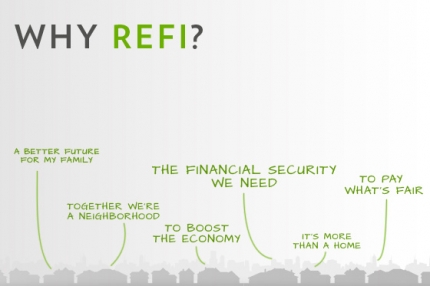
Why Refi? (May 6, 2012)

Millions of families who bought homes before the financial crisis are locked in at the high interest rates of the past. Even though they have done everything right, including making their payments on time each month, they can't refinance at today's rates, which are historically low.

That's why President Obama is urging Congress to take up his proposal to cut through the red tape that currently prevents these families from saving hundreds of dollars every month.

Making the process simpler will have an outsized effect. It will give families more money for their everyday needs, which in turn will benefit local communities and the entire economy. It won't just help those who own homes; it will help the country.

It has the potential to be a huge deal, so we want to make sure you have the facts -- and get a chance to tell us what you think.

Take a minute to watch this White House Whiteboard from Brian Deese:

Then answer a few questions that will help guide our work in the weeks ahead:

http://obamawhitehouse.archives.gov/why-refi

To be the first to get updates like this and share your input, sign up for the White House email list.

Related Topics: Economy, Housing, ToDo List

From the Archives: President Obama Commemorates D-Day

Watch President Obama mark the 65th D-Day anniversary:

Today, June 6, marks D-Day, the day in 1944 when Allied forces from America, the United Kingdom, and Canada landed on the beaches at Normandy to liberate mainland Europe from Nazi control. The odds for success that day were bad: for three centuries, no invader had been able to cross the English Channel into Normandy. The 50-mile stretch of French coastline was heavily fortified to fend off a seaborne invasion, and Nazi soldiers lined steep cliffs along the water, armed with machine guns and artillery. Thousands of troops died in the fighting that day, but when it was over, the Allies had gained a foothold into France and, ultimately, Nazi Germany, where they would defeat Hilter.

To commemorate the 65th anniversary of D-Day, President Obama spoke in Normandy, thanking the men who achieved victory there against all odds, and remembering those who died that day:

It was unknowable then, but so much of the progress that would define the 20th century, on both sides of the Atlantic, came down to the battle for a slice of beach only six miles long and two miles wide.

More particularly, it came down to the men who landed here -- those who now rest in this place for eternity, and those who are with us here today. Perhaps more than any other reason, you, the veterans of that landing, are why we still remember what happened on D-Day.

Watch video from the speech above.

Related Topics: