The First Lady's Trip to Africa

June 16, 2011 | 2:19 | Public Domain

The First Lady delivers a message before leaving on her Africa trip, urging young people to engage with each other in order to find commonalities. To learn more, please visit the Young Africa page here.

Download mp4 (22MB) | mp3 (2MB)

A Playground and a Picnic with Congressional Families

Watch the President's full remarks here.

This evening the President and First Lady welcomed members of Congress and their families to the White House for the annual White House Congressional picnic.

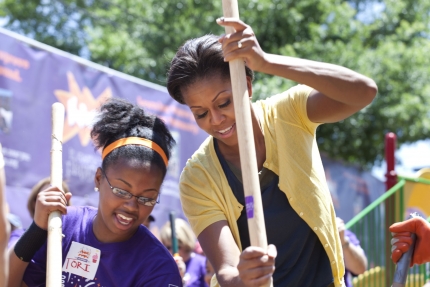
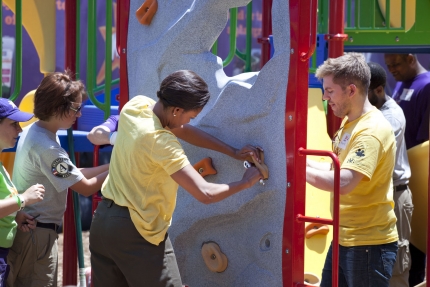
Earlier in the day, First Lady Michelle Obama joined congressional families and AmeriCorps volunteers to help build a playground during the Congressional Family Service Project in partnership with KaBOOM!, a national non-profit organization that promotes activity for communities across the country. As the First Lady said before getting started, the playground they helped build at Imagine Southeast Public Charter School in Washington, D.C. was KaBOOM!’s 2,000th all-volunteer done-in-a-day playground. Find service opportunities near you at Serve.gov.

First Lady Michelle Obama and a Young Volunteer at the KaBOOM! and Congressional Family Service Project

First Lady Michelle Obama and a young volunteer mix cement as they help build a playground during the KaBOOM! and Congressional Family Service Project at Imagine Southeast Public Charter School in Washington, D.C., June 15, 2011. (Official White House Photo by Chuck Kennedy)

First Lady Michelle Obama Joins Volunteers to Help Build a Playground

First Lady Michelle Obama tightens a bolt on a climbing wall as she joins volunteers to help build a playground during the KaBOOM! and Congressional Family Service Project at Imagine Southeast Public Charter School in Washington, D.C., June 15, 2011. (Official White House Photo by Chuck Kennedy)

Related Topics: Service

The White House

Office of the First Lady

Remarks by the First Lady at Congressional Family Service Project

Imagine Southeast Public Charter School, Washington, D.C.

1:06 P.M. EDT

        MRS. OBAMA:  Thank you so much.  This is a very cool experience because, you know, I’ve known and worked with KaBOOM! long before being First Lady when I was at Public Allies running an AmeriCorps national service program.  KaBOOM! was a huge partner -- and a baby just in its infancy.  And to see this organization grow as it has, impacting so many communities, so many schools, so many young people, it is really a source of pride to be here today to celebrate the 2000th build.  

        So I’m really proud of Darrell, I’m proud of everyone at KaBOOM! because it takes thousands and thousands of people to do what you all do all over the country.

        Arne is a dear friend, has been a dear friend for quite some time.  And it is a joy to share the stage with him.  But the real powerhouse in the family on this effort is his wife, Karen Duncan who works very closely with KaBOOM!  (Applause.)  And she is an advocate for health and sports and fitness, and they have two beautiful kids who crack me up all the time, Claire and Ryan.  He -- Ryan is going to be the next Michael Jordan -- somebody.  It’s coming, it’s coming.  But they are a family that believes in service, that believes in getting young people outside to play, and it is a wonderful partnership.

        I just want to thank a few people before we start.  We have a lot of people helping us today.  First of all, several members of Congress and their families are here today.  We have a congressional picnic, but so many of them have taken time out of their busy days to come and be a part of the service.  It means a lot to me.  It means a lot to politics in this country that we all can come together for something important like this.  So I want to give them a round of applause and a special thank you for being here.  (Applause.)

        We have AmeriCorps volunteers who do everything and anything anywhere around the country.  They are here.  Let’s give them a round of applause for AmeriCorps volunteers.  (Applause.)

        We have BOOMers who are here who are always here making it happen.  Again, thank you.  (Applause.)

        But more importantly, I want to thank this community, the community members who have allowed us to come here, who have developed and built and support this beautiful school; to all the kids who will be taking advantage; to all the people across the street.  (Applause.)  You all make sure you help take care of this playground.  You make sure that kids get over here and play.  We want you all moving.  We are proud to be here, proud to have the media here in this community looking at what you all are doing, what's been able to be accomplished here.  

        So with that, I’m going to stop talking.  I’m going to do some -- I’m going to mix concrete.  (Applause.)  It’s been a lifelong dream of mine to mix concrete.  So let’s get going, you all.  Thank you so much.  (Applause.)

END 1:09 P.M. EDT

First Lady Urges Hollywood to Tell Military Family Stories

Cross-posted from Defense.gov

The entertainment industry can help to shine the light on military families by incorporating their compelling stories into movies and television, First Lady Michelle Obama said yesterday during a panel discussion hosted by the entertainment guilds in Los Angeles.

Speaking to an audience of about 500 producers, writers, actors and directors, the first lady discussed her “Joining Forces” military-support campaign and how Hollywood can play a role in her quest to stir up national support for military families.

The First Lady with Military Family Panelists

First Lady Michelle Obama with military family panelists Capt. Kelly Smith of the California Air National Guard, retired Army Sgt Bobby Jarman, and Arnita Moore, a Marine wife, at a Joining Forces event at the Writer's Guild of America in Los Angeles, California, June 13, 2011. (Official White House Photo by Lawrence Jackson) June 13, 2011. (Official White House Photo by Lawrence Jackson)

Writer-director J.J. Abrams, who moderated the panel, kicked off the discussion by asking Obama what sparked her passion for military family support.

The first lady traced it back to her time on the campaign trail with her husband. As she met in small groups with working women, she heard voices she hadn’t heard from before—military spouses. These women—and men—talked about juggling careers and deployments, raising kids and managing moves, and dealing with finances alongside post-deployment reconnections.

These stories took my breath away,” she said, “because they were so unfamiliar to me. And I thought, ‘Well, if I don't know, and I’m educated and I consider myself aware, then where are we in this country? Why don't we know about these families? Why don't we know their struggles? Why aren’t we pushing for them?”

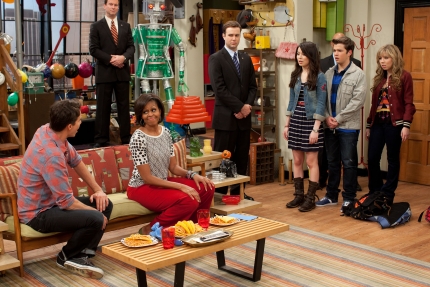
PHOTO: First Lady Michelle Obama on Nickelodeon’s iCarly

On Monday, First Lady Michelle Obama filmed a special appearance on Nickelodeon’s iCarly to bring awareness to Joining Forces, her initiative to support our nation's military families. iCarly’s lead character, Carly Shay, is the daughter of a Colonel currently serving overseas and the episode focused on Carly’s service to America as a member of a military family.

First Lady Michelle Obama makes a special appearance on "iCarly"

First Lady Michelle Obama makes a special appearance on Nickelodeon's television series "iCarly" during a taping in Los Angeles, Calif. June 13, 2011. The First Lady appeared on the show to promote the Joining Forces military families initiative. (Official White House Photo by Lawrence Jackson)

 
Join Mrs. Obama in supporting our military families and find ways you can get involved today.

The White House

Office of the First Lady

Remarks by the First Lady at a DNC event

Julia Morgan Ballroom, San Francisco, California

12:36 P.M. PDT

        MRS. OBAMA:  Thank you everyone.  (Applause.)  You all are so sweet.  (Applause.)  Thank you so much.  (Applause.) Please sit down, as I said in Oakland.  (Laughter.)  We don't want you to -- you’re too tired.  You got to work.  (Laughter.)  So rest.

        I’m thrilled to be here.  It is a pleasure.  And I want to start by thanking Marie for that truly wonderful introduction, her story, her successes, her connections.  We need to give her a round of applause for all that she has done -- (applause) -- in her life and all that she has done for the campaign.

        And I also want to recognize Janet and Clint for hosting us here in this beautiful space.  Thank you both.  (Applause.)  Two beautiful daughters, as well.  Reminds me of the challenges I face at home with my two.  (Laughter.)  I almost got lost -- I wasn’t talking about politics or anything.  I wanted to find out, are you all arguing all the time?  (Laughter.)  But they’re very sweet and a wonderful family.  Thank you all so much.

        And I also -- I’m not sure -- Mayor Lee is here hopefully?  Are you there, Mayor?  Where?  How are you?  (Applause.)  Thank you so much for your leadership.  Thank you for being here.

        My dear friend -- I call him “my other husband,” Paul Pelosi -- (laughter) -- is also here.  (Applause.)  Paul -- you know what, I call him that because Paul is always at my things.  He comes -- I could be in, you know, another part of the world.  It’s like, Paul’s here.  (Laughter.)  It’s like, well, how did you get here?  (Laughter.)  But I am always happy to see him.  He has been such a great support.  And he represents this state and this country so well.  He is a wonderful man.  Thank you, Paul.  Thank you again for being here.  

        I also want to recognize everyone on the National Finance Committee who is here this evening for helping to make this event such a success.  Thank you to you all.  (Applause.)

        And finally, I want to thank all of you for being here.  I am just delighted to see so many new faces.  And that's always wonderful as we move along on this journey.  But I’m also thrilled to see so many folks who’ve been with us right from the beginning, the folks who’ve been through all the ups and downs and all the nail-biting moments along the way, because there have been many.

        And today, as we look ahead to the next part of this journey, I can’t help but think back to how it all began.

        And I have to be honest with you, and many of you who know me know this, when Barack first started talking about running for President, I wasn’t exactly enthusiastic about the idea.  (Laughter.)  Don't get me wrong, I was proud of what my husband was doing in the U.S. Senate.  I thought he was doing a phenomenal job.  I was confident, I knew that he would make an outstanding President.  That was not the issue.

        But I was like a lot of folks, and I still had some cynicism about politics.  And more importantly I was worried about the toll that it would take on my family, a presidential campaign.  We had two young daughters at the time at home, and the last thing I wanted to do was disrupt their lives and their routines.  And the last thing I wanted to do was to spend time apart from them.

        So it took some convincing on Barack’s part, and by “some,” I mean a lot.  (Laughter.)  And even as I hit the campaign trail, I was still a little uneasy about the whole “President thing,” as Malia used to call it.  (Laughter.)  

        But something happened to me during those first few months on the campaign trail that changed me, and I didn’t expect it.  Campaigning in places like Iowa and New Hampshire and South Carolina, it wasn’t just about handshakes or stump speeches.  It was about conversations, real conversations that we could have with people on front porches and in living rooms.  It was just amazing to me how willingly people opened up their homes and welcomed complete strangers into their lives.

        One of my first events in Iowa was a gathering in a beautiful backyard.  It was a bright, sunny day, and this was the first time -- one of the first times I had been to Iowa.  Never met the family hosting the event before.  Ever.  But within a few minutes, I was so comfortable that I kicked off my shoes, and I was standing in the bare -- barefoot in the grass, and I was just talking to folks.  It was that easy.  It was that comfortable.

        And that’s what campaigning was all about for me.  It was about meeting people one-on-one and hearing what was going on in their lives, like you would a neighbor, like you would a family member.  I learned about the businesses that folks were trying to keep afloat; the home they loved, but could no longer afford; the spouse who came back from the war, changed forever, and still needed a lot of help; the child with so much smarts, who could be anything she wanted, if her family could just afford tuition.

        And these stories moved me in a way that I didn’t expect.  And even more than that, these stories were familiar to me, because in the parents working that extra shift, or taking that extra job, I saw Barack’s mother, as you know, a young single mom struggling to support Barack and his sister.

        I saw my father, who dragged himself to work at the city water plant every morning, because even as his Multiple Sclerosis made him weaker and weaker, he was determined to be our family’s provider.

        In the grandparents coming out of retirement to pitch in and help make ends meet, I saw my own mother who helps me raise my girls, and she did it from the day they were born.  And I couldn’t do this without her.

        I saw Barack’s grandmother, the primary provider for her family, who got up early to catch that bus before dawn to make sure that her family had everything they need.  

        And in the children I met -- children worried about a mom who lost a job -- because as children do, they know what's going on and it worries them -- or a dad deployed far from home, kids so full of promise and dreams, of course I saw my own daughters.

        These folks weren’t asking for much.  That was the thing.  They were looking for basic things –- like being able to afford a doctor when you get sick.  Things like decent public schools for their kids, a chance to send them to college even if they’re not rich.  They wanted things like a decent wage and a secure retirement.  They wanted to leave maybe something a little bit better for their kids.

        And while we may have grown up in vastly different places that seemed different in many ways unlike what you’d expect, their stories were my family’s stories.  They were Barack’s family’s stories.  More importantly, their values were ones we all shared.  That's what we grew up with, learning things like you treat people how you want to be treated.  Right?  That's what we tell our kids.  That's what I heard.   You put your family first, no matter what. You work hard at everything you do.  And you do what you say you’re going to do, even if it’s hard, even if it’s not easy for you.  These were our family’s values.  But we shared them with so many people we didn’t even know.

        And suddenly, everything Barack had been saying about how we’re all interconnected, about how we’re not just red states and blue states, those weren’t just lines in a speech.  It was what I was actually seeing with my own eyes, something that I wish every American could experience, traveling around the country realizing just how much alike we are.  And that changed me.

        And you know what else changed me?  It was all of you during that campaign.  You did it.  You changed me.  

        Because when I got tired, I would think of all you folks out there making calls and knocking on doors day after day, doing things you probably never expected you’d do.  And that would energize me.  When I got discouraged, I would think of the folks who were opening their wallets even when they didn’t have it to give, giving a dollar here, $10 there.  That's what made this campaign.  I would think of the folks who had the courage to believe again and hope again -- so many of our grandparents who never thought that this country would embrace a Barack Obama because of their history.  They wanted to believe but just had to take that risk to make it happen, and they did.  And that would give me hope.

        And the simple truth is that today, four years later, we are here because of you.  And I am not talking about winning an election.  I’m talking about what we’ve been doing every day in the White House since that time to fight for the folks we met out on that campaign trail, for their values that we all share.  I’m talking about what Barack Obama has been doing to help us all win the future.

        But at a time when we still have so many challenges and so much work to do, it is very easy to forget about what we’ve done along the way.

        So let’s just take a moment and think about these past couple of years and all that's happened.  This is two years.  

        We have gone from an economy that was on the brink of collapse to an economy that is starting to grow again.  We’re helping middle class families cut taxes, working with them to stop credit card companies from taking advantage of them.  We’re going to give working moms, working dads a childcare tax credit because we know how those costs add up.  And we’re helping to make sure that women get equal pay for equal work.  Don't know if you remember the Lilly Ledbetter Fair Pay act.  (Applause.)  That was the very first bill my husband signed into law as President of the United States.  That's something that we cannot forget.  (Applause.)

        Because of health reform, millions of folks will finally be able to afford a doctor.  (Applause.)  Their insurance companies won’t be able to drop their coverage when they get sick -- not anymore -- change them -- slipping stuff -- charge them through the roof because their child has a pre-existing condition.  That can’t happen.  And they now have to cover preventative care –- basic things, prenatal care, mammograms -- things that save money, yes, but more importantly, save lives.

        And because we don’t want to leave our kids a mountain of debt, we’re watching our spending, reducing our deficit by doing what families across this country are already doing, cutting back so that we can start living within our means but still investing in things that really matter -- things like clean energy, so that we can do something about those gas prices that really mean something; and scientific research, including stem cell research.  That's what we’ve been doing.  We’re also investing in community colleges, which, as so many of you know, are a gateway to opportunity for so many folks, and Pell Grants, which help so many young people afford tuition.  And through a competition called Race to the Top, we’ve got 40 states working to raise standards and reform their schools.  (Applause.)

        We’re working to live up to our founding values of freedom and equality.  And today, because this President ended Don’t Ask Don’t Tell, our troops will never again have to lie about who they are to serve the country they love.  (Applause.)

        And you may also recall that my husband appointed two brilliant Supreme Court Justices, and for the first time in history -- (applause) -- our daughters and sons watched three women take their seats on the nation’s highest court.  (Applause.)

        We’re working to keep our country safe and restore our standing in the world, something that Barack Obama said he’d do.  We’re responsibly ending the war in Iraq and we’ve already brought home 100,000 men and women in uniform who have served this country bravely.

        And today, thanks to the tireless work of our intelligence and counter-terrorism communities and the heroic efforts of our troops, the man behind the 9/11 attacks and so many other horrific acts of terror has finally been brought to justice.  This President did that.  (Applause.)

        And as you know, we’re tackling two issues very near and dear to my heart, both as First Lady and as a mom.

        And the first is childhood obesity.  And this issue doesn’t just affect our kids’ health and how they feel.  It affects how they feel about themselves and whether they will have the energy and the stamina to succeed in school and in life and be the leaders that we need them to be.  So we’re working hard to get better food into our schools and in our communities.  We’re trying to help parents with information that will allow them to make better decisions for their kids.

        And the second issue is one that I came to on the campaign trail, meeting so many extraordinary military families.  I mean, these are folks who are raising their kids and running their households alone while their spouse is deployed and deployed and deployed.  And they do it with such tremendous courage and strength and pride.  And that’s why Jill Biden and I launched a nationwide campaign to rally our country to serve these families and these individuals as well as they serve us.  (Applause.)    

        So look, I could go on.  I mean, this is two years.  So I think it’s fair to say that we’ve made some significant change these last couple of years.  And we should be proud of what we’ve accomplished.  But we should never be satisfied, because we know that there is still a lot of work to do.  We know that too many of our kids still don’t have what they need to succeed.  We know that.  We know that too many families are still struggling to pay their bills.

        The truth is, is that all those folks that we campaigned for, and won for, and that we’ve been fighting for, for these past two years, those folks still need our help.  

        And that, more than anything, is what drives my husband as President.  And that’s what I see when he comes home from the Oval Office or traveling the country, and he tells me about the people he meets.  And I see in those quiet moments late at night, after the girls have gone to bed, when he’s reading the letters that people have sent him.  The letter from a woman dying of cancer whose health insurance wouldn’t cover her care.  The letter from the young person with so much promise, but so few opportunities.

        And I see the sadness and worry creasing his face.  I hear the passion and determination in his voice.  He says, “You won’t believe what folks are going through.”  He says, “It’s not right.  And we have to fix it.  We’ve got to do more.”

        Because the thing I’ve been sharing with people now and I’ve tried to share even before he was elected, is that your President is a special person, because when it comes to the people he meets, Barack has a memory like a steel trap.  He might not remember your name, but if he has had a few minutes and a decent conversation with you, he will never forget your story.  It becomes imprinted on his heart.  And that’s what he carries with him every day –- that collection of hopes, and dreams, and struggles.

        And that is where Barack gets his passion.  And that’s why he works so hard every day, first thing in the morning, late into the night -- the amount of materials he has to take in at the speed -- reading every word, making notes and writing questions, and being better prepared than the people briefing him, because all those wins and losses are not wins and losses for him.  They’re wins and losses for the folks whose stories he carries with him, the folks he worries about and prays about before he goes to bed at night.

        And in the end, for Barack, and for me, and I know for many of you, that is what politics is supposed to be about.  It is not about one person.  It never has been.  It is not about one President.  It never will be.  It is about how we work together to make real changes that makes a real difference in people’s lives, like the young person attending college today because she can finally afford it.  That is happening now.  Like the mom or dad who can finally take their child to a doctor because of health care reform.  That is happening for people.  The folks who are working on the line today at places like GM, and bringing home a good paycheck for their families, the change is real.  

        And now, more than ever before, we need your help to finish what we’ve started.  We need all of you to be with us for the next phase of this journey.  And as I’ve always done, tried to be honest, it is not going to be easy.  It is going to be long.  It is going to be hard.  There will be plenty of twists and turns along the way.

        But here’s the thing about your President –- and this is something that I appreciate about him even if he hadn’t shown the good judgment to marry me.  (Laughter and applause.)  That even in the toughest moments, when it seems like all is lost, Barack Obama never loses sight of the end goal.  He never lets himself get distracted by the chatter and the noise.  He just keeps moving forward.

        And in those moments when we’re all sweating it, when we’re worried about whether the bill is going to pass, the negotiations might fall through -- Barack, what are you doing -- I know you all have thought that.  (Laughter.)  I hear it.  I put him through it, too.

        Barack always reminds me that we’re playing a long game here.  He reminds me that change is slow.  Good things take time.  He reminds me that change doesn’t happen all at once.  But he tells me if we keep showing up, if we keep fighting the good fight, and doing what we know is right, then eventually we get there, because he tells me we always have.  And he’s right.  In this country, it may hurt a little bit, but we get to the right place.  

        And that’s what he needs from you.  He needs you to be in this with him for the long haul.  He needs you to hold fast to our vision and our values, our dreams for our kids and for our country.  He needs you to work like you’ve never worked before, that’s what I plan on doing.  

        And I will not be doing it as a wife or a First Lady.  I’ll be doing it as a mother, who wants a legacy for my children that they deserve.  And more than that, I’ll be doing it as a citizen who knows what we can do together to change this country for the better, because the truth is that no matter what happens, my girls will be okay.  My girls will have plenty of advantages and opportunities in their lives.  And that is probably true for every single one of the beautiful young people in this room, because many of us are blessed.

        But I think that the last four years have shown us the truth of what Barack has always said: That if any child in this country is left behind, then that matters to all of us, even if it is not our daughter or our son.  If any family in this country struggles, then we cannot be fully content with our own family’s good fortune, because that’s not who we are as a country.  It’s not what we do.

        In the end, we cannot separate our own story from the broader American story.  Like it or not, we’re all in this together.  And that's a good thing.  And that's as it should be.  And I know that if we all put our hearts and our souls into this, as we have done before, and if we do what we need to do during the next couple of years, then I know that we will continue to make the change that we believe in.  I know that we will build that country that we want for our kids.

        So I have one final question for all of you here.  Are you in?  (Applause.)  Are you ready for this?  Are you all fired up?  (Applause.)  I hope you are, because I certainly am.  (Applause.)  We are going to need you fired up.  (Applause.)  The alternative is not something that we even want to fathom.  

        So I look forward to getting back out there with all of you in the months and years ahead.  I am going to have a ball.  So I want to thank you all and thank each and every one of you for your prayers, for your good wishes, for your hugs, for your sacrifice.  It helps us keep going.

        So let’s just do what we have to do and get this done.  All right?  (Applause.)  Thank you all.  (Applause.)

END 1:02 P.M. PDT

The White House

Office of the First Lady

Remarks by the First Lady at DNC event

Claremont Hotel
Berkeley, California

10:21 A.M. PDT

MRS. OBAMA:  Oh, my goodness.  (Applause.)  Thank you so much.  (Applause.)  Oh, my goodness.  (Applause.)  Now, this is the way you start your day, right?  (Applause.)  You all, thank you so much.  Please rest yourselves.  (Laughter.)  I want to make sure you have some energy to work.  (Laughter.) 
 
Thank you again.  It is a pleasure, it is a thrill to be with all of you this morning.  And I have to start by thanking one of my dear friends not just for that kind introduction -- because that was really nice -- (laughter) -- but for her leadership in Washington, for her outstanding work to make today such a success -- she really pulled it all in for this one -- but more importantly she has been a real friend to me in Washington, because you have those people at these events where you can just kind of pull aside and go, “Whew, goodness!”  (Laughter.)  That's Barbara for me. 
 
And she talks about the nutrition legislation as a victory for me.  No, no.  This wouldn’t have happened without her.  Barbara is always focused on her base.  She is always fighting tooth and nail to do the right thing.  And we are just so grateful for your friendship, your leadership, your support.  We love you.  Let’s give Barbara another round of applause  (Applause.)  Thank you.  (Applause.)
 
And of course I have to recognize the fabulous Alice Waters for preparing this delicious breakfast I didn’t get to eat, but it’s okay.  (Laughter.)  They don't let me eat at these things.  (Laughter.)  Just keep moving.  But I can only imagine -- (laughter) -- because it was at one of the first fundraising lunches in Chicago that Alice did for me, where it began the spark of understanding this issue.  And thank you for that.  Thank you for your continued support.  Thank you for laying the foundation for this issue and so many others.  We are so grateful.  I’m proud to call you a supporter and a friend.  Thank you so much, Alice.  (Applause.)
 
And we’ve got some mayors here -- Mayor Quan, Major Johnson.  You all -- hey, what’s happening?  (Laughter.) 
 
And I know we have other elected officials.  You all, thank you all for your leadership and for taking time to join us this morning and for all your work you guys are doing -- got to talk -- amazing work supporting "Let's Move" and so many other things.  You’re holding it down.  Thank you.
 
And I have to acknowledge our National Finance Committee members for helping to make this event such a success. 
 
And finally, I have to thank all of you for being here today.  Again, I’m thrilled to see so many new faces.  And that's always a good thing in round two, is seeing new faces, people we haven’t engaged before.  But I’m also thrilled to see many folks who’ve been with us right from the very beginning, I mean, folks who have been through all the ups and downs, all the nail-biting moments along the way.  It’s been a thrill.
 
And today, as we look ahead to the next part of this journey, I can’t help but think back to how it all began, because I have to be honest with you -- and many of you know this, if you were following my campaign -- Barack, when he first started talking about running for President, I wasn’t exactly enthusiastic about the idea.  (Laughter.) 
 
Now, granted, I was proud of -- always been proud of the work that he’s done in the U.S. Senate, and I knew that he would make an extraordinary President.  That, I knew, and I always told you that.
 
But like a lot of folks, I still had some cynicism about politics.  Yeah, believe that.  (Laughter.)  And more importantly, I was worried about the toll that a presidential campaign would take on our family.  We had two young daughters at the time, even though Malia is now my height, and the last thing I wanted to do was to disrupt their lives and to knock their routines upside down.  The last thing I wanted to do was to spend time apart from my girls, and that's all a campaign meant to me.
 
So it took some convincing on Barack’s part, and by “some,” I mean a lot.  (Laughter.)  A little begging, a little convincing.  (Laughter.)  And even as I hit the campaign trail, I was still uneasy about this whole “President thing,” as Malia would call it. (Laughter.)
 
But the truth is that something happened to me during those first few months on the campaign trail that changed me, because when I was campaigning in places like Iowa and New Hampshire and South Carolina, it wasn’t just about handshakes and stump speeches.  It was about real conversations that we could have with folks on their front porches, going into people’s living rooms, people opening up their homes to folks they didn’t even know.  You know, Barack Obama wasn’t always Barack Obama.  (Laughter.)  He was just this strange kid with the big ears.  But people still let him in their house -- (laughter) -- and into their lives.
 
And one of my very first events was in Iowa, and I’ve told this story often at commencements -- when I was in Iowa.  It was a gathering in a backyard.  And I remember -- beautiful day, sunny, people sitting on the lawn, everybody was relaxed.  They didn’t know me.  Never been to the home before.  But within a few minutes, I was so comfortable that I kicked off my shoes, because I was wearing high heels -- (laughter) -- and I was standing barefoot in the grass, just talking to folks.  And it felt as natural as being in my own backyard.
 
And that’s what campaigning was about for me.  It was about meeting people one-on-one, which we rarely get to do as Americans; hearing what was going on in each other’s lives.  And I learned about the businesses that were trying to stay afloat; the home that someone loved, but could no longer afford; stories about the spouse who came back from war and needed a whole lot more help; the child who was so smart, the child we all know, who could be anything she wanted, if only her parents could find a way to pay that tuition.
 
These stories moved me.  And even more than that, these stories were familiar to me.  And that's something that we as Americans don't understand, is that our stories are so linked.
 
You see, in the parents that were working that extra shift, and taking that extra job, I saw Barack’s mother, that young single mom struggling to support Barack and his sister.
 
I saw my father, who, as you know, would get up every day, drag himself to work, even as he got weaker and weaker from Multiple Sclerosis, because he was determined to be our family’s provider.
 
In the grandparents coming out of retirement to pitch in and help make ends meet, I saw my own mother who has helped raise our girls since the day they were born.  And I wouldn’t be standing here without her. 
 
I saw Barack’s grandmother -- got up and caught the bus to work before dawn every day.  She was his family’s sole provider -- primary provider.
 
And in the children I met who were worried about a mom who’s lost her job, or a dad deployed far from home, kids so full of promise and dreams, of course I saw my own daughters, who are the center of my world.
 
See, and the beauty of this is that these folks weren’t asking for much.  They don't want much.  They’re looking for basic things –- like being able to see a doctor when you’re sick.  Things like having a decent public school to send your kids to, and maybe a chance to send them to college even if you’re not rich.  Things like making a decent wage.  People aren’t trying to be rich.  They just want a decent wage, and having a secure retirement, and maybe, just maybe leaving something better for their kids.
 
And while we may have grown up in different places and seemed different in many ways, these folks’ stories were my family’s stories.  They were Barack’s family’s stories.  Even more poignantly, their values were our values –- things like you treat people how you want to be treated -- simple things -- that you always put your family first no matter what, that you work hard always, that you do what you say you’re going to do, even if it’s not easy, even if it hurts.  These were our family’s values, and we shared these things.
 
And then suddenly, everything Barack had been saying about how we are all interconnected, about how we’re not just red states and blue states, those weren’t just lines in a speech for me.  It was what I was seeing with my own eyes.  And that changed me.
 
And you know what else changed me during those months that got me fired up and ready to go and ready to do all this First Lady stuff?  (Laughter.)  You all did.  All of you who are all over the country and quite frankly all over the world changed me.
 
Because when I got tired, I would think of folks out there making calls and knocking on doors day after day in the cold, in the wind, in the rain for Barack Obama.  People who would have never done that -- people like my mother.  (Laughter.)  And that would energize me. 
 
And when I got discouraged, I would think of folks opening their wallets even when they didn’t have much to give.  The one dollar.  The 25 dollars.  People who would take their last little bit and give it to this campaign.
 
I would think of folks who had the courage to let themselves believe again and hope again.  You know, the folks who never thought this country would ever embrace the Obamas, right, because of all the pain, all the history.  But they let themselves.  They took that chance to put their emotions on the line again.  And that would give me hope.
 
And the simple truth is that today, four years later, we are here because of all of you.  And I’m not just talking about winning an election.  I’m talking about what we have been doing every day in the White House since that time to keep fighting for the folks we met on that campaign trail and the values we share.  I’m talking about what your President Barack Obama has been doing to help all of us win the future.  All of us.
 
And at a time when we still have so many challenges and so much work ahead -- because we do -- it is very easy to forget about what we’ve done along the way.
 
So let me just step back a moment and let’s think about these last couple of years.  Two years, okay? 
 
We’ve gone from an economy on the brink of collapse to an economy that’s starting to grow.  (Applause.)  Two years.  (Applause.)  We’re helping middle class families by cutting taxes for them, working to stop credit card companies from taking advantage of those folks.  We’re going to give working moms and dads a childcare tax credit because we know how those costs add up.  We’re helping women get equal pay for equal work.  That was my husband’s first bill, the Lilly Ledbetter Fair Pay act -- (applause) -- very first thing he did when he entered office.  (Applause.)
 
And of course, because of health reform, millions of folks will finally be able to afford a doctor.  (Applause.)  Their insurance companies won’t be able to drop their coverage when they get sick, or charge them through the roof because their child has a pre-existing condition.  Never again.  And they now have to cover preventative care –- you know, things like prenatal care, mammograms.  And this isn’t just about saving money.  It’s about saving lives. 
 
And because we don’t want to leave our kids a mountain of debt, we’re reducing our deficit by doing what families across America have to do already -- cutting back so that we can start living within our means, and then investing in the things that really matter -- things like clean energy, so that we can really bring those gas prices down.  (Applause.)  Things like scientific research, including stem cell research.  (Applause.) 
 
We’re also investing in community colleges.  (Applause.)  And we all know for so many people these are the gateway to opportunity for so many people, and Pell Grants, which help so many young people afford their tuition.  And through a competition called Race to the Top, we’ve got 40 states working to raise standards and reform their schools.
 
We’re working to live up to our founding values of freedom and equality.  And today, because the President of the United States ended Don’t Ask Don’t Tell, our troops will never again have to lie about who they are to serve the country they love.  (Applause.)
 
And it may have felt like this happened a while ago, but it still counts, you may recall that my husband appointed two brilliant Supreme Court Justices, and for the first time in history, our daughters –- and our sons –- watched three women take their seats on our nation’s highest court.  (Applause.)
 
This administration is also working to keep our country safe and restore our standing in the world.  We’re responsibly ending the war in Iraq; already brought home 100,000 men and women in uniform who have served our country so bravely.  (Applause.)
 
And thanks to the tireless work of our intelligence and counter-terrorism communities, the heroic efforts of our troops, the man behind 9/11 and so many other horrific acts of terror has finally been brought to justice.  That's what this President did.  (Applause.)
 
And finally, as Barbara mentioned, we’re also tackling two issues near and dear to my heart, not just as a First Lady but as a mom.
 
And the first is childhood obesity, childhood nutrition.  This issue doesn’t just affect our kids’ health and how they feel.  But we all know it affects how they feel about themselves, it affects whether they will have the energy and the stamina to succeed in school and in life and to be the leaders we know they must be.  So we’re working hard to get better food into our schools and into our communities and help parents make better decisions for their kids.
 
The second issue is one that I came to on the campaign trail, meeting so many extraordinary military families.  These folks, as Barbara mentioned, are raising their kids and running their households all alone while they have spouses who have been deployed and redeployed and redeployed.  And they do it with courage and strength and pride.  So that’s why Jill Biden and I launched a nationwide campaign to rally our country so that we serve them as well as they serve us. 
 
So that's what -- the few things we’ve done for two years.  (Laughter and applause.)  I could go on, but this is breakfast and I don't want to hold you.
 
So I think it’s fair to say that we have made some significant change these last couple of years.  And we should be proud of what we’ve accomplished.  But we should never be satisfied, because we know that we still have a lot of work to do.  We know that too many of our kids still don’t have what they need to succeed.  We know that too many folks are still struggling to pay the bills.
 
And the truth is, is that all the folks that we campaigned for, and that we won for, and that we’ve been fighting for these past two years, those folks still need our help. 
 
And that, more than anything else, is what drives my husband as President.  That’s what I see when he comes home after a long day at the Oval or traveling around the country, and he tells me about the people that he meets.  And I see those quiet moments late at night, after the girls have gone to bed, and he’s reading letters from people -- because he always reads people’s letters, always.  The letter from the woman dying of cancer whose health insurance wouldn’t cover her care.  The letter from the young person with so much promise, but so few opportunities.
 
And I see the sadness and the worry creasing his face.  I hear the passion and determination in his voice.  Says, “You won’t believe what folks are going through.”  Says, “Michelle, this isn’t right.  And we have to fix it.  We have to do more.”
 
See, what you all need to know about the President you helped to elect is that when it comes to the people he meets, Barack has a memory like a steel trap, and that he might not remember your name, but if he’s had a few minutes and a decent conversation with you, he will never forget your story.  It becomes imprinted in his heart.  And that is what he carries with him every day –- that collection of hopes, and dreams, and struggles.
 
That is where Barack gets his passion.  And that’s why he works so hard every day.  I mean, this is a hardworking man.  (Laughter.)  Starting first thing in the morning everyday -- everyday -- going bed late at night everyday, hunched over briefing books, reading every single word.  And he has a gift in that way, able to retain information, know more than those who are briefing him, asking critical questions, because all of those wins and losses are not wins and losses for him.  They are wins and losses for the folks whose stories he carries with him, the folks that he worries about and prays about before he goes to bed at night.
 
And in the end, for Barack, and for me, and I know for all of you, that is what politics is about.  That's what it’s supposed to be about.  It is not about one person.  It has never been about one President.  I said that all during the campaign.  It’s not about electing Barack Obama.  It’s about how we work together to make real changes that make a real difference in people’s lives.  And we’re doing that. The young person attending college today because she can finally afford it, that is happening.  The mom or the dad who can take their child to a doctor because of health reform, that is happening.  The folks who are working on the line today at places like GM, and bringing home a good paycheck for their families, that's real.
 
And now, more than ever before, we have to finish what we started.  And we need your help.  We need all of you to be with us for the next phase of this journey.  And I’m not going to kid you, it is going to be long.  It is going to be hard.  It’s supposed to be.  And there will be plenty of twists and turns along the way.
 
But here’s the thing about Barack Obama –- and this is something that I’d appreciate even if he hadn’t shown the good sense to marry me.  (Laughter and applause.)  I truly believe that one of his greatest strengths is that in the toughest moments, when it seems like all is lost, and we’re all wringing our hands -- oh, Lord, what's he doing now?  Why is he doing that?  (Laughter.)  Just shake him!  (Laughter.)  We all want Barack to lose his cool and do something.  (Laughter.) 
 
I know.  I’ve said it before.  (Laughter.)  I’m right there.  But Barack Obama never loses sight of the end goal.  He never lets himself get distracted by the chatter and the noise.  He just keeps moving forward.
 
And in those moments when we’re all sweating it, when we’re worried about whether the bill will pass, or the negotiations might fall through, Barack always reminds me that we are playing a long game here.  Our vision is way back there.  And he reminds me that change is slow; that good things take time.  But he also tells me that if we keep showing up, and if we keep fighting the good fight, and more importantly doing what we know is right, then we’ll always get there, because we always have.  And that's something we have to remember.  We always have.  In this country we get to the right place.  It may hurt a little bit, it may take more time than we’d like, but we get there.
 
And that’s what he needs from you.  He needs you to be in this with him for the long haul.  He needs you to hold fast to our vision and our values and our dreams for our kids and for this country.  He needs you to work like you’ve never worked before, because that’s what I plan on doing.  And I will do it happily.
 
And I won’t be doing it as a wife or as a First Lady.  I do this because I’m a mother who wants my kids to have a legacy that they can be proud of.  More importantly, I do it as a citizen who knows that we can do amazing things together to change this country for the better -- I know that now -- because the truth is, is that no matter what happens to life along the way, my girls are going to be okay.  I’m going to see to that.  My girls will have advantages and opportunities in their lives.  And that’s probably true for all the kids in this room.  They are blessed.
 
But I think the last four years have shown us that the -- the truth of what Barack has always said: That if any child in this country is left behind, then that matters to all of us, even if it is not our son or our daughter.  (Applause.)  If any family in this country struggles, then we cannot be fully content with our own family’s good fortune, because that’s not what we do in this country.  That's not who we are.
 
In the end, we cannot separate our own story from the broader American story.  Like it or not, we are all in this together.  And that's a good thing, as it should be.  And I know that if we put our hearts and our souls into this, and if we do what we need to do over these next couple of years, then we can keep making that change we believe in.  I know that we can build that country we want for our kids.
 
So I have one last question.  Are you all in?  (Applause.)  I mean, are you ready for this?  Because I am.  I’m ready and I hope that you are all fired up -- not little flames, but big, huge, gigantic flames -- fired up and ready to go, because we are going to need you.  Barack and I are going to work our tails off.  (Laughter.)  And we’re going to need you praying for us and loving us and caring about us and caring about these issues more than anything else. 
 
I look forward to getting back out there with all of you in the months and years ahead.  Thank you for all you’ve done for us to this day.  (Applause.)  And thank you for everything we’re going to do in the years to come. 
 
You all take care.  It was great to be here.  (Applause.)
END           
10:48 A.M. PDT
 

The White House

Office of the First Lady

Remarks by the First Lady at a DNC event

Private Residence, Los Angeles, California

7:36 P.M. PDT

     MRS. OBAMA:  Well, that was so nice!  Sheesh.  (Applause.)  Thank you so much.  It is a real pleasure to be here with all of you tonight in this beautiful setting at the home of two of my favorite people in the whole wide world.   And when you’re my age, you don't often run into new people that you just sort of click with.  But Michael and James have been just a true blessing to our family.  I mean, imagine moving to this new house -- it’s a little more than a house -- not knowing where stuff goes, how it works, and Michael just -- he has the right temperament, because believe it or not, the President has opinions about his drapes.  (Laughter.)  And Michael is very patient with him in a very humorous way.  It’s a very good balance.  It’s very interesting to watch.

     But I want to thank them for generously hosting us at this beautiful home in this beautiful setting.  Thank you guys.  You are amazing.  Well done.  (Applause.)

     I also want to recognize all of the National Finance Committee members here.  Yay, you all.  (Applause.)  Firing it up.  You made this event such a tremendous success, and we couldn’t do this without you.  We are truly, truly grateful and proud because all of you are good, solid people, as well.  So thank you.

     And finally I want to thank all of you for being here tonight.  I’m thrilled to see so many new faces.  That is always good.  And I’m thrilled to see so many folks who have been with us right from the beginning; folks who have been through all of the ups and the downs and the nail-biting moments along the way, because there have been many.

     And tonight, as we look ahead to the next part of this amazing journey, I can’t help but think back to how it all began.

     And I have to be honest and tell you that when Barack first started talking about running for President, I was not exactly enthusiastic about the idea.  (Laughter.)  I mean, don't get me wrong, I was proud of what my husband was doing in the Senate; he was a phenomenal U.S. senator.  And I knew that he would make a phenomenal President.  That was never a doubt in my mind.

     But like a lot of people, I still had some cynicism about politics.  And I was worried about the toll that a presidential campaign would take on my family.  At the time, we had two young daughters.  They are growing.  Malia is here.  And yes we are having conversations about shorts and heels and all that stuff.  I don't know what to do.  But she’s growing up.  But at that time they were still young.  And the last thing that I wanted to do was disrupt their lives and turn their routines upside down.  The last thing that I wanted in the world was to spend time apart from my girls.

     So it took some convincing on Barack’s part, and by “some,” I mean a lot.  (Laughter.)  No, really.  And even as I hit the campaign trail, I was still a little uneasy about this whole “President thing.”  That's what Malia used to call it -- “Is Dad doing that President thing?”  (Laughter.) 

     But something happened to me during those first few months on the campaign trail that changed me, because for me campaigning in places like Iowa and New Hampshire, South Carolina, it wasn’t just about handshakes and stump speeches.  For me it was really about the conversations that we were able to have with people on front porches and in folks’ living rooms, people who didn’t know a thing about us.  Barack Obama who?  You just let Barack Obama walk into your house and sit at your kitchen table -- it takes some courage -- into their homes, into their lives.

     And I remember one of my first events in Iowa was a gathering in a backyard.  It was a beautiful day.  Never been there before.  Didn’t know the family.  Tons of people out, just curious to see who I was.  And within minutes, I was so comfortable that I remember kicking my shoes off -- I had high heels on, as usual -- and I was standing barefoot in the grass, just talking to folks.

     And that’s what campaigning was about for me.  It was about meeting people one-on-one and hearing what was going on in their lives.  And I learned a lot about folks.  I learned about the businesses that they were trying to keep afloat -- the home that they loved, but could no longer afford, the spouse who came back from war, and still needed a lot of help, the child who was so smart, like so many of our children, who could be anything she could imagine if only her parents could find the way to pay tuition.

     And these stories moved me.  That's it.  These stories were familiar to me.  That was the thing.

     Because in the parents working that extra shift, or taking that extra job, I saw Barack’s mother, a young single mom struggling to support Barack and his sister.

     I saw my father, who dragged himself to work at the city water plant every morning, because even as his Multiple Sclerosis got worse and he got weaker and weaker, my father was always determined to be our family’s provider.

     And in the grandparents coming out of retirement to pitch in and help make ends meet, I saw my own mother -- oh, thank God for Grandma -- who has helped raise our girls since the day they were born.  We couldn’t do this without Grandma. 

     I saw Barack’s grandmother who caught a bus to work before dawn every day to help provide for their family.  She was the primary breadwinner. 

     In the children I met who were worried about a mom who’s lost her job, or a father deployed from home for months on end, kids so full of promise and dreams, of course I saw my own daughters, who are the center of my world.

     And the thing is, is that these folks weren’t asking for much.  They were looking for basic things –- things like being able to see a doctor when you’re sick.  Things like having a decent public school to send your kids to, and a chance for them to go to college even if you’re not rich.  Things like making a decent wage, having a secure retirement, leaving something better for your kids.

     And while we may have grown up in different places and seemed different in so many ways, their stories were my family’s stories.  They were Barack’s family’s stories.  Their values were the ones we learned all over this country -- basic things -- you treat people how you want to be treated, you put your family first always, you do what you say you’re going to do every time, you don't make false promises.  These were our family’s values.

     And then suddenly, as I traveled around and saw the sameness, everything Barack had been saying about how we’re all interconnected, about how we’re not red states and blue states, those weren’t just lines from a speech.  It was what I was seeing with my own eyes, something that I wish every American could experience, because that changed me.

     And you know what else changed me during those months on the campaign trail?  All of you did, truly, this cynic, because when I got tired, I would think of all the folks out there making calls and knocking on doors day after day, folks who would never imagine themselves as part of the political process, and many of you were doing that, knocking on strange people’s doors, getting them to vote for Barack Obama.  And that would energize me. 

     And when I got discouraged, I would think of the folks opening their wallets even when they didn’t have much to give, because a lot of people were giving a dollar, $25, their last dollar. 

     I would think of the folks who had the courage to let themselves believe again and hope again, because there are many people my grandparents’ age who never believed this could happen.  And it wasn’t because they didn’t believe in Barack.  They didn’t believe we could do this, that this country could do it.  They had to let go and let themselves believe, forget everything they had learned, everything they experienced, and think about what was possible.  And they would give me hope.

     And the simple truth is that today, four years later, we are here because of all of you.  And I’m not just talking about winning that election.  I’m talking about what we’ve been doing every day in the White House since that time to keep fighting for the folks we met and the values we share.  I’m talking about what Barack has been doing to help us all win the future.

     And at a time when we still have so many challenges and so much work to do, it is so easy to forget about what we’ve been able to accomplish along the way.

     But I want to just take a step back for a moment and think about these past couple of years, because it’s only been two years, right? 

     And in two years, we have gone from an economy that was on the brink of collapse to an economy that is growing again.  We’re helping middle class families by cutting taxes, and working to stop credit card companies from taking advantage of regular folks.  We’re going to give working moms and dads a childcare tax credit because we know that those little costs add up.  And we’re helping women get equal pay for equal work with the Lilly Ledbetter Fair Pay act.  That was the first bill that my husband signed into law, the very first thing he did as President of the United States.  (Applause.)

     And because of health reform, millions of Americans will finally be able to afford a doctor.  Their insurance companies won’t be able to drop their coverage when they get sick, or charge them through the roof because their child has a pre-existing condition.  (Applause.)  No more.  And now we have things covered like preventative care –- prenatal care, mammograms, ooh, just going crazy -- (laughter) -- things that save money but more importantly things that save lives.

     Because we don’t want to leave a mountain of debt for our kids, we’re reducing our deficit and doing what families across this country are already doing.  We’re cutting back so that we can start living within our means.

     But that still means we need to invest in the things that really matter -- things like clean energy, so that we can really bring down gas prices, things like scientific research, including stem cell research.  Those are the investments that this President is making.  (Applause.)  We’re also investing in community colleges, which are a gateway to opportunity for so many people, Pell Grants, which help so many young people afford their tuition.  And then through a competition called Race to the Top, we’ve got 40 states now working to raise standards and reform their schools.

     We’re working to live up to our founding values of freedom and equality.  And today, because we ended Don’t Ask Don’t Tell, our troops will never again have to lie about who they are to serve the country they love.  (Applause.)  No more. 

     And you might also recall that my husband appointed two brilliant Supreme Court Justices -- (applause) -- and for the first time in history, our daughters –- and our sons –- watched three women take their seats on our nation’s highest court.  (Applause.)

     And we are also working to keep our country safe and restore our standing in the world.  We’re responsibly ending the war in Iraq and we’ve already brought home 100,000 men and women in uniform who have served this country so bravely.

     And today, thanks to the tireless work of our intelligence and counter-terrorism communities and the heroic efforts of our troops, the man behind 9/11 and so many other horrific attacks has finally been brought to justice.  Yes, that did happen.  (Applause.)

     And finally, we’re tackling two issues near and dear to my heart, both as First Lady and as a mom.

     The first is childhood obesity.  I mean, this issue doesn’t just affect our kids’ health and how they feel.  This issue affects how they feel about themselves and whether they will have the energy and the stamina to succeed in school and in life. 

     Are we good there?  Do we need -- because we have agents.  They have stuff.  They come equipped with things.    All right.

     So we are working through this initiative to get better food into our schools and communities and to help parents make better decisions for their kids.

     The second issue that Michael mentioned is one that I came to on the campaign trail, meeting so many extraordinary military families.  These folks are raising their kids and running their households all alone while their spouses are on deployment after deployment, and they do it with tremendous courage and strength and pride.  That’s why Jill Biden and I launched a nationwide campaign to rally this entire country to serve those families and those men and women as well as they serve us.  (Applause.)

     So these are just some of the things that have been accomplished in two years.  I could go on but I don't want to make you stand in your heels.  It gets difficult.  (Laughter.)  I know.

     So I think it’s fair to say that we have seen some significant change these last couple of years.  And we should be proud of what we’ve accomplished.  But we should never be satisfied, because we know that we still have a lot of work to do.  We know that too many of our kids still don’t have what they need to succeed.  We know that too many folks are still struggling to pay the bills today.

     The truth is, is that all those folks we campaigned for, and won for, and that we’ve been fighting for, for these past two years, those folks still need our help.  We are not done.

     And that, more than anything else, is what drives my husband as President of the United States.  That’s what I see when he returns home after a long day traveling around the country, and he tells me about the people that he’s met.  And I see in those quiet moments late at night, after the girls have gone to bed, when he’s reading the letters people have sent him -- the letter from the woman dying of cancer whose health insurance wouldn’t cover her care.   The letter from the young person with so much promise, but so few opportunities.

     And trust me, I see the sadness and the worry creasing his face.  You want to know where the gray hairs come from?  I hear the passion and determination in his voice.  Says, “You won’t believe what these folks are going through.”  Says, “Michelle, this isn’t right.  And we still have to fix this.  We have to do more.”

     So the one thing I want to share with you about my husband is that when it comes to the people he meets, Barack has a memory like a steel trap.  I mean, he might not remember your name, but he will remember, if he’s had a few minutes and a decent conversation with you, he will never forget your story.  It becomes imprinted on his heart.  And that is what he carries with him every day –- that collection of hopes, and dreams, and struggles.

     And that’s where Barack gets his passion.  That is why he works so hard every day, and I have never seen anyone work this hard.  Every day.  Every day.  Most days there isn’t an issue that faces this world that he is not expected to fix.

     Starting the first thing in the morning and going late into the night, this is a man who is hunched over briefing books.  He reads every single word.  He is gifted.  He is able to retain, make notes, ask questions.  He knows more than the people briefing him.  This man is special because all those wins and losses, they’re not wins and losses for him.  They’re wins and losses for the folks whose stories he carries with him, the folks he worries about and prays about before he goes to bed at night.

     And in the end, for Barack, and for me, and for so many of you, that is what politics is about.  It’s what it should be about.  It’s about how we work together, even when it’s hard, to make real changes that make a real difference in people’s lives.  That young person attending college today because she can finally afford it.  That is happening.  The mom or dad who can take of their child today find a doctor because of health care reform.  That is happening.  The folks who are working on the line today at places like GM, bringing home a good paycheck for their families.  That change matters. 

     And now, more than ever before, we need your help to finish what we’ve started.  We need all of you to be with us for that next phase of our journey.  And I’m not going to kid you, because I didn’t kid you when we first started, I never said this was going to be easy.  And no one can quote me on that. 

     It’s going to be long.  It is going to be hard.  I joke, did you ever think Barack Obama was going to be easy?  Was there ever anybody here who just thought he’d just trounce in and fix everything, Barack Obama? 

     But here’s the thing about my husband –- and this is something that I’d appreciate even if he didn’t have the good sense to marry me.  (Laughter and applause.)  Even in the toughest moments, when it seems like all is lost, Barack Obama never loses sight of the end goal.  He never lets himself get distracted by the chatter and the noise.  It’s amazing.  He just keeps moving forward.

     And in those moments when we’re all sweating it, and all of you have been sweating it at some point, because I know I have -- will the bill get passed, will the negotiations fall through, what will he do, why isn’t he doing this, he should do more of that -- I do it to him, too -- (laughter) -- Barack always reminds me that we’re playing a long game here.  He reminds me that change is slow.  Nothing worth having happens in an instant, something we tell our children so that they actually invest.  You don't get success overnight.  

     But he tells me that if we keep showing up, as we tell our children, if we keep fighting the good fight, and doing what we know is right, then eventually we will get there, because we always have.  As bleak as things may be, we always wind up in the right place.

     And that’s what he needs from you.  He needs you to be in this with him for the long haul.  He needs you to hold fast to our vision and our values and our dreams for our kids and for our country.  He needs you to work like you’ve never worked before.

     And let me tell you, that is what I plan to do.  And I won’t be doing it as a wife or as a First Lady.  I’m going to be doing it as a mother, who wants to leave a legacy for my girls.  And more than that, I’m going to be doing it as a citizen who knows what we can do together to change this country for the better, because the truth is, is that no matter what happens, my girls are going to be okay.  I’m going to see to that.  My girls will have plenty of advantages and opportunities in their lives.  And that’s probably true for many of the kids here, many of your kids.

     But I think the last four years have shown us the truth of what Barack has always said: That if any child in this country is left behind, then that matters to all of us, even if it is not our daughter or our son.  (Applause.)  We cannot just look inward.  If any family in this country struggles, then we cannot be fully content with our own family’s good fortune, because that is not what we do in this country.  It’s not who we are.

     In the end, we cannot separate our own story from the broader American story.  Like it or not, we’re all in this together.  And that's how it should be.  That's a good thing.  And I know that if we put our hearts and souls into this, as we’ve done before, if we do what we need to do during these next couple of years, then we can continue to make that change that we believe in.  I know that we can build that country that our kids deserve.

     So I have one last question.  Are you in?  (Applause.)  I mean, come on.  Are you in this?  Are you ready for this?  (Applause.)  Because I certainly am.  And I hope that all of you are fired up, ready to go, because I really look forward to this.  This is going to be good working with all of you in the months and years ahead. 

     Thank you.  Thank you for your prayers.  Thank you for your commitment.  Thank you for taking a risk.  You haven’t made a mistake.  We’re making things happen.

     Thank you all so much.  (Applause.)

END
8:01 P.M. PDT

The White House

Office of the First Lady

Remarks by the First Lady at a DNC event

Ann and Robert Hamilton Residence, Pasadena, California

12:42 P.M. PDT

        MRS. OBAMA:  Well, goodness, that was good.  How’s everybody doing?  You all, thank you so much.  This is a real thrill for me.  It’s a pleasure to be here, to be back.  I remember so well being here -- gosh, how long ago was that?  Was that two years ago?  It was 2009, and I remember we were sitting -- was it right about here?  We had two big chairs and we were sort of the king and queen of Pasadena.  It was kind of cool.  (Laughter.)  

        So it is great to be back.  I want to start by thanking Lena for that very kind introduction and more importantly for her outstanding work today and every day.  She has been a real friend and supporter to both me and to the President, and we are grateful for her friendship, for her dedication, for her passion.  And let’s give her a round of applause.  (Applause.)  

        Yes, everyone, please feel free to sit.  It’s hot out here.  It’s nice and sunny.  Everybody, sit and rest.  

        I also want to recognize Ann and Robert Hamilton and their huge and beautiful family, for their incredible generosity in hosting us at their beautiful home.  Thank you again, Ann.  Thank you, Robert.  You all have been tremendous to us, as well.

        And I also understand that Los Angeles City Councilwoman Janice Hahn is here.  Is she here?  Hey, Janice, if you’re here.  (Laughter.)  I know that she’s going to make a terrific member of Congress, but I’m glad that she is working hard on behalf of the people here.

        I also want to thank all of the National Finance Committee members for making this event such a tremendous success.  This is a terrific turnout.  You all are amazing.  Way to go.  Keep it up.

        And finally, I want to thank all of you all, everybody here, for coming today.  And I am thrilled to see so many new faces.  I know there are people here who have not been to an Obama event, and we are excited to have you here.  But I’m also thrilled to see so many people who have been with us right from the very beginning -- (applause) -- yes, indeed -- (applause) -- folks who have been through all of the ups and downs, all of the nail-biting moments along the way, because there was some drama, right?  There’s always a little drama.  And today, as I look ahead to the next part of this journey, I can’t help but think back to how it all began.

        And I have to be honest with you, when Barack first started talking about running for President, I wasn’t exactly thrilled by the idea.  I was proud of what my husband was doing in the U.S. Senate.  And don’t get me wrong, I knew he would make an extraordinary President.  I knew it.  I told you all.  (Applause.)

        But like a lot of people, I still had some cynicism about politics.  That was my hesitation.  And I was worried about the toll that a presidential campaign would take on my family.  We had two beautiful daughters.  They were young at the time.  Malia is now here -- yeah -- and we’re trying to work on the length of the shorts and all that stuff.  (Laughter.)  It’s a whole different set of conversations.  But we had two young daughters at home, and the last thing I wanted to do was disrupt their lives and upset their routine.  That was a huge concern.  The last thing in the world that I wanted was to spend time apart from my children.  They are the air that I breathe.

        So I have to tell you it took some convincing on Barack’s part, and by “some” I mean a whole lot.  (Laughter.)  And even as I hit the campaign trail, I was still a little uneasy about this whole “President thing.”  That's what Malia would call it, the “President thing.”

        But I have to tell you that something happened to me during those first few months on the trail that changed me.  See, when we started campaigning in places like Iowa and New Hampshire and South Carolina, it wasn’t just about handshakes and stump speeches.  It started to become about conversations -- conversations on people’s front porches and in their living rooms; people welcoming us into their home.  People who didn’t know anything about us opened up their homes before Barack Obama was Barack Obama.  People were sitting down at the kitchen table, talking.  They welcomed us into their homes and into their lives.

        And I remember one of the first events that I did in Iowa was a gathering in a beautiful backyard, a very solid community; folks who were just sitting on the lawn.  It was one of my first events.  And I remember within a few moments, I was so comfortable in that place that I had never been before that I kicked off my heels, like I'd like to do now but I’m not going to -- (laughter) -- and I remember I was just standing barefoot in the grass, just talking to people.  That's how comfortable I was.

        That’s what campaigning became for me.  It was about meeting people one-on-one and hearing what was going on in their lives.  That's what gave me energy, learning about the businesses they were trying to start -- businesses they were trying to keep afloat, the home they loved but could no longer afford, the spouse who came back from the war, changed forever, who needed help, the child who was so smart, who could be anything in the world she wanted if only her family could afford to pay tuition.

        It’s those stories that I heard that moved me.  And even more than that, these stories were familiar to me.  So familiar.

        And that was one of the lessons that I learned.  Whether you grew up on the South Side of Chicago or in a backyard in Iowa, our stories are shared.

        In the parents working the extra shift, or taking that extra job, I saw Barack’s mother, a young single mom struggling to support Barack and his sister.

        I saw my father, who dragged himself to work at the city water plant every morning, because even as his Multiple Sclerosis made him weaker and weaker, my father was determined to be our family’s provider.

        In the grandparents coming out of retirement to pitch in and help make ends meet, I saw my own mother who has helped me raise my girls -- thank God for Grandma -- (applause) -- from the day she was born -- from the day they were born.

        I saw Barack’s grandmother who caught a bus to work before dawn every day to help provide for her family.

        And in the children I met who were worried about a mom who’s lost her job, or a dad deployed far from home, kids so full of promise and dreams, of course I saw my own two daughters, who, as you know, are the center of my world.

        And what I saw was that these folks weren’t asking for much.  I mean, Barack talked about this.  They were looking for basic things –- like being able to see a doctor when you get sick.  Not much.  (Applause.)  Things like having a decent public school for your kids, and making sure they had a chance to go to college even if you weren’t rich.  Little things.  Things like making a decent wage, having a secure retirement, leaving a little something better for your kids.

        And while we may have grown up in different places and seemed different in many ways, these stories were my family’s stories.  They were Barack’s family’s stories.  All over the country we heard these stories.  Their values were the same; things like -- that we learn from our parents -- that you treat people how you want to be treated, right; that you put your family first, no matter what; that you work hard at everything you do, you put in 120 percent; that you do what you say you’re going to do; when you make a promise, you keep it, even if it’s hard, even if it’s -- (applause) -- not in your self-interest.  These were our family’s values.

        And I saw this playing itself out around the country.  And suddenly, everything Barack had been saying about how we’re all interconnected, about how we’re not just red states or blue states, those weren’t just lines from a speech.  It was what I was seeing with my own eyes around the country.  It was something that I wished every American could experience.

        And that changed me.  That pushed me away from my cynicism.  It kept me from worrying about my own inconveniences and the sacrifices that we would have to make to make this happen.

        And you know something else that changed me during all those months out on the campaign trail?  You all changed me.  I mean, the truth is, coming back here and seeing so many new faces, people who I haven’t seen in a while but it’s still like coming home, you all changed me.

        See, because when I got tired, I would think about all the folks out there making calls, knocking on doors day after day.  Remember that?  People -- you’d never thought -- would be out on the street knocking on a stranger’s door telling him to vote for Barack Obama.  (Laughter and applause.)  And that would energize me just thinking about it.

        And when I got discouraged, I would think of folks opening their wallets, the folks who gave when they didn’t have much to give, to this campaign.  I would think of folks who had the courage to let themselves believe again and hope again.  And for so many people, it was hard for them to believe that this country would be ready for Barack Obama, but they let themselves believe again.  And that would give me hope.

        And the simple truth is that today, four years later, we are here.  I am the First Lady of the United States. Barack Obama is the President of the United States.  (Applause.)  We’re here because of all of you.  Truly.  (Applause.)

        And I’m not just talking about winning an election.  I’m talking about what we’ve been doing every day in the White House since that time to keep on fighting for the folks we met and fighting for those values that we share.  I’m talking about what your President has been doing to help us win the future.

        At a time when we still have so many challenges and so much work to do, it is so easy to forget what we’ve done along the way.

        But let’s just take a step back for a moment and think about what’s happened over the past couple of years -- because it’s only been a couple of years:

        We’ve gone from an economy that was on the brink of collapse to an economy that’s starting to grow again.  (Applause.)   We are helping middle-class families by cutting taxes -- middle-class families -- working to stop credit card companies from taking advantage of people.  We’re going to give working moms and dads a childcare tax credit because we know how those costs add up.  And we’re helping women get equal pay for equal work -- (applause) -- if you remember, that was the first bill my husband signed into law, the Lilly Ledbetter Fair Pay act, the very first thing he did as President of the United States.

        Because of health care reform, millions, millions of folks will finally be able to afford a doctor.  (Applause.)  Their insurance companies won’t be able to drop their coverage when they get sick, or charge them through the roof because their child has a pre-existing condition.  No more.  And now we have to cover preventive care because of health reform –- simple things like prenatal care, mammograms that not just saves money but saves lives.  That's some of what we’ve done.

        Because we don’t want to leave our kids a mountain of debt, we are reducing the deficit by doing what families across this country are already doing.  We’re cutting back so that we can start living within our means as a country.

        But at the same time we’re investing in things that really matter -- things like clean energy, so that we can do something about those gas prices; scientific research, including important things like stem cell research.  We’re investing in those types of things.  (Applause.)  We’re also investing in education, in our future, in community colleges, which, as so many people know, that is the gateway to opportunity for so many folks.  That is where opportunity lies.  And Pell Grants, which help so many young people pay for their tuition, that's the investment we’ve been making.  And through a competition that we call Race to the Top, we’ve got 40 states working to raise standards and to reform their schools.

        We’re working to live up to our founding values of freedom and equality.  And today, because my husband ended Don’t Ask Don’t Tell, our troops will never again have to lie about who they are to serve the country they love.  We’ve got that done, too.  (Applause.)

        And you may recall, although this happened very early, my husband appointed two brilliant Supreme Court Justices -- (applause) -- and for the first time in history, our daughters –- and our sons –- watched three women take their seat on the nation’s highest court.  (Applause.)

        We’re working to keep our country safe and restore our standing in the world.  We are responsibly ending the war in Iraq and have already brought home 100,000 men and women in uniform who served this country so bravely.  (Applause.)  They are now home.  

        And today, thanks to the tireless work of our intelligence and counter-terrorism communities and the heroic efforts of our troops, the man behind the 9/11 attacks and so many other horrific acts has finally been brought to justice.  (Applause.)

        Finally, we are tackling two issues near and dear to my heart, both as First Lady and as a mother.

        The first, as Lena mentioned, is childhood obesity.  This issue doesn’t just affect our kids’ health and how they feel.  It affects how they feel about themselves and it affects whether they will have the energy and the stamina to succeed not just in school but in life.  So we’re working hard to get better food into our schools and into communities and to help parents make better decisions for their kids.  And we’re making some progress.

        The second issue is one, again, that I came to on the campaign trail, meeting so many extraordinary military families.  These folks are raising their kids and running their households all alone while their spouses are deployed, many of them multiple deployments.  And they do it with a tremendous courage, strength and pride.  I have seen it for myself.  It will move you.  Every American should spend time on a base.  Every American should visit a military hospital.  Every American should understand that strength and discipline and sacrifice.

        That’s why we launched a nationwide campaign to rally our country to serve those men and women and their families as well as they’ve served us.  (Applause.)

        So those are just some of the things that have happened in two years.  I could go on, but it’s hot.  (Laughter.)  

        So I think it’s fair to say that we’ve made some significant change these last couple of years.  And we should be proud of what we’ve accomplished.  Everyone.  (Applause.)  

        But we should never be satisfied, because we know that we still have so much more work to do.  We know that too many of our kids still don’t have what they need to succeed.  We know that too many folks are still struggling to pay their bills every day.

        And the truth is, is that all those folks we campaigned for, and we won for, and that we’ve been fighting for all these years, those folks still need our help.  

        And that, more than anything else, is what drives my husband as President.  

        Now, let me tell you something about your President.  That’s what I see when he returns home after a long day traveling around the country, I mean, doing things you wouldn’t imagine that a single person could do in the span of 24 hours.  And he always tells me not about how hard the day was but about the people he’s met along the way.

        And I see in those quiet moments late at night, after we’ve put the girls to bed, and he’s hunched over his desk, and he’s reading everything -- letters people have sent him.  That's what keeps him motivated.  He reads those letters.  A letter from the woman dying of cancer whose health insurance wouldn’t cover her care.  Those are the letters he’s reading.  The letter from the young person with so much promise, but so few opportunities.

        And I see the sadness and the worry that's creasing his face.  And I hear the passion and the determination in his voice.  He says, “You know, Mich, you won’t believe what these folks are going through.”  He says, “It’s not right.  Still not right.  And we’ve got to fix this.  We have to do more.”

        And what some of you know, who has spent any time with Barack, is that when it comes to the people he meets and the stories he hears, he has a memory like a steel trap.  I mean, it’s a gift.  He remembers everything.  He can retain so much information, substantively -- stories, background, and children.  He might not remember your name, but if he’s had a few minutes and a decent conversation, he will never forget your story.  It becomes imprinted on his heart.  And that is what he carries with him every day –- that collection of hopes, and dreams, and struggles.

        That is what your President does.  That's where he gets his passion.  And that’s why he works so hard every day.  I mean, this man doesn’t take a day off.  The President of the United States works every day.  There isn’t a problem that faces this world that doesn’t come across his desk, with an expectation of completion.

        Starting first thing in the morning and going late into the night, hunched over every briefing, he reads every word of every memo so that he is more prepared than the people briefing him, writing notes, asking questions.  That is who your President is.  That's who you elected, because all those wins and losses, trust me, are not wins and losses for him.  They’re wins and losses for the folks whose stories he carries with him, the folks he worries about and prays about before he goes to bed at night.

        And in the end, for Barack Obama, and for me, and for so many of us here, that is what politics is about.  It’s not about one person.  (Applause.)  It is not about one President.  We talked about this.  This election was not about Barack Obama.  It’s about how we work together to make real changes that make a real difference in people’s lives on the ground.  The young person attending college today because she can finally afford it.  The mom or dad who can take their child to a doctor today because of health care reform.  Those are real changes for people.  You may not hear them on the news all the time, but that's helping folks.  The folks who are working on the line today at places like GM, and bringing home a good paycheck to their families.

        Now, more than ever, we need your help to finish what we’ve started.  We need all of you to be with us on the next phase of our journey.  And I’m not going to kid you, it is not going to be easy.  And it is going to be long.  It was never supposed to be easy for Barack Obama.  Did anybody think that?  (Laughter.)  Was anybody under the impression that this was going to be smooth and easy?  Well, I wasn’t.  (Laughter.)  It’s going to be hard.  And there will be plenty of twists and turns along the way.

        And I know you all have been riding that roller coaster, rolling -- oh, my god, what’s he doing now -- and why isn’t he -- oh, why did he -- why isn't he saying -- boy, it’s -- we hear you.  (Laughter.)  

        But here’s the thing about Barack –- and this is something I’d appreciate even if he hadn’t shown the good judgment to marry me.  (Laughter and applause.)  But even in the toughest moments -- and I have seen him every step of the way for every fight, for every decision -- when it seems like all is lost, and we’re all wringing our hands, and I’ve done it to him, too -- what’s going to happen, are we going to be okay -- (laughter) -- Barack Obama never loses sight of the end goal.  He is always an end-goal game player.  He’s not looking right here.  He’s looking way down the road.  (Applause.)  And he never lets himself get distracted by the chatter and the noise.  It doesn’t faze him.  He just keeps moving forward, step by step.  That's how change happens.  (Applause.)

        And in those moments when we’re all sweating it, when we’re worried that that bill won’t pass, or the negotiations might fall through, Barack always reminds me that we’re playing a long game here.  That's how he reassures me.  It’s not about today.  It’s about our future.  It’s about these kids.  It’s not about us.  

        He reminds me that change is slow.  Nothing worth having happens in an instant.  He reminds me that change does not happen all at once.  It never does.  Never has.  But he tells me that if we keep showing up, right, if we keep fighting the good fight, and doing what we know is right, then eventually we will get there, because we always have.  When you think about it, we always have gotten to the right place in this country.

        And that’s what he needs from you.  All of you.  That's why I’m back out here on the campaign trail.  He needs you to be in this with him for the long haul, the end game.  He needs you to hold fast to our vision and our values and our dreams for our kids and for our country.  He needs you to work like you’ve never worked before.  Every day.

        And that’s what I plan on doing, because I am not doing this just as his wife.  I never have.  I’m not doing it because I’m the First Lady.  I'll be doing it because I’m a mother.  (Applause.)  I want to leave a legacy for our girls that I can be proud of.  And more than that, I will be doing it as a citizen who knows that we can do great things together to change this country for the better, because the truth is, no matter what happens, my girls will be okay.  My girls will have plenty of advantages and opportunities in their lives.  And that’s probably true for a lot of families here, for a lot of your kids, as well.  

        But I think the last four years have shown us the truth of what Barack has always said: That if any child in this country is left behind, then that matters to all of us -- (applause) -- even if she’s not our son or our daughter.  If any family in this country struggles, then we can’t be fully content with our own family’s good fortune.  We can’t just sit back and let our neighbors struggle, because that’s not what we do in this country.  That's not who we are.  

        In the end, we cannot separate our own story from the broader American story.  And that, I know.  I’ve seen it.  Like it or not, we are all in this together.  And that's not so bad.  (Applause.)

        So I know that if we all put our hearts and our souls into this, if we do what we need to do during the next couple of years, then we can continue to make the change that we believe in.  We can.  And I know that if we do that, we can build the country that our children deserve.

        So I have one last question to ask you.  Are you in?  (Applause.)  I mean, are you ready for this?  (Applause.)  Because I am in.  (Applause.)  And I hope that you all are fired up.  (Applause.)  And I hope that you all are ready to go -- (applause) -- because it is going to take all of our energy to keep moving towards the future.  

        I look forward to working with you all hard in the years ahead.  Thank you all, God bless, keep praying, keep working.  (Applause.)  We are so grateful to all of you.  Thank you so much.  

END 1:10 P.M. PDT

The White House

Office of the First Lady

Remarks by the First Lady at a Joining Forces Entertainment Guilds Event

Writer’s Guild of America Building, Los Angeles, California

10:13 A.M. PDT         

        MRS. OBAMA:  My biggest thing -- I didn’t fall coming down.  (Laughter.)  So I’m good, I’m good.

        Q         Nicely done.  So thank you so much for being here.  This is so exciting.  So just for any of you who aren’t aware, I’m on stage with the First Lady of the United States.  (Laughter.)  Just want that to be clear -- what's happening.  (Laughter.)  
        So how did you become involved in supporting military families?

        MRS. OBAMA:  Well, it started on the campaign trail, my husband, running, for this office.  (Laughter.)  So when I first went out on the campaign trail, I wanted to spend a lot of time talking to working women because that was really my connection.  I wanted to make sure that their voices were incorporated into the campaign, potentially into the administration, so I spent a lot of time traveling around the country meeting with groups of women.

        And as you mentioned, I didn’t come from a military background; didn’t know many people in the military.  But at every one of these sessions -- and they were great, intimate discussion groups -- there were voices that I hadn’t heard before, and they were the voices of military spouses, many of them women, but many men.

        And if you imagine talking to women about the day-to-day struggles that we’re facing -- trying to manage a career, trying to keep it all together, raise our kids, look good, stay fit, manage in a tough economic situation, all of that -- and then you couple and you multiply that with several deployments, what military families go through -- the average military kid has moved six times in their lives -- you think about what it takes for a family to re-engage with one another after a deployment -- it takes a while to reconnect and then you turn around and they have to be deployed again -- spouses trying to maintain a career while moving all those times, trying to finish their own education -- these stories took my breath away because they were so unfamiliar to me.

        And I thought, well, if I don't know, and I’m educated and I consider myself aware, then where are we in this country?  Why don't we know about these families?  Why don't we know their struggles?  Why aren’t we pushing for them?  Why aren’t we talking about them every day?  That's what I walked away from these conversations feeling.

        And I vowed then and there that if my husband got elected, I would use my platform to help be their voice, because truly these families are amazing.  That's the other thing.  They’re strong, they don't complain, they don't ask for much.  And I think that's one of the reasons why we don't know about them, because they’re holding it down.  They’re holding it together.  And that's not what you do in the military -- you don't complain.  So they count on each other, and they don't ask for help.  

        Well, they shouldn’t have to ask for help.  As the First Lady, along with my wonderful partner, Jill Biden, we’re going to make sure we keep shining a light on these families so that America understands that when our country goes to war, we have families who are serving right along with them.  So -- (applause.)

        Q         So to that end, this initiative, how is this important to you?  And what do you hope this accomplishes then, just to tell their stories and to share that?

        MRS. OBAMA:  Well, when I think about where I hope we are in a year, I want the conversation to be different.  I want the military families to feel this support on the ground.  This isn’t about, you know, empty words or deeds.  This isn’t about politics.  This isn’t blue or red or anything.  This is about making sure that these families in the end feel like everyone in this country, first of all, understands their sacrifices, appreciates it, and that we’re all doing our part to step up.

        One of the things that we can’t forget is that 1 percent of our population is protecting the rights and freedoms of the rest of us.  One percent of our population serves, right?  

        So if we want a strong defense, if we want to feel safe in this land, we have to support our military, but they’re only as strong and as solid as their families are.

        My husband says that every time he goes to Afghanistan or visits troops, they’re not asking him for better equipment, new armor, they’re not talking about their own deployment, they’re not talking about their safety.  The one thing they need to know while they’re serving is that their families are good.

        And you imagine you’re stationed halfway around the world and you hear that your kid can’t get the special education assistance that he needs because you moved again; or your wife is struggling because the heater blew out and she doesn’t have any help getting that done.

        We need to make sure that by the end of this year, every American knows these families’ stories and that we’re all figuring out ways, large and small, to step up and find the families in our community so that they feel like they’re not alone.  And that's really the goal of this campaign.

        Q         Obviously we’re in a room full of people who tell stories and do that professionally.  In terms of -- but we all would want to say thank you to the military families that are sacrificing as much as they are.  What are ways that we can do that, even those of us who aren’t writing stories and making movies and TV shows?

        MRS. OBAMA:  Right.  Well, the storytelling piece is so important.  We can’t take that for granted.  That's why the work that this industry has done so far -- and I want to say thank you, because you all have stepped up in so many ways already, telling good stories.  You all know how to seep into our conscience.

        I just talked to my kids about whatever movie or show they’ve seen.  I mean, they can rattle off the details -- gosh -- (laughter) -- yeah, I figure if we can do that with our kids on a certain set of subjects, we can do it with this one.

        So I want to thank all of you who have already stepped up.  But the key is that we -- there's more that we can do.

        And the work isn’t that hard, because the stories are already compelling.  The individuals are already pretty powerful.  They do a pretty good job of telling their own stories.  

        But if it’s not just storytelling, it’s the little things that people can do in their own lives -- just making sure that they know who are the military families in their lives.

        Many of us have kids in school, and in this war we have a number of families who are reservists.  We’ve had to deploy many reservists into this Army because it’s gone on for a while.  And reservists don't live on military bases. And that's one of the things we all assume; that if you’re in the Army, you live on a base, you live in a military community, if you’re a service member.  But the truth is, is that there are many who are -- they’re our neighbors.  They were a firefighter one day.  The next week they were called up to serve, and they’re in the desert somewhere serving our country, and their families are back at home pretty isolated.  They don't have people who understand what they’re going through.

        So part of what we can do as individuals is look into our schools and our churches and our community groups and just identify the people who are military families.  That should be a part of what we’re trying to do all the time.

        And then those families will let us know what they need.  Some of them don't need any help, but some of them need help babysitting.  You know, women, we know every now and then it’s just good to have somebody who’s going to take your kid so you can breathe for an hour, right?  (Laughter.)  I mean, we laugh but, yeah -- Amen.  (Laughter and applause.)   And dads, too, because we have fathers who are raising children alone.

        So it can be telling a story on the big screen, on the small screen, or it can be helping a neighbor mow their lawn.  It can be making sure that teachers understand what military children are going through, if they’ve lost a parent, if they have a parent who’s come home severely wounded.

        These are -- and this will not stop when the wars end -- the wars are coming to a close.  But the real work happens when these men and women come home and they’re dealing with the ramifications of war.  They’re dealing with the injuries and the wounds and trying to reintegrate into society.  We have to make sure that we understand that this is a forever battle.  This isn't about wartime or not-wartime.  We have men and women who are serving our country everyday, and they’ll be dealing with the consequences of that dedicated service for the rest of their lives.  And we have to be there for them and for their children.  So.

        Q         Good answer.  (Laughter.)

        So there's never -- (laughter) -- there's never, in the history of time, been a crazier left turn than this question, but I’ve been asked to ask you the following thing.

        MRS. OBAMA:  All right, I’m with you.

        Q         I apologize for this in advance.  Apparently there's some connection between you and the Screen Actors Guild.  Mrs. Obama, what's happening on the set of iCarly today?  (Laughter.)

        MRS. OBAMA:  Oh, yeah.  Well, let’s say I’m the coolest mom on the face of the planet.  (Laughter.)  Can you believe we have friends of my children who don't believe that I’m going to be on iCarly?  (Laughter.)  But I was like, look, I stayed in Buckingham Palace.  (Laughter.)  Why is it such a huge leap that I would -- (laughter and applause) -- they don't believe that.  (Laughter.)  

        Q         That's fantastic.  (Laughter.)

        MRS. OBAMA:  I’m like, really?  (Laughter and applause.)

        But yes, we are big fans of iCarly.  This is an example of the way that we can integrate these story lines into shows, and it’s important for kids to hear themselves in the shows that they love.

        But I’m going to be a -- I’m going to put on my acting cape.  I’ve been memorizing my lines -- I am terrified.  (Laughter.)  I can give a speech, I can talk to you all, but oh, I’m shaking, yes.

        Q         How many scenes are you doing?

        MRS. OBAMA:  I think it’s two.

        Q         That's two scenes.

        MRS. OBAMA:  I think two.

        Q         Well, break a leg.  It’ll be fun.

        MRS. OBAMA:  I’m going to break a leg.  But the story line is very sweet.  iCarly -- Carly is a -- they have a webcast, and Carly is a military kid, and that's always been a part of the script -- that's been a part of their situation.  Her father has been deployed.  And it’s just a way for us to recognize her challenges as well as how her friends are stepping up to support her.  So I’m pretty excited about it.

        Q         That's fun.

        MRS. OBAMA:  Yeah, yeah.   

        Q         Nice.  (Applause.)

        MRS. OBAMA:  That wasn’t such an odd turn.  

        Q         Really?

        MRS. OBAMA:  It was -- it’s connected, it’s well connected.

        Q         Oh, good, okay, okay.  (Laughter.)

        MRS. OBAMA:  Well done.  (Laughter and applause.)

        Q         Thank you.  (Laughter.)  Touché.  (Laughter.)  

        Before we meet three of the amazing people we learned about in the film and knowing there are literally hundreds of thousands of more stories like these out there, is there anything you’d like to say to the writers and creators in the room about the importance of telling their story that you haven’t already mentioned, or anything specific that you think we should be considering?

        MRS. OBAMA:  Well, again, I want to say thank you.  Thank you for coming together to listen, to learn.  Thank you for the work that you’ve already done, because so many of you have already been telling those stories.  

        Joining Forces is really an initiative to shine a light on the work that so many people are already doing.  It recognizes that as First Lady and as the Second Lady, Jill Biden -- she doesn’t like to be called Second Lady.  (Laughter.)  She’s right up there with me:  the First and the First.  (Laughter.)  

        What we know is that there's a power in this platform that we have -- that people follow us around and they look at our shoes, and while they’re looking at our shoes, we can actually turn their attention to something really important like these families.  

        And that's true for all of you.  You all have the vehicle to tell stories that just pull people in.  And if we think again about that year-long goal -- that in the end this isn’t just about the story, but it’s really about having the men and women and their families who serve our country feel the gratitude every day from a grateful nation -- if we can say we’ve done that, and if we set this foundation not just for today but forever, regardless of who the President is in office, that this is a part of who we are as Americans lifting these families up, if we are all a part of that, and I know this group is more than capable of doing that, then we’ve been successful.

        So I would just urge you to do what you do best.  Be creative.  Be funny.  Be powerful.  Move us.  Move America to think differently about these issues and about these families and about our men and women who serve so graciously.  

        And Jill and I will continue to use our platform.  I am shameless.  I dance in public.  (Laughter.)  Yeah, I do.  If it’s going to help, I'll do it.  You want me to dance?  Is it going to help the cause?  I'll dance.  (Applause.)

        So Jill and I are pretty much ready to do whatever we can for however long the country allows us to do it to keep this issue on the forefront of everyone’s mind.  

        And it isn’t difficult to do, because the truth is, is that people want to do something.  They just don't know how.  They think they maybe need to be a military expert in order to it.  And I think these shows can demonstrate how easy it is and how small gestures make a really big difference, and saying “thank you” actually does matter.  

        But thanks has to be backed up with stuff like jobs and child care and the opportunity for spouses to continue their education; you know, thinking of creative ways that we can suggest to the business community and to the education community, how they can further assist families in some real tangible ways.  Those are the stories that can be told by the individuals in this room.

        Q         Well, thank you so much for coming here.  And I know you --

        MRS. OBAMA:  It’s my pleasure.

        Q         Well, thank you.  I know that you’re looking forward, as everyone is here, to hearing from the real stars of this panel, the panelists.  

        MRS. OBAMA:  Yes.

        (The panelists share their stories.)

        MRS. OBAMA:  One thing I want to also remind people, because Kelly mentioned the research, too, one of the things I do -- I spend a lot of time on military bases.  I spend -- I go to Walter Reed, I go to the Naval Hospital as often as possible.  Whenever I’m in another country, whether it’s Germany -- there's a military facility there -- I think it’s so important for every American to do something like that, because it’s not just for the military members, but it’s for you as an individual.  

        I mean, there is -- people always say, when I’m going to Walter Reed, they’ll say, well, that's going to be depressing.  And I’m like, no, no, it is the most uplifting thing that I do, because you go in those rooms, and these are kids -- no leg, no arm -- but they’re still talking about what they’re going to do next.

        There is something in the water that you all drink.  (Laughter.)  No, I say this seriously because if we could just sprinkle that on a lot of other young people -- it’s the ability to keep moving ahead in the face of real change and difficulty -- and these young men and women do not want you to feel sorry for them.  Their brains are moving to the next thing.

        That kind of experience -- going to a Fisher House, where families stay when their loved ones are wounded or in the hospital -- they have facilities where families can come and stay; spending time on these bases where possible; going to the hospital -- we should be at the point where there is never an important day that goes by that Walter Reed isn’t packed with visitors, with people coming by -- because their families need it, too, because their families are there, these people who move their lives, change their lives, and they’re spending day and night in these hospitals next to their loved ones.  

        It’s powerful.  And that's the kind of research, that's another piece of -- it’s not just research.  It’s an experience that we should all have, because I think if we all experience that, we would think differently about all this stuff.  We would even think differently about what it means to be an American.  

        I mean, I think that's one of my hopes with Joining Forces, is it’s reminding us really we’re all in this together.  It sounds corny, but it is true.  We are all -- we all have to have each other’s backs in the end.  We are not fighting each other.  And the world is getting so small that we’re not even fighting with the rest of the world.  We’ve got to do this together.

        And military members and their families understand this in a way -so they don't sweat the small stuff.  And I think each of us experiencing that and trying to share that with others and encouraging others to do the same, I think that's what changes mindsets.  

        So I would encourage the people in this room and in this industry to think about devoting more time on the ground in places like that.

        Q         In terms of research, I’m just wondering if there's ever anything that you see sort of on a regular basis, or just, you know, every once in a while that you see a -- as the military is depicted that just drive you crazy, where you think, oh, come on, that isn’t right, that’s not the way it is, and it frustrates you.

        MS. SMITH:  I'll speak for Shiloh (ph.) (Laughter.)  He said it drives him nuts about the uniforms.  

        MRS. OBAMA:  What do -- what's with the --

        MS. SMITH:  That they’ll be incorrect.  (Laughter.)  People will have the wrong rank, maybe out of date.  

        MRS. OBAMA:  Hmm.  (Laughter and applause.)

        MS. SMITH:  Something I worry about, too, but, you know, that's a whole ‘nother story.

        Q         That's a good one.  (Laughter.)  Anything?

        MR. JARMAN:  The only thing I can say -- that major pain doesn’t exist.  (Laughter.)  There is no major pain.  (Laughter.)

        MS. SMITH:  When did you go to Basic?  (Laughter.)  I have major pain!  (Laughter.)  

        Q         Anything, Anita?

        MS. MOOORE:  Army Wives, I love that.  I think that's as close to -- (applause) -- you know, it’s close to how we live.   (Applause.)  So I think that's really accurate on point.  But I think that they could include us, wives, when the husbands come home, how we deal with them, how we have to deal with them, you know, and the PST disorders.  But I'd say that Army Wives is accurate to -- close to what we go through.  

        MRS. OBAMA:  And the point about Post-Traumatic Stress Disorder -- that's one of the components of Joining Forces that we want to work on, because we have to work in this country to de-stigmatize mental health issues.  I think that's a huge challenge for families coming back, because we hear time and time again that a lot of servicemembers don't want to acknowledge that they have it because they think there's going to be a penalty for it.

        We need to have a stronger culture of support.  We need a whole new generation of psychiatrists and people in the medical profession who know about this disorder, this condition, and can treat it properly.  Those are some real interesting themes that I think would go a long to helping families as they try to readjust -- and telling those stories, and try to encourage people to seek help when they need it, because there are still issues of domestic violence, and there's a lot of challenges that families face when they reengage; children adjusting to so many different traumas, having that affect their school and a whole range of things.  Those are some of the stories that we don't hear that I think are important so that we understand how deep these challenges can be for families.

        Q         Since we’re in Hollywood -- technically Beverly Hills -- but we’re talking about great stories and the thousands of miles that separate military family members from their loved ones, we thought we would end with a little surprise for Kelly.

        (A surprise Skype live video from Afghanistan of Lacy Smith, Kelly’s sister, is shown.)

END 10:59 A.M. PDT