The White House

Office of the First Lady

Remarks by the First Lady at a DNC Reception -- Chicago, Illinois

The Waldorf Astoria Hotel
Chicago, Illinois

5:09 P.M. CDT

MRS. OBAMA:  Hello, Chicago!  (Applause.)  Oh, my goodness.  Look at you guys!  It’s good to be home.  Oh, my God, it is really, really nice to be home.  And the city looks beautiful.  It’s like this every day, right?  No rain.  (Laughter.)  Yes, we’ve been watching.  The weather has been kind of crazy.  It is really good to be home.

Let me start by thanking Molly and Brian not just for that very kind introduction but for their tremendous hard work and generosity in supporting us, hosting this event.  They are serving right alongside of us, and we’re very proud of them and their family.  It’s because of people like them that we are here, so I want us to just take a moment to give them a round of applause and a thank you.  (Applause.)

And I also want to recognize our Governor, Governor Pat Quinn.  I just saw you -- there he is.  (Applause.)  Governor Quinn has been a great friend and a fantastic partner in our work on military families.  And I’m looking forward to doing more work with you in the years to come, because I’m going to be voting for this man.  And we’re going to do everything in our power to make sure he gets over the finish line.  He is the guy for this state.  (Applause.) Thank you, Governor.  Thank you for being here. 

And of course, I want to thank all of you for taking time to be here.  Gosh, I see Biff, I see so many people here!  Oh, my God!  I see so many old friends here today.  Wow.  Oh, my God, I’m not even going to start calling out names.  (Laughter.)  Look at you guys!  Wow.  I see folks who’ve been with us from the very beginning -- folks who were with us back when Barack first ran for office here in Chicago, I see people I grew up with, around the corner; see people who were with us when we were out in Iowa and New Hampshire talking about hope and change, and getting all fired up and ready to go.  Reggie Love was there -- Hey, Reggie.  I couldn’t miss your head.  (Laughter.) 

And then you all were with us when Barack first took office -- that cold, cold inauguration.

AUDIENCE MEMBER:  Very cold. 

MRS. OBAMA:  Very cold.  (Laughter.)  And then we took a good look at the mess he’d been handed, and we all wondered what we had gotten ourselves into.

Remember how bad things were back then?  Sometimes it’s hard to remember, but we were in full-blown crisis mode.  Our economy was literally on the brink of collapse.  Wall Street banks were folding -- you remember that?  Businesses were losing 800,000 jobs a month.  Folks on TV were panicking about whether we were headed for another Great Depression -– and that wasn’t just talk, that was a real possibility.  And that was just what was going on here at home.  We were also fighting two wars abroad; the man behind 9/11 was still on the loose.  I just want to remind everyone, this is what Barack walked into on day one as President.

Now I want you to think about how things look today, just five and a half years later.  We’ve now had the longest period of job growth since World War II.  (Applause.)  And as millions of folks have gone back to work, unemployment is the lowest it’s been in nearly six years.  We’ve cut our deficit by more than half.  We’re sending more kids to college.  We brought Osama bin Laden to justice.  And after decades of trying to pass health reform, today, millions of Americans finally have health insurance because of the Affordable Care Act.  (Applause.) 

And just think about how different our country looks to our children growing up today.  Think about how our kids take for granted that a black person or a woman can be President of the United States –- they take it for granted.  (Applause.)  They take for granted that their President will end hurtful policies like “don’t ask, don’t tell” and speak out for gay marriage because, as our President said in his inauguration speech, he said, “If we are truly created equal, then surely the love we commit to one another must be equal as well.”

So today, when folks ask me whether I still believe everything we said about hope and change back in 2008, I tell them that I believe it more strongly than ever before -- because I’ve seen it with my own eyes.  I’ve seen veterans finding jobs as our nation proudly supports their transition to civilian life.  I’ve seen children getting better nutrition and growing up healthier.  I’ve seen young people from the most underserved areas reaching higher and going to college, and then reaching back to serve their communities.

And, yes, while we still have plenty of work to do, we have truly made so much of that change we were talking about. But remember, Barack didn’t do all of that just sitting alone in the Oval Office.  Remember that Recovery Act that helped rescue our economy?  Remember the legislation that helped save the auto industry, the Affordable Care Act that gave all those folks insurance?  Those bills were all passed by a democratic Congress back in 2008, 2009 and 2010.  And I say this because it is so easy to lose sight of that reality. 

Too often, we forget what we learned in civics class back in middle school about how we have a separation of powers between three branches of government.  I can’t tell you how many folks have asked me, well, the President passed health care, why can’t he just pass immigration reform?  Why hasn’t he fixed our infrastructure yet?  When is he going to raise the minimum wage?  And I have to tell them, well, you know, infrastructure is a budget issue; immigration and wages are legislative issues.  And we know who has the final say on all of that -- it’s Congress.  That’s right, it’s our Congress. 

So the truth is, if we want to keep making that change we all believe in -- I know.  She stood in a photo line, and she is so sick of her mom and dad right now.  (Laughter.)  I understand.  (Laughter.)  But if we want to keep making that change we all believe in, then we need a President who will fight for that change, and we need a Congress who will pass it and leaders in our states who will support it.

So make no mistake about it:  Barack’s last campaign was not in 2012, Barack’s last campaign is this year, 2014.  Because the election in 2012 wasn’t the change that we sought, it was only the chance to make that change.  And frankly, if we lose these midterm elections, it’s going to be a whole lot harder to finish what we started because we’ll just see more of the same out in Washington –- more obstruction, more lawsuits and talk about impeachment -- (laughter) -- more votes to repeal the Affordable Care Act or even shut down the government, behavior that just wastes time and taxpayer dollars. 
 
In fact, it’s gotten so bad, they’re even trying to block the work that I do on childhood obesity.  And that’s really saying something.  I mean, for most folks in this country, making sure our kids get decent nutrition shouldn’t be that controversial.  (Applause.)  That’s why back in 2010, we passed legislation to ensure that our school lunches meet modern nutrition standards set by experts, based on science.  But as you know, believe it or not, there are folks in Congress actually working to repeal these standards.  And that’s simply not acceptable.  It’s just not.

As parents, there is nothing we wouldn’t do for our children -- nothing.  We always put our kids’ interests first.  We wake up every morning and we go to bed every night thinking and worrying about their health, their happiness, their futures.  So we deserve leaders across this country who are going to do the same.  (Applause.)   

We deserve leaders who believe like we do that no matter how our kids start out in life, if they’re willing to work for it, they should have every opportunity to fulfill their boundless promise.  They should have every opportunity to get a good education, build a decent life for themselves and an even better life for their own kids.  That’s the American Dream we all believe in.  And that’s what these midterm elections are all about.

And here’s the thing:  We know that we can win these elections.  Right now, we are just 17 seats away from taking back the House, but we’re just six seats away from losing the Senate -- six seats.  And we have tight governors’ races and legislative races in states across the country, races that will be won or lost by just a few thousand, a few hundred, and even a few dozen votes. 

So the truth is that all of this, this is on us.  So, yes, there’s too much money in politics.  There’s special interests that have too much influence.  But they had all that money and all of that influence back in 2008 and 2012 –- and we still won those elections.  Nothing has changed.  (Applause.)   

And you know why we won?  We won because we showed up and we voted.  And at the end of the day, the folks running those special interest groups, they each have just one vote.  The folks who poured millions of dollars into the 2012 election, they each have just one vote too -- and so do each of us.  And ultimately, the only thing that counts are those votes.  At the end of the day, that is what decides elections in the United States of America.

But the fact is that during the midterms, a lot of us don’t show up.  A lot of women, minorities, young people -- we simply don’t show up to cast our votes.  That’s a fact. 

These are folks who already agree with us.  They support our policies and ideas, so we don’t have to change any hearts and minds to get their votes.  We don’t have to spend hours persuading them that we have the best plans.  We just need to get them out to vote -– just like we did in 2008 and 2012.  We need to call them and remind them that the midterms are coming, and then we need to call them again and again and again, and then we need to give them a ride to the polls on Election Day.  (Applause.)  And we need to convince them to be as passionate and hungry for the midterm elections as they were back in 2008 and 2012.  In fact, we have to tell them to be even more passionate and more hungry, because these midterm races will be even harder and even closer than those presidential elections -- but they’re just as important, just as important. 

So we can’t afford to just sit back and hope for the best, and then be shocked when things don’t work out our way -- we do that a lot.  We need to be engaged right from the beginning.  And that’s where all of you come in, because there is something that all of you can do right now, today, to make a difference, and that is to write a big, fat check.  I kid you not.  I’m going to be honest with you, that’s what we need you to do right now.  We need you to write the biggest, fattest check that you can possibly write.

Now, I know, particularly for this group, some of you might occasionally feel a little bit annoyed that we are always hitting you up for money.  (Laughter.)  And that’s okay.  You can admit it.  But we do this because writing those checks is the single-most impactful thing that you can do right now.  Because it’s simply not enough for us to have the best candidates if they don’t have the resources they need to win elections.  It’s not enough to have the best values and ideas if we never get to make them into laws and policies.

So we can’t just stake out the moral high ground and feel good about ourselves -- we need to act.  And understand that your actions will absolutely make the difference, because when you dig deep, when you max out, that translates into staff hired and offices opened and ads running where they need to run.  And we can’t wait until September or October to get going here because these candidates need these resources right now.

And then once you have given what you can, we do need you to get out there and volunteer like many of you did for us.  Because we know that those person-to-person contacts, those calls made, those doors knocked on -- for those of you who participated, you understand that all of that can mean the difference between victory and defeat.

And the stakes simply couldn’t be higher.  They couldn’t be.  If we don’t show up at the polls this November, if we don’t elect leaders in our Congress and our states who will help Barack finish what we started, then we know exactly what will happen:  We’ll see more folks interfering in women’s private decisions about our health.  We will see more folks denying that climate change even exists.  We will see more votes against equal pay, immigration reform, raising the minimum wage for hard-working folks.

So I want to be really clear with my friends:  If you think folks who work 40 or 50 hours a week shouldn’t have to live in poverty in the wealthiest nation on earth, if you believe in science and you care about the planet that you’re leaving for your kids and grandkids, if you don’t want women’s bosses making decisions about their birth control -- (applause) -- if you want your kids to have quality preschool and the college education they need to fulfill every last bit of their God-given potential, then you need to step up.  You need to dig deep.  And you need to get everyone you know out to vote this November.  That’s no joke.

That is what is at stake in these elections –- the kind of country we want to leave for our kids and our grandkids.  Because those kids are counting on us to stand up for them this November.  They’re kids like the kids here in Chicago who are confronting outrageous levels of violence; kids who are losing their lives day after day to shootings that devastate our communities and break our hearts, and rob this country of so much talent and promise.  Those kids deserve so much better than this.

I’ve met these kids.  I met a kid, his name is Lawrence Lawson.  I met him at a college affordability event in Virginia earlier this year.  Now, Lawrence’s father died when he was just eight years old.  Then at the age of nine, Lawrence, he suffered a major seizure, then he had to learn to read and walk and speak again -- at nine.  When he was 12, his mother passed away, and Lawrence was passed from his aunt in Atlanta to his sister in Baltimore.

But here’s the thing about this kid -- he’s a wonderful young man -- no matter where he was, Lawrence did his best in school, despite the odds.  He joined the marching band, interned at John’s Hopkins hospital, and he graduated as the valedictorian of his high school class.

And I share this with you because as I travel across this country, I meet so many kids just like Lawrence.  There are millions of them -- kids who wake up early, take the long route to school to avoid the gangs.  Kids who juggle after-school jobs to support their families, and stay up late to get their homework done.  Kids whose parents don’t speak a word of English, but who are fighting every day to realize their dream of a better life.  

These kids have every reason to give up, but they are so hungry to succeed, they are so desperate to lift themselves up -- despite us.  And that’s why we’re here today –- because those kids never give up, and neither can we.  Neither can we.

Between now and November, we need to be energized for them.  We need to be inspired for them.  We need to pour everything we have into these elections so that they can have the opportunities they need to build the future they deserve.  And if we do that, if we just keep stepping up, digging deep, and bringing others along with us, then I know that we can keep making that change we believe in.  I know we can finish what we start.  And together, we can keep building a future worthy of all of our children.

So I hope you all are ready for this.  I hope I was clear.  (Laughter.)  We can do this, but it is completely within our hands.  So I don’t want anybody to look the day after Election Day and say, oh, what could we have done -- because that’s on us.  If we haven’t done everything that we can possibly do -- raise as much money, talk to as much -- many people, find the races around the country that are close and need our help; we don’t get our kids focused on this -- this is like working for Barack Obama.  There is no difference.  You can’t just be happy about Barack and then sit back and watch the midterm elections slip away. 

This is on us.  And we have everything we need right now to get it done, but we have to do the work.  So we’re going to need you -- checks, time, passion.  Can you do that for us?  (Applause.)  All right.  Let’s get it done.

Thank you all.  God bless.  (Applause.)

END 
5:30 P.M. CDT

Drink Up! with First Lady Michelle Obama

July 22, 2014 | 11:21 | Public Domain

First Lady Michelle Obama announces new supporters who have joined the Drink Up effort, and joins children from a DC YMCA and Arlington County Department of Parks and Recreation on the South Lawn of the White House.

Download mp4 (417MB) | mp3 (11MB)

Read the Transcript

First Lady Michelle Obama Announces Seven Organizations Join Drink Up Effort to Encourage Americans to Drink More Water, More Often

Brita®, First 5 Santa Clara County, Haws Corporation™, Nalgene® Outdoor Products, S’well Bottle, Santa Clara Valley Water District and The California Endowment will support Drink Up through products and marketing efforts

WASHINGTON, DC –Today, First Lady Michelle Obama joined the Partnership for a Healthier America (PHA) to announce that seven organizations have joined or renewed their support for the Drink Up effort, which encourages people across the country to drink more water, more often.  Brita®, First 5 Santa Clara County, Haws Corporation™, Nalgene® Outdoor Products, S’well Bottle, Santa Clara Valley Water District and The California Endowment will support Drink Up by promoting its messages on water filtration systems, re-usable water bottles, drinking fountains or other products and programs.  The First Lady also highlighted a new study from Nielsen Catalina Solutions (NCS), which found that a recent online ad campaign for Drink Up fueled a 3 percent lift in incremental sales of bottled water among those exposed to the campaign.

“When the Drink Up campaign was launched last year, it had one simple goal – to get kids and families excited about drinking water,” said First Lady Michelle Obama.  “And today, less than a year later, we know that water sales jumped nearly three percent among people who saw Drink Up ads.  So I am thrilled about the additional commitments to continue this effort that are being announced today by Brita, First 5 Santa Clara County, Haws, Nalgene, the Santa Clara Valley Water District, S’WELL Bottle Company and The California Endowment.  And I am confident that in the coming months and years, we’re going to see people across this country drinking more and more water.”

“As Drink Up encourages more people to drink more water, we also want to help make choosing water an easy choice. The efforts announced today – along with our current supporters’ efforts – will help us show more people that you are what you drink, and when you drink water you Drink Up,” said PHA CEO Lawrence A. Soler.  “We applaud the efforts of each of these supporters toward helping us take another step closer to providing access to water for more people wherever they are, whenever they want it, however they want it – be it tap, filtered or bottled.” 

For complete information about this PHA commitment, visit AHealthierAmerica.org and YouAreWhatYouDrink.org

Close Transcript

The White House

Office of the First Lady

Remarks by the First Lady at a "Drink Up" Event

State Dining Room

3:37 P.M. EDT

MRS. OBAMA:  Well, hello, everyone.  (Applause.)  You guys, sit.  You never know how long to clap for the First Lady in her house, do you?  (Laughter.) 

Well, welcome to the White House.  I want to start by thanking Annalisa for that very kind introduction, and I want to thank her and Larry for their outstanding leadership.  We are so grateful to the California Endowment and PHA for helping families across America lead healthier lives. 

And of course, I want to thank all of you for your tremendous support of the Drink Up campaign.  We’re here today because of your passion -- mine, too -- your dedication and creativity.  And I’m so appreciative of everything you’ve done to make Drink Up such a success.

Now, as we all know, Drink Up is based on a very simple fact –- that water is good for you.  Right, you two?  We have little people in the press.  (Laughter.)  We have many young people in our press pool.  I love that.  Do you know that water is good for you?  It’s good.  (Laughter.)   

So when the Drink Up campaign was launched last year, it had one simple goal:  To get kids and families excited about drinking water.  Pretty cool.  To each -- to achieve that goal, the campaign brought together folks from every part of the water community –- tap water, filtered water, bottled water.  It was like the “who’s who” of water all here to help with Drink Up. 

And you all reached out to some of the brightest minds in advertising and research, and some of the biggest media and Internet companies as well as celebrities and elected officials from across the country who helped out on this campaign.  And together, they launched a nationwide marketing campaign for water, a campaign featuring public service announcements, branded re-useable water bottles, social media and so much more.

And as a result of this effort, today, I am thrilled to announce that less than one year after Drink Up was launched, bottled water sales went up three percent among folks who saw these ads.  And overall water consumption has jumped nearly three percent as well.  Now, this is pretty major.  It’s an important step forward.  Because we’re talking about people all across this country who are drinking more water every single day, which was one of our goals.

So make no mistake about it, when we make a real effort to promote healthy products, when we put as much energy and creativity into marketing healthy products as we do for junk food, then kids actually get excited about these products, and families actually buy them and consume them. 

And as we’ve seen with the success of Drink Up, when folks start making these healthy choices, that’s not just good for families, it’s good for our companies’ bottom lines.  Because when people get educated about the food and beverages they buy, the demand for healthy products rises, and that’s really what we want to see happen.  And often, when businesses step up to meet that demand, their profits rise too, and everyone wins.

And that’s why I am so thrilled about the additional commitments being announced today by Brita, the California Endowment, First 5 Santa Clara County, Haws, Nalgene, the Santa Clara Valley Water District, and S’Well Bottle Company.  They’re giving grants to community groups.  They’re distributing reusable water bottles and donating hydration stations to schools and communities, all of which are branded with the Drink Up logo.  And they’re doing a whole lot more. 

So I’m confident that in the coming months and years, we’re going to see people across this country drinking more and more water.  And here’s the thing:  If we can achieve that kind of success in marketing something as simple as water, then I know we can do the exact same thing for any healthy product -- whether that’s fruits and veggies, or whole grains, or lean meats and dairy products, we can get kids to enjoy these things, too.

And let’s be clear:  What I’m talking about today doesn’t just apply to the companies who make these products.  Any organization or institution can get creative about promoting healthy products.  And that’s particularly true when we’re talking about our kids. 

Just take the example of our school lunch program.  Ninety percent of our schools are now successfully serving healthier lunches to our kids all over this country.  And in a survey released just this week by the Robert Wood Johnson Foundation, it showed that a strong majority of school nutrition directors report that their programs are running smoothly, and that kids –- particularly elementary school kids, the youngest kids -– are truly enjoying these new healthy lunches.  Go figure. 

And in a number of school districts, participation in the lunch program has actually risen.  And there’s a simple reason for that:  It’s because those districts actually put some effort into marketing the new meals to the kids.  They didn’t just sit back and say, well, the kids like junk food so let’s just give them junk food.

Instead, they embraced higher standards and more nutritious options, and they worked hard to get the kids excited about them. They did taste tests.  They came up with new recipes.  They did everything they could to make healthy eating fun. 

And today, we’re seeing the results, especially among younger kids.  Guess what they’re doing.  They’re adapting.  They’re adapting.  They’re getting used to healthier food, and they’re developing healthy habits early on that will stay with them for the rest of their lives.  And that’s our job as adults. Being the adult in the room means we make responsible decisions for our kids even when it’s hard, and then we stick with it.  We stick with it.  Because in the end, we’re in charge -- even if it doesn’t always feel that way.  (Laughter.)  And no matter what, we don’t give up on our kids.  And we don’t give up on their health and their futures. 

And when we stand firm, the grownups, when we get creative and innovative with the folks behind Drink Up, we know we can get kids to enjoy food and beverages that are good for them.  As First Lady, I’ve seen this happen in schools and communities across the country.  And as a mother, I’ve seen it happen at my own kitchen table.  So that’s why I know that we can do this.  And I know that many of you have seen it, too.

So we need to keep moving forward on these issues.  We need to keep pushing to market healthy products to children and families.  We need to keep working together within industries and across industries to help our kids lead healthier lives.  And if we do all that, then I am confident -- I continue to be confident that we can give our kids the bright, healthy futures they deserve.  Right, guys? 

So with that, now we’re going to have a little fun.  The work is over.  We’re going to -- first of all, thank you all again for everything you’ve done for Drink Up.  And I want to invite you guys to head out to the South Lawn, because we’ve got a group of really tremendous kids who have worked on a pretty neat surprise that they would like to show to you.  So with that, I’m going to step out and you guys are going to meet me outside.  Gentlemen, you may want to take off your jackets because it’s hot outside.  (Laughter.)  You may do that.  The First Lady has given you permission.  (Laughter.)

But congratulations on all the success.  I look forward to working with you all in the months and years ahead.  We’re going to keep moving forward on this issue and we’re going to slowly see some real changes in our kids, and they’re going to thank us for it when they’re old like us, right?  All right, thank you all.  (Applause.)

END  
3:47 P.M. EDT

The White House

Office of the First Lady

First Lady Michelle Obama Announces Seven Organizations Join Drink Up Effort to Encourage Americans to Drink More Water, More Often

Brita®, First 5 Santa Clara County, Haws Corporation™, Nalgene® Outdoor Products, S’well Bottle, Santa Clara Valley Water District and The California Endowment will support Drink Up through products and marketing efforts

WASHINGTON, DC –Today, First Lady Michelle Obama joined the Partnership for a Healthier America (PHA) to announce that seven organizations have joined or renewed their support for the Drink Up effort, which encourages people across the country to drink more water, more often.  Brita®, First 5 Santa Clara County, Haws Corporation™, Nalgene® Outdoor Products, S’well Bottle, Santa Clara Valley Water District and The California Endowment will support Drink Up by promoting its messages on water filtration systems, re-usable water bottles, drinking fountains or other products and programs.  The First Lady also highlighted a new study from Nielsen Catalina Solutions (NCS), which found that a recent online ad campaign for Drink Up fueled a 3 percent lift in incremental sales of bottled water among those exposed to the campaign.

“When the Drink Up campaign was launched last year, it had one simple goal – to get kids and families excited about drinking water,” said First Lady Michelle Obama.  “And today, less than a year later, we know that water sales jumped nearly three percent among people who saw Drink Up ads.  So I am thrilled about the additional commitments to continue this effort that are being announced today by Brita, First 5 Santa Clara County, Haws, Nalgene, the Santa Clara Valley Water District, S’WELL Bottle Company and The California Endowment.  And I am confident that in the coming months and years, we’re going to see people across this country drinking more and more water.”

“As Drink Up encourages more people to drink more water, we also want to help make choosing water an easy choice. The efforts announced today – along with our current supporters’ efforts – will help us show more people that you are what you drink, and when you drink water you Drink Up,” said PHA CEO Lawrence A. Soler.  “We applaud the efforts of each of these supporters toward helping us take another step closer to providing access to water for more people wherever they are, whenever they want it, however they want it – be it tap, filtered or bottled.” 

For complete information about this PHA commitment, visit AHealthierAmerica.org and YouAreWhatYouDrink.org

The Top 5 Best Moments from the 2014 Kids’ State Dinner

Ed. note. This is cross-posted from the Let's Move blog. See the original post here.

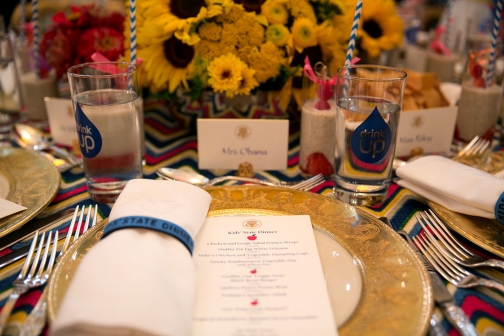
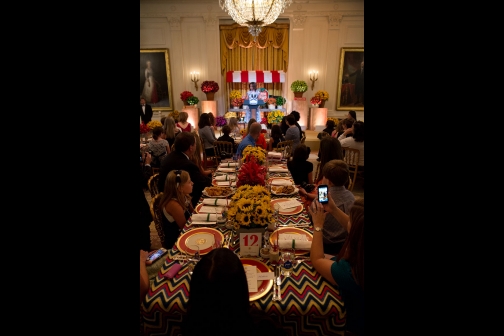
Today, the First Lady welcomed fifty-four young chefs from all over the country to the State Dining Room for the 2014 Kids’ State Dinner. These 54 kids were selected from more than 1,500 recipes that were submitted for the Epicurious Healthy Lunchtime Challenge. From the décor to the talent, food, and big smiles, the White House was bustling with our next generation of kids encouraging healthy habits.

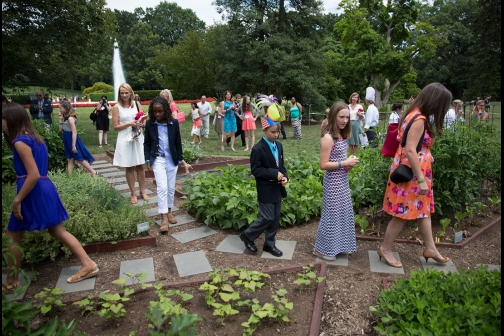
The kids heard from the First Lady, tasted delicious meals, and enjoyed live entertainment all before taking a stroll to the White House Kitchen Garden. There were so many amazing moments from this year’s Kids State Dinner but here’s a “taste” of some of our favorites:

1. Enjoying the Healthy Lunches

From Black Bean Burgers to Smoky Southwestern Vegetable Dip, the lunch cooked up by White House chefs of the winning recipes was healthy and scrumptious! Make sure to check out how to cook up these great recipes in your own kitchen at home!

  • 01 Kids State Dinner
    1 of 13
  • 03.1 Kids State Dinner
    2 of 13
  • 04.1 Kids State Dinner
    3 of 13
  • 05 Kids State Dinner
    4 of 13
  • 06 Kids State Dinner
    5 of 13
  • 07 Kids State Dinner
    6 of 13
  • 08 Kids State Dinner
    7 of 13
  • 09 Kids State Dinner
    8 of 13
  • 10 Kids State Dinner
    9 of 13
  • 11 Kids State Dinner
    10 of 13
  • 12 Kids State Dinner
    11 of 13
  • 13 Kids State Dinner
    12 of 13
  • 14 Kids State Dinner
    13 of 13
 
Elyse Cohen, Deputy Director of Let’s Move!
Related Topics: Healthy Kids

What You Might Have Missed This Week:

This week, President Obama addressed the crash of Flight MH17, talked about investing in our country's infrastructure, and continued to take important steps to respond to a changing climate -- and the First Lady hosted the Kids' State Dinner, featuring 54 delicious recipes from around the country.

Check out what else you may have missed in this week's wrap up.


President Obama on the Crash of Flight MH17

Today, President Obama delivered a statement to the press in the wake of the tragic crash of Malaysia Airlines Flight MH17:

Yesterday, Malaysia Airlines Flight MH17 took off from Amsterdam and was shot down over Ukraine near the Russian border. Nearly 300 innocent lives were taken -- men, women, children, infants -- who had nothing to do with the crisis in Ukraine. Their deaths are an outrage of unspeakable proportions.

Watch on YouTube

President Obama noted that this was "a global tragedy -- an Asian airliner was destroyed in European skies, filled with citizens from many countries." And as a result, there now needs to be a credible, international investigation into exactly what happened.

Related Topics: Grab Bag, Colorado, Delaware, Texas

The President and First Lady at the 2014 Kids' State Dinner

July 18, 2014 | 18:40 | Public Domain

President Obama and First Lady Michelle Obama deliver remarks at the 2014 Kids' State Dinner in the East Room of the White House.

Download mp4 (687MB) | mp3 (18MB)

Read the Transcript

Remarks by the President and the First Lady at the Kids State Dinner

East Room

12:17 P.M. EDT

MRS. OBAMA:  Okay, Braeden.  (Laughter.)  All right, it’s going to be hard.  All right, mister, you’re not supposed to make the First Lady cry.  (Laughter.) 

Thanks so much.  You guys, let’s give Braeden a big round of applause.  (Applause.)  Well done, young man.  Well done.  And thank you so much, Christy.  Thank you. 

Okay, this is cool, right?  You guys having a good time? 

AUDIENCE:  Yes.

MRS. OBAMA:  Yes?  Has it been exciting from beginning to end?

AUDIENCE:  Yes.

MRS. OBAMA:  What’s been the best part so far?

AUDIENCE:  You. 

MRS. OBAMA:  This?  All right, I didn't cue them on that one.  (Laughter.)  That was a natural response. 

Well, I am just delighted to have you guys.  You guys look amazing.  You have dressed so appropriately for the event.  Doesn't the room look beautiful?  They do such a great job.  And all this stuff was picked out especially for you guys.  It is really an honor to be here.

And I want to start by thanking Tanya and all the folks from Epicurious, the entire team, for, year after year, making this event possible.  It is truly the highlight of our lives, and I know that everyone involved really, really gets inspired from this event. 

And I’m also thrilled about the new Kids and Chefs Cook for Success program that you guys are launching.  And with this effort, you guys are going to take this whole thing to another level.  So I love the fact that, Epicurious, you’re finding ways to step this up every single year.  So thank you, guys, and a big round of applause.  (Applause.)

And, of course, to our Delta Airlines team for flying everybody here.  Oh, let’s all go!  Yay!  (Applause.)

How many people was it your first trip on an airplane?  Or is everybody old flying pros?  You’ve been flown before, huh?  You haven’t flown before?  Well, that's awesome.  So did Delta Airlines treat you well?

AUDIENCE:  Yes.  (Applause.)

MRS. OBAMA:  All right, there you go.  Bob was a little nervous on that question.  (Laughter.) 

And I want to join Tanya in also thanking all of the family members, the parents, the moms, the dads.  I know we have an aunt or two here, as well.  Thank you all so much for supporting your kids in this passion, and for cooking with them and for putting up with those endless messes in the kitchen.  Who’s a messy cook here?  (Laughter.)  Me, too.  Me, too.  (Laughter.)

But I hope you all know that their success is because of your love and your constant encouragement for their creativity.  So we’re just so grateful to all of you grownups who are here with us today, and I hope you’re having a good time, too.

But, of course, most of all, I want to recognize our guest of honor, our 54 Healthy Lunchtime Challenge winners!  (Applause.)  Congratulations.  (Applause.)  Yes, whoop it up.  Party in the White House.  It’s exciting.  I am so proud of you. The President is so proud of you.  Oh, look at the room out there.  I missed the balloons.  (Laughter.)  We have been working so hard to make this event special for you.

But these kids have been selected.  There were more than 1,500 kids that submitted their recipes for this year’s challenge, and it was not easy to choose just one winner from each state, so this was a competitive experience.  You had to claw your way to the finish line.  (Laughter.)  I hope you didn't push and shove anyone on the way up to the top.  But you made it. But you’re all here because a panel of distinguished judges agreed that your recipes were the very best.

And I want to thank all the judges.  Sam was one of those judges.  (Applause.)  There’s a lot of eating.  Did you taste all 1,500 recipes?

MR. KASS:  110 dishes.

MRS. OBAMA:  110 dishes. 

MR. KASS:  That's a lot. 

MRS. OBAMA:  Thank you, Sam.  (Laughter.)  Well done.

But yours were the most nutritious and the most delicious, all right?  So healthy and good, too, right?  And you guys took very different paths to get here.  Some of you started cooking as a way to bond with your families -- and that was true for Genene Wedd.  Hey, Genene, how are you?  From California.  He said, “I love cooking with my mom.  It is fun spending time with her and talking about my day.”

And for some of you, cooking is how you celebrate your culture or other cultures you’re interested in.  Lucy Hickerson  -- where’s Lucy?  I know I saw Lucy.  Where are you, Lucy?  Lucy is from Kentucky, and she made a pocket with sweet potatoes and kale.  And she describes her dish as a combination of an Indian samosa, a Spanish empanada and an Asian spring roll.  And what Lucy says, “It’s like going around the world in one bite.”  (Laughter.)

And some of you like to cook because you’re good at it and hope to make it a career.  That’s why Hannah Foley from Pennsylvania right here -– as she said -- she said, “I love to cook and hope to one day be a chef with my own show on the Food Network.”  (Laughter.)  Wait, she’s got a title.  (Laughter.)  It’s called, “H to the F to the Hannah Foley Chef.”   (Laughter.) Yes, that's been in my head for many days.  (Laughter.)  That's why I knew it.  H to the F -- okay. 

But no matter how you got to the White House today, you’re all here for one simple reason.  And I think Adrianna Nelson from West Virginia -- Adrianna, where are you?  Hi, you.  This is what she said.  She said, “I love to create healthy recipes because I feel great when I eat healthy.”  That's why you’re here.  Like Adrianna, you all know that what you eat affects how you feel, and how much energy you have, and how well you do at school.

And that’s really why I started Let's Move.  I did it because I care deeply about the kids in this country.  I really do.  Not just as First Lady, but I’m a mom, I’ve got two kids.  I love them, and I love you all just as much.  So it’s important for me to make sure that the things I do for my girls are the same things that every kid in this country has access to.   

And that’s why we’ve been working so hard to help families cook healthy meals at home, and to get more grocery stores into our communities, and to get companies to market healthier foods to kids. 

And most of all, that’s why we’ve been fighting so hard for our new healthy school lunches.  And I have to tell you, and I said this to some of you in the photo line that you all are my inspiration.  Kids like you really do inspire me.  You all represent 54 reasons why we know that we can do so much better by our kids when it comes to eating healthy because the truth is, is that if 8-, 9- and 10-year-old kids can cook and happily eat a healthy, tasty meal, then there is absolutely no reason why we can’t get nutritious food into every school in this country that kids will actually enjoy.  You guys remind me of that every single day.

Now, I know that some of you might have friends who want to bring back the junk food in the schools, right?  Because there’s always those kids.  They're like, give me my junk food back.  (Laughter.)  And I know that in recent months, we’ve even seen grownups, including folks in Congress, trying to undo some of the progress that we’ve made to get healthier food into our schools. And while the vast majority of the schools are doing just fine with these new standards, those few complaining voices happen to be the loudest voices and they’re getting the most attention right now.

So here’s what I’m going to ask you to do for this year.  I need you guys to make your voices heard, too.  It’s important.  And don’t be shy.  I want you to speak up, talk to your classmates and your teachers.  Share with them what you’ve learned about healthy eating and cooking, about how to craft interesting things.  Like, Braeden, you might even get your school to test your recipe in the lunchroom for other kids.  Teach them what you know about healthy eating.

And also, to the parents, parents play a really important role in what happens on the ground.  And in many instances, parents are way more powerful than people like us in the White House.  So I urge you guys to speak up as well, and to continue speaking up.  Go to those PTA meetings and those school board meetings and tell them what you know and what you’re learning, to make sure that they're listening to all the voices on this issue.

There’s a lot of money involved in feeding our kids at school.  We are currently spending $10 billion a year -- did you hear that, $10 billion a year -- on our school lunch programs.  So it’s not surprising that there are certain interests that are resisting change and trying to take us back to the old ways of doing business, because for them there’s a lot of money is on the line.  But you all have a right to expect that your hard-earned tax dollars will be spent on food that meets basic nutrition standards. 

It’s as simple as that.  Because when you are working so hard to prepare nutritious foods at home, I know that you don’t want all that work undone when you send your kids off to school and they’re eating in the lunchroom.  So we can’t afford to stay silent on this issue, because if we do we’re going to wind up right back where we started.  And that’s not acceptable.  Because I know that everyone in this room, at least, and many people around the country know that the food our kids are eating today will affect their health for decades.  We are laying an imprint on our kids with everything they put into their bodies today.  We know so much more about how nutrition and exercise impacts our children’s ability to focus and succeed both in school and in life.

And that’s why you guys, as parents, are so passionately supporting your kids on this issue -- you know that this is real, this isn’t a joke.  So what I don’t want to have happen is that 20 years from now I don’t want us to be looking back and saying to ourselves, man, we were almost there, we were right on the brink of transforming our kids’ health, but then things got tough and expensive, and then we didn’t stand up and we didn’t speak up, and we gave up too soon. 

Our kids deserve better than that.  And they don’t know, but we know -- we know better.  All of you kids, like kids across this country, deserve everything that we adults can muster up for you.  I have to tell my kids that every day -- I still know more than they do.  (Laughter.)  So when we know better, we have to do better for you.

So I hope that you all will serve as ambassadors, okay?  And think about, as Braeden did, how you will pay this forward.  And there are many, many ways you’re going to pay it forward.  There’s no one right answer on how you’re going to do it.  But when you get a chance to do something this special and to come to the White House, and have all this press and all these special things going on, I know for me when I think about my advantages, I think, I have to give that back to somebody else.  That is my obligation.  That’s the price I pay for standing here and hanging out. 

So I want you to think about what you’re going to do.  I want you to keep talking to other kids about eating healthy.  Help them learn.  Help them try new things.  And you’re going to run into bumps and bruises -- I know, Braeden, it must have been hard work starting your new non-profit organization.  I’m sure it wasn’t easy every step of the way, but it was so worth it, right, for the thanks that you get and knowing that you impact the lives of others. 

So I know each of you can do that in your own special way. And we’re going to do this again next year, so I hope that one of you will be standing here like Braeden, being able to share all the great things that you’ve done over the course of the year.  I can’t wait to see what you guys accomplish.  You all are pretty amazing young people. 

So I think with that, it’s time to eat, don’t you think?  I’m a little hungry.  I just had fruit for breakfast so I’m really ready to try all these dishes.  (Applause.)  You guys, have a great time.  And I will see you after lunch.  Enjoy.  (Applause.)

Wait, wait.  We have a special guest -- Braeden knew about this -- but another person who likes this event just as much as me, who never gets invited to sit down is the President of the United States.  (Applause.)

THE PRESIDENT:  Hello, everybody!  I am not going to hold up the meal -- everybody sit down.  (Laughter.)  I just wanted to come by because I love the event.  First of all, we have a lot of state dinners around here.

MRS. OBAMA:  We do.

THE PRESIDENT:  They’re not always as cheerful and fun as this.  (Laughter.)  First of all, everybody is older and a little stodgier.  But this is a much hipper crowd.  More colorful outfits -- so I like that.  But I also just love seeing young people who are doing wonderful things.  We are so proud of you.  To see the kind of leadership you’re taking and the way that you’ve really thrown yourselves into these projects is just really inspiring. 

And sometimes people ask me, you know, Mr. President, you have this really tough job and there is always stuff happening all around the world, and how do you keep up with all of it and how do you keep your spirits up?  And my answer is, because I meet young people every day who I know are energetic and are full of great ideas and are going to be continuing to make this country better.  This is one way to do it.  You guys are leaders in your schools and in your communities, and you’re helping to teach folks the importance of good nutrition, the importance of putting good fuel in your bodies so that you’re living healthy, active lives.

And by the way, one thing -- maybe I shouldn’t say this, but it’s not like our family -- including me -- don’t have some snacks once in a while -- (laughter) -- that may not be on the perfect nutrition chart.

MRS. OBAMA:  It’s true.  (Laughter.)

THE PRESIDENT:  Each of us have our weaknesses, so I’m going to reveal some right now.  Malia, ice cream.  I mean, basically, it’s very hard for her to turn down ice cream.  But she has learned to kind of control herself when it comes to ice cream.

MRS. OBAMA:  It’s hard.

THE PRESIDENT:  It’s hard, but she still has fun when she does have ice cream.  In fact, the fact that she doesn’t have ice cream every day means when she has it --

MRS. OBAMA:  It’s very special.

THE PRESIDENT: -- it’s like, hallelujah.  She starts -- she is so happy.  (Laughter.)  Sasha -- what would you say is Sasha’s pig-out indulgence food?

MRS. OBAMA:  She likes sushi.

THE PRESIDENT:  Oh, no.  (Laughter.)

MRS. OBAMA:  It’s what she’s into.

THE PRESIDENT:  She is kind of into sushi right now.  She’s a little -- I love sushi, so maybe I had some influence there.  But let’s say -- her pies.  She pretty much takes dessert whenever she can.

MRS. OBAMA:  Pie.

THE PRESIDENT:  Pie.  She’s like me.  My big thing -- chips and guacamole.  (Laughter.)  Basically, if there is a bowl of good chips and guacamole --

MRS. OBAMA:  He loses it.

THE PRESIDENT:  -- I lose my mind.  (Laughter.)  I lose my mind.  And the First Lady -- French fries.  (Laughter.)

MRS. OBAMA:  But I’m going to say this.  I’m making a vow -- I’m going to take a break from French fries.

THE PRESIDENT:  Really?

MRS. OBAMA:  Yes.

THE PRESIDENT:  Wow, that’s big.  (Laughter and applause.) 

Now, the reason I make this point is that the question is not can you never have anything -- it’s, on a day-to-day basis, at lunches, at breakfast, at dinner, is your basic nutrition something that’s going to make you strong and make you healthy?  And if it is, then having fun food that may not be perfect for you, that’s okay, too. 

But we’re just all trying to develop good habits.  And the one thing I know about all these young people is they’ve got great work habits, because, otherwise, they wouldn’t have been able to do everything that they’ve done.  They’ve got great habits of caring about other people, because they’re out there spreading the word about what they’re doing.  And as a consequence, I’m really optimistic about what all these great young leaders are going to achieve in the future. 

So good luck.  Have a great Kids State Dinner -- even though it’s technically lunch.  (Laughter.)  Calling it a state lunch -- there was a debate about this and we thought --

MRS. OBAMA:  It doesn’t work.

THE PRESIDENT:  -- it doesn’t make sense, because we have state dinners.  So it’s a Kids State Dinner, even though it’s noon. 

And parents, good job, everybody.  You’ve got great kids.  (Applause.)

END
12:35 P.M. EDT

Close Transcript

Tune In: Watch the Kids' State Dinner Live!

This morning at 11:25 a.m. ET, we'll be streaming the 2014 Kids' State Dinner live from the White House.

And you can watch it all right here.

More than 1,500 entries were submitted this year, featuring wholesome and tasty ingredients such as squash, ground turkey, salmon, and kale. Watch the winning recipes being selected for the 2014 Kids' State Dinner below -- and tune in to the Kids' State Dinner live today at 11:25 a.m. ET.

Watch on YouTube

Related Topics: Healthy Kids

The White House

Office of the First Lady

Remarks by the First Lady at Grammy Museum's Jane Ortner Education Award Luncheon

Grammy Museum
Los Angeles, California

12:32 P.M. PDT

MRS. OBAMA:  Thank you so much.  (Applause.)  Well, hello, everyone!  How are you guys doing?

AUDIENCE:  Good!

MRS. OBAMA:  It’s really exciting, huh?

AUDIENCE:  Yeah!

MRS. OBAMA:  Well, it is a pleasure for me to be here for the inaugural Jane Ortner Education Award Luncheon.  I want to start by thanking Bob for that very kind introduction and for his visionary leadership of the Grammy Museum, and for sharing that story.  And in response, yes, we did hear.  (Laughter.)  We heard everything.  We can hear everything that goes on on the State floor upstairs.  But as Bob noted, it was a beautiful sound.  It was the sound of growth and victory and happiness, and it filled the White House just as Barack and I had imagined.  So we were grateful for that night and so many, many wonderful nights shared with this organization.

I want to thank Chuck Ortner and his family for their tremendous generosity in making this luncheon possible.  Yes.  (Applause.)  And I want to give a special thank-you to your fabulous mayor, Mayor Garcetti.  We’re just thrilled that he could join us today, and we are grateful for his leadership.  (Applause.)

And I’d like to thank and congratulate today’s honorees -- my dear, dear friend, Janelle Monae, as well as Sunshine Cavalluzzi, who I will get to meet.  (Applause.)  Sunshine -- I’m going to see Sunshine soon.  We are so inspired by the both of you and so grateful for everything you do for our children.

And of course, I want to thank everyone here today for your support to bring arts education to young people across this country.  Your work has been at the heart of our vision for the White House right from the very beginning, as Bob shared.

Now, traditionally, when it comes to hosting cultural events, the White House has always brought in the most renowned performers in the world.  And in the past, the audiences for these performances were usually a lot of pretty fancy people -- politicians, business leaders, celebrities -- the kind of folks who get invited to the White House all the time.

But when Barack and I first came to Washington, we decided that it was time to shake things up a little bit.  We wanted to do everything we could to make the White House the “People’s House.”  We wanted to open it up to as many people in this country as possible, especially our young people.  So when we started inviting performers to the White House, as Bob mentioned, we told everyone that we also expected them to spend some time with young people, doing workshops and these wonderful mentoring sessions.

And that’s where all of you came in.  Thanks to your generosity, the Grammy Museum has flown nearly 1,000 students to Washington to visit the White House and take part in these programs, and thousands more have participated by video.  These young people have had so many once-in-a-lifetime experiences. They’ve explored soul music with Janelle Monae, Melissa Etheridge, Patti LaBelle -- that was good.  (Laughter.)  They’ve learned about country music with Lyle Lovett, Darius Rucker, Kris Kristofferson.  As you heard, they talked about Motown with Smokey Robinson and John Legend.  I could go on and on.  These sessions are amazing.  

And I have to tell you, these are some of my favorite events at the White House.  They’re these truly intimate moments when the artists and the kids are sitting around in the State Dining Room.  Very special.  I make sure they know they’re sitting where we host kings and queens and leaders from all over the world.  And in that room, they’re pouring their hearts out to each other.  They get really close.  They’re not just talking about music -- they’re talking about their hopes and dreams and their fears.  They’re talking about the value of hard work, things like staying true to yourself, picking yourself up when you fall.  That’s one thing I always say to the students -- failure is your only guarantee in life.  So you got to figure that out.

And let me tell you, so many of the young people who’ve had these experiences, they walk away transformed -- how can you help but not be transformed -- with a new sense of purpose and hope. 

Just take the example of a young woman named Trina Vargas who attended a workshop -- she attended that first workshop on the music of the civil rights, back in 2010, that Bob talked about.  Now, Trina was raised by a single mother, much like many of the artists who perform and we have known and love.  She’s from Guatemala.  Her mother never had a chance to go to college herself.  And while Trina worked hard in school, she wasn’t always sure that hard work would really pay off.

But her trip to the White House opened her eyes, and as she put it -- and these are just a few of her words -- she said, “I saw for the first time how education and hard work could open doors I never dreamed possible.”  And she said, even though it isn’t easy to -- and “it’s easy to feel discouraged at times,” she said, “I won’t stop chasing my dreams.”

Well today, four years later, Trina has graduated Summa Cum Laude from SUNY Albany, and she’s now working her way towards law school.  (Applause.)  And I’m sure I could share hundreds of stories just like that. 

So make no mistake about it, programs like this aren’t just about taking a fun field trip to Washington, and they shouldn’t just be luxuries for kids who can afford it.  Because we know that engagement in the arts can unlock a world of possibilities for our young people, especially when it comes to their education. 

Studies show that kids who are involved in the arts have higher grades, higher graduation rates, higher college enrollment rates.  And when you think about it, that’s not really surprising.  Because for many young people, arts education is the only reason they get out of bed in the morning.  Just like Janelle, they go to school each day because there’s an instrument they want to play, a musical they want to perform in, a painting they are dying to finish.  See, and then once they arrive in those classrooms, that’s when we can teach them something else, like math and writing and science.  That is the power of the arts for so many of our young people. 

But today, as we honor your work to promote arts education and we recognize leaders like Sunshine and Janelle, we also need to be thinking about all the young people who will never have these opportunities in this country.  We need to be thinking about the six million children in this country who don’t have a single art or music class in their schools.  (Applause.)

So for every Janelle Monae, there are so many young people with so much promise [that] they never have the chance to develop.  And think about how that must feel for a kid to have so much talent, so much that they want to express, but it’s all bottled up inside because no one ever puts a paintbrush or an instrument or a script into their hand. 

Think about what that means for our communities, that frustration bottled up.  Think about the neighborhoods where so many of our kids live -- neighborhoods torn apart by poverty and violence.  Those kids have no good outlets or opportunities, so for them everything that’s bottled up -- all that despair and anger and fear -- it comes out in all the wrong places.  It comes out through guns and gangs and drugs, and the cycle just continues.  

But the arts are a way to channel that pain and frustration into something meaningful and productive and beautiful.  And every human being needs that, particularly our kids.  And when they don’t have that outlet, that is such a tremendous loss, not just for our kids, but for our nation.  And that’s why the work you all are doing is so important. 

But we can’t stop here.  Yes, you all have an abundance of riches here in Los Angeles.  And yes, we do have a pretty big platform at the White House; people do tend to accept our invitations to perform and interact with young people.  We’ve got a little leverage.  But let’s not forget that there are theaters and symphonies and museums in cities and towns all across this country.  And with every exhibit and performance they put on, these folks should be asking themselves, “How can we get some kids in here?  How can we get these artists and performers to connect with young people in those communities?” 

In other words, every arts organization in this country should be embracing the mission of the Grammy Museum.  Because we cannot be satisfied until every child in America has some kind of exposure to the arts -- every child.  Every child.  (Applause.) 

And to all the young people here today, I just want to urge you all to take the fullest advantage of these opportunities when you get them.  Try as many new art forms as you can, and take some risks.  Don’t be afraid to express yourself.  And most importantly, take the lessons you learn through arts and apply them at school, and bring that same passion and dedication to getting the education you need to fulfill your dreams.  And so many of you are already doing that, and I am incredibly proud of you all. 

But today, I want to urge you to dream even bigger, work even harder, and don’t ever give up, no matter what challenges you face.  Because if you do that, there is no limit to what you can achieve.  And remember, there are so many people who believe in you.  I believe in you.  Your President believes in you.  And all of these people here today believe in you. 

So go out there and make us proud.  And more importantly, make yourselves proud.  Yes.  (Applause.)

And to all of you here today who are doing so much to support these amazing young people, I want to end as I started by once again saying thank you.  Thank you for your commitment to their future, to our country’s future.  And I do look forward to continuing our work together in the months and years ahead.

Thank you all so much.  (Applause.)  Thank you.

I have one more wonderful task here today.  You know that little fireplug of a woman that just stood here today?  Well, I’m going to introduce her, because she’s going to come out here and do her thing. 

But let me just say something about this young, beautiful, talented woman.  First of all, I am honored to be the first Electric Lady.  (Laughter.)  I got my letter in the mail -- I framed it; it’s up.  But when you listen to Janelle, when you hear her speak -- I love to hear her perform.  And yes, she was on a table in the White House.  And that’s our little secret.  (Laughter.)  But I love to hear her perform, but I love to hear her talk.  I love Janelle’s message. 

I love that she is one of the young artists here who is making music that means something.  She has a message.  She has a voice.  She has a power in her.  And she understands the responsibility she has within her grasp to take these opportunities and just take off with them.  She serves as a role model and an inspiration to so many young people.  And I am happy to call her my friend.  I am so proud of her. 

It is my pleasure to introduce the one, the only -- Janelle Monae.  (Applause.) 

END
12:46 P.M. PDT

The White House

Office of the First Lady

Remarks by the First Lady at the Unite for Veterans Summit

Hyatt Regency
Los Angeles, California

11:37 A.M. PDT

MRS. OBAMA:  Thank you all.  (Applause.)  Rest yourselves.  I just heard the charge.  You’re going to need your energy, so I want you all well rested.  Please sit.  It is truly a pleasure to be with you here in Los Angeles on this terrific occasion.  

I want to start by thanking your amazing mayor, Mayor Garcetti, not just for that kind introduction, but for his tremendous leadership for this city, and for our veterans, and for his service to this country in the Navy Reserve.

And I also want to throw in a thank-you to his partner, Amy, because I know that her support is going to be critical in making sure you all reach this ambitious goal.  So I want to thank her for all the work that she has done in her role as first lady, for our veterans, for our servicemembers.  Let’s give them both another round of applause.  (Applause.) 

And, of course, I want to thank Matthew for his powerful story, for sharing his journey with us, and for all the work that he is doing to support other veterans in this city.  That is truly the amazing power of what our veterans do.  They keep giving.  That’s why we need to make sure that we give them all the resources they need to be the best Americans that they can be.  We are so proud of you, Matthew -- we really are.  (Applause.)

And to Elise for her remarks and leadership, we would not be here if it weren’t for the dedication and hard work of people like you.  We are so grateful.  As well as everyone from United Way of Greater Los Angeles, the Federal Reserve Bank, the University of Southern California -- all of you, thank you for hosting this summit.  Thank you for your leadership, your work.  I am confident in what you are going to be doing, and grateful, just so incredibly grateful for taking this on.

And most importantly, I want to thank all of you for coming here today to show our veterans and their families that after all they have done for our country, that we have got their backs.  I have had a number of incredible opportunities as First Lady, and right at the top of the list is the time I’ve spent with our servicemembers and veterans and their families.

Over the last few years, as I’ve visited with these men and women at the White House or on bases and in communities around the country, I have been blown away by their stories.  I’ve been blown away by their courage, and dedication, and their unwavering commitment to excellence.

There’s the Army Ranger that I had the fortune of sitting next to at my husband’s State of the Union Address.  Remember the young man who had nearly been killed by a roadside bomb in Afghanistan, but fought back to speak again, and stand again, and walk again. 

There’s the soldier that we met just a month ago who was caught in a firefight in Afghanistan when a live grenade landed just feet away from him and his best friend.  He responded by jumping onto that grenade to save his friend’s life. 

And then there are the stories of the talent and skills these men and women display every day.  They are mastering cutting-edge technologies.  They’re leading dozens of their peers in the most dangerous missions on the planet.  They’re doing everything from handing out humanitarian aid, responding to incoming fire, building relationships with local leaders -- sometimes all in one day.  

And I’ve seen their excellence firsthand at the White House.  We have folks on our policy teams, our military aides, our Navy Mess staff.  They are some of the sharpest, most dynamic, and most effective people I have ever had the pleasure of working with. 

So when these men and women come home, they have got the skills that any company in America should want, and they’re more than prepared to succeed in any career or at any school they choose.  But too often, that transition back to civilian life presents all kinds of challenges and obstacles. 

Just try putting yourselves in their shoes for just a moment.  After spending your entire life in service to your country on a military base or in combat, you come home to a very different way of life.  The friends who have been by your side every minute are suddenly spread out all across the country, and there’s nobody around who understands what you’ve been through. The missions that drove you every day are gone.  The skills you’ve spent years developing are not valued or understood in the civilian world.

I met a man, young man, who served five years in the Navy, managing a team of sailors and dealing with complicated data and equipment.  But in the two years -- two and a half years after he came home, he went through dozens of rejections before UPS recognized his management skills and gave him a job.

Then there are even tougher stories.  A couple of months ago, I met a young woman who’d had experiences during her time in Afghanistan that she struggled to recover from once she returned home.  Her life unraveled.  She lost her job, got into drugs, ended up living out of her car before she got the therapy and employment she needed to get back on track. 

Now, I want to be clear -- just a tiny percentage of veterans end up homeless.  And the majority of these men and women transition back in good health and good spirits and go on to build successful careers and strong families.  But after everything they have done for us, the idea that any of our veterans are spending months, or even years, struggling to find a job is unacceptable.  (Applause.)  It’s unacceptable.

And the image of even one of these heroes sleeping out in the cold, huddled up next to an overpass -- that should horrify all of us.  Because that’s not who we are.  And the truth is, we know that there are simple steps that we can take -- whether that’s in business or government or in our communities -- to prevent and solve these kinds of problems. 

My husband has led the way to developing and devoting historic levels of funding and resources to helping our vets transition back to civilian life.  On employment, we’ve started new programs to help veterans get civilian licenses for jobs they did in the military.  Through our Joining Forces initiative, we have rallied businesses to hire or train more than half a million veterans and military spouses.  And we’ve launched a one-stop website to connect veterans to employers looking to hire them.  And any business or organization here today or out there listening that wants to hire vets should sign up at eBenefits.VA.gov. 

And when it comes to veteran homelessness, my husband vowed, as the mayor said, not just to address this issue, but to end it once and for all.  So the administration is cutting red tape across agencies.  We’re starting new programs and strengthening old ones to get veterans into homes right away.  And over the past few years, these efforts have brought tens of thousands of veterans out of homelessness.  They have helped prevent over 100,000 more [from] falling into homelessness in the first place.  And even in the face of difficult economic times, we have seen the rate of homeless veterans in our country fall by 24 percent under this President.  (Applause.)  So we are making some real progress. 

But we know that government can’t do this alone.  If we’re going to make a difference on this issue, issues like employment and homelessness, we have got to get communities across the country engaged at every level.  That means businesses, government and foundations.  It means nonprofits.  It means our schools, our hospitals.  It means neighbors from down the street. 

And that’s why I am so excited about this conference, why I really want to be here today -- because that’s exactly what you’re doing right here in Los Angeles.  With your 10,000 Strong initiative -- I almost said 100,000.  Sorry, Mayor.  (Laughter.)  Ten thousand is really good.  (Laughter.)  You’ve secured commitments from nearly 150 businesses and public sector organizations to hire 10,000 veterans by 2017. 

And I really, really want to commend you for doing this the right way -- because you’re not just talking about hiring these veterans; you’re talking about retaining them and giving them a chance to grow in the years ahead.  (Applause.)  Yes, you’re  doing it the right way.  (Applause.)  You’re recruiting volunteers to work with veterans on their résumés, holding mock interviews.  You’re focusing on good jobs -- jobs in health care and entertainment, jobs in engineering, finance, and so much more.

So I want to applaud Mayor Garcetti’s office and the United Way of Greater Los Angeles for heading this charge.  And as if hiring 10,000 veterans wasn’t enough, this community is also tackling a problem that this country has tacitly accepted for far too long, and that is homelessness among our veterans. 

So when I heard that this mayor was joining the Mayors Challenge to End Veteran Homelessness by the end of 2015, I couldn’t have been more excited.  I really couldn’t have been more excited.  Because we can’t end homelessness without all of you.  More than one out of every 10 homeless veterans in America lives right here in Los Angeles, as the mayor said.  And that’s more than any other community in the country -- more than 6,000 veterans in total. 

And I know that’s a big number -- and make no mistake, it is an aggressive goal.  But we’ve seen time and time again that if you break these numbers down, if you work on the ground with landlords to find open apartments, with developers to build new housing; if you rally community groups, and congregations, and businesses around this issue -- then this problem becomes eminently solvable.  

That’s what they realized in Phoenix, Salt Lake City, where they’ve already effectively ended chronic homelessness among their veterans.  And down in New Orleans they’ve committed to end all veteran homelessness in the next six months -- and they are on track to do it today.  And here in LA, the United Way, the Chamber of Commerce have brought public and private partners together for this incredible program called Home for Good.  And together, you have housed more than 9,000 veterans since 2011. 

And on top of that, I want to applaud voters and legislators here in the state for voting to authorize $600 million toward housing for veteran families -- (applause) -- which is the largest state-funded effort in this country.  Well done.

So you’ve already laid much of the groundwork to reach this goal.  And now, as your leader, your mayor said, you just got to finish the job.  And I know that’s not going to be easy, but I also want you to know that you won’t have to do this alone. We will be with you every step of the way –- folks from the White House, the VA, the Interagency Council on Homelessness, we will all be there to support you, to connect you with other leaders across the country who can share their best practices on homelessness or employment.  Because we are all in this together, and we have got to remember that this work isn’t just about paying back the debt we owe these men and women, it’s about investing in their future and the future of this country. 

Take the story of a man I had a chance to meet backstage, Jim Zenner.  I met Jim and his wife and his young son.  Jim served as an Army intelligence analyst during the Iraq War.  And when he first came back home, he was mostly OK.  His father was a Vietnam vet, and Jim could always turn to him when he needed to talk to someone.  But a few months later, Jim’s father died unexpectedly.  And that’s when, as Jim says, “Things, they just kind of fell apart.” 

He became easily irritated, and got into shouting matches with his wife.  And one night, it got so bad that Jim had to move out of the house.  He spent the night sleeping in his car -- and then he asked for help.  He reached out to the VA, and they connected him with Volunteers of America, which used the VA Grant and Per Diem Program to help Jim pay for an apartment for him and his oldest son.   

So for seven months, Jim had a place to call home as he got his life back on track and went to school to get his master’s in social work.  He got the therapy he needed through the VA.  He saved up enough money to eventually buy a place of his own.  And during that time, Volunteers of America was so impressed with Jim that they asked him to open the new Hollywood Veterans Center -- a 48-bed readjustment facility for Iraq and Afghanistan vets.  And in the four years since it opened, the center has given shelter, counseling, and job training to nearly 350 veterans. 

And Jim also keeps paying it forward when he hires for his staff positions.  Jim manages about 12 staffers, and seven of them are post-9/11 veterans.

So because this city was there for Jim, because the VA had those grants, because doctors cared for Jim and helped save his marriage, because an organization on the ground housed him and then hired him -- Jim is able to keep giving back to the country he loves.  That’s all our veterans want to do.  See, that’s what so many of them do -- they keep on serving for the rest of their lives, because that is who they are. 

And now it’s time for us to show who we are.  It’s time to match their service with service of our own.  And that’s especially important now -- because with our war in Iraq over and a war in Afghanistan drawing to a close, thousands of men and women who risked their lives for this country are transitioning back home.  And we cannot make the same mistakes for this generation that we made in the past.  (Applause.)  

So the work we all do together is for all of our veterans.  Whether they served in Vietnam or the Gulf War or Afghanistan or any other time in our history, we want to show them that we don’t leave any veteran behind.  And all we have to do is show just a fraction of the courage and commitment that our veterans have shown to all of us. 

We don’t have to do much -- we don’t have to dodge bullets, we don’t have to jump on grenades.  We just have to keep veterans in mind when we’re hiring for that next open spot.  We just have to make sure they have a place to call home. 

And that’s why all of you are here today -- because you believe like I do that we can do this.  I heard you.  (Laughter.)  And I want you to know that when you reach this goal -- yes, “when,” not “if” -- when -- you will be a model for the entire country.  And I am not exaggerating.  You’ll be starting a movement that can spread across America -- folks in Houston, and Chicago, and New York will want to follow your lead.  Folks in small towns and mid-size cities will think, “Well, if they can house 6,000 veterans in Los Angeles, then surely we can house a couple hundred.  If they can hire 10,000 veterans, then surely our businesses can hire a quarter of that number.” 

That’s the impact you all can have -- an impact that would be felt by millions of veterans across the country, starting here.

So I want to once again thank you -- thank you for everything you’ve done, everything that you will do in the years ahead to serve our veterans as well as they’ve served this country.  This is a great day today.  And I look forward to coming back and celebrating you reaching that goal. 
 
Thank you all.  God bless.  (Applause.)   

END
11:55 A.M. PDT