

Latest News
Blueprint for Justice for All: All Hands on Deck
Posted by on October 21, 2011 at 4:40 PM ESTEd. Note: Champions of Change is a weekly initiative to highlight Americans who are making an impact in their communities and helping our country rise to meet the many challenges of the 21st century.
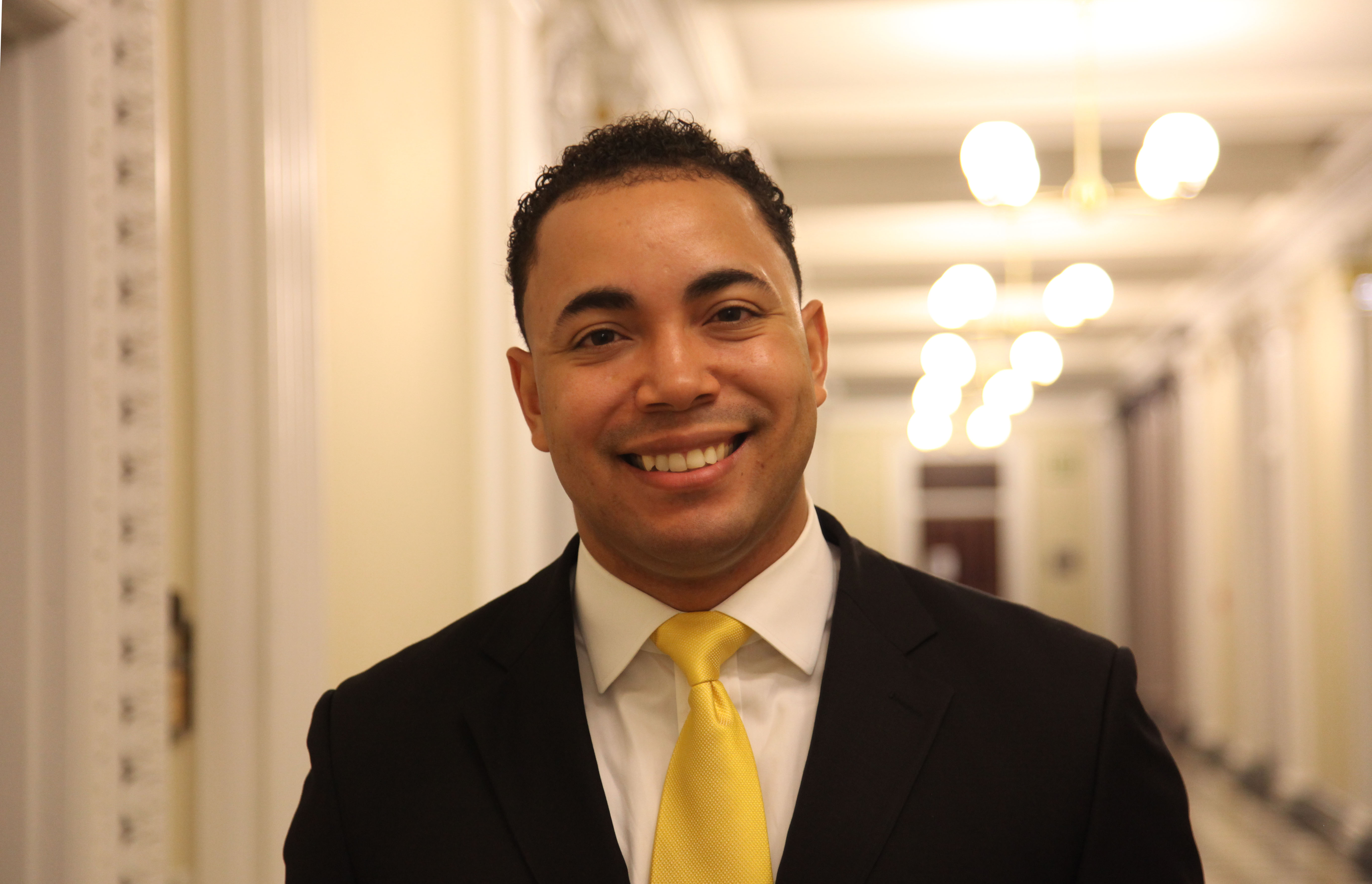
On Thursday, October 13, 2011, I had the tremendous honor and privilege of being recognized as a “Champion of Change” and served on a panel alongside advocates who have devoted their lives to serving the underserved in our country. During the panel law students from across the nation posed well informed questions regarding America’s justice gap. Although each question demanded its own response, one of the themes that emerged is that we need all hands on deck if America is going to fulfill her promise of justice for all. A starting point for that ‘all hands on deck’ blueprint is below.
Remove Barriers that Force our Legal Aid Attorneys to Work Inefficiently:
Legal services organizations that receive funding from the Legal Services Corporation are restricted from bringing class-actions or using their expertise to influence legislators to vote for policies that help our communities (lobbying). Those two tools are the only way to create the systemic change that our communities need. Without them, legal aid attorneys are forced to represent one client at a time. Not only is that an inefficient use of resources, it does not produce the larger scale changes that justice warrants and our communities need. If Congress amends the LSC appropriations rider from 1996, these restrictions can be removed at no cost and our communities will immediately have greater access to justice.Create the Expectation for Law Students to Learn by Doing:
Every law school should require their students to participate in one of the school’s clinics, practicum options or externships so that students can help meet unmet legal needs while honing their legal skills. On the extra-curricular level, schools should require a minimum of 30 hours of public service (10 hours a year) so that students can get more insight into the struggles that our communities endure and, hopefully, cultivate an ethic of service that will stay with them throughout their legal career.Learn more aboutAdvancing Equality for All Americans through Access to Justice
Posted by on October 21, 2011 at 2:31 PM ESTEd. Note: Champions of Change is a weekly initiative to highlight Americans who are making an impact in their communities and helping our country rise to meet the many challenges of the 21st century.

I was honored to be a part of the Champions of Change and join a discussion at the White House with other public interest lawyers who have dedicated their lives to closing the justice gap in America. Our discussion was wide-ranging and fruitful, focusing on the role of the legal profession in shaping political discourse and public policy in our nation.
One issue that often strikes me while discussing these issues is that it has been more than half a century since the civil rights movement and our work is not yet done.
During the civil rights movement, a generation of lawyers and advocates came to Mississippi from across America to lend their time and talent to the heroic struggle for equality. It made an indelible impact on our nation’s laws, politics and culture. We have become a more fair and just nation because of it.
But the truth is, while Mississippi was at the heart of the movement, its promises were never fully realized. Mississippi remains a state where racism and inequality are a fact of life. It is still mired in poverty and registers at the bottom of nearly every national measure of well-being. This is the reason why the Mississippi Center for Justice was created as a nonprofit, public interest law firm. And it's the reason I continue our work today.
Learn more aboutHolding Our Nation to Its Promise
Posted by on October 21, 2011 at 1:33 PM ESTEd. Note: Champions of Change is a weekly initiative to highlight Americans who are making an impact in their communities and helping our country rise to meet the many challenges of the 21st century.

On October 13, Attorney General Eric Holder recognized me as a Champion of Change for helping low-income people get their day in court. Of course, the real heroes are the people who fight daily in court to protect their lives and their families, despite an inability to find a lawyer, language barriers, and other obstacles. Here are two of their stories.
Charles Guider was late making a mortgage payment after his mother died. When he tried to pay, none of the banks or mortgage servicers that had bought and sold the mortgage over the years would take the money. One of them filed for foreclosure. He’s still in his home today because his civil legal aid lawyer persuaded the lender to accept the money and drop the foreclosure.
Charles is one of the lucky ones. Record numbers of people are turning to the courts for help dealing with the effects of the financial crisis on their lives, including foreclosure, eviction, unjust denial of subsistence benefits, and domestic violence. The vast majority cannot afford a lawyer and cannot find one to help them for free. Nonetheless, the House of Representatives is pushing for a 27% cut in funding for the Legal Services Corporation, which provides lawyers for low-income families needing legal help. To spur discussion about the need for civil legal aid, my colleagues and I produced a series of short videos telling the stories of Charles and other homeowners. Please watch them and join us in the push for civil legal aid funding.
Maythe Ramirez tried to warn the judge in her child custody case that her husband had beaten her and might harm the children. But Ms. Ramirez speaks Spanish, and there was no interpreter in the courtroom. She later told a New York Times reporter, “It is really as if you are doing nothing in court, standing still and not being able to explain what’s really happening.”
Ms. Ramirez had the misfortune to be in court in California, a state that provides interpreters for some court cases but not others. But her story is prompting change. Colorado, Ohio, Pennsylvania and Utah are among the states that have vastly improved their court interpreter programs in the past few years. And the American Bar Association is developing a historic set of standards for language access in courts, which will help the courts educate legislators and others about the need to fund this important aspect of access to the courts.
I have spent over a decade building a national program that uses advocacy, policy analysis, scholarship, public education and litigation to ensure that the justice system works when low-income communities need it. When I hear Charles’s and Maythe’s stories, I know our work is far from over. I am proud to have the opportunity to work with my fellow Champions of Change to hold our nation to its promise of “equal justice under law.”
Laura K. Abel is Acting Director of the Justice Program at the Brennan Center for Justice at New York University School of Law.
Learn more about Education"Entrepreneurs in Residence":Realizing the Job-Creating Potential of Current Immigration Law
Posted by on October 21, 2011 at 11:42 AM ESTLast week, I joined the President’s Jobs Council in Pittsburgh to announce “Entrepreneurs in Residence.” This initiative will help U.S. Citizenship and Immigration Services (USCIS) obtain industry expertise on immigrant investors, entrepreneurs, and workers with specialized skills, knowledge, or abilities.
While in Pittsburgh I had the opportunity to meet many foreign-born entrepreneurs who seek to use their innovative ideas and energy to launch new businesses and employ U.S. workers. Their aims directly reflect one of our immigration system’s goals: to further American prosperity by introducing talent and investment from abroad.
Learn more about ImmigrationFor the Win: Taking Action in the Big Easy
Posted by on October 20, 2011 at 6:47 PM ESTFor the Win is a guest blog series featuring the remarkable initiatives that young Americans are advancing to win the future for their communities. Each week we highlight a new young person and learn about their inspiring work through their own words. Submit your story to appear in the For the Win guest blog series.
Shonak Patel is a member of AmeriCorps Alums, a division of Points of Light Institute and co-founder and CEO of Swellr. Shonak was a finalist in the 2011 MassChallenge start-up competition and accelerator. Prior to founding Swellr, he served in AmeriCorps as finance and development fellow with the New Orleans Neighborhood Development Collaborative (NONDC) primarily working on a variety of affordable housing and community revilatilization projects in the Central City neighborhood of New Orleans. He graduated with honors from Babson College in 2006 with a concentration in finance.

Shonak Patel. (Photo by La Capoise Gallerie)
We heard today’s kids were having educational opportunities and resources taken from them, and not provided to them. We knew far too many teachers close to us sacrificing money out of their own paycheck every year to deliver their students the quality education they deserve. We saw a window to innovate and change the status quo in a meaningful way. So we took action. My co-founders and I created Swellr earlier this year to make it easier for us all to do our small part to account for increasing budget cuts to education across the country.
Action, this is what being an entrepreneur is all about as I have come to learn, and this is what my service experience prepared me for.
Growing Community in Chicago
Posted by on October 19, 2011 at 2:53 PM ESTA few months after President Obama entered office, First Lady Michelle Obama broke ground on the first White House Kitchen Garden as part of a broader initiative to promote a healthier and more active way of life. Among the crops planted are spinach, broccoli, lettuces, kale and collard greens, and assorted herbs. Each season, the First Lady brings together people from all over DC, to celebrate the harvest and enjoy the tasty fruits and veggies grown at the White House. The harvest is a great event that helps people better understand the food they eat and the community that grows it.

Jill Zenoff. (Photo from HelloGiggles)
Office of Personnel Management Director John Berry Talks about the American Jobs Act at the GLBT Center of Colorado
Posted by on October 19, 2011 at 2:45 PM ESTLast week, Office of Personnel Management (OPM) Director John Berry toured the GLBT Center of Colorado in Denver and spoke with members of the local gay, lesbian, bisexual, and transgender community about the importance of the American Jobs Act.
Read more about Director Berry’s visit from Amy Drayer, Vice President for Strategic Initiatives at The Center:

John Berry, Director for the Office of Personnel Management, visits The GLBT Community Center of Colorado on Friday, October 14, 2011. (Photo from OutFront Colorado)
Advocacy for the lesbian, gay, bisexual, and transgender community is at its most powerful when it comes from all directions – from the top, from the grassroots, from our allies, and from the middle.
Last Friday, the GLBT Community Center of Colorado got a chance to see what’s happening at the top – straight from John Berry, Director of the U.S. Office of Personnel Management. Director Berry was passionate about the Obama Administration’s support for our community and the steps he is taking as OPM Director to institutionalize equality in the nation’s largest workforce.
Learn more about Civil Rights, EconomyChampions of Change: Access to Justice Initiative
Posted by on October 18, 2011 at 4:48 PM ESTEd. Note: Champions of Change is a weekly initiative to highlight Americans who are making an impact in their communities and helping our country rise to meet the many challenges of the 21st century.
The U.S. Department of Justice Access to Justice Initiative was honored to join with the White House Office of Public Engagement on October 13, 2011 in co-sponsoring President Obama’s Champions of Change event, to celebrate the 16 courageous and creative advocates who dedicate their lives to closing the justice gap in America.
We’re overwhelmed by grateful messages for the inspiration the Champions provided to the public-spirited law students at 118 law schools in 42 states and the District of Columbia who watched the event via live-feed. And we want to thank the deans, professors, public interest student leaders, and Pro Bono Directors who emceed these watching events in law school classrooms and moot courtrooms across the country. We aim to continue this historic national conversation among the Champions, law students and faculty, public service lawyers, Attorney General Eric Holder and the Access to Justice Initiative, and invite you to join in. We’re hoping the discussion will reverberate and expand.
You might start by watching the video version of the October 13 event, and then reading the Champions’ inspirational stories, posted at www.whitehouse.gov/Champions. We also hope you will read about what law schools are doing to expand access to justice for low-income communities and motivate students to add their talents to the effort to secure basic rights for all Americans. Over the next two weeks, we will roll out on the White House Blog postings from the 118 participating schools that describe what they do to support a public service ethic in every student, and any new public service opportunities created for this academic year.
Please join the White House and Department of Justice in thanking the 16 individuals listed below for being Champions of Change in their communities, and the impressive list of law schools that hosted watching events on October 13, 2011.
Mark B. Childress is Senior Counselor for the U.S. Department of Justice Access to Justice Initiative.
Learn more about Civil Rights
- &lsaquo previous
- …
- 189
- 190
- 191
- 192
- 193
- 194
- 195
- 196
- 197
- …
- next &rsaquo
Twitter