

Latest News
Making Change, One Child at a Time
Posted by on October 17, 2011 at 4:50 PM ESTEd. Note: Champions of Change is a weekly initiative to highlight Americans who are making an impact in their communities and helping our country rise to meet the many challenges of the 21st century.
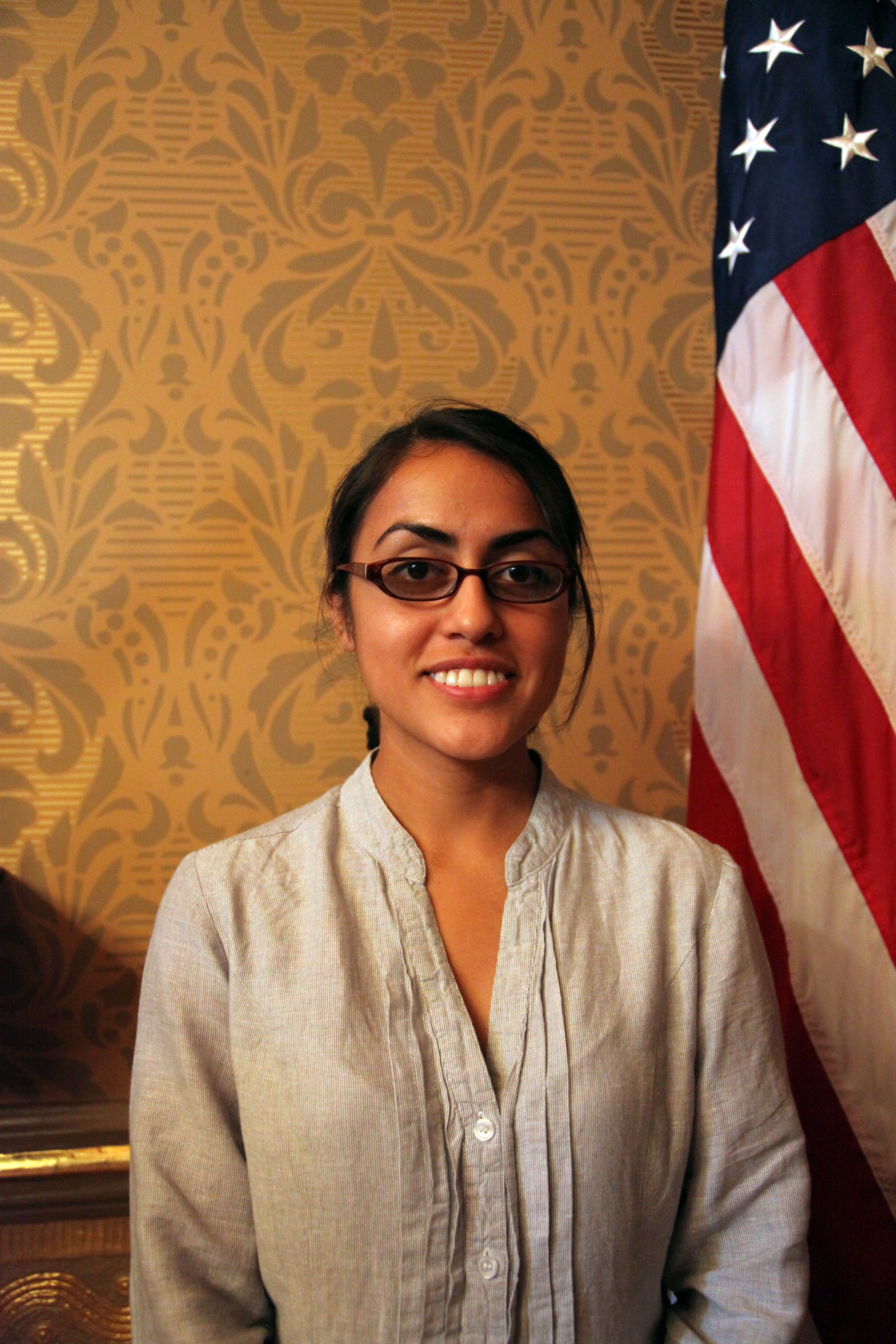
I am the daughter of Mexican immigrants, and was raised in the Mission District, San Francisco’s Latino neighborhood. I grew up attending the local public schools that, sadly, lacked many resources. Thanks to the guidance of First Graduate, a non-profit that helps students become first-generation college graduates, I was able to attend an excellent private high school. I was stunned and pained by the tremendous disparities I observed between the education I received there, and the education my working class peers and I had obtained in the Mission. I arrived being academically far behind my classmates, so my eventual admission to Harvard College represented a very meaningful accomplishment to me. I decided to devote my career to helping other low-income students obtain the quality education they need and deserve. Public education can and should become a means to improving the life of every individual and I believe it truly is the key to moving our nation forward.
I aspire to become a leader in education, and I am committed to acquiring a comprehensive, grass-roots understanding of public education. I believe the best kind of learning happens through the provision of services to people in need, which allows both parties to benefit and grow together. I have therefore served as a summer school teacher in San Francisco, teaching Humanities to eighth and ninth grade students from low-income families, and given presentations on the college admissions process to middle schools and high schools across the city. A strong believer in the value of learning across cultures, I have also been a mentor in a program for Native American youth, and a literacy and career coach in South Africa. During my semester abroad in Namibia, I interned at a school for orphans and vulnerable children called Hope Initiatives, where I taught students between the ages of two and twenty about a wide range of subjects including History, Math, Science, English and Health Education. My students have taught me many invaluable lessons - in particular lessons about resourcefulness and resilience. I have also learned that teaching is one of the most essential and most demanding jobs anyone can do, and I look forward to a day when our society will treat the teaching profession with all the respect and admiration it merits.
Learn more about EducationWe Are All In This Together
Posted by on October 17, 2011 at 3:51 PM EST
Doug Wilson, Assistant Secretary of Defense for Public Affairs, at the OutServe Armed Forces Leadership Summit in Las Vegas, NV, Saturday, Oct. 15, 2011. (Photo from OutServe)
Last Saturday, I was honored to deliver the keynote address at the inaugural OutServe Armed Forces Leadership Summit in Nevada. Less than a month after the full and final repeal of “Don’t Ask, Don’t Tell,” this was one of the first opportunities for gay and lesbian service members – and their partners and families – to openly gather to share their stories and reflect on the importance of military service.
As the Assistant Secretary for Public Affairs at the Department of Defense, I was proud to attend this summit. As the President said earlier this month at the Human Rights Campaign 15th Annual Dinner in Washington, DC:
And all over the world, there are men and women serving this country just as they always have –with honor and courage and discipline and valor... All around the world, you’ve got gays and lesbians who are serving, and the only difference is now they can put up a family photo. No one has to live a lie to serve the country they love.
Learn more about Civil RightsRenewing the American Dream: Café con Leche and Diversity
Posted by on October 16, 2011 at 11:42 AM ESTAs we come to the close of National Hispanic Heritage Month, I’d like to reflect on the personal and moving stories of the many public servants who shine a bright light on all that is magnificent about our country. We’ve heard from those who rose from poverty to now serve proudly in the Obama administration, and others who immigrated to this country, overcoming barriers to dedicate their career and lives to helping others who arrive in America seeking a better life.
All of these stories weave a strong record of specific initiatives that the Obama administration has assembled—educational programs, housing initiatives, economic development assistance programs, health care prevention and screening, and many more—that speak directly to the needs of the over 54 million Latinos in the United States and Puerto Rico. The richness and diversity of the stories exemplify why we celebrate our nation’s diversity and our rich Hispanic heritage.
My own story begins in the Hunts Point section of the Bronx, N.Y., in a hospital that no longer exists, growing up in a building where a community garden now sits. Both of my parents came to New York from Puerto Rico, the children of widowed mothers who wanted to give the next generation a better chance to succeed. We left the Hunts Point section and moved across the Bronx River to a small neighborhood bordered by two highways and engulfed in the aroma of roasting coffee beans from the Café Bustelo plant. That scent of roasted coffee dominates my memories of living among a potpourri of ethnicities, where everyone drank café con leche, danced to salsa, and ate knishes and lasagna together. We learned to accept diversity because we lived diversity. And like the Honorable Sonia Sotomayor, our nation’s first Latina Supreme Court Justice, who grew up a six blocks from me, I have always believed that if I worked hard and dedicated myself to my passion, I could rise from the Bronx and do whatever I wanted to do.
Commitment to the Hispanic Community in the American Jobs Act
Posted by on October 14, 2011 at 3:35 PM ESTThe American Jobs Act reflects a commitment to strengthen the recovery and help increase access to jobs for all Americans. Hispanic families, who will account for 65% of the Nation’s population growth between 2010 and 2050, will help form the backbone of America’s labor force in the coming decades. With unemployment among Hispanics at an unacceptably high rate of 11.3% – and nearly 1 million Hispanic Americans out of work for more than six months– the President believes that we must take action to support the hard working families that drive our nation’s prosperity and growth. That’s why the President is putting forward a plan to increase the pace of job creation in America, and why he is committed to fighting for Congress to act on this plan:
Learn more about EconomyFor the Win: A Big Idea
Posted by on October 14, 2011 at 3:20 PM ESTFor the Win is a guest blog series featuring the remarkable initiatives that young Americans are advancing to win the future for their communities. Each week we highlight a new young person and learn about their inspiring work through their own words. Submit your story to appear in the For the Win guest blog series.
Andrea de Avila, 25, is a pre-kindergarten teacher at St. Edmund School in Oak Park, Ill. Her idea was awarded the grand prize in Scholastic’s third annual “Clifford BE BIG in Your Community Contest.” Scholastic Media, a division of Scholastic Inc., the global children’s publishing, education and media company, and HandsOn Network, the volunteer activation division of Points of Light Institute and largest volunteer network in the nation, announced winners of the contest, a signature component of the ongoing Clifford The Big Red Dog® BE BIG!™ campaign sponsored by American Family Insurance earlier this week.
Raising an Effective Voice in Representing Our Communities
Posted by on October 13, 2011 at 5:46 PM ESTEd. Note: Champions of Change is a weekly initiative to highlight Americans who are making an impact in their communities and helping our country rise to meet the many challenges of the 21st century.
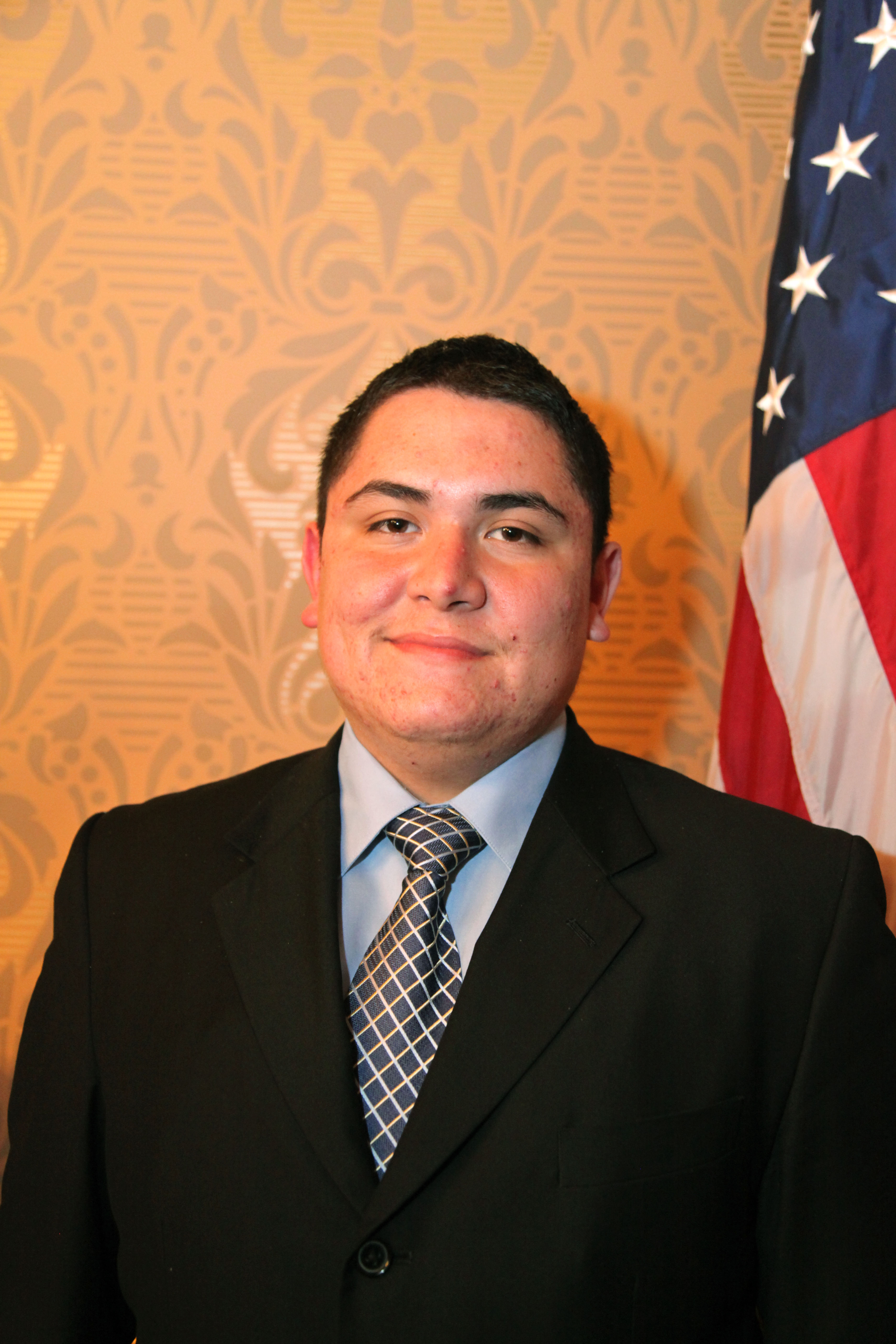
My visit to the White House proved to be one of the most rewarding experiences in my life. Recently, I was honored as a White House Champion of change. Being able to be part of an inspiring and empowering discussion amongst other community leaders, and White House administrators, proved to me that there are others committed progressing this great nation forward.
After the initial discussion, it became obvious that to operate on a national framework, it all begins at the local level-in our communities. As leaders, we have to understand and know the people who comprise where we live, serve the interests of the people are who in most need, and execute an appropriate plan of action.
As a student at the University of Southern California, and resident of Los Angeles, some my passions include: immigration, education policy reform and social change. Currently I am involved in an organization on campus known as Chicanos for Progressive Education (CPE). The high schools CPE visits are neighboring schools in the South Los Angeles area that have low retention rates, are overcrowded and underfunded. These are not just characteristics of a school, but walls that prevent students from having access to the necessary resources that will encourage them to succeed. We foster the idea of a higher education whether it be: Community College, Cal-State schools, UC's or private institutions.
Also, this spring I was able to take part in the annual Sustainability Summit in partnership with the Los Angeles Business Council where the USC program for Environmental and Regional Equity headed by Dr. Manuel Pastor presented on Multifamily Rooftop Solar and Social Equity in Los Angeles. Among the issues of discussion were if solar investment in multi-family housing could occur in distressed neighborhoods. The data showed that many low-income renters currently live in high-solar potential neighborhoods and could relieve the cost of utilities significantly. It has been all part of an effort in creating a market for many of the residents of Los Angeles, especially in lower-income communities. Lastly, I will present my senior honors thesis next spring in American Studies and Ethnicity on the case study of Gardeners in Los Angeles.
Being the son of immigrant parents from Mexico, and having my father be part of this labor force-I am interested in looking at undocumented healthcare in Los Angeles, and the different modes which are sought after for quality care here in Los Angeles. Also, social networks of gardeners, entrepreneurship, and generational progress between gardeners and their children. Through my research I hope it may to bring to light many of the negative misconceptions of our nation's immigrants. As a White House Champion of Change, it has made me believe that we all, as Americans, have the potential to be an effective voice in representing our residents and communities equally, and pass down knowledge to the future generations of America.
David Horacio Hernandez is a junior at the University of Southern California and a member of Chicanos for Progressive Education, an organization that encourages students in inner city schools to pursue higher education.
Join our Virtual Youth Town Hall on Friday October 14th
Posted by on October 13, 2011 at 2:20 PM EST
In celebration of the two-year anniversary of the signing of the Executive Order that reestablished the White House Initiative on Asian Americans and Pacific Islanders, the Initiative cordially invites students, youth, and community advocates across the country to attend its first ever Virtual Youth Town Hall on October 14, 2011 from 4pm to 5:30pm PDT.
During the Virtual Town Hall, the White House Initiative will explore increasingly important issues relevant to Asian American and Pacific Islander (AAPI) youth. Singer/songwriter Clara Chung and YouTube personality Ryan Higa are among the prominent AAPI role models that will serve as Town Hall panelists and address issues such as anti-bullying, access to education, and AAPI representation in the arts and media. The Town Hall will be moderated by Sefa Aina, Vice Chair of the President’s Advisory Commission on AAPIs.
Learn more about Additional IssuesHUD Addresses LGBT Housing Discrimination
Posted by on October 13, 2011 at 10:01 AM ESTIn a recent survey of 6,450 transgender and gender non-conforming persons, 19 percent reported having been refused a house or an apartment because of gender identity, and 19 percent reported having been homeless because of gender identity. Findings of a 2007 Michigan study indicate that same sex couples face bias and discriminatory treatment based on sexual orientation when trying to access rental housing.
Recognizing these issues and utilizing its authority to promote decent housing and a suitable living environment for all, the U.S. Department of Housing and Urban Development (HUD) has taken important steps over the past two years to ensure that lesbian, gay, bisexual, and transgender (LGBT) persons have equal access to housing and HUD programs.
Learn more about Civil Rights
- &lsaquo previous
- …
- 190
- 191
- 192
- 193
- 194
- 195
- 196
- 197
- 198
- …
- next &rsaquo
Twitter