

Latest News
Introducing “MiPlato” to help the Hispanic Community Make Healthier Food Choices
Posted by on October 3, 2011 at 6:40 PM ESTOn Friday, September 30th, as part of the Obama Administration’s celebration of Hispanic Heritage Month, Secretary of the Interior Ken Salazar,Secretary of Agriculture Tom Vilsack, Surgeon General Regina Benjamin, and White House Chef Sam Kass were joined by celebrity Hispanic chefs Chef Pepín and Chef Marcela Valladolid to unveil “MiPlato,”an easy to follow diet guide for staying healthy and fit.
Learn more aboutStepping Up to the Challenges Facing Higher Education
Posted by on October 3, 2011 at 2:57 PM ESTEd. Note: Champions of Change is a weekly initiative to highlight Americans who are making an impact in their communities and helping our country rise to meet the many challenges of the 21st century.
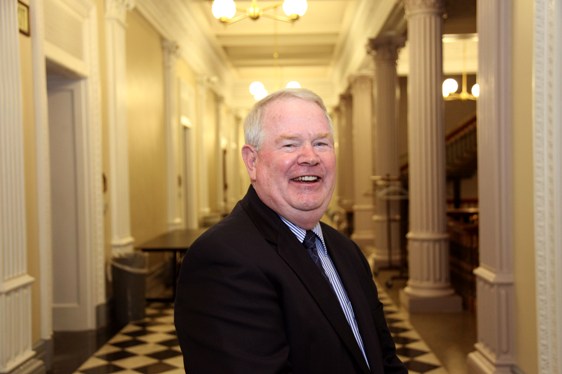
It was a great honor and insightful experience to participate in the Champions of Change Roundtable with administration officials and community and technical college leaders from across our nation at a White House conference. We all agreed our nation faces an urgent challenge. Economic recovery efforts, global competitiveness, and our longer-term economic vitality, are compromised by a growing shortage of skilled workers in the United States. Moreover, social costs continue to rise as the number of unemployed, working poor, and incarcerated individuals continues to rise.
The challenge we face is daunting. It is projected that 60 percent of our working age population will be required to have a high quality degree or credential by 2018. Currently less than 40 percent attain these degrees and credentials. Compounding the challenge is shrinking federal and state budgets to support students and the colleges delivering essential programs and services.
Best practices shared by leaders instilled confidence that community and technical colleges throughout the United States can and will contribute to "winning the future" by stepping up to the challenge. Examples of innovative and entrepreneurial strategies to increase access and completion during these tough economic times were presented with the idea that other colleges will benefit from lessons learned. A common theme was the importance of partnerships with other educational institutions, workforce development agencies, and business and industry.
Learn more about EducationFulfilling a Promise of Success to the Students and the Nation
Posted by on October 3, 2011 at 1:50 PM ESTEd. Note: Champions of Change is a weekly initiative to highlight Americans who are making an impact in their communities and helping our country rise to meet the many challenges of the 21st century.
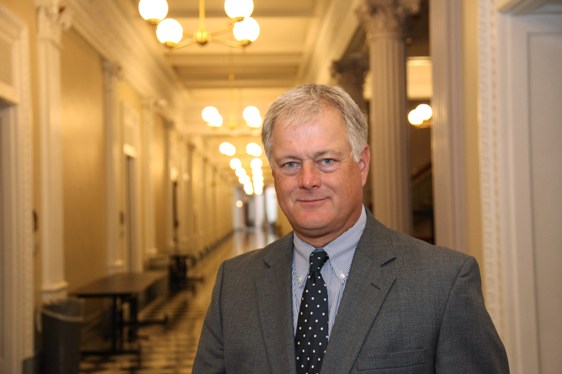
America’s community colleges are uniquely positioned to address the great fault line between those who will succeed in the new economy and those who will languish. That fault line is access to excellent post-secondary education and training. But the colleges, while succeeding in their access agenda for decades, have often failed to achieve the completion and graduation rates that would fulfill their promise to their students and the nation.
Recognizing this fact more than a decade ago, Valencia College, in greater Orlando, Florida, began to bore into the data on student learning and success and fashion systemic solutions to increase both. After a decade of effort, graduation rates for college-ready and developmental students have doubled, gaps between students from different ethnic and socio-economic backgrounds have diminished, and the college is poised to achieve completion rates more typical of selective state universities and more than three times the rates of their peer colleges. The college implemented a much more structured process of engaging students in their transition to college, a program known as LifeMap that is being emulated at many other colleges across the country.
Learn more about EducationLeading the Charge in Creating Higher Education Access Pathways
Posted by on October 3, 2011 at 1:10 PM ESTEd. Note: Champions of Change is a weekly initiative to highlight Americans who are making an impact in their communities and helping our country rise to meet the many challenges of the 21st century.
Although Colorado is regarded as a highly educated state, college attendance rates of native Coloradans, those born and raised in Colorado, are low. For the past decade, elected officials across the political and education spectrum have termed this the “Colorado Paradox.” Nowhere is the education paradox more pronounced than in the southern counties in Colorado, where less than ten percent of high school graduates from the region enroll in college.
In June, 2009, led by the University of Colorado Colorado Springs (UCCS), higher education leaders from all ten public colleges and universities in southern Colorado came together to form the Southern Colorado Higher Education Consortium. Five of the Consortium's institutions are designated Hispanic-serving institutions and one has a special mission to serve Native Americans. Of the ten (10) institutions participating in the consortium, five are community colleges, three are four-year colleges, and two are comprehensive regional universities. Member institutions include: Lamar Community College, Otero Junior College, Pikes Peak Community College, Pueblo Community College, Trinidad State Junior College, Adams State College, Fort Lewis College, Western State College, Colorado State University- Pueblo and the University of Colorado Colorado Springs.
Learn more about EducationRenewing the American Dream: For Our Future
Posted by on October 3, 2011 at 10:53 AM EST“Education changed my life.”
In every community I’ve visited over the past nearly two and a half years there are always Latino college graduates who share their powerful stories of what they had to endure to get in to college and what it took for them to finish: “I was the first in my family to go to college.” “My high school counselor told me I’d never get in to college and that I should think about working with my hands.” “I had no clue how any of this worked—applying to college, scholarships, loans.” “I had to work when I was in school.” “I had to take care of my grandmother, my mom, my kids.” “I had no idea how I was going to pay for college.” But, despite all these challenges, they made it—and from that point forward their lives and the lives of their families would never be the same.
President Obama understands their journey. So does the First Lady and Supreme Court Justice Sonia Sotomayor and every one of us for whom a college degree meant an entry into a new world of possibilities, the American Dream. It changed our lives, forever. And it can change the country’s future as well.
Honoring Hispanic Heritage
Posted by on October 3, 2011 at 10:16 AM EST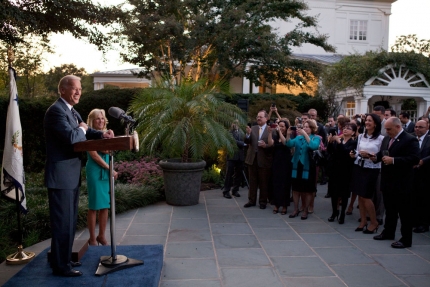
Vice President Joe Biden and Dr. Jill Biden host a Hispanic Heritage Month reception at the Naval Observatory Residence, in Washington, D.C., September 29, 2011. (Official White House Photo by David Lienemann)
Last week, Vice President Biden and Dr. Jill Biden hosted a reception at the Naval Observatory to celebrate Hispanic Heritage Month and recognize the outstanding contributions of Hispanic Americans across the military, government and private sector. As Social Secretary to the Vice President and Dr. Biden, I was pleased to open up the doors of the Vice President’s residence for this special occasion – the third Hispanic Heritage reception they have hosted at their home.
The Vice President spoke before a crowd that included veterans and active duty service members, as well as Hispanic business leaders from around the nation. Noting the particular influence of Hispanic immigrants on American society, Vice President Biden said, “we have never once in our history not been stronger and richer and more vibrant as a consequence of the waves of immigration. … it is the thing that enriches us.”
The reception also recognized the continuing sacrifice and dedication of Hispanic American service members, with veterans from the Vietnam War to the continuing conflicts in Iraq and Afghanistan in attendance.
Learn more about Immigration, VeteransWelcome to the White House, Alpha Kappa Alpha Sorority, Inc.
Posted by on October 3, 2011 at 9:43 AM ESTLast Tuesday, September 20th, 2011, the White House welcomed 160 Alpha Kappa Alpha (AKA) sorority sisters. Fashioned in the AKA signature colors, salmon pink and apple green, the ladies attended a briefing with senior White House officials to learn more about the American Jobs Act and the Deficit Reduction Plan (PDF).
The briefing, part of the AKA’s 9th Public Policy Conference “The Time is Now!”, gave members the opportunity to explore ways to progress their civic, social and legislative agenda by focusing on unemployment, poverty, and health disparity issues they find significant to improving the lives of African Americans.
Senior leadership from the White House Offices of Communications, Presidential Personnel, National Economic Policy fielded questions related to how the AKAs could be supportive of the President’s plan in their own communities. Staff from the Office of Minority Health at HHS discussed the Affordable Care Act, and fellow AKA Dru Ealons of the EPA was on hand to talk about the impacts of clean air and energy and green jobs.
The AKA Sorority has been previously recognized by the White House and was invited to become a part of the White House Economic Recovery Advisory Board for their dedication to improving the quality of life for citizens and for promoting peace as well as entrepreneurship and economic success among its members.
Heather Foster is the Associate Director of African American Affairs.
Head Start Awareness Month
Posted by on October 3, 2011 at 5:00 AM ESTEvery day, nearly one million children across the country walk through the doors of their local Head Start center and begin working, playing and learning their way toward success in Kindergarten and in life. This month we celebrate the rich history of Head Start. For more than 46 years, Head Start has served over 28 million children and their families by promoting school readiness through providing educational, health, nutritional, social and other services.
- 90 percent of children are 3 to 5 years old and 10 percent are infants or toddlers.
- 49,000 classrooms can be found in 50 states, the District of Columbia, and eight territories.
- 31 percent of children speak a language other than English at home, representing more than 140 languages; 26 percent of the children speak Spanish.
-
Head Start serves:
- 120, 800 children with disabilities
- 42, 500 children of American Indian/Alaska Native heritage
- 34,000 children of migrant and seasonal workers
Under the Obama Administration, Head Start programs have continued to flourish and expand. With funding from the American Recovery and Reinvestment Act, Head Start has helped an additional 61,000 children and created 12,000 new jobs. It has also stimulated economic recovery in hard hit communities, as facilities are being built and renovated and local businesses are tapped to provide construction, food, and other services.
Learn more about Education
- &lsaquo previous
- …
- 194
- 195
- 196
- 197
- 198
- 199
- 200
- 201
- 202
- …
- next &rsaquo
Twitter